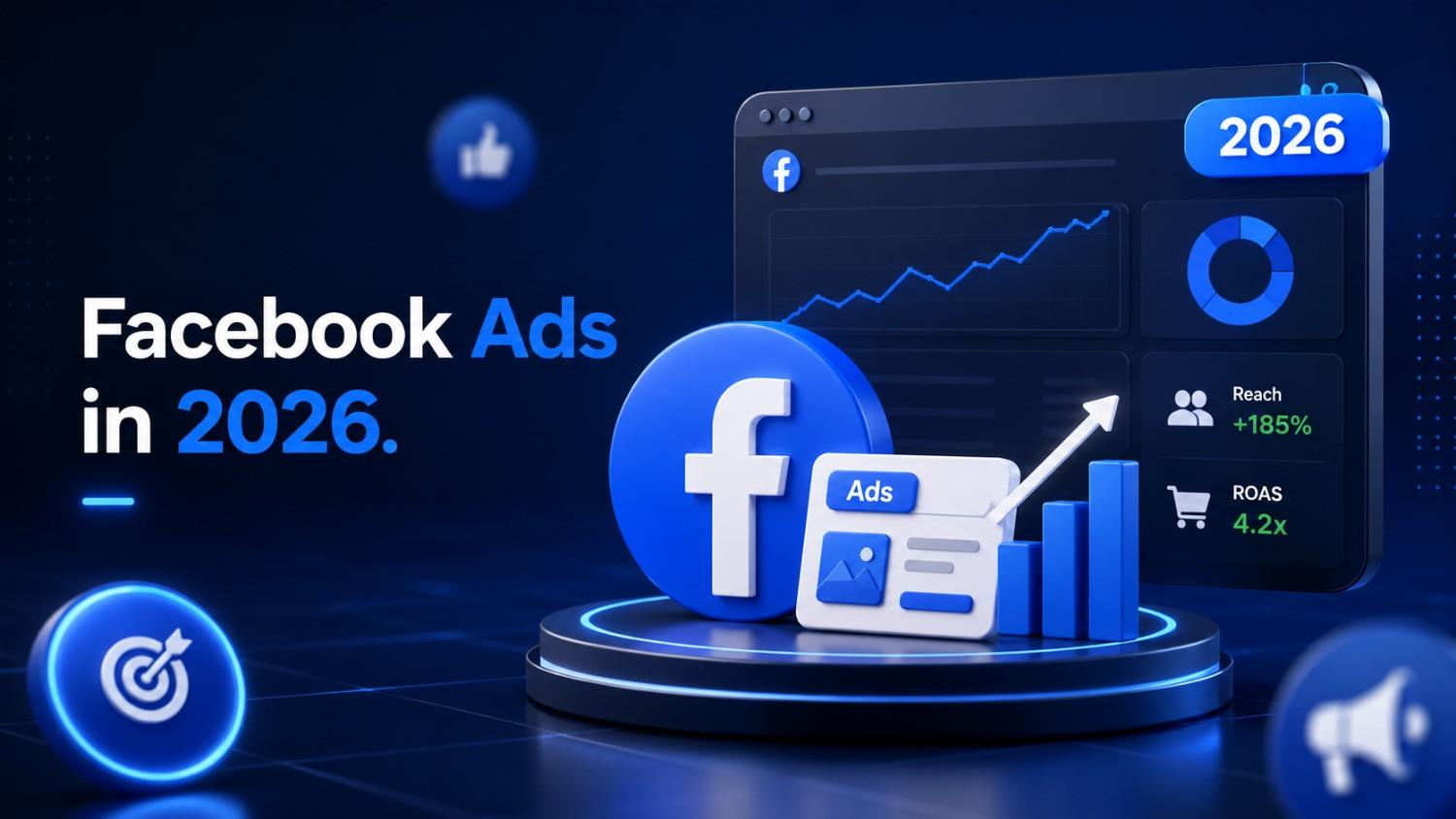
Facebook Ads in 2026: A Practical Guide to Profitable Campaigns

Learn how to plan, launch, and scale profitable Facebook ad campaigns in 2026 using Meta Ads Manager, Advantage+ automation, and privacy-first tracking.

Key Takeaways

  • Meta Ads Manager now runs a single campaign across Facebook, Instagram, Messenger, and Audience Network, making Facebook ads part of a much bigger reach engine than before.
  • Facebook advertising remains one of the most cost-effective channels for small and mid-sized businesses that want precise targeting and measurable ROI.
  • Success in 2026 depends less on micro-targeting and more on signal quality: Conversions API, first-party data plus creative built for each placement.
  • Privacy rules (iOS 17+, EU regulations) mean advertisers now lean on modeled conversions and aggregated reporting, but this hasn’t killed profitability.
  • The businesses winning right now treat Ads Manager as a testing lab, not a “set and forget” tool.

Want to scale your Facebook Ads without wasting budget?

Why Facebook Advertising Still Matters in 2026

With TikTok, YouTube Shorts, and AI search all competing for attention, it’s fair to ask whether Facebook still deserves a place in your budget. It does. Meta’s platforms still command close to 3 billion monthly active users worldwide, and when you add Instagram and Messenger into the mix, the combined reach is hard for any single business to ignore.

What’s changed is how that reach is delivered. A single Facebook ad campaign built in Meta Ads Manager can now show up across Facebook Feed, Instagram Reels, Stories, and Messenger, all from one interface, one budget, and one set of reports. That’s very different from the old days of running separate campaigns per platform.

It’s also worth separating organic posts from paid Facebook ads early on. Organic reach on Facebook has been declining for years; paid ads are how you actually control who sees your message, on what budget, and how you track what happens next. This guide is written for business owners and marketers who want a practical, ROI-focused playbook, not a definitions page.

What Exactly Is a Facebook Ad in 2026?

A Facebook ad is a paid message that appears across Facebook Feed, Stories, Reels, Marketplace, and Meta’s partner placements, all managed through Meta Ads Manager. Technically, most “Facebook ads” today are Meta ads, since the same campaign can run simultaneously on Instagram, Messenger, and Audience Network.

Every modern Facebook ad is built from a few core pieces:

  • Objective: what result you want (leads, sales, awareness)
  • Audience: who sees it
  • Placements: where it shows up
  • Creative: image, video, or carousel
  • Copy and CTA: the message and the action you want taken
  • Tracking: how you measure what happened

Budgets are flexible (daily or lifetime), and while billing is typically based on impressions (CPM), the number that actually matters is your cost per result: CPA or ROAS.

Why Facebook Ads Are Still a Smart Bet

Alongside Google Ads and TikTok Ads, Facebook still earns its place in most digital marketing budgets for a few reasons. Cost-per-click and cost-per-thousand-impressions on Meta are frequently competitive with or lower than those on other major platforms, though exact numbers vary widely by industry and country.

You also keep tight control over spend, daily and lifetime budget caps, scheduled start and stop dates, and the ability to pause a campaign instantly if something isn’t working. And despite privacy changes, Meta still holds an enormous amount of targeting data: interests, behaviors, custom audiences, and lookalikes, all of which can reduce customer acquisition costs when used effectively. Perhaps most importantly, Facebook supports a full-funnel strategy, driving awareness, retargeting warm audiences, and closing sales with dedicated conversion campaigns, all within the same tool.

How Facebook Ads Fit Into Your Marketing Funnel

Facebook ads shouldn’t run in a silo. They work best alongside your website, SEO, and email marketing. Think of the funnel in four stages: Awareness, Consideration, Conversion, and Loyalty and match your Meta campaign objective to whichever stage you’re targeting.

Some practical ways to connect the dots: retarget people who found you through SEO but didn’t convert, use ads to amplify a blog post that’s already performing well organically, or boost webinar registrations for one you’re already promoting by email. It also helps to treat Meta ads as a testing lab: the messaging and creative that win here can often be reused directly in email campaigns and landing pages.

Core Campaign Objectives You Should Actually Use

Ads Manager groups objectives into a simplified set: Awareness, Traffic, Engagement, Leads, App Promotion, and Sales. Each maps to a different kind of result:

  • Sales: best for eCommerce brands optimizing for ROAS
  • Leads: ideal when you want form submissions
  • Engagement: Useful early on for social proof and building retargeting audiences
  • Traffic: A reasonable starting point if your tracking isn’t fully reliable yet

If your tracking is set up correctly, start with Sales or Leads. If it isn’t, Traffic or Engagement will still let you learn without misleading data. Your objective choice directly affects who Meta shows your ad to; clickers, buyers, or engagers aren’t the same audience.

Targeting in 2026: Beyond Micro-Segmentation

Facebook’s algorithm has gotten noticeably better at finding converters when you feed it broad, high-quality data instead of narrow interest stacks. The main targeting types remain broad targeting (minimal filters), detailed interests and behaviors, custom audiences (website visitors, email lists, video viewers), and lookalike audiences built from your best customers.

Privacy changes such as iOS 17, App Tracking Transparency, and EU regulations have reduced certain forms of granular tracking, but modeled conversions and server-side data still make performance measurable. A practical rule of thumb: start broad or lookalike for prospecting, then reserve custom audiences for recent site visitors, add-to-cart users, and engaged followers for retargeting.

Choosing the Right Ad Formats and Placements

Creative and placement choice now matter as much as targeting. Meta supports single image ads, video ads, carousels, collection/Advantage+ shopping ads, Reels ads, Stories ads, and lead ads with native forms.
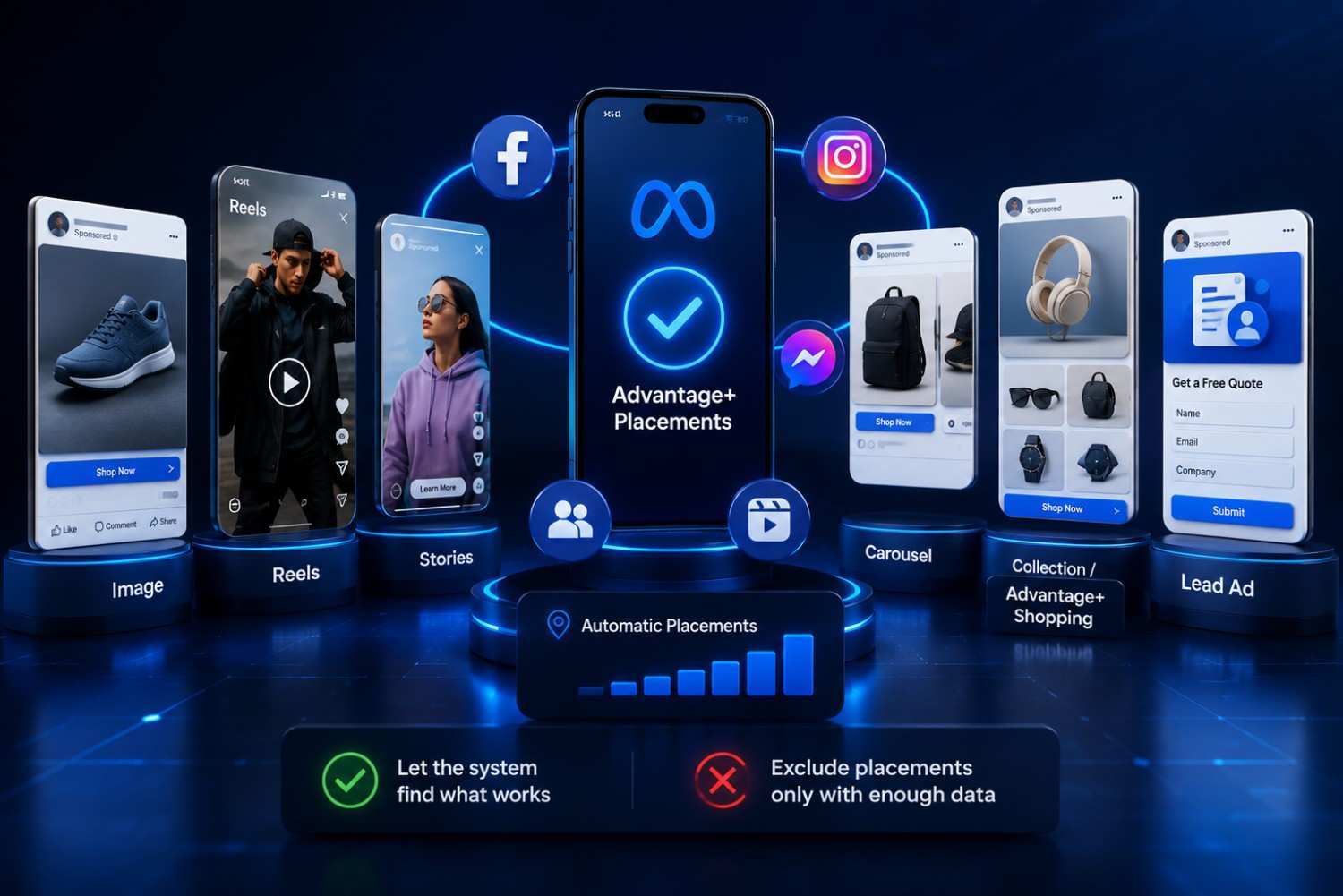
Right Ad Formats and Placements

Each format has a natural fit: Reels and Stories favor short vertical video, carousels work well for showcasing product ranges, and lead ads are strong for B2B and service-based inquiries where a quick native form beats sending someone to a website.

Meta generally recommends Advantage+ placements, which let its system automatically decide where your ad performs best; manual placement exclusions are usually only worth it once you have enough data to see a placement is clearly underperforming.

Crafting High-Performing Ad Creative

In 2026, creative quality the combination of visuals, copy, and offer often moves the needle more than small targeting tweaks. For video, the first two seconds need to stop the scroll; keep the product front and center, add on-screen text since many people watch with sound off, and end with a clear call to action.

For copy, open with a hook, follow with a benefit-driven message, include social proof (reviews, numbers, results), and close with a direct CTA like “Shop now” or “Book a free call.” Creative should also shift by funnel stage: storytelling and education work at the top, while offers and urgency perform better at the bottom.

Setting Budgets and Bids

There’s no fixed price for a Facebook ad; you set the budget, and Meta runs an auction shaped by competitiveness, relevance, and estimated action rate. Daily budgets suit ongoing testing, while lifetime budgets work well for a fixed promotional window, such as Black Friday or an end-of-quarter push.

Costs vary by market and spike during Q4 shopping season, so treat any benchmark as a starting reference, not a guarantee. Most small advertisers should start with Meta’s automatic (Advantage+) bidding rather than manual cost caps. A reasonable starting point is a daily budget of $20–$50 for 7–14 days enough time and spend to gather statistically useful data before making changes.

Step-by-Step: Setting Up Your First Campaign

This is a practical walkthrough using Meta Ads Manager on desktop, not the Boost Post button.

  1. Set up a Business Manager account and add your payment method.
  2. Verify your domain and install the Meta Pixel and Conversions API before you launch anything.
  3. In Ads Manager, choose your objective and name the campaign.
  4. Set a campaign-level budget or use Advantage campaign budget (CBO).
  5. Build ad sets with your audience and placement choices.
  6. Create the ads themselves: images or video, plus copy and publish.

Tracking, Measurement, and Fixing Broken Data

Accurate measurement isn’t optional if you want to understand ROI. Meta Pixel and Conversions API work together; the Pixel tracks in-browser, while server-side Conversions API recovers signals lost to privacy restrictions.

Keep an eye on CTR, CPM, CPC, cost per add-to-cart, cost per purchase or lead, conversion rate, and ROAS, and know which of these matter most at each funnel stage. If conversions suddenly drop, check for misfiring events, domain verification issues, or attribution window changes first. And don’t expect Ads Manager numbers to match Google Analytics or your eCommerce platform exactly; some variance between data sources is normal in 2026.

Optimization: Improving Performance Over Time

Optimization really starts once a campaign exits the learning phase, generally after an ad set has around 50 conversions, when possible. Frequent edits to budget, audience, or creative during this phase can reset learning and destabilize performance, so patience matters early on.

A simple weekly routine works well: pause underperformers, shift budget toward winners, test new creative, and adjust bids or audiences only when the data actually supports it. Use Meta’s built-in A/B testing (or manual split tests) for variables like images, hooks, and landing pages. When scaling budgets, increase by 20–30% every few days rather than jumping dramatically, which tends to shock the algorithm and reset performance.

Scaling Strategies: From First Win to Reliable Revenue

Scaling means increasing spend while keeping CPA or ROAS inside your targets. Horizontal scaling means duplicating winning ad sets into new countries, languages, or lookalike audiences, and launching fresh creative based on what’s already working. Vertical scaling means gradually raising budgets on ad sets that have consistently hit their goals over several days or weeks.
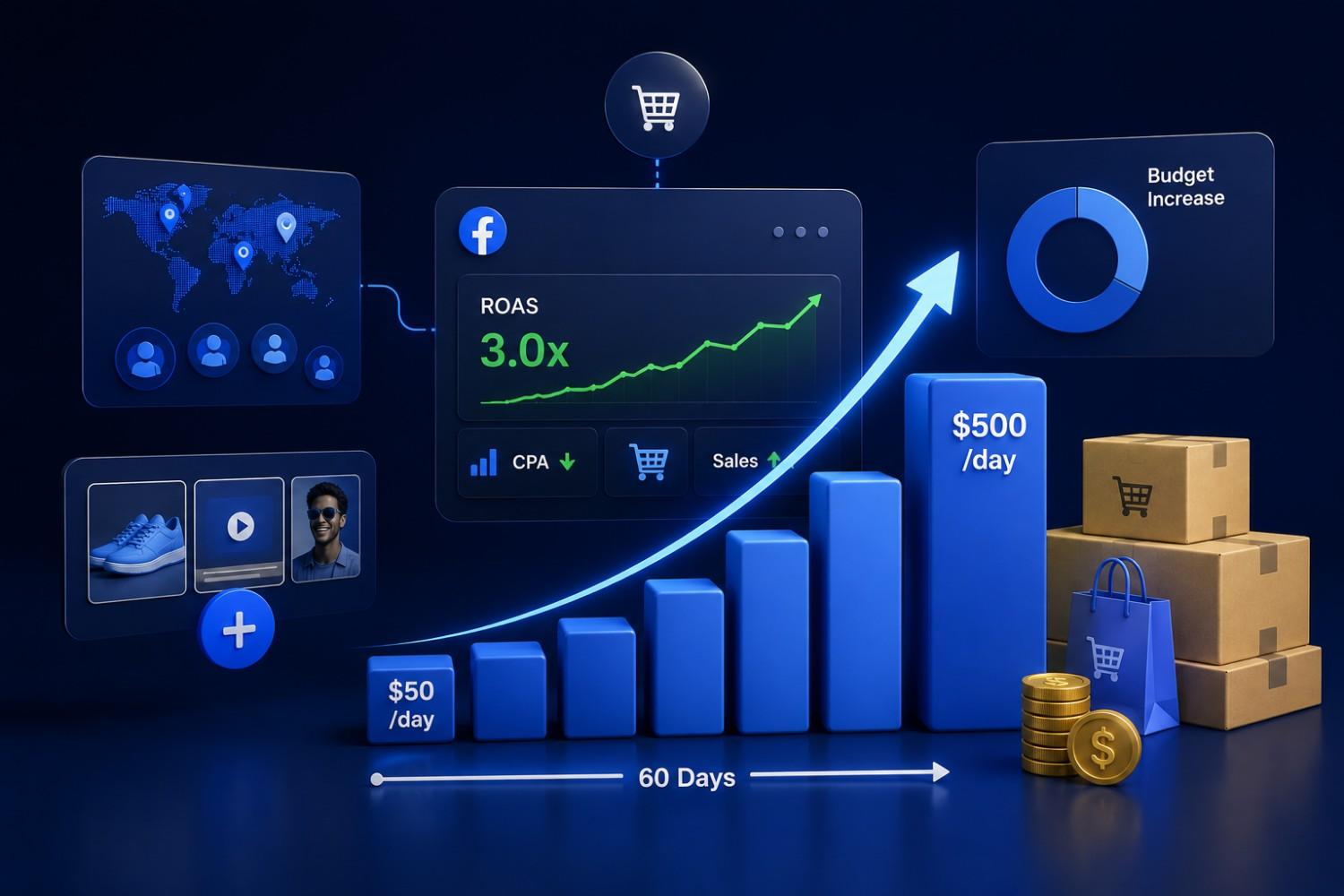
Scaling Strategies

Advantage+ shopping campaigns can automate much of this for eCommerce brands once sufficient conversion data is available. As an example of what’s realistic: a DTC brand might move from $50/day to $500/day over 60 days while maintaining a 3x ROAS, not by scaling in a single leap but through steady, data-backed increases.

Creative and Strategy Trends Shaping 2026

What worked in 2022–2023 can feel too polished for today’s feed and Reels environment. UGC-style content founders talking to camera, real customer testimonials shot on a phone, behind-the-scenes clips is consistently outperforming studio-perfect production.

Short-form vertical video with a 6–15 second hook and quick cuts remains essential for Reels and Stories. AI tools are also playing a bigger role in creative production, generating copy variations, testing multiple thumbnails, and auto-cropping assets for different placements. Tying creative to cultural moments (seasonal sales, major sporting events, local festivals) can work well too, as long as it stays within Meta’s ad policies.

Compliance, Policies, and Brand Safety

Violating Meta’s advertising policies can lead to disapproved ads, disabled accounts, or lost data, so compliance isn’t optional. Key areas to watch include personal attributes (avoid language like “you have diabetes”), special categories like housing, credit, and employment, restricted content such as crypto or supplements, and political or social issue ads.

Build a simple internal checklist before launching any campaign to reduce the risk of rejection. EU audiences face extra scrutiny under GDPR and the Digital Services Act, so factor in region-specific rules. If an ad does get disapproved, use the appeal process and keep an eye on your Account Quality dashboard. It’s worth having backup ad accounts or payment methods for resilience.

When to Bring in a Facebook Ads Specialist

Many businesses handle their first campaigns in-house, but scaling or troubleshooting often calls for outside help. Signs it’s time: consistently unprofitable spend, difficulty interpreting Ads Manager data, stalled growth despite testing or simply not having the time to manage campaigns properly.

Look for a partner who offers transparent reporting, a clear testing plan, relevant industry experience, and comfort with tracking and analytics. The best partners think holistically, connecting landing pages, email flows, and offer structure to the ad spend, rather than just “buying traffic.” This is exactly the kind of work our team at Deftsoft handles day-to-day, building Meta Ads campaigns alongside the websites, SEO, and content that support them, so the leads a campaign generates actually have somewhere good to land.

Want to scale your Facebook spend without flying blind on your data?

Frequently Asked Questions

What is a realistic daily budget to start with on Facebook ads?

Most small businesses start between $10–$50 per day per campaign, depending on industry, and should run tests for at least 7–10 days before making big decisions. The real constraint isn’t a minimum spend; it’s having enough budget to generate meaningful data, including enough clicks and a handful of conversions. Higher-ticket offers usually require larger daily budgets to gather sufficient conversion data.

How long does it take for a new campaign to “work”?

Meta typically needs several days and around 50 conversion events per ad set to exit the learning phase and stabilize. Avoid judging a campaign in the first 48–72 hours unless there’s an obvious problem, like zero impressions or a tracking error. Full optimization can take a few weeks, especially for low-volume or high-ticket offers.

Can I run profitable Facebook ads without a website?

Yes, lead ads, Messenger or WhatsApp conversations, and booking links or marketplace pages can all work. A well-designed landing page usually improves results, though, so service providers and local businesses often start with native lead forms while building out a proper conversion-focused site. Skipping a website can limit the depth of tracking and long-term optimization options.

What’s the difference between “Boost Post” and Ads Manager?

Boost Post is a simplified shortcut with limited control over objectives, audiences, and optimization. Ads Manager gives full control over campaign structure, objectives, creative variations, and detailed reporting; it’s the right tool for anything beyond a very basic engagement or awareness boost.

Do Facebook ads still work after all the privacy changes?

Yes. Success now relies more on strong creative, broader audiences, and proper tracking through Pixel and Conversions API than on hyper-niche targeting. Reporting looks different due to modeled conversions and attribution windows, so it helps to adjust expectations and cross-check data sources rather than assume that privacy updates have “killed” Facebook advertising.
Google Performance Max Campaigns: Complete 2026 Guide for Smarter Growth with Google Ads

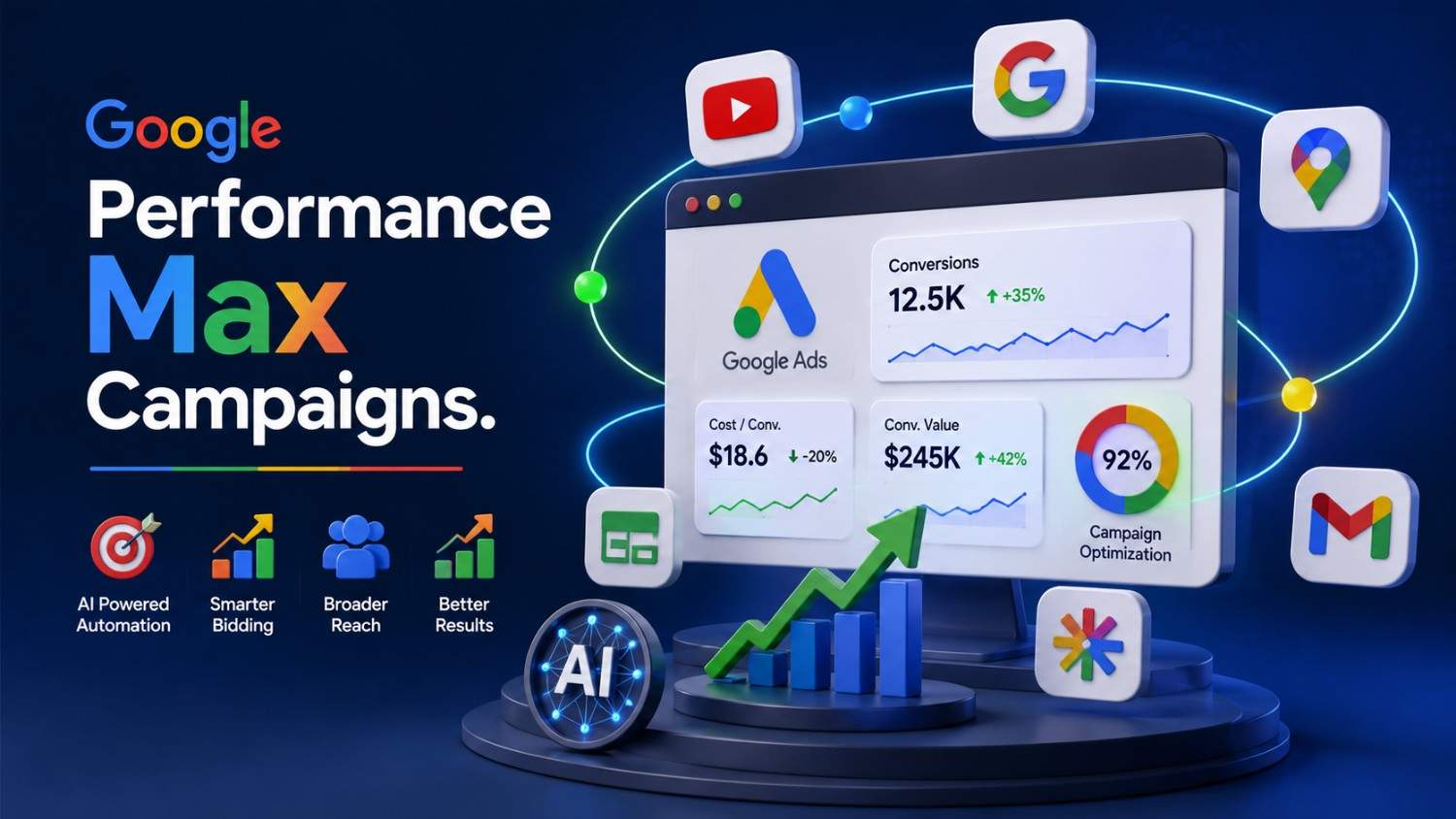
If you’re running Google Ads in 2026 and haven’t given Performance Max a serious look, you’re leaving reach, and likely conversions, on the table. Performance Max has moved from “the new campaign type nobody fully trusts” to one of the core building blocks of a modern Google Ads account, sitting alongside, not replacing, your search campaigns. But it’s also one of the most misunderstood formats in Google Ads, precisely because it hands so much control to automation. This guide breaks down what Performance Max actually is, when to use it, how to structure it properly, and how to avoid the mistakes that quietly waste ad spend.

Quick Summary

  • Performance Max is a goal-based Google Ads campaign type that runs across Search, Display, YouTube, Discover, Gmail, and Maps from a single campaign.
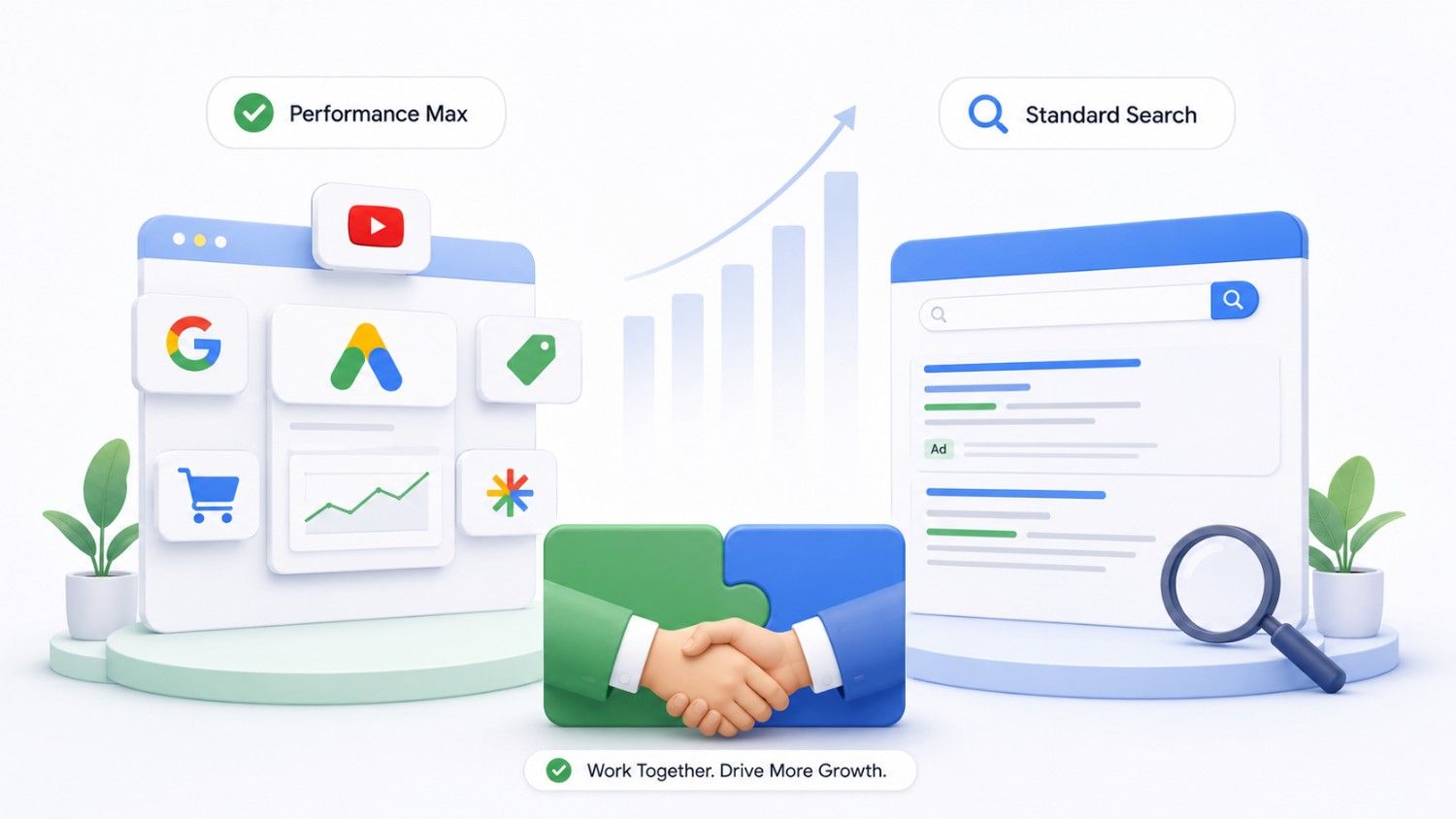
  • It works best when it complements existing search campaigns rather than replacing them, especially for brands with proven high-intent keyword strategies.
  • Accurate, end-to-end conversion tracking, including enhanced or server-side conversions and GA4 integration, is non-negotiable before scaling PMax budgets.
  • Clear business goals (Target CPA or Target ROAS), strong creative assets, and well-built audience signals are the core best practices for 2026.
  • Deftsoft’s Google Ads specialists plan, launch, and optimize Performance Max campaigns for ecommerce and B2B lead-gen businesses, typically starting around $1,500–$3,000/month in managed ad spend.

Want to scale your Google Ads without wasting budget?

Quick Navigation

What Is Google Ads Performance Max (and Why It Matters in 2026)?

When to Use Performance Max vs Standard Search Campaigns

Who Should Invest in Performance Max Campaigns?

How Performance Max Works Under the Hood

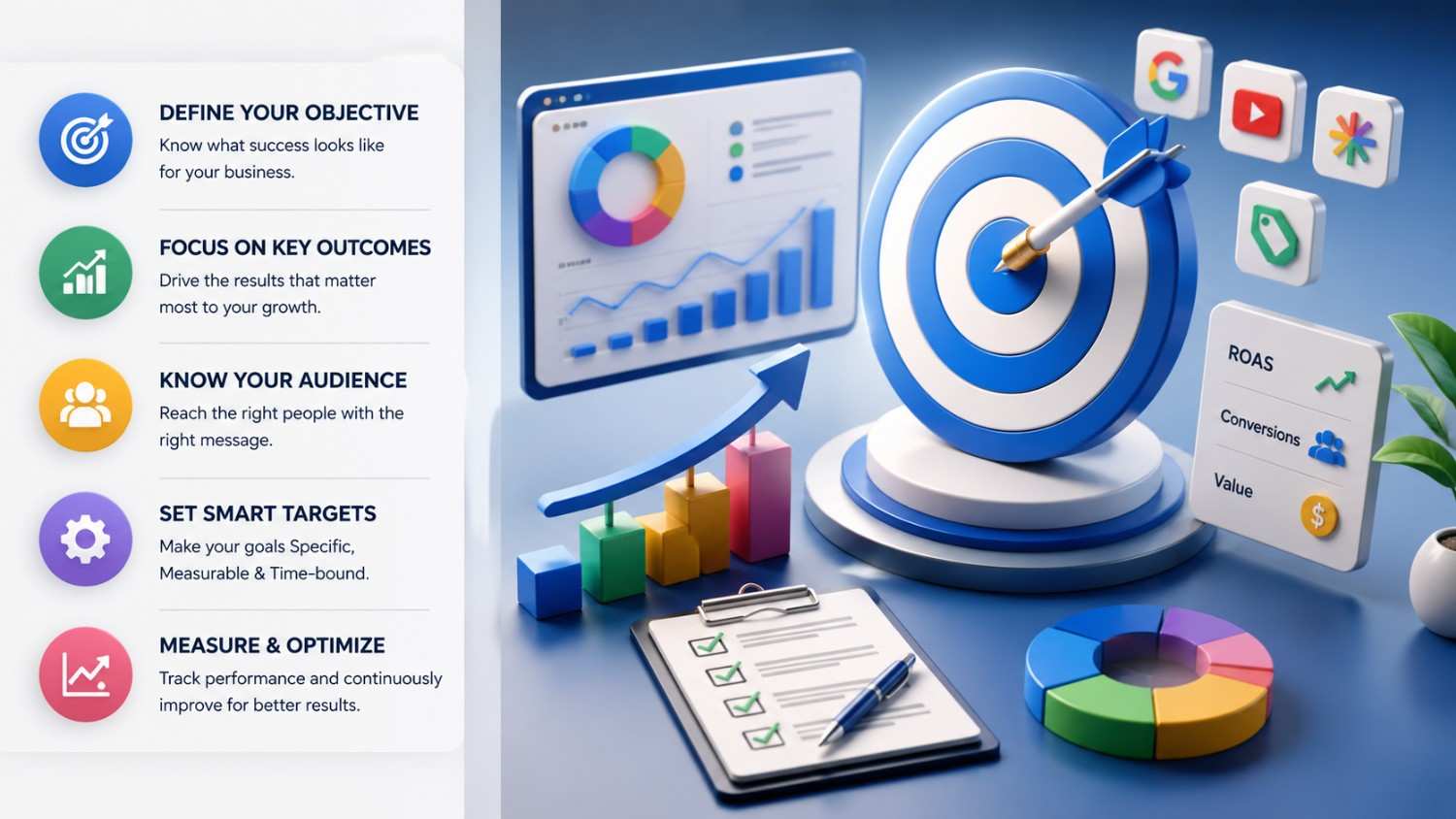
Setting Clear Business Goals for Your Performance Max Campaigns

Structuring Performance Max: Campaigns, Asset Groups, and the Ad Group Analogy

Building High-Impact Asset Groups (Text, Images, and Video)

Audience Signals: Guiding Google AI Without Over-Restricting It

Conversion Tracking and GA4 Integration

Location, Language, and Device Targeting Nuances

Budgeting and Bidding Strategies for Performance Max in 2026

Managing URL Expansion and Traffic Routing

Creative and Messaging Best Practices

Performance Max vs Other Google Ads Campaign Types

Reporting, Insights, and What to Expect

Ongoing Optimization: A Monthly Checklist

Common Mistakes to Avoid

How Deftsoft Plans and Manages Performance Max for Clients

The Future of Performance Max and Google Ads Automation

Getting Started: A Simple Performance Max Launch Plan

FAQ: Performance Max Campaigns and Google Ads

What Is Google Ads Performance Max (and Why It Matters in 2026)?

Performance Max is Google’s goal-based, fully automated campaign type, first launched globally in 2021 and now a central pillar of the Google Ads ecosystem. Instead of building separate campaigns for Search, Display, YouTube, and Shopping, Performance Max lets you access nearly all of Google’s ad inventory from a single campaign built around one clear conversion goal, whether that’s sales, leads, or store visits.

Where Performance Max really differs from a traditional Search or Shopping campaign is in its structure and level of control. There’s no keyword list to manage. Instead of ad groups, you build “asset groups”, collections of text, images, and video organized around a theme or audience. Google’s AI handles bidding, budget allocation, and placement decisions in real time using Smart Bidding, drawing on the creative assets, audience signals, and conversion data you provide.

Traditional Search Campaign Performance Max
Where ads show Google Search results only Search, Display, YouTube, Discover, Gmail, Maps
Targeting Keywords you choose and control AI-driven, guided by audience signals
Control level High, granular, query-level Lower, goal and asset-level

It’s also worth understanding this in the context of what else Google is changing in 2026. Google recently updated how Target CPA and Target ROAS bidding behaves for budget-limited campaigns, a change that will roll out on August 17, 2026, and it affects Performance Max just as much as standard Search campaigns. If your PMax campaign has been quietly converting well below its stated Target CPA, that gap will start closing as the algorithm steers delivery back toward the number you actually set. That makes getting your targets and conversion data right before scaling more important than ever.

For most advertisers, the right question isn’t “PMax or Search?” It’s “how do these work together?” Performance Max is designed to complement your keyword-based Search campaigns, not replace them, and Google’s bidding logic reflects that: if a user’s query exactly matches an exact-match keyword in your Search campaign, that Search campaign is prioritized over Performance Max.

Performance Max tends to shine when:

  • You have a proven search campaign that’s plateaued, and you want incremental reach beyond it.
  • You’re an ecommerce brand with a Google Merchant Center feed and want broader product visibility across Shopping, Display, and YouTube.
  • You want to reach customers across multiple Google surfaces without having to build and manage five separate campaign types.

Lean more heavily on Search campaigns when:

  • You’re running a niche B2B account with low search volume that doesn’t generate enough data for PMax to learn effectively.
  • You operate under strict compliance or industry advertising rules that require tight, query-level control.
  • Precise control over exactly which search terms trigger your ads matters more than incremental reach.

The sequencing matters too. Stabilize and optimize your core search campaigns first, then layer Performance Max on top as an incremental growth channel sharing the same business goals. At Deftsoft, we typically run PMax alongside dedicated brand and non-brand search campaigns, with brand exclusions in place specifically to avoid PMax cannibalizing high-performing branded search traffic you’re already winning cheaply.

Who Should Invest in Performance Max Campaigns?

Performance Max isn’t free reach; it requires enough budget and volume for Google’s algorithm to actually learn. As a rule of thumb, plan for a consistent daily budget in the $50–$100 range and maintain it for at least 30 days before drawing conclusions about performance.

  • Ecommerce businesses: D2C brands, marketplaces, and retailers with 50+ SKUs tend to see strong results, since PMax can boost product feed visibility and surface incremental revenue across Shopping, Display, and YouTube simultaneously.
  • Lead generation businesses  SaaS, professional services, education can absolutely use Performance Max, but only with high-quality lead scoring and offline conversion import from your CRM. Without that, PMax will happily optimize toward form fills that never turn into real customers.
  • Local businesses, restaurants, clinics and showrooms can use PMax with store visits or local actions as the primary goal, supported by accurate location extensions and an up-to-date Google Business Profile.

Performance Max is best suited to advertisers who already have a working handle on Google Ads fundamentals. If you’re launching your very first campaign ever, get a standard Search campaign running and stable first.

How Performance Max Works Under the Hood

At a practical level (not deep technical documentation), Performance Max is built on three layers: the campaign itself (budget and bid strategy), asset groups (which replace traditional ad groups), and assets (the text, images, video, logos, and audience signals inside each group).

Google’s systems use signals like search intent, audience data, device, time of day, and location to make bidding and placement decisions in real time. Smart Bidding strategies commonly used in PMax include Maximize Conversions and Maximize Conversion Value, which can optionally be paired with a Target CPA or Target ROAS once you have enough conversion history.

One thing that surprises many advertisers coming from manual campaign types: Google’s AI automatically tests combinations of your assets to find the top performers across Search, Display, YouTube, Discover, Gmail and Maps, without you needing to run manual split tests. Your job is to feed it strong raw material; the system handles the combination testing.

Setting Clear Business Goals for Your Performance Max Campaigns

Every Performance Max setup should start with a business goal, not a creative brief or an audience list. Common 2026 goal types include direct online sales, qualified leads, subscription sign-ups, store visits, and app installs, each of which maps to a different conversion action inside Google Ads.

From there, decide whether you’re optimizing for conversions or conversion value. If your average order value and margins are fairly consistent, Target CPA is usually simpler to manage. If order values vary significantly (common in ecommerce with a wide product range), Target ROAS gives the algorithm a better signal about which conversions are actually worth chasing.
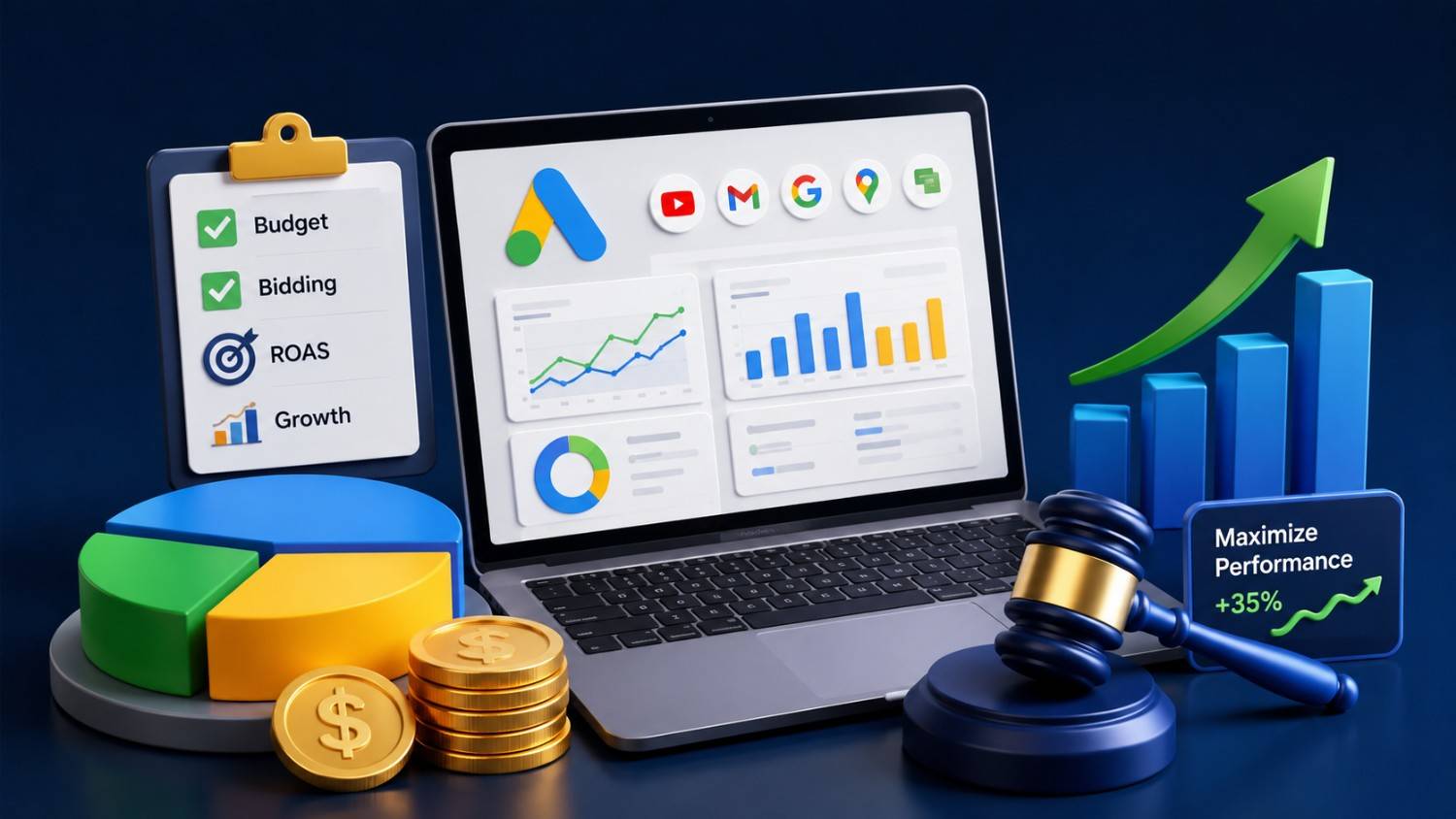
Be deliberate about how you value micro-conversions like add-to-cart or lead form starts. Assigning them too much weight can quietly pull optimization away from your real revenue or sales goal. Document your actual KPIs before launch: target CPA in dollars, target ROAS percentage and minimum daily revenue, so you have an objective benchmark to measure success against, rather than relying on gut feel a few weeks in.

Structuring Performance Max: Campaigns, Asset Groups, and the Ad Group Analogy

Asset groups function similarly to ad groups in a standard Search campaign, but they’re built around audiences and creative themes rather than keyword lists. Most advertisers do best with a small number of well-structured campaigns rather than many thin ones.

Consider splitting into multiple Performance Max campaigns when you’re targeting drastically different countries, have very different ROAS targets across product lines, or are running genuinely distinct business lines that shouldn’t share a budget or learning phase. Within each campaign, organize asset groups by product category, service line, funnel stage, or audience type, while resisting the urge to over-fragment; too many thin asset groups slow the learning phase without adding real precision.

Deftsoft generally prefers a handful of well-structured campaigns over a sprawling account of narrow ones, and we keep naming conventions consistent across campaigns and asset groups so reporting in Google Ads and GA4 stays readable months later.

Building High-Impact Asset Groups (Text, Images, and Video)

Performance Max is a creative-hungry format, since it needs to serve everywhere, from search results to YouTube pre-rolls. A few practical guidelines:

  • Text assets: Write multiple headlines and descriptions tailored to your actual unique selling points, not generic claims. Use dated, seasonal offers (“Summer 2026 Sale”) where relevant, and keep calls to action specific.
  • Image assets: Mix product-focused and lifestyle imagery, use correct aspect ratios for every placement, and avoid overlaid text that gets truncated on smaller screens.
  • Video assets: Add at least one genuine video asset. If you don’t, Google will auto-generate one from your static images and text, and the results are usually noticeably generic. A simple 15–30 second branded video, even made with a lightweight tool, outperforms an auto-generated one.
  • Logo and brand assets: Use transparent PNG logos, and keep colors and typography consistent with your website and landing pages.

Audience Signals: Guiding Google AI Without Over-Restricting It

Audience signals work as hints to Google’s AI, not hard targeting rules. Performance Max will use your signals as a starting point and then expand beyond them once it identifies users who convert, similar to how optimized targeting behaves in Display and Discovery campaigns.

Strong audience sources include remarketing lists from site visitors, customer match lists pulled from your CRM or email platform, custom segments built around your top-converting search terms, and GA4 predictive audiences. Deftsoft typically builds separate asset groups with distinct audience signals for different intent levels, cart abandoners versus cold in-market audiences, for example, so we can directly compare how each performs. Avoid relying only on broad demographic signals; combining behavioral, interest, and first-party data gives the algorithm a much stronger starting point.

Conversion Tracking and GA4 Integration

Performance Max depends entirely on accurate, end-to-end conversion data to make good bidding decisions, and that’s become even more true following the privacy and cookie changes of the past two years. At minimum, you need properly configured Google Ads conversion actions, GA4 events linked to those actions, and enhanced conversions or server-side tracking wherever possible.

Link your Google Ads and GA4 accounts, import conversions correctly, and use GA4 audiences as additional audience signals that feed back into PMax. It’s also worth building a dedicated GA4 segment or exploration view specifically for Performance Max traffic, since native landing page and geographic reporting inside PMax itself is still limited. This is one of the most common gaps Deftsoft finds when auditing existing accounts: broken or incomplete tracking that quietly misleads the entire bidding algorithm.

Location, Language, and Device Targeting Nuances

A few settings can silently drain budget if left on their defaults, especially for advertisers running international campaigns. Location targeting defaults to “Presence or interest,” meaning your ads can show to people who are merely interested in a location, not just those physically present there. For most local and national businesses, switching to “Presence” only avoids irrelevant, low-value clicks from outside your actual market.

Language settings should match both your website and your customer base, particularly in multilingual markets like India (English and Hindi) or the US (English and Spanish). Device-level reporting is also worth reviewing regularly; mobile, desktop, and tablet performance can differ significantly, and these differences should inform both landing page optimization and account-level bid adjustments. Deftsoft reviews geo and device reports monthly to catch anomalies, such as unexpected traffic spikes from low-value regions.

Budgeting and Bidding Strategies for Performance Max in 2026

Because Performance Max runs on Smart Bidding by design, getting your budget and bid strategy right from day one matters more than in a manually-controlled campaign. As a starting point, most SMBs should budget $50–$100 per day (per country if operating internationally) to achieve 30–50 conversions per month, which is enough for reliable algorithmic learning.

For strategy, many advertisers start with “Maximize Conversions” without a target while the campaign builds conversion history, then introduce a Target CPA once there’s enough data. Mature ecommerce accounts often shift to “Maximize Conversion Value” once margins and product mix stabilize.
This is exactly where Google’s August 2026 bidding update becomes directly relevant to Performance Max, not just Search. Campaigns that have been over-delivering against their stated Target CPA or ROAS will be pulled back toward that stated number starting August 17, 2026. If you haven’t reviewed your PMax targets against actual delivered performance recently, do it before that date, ideally using the Bid Target Adjustment Tool Google is rolling out from July 6, 2026. And regardless of the update, avoid making major bid or budget changes more than once every 2–3 weeks; frequent changes repeatedly reset the learning phase and produce noisier, less reliable results.

Managing URL Expansion and Traffic Routing

Performance Max uses URL expansion, similar in spirit to Dynamic Search Ads, to send traffic beyond the exact final URLs you specify. It’s powerful for surfacing relevant landing pages you might not have manually selected, but it can also send traffic to pages that aren’t built to convert if left uncontrolled.

If precise control matters, for regulatory reasons or a tightly designed user experience, you can disable URL expansion entirely. More commonly, advertisers use URL exclusions to block irrelevant sections of the site: careers pages, general blog content, help center articles, or discontinued product lines. Reviewing GA4 landing page reports segmented specifically for Performance Max traffic is the most reliable way to spot URLs that are generating poor engagement or high bounce rates and need to be excluded.

Creative and Messaging Best Practices

Messaging should align tightly with both business goals and search intent, emphasizing whatever matters most in your category: price, shipping speed, guarantees, or a clear unique selling point. Update seasonal and time-bound messaging at least quarterly to avoid creative fatigue; generic, static ad copy is one of the fastest ways to underperform in Performance Max.

It’s also worth building distinct asset sets for remarketing audiences (more urgency, social proof) versus cold audiences (more education, brand story, problem-solution framing), and testing different offers, a free trial versus a percentage discount versus free shipping, while tracking downstream profit in GA4 or your internal BI tools, not just click-level metrics.

Performance Max vs Other Google Ads Campaign Types

Performance Max sits alongside Search, Display, Demand Gen, Video, Shopping, and App campaigns, but it automatically taps into inventory, YouTube in-stream, Discovery, and Shopping placements that previously required separate, standalone campaigns. Compared to Search, PMax trades granular control for reach. Compared to Display, it’s more conversion-focused than pure awareness-driven. Compared to Demand Gen, it’s goal-first rather than creative-first.

Keep dedicated, separate campaigns for pure brand awareness (better served by Demand Gen or Video) or when you genuinely need tight creative or targeting control that PMax can’t offer. Deftsoft often runs a hybrid structure: a foundation of Search campaigns, Performance Max layered on top, plus highly targeted campaigns like RLSA search or YouTube remarketing where the situation calls for it.

Reporting, Insights, and What to Expect

Performance Max offers less search-term and placement transparency than a traditional Search campaign, so reporting workflows need to adapt. The Insights tab is your best native resource; it surfaces top search categories, converting audience segments, and asset performance ratings that guide optimization even without a full search terms report.

Beyond the Insights tab, set up custom reports in Google Ads and GA4 tracking CPA, ROAS, impression share, new versus returning customers, and incremental revenue attributable to PMax. Expect 2–4 weeks of real volatility while the algorithm tests audiences and placements before performance meaningfully stabilizes; resist the urge to judge a campaign in week one.

Ongoing Optimization: A Monthly Checklist

Treat Performance Max as something that needs regular, deliberate attention, not a “launch and forget” campaign:

  • Review search categories and audience insights for new opportunities or drift.
  • Prune consistently poor-performing asset groups.
  • Refresh seasonal creative and update stale messaging.
  • Refine audience signals based on what’s actually converting.
  • Use account-level negative keywords or brand safety settings, where available, to reduce irrelevant traffic.
  • Run coordinated landing page A/B tests (headlines, forms, offers) alongside PMax optimization, since conversion rate improvements compound with better traffic.
  • Schedule quarterly strategy reviews with stakeholders, or an agency partner, to realign the campaign with evolving business goals and budgets.

Common Mistakes to Avoid

The most frequent issues Deftsoft finds when auditing existing Performance Max accounts:

  • Launching with poor or missing conversion tracking, which cripples the algorithm’s ability to optimize toward anything meaningful.
  • Mixing low-value and high-value conversions into a single optimization goal, diluting signal quality.
  • Chasing vanity metrics (clicks, impressions) instead of actual profit.
  • Letting Performance Max quietly cannibalize branded search without brand exclusions.
  • Spreading too-small budgets across too many campaigns, so none of them properly exit the learning phase.
  • Changing bid strategies too frequently, resetting learning repeatedly.
  • Relying entirely on Google’s auto-generated videos or generic stock imagery that weakens brand perception.
  • Ignoring offline conversions and CRM data, especially damaging for B2B accounts with longer, multi-touch sales cycles.

How Deftsoft Plans and Manages Performance Max for Clients

Rather than a one-size-fits-all launch, Deftsoft’s approach starts with a full account audit, tracking and GA4 review, and a business goals workshop, before mapping out a Google Ads structure that combines Performance Max with the right complementary search campaigns.

From there, we run a structured 60–90-day test-and-scale window with clear, hypothesis-driven go/no-go criteria before scaling budgets or expanding into new markets. Our team monitors performance weekly but makes major structural changes only once we have enough data to act on with confidence, avoiding the common trap of prematurely resetting the learning phase. Clients receive regular, plain-English performance summaries rather than raw platform metrics without context.

The Future of Performance Max and Google Ads Automation

Google continues to push deeper into AI automation and privacy-safe measurement across every campaign type, and Performance Max sits at the center of that direction. Expect tighter integration among Google Ads, GA4, and consent mode, along with increasingly granular transparency and brand-safety controls as advertisers continue to push back against the “black box” reputation that PMax earned early on.

The advertisers who’ll do best here aren’t chasing every new toggle Google ships. They’re investing in durable foundations, clean first-party data, genuinely useful content, and a strong customer experience, so that whatever automation Google builds next has the best possible signals to work with. Deftsoft continues updating our own playbooks as Google rolls out new tools, including the ongoing shift toward AI Max and the August 2026 bidding changes, so our clients aren’t caught off guard by platform updates that quietly reshape performance.

Getting Started: A Simple Performance Max Launch Plan

  1. Audit your existing tracking and GA4 setup for gaps.
  2. Define clear business goals and KPIs before touching campaign settings.
  3. Choose your starting budget and bidding strategy.
  4. Plan your campaign and asset group structure.
  5. Prepare creative assets, text, image, and at least one genuine video.
  6. Configure key settings: location and language targeting, URL expansion rules, and brand safety filters.
  7. Link Google Ads with GA4 before launch, not after.
  8. Give the campaign a genuine 30–60-day testing window, track daily, but optimize in weekly or bi-weekly cycles rather than reacting to day-one numbers.
  9. Once initial data is in, get a professional audit to confirm the campaign is genuinely aligned with your broader Google Ads and business strategy.

Maximize your 2026 ROI.

Let Deftsoft build, monitor, and optimize your high-impact asset groups.

FAQ: Performance Max Campaigns and Google Ads

How many Performance Max campaigns should I run?

Stick to 1 to 3 campaigns mapped to your main goals. Splitting your budget across too many campaigns dilutes your data and slows Google’s AI learning.

Will Performance Max steal traffic from my branded search campaigns?

Yes, it can absorb brand queries. To keep your data clean and protect your standalone brand campaigns, you should add brand exclusions or account-level negative keywords.

How long does the learning phase take?

Give a new campaign 30 to 60 solid days. Avoid making major changes or overreacting to early performance while the algorithm gathers data.

What creative assets do I absolutely need to provide?

You need high-quality headlines, descriptions, landscape/square images, and at least one video. Without a video, Google will auto-generate a generic, often unprofessional one for you.

Can I control where my ads appear?

While placements across Search, YouTube, and Display are automated, you can maintain control using brand safety filters, URL expansion exclusions, and negative keyword lists.

Google Ads’ August 2026 Bidding Update: What Advertisers Must Do Before the Deadline

The Google Ads landscape is shifting once again, and this time, the changes directly impact your bottom line. Google’s upcoming automated bidding update targets campaigns flagged as “Limited by budget,” fundamentally altering how Target CPA and Target ROAS strategies operate. If your campaigns have been quietly outperforming your targets, this algorithmic adjustment could unintentionally drive up your costs or lower your returns overnight. Staying ahead of these platform changes requires immediate action. This guide breaks down exactly what is changing, why it matters, and the critical steps your business must take before the August 17 deadline hits.

Quick Summary

Starting August 17, 2026, Google Ads is changing how Target CPA and Target ROAS bidding strategies behave for campaigns that are “limited by budget.” If your campaigns have been quietly over-delivering, beating their stated cost or return targets, Google’s system will start pulling them back toward the number you actually typed in. This isn’t a cosmetic UI change. It can shift where your budget goes, how many conversions you get, and what your reports look like starting the very next day. This guide breaks down exactly what’s changing, why Google is making the change, and what you need to do before the deadline hits.

Is your ad spend at risk?

Google’s August 17 deadline is approaching fast. Don’t let algorithmic shifts disrupt your leads

Quick Navigation

The Short Version: What’s Actually Changing

Why Is Google Making This Change?

How Will I Know If I’m Affected?

This Isn’t Happening in Isolation

What Should Advertisers Actually Do Before August 17?

Why This Is Harder to Manage Alone Than It Looks

Frequently Asked Questions

The Short Version: What’s Actually Changing

If you run Google Ads campaigns using Target CPA or Target ROAS bidding, and your campaign is marked “Limited by budget” in your account, this update is for you.

Here’s the situation Google is fixing. Imagine you set a Target CPA of $10 per conversion. For months, your campaign has quietly been delivering conversions at $5, half your target, because your budget was capping how much the algorithm could spend before it needed to chase your stated target more aggressively. On the surface, that sounds great. You’re getting cheap conversions. But it also means your bidding target and your budget were never really talking to each other properly, and Google’s own systems were essentially guessing at your real priorities.

From August 17, 2026, that changes. Campaigns that have been over-performing their stated Target CPA or Target ROAS will be steered back toward the number you actually set. Using the same example, a campaign with a $10 Target CPA that’s been converting at $5 will start moving toward that $10 figure once the update rolls out. The logic works the same way for Target ROAS: a campaign set to a 300% target that’s been quietly delivering 400% will be pulled back down toward 300%.

The important detail most advertisers miss: this affects only budget-limited campaigns. If your campaign isn’t constrained by its daily or total budget, this change doesn’t apply to you. It’s specifically aimed at the mismatch between “what you told the algorithm you want” and “what your budget is actually letting it do.”

Why Is Google Making This Change?

From Google’s perspective, the goal is predictability. Right now, a budget-limited campaign can drift far from its stated target without anyone noticing, until a client asks why their reported Target CPA doesn’t match what they’re actually seeing on the invoice, or until a business tries to scale spend and performance changes in unpredictable ways. By tightening the relationship between target and delivery, Google wants advertisers to get results that are closer to “what it says on the box.”

There’s a second, less-discussed motivation here too. As Google leans harder into automation, AI Max, Performance Max, Smart Bidding Exploration, it needs the inputs advertisers give it to actually mean something. An algorithm can only optimize toward a target if that target reflects genuine intent rather than a number nobody has revisited since the campaign launched two years ago.

How Will I Know If I’m Affected?

Google isn’t leaving advertisers to figure this out alone. Starting July 6, 2026, accounts with campaigns that were budget-limited at any point in the last 12 months and that use a target-based bidding strategy will start seeing an in-account notification pointing them to a new Bid Target Adjustment Tool. This tool shows your historical performance against your stated target and gives you a simple choice:

  • Apply the suggested update – if you want to lock in your recent, better-than-target performance as your new official target.
  • Set a custom target – if you have your own number in mind based on business goals, margins, or lead value.
  • Do nothing – if you’re comfortable with your current target and want the algorithm to steer toward it starting August 17.

That gives you a six-week window, from July 6 to August 17, to review every affected campaign and decide deliberately rather than being surprised when performance shifts.

This Isn’t Happening in Isolation

The Target CPA/ROAS change is the headline item, but it’s landing alongside several other 2026 Google Ads shifts that any serious PPC strategy needs to account for right now:

  • AI Max is replacing manual controls for Search campaigns. Dynamic Search Ads, automatically created assets, and campaign-level broad match settings will be auto-upgraded to AI Max starting in September 2026. Google’s internal data indicates that AI Max delivers about 7% more conversions at a similar cost, though independent testing has shown mixed results depending on the account and industry. Either way, if you haven’t looked at AI Max controls yet, this is the year to start.
  • Call-only ads are being phased out. New call-only ads stopped being creatable as of February 2026, and existing call-only ads will stop serving entirely by February 2027. If your business, especially local service businesses, law firms, healthcare providers, or anyone whose leads come primarily through phone calls, still relies on call-only ad formats, this is a structural change you need a migration plan for now, not later.

  • Performance Max is getting more transparent and more work. Advertisers now have asset group-level reporting, channel-level performance breakdowns across Search, Display, YouTube, Discover, and Maps, and better placement exclusion controls. That’s good news for anyone who’s felt like Performance Max was a black box. The trade-off is that “set it and monitor loosely” is no longer a viable Performance Max strategy. If you have the reporting, you’re now expected to act on it.
  • Ads can now appear inside AI Overviews. Google Ads are now eligible to show above, below, and in some cases within AI Overviews, the AI-generated summaries that increasingly sit at the top of the search results page. This is a genuinely new placement opportunity most advertisers haven’t optimized for yet, and it mirrors a broader shift happening across the industry. OpenAI has been rolling out its own advertising program within ChatGPT, expanding country by country, which tells you the direction paid search as a category is heading: fewer traditional “ten blue links,” more AI-mediated answers with ads carefully woven around them. Advertisers who understand how to structure campaigns, landing pages, and creative for both Google AI Overviews and emerging platforms like ChatGPT Ads will have a real head start over competitors who are still thinking purely in terms of keywords and blue links.

What Should Advertisers Actually Do Before August 17?

Here’s a practical checklist to work through before the deadline:

  1. Audit every Target CPA and Target ROAS campaign. Identify which ones are currently marked “Limited by budget” in the campaign status column. These are the campaigns the change will affect.
  2. Compare stated targets against actual delivered performance. If a campaign has been running well below its Target CPA (or well above its Target ROAS), decide now whether that over-performance was a deliberate strategy or simply an outdated target nobody revisited.
  3. Use the Bid Target Adjustment Tool as soon as it appears in your account (from July 6, 2026). Don’t wait for the automatic change to hit on August 17 and then react.
  4. Increase budgets on campaigns you want to keep scaling. If a campaign has been over-delivering and you want to preserve that lower cost per conversion, raising the budget cap is often a more effective lever than adjusting the target itself.
  5. Review your call tracking setup now, not in 2027. If phone leads matter to your business, get your responsive search ad call assets and conversion tracking configured well ahead of the call-only ads sunset.
  6. Get familiar with AI Max controls before the September auto-upgrade. Migrating voluntarily lets you control the transition and set a performance baseline, rather than having Google make the switch for you on its own timeline.
  7. Start testing content and landing pages built for AI Overviews visibility. This connects directly to your organic AI SEO and AEO (Answer Engine Optimization) strategy; paid and organic visibility inside AI-generated answers increasingly reinforce each other.

Why This Is Harder to Manage Alone Than It Looks

On paper, this sounds manageable: check a tool, review some campaigns, click a button. In practice, most in-house marketing teams and business owners running their own PPC campaigns don’t have the bandwidth to audit every Target CPA campaign against 12 months of performance data, cross-reference it with budget caps, and make an informed decision, all before a six-week window closes. And this is just one of five or six major platform-level changes hitting Google Ads in 2026 alone.

This is exactly the kind of ongoing, detail-heavy work a dedicated Google Ads agency or PPC management service is built for. At Deftsoft, our Google Ads management services are built around continuously monitoring exactly these kinds of platform changes, not discovering them a month after they’ve already reshaped a client’s cost-per-lead. Whether you need a full PPC audit ahead of the August 17 deadline, help migrating away from call-only ads, or a broader digital marketing strategy that connects your Google Ads, Meta Ads, and emerging channels like ChatGPT Ads into one coherent plan, our paid media team handles the platform complexity so you can focus on running your business.

If your account has campaigns that have been “too good to question” for the past year, now is the moment to actually question them, ideally with a second pair of expert eyes before Google makes the decision for you. Talk to Deftsoft’s PPC team for a free Google Ads audit ahead of the August 2026 deadline.

Don’t Navigate the 2026 Platform Updates Alone.

From bidding updates to AI Max upgrades, managing Google Ads is becoming a full-time balancing act.

Let our paid media experts handle the complexity while you focus on scaling your business.

Frequently Asked Questions

What is the Google Ads Target CPA bidding change happening in August 2026?

Starting August 17, 2026, Google Ads will change how budget-limited campaigns using Target CPA or Target ROAS behave. Campaigns that have been over-delivering, converting well below their Target CPA or well above their Target ROAS, will be steered back toward the actual target the advertiser set, rather than continuing to over-perform.

Which campaigns are affected by the August 17, 2026 Google Ads update?

Only campaigns marked “Limited by budget” that use a target-based bidding strategy (Target CPA or Target ROAS) are affected. Campaigns that aren’t constrained by budget, or that use other bidding strategies like Maximize Conversions without a target, are not impacted by this specific change.

What is the Bid Target Adjustment Tool in Google Ads?

It’s a tool Google is rolling out inside the Google Ads platform starting July 6, 2026, that shows advertisers their historical campaign performance against their stated bidding target. It lets you apply an updated target based on recent performance, set a custom target, or leave your existing target unchanged before the August 17 update takes effect.

When are call-only ads being removed from Google Ads?

New call-only ads could no longer be created as of February 2026. Existing call-only ads are scheduled to stop receiving impressions entirely by February 2027. Advertisers who rely on phone-call leads should transition to call assets in responsive search ads.

Can my Google Ads actually appear inside Google’s AI Overviews?

Yes. Google Ads are now eligible to appear above, below, and in some cases within AI Overviews, the AI-generated answer summaries that appear at the top of many search results pages. This is a distinct placement from traditional search ads and requires its own optimization approach.

Should I increase my Google Ads budget before August 17, 2026?

If you have a campaign that’s been performing better than its stated target and you want to preserve that performance, increasing your budget is often more effective than changing your target, since it gives the algorithm more room to keep delivering at your preferred cost per conversion or return.

Will Google automatically change my Target CPA numbers if I do nothing?

No. Google will not alter the target numbers you typed into the system. If you take no action, your specified targets will remain exactly as they are, but the algorithm will stop over-performing them starting August 17.

What happens if I miss the August 17 deadline?

If you have budget-limited campaigns that were quietly beating their targets, you will likely see your actual Cost Per Acquisition (CPA) rise or your Return on Ad Spend (ROAS) drop to align with your higher, unadjusted historical targets.

What if I want to keep my low CPA without changing my targets?”

The most effective workaround is to remove the “Limited by Budget” bottleneck. You can either increase your daily budget to give the algorithm breathing room, or switch the campaign to a maximize-bidding strategy (like Maximize Conversions) without a strict target cap.

Why Is Your Website Getting Traffic But No Leads?

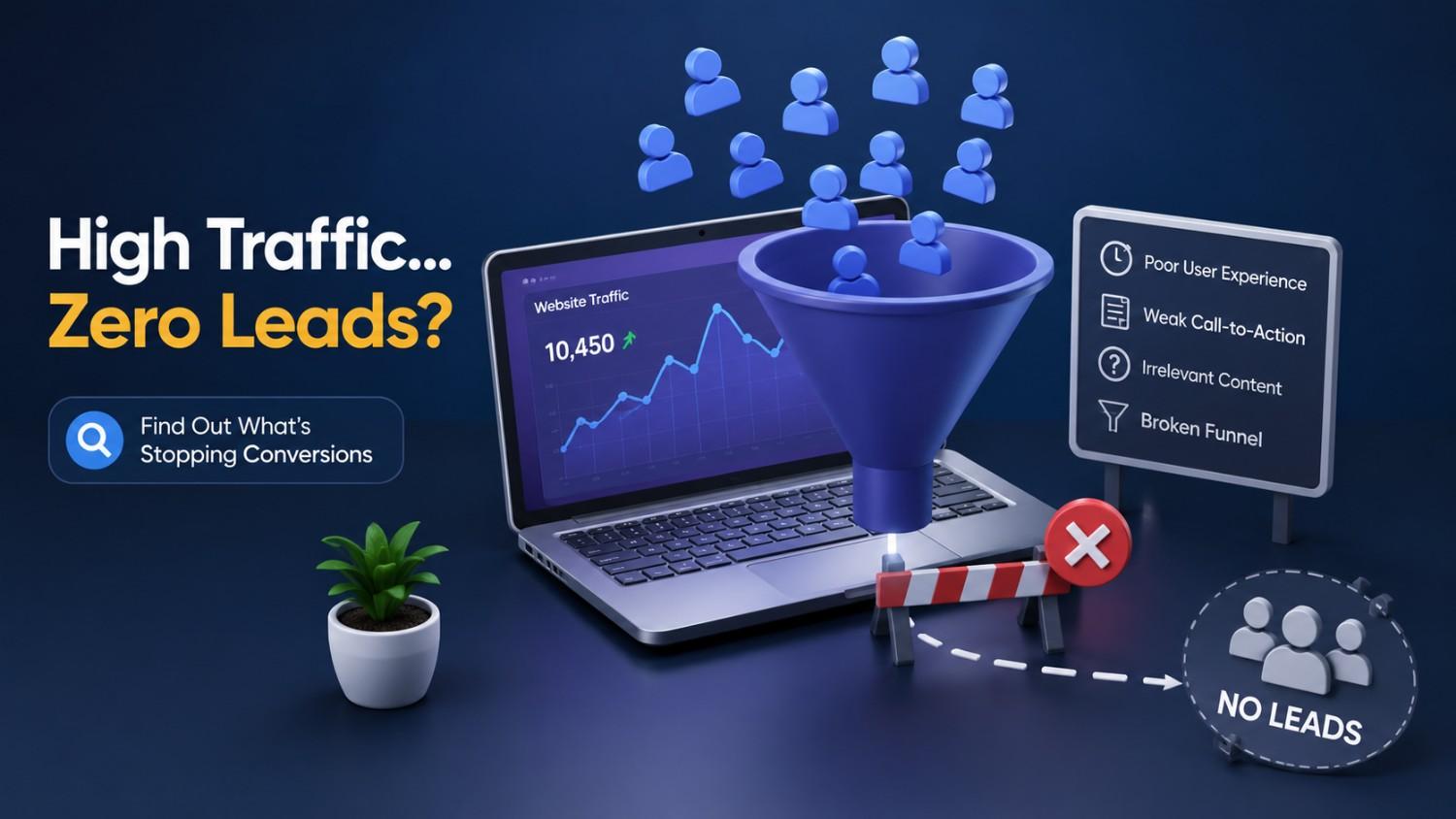
You open Google Analytics and the numbers look fine. Decent sessions, reasonable time on page, traffic ticking upward. But the contact form isn’t getting filled out. The phone isn’t ringing. And nobody seems to be clicking that “Get a Quote” button you spent three weeks debating. The instinct is almost always the same: get more traffic, run more ads, post more on social, invest more in SEO and get more people to the site.

But here’s what the data consistently shows: traffic without leads is almost never a traffic problem. It’s a conversion problem. And throwing more visitors at a website that isn’t converting is one of the most expensive mistakes a business can make in 2026. Let’s go through the real reasons this happens and what to actually do about each one.

Quick Summary:  Getting traffic but no leads is one of the most frustrating problems a business can have and one of the most common. The average website converts just 2.9% of its visitors into leads. Most small business websites convert well below that. But here’s what most businesses get wrong: they try to fix a conversion problem by buying more traffic. More visitors sent to a broken funnel just means more money wasted. This blog breaks down the real reasons your website isn’t converting in 2026, from unclear messaging and slow load times to wrong traffic sources, outdated SEO approaches, and the new AI-driven search landscape that’s quietly changing where your leads come from before they ever reach your website.

Not sure why your website isn’t converting?

Reason 1: Your Traffic Is the Wrong Kind

Not all website traffic is created equal. A visitor who landed on your page because they searched “what is digital marketing” and a visitor who searched “digital marketing agency for my e-commerce business in Manchester” are not the same person. One is browsing. The other is buying.

High-intent traffic converts at 4.6 times the rate of cold traffic. So before assuming your website is broken, check what keywords are actually sending people to your pages. If the majority of your organic traffic is coming from informational queries “how to,” “what is,” “best way to” you’re attracting readers, not buyers.

This is directly connected to how search behaviour has shifted in the zero-click search era. A significant portion of informational queries now get answered directly on Google’s results page through AI Overviews and featured snippets, meaning the visitors who do click through to your website from those queries are often still in early research mode, not ready to make contact. The traffic looks real in your analytics. The intent isn’t there yet.

The fix: audit your top-traffic pages and check what keywords are driving those visits. If your highest-traffic pages are informational content, your SEO strategy may need to be rebalanced toward more commercial and transactional-intent keywords, the ones people search when they’re actually ready to hire someone.

Reason 2: Your Homepage Doesn’t Answer the Three Questions Fast Enough

Visitors form a trust judgement about a website within 50 milliseconds of landing on it. That’s not a metaphor; it’s the actual timeframe within which a first impression is made. And in most cases, the homepage fails that test before anyone reads a single word.

The three questions every first-time visitor needs answered immediately are: What does this business do? Who is it for? What should I do next? If your homepage leads with a vague tagline, a paragraph about how long you’ve been in business, or a rotating hero image with abstract language, you’ve already lost most of the people who landed there.

A  Marketing Experiments study found that improving message clarity alone produced a 200% lift in conversion rate. That’s not from redesigning the entire website. That’s from making the value proposition clear enough that visitors understand it in the first few seconds.

The fix: show your homepage to someone who has never seen it. Give them five seconds. Ask them what your business does, who it helps, and what they should do next. If they can’t answer all three confidently, you have a clarity problem that no amount of additional traffic will solve.

Reason 3: Your CTAs Are Either Missing, Buried, or Confusing

A call to action is the specific step you want a visitor to take: book a call, request a quote, get in touch, download the guide. Without one that’s visually prominent and placed above the fold, most visitors read the page and leave without taking any action. Not because they weren’t interested, but because nothing clearly told them what to do next.

The other common mistake is having too many competing CTAs. Research on conversion rate optimisation consistently shows that a single, clear primary call to action outperforms multiple options with equal visual weight. When you give someone four different things to click, all presented with the same emphasis, the most common outcome is that they click none of them.

CTA copy matters too. “Submit” converts less than “Get My Free Audit.” “Contact Us” converts less than “Talk to a Specialist Today.” The specificity of what happens after the click is what removes hesitation and triggers action.

The fix: every key page on your website should have one primary CTA, positioned prominently, with copy that tells the visitor exactly what they’ll get, not just what they’re doing.

Reason 4: Your Website Is Too Slow on Mobile

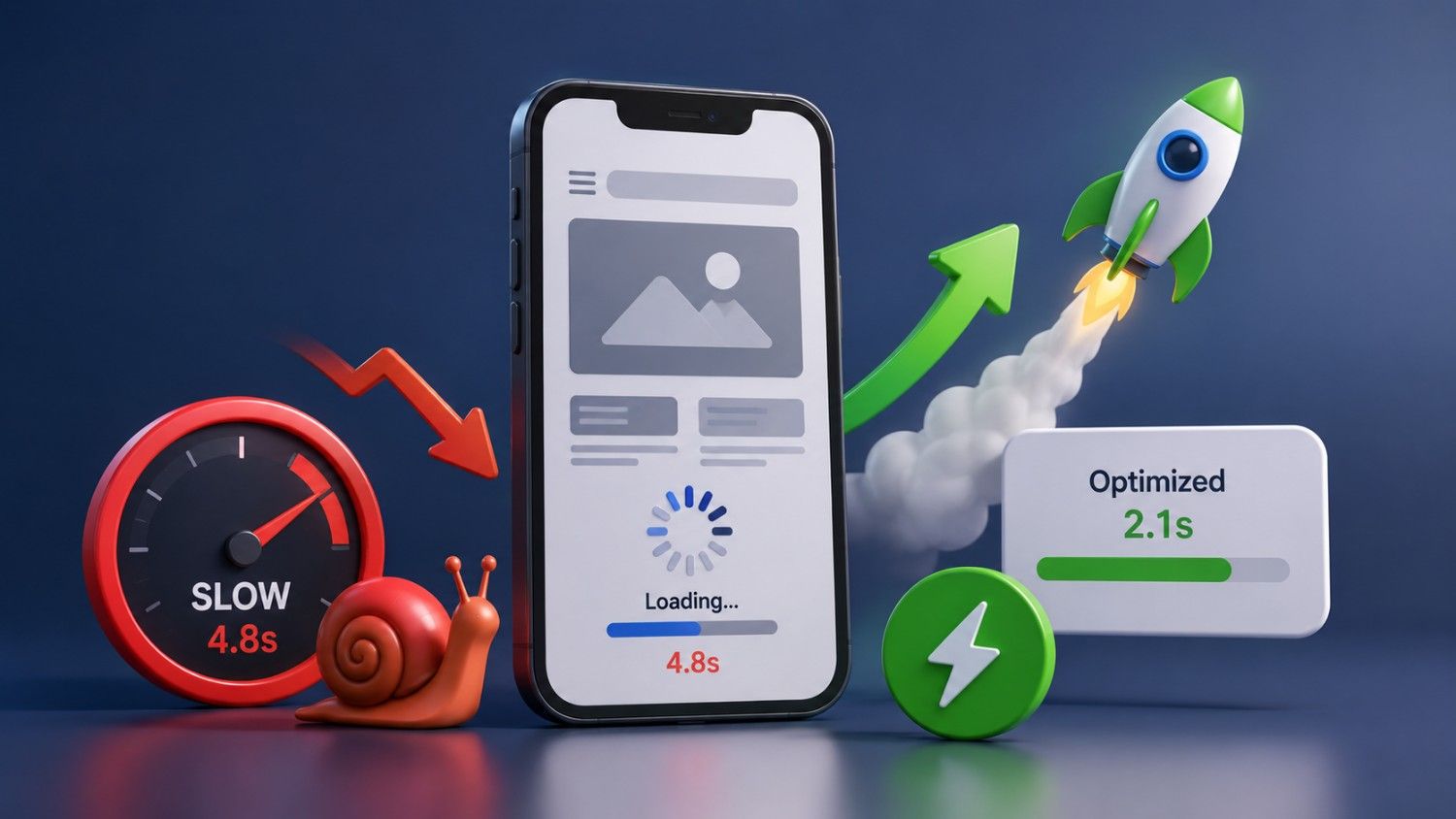
A one-second delay in page load time reduces conversions by 7.2%. Pages loading under 2.5 seconds convert 31% higher than slower pages. And in 2026, mobile accounts for over 60% of all web traffic globally, but mobile users convert at roughly half the rate of desktop users, partly because mobile pages are consistently slower and harder to navigate.
If your website takes four or five seconds to load on a 4G connection, you’re losing a large percentage of visitors before they’ve even seen your headline. They don’t bounce because your offer is wrong. They bounce because the page didn’t load fast enough to hold their attention.

Run your website through Google PageSpeed Insights right now. If your mobile score is below 70, that’s not a minor technical issue; it’s a conversion leak that’s actively costing you leads every single day.

The fix: Optimise your core web vitals: optimize images, reduce render-blocking scripts, use a content delivery network, and target a Largest Contentful Paint (LCP) under 2.5 seconds on mobile. These aren’t glamorous fixes, but they have a direct and measurable impact on conversion rates.

Reason 5: Your Forms Are Asking for Too Much Too Soon

Reducing form fields to five or fewer doubles conversion rates, yet most contact forms ask for name, email, phone, company, role, company size, specific interest, and a message before the visitor has any reason to trust you. Form abandonment after starting sits at 81%. Most people who begin filling out a long form don’t finish it.

The logic behind long forms that they produce more qualified leads isn’t supported by data. Shorter forms produce more leads at higher volume. Qualification happens in the follow-up conversation, not in the form itself.

The fix: reduce your contact and enquiry forms to a maximum of four or five fields. Name, email, phone number, and one open-ended “what are you looking for?” field is usually enough to start a conversation and qualify properly from there.

Reason 6: You Have Traffic But No Trust Signals

Getting someone to your website is only half the job. Getting them to take action requires trust, and trust is built through very specific on-page signals that most websites either underinvest in or place in the wrong locations.

Trust signals such as testimonials and case studies can increase conversion rates by 15 to 34% when placed near calls to action. Yet the most common pattern is for testimonials to live on a separate “Reviews” page that most visitors never navigate to. A testimonial three clicks away from your contact form does almost nothing. A specific, named client quote placed directly next to your “Book a Call” button does a great deal.

Other trust signals that matter: specific results (not vague claims), recognisable client logos, certifications, clear links to privacy policies near forms, and a real team photo rather than stock photography. Each of these reduces the psychological risk a visitor feels before reaching out to a business they’ve never heard of before.

The fix: audit where your trust signals currently live and move the most compelling ones to sit alongside your primary CTAs on your highest-traffic pages.

Reason 7: Your SEO Is Driving the Wrong Intent

This one is closely related to Reason 1 but goes deeper. In 2026, the relationship between search visibility and lead generation has become more complex as AI SEO and LLM SEO reshape which queries actually drive visitors to websites.

Answer Engine Optimisation (AEO) and Generative Engine Optimisation (GEO) are now driving a different kind of visitor: one who has already read an AI-generated summary and is coming to your website for depth, credibility, or to take action. AI search visitors convert 23 times better than traditional organic traffic. They arrive with context and intent already formed. A website that doesn’t match the expectation set by the AI answer they just read will lose them immediately.

Meanwhile, websites still optimised purely for volume-based traditional SEO often attract high bounce rates from informational queries that AI is now answering on the SERP itself. The traffic number looks healthy. The conversion rate suffers.

The fix: align your SEO strategy with where your audience is in the buying journey. High-intent service pages and landing pages should be optimised for commercial and transactional queries. Informational content should be structured to earn AI search citations and build brand authority, not to drive direct form submissions.

Reason 8: You’re Not Following Up Fast Enough

This one has nothing to do with your website itself, but it kills conversions just as effectively as any of the technical issues above. B2B sites that respond to enquiries within five minutes are eight times more likely to convert leads than those that respond within an hour. Yet the average response time for most small and medium businesses is measured in hours or days.

Someone who fills out your contact form at 11 am on a Tuesday and receives a response at 4 pm the following afternoon has almost certainly contacted two or three other businesses in that window. The form submission wasn’t a commitment; it was the beginning of a shortlisting process. Slow responses hand that process to your competitors.

The fix: set up automated acknowledgement emails as soon as a form is submitted, so the lead knows they’ve been heard. Then ensure a human follow-up happens within the hour during business hours. A CRM connected to your contact form makes this manageable even for small teams.

Reason 9: Paid Traffic Is Going to the Wrong Page

If you’re running Google Ads, Meta Ads, or any other paid campaign and sending that traffic to your homepage, you’re almost certainly leaving significant conversion potential on the table. A homepage is designed for multiple audiences with multiple possible next steps. A paid ad targets a specific audience with a specific message, and the page they land on should match that message exactly.

The average landing page conversion rate is 10.76%, but performance varies significantly by industry and depends entirely on the match between ad message and landing page content. When that match is tight, the ad says “iOS app development for healthcare companies,” and the landing page speaks directly to that, conversion rates climb sharply. When an ad sends someone to a generic homepage, the visitor has to do extra work to find relevance. Most won’t.

This applies equally to ChatGPT advertising and AI search advertising as these channels grow. Traffic arriving from AI platforms already carries context and intent, and landing pages that don’t immediately match that context will see the same drop-off as mismatched paid campaigns.

The fix: every paid campaign should have a dedicated landing page built around the specific message, audience, and offer in the ad. Test one clear CTA, minimal navigation, and messaging that speaks directly to the exact problem the ad addressed.

Reason 10: You’re Measuring Traffic Instead of Behaviour

The final reason many businesses don’t realise their website isn’t converting is that they’re looking at the wrong metrics. Session counts, page views, and monthly users are all visible and easy to report. Scroll depth, click maps, form abandonment rates, and session recordings are harder to set up but reveal far more about why visitors aren’t converting.

Only 17% of marketers currently use A/B testing to improve their landing pages. Top-performing pages that achieve conversion rates above 10% almost universally share one characteristic: they have been systematically tested and improved over time. Without testing, conversion decisions are based on assumption rather than evidence.

Tools like Microsoft Clarity, Hotjar, or Google Analytics 4’s event tracking can show you exactly where visitors stop scrolling, which CTAs they hover over but don’t click, and which field in your form people give up on. That data is worth more than any amount of additional spend on traffic.

The fix: set up behaviour tracking on your highest-traffic pages this week. Even two weeks of scroll-and-click data will reveal conversion problems you’d never find by looking at session counts alone.

The Bigger Picture: Traffic Quality Is Changing in 2026

All of the above conversion issues have existed for years. But there’s a layer specific to 2026 that’s worth understanding before you invest more in driving traffic.

The nature of website visitors is shifting. In the AI search era, the visitors who do arrive at your website are increasingly doing so with higher intent and more prior context; they’ve often already read an AI-generated summary about your service area, seen your brand cited in a GEO or AEO result, or followed a recommendation from ChatGPT or Perplexity. These visitors convert at dramatically higher rates than cold organic traffic, but they also have higher expectations: they expect your website to immediately validate the picture the AI painted of you.

At the same time, the sheer volume of low-intent informational traffic that used to bulk up analytics dashboards is being absorbed by Google AI Overviews and AI Mode. For many businesses, this means total sessions are falling while lead quality is actually improving a trend that looks like a problem in the numbers but is actually a healthier signal.

Understanding this distinction is critical before making decisions about where to invest. Buying more paid traffic to compensate for falling organic sessions, without first fixing conversion issues, is the most common and most expensive mistake businesses make when they first see their traffic numbers shift.

Why Deftsoft Approaches This Differently

Most agencies focus on getting more traffic to your website. At Deftsoft, we focus on making the traffic you already have work harder because in almost every case, conversion rate optimisation delivers a better return than traffic acquisition alone.

A website converting at 2% that doubles its conversion rate to 4% delivers the same lead volume as doubling its traffic at a fraction of the cost. That’s the lever most businesses aren’t pulling, and it’s where we tend to find the fastest wins for clients whose traffic looks fine but whose leads don’t reflect it.

We combine conversion rate optimisation with AI SEO services, GEO, and AEO to ensure that the visitors arriving at your website are the right ones and that your website is set up to convert them when they get there. If you’d like to understand exactly where your current website is losing leads, we can audit it and show you the most impactful fixes. Explore our conversion and SEO services to see how we approach it.

Ready to turn your existing traffic into actual leads?

Frequently Asked Questions

1. Why is my website getting traffic but no leads or enquiries?

In most cases, traffic without leads is a conversion problem, not a traffic problem. The most common causes are unclear messaging on key pages, missing or weak calls to action, slow mobile load times, wrong-intent traffic from informational keywords, long contact forms, and insufficient trust signals near the conversion point.

2. What is a good website conversion rate in 2026?

The average conversion rate across industries sits around 2.9% to 3.1%. For service-based businesses and B2B lead generation, a healthy rate is typically between 3% and 5%. Top-performing landing pages can reach 10% or higher. If your rate is below 1%, there are likely multiple fixable issues affecting your conversion experience.

3. Does more traffic fix a low conversion rate?

No. More traffic sent to a website with conversion problems just means more wasted budget. The most cost-effective approach is to optimise conversion first, fixing messaging, CTAs, page speed, form length, and trust signals, then scale traffic once the conversion foundation is solid.

4. How does AI search affect website leads in 2026?

AI search is changing the quality and intent of website visitors. Traffic from AI platforms like ChatGPT and Perplexity converts 23 times better than traditional organic traffic, because those visitors have already formed context and intent before arriving. However, total traffic volumes may fall as AI Overviews absorb informational queries that previously sent visitors to websites.

5. How many form fields should a contact form have?

Research consistently shows that reducing form fields to five or fewer doubles conversion rates. Four fields name, email, phone, and a brief message are usually sufficient to start a qualified conversation. Additional qualification should happen during the follow-up call, not the form.

6. How quickly should I respond to website leads?

Within five minutes during business hours. B2B businesses that respond within 5 minutes are 8 times more likely to convert a lead than those that respond within an hour. Automated acknowledgement emails sent immediately after submission, followed by a human response within the hour, is the standard that consistently outperforms slower follow-up.

7. What is conversion rate optimisation (CRO) and how does it help?

CRO is the practice of improving your website so that a higher percentage of existing visitors take a desired action, fill out a form, make a call or book an appointment. It involves testing and improving headlines, CTAs, page layout, load speed, form length, and trust signals based on real visitor behaviour data rather than assumptions. A website converting at 4% instead of 2% generates twice the leads from the same traffic volume.

What Is Zero-Click Search and How Do You Win It in 2026?

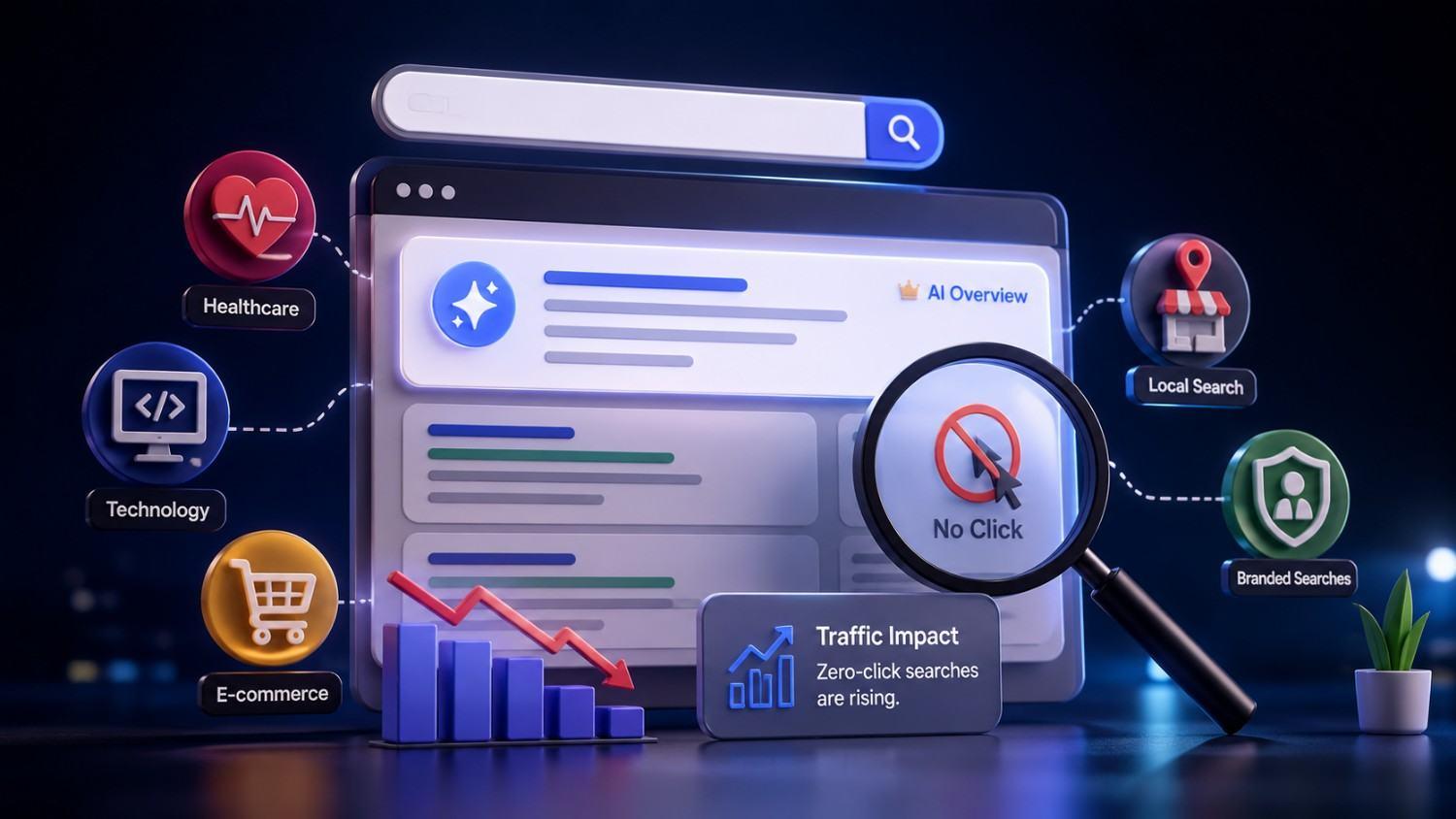
Here is a number worth sitting with for a moment. For every 1,000 searches typed into Google in the US right now, only 360 result in someone clicking through to a website. The other 640 people get their answer directly on the search results page and move on. No visit. No impression. No chance to convert.

Ten years ago, roughly 45% of Google searches ended this way. Today, this number is 68%. That’s the fastest acceleration of this trend in a decade, and most businesses haven’t yet adjusted their strategies to account for it.

This isn’t a glitch or a temporary experiment. It’s the direction Google has been deliberately moving in for years, and AI SEO has turned what used to be a slow drift into a rapid structural change. Understanding what’s driving it and what still works is one of the most important things a marketing team can do right now.

Quick Summary

In the first four months of 2026, 68% of all Google searches ended without a single click to any website. When a Google AI Overview is present, that number jumps to 83%. And in Google’s newer AI Mode, it reaches 93%. For businesses that depend on organic search traffic, these numbers represent one of the most significant shifts in digital marketing history. This blog explains what zero-click search is, why it’s happening so fast, which industries are most affected, and most importantly, what businesses can actually do to stay visible and keep generating leads even when most searchers never leave Google.

Worried your organic traffic is dropping without knowing why?

Quick Navigation

What Is Zero-Click Search?

Why This Is Happening Faster Than Anyone Predicted

Which Industries Are Being Hit Hardest

What Zero-Click Search Actually Means for Your Business Strategy

What Actually Works in the Zero-Click Era

The Metrics You Should Be Tracking in 2026

Why This Matters More for Some Businesses Than Others

How Deftsoft Approaches Visibility in the Zero-Click Era

Frequently Asked Questions

What Is Zero-Click Search?

A zero-click search is exactly what it sounds like: a Google search that ends without the user clicking on any external website link. The person types a question, gets an answer directly on the results page, and closes the browser or moves on.

This isn’t new. Google has been building features that answer questions directly in search results since it introduced Knowledge Panels in 2012 and Featured Snippets in 2014. Ask Google “how many centimetres in an inch?” and the answer appears instantly without any clicking required. Ask “what time is it in Tokyo?” and you get a live clock. These direct answers were always a form of zero-click search, just a relatively benign one.

What changed everything was the launch and rapid scaling of Google AI Overviews in 2024, followed by Google AI Mode in 2026. These aren’t simple answer boxes. They’re full, multi-paragraph, AI-generated summaries that synthesise information from multiple sources and deliver a comprehensive answer directly in the search interface. And they’re now present on nearly half of all Google searches globally.

When an AI Overview appears, 83% of searches end without a click. When someone is using Google AI Mode, the newer interface that replaces traditional results entirely with an AI conversation, that number reaches 93%. Only 1% of people who see an AI Overview ever click one of the sources it cites.

That last statistic is worth repeating. One percent.

Why This Is Happening Faster Than Anyone Predicted

Gartner forecast in 2024 that traditional search volume would drop 25% by 2026. The data suggests that forecast is coming true; in some sectors, it’s actually worse. Some industries have seen organic traffic fall between 40% and 70% in a single year.

Three forces are driving this acceleration simultaneously.

  1. Google is deliberately keeping users on its platform.  AI Overviews don’t just answer questions. They encourage follow-up searches within Google, which means more ad exposure, more data collection, and more time spent inside Google’s ecosystem. This is good for Google’s business model and bad for everyone else’s website traffic. Between 2024 and 2026, the share of searches that led to another Google search rose 7.2 percentage points, meaning Google is successfully redirecting searchers into more searches rather than letting them leave.
  2. AI search engines are growing fast. It’s not just Google.  ChatGPT, Perplexity, and Gemini are now collectively handling billions of searches a month that would previously have gone to traditional search engines. When someone asks ChatGPT “what’s the best CRM for a small business?” they get a direct answer. No search results, no links, no clicks. AI assistants are absorbing a significant and growing share of what used to be traditional search traffic.
  3. User behaviour has shifted.  Particularly on mobile, where 77% of searches now end without a click, people have adapted to getting answers directly from the results page. The expectation of immediate, frictionless answers is now baked into how people use search. That expectation isn’t going back.

Which Industries Are Being Hit Hardest

Zero-click search doesn’t affect every business equally. The impact depends heavily on the types of queries your audience is searching for.
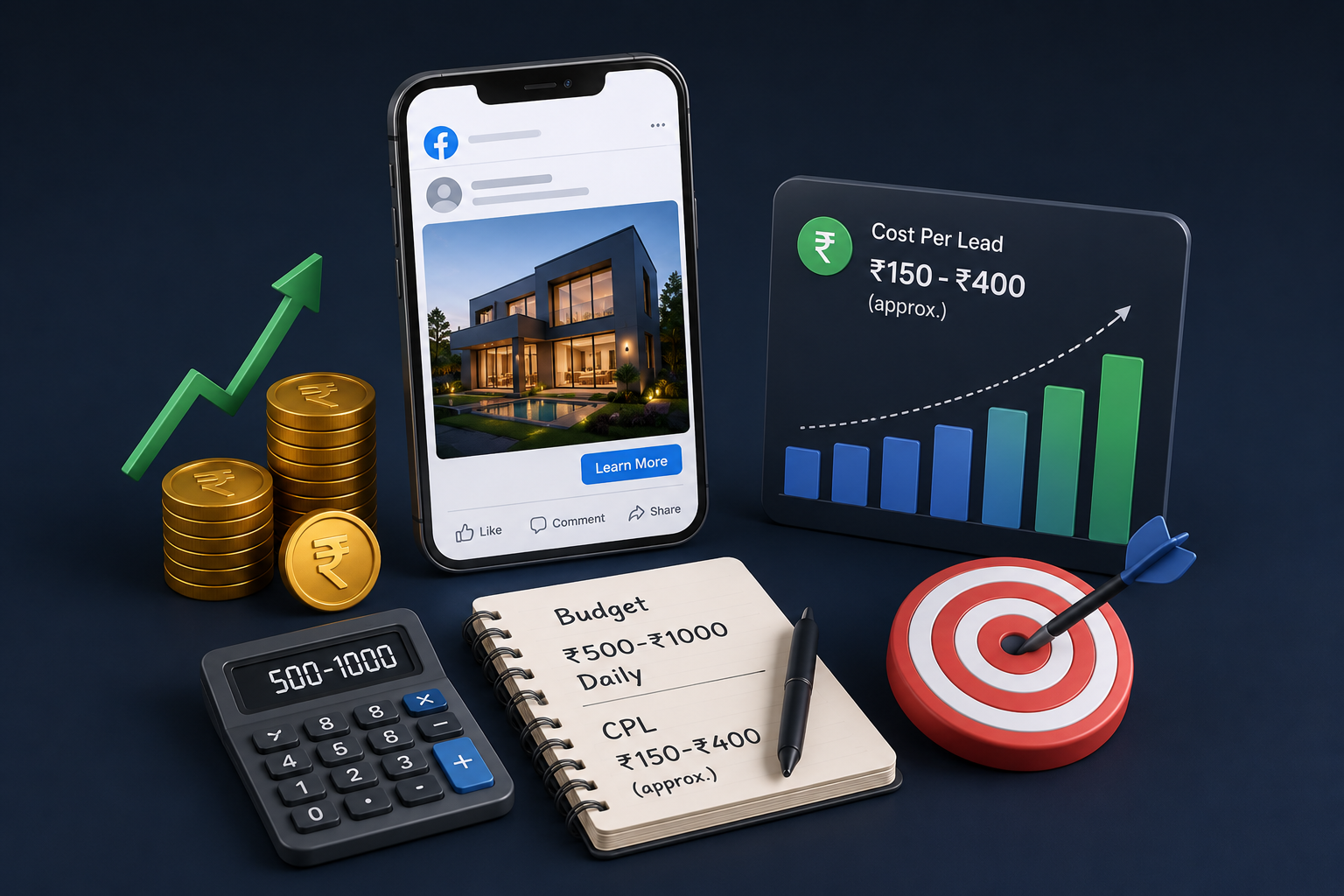
  • Informational queries are taking the hardest hit. Content like “what is X,” “how to do Y,” “best Z for beginners” is the category that AI Overviews are almost perfectly designed to answer. If your blog traffic comes primarily from informational how-to content, you are directly in the blast radius of this trend. Some sectors are seeing AI Overviews triggered on over 80% of their relevant queries. Healthcare sits at 88% while B2B technology queries trigger AI Overviews 82% of the time.
  • E-commerce and transactional searches are less affected for now. Google actually pulled back on AI Overviews for shopping queries early on because the AI responses weren’t converting into sales. Currently, only 3.2% of shopping queries trigger an AI Overview, compared to 43% for health queries. If your business model depends on transactional intent someone searching with clear buying intent your organic traffic is more protected than it was for pure content businesses.
  • Local searches have a mixed picture. For “near me” searches and local intent queries, Google Maps, Local Packs, and Business Profiles have effectively become mini-websites inside the search results. Up to 78% of local searches produce zero clicks to an external website. But the flip side is that a well-optimised Google Business Profile can capture that intent directly: the user calls, gets directions, or visits the location straight from the search results page, without your website being involved at all.
  • Branded searches are still relatively protected. When someone searches specifically for your brand name or your website, they usually click through. This is one of the few query categories where traditional organic SEO still behaves the way it used to.

Here is the shift in thinking that most businesses haven’t made yet: traffic and visibility are no longer the same thing. In the old model, if you ranked on page one of Google, you got traffic. If you got traffic, you had a chance to convert. The metrics all lined up neatly.

In 2026, you can be featured prominently in a Google AI Overview that millions of people read, yet receive almost no website traffic from it at all. That’s not a failure. That’s just how the new system works. The goal is no longer purely to earn the click. The goal is to be the trusted source that the AI cites, summarises, and recommends when it answers the question.

This distinction matters enormously for how you measure success and where you invest. A business that keeps obsessing over organic session counts while ignoring whether its brand appears in AI-generated answers is measuring the wrong thing.

What Actually Works in the Zero-Click Era

Adapting to zero-click search doesn’t mean abandoning SEO or starting from scratch. It means shifting the emphasis on what you’re optimising for and adding new disciplines to your existing strategy.

  • Optimise to be cited, not just to rank. AI Overviews and AI search engines pull heavily from content that already ranks well in traditional Google search. Getting into AI answers isn’t a completely separate task; it builds on the same authority signals. But the content needs to be structured differently. Clear direct answers to specific questions, structured data markup (schema), authoritative sourcing, and comprehensive topic coverage all increase the likelihood that AI systems select your content to answer a query.
  • Answer Engine Optimisation (AEO) is now a real discipline. AEO is the practice of structuring your content specifically to appear in AI-generated answers, featured snippets, People Also Ask boxes, and voice search results. It involves writing content that directly answers questions your audience is actually asking in clear, concise language that an AI system can confidently pull and summarise. If your content is vague, meandering, or structured purely around keywords rather than questions, AI systems will consistently skip it.
  • Generative Engine Optimisation (GEO) goes a step further. While AEO focuses on traditional Google features, GEO focuses specifically on appearing in responses from ChatGPT, Perplexity, Gemini, and Google AI Mode. The signals these AI systems use to decide what to cite include brand mention frequency across the web, how often your content is referenced by other authoritative sources, the clarity and directness of your writing, and the depth and breadth of your topical coverage. Building genuine authority across a topic, not just ranking for individual keywords, is what GEO rewards.
  • Transactional content is more valuable than ever. Since informational queries are increasingly answered before anyone reaches a website, content that targets genuine buying-intent comparisons, pricing pages, case studies, service pages, reviews, and specific problem-solution pieces is becoming disproportionately valuable. These are the queries where users still need to click to get what they want.
  • Your Google Business Profile is now a landing page. For local businesses, an optimised Business Profile means a searcher can read your reviews, see your hours, view your services, and call you directly from the search results page without ever visiting your website. In a zero-click world, that’s not a problem to solve; it’s a feature to optimise.
  • Brand search volume is the new organic traffic metric. One of the clearest signals emerging from 2026 data is that brands cited in AI Overviews see an increase in branded search volume, even when direct click-through rates fall. The reasoning makes sense: someone reads an AI-generated answer that mentions your brand, gets curious, and then searches your brand name directly. Brands cited in AI Overviews have been shown to earn nearly 16% paid click-through rates on the same queries, compared to 11% when uncited. Visibility inside AI answers is driving brand recall and downstream intent, even when no click happens in the moment.

The Metrics You Should Be Tracking in 2026

If your current reporting is built entirely around organic sessions and keyword rankings, you’re missing the most important signals of search visibility in the zero-click era. A few metrics worth adding: AI Overview impression share: how often your content appears cited inside AI-generated answers, trackable through Google Search Console and third-party tools like Otterly.ai or Peec AI.

Branded search volume: whether your brand name is being searched more frequently, which often indicates downstream intent driven by AI visibility. Share of voice in People Also Ask and featured snippets, both of which remain significant click drivers even in a zero-click environment.

Citation frequency in ChatGPT, Perplexity, and Gemini, which you can track using AI monitoring tools and regular manual spot-checks.

Why This Matters More for Some Businesses Than Others

If your business relies heavily on informational blog content for top-of-funnel traffic, zero-click search is already affecting your numbers and will continue to do so. The appropriate response isn’t panic; it’s a strategy shift toward content that earns citations, builds brand authority, and supports transactional intent rather than purely chasing informational query volume.

If your business is primarily local, e-commerce, or service-based with strong transactional intent, you’re somewhat more protected, but “somewhat” does a lot of work in that sentence. The trend is moving in one direction, and waiting until the impact is severe before adapting is a more expensive response than adapting now.

How Deftsoft Approaches Visibility in the Zero-Click Era

Most SEO strategies currently in use were designed for a search environment that no longer exists. The agencies that continue to build content calendars around high-volume informational keywords without considering AEO, GEO, or AI citation signals will see diminishing returns throughout 2026 and beyond.

At Deftsoft, we’ve rebuilt our search visibility framework around how search actually works in 2026, which means combining traditional SEO with structured content for AI citations, GEO signal building, Google Business Profile optimisation for local clients, and performance measurement that goes beyond session counts. Whether you’re seeing unexplained drops in organic traffic or simply want to ensure your visibility strategy is built for where search is headed, we can audit your current setup and show you exactly where the gaps are. Explore our AI SEO and search visibility services to see how we approach it.

Not sure how visible your brand is in AI search right now?

Frequently Asked Questions

1. What is zero-click search?

A zero-click search is a Google query that ends without the user clicking on any external website. The answer is delivered directly on the search results page through AI Overviews, featured snippets, knowledge panels, or other Google features. In 2026, this accounts for approximately 68% of all Google searches globally.

2. Why has zero-click search increased so much in 2026?

The rapid scaling of Google AI Overviews, now present on nearly half of all Google searches, is the main driver. Google AI Mode, which replaces traditional results with a full AI conversation interface, has further accelerated the trend. Google’s broader strategy of keeping users on its own platform rather than sending them to external websites is the underlying force behind both.

3. Which industries are most affected by zero-click search?

Healthcare (AI Overviews on 88% of queries), B2B technology (82%), and sectors that rely heavily on informational “what is” or “how to” content are the most affected. E-commerce and transactional queries are currently less affected, with only 3.2% of shopping queries triggering AI Overviews.

4. Does zero-click search mean SEO is dead?

No. But it means the goal of SEO has shifted. Ranking well in traditional search remains important; AI Overviews still pull heavily from content that ranks in the top results. The difference is that ranking now needs to be paired with AEO and GEO strategies that optimise for being cited inside AI-generated answers, not just earning a click.

5. What is Answer Engine Optimisation (AEO)?

AEO is the practice of structuring content specifically to appear in AI-generated answers, featured snippets, People Also Ask boxes, and voice search results. It involves writing clear, direct answers to questions your audience is actually asking, using structured data markup, and organising content so AI systems can easily extract and summarise it.

6. What is Generative Engine Optimisation (GEO)?

GEO goes beyond traditional Google features to optimise specifically for appearing in responses from ChatGPT, Perplexity, Google AI Mode, and Gemini. It focuses on brand authority signals, citation frequency across the web, topical depth and breadth, and the directness and clarity of content that AI systems use when deciding which sources to reference.

7. What should businesses do right now to adapt to zero-click search?

Focus on transactional and commercial-intent content rather than pure informational volume. Implement structured data markup so AI systems can read your content clearly. Build brand presence across Reddit, YouTube, LinkedIn, and other platforms that AI tools reference. Optimise your Google Business Profile. Start tracking AI Overview impressions and branded search volume alongside traditional organic metrics. And audit whether your content is structured to answer questions directly, not just rank for keywords.

How to Run Facebook and Instagram Ads for Real Estate in 2026: Setup, Budget, and Creative Breakdown

If you sell, rent, or develop real estate, you already know the buyer journey no longer starts with a phone call. It starts with a scroll. Someone is lying on their couch, swiping through Instagram Reels, and suddenly your 3BHK listing pops up with a quick walkthrough video. That’s the moment real estate deals begin in 2026.

Facebook ads and Instagram ads (run together through Meta Ads Manager) are still one of the most reliable ways for real estate agents, brokers, and developers to get in front of buyers and renters who are actually ready to act. But the platform itself has changed a lot. The old approach of picking 15 interests, setting a budget, and hoping for the best simply doesn’t work the way it used to. Meta’s algorithm is smarter, more automated, and a lot less forgiving of lazy setups.

This guide breaks down exactly how to set up Facebook and Instagram ads for real estate in 2026, what budget actually makes sense, and what kind of creative gets clicks instead of getting scrolled past.

Quick Summary:

Facebook and Instagram ads remain among the best lead-generation channels for real estate in 2026, but the old playbook of manual targeting no longer works. Meta’s Advantage+ AI now handles most targeting decisions, which means your account setup, Special Ad Category compliance, budget structure, and creative quality matter more than ever. This guide walks through how to set up a real estate Ads campaign correctly, how much to budget, what creative formats convert best (hint: vertical video), and the common mistakes that quietly drain ad spend. By the end, you’ll have a clear, practical framework to start generating qualified buyer and renter leads.

Not sure if your Meta Ads budget is being spent the right way?

Quick Navigation

Why Meta Ads Still Matter for Real Estate in 2026

Step 1: Get Your Account Set Up the Right Way

Step 2: Build Your Targeting Around What Meta Can Still Do Well

Step 3: Setting a Budget That Actually Makes Sense

Step 4: Creative Is Doing More of the Work Than Ever

Step 5: Instant Forms and Faster Lead Capture

Step 6: Don’t Treat Meta Ads as a Standalone Channel

Common Mistakes to Avoid

Final Thoughts

Frequently Asked Questions

Why Meta Ads Still Matter for Real Estate in 2026

There’s a lot of noise right now about ChatGPT ads, AI search, and other emerging channels. Those are worth keeping an eye on, but they’re not replacing Meta anytime soon. People still spend close to an hour a day combined on Facebook and Instagram, and that kind of daily attention is hard to beat for real estate, where buyers need multiple touchpoints before they trust an agent enough to book a site visit.

What’s changed is how Meta delivers results. The platform has shifted almost entirely toward AI-driven automation, known as Advantage+. Instead of advertisers micromanaging every targeting option, Meta’s AI now studies signals like browsing behaviour, pixel data, and engagement patterns to find the right audience on its own. For real estate specifically, this means the agencies that are still using narrow, manually built audiences from two or three years ago are usually the ones complaining about rising cost per lead. The ones adapting to the new system are seeing the opposite.

If you’re trying to decide where Meta Ads fit into your bigger online strategy, it helps to look at this alongside other channels.

Step 1: Get Your Account Set Up the Right Way

Before you even think about budgets or creative, your account needs to be built correctly. A surprising number of real estate ad accounts fail not because of bad creative, but because of basic setup mistakes.

  • Use a Business Manager account, not a personal profile boost. Boosting posts from a personal page might feel quicker, but it limits your targeting, reporting, and scalability. Set up a proper Meta Business Suite account connected to your Facebook Page and Instagram profile.
  • Install the Meta Pixel and Conversions API on your website. This is non-negotiable in 2026. With third-party cookies gone and privacy rules tighter than ever, Meta relies heavily on first-party data sent directly from your website to understand who’s actually converting. If you skip this step, you’re essentially flying blind, and Meta’s AI has nothing useful to learn from.
  • Select the right campaign objective. For real estate, “Leads” is usually the best objective if you want people to fill out a form for more details, schedule a visit, or download a brochure. “Traffic” works if you’re sending people to a property listing page on your website. Avoid “Awareness” unless you’re specifically running a brand campaign for a new project launch.
  • Declare the Special Ad Category. This is one of the most important and most overlooked steps. Any housing-related ad in the US falls under Meta’s Special Ad Category for Housing, which exists because of fair housing laws. If you don’t select this category and Meta’s system detects real estate imagery in your ad (floor plans, “for sale” signs, building exteriors), it can automatically restrict the campaign or flag your account. Selecting the category upfront removes guesswork and keeps you compliant.

Under Special Ad Category restrictions, you lose access to detailed targeting by age, gender, ZIP code, and certain interests, as well as lookalike audiences. Don’t panic. Meta replaces these with Special Ad Audiences, a compliant version of lookalike targeting that builds a similar audience without using protected characteristics. Combine that with location-based targeting (a minimum 15-mile radius applies to housing ads), and you still get strong reach without breaking any rules.

Step 2: Build Your Targeting Around What Meta Can Still Do Well

Since detailed demographic targeting is limited for housing ads, your job shifts from “who should I target” to “what should my creative say to attract the right people on its own.” This sounds strange at first, but it’s actually how Meta’s AI is designed to work now.

A solid structure for real estate looks like this:

  • Geo-targeted campaigns centered on the neighbourhoods or cities where your listings are. Keep the radius realistic. A 15- to 25-mile radius around a project location usually performs better than targeting an entire metro area.
  • Advantage+ Audience is turned on so Meta can expand reach beyond your set parameters when it spots high-intent users, such as people who recently searched for mortgage calculators or browsed competing listings.
  • Retargeting layer for people who’ve visited your website, watched a video, or engaged with a previous ad but haven’t yet filled out a form. This group converts at a much lower cost than cold audiences, so don’t skip it.
  • Engagement layer aimed at people who follow your page or have interacted with your content before, useful for nurturing leads who aren’t ready to buy yet but might be in three to six months.

A workable budget split many agencies use is roughly 70% toward cold prospecting (Advantage+ or Special Ad Audience within your geo zone), 20% toward retargeting website visitors, and 10% toward warming up engaged audiences. Adjust based on the size of your existing audience pool.

Step 3: Setting a Budget That Actually Makes Sense

There’s no single “correct” daily budget for real estate ads, but here’s a realistic way to think about it.

For a single property listing in a competitive city, expect the cost per lead to land somewhere between ₹150 and ₹400 (roughly $5 to $15 in US markets), depending on property type, price point, and competition. Luxury or commercial real estate tends to cost more per lead simply because the audience is smaller and more competitive.

If you’re just starting out, don’t spread a tiny budget across five different campaigns. Meta’s algorithm needs sufficient data (typically a baseline of conversions per week) to optimise properly. A focused ₹500-₹1000 daily budget for one well-structured campaign will almost always outperform ₹100 a day spread across five scattered campaigns.

Run campaigns for at least 4 to 7 days before judging performance. Meta’s system goes through a “learning phase” early on, and pausing or editing campaigns too often resets that learning, which quietly wastes your budget. This is a mistake we see constantly when auditing real estate ad accounts, and it’s one of the easiest things to fix once you know what to look for.

If your current cost per lead has crept up compared to last year, it’s often not your budget that’s the problem; it’s your campaign structure. That’s where you need some effective digital marketing strategies that can help your real estate projects sell faster. What’s better than effective managed paid ads, as they work best when combined with the rest of your online presence?

Step 4: Creative Is Doing More of the Work Than Ever

Here’s the part that’s changed the most. Because targeting is now largely automated, your creative is what tells Meta’s AI (and the actual humans scrolling) who this ad is for. A photo of a luxury penthouse with copy about “spacious family homes near top schools” sends mixed signals to both the algorithm and the viewer. Be specific and consistent.

A few things that matter a lot right now:

  • Vertical video is the default, not an option. Over 90% of Meta’s ad inventory is now vertical (9:16), thanks to the merger of Stories and Reels into a single placement system. If you’re still uploading square or landscape photos and letting Meta auto-crop them, you’re likely cutting off important parts of your image, like the price tag, headline, or the property itself. Shoot or edit specifically for 9:16 from the start.
  • Short property tour videos outperform static photos by a wide margin. Video content generates dramatically higher engagement in real estate ads compared to photo carousels alone. The sweet spot for a listing tour video is 60 to 90 seconds, walking through the property in a logical order (entrance, living area, kitchen, bedrooms, view or balcony, then a closing shot with price and contact info).
  • Carousel ads still work well for showcasing multiple units or floor plans. If you’re advertising a project with multiple configurations (2BHK, 3BHK, penthouse), a carousel lets potential buyers compare options without leaving the ad.
  • Disclose AI-generated content. If you’re using AI tools to generate any part of your visual creative (not just colour correction or cropping, but actual AI-generated scenes, renders, or people), Meta now requires disclosure. Skipping this is becoming one of the more common reasons ads get rejected, so it’s worth checking your creative workflow if you’ve started using AI image tools for staging or virtual renovations.
  • Match your copy to the audience you want, not the audience you can target. Since you can’t manually target by income or family status for housing ads, your words have to do that filtering. “Perfect for first-time buyers under ₹50 lakh” pulls in a very different crowd than “Premium 4BHK villas with private pools.” Write the headline as if you’re speaking directly to the person you want to click.

Step 5: Instant Forms and Faster Lead Capture

Instant Forms (lead ads that open directly in Facebook or Instagram without sending people to a separate website) continue to be among the highest-converting formats for real estate, mainly because they remove friction. The user doesn’t have to leave the app, wait for a page to load, or fill out a long form.

Meta has also started rolling out AI-assisted form building, where you can point the tool at your property listing page and it will automatically generate a usable Instant Form. This saves a meaningful amount of setup time if you’re running multiple listing campaigns at once.

A couple of practical tips for Instant Forms in real estate: keep the form to 4 or 5 fields maximum (name, phone, email, and maybe budget range or preferred location), and always follow up within minutes, not hours. Leads from Instant Forms cool off fast, and the agencies seeing the best return are the ones with a CRM connected directly to their ad account so leads get a call or WhatsApp message almost immediately.

Step 6: Don’t Treat Meta Ads as a Standalone Channel

This is probably the biggest shift in how real estate marketing works in 2026. Buyers no longer move through one neat funnel. Someone might see your Instagram ad, search your agency name on Google a week later, read a blog post you wrote about the neighbourhood, and only then fill out a form. If your Meta Ads aren’t backed by a solid website, decent SEO, and consistent content, you’re leaving a lot of that interest on the table.

This is why most successful real estate marketing right now runs Meta Ads alongside SEO and content, not instead of it.

Common Mistakes to Avoid

A few patterns show up again and again in underperforming real estate ad accounts:
  • Forgetting to select the Special Ad Category for housing, which risks ad disapproval or account restrictions.
  • Editing or pausing campaigns too frequently, which resets Meta’s learning phase and quietly inflates costs.
  • Using landscape or square images in a feed that’s now almost entirely vertical.
  • Sending paid traffic to a slow, outdated, or non-mobile-friendly website, which kills conversion rates no matter how good the ad is.
  • Running ads without a pixel or Conversions API set up, leaving Meta’s AI with no real data to optimise against.
  • Treating every property the same in messaging, instead of writing creative that speaks to the specific buyer for that specific listing.

Final Thoughts

Running Facebook and Instagram ads for real estate in 2026 isn’t about outsmarting the algorithm with clever targeting tricks anymore. It’s about feeding Meta’s AI high-quality, clean data and a compliant setup, then letting it do what it’s genuinely gotten quite good at: finding the right person at the right time. Pair that with a website and content strategy that supports the same buyers once they leave the ad, and you’ve got a system that keeps generating leads long after the campaign goes live.

If setting all of this up feels like a lot to manage alongside actually selling properties, that’s exactly the kind of work our team handles every day. Deftsoft works with real estate agents, brokers, and developers to build and manage Meta Ads campaigns, websites, and AI SEO strategies that work together instead of competing for the same budget. Reach out to us if you’d like a free audit of your current ad account and a clear idea of where you’re leaving leads on the table.

Ready to turn your ad spend into actual site visits and closings?

Frequently Asked Questions

1. How much should I spend on Facebook and Instagram ads for real estate in 2026?

There’s no fixed number, but a focused daily budget of ₹500 to ₹1000 (roughly $10 to $20) on a single, well-structured campaign usually outperforms a small budget spread across multiple campaigns. Meta’s algorithm needs enough weekly conversions to optimise properly, so concentrating your spend tends to work better than spreading it thin.

2. Do real estate ads need special approval on Meta?

Yes. Housing-related ads must be run under Meta’s Special Ad Category for Housing, a requirement tied to fair housing laws. This restricts certain targeting options, such as age, gender, ZIP code, and lookalike audiences, but Meta provides compliant alternatives, such as Special Ad Audiences and geo-radius targeting.

3. Is Instagram or Facebook better for real estate ads

Neither works better in isolation. Most real estate campaigns run across both platforms simultaneously through Meta Ads Manager, using Advantage+ Placements so the algorithm can decide where each version of your ad performs best, whether that’s Facebook Feed, Instagram Reels, or Stories.

4. What type of creative works best for real estate ads right now?

Short vertical video tours (60 to 90 seconds, shot in 9:16 aspect ratio) consistently outperform static photos. Carousels work well for showcasing multiple unit types or floor plans within a single project.

5. How long should I let a campaign run before judging its performance?

At least 4 to 7 days. Meta’s system goes through a learning phase early on, and editing or pausing a campaign too soon resets that learning, which often makes performance look worse than it actually is.

6. Can I target buyers by income or family status

Not directly. Special Ad Category restrictions remove those targeting options for housing ads. Instead, your ad copy and creative need to do that filtering by speaking directly to the buyer you want, for example, mentioning price range, property type, or lifestyle details that naturally attract the right audience.

7. Do I need a website to run Meta Ads for real estate?

It’s strongly recommended. While Instant Forms let you capture leads without sending people to a website, a fast, mobile-friendly site with proper SEO supports the rest of the buyer journey and gives Meta’s pixel and Conversions API the data it needs to optimise your campaigns effectively.

How AI Search Is Changing Real Estate Lead Generation in Dubai

Dubai’s real estate market has never been more exciting. With record-breaking property transactions, a surge in international investor activity, and a steady flow of expats seeking homes, the demand for real estate in the UAE continues to grow at a remarkable pace.

But here’s the thing: the way people find properties has changed completely.

A few years ago, a buyer would type something like “apartments for sale in Dubai Marina” into Google and scroll through listings. Today, more and more buyers, especially younger investors and tech-savvy expats, are turning to AI-powered search tools. They ask ChatGPT, “What are the best off-plan projects in Dubai right now?” or use Google’s AI Overviews to get instant answers without even visiting a website.

This shift is massive. And if your real estate business is not adapting to it, you are already missing out on a growing stream of qualified leads.

This blog breaks down exactly how AI search is changing real estate lead generation in Dubai, what it means for your marketing strategy, and how Deftsoft’s digital marketing services can help your business stay ahead of the curve.

Quick Summary

  • AI-powered search tools like ChatGPT, Google AI Overviews, and Perplexity are changing how buyers in the UAE discover properties
  • Traditional real estate SEO in Dubai is no longer enough; AI search optimization is now essential
  • Real estate lead generation in Dubai requires smarter content, structured data, and authority-building
  • Off-plan property lead generation in Dubai is one of the biggest opportunities in AI search right now
  • Deftsoft helps real estate businesses across Dubai and the UAE rank in AI search results and attract high-quality leads

Ready to Get Found in AI Search?

Is your real estate business visible when buyers ask ChatGPT or Google AI about properties in Dubai? If not, you’re losing leads to competitors.

Quick Navigation

What Is AI Search and Why Should Dubai Real Estate Businesses Care?

Why Traditional Dubai Real Estate SEO Is No Longer Enough

AI SEO for Real Estate in Dubai: What It Actually Looks Like

1. Conversational Content That Answers Real Buyer Questions

2. Structured Data and Schema Markup

3. Hyperlocal Content for Dubai Neighbourhoods

4. Building Topical Authority

5. Technical SEO Foundations

Real Estate Lead Generation in Dubai in the Age of AI

AI-Powered Chatbots on Real Estate Websites

Personalised Property Recommendations

Smarter Lead Nurturing Through AI

Predictive Analytics for Better Targeting

Off-Plan Property Lead Generation Dubai: A Major AI Search Opportunity

How Deftsoft Helps Real Estate Businesses Win with AI SEO in the UAE

Conclusion: The Future of Real Estate Marketing in Dubai Is AI-Driven

Frequently Asked Questions (FAQs)

AI search is not just a trend; it is becoming the default way people look for information online.

Here is what AI search looks like in practice:

  • Google AI Overviews: Google now shows AI-generated summaries at the top of search results. These pull from websites it trusts. If your site is not one of them, you are invisible.
  • ChatGPT and Bing Copilot: Buyers type full questions and get direct answers. They may never visit a traditional website.
  • Perplexity AI: Growing fast in the UAE market, especially among professionals and investors looking for research-backed answers.
  • Gemini (Google’s AI assistant): Deeply integrated into Android and Google Search, meaning millions of UAE users interact with it daily.

For real estate professionals in Dubai, this is both a challenge and a huge opportunity. The businesses that learn how to show up in these AI-generated answers will capture leads that their competitors do not even know they are missing.

Why Traditional Dubai Real Estate SEO Is No Longer Enough

Let’s be honest, the old way of doing SEO for real estate in Dubai was fairly simple. You would target keywords like “villas for sale in Jumeirah,” create some property listing pages, maybe write a few blogs, and build some backlinks. That was enough to rank on page one.

Those days are fading fast.

Here is why traditional Dubai real estate SEO alone is falling short:

1. Zero-Click Searches Are Growing. More searches than ever end without a single click on a website. Google answers the question directly at the top of the page using AI. If your content doesn’t provide those answers, you get zero traffic, even if you are on page one.

2. Buyers Ask Questions, Not Keywords. AI search is conversational. A buyer does not type “off-plan apartments Dubai 2026.” They ask, “Which off-plan projects in Dubai offer the best ROI for a first-time investor?” Your SEO strategy needs to answer real questions, not just target isolated keywords.

3. Authority Matters More Than Ever AI search engines prioritise websites that demonstrate genuine expertise, authority, and trust (what Google calls E-E-A-T: Experience, Expertise, Authoritativeness, Trustworthiness). Low-quality content and keyword stuffing actually hurt you now.

4. Voice and Mobile Search Is Dominant in the UAE. A significant portion of property searches in the UAE occur on mobile devices, often via voice assistants. AI-powered voice search returns one single answer. You either get that slot, or you don’t.

This is why Deftsoft’s AI SEO services go far beyond traditional SEO; they are designed specifically for the way search works today and where it is heading tomorrow.

AI SEO for Real Estate in Dubai: What It Actually Looks Like

So what does proper AI SEO for real estate in Dubai involve? Here is a practical breakdown:

1. Conversational Content That Answers Real Buyer Questions

Instead of writing content that targets keyword phrases, AI-optimised content is built around the actual questions your buyers are asking. Think: “Is it a good time to buy property in Dubai?” or “What is the process for a foreigner to buy off-plan in the UAE?” These question-and-answer formats are exactly what AI search tools pull from.

2. Structured Data and Schema Markup

Structured data tells search engines and AI tools exactly what your content is about. For real estate websites, this includes schema for property listings, reviews, FAQs, business details, and local area information. Without this, AI search tools are guessing about your content.

3. Hyperlocal Content for Dubai Neighbourhoods

AI search is getting extremely location-specific. Content about specific communities, Downtown Dubai, Business Bay, Arabian Ranches, Palm Jumeirah and Dubai Hills Estate, performs significantly better in AI-generated results than generic property content. Each neighbourhood needs its own rich, informative content.

4. Building Topical Authority

AI tools trust websites that cover a topic deeply and comprehensively. A real estate website that has detailed guides on buying, selling, investing, mortgage options, visa rules for property investors, and community comparisons will be seen as an authority and recommended by AI search tools accordingly.

5. Technical SEO Foundations

Fast page speeds, mobile-first design, clean site architecture, and secure hosting are all non-negotiable. AI search tools crawl and evaluate these signals just like traditional search engines do.

Deftsoft’s SEO services for real estate cover all of these elements, giving your business the full package needed to dominate both traditional and AI search results in the UAE.

Real Estate Lead Generation in Dubai in the Age of AI

Showing up in AI search is one part of the puzzle. Converting that visibility into actual leads is another. Here is how AI is changing real estate lead generation in Dubai beyond just search rankings:

AI-Powered Chatbots on Real Estate Websites

Buyers searching for a property at midnight do not want to wait until morning to speak to an agent. AI chatbots added to the website, trained specifically on your listings and services, can qualify leads, answer questions, schedule viewings, and capture contact details 24/7. This alone can dramatically increase your conversion rate.

Personalised Property Recommendations

AI can analyse a visitor’s behaviour on your website and serve them personalised property recommendations, much like how Netflix suggests content. This keeps buyers engaged longer and increases the chances they submit an enquiry.

Smarter Lead Nurturing Through AI

Once you have a lead, AI-powered CRM and email tools can send the right message to the right person at the right time. Whether a buyer is just browsing or ready to sign a contract, your communication should match their stage in the journey.

Predictive Analytics for Better Targeting

AI tools can now analyse market trends, buyer behaviour patterns, and demographic data to help you identify the most likely buyers before they even enquire. This makes your paid advertising and outreach far more efficient.

Off-plan property lead generation in Dubai is one of the most competitive and lucrative areas of real estate marketing in the UAE. Developers and agencies are competing fiercely for the attention of investors looking to invest in projects such as Dubai Creek Harbour, Emaar’s latest launches, and emerging communities in Dubai South.

AI search is creating a significant opportunity here that many agencies are not yet capturing.

When an investor in the UK, India, or Russia types into ChatGPT: “What are the best off-plan projects in Dubai to invest in right now?” the AI will pull an answer from websites it considers reliable and authoritative. If your website has well-structured, current, and detailed content about off-plan launches, payment plans, developer track records, and ROI comparisons, you have a real chance of being that source.

This is exactly the kind of content strategy that Deftsoft’s real estate content marketing team builds, tailored to help you capture AI-driven leads from global investors actively looking at the Dubai market.

Key content formats that work well for off-plan AI search include:

  • Project comparison guides (“Emaar vs. Damac: Which Off-Plan Developer Offers Better ROI?”)
  • Payment plan explainers (“How Do Off-Plan Payment Plans Work in Dubai?”)
  • Area guides tied to specific developments
  • Investor FAQ pages for each project
  • Video scripts optimised for AI search (yes, AI pulls from transcripts too)

How Deftsoft Helps Real Estate Businesses Win with AI SEO in the UAE

Deftsoft is not a generic digital marketing agency. We specialise in building high-performance digital strategies for competitive industries, and Dubai real estate is one of the most competitive markets in the world.

Here is what working with Deftsoft looks like for a real estate business:

AI Search Audit and Strategy. We start by analysing where your current website stands in both traditional and AI search results. We identify the gaps, opportunities, and quick wins, then build a roadmap tailored to your business goals.

Content That AI Tools Actually Recommend. Our content team creates in-depth, expertly written content for your real estate brand that answers the exact questions your buyers are asking. Every piece is structured for AI readability, local relevance, and conversion.

Technical SEO and Schema Implementation We handle the behind-the-scenes technical work that makes your site easy for AI to understand, crawl, and cite in its answers.

Local SEO for Dubai and UAE Markets. From Google Business Profile optimisation to neighbourhood-specific landing pages, we ensure your business appears in local search results across Dubai, Abu Dhabi, Sharjah, and beyond.

Lead Generation Funnel Design: Great SEO means nothing if your website does not convert. We design and optimise landing pages, lead-capture forms, and chatbot flows that convert AI search visitors into qualified enquiries.

Explore Deftsoft’s full range of digital marketing services and see how we have helped businesses across the UAE grow their online presence and lead pipelines.

Conclusion: The Future of Real Estate Marketing in Dubai Is AI-Driven

Dubai’s real estate market will continue to attract global investors, expat buyers, and high-net-worth individuals. But the path those buyers take to find a property is changing rapidly.

AI search is not a future trend; it is happening right now. Every day that your real estate business is not visible in AI-generated answers is another day of lost leads and missed opportunities.

The good news? Businesses that act early on AI search optimisation will build a significant advantage that is difficult for competitors to close. The content, authority, and technical foundations you build today will compound over time, driving consistent, high-quality leads for years to come.

Deftsoft is here to help you make that move with the expertise, strategy, and execution that the Dubai real estate market demands.

Don’t Let Competitors Capture Your Leads

Dubai’s real estate market moves fast. Your digital strategy shuld, too. Deftsoft’s team of AI SEO specialists is ready to help you show up where your buyers are searching and turn that visibility into a consistent flow of qualified leads.

Frequently Asked Questions (FAQs)

Q1. What is AI SEO for real estate in Dubai?

AI SEO for real estate in Dubai means optimising your website and content so that AI-powered search tools, like Google AI Overviews, ChatGPT, and Perplexity, recommend your business when buyers search for properties in Dubai. It involves creating expert content, structured data, and strong technical foundations that AI search engines trust and cite.

Q2. Why is AI search important for real estate lead generation in Dubai?

More and more property buyers, especially international investors — are using AI tools to research Dubai real estate before making any contact with an agent. If your business does not appear in those AI-generated answers, you are invisible to a growing segment of buyers. AI search is where the next generation of leads will come from.

Q3. How is Dubai real estate SEO different from AI SEO?

Traditional Dubai real estate SEO focuses on ranking in the standard Google search results using keywords and backlinks. AI SEO goes further — it optimises for AI-generated answers, conversational queries, and zero-click search results. It requires deeper content, stronger authority signals, and structured data that AI tools can easily read and reference.

Q4. How can I improve off-plan property lead generation in Dubai using AI?

Focus on creating detailed, trustworthy content about off-plan projects — including payment plans, developer comparisons, ROI analysis, and community guides. This is the type of content that AI tools pull from when investors ask about off-plan opportunities in Dubai. Working with a specialist agency like Deftsoft can significantly accelerate these results.

Q5. How long does it take to see results from AI SEO for real estate?

Results vary depending on your current website authority, content quality, and competition. Typically, businesses start seeing improvements in AI search visibility within 3 to 6 months of a consistent strategy. Lead generation impact often follows closely after improved visibility.

Q6. Does Deftsoft offer AI SEO services specifically for real estate in Dubai?

Yes. Deftsoft provides tailored AI search optimisation and digital marketing services for real estate developers, agencies, and brokers in Dubai and across the UAE. We understand the specific challenges of this market and build strategies that generate real, measurable leads.

How UAE Tourism Companies Can Use Video SEO to Drive More Bookings

The UAE tourism market is one of the most competitive digital spaces in the region. Hotels, resorts, tour operators, destination experience providers, holiday rental companies, yacht tours, desert safari businesses, and luxury travel brands are all competing for the same audience: travelers who are researching, comparing, and booking online.

In that environment, simply having a website and posting occasional social media updates is no longer enough. Tourism brands need a content strategy that helps them get discovered early in the travel planning journey, stay visible across multiple platforms, and convert interest into direct bookings. That is exactly where video-led marketing makes a difference.

Today’s traveler wants to see a destination before they book it. They want to watch a room tour before reserving a hotel, preview an experience before paying for it, and understand what makes one travel package different from another. Video helps answer those questions faster than text alone. But video content only works when people can actually find it. That is why video SEO, YouTube content strategy, Instagram Reels, and Facebook remarketing should work together as part of one tourism marketing system.

Quick Summary

UAE tourism video SEO demands more than basic social media updates — it requires a strategic, video-led booking funnel. While travelers rely on highly visual content to research destinations, hotel rooms, and luxury experiences, video content only drives revenue if it is discoverable. By aligning video creation with actual search intent across YouTube and Instagram, and backing it with conversion-optimized landing pages, UAE tourism brands can capture high-intent traffic early. Transforming video from a branding afterthought into a structured, search-optimized acquisition asset builds trust, bypasses digital noise, and measurably increases direct bookings.

Is your website losing the bookings your videos are attracting?

A great video needs a flawless landing page to convert. Let Deftsoft audit your current digital funnel, from search visibility to checkout experience.

Quick Navigation

Why Video Matters More Than Ever for UAE Tourism Brands

What Video SEO Means for Tourism Marketing

Start With Search Intent, Not Just Content Ideas

How YouTube SEO Helps Tourism Brands Capture High-Intent Traffic

What tourism brands should publish on YouTube

Key YouTube SEO practices for tourism brands

How Instagram Reels Help Tourism Brands Reach Travelers Earlier

How Facebook Supports Retargeting and Booking Conversion

Build a Full Booking Funnel Instead of Isolated Content

Stage 1: Discovery

Stage 2: Consideration

Stage 3: Conversion

Stage 4: Retention and repeat bookings

The Role of the Website in Video-Led Tourism Marketing

Content Ideas UAE Tourism Brands Can Start Using Right Away

For hotels and resorts

For tour and activity brands

For destination-focused travel brands

For luxury tourism brands

How Deftsoft Turns Video Engagement into Direct Bookings

Final Thoughts

FAQs

Why Video Matters More Than Ever for UAE Tourism Brands

Tourism is a visual buying decision. A traveler choosing between two hotels, two desert safari operators, or two tour packages is often influenced by what feels more memorable, more trustworthy, and more premium. Video helps create that feeling quickly.

A well-produced short video can show:

  • What the hotel room actually looks like
  • What a city tour feels like in real life
  • How a private transfer, yacht experience, or luxury stay is delivered
  • What kind of audience is the brand best suited for
  • Why is the experience worth the price

For UAE tourism brands, this matters even more because the market includes a mix of luxury leisure travelers, family holiday planners, short-stay visitors, business travelers, event travelers, and high-intent international tourists. Many of them are making quick decisions online, often after watching videos across multiple platforms.

Quick Stat

Dubai alone welcomed 19.59 million international overnight visitors in 2025, marking another record year for tourism growth. In the first half of 2025, the city had already reached 9.88 million international visitors.

For hotels, attractions, and tourism businesses, that scale of demand creates a huge opportunity, but it also increases digital competition. Brands that show up consistently in search and social channels have a much stronger chance of winning the booking.

This is why tourism businesses should stop treating video as a “nice extra” and start using it as a core growth channel.

What Video SEO Means for Tourism Marketing

Video SEO is the process of optimizing video content so it can rank and appear in relevant search results across platforms such as Google and YouTube. It also helps videos perform better when embedded on websites, landing pages, and blog content.

For a tourism brand, video SEO is not just about views. It is about showing the right video to the right traveler at the right stage of their booking journey.

For example:

  • A family searching for the best desert safari for kids in Dubai may come across a YouTube video comparing family-friendly options.
  • A couple searching for a luxury beachfront hotel in Abu Dhabi may click a room tour video that answers their questions before they even visit the booking page.
  • A traveler searching for things to do in Dubai Marina at night may find a video guide that leads them to a cruise booking or local tour page.

In each case, the video becomes part of the conversion path.

For tourism brands, good video SEO includes:

  • choosing the right search-focused topics
  • using destination and service keywords in titles and descriptions
  • adding chapters, captions, and strong thumbnails
  • linking viewers to relevant landing pages
  • embedding videos on service pages and blog content
  • using analytics to understand which content drives bookings or inquiries

This is where SEO, content marketing, and digital marketing services work together. The goal is not to create random travel videos. The goal is to create content that aligns with real traveler intent and drives revenue.

A common mistake in tourism marketing is creating videos that focus solely on what the brand wants to promote. The smarter approach is to begin with what travelers are already searching for.

For UAE tourism businesses, video topics should be built around questions and booking intent, such as:

  • Best places to stay in Downtown Dubai
  • Family-friendly resorts in Ras Al Khaimah
  • What to expect on a Dubai desert safari
  • Abu Dhabi luxury hotel room tour
  • Best time to visit Dubai for shopping and sightseeing
  • Things to do near Burj Khalifa
  • Private yacht tour Dubai price guide
  • UAE honeymoon itinerary ideas
  • Dubai stopover travel guide
  • Airport transfer and hotel check-in tips for first-time visitors

This is where keyword research services and SEO consulting services become valuable. A tourism business can publish a visually strong video, but if it is not aligned with actual search demand, it may not drive the traffic or bookings the brand expects.

The strongest tourism video strategies usually combine three types of content:

  1. Discovery content –  videos that help travelers explore destinations, attractions, and experiences
  2. Decision-stage content –  videos that compare options, show rooms, explain packages, or answer common objections
  3. Conversion content –  videos tied directly to offers, booking pages, lead forms, or WhatsApp inquiries

When those three content types are aligned, video becomes a real booking asset rather than just a branding tool.

How YouTube SEO Helps Tourism Brands Capture High-Intent Traffic

YouTube should be a major channel for tourism brands in the UAE because it serves both discovery and decision-making. Travelers use YouTube to research destinations, compare experiences, evaluate hotel quality, and understand logistics before booking.

Unlike short-form social content that disappears quickly, YouTube videos can continue attracting traffic for months or even years when optimized properly.

What tourism brands should publish on YouTube

A UAE tourism business can build a strong YouTube content library around:

  • hotel room tours
  • destination guides
  • itinerary videos
  • resort walkthroughs
  • activity previews
  • customer experience videos
  • travel tips for first-time visitors
  • seasonal event guides
  • luxury travel experience showcases
  • FAQs about visas, transport, or local travel planning

For example, a resort in Dubai can create videos like:

  • 3-night luxury stay in Dubai: what’s included
  • Best room categories for couples vs families
  • Inside our beachfront suite in Dubai
  • What to do near our hotel in 48 hours
  • Airport to hotel: the easiest arrival guide for tourists

A desert safari company could create:

  • Evening desert safari Dubai: complete experience guide
  • VIP vs standard desert safari: which one should you book?
  • What to wear for a desert safari in Dubai
  • Family Desert Safari Tips for First-Time Visitors

These videos do more than attract views. They reduce booking hesitation.

Key YouTube SEO practices for tourism brands

To improve discoverability, tourism businesses should optimize:

  • video titles with destination and service keywords
  • descriptions with clear summaries, location context, and booking links
  • thumbnails that show the experience clearly
  • chapters for room features, itinerary stops, inclusions, and pricing sections
  • closed captions for accessibility and keyword relevance
  • playlists grouped by destination, hotel category, experience type, or traveler segment

It also helps to link every video back to a relevant service page, booking page, or blog article. That is where web development services and landing page optimization become important. If a user watches a video and clicks through, the next page must be fast, mobile-friendly, and designed to convert.

How Instagram Reels Help Tourism Brands Reach Travelers Earlier

If YouTube is strong for search and research, Instagram is powerful for inspiration and early-stage attention. Reels are especially useful for tourism brands because travel decisions often begin with visual aspiration. A short clip of a skyline view, an infinity pool, a private desert dinner, or a luxury suite can create instant interest.

For UAE tourism brands, Instagram works well for:

  • luxury hotel visuals
  • Short itinerary inspiration
  • Before-and-after travel moments
  • Behind-the-scenes hospitality content
  • Influencer-style property walkthroughs
  • vent-based travel promotions
  • cultural experiences and food discovery
  • “save this for your Dubai trip” style content

Instagram also helps brands stay top-of-mind with international travelers who may not be ready to book immediately but are collecting ideas for an upcoming trip.

How Facebook Supports Retargeting and Booking Conversion

Facebook may not always be the first platform people think of for travel discovery, but it remains highly useful for remarketing, audience targeting, and conversion campaigns. It is especially effective when paired with website traffic, video views, and lead-generation campaigns.

Tourism brands can use Facebook to retarget:

  • People who watched a YouTube video but did not book
  • Website visitors who viewed hotel or package pages
  • Users who engaged with Instagram content
  • Travelers who opened a lead form but did not submit it
  • past customers with new seasonal offers or return-trip promotions

For example, if someone watches a video tour of a luxury suite in Dubai and visits the booking page without converting, Facebook can help bring them back with a tailored offer, a testimonial video, or a limited-time package ad.

This is where PPC services, paid social advertising, and remarketing strategy support the wider video funnel. The booking may not happen on the first touchpoint, but Facebook helps the brand stay visible until the traveler is ready to act.

Platform Customer Mindset Primary Content Type Strategic Goal
YouTube Active Research / Intent-Driven Long-form Tours, Guides, FAQs Capturing high-intent search traffic
Instagram Casual Discovery / Visual Aspiration Short-form Reels, Aesthetics, Teasers Sparking early-stage travel inspiration
Facebook Passive / Evaluative Retargeting Ads, Social Proof, Offers Driving conversion & cart recovery

Build a Full Booking Funnel Instead of Isolated Content

One of the biggest mistakes tourism brands make is treating every platform separately. The hotel team posts on Instagram, the marketing team uploads a few videos to YouTube, and someone boosts a Facebook ad now and then. The result is activity, but not a system.

A stronger approach is to build a connected booking funnel:

Stage 1: Discovery (The Hook)

  • Goal: Catch travelers planning their trip.
  • Assets: Search-optimized YouTube guides (“Things to do in Downtown Dubai”) and localized SEO blogs.

Stage 2: Consideration (The Proof)

  • Goal: Remove hesitation and build trust.
  • Assets: Detailed resort walkthroughs, room tours, and Instagram Reels emphasizing the aesthetic vibe.

Stage 3: Conversion (The Close)

  • Goal: Turn interest into an active booking.
  • Assets: Frictionless, mobile-first landing pages, targeted WhatsApp click-to-chat widgets, and clear package terms.

Stage 4: Retention (The Loop)

  • Goal: Win back past guests.
  • Assets: Targeted social remarketing and exclusive seasonal staycation packages emailed before peak holidays.

When tourism businesses think in funnels instead of channels, every piece of content becomes more valuable. See our guide to building a digital marketing funnel for hospitality brands for a deeper walkthrough of each stage.

The Role of the Website in Video-Led Tourism Marketing

A tourism brand can create excellent videos and still lose bookings if the website experience is poor. Slow pages, unclear package information, weak mobile design, and confusing inquiry flows can undo the value of all that content.

This is why video marketing should connect directly with:

For example, if a YouTube video is about a luxury Dubai stay package, the landing page it links to should include:

  • Package details
  • Room visuals
  • Inclusions and exclusions
  • FAQs
  • Testimonials or trust signals
  • A simple booking or inquiry CTA
  • A mobile-friendly layout
  • Embedded video for extra reassurance

This is especially important for international travelers, who often make decisions quickly and expect frictionless online experiences.

Content Ideas UAE Tourism Brands Can Start Using Right Away

If you are a hotel, resort, tour operator, travel company, or destination brand in the UAE, here are practical video-led content ideas that can support bookings:

For hotels and resorts

  • Room tours by category
  • 48-hour itinerary around the property
  • Airport-to-check-in travel guide
  • Family amenities showcase
  • Spa, dining, and pool walkthroughs
  • Seasonal staycation package explainer

For tour and activity brands

  • What to expect from the full experience
  • Pickup to drop-off journey videos
  • Family vs luxury package comparison
  • Top Mistakes Tourists Make Before Booking
  • Best time of day for the experience
  • Customer testimonial videos

For destination-focused travel brands

  • First-time Dubai travel guide
  • Abu Dhabi luxury weekend itinerary
  • Hidden experiences beyond the usual tourist spots
  • Where to stay based on traveler type
  • Best months to visit for shopping, beaches, events, or family travel

For luxury tourism brands

  • VIP experience showcases
  • Behind-the-scenes hospitality storytelling
  • Premium transfer or concierge experience videos
  • Suite tours with experience-led narration
  • Curated itinerary videos for high-end travelers

How Deftsoft Turns Video Engagement into Direct Bookings

Creating visually stunning travel videos is only half the battle; the real challenge is engineering a digital ecosystem that turns those views into revenue. At Deftsoft, we eliminate the friction of managing disconnected campaigns across multiple vendors. We integrate high-impact video assets directly into a unified digital marketing system—combining advanced Video SEO, targeted PPC remarketing, and high-converting web design to ensure your content reaches travelers at the exact moment they are ready to book.

Rather than treating video as isolated social media noise, our team aligns your visual content with real search intent and local UAE market trends. From optimizing your YouTube presence for high-intent search terms to designing flawless, mobile-first landing pages that capture traffic from Instagram Reels, we turn visual storytelling into a predictable engine for direct bookings, maximizing your return on ad spend and web traffic.

Final Thoughts

Tourism marketing in the UAE is becoming more visual, more competitive, and more performance-driven. Travelers are not just reading about destinations anymore. They are watching them, comparing them, and deciding faster based on what they see online.

That shift creates a major opportunity for hotels, resorts, tour operators, and travel brands that are ready to invest in video-led digital growth. A well-planned mix of video SEO, YouTube content, Instagram Reels, Facebook remarketing, and conversion-focused landing pages can help tourism brands attract the right audience, build trust earlier, and turn more travel intent into real bookings.

For tourism businesses in Dubai and across the UAE, the goal should not be to “post more videos.” The goal should be to build a connected content and booking ecosystem where every video drives visibility, every platform drives conversion, and every campaign drives revenue.

That is exactly where Deftsoft can add value. With expertise in SEO, social media marketing, content marketing, PPC, web development, and end-to-end digital marketing, Deftsoft can help tourism brands build a smarter growth strategy that turns attention into bookings and traffic into long-term business results.

Ready to turn your views into direct bookings?

Don’t let your video content get lost in the noise. Contact Deftsoft’s digital marketing experts today for a tailored Video SEO strategy that drives high-intent travelers straight to your booking engine.

FAQs

1. What is video SEO in tourism marketing?

Video SEO in tourism marketing is the process of optimizing videos so they can appear in search results on platforms like Google and YouTube. For tourism brands, this includes using relevant travel keywords, writing strong video titles and descriptions, adding captions, and linking videos to hotel, tour, or booking pages. The goal is to help potential travelers discover your content as they research destinations, accommodations, or travel experiences.

2. How can YouTube help tourism brands in the UAE get more bookings?

YouTube helps tourism brands attract travelers who are actively researching destinations, hotels, activities, and travel plans. A UAE hotel or tour operator can publish room tours, itinerary guides, experience previews, and destination videos that answer common traveler questions. When these videos are optimized for search and linked to booking pages, they can bring highly relevant traffic and support direct conversions.

3. Is Instagram useful for hotels and travel businesses in Dubai?

Yes, Instagram is highly effective for hotels, resorts, tour operators, and travel brands in Dubai because travel decisions are often visual. Instagram Reels can showcase rooms, amenities, local attractions, dining experiences, and curated travel moments in a way that quickly builds interest. It works especially well for brand visibility, engagement, and remarketing when paired with a website or booking campaign.

4. How does Facebook help tourism businesses increase bookings?

Facebook is valuable for remarketing and conversion campaigns. Tourism businesses can use it to re-engage users who watched a video, visited a hotel or package page, or interacted with content on Instagram. With the right targeting strategy, Facebook can help move interested travelers back into the booking funnel through tailored offers, seasonal packages, or direct inquiry campaigns.

5. What type of videos should UAE tourism brands create?

UAE tourism brands should create videos that match traveler intent at different stages of the booking journey. Good examples include hotel room tours, destination guides, package explainers, resort walkthroughs, itinerary videos, customer experience videos, FAQs for first-time travelers, and short-form content around local attractions or seasonal experiences. The best-performing videos are those that answer real travelers’ questions and guide users toward a booking decision.

E-E-A-T in 2026: How to Prove Expertise to Both Google and AI Engines

Something changed in search this year, and many businesses haven’t caught up yet.

For a while, the playbook was simple: publish a lot of content, hit your keywords, build some backlinks, and watch the traffic come in. That playbook is dead. Google’s April 2026 core update placed heavy weighting on search intent alignment, topical authority, and real-world expertise signals, and the sites that were coasting on keyword density and bulk content got hit hard and fast.

At the same time, a second search engine has quietly taken over a huge chunk of how people find information, and it isn’t Google’s blue links. It’s AI. Google AI Overviews now appear in over 60% of searches, and tools like ChatGPT, Perplexity, and Gemini are answering questions directly rather than sending people to websites at all.

So now your content has two judges instead of one. Google’s traditional ranking system is judging you. And a separate AI layer is judging you too, deciding whether your page is trustworthy enough to quote, cite, or recommend. Google AI Signals now evaluates things like Semantic Intent and real-world Expertise far beyond simple keywords — and the uncomfortable truth is, both judges are now looking for the exact same thing: proof that a real, knowledgeable human is behind what you published.

This guide breaks down what E-E-A-T actually means in 2026, why authentic, first-person content is winning over generic AI-generated fluff, and exactly what you need to do about it.

Quick Summary

If you only have two minutes, here’s the short version:

  • E-E-A-T stands for Experience, Expertise, Authoritativeness, and Trustworthiness. It’s not a literal ranking score — it’s the quality framework that Google’s human reviewers use, and it shapes the real signals the algorithm measures.
  • Trustworthiness is the most important piece of the four. Google’s own guidelines describe it as the foundation that the other three feed into.
  • AI Overviews and AI search tools (AEO and GEO) lean on the same trust signals as traditional SEO. There is no separate “AI SEO” playbook — the same factors that earn organic rankings also earn AI citations.
  • Generic, AI-spun content without real human input is being actively pushed down. Google’s update specifically targets low-quality AI-generated content that lacks unique insights or factual depth.
  • First-person experience, real photos, specific details, named authors and genuine results are now a measurable advantage, not a nice extra.

Now let’s get into the details.

Ready to Dominate Search and AI Overviews in 2026?

Don’t let algorithmic shifts leave your business behind. Our team is here to help you audit your current strategy, build bulletproof topical authority, and align your content with the latest E-E-A-T and AI engine requirements.

Quick Navigation

What E-E-A-T Actually Means in 2026

Why AI Engines Care About the Exact Same Thing

Why Generic AI-Generated Content Is Losing

The Trust Signals That Actually Move the Needle

Topical Authority: Why One Great Article Isn’t Enough

What This Looks Like in Practice

Common Mistakes Businesses Are Still Making

Frequently Asked Questions

What E-E-A-T Actually Means in 2026

E-E-A-T isn’t new. Google introduced E-A-T (Expertise, Authoritativeness, Trustworthiness) in 2014 and added the second “E” for Experience in December 2022. That one addition mattered more than it seemed at the time — it signaled that Google wanted content from people who’ve actually done the thing they’re writing about, not just researched it from a desk.

Here’s something worth clearing up, because it confuses a lot of people: E-E-A-T is not a direct ranking factor the algorithm reads and scores. It’s the target Google’s engineers are aiming at, while things like backlinks, page speed, and author signals are the actual bullets fired at that target. You can’t “add E-E-A-T” the way you’d add a meta tag. You build the real underlying qualities, and the measurable signals follow.

What does that look like in practice?

  • Experience  means showing you’ve actually used, tested, or lived through what you’re writing about. Real-world photos, specific project details, client outcomes, and personal insights all signal genuine experience — and a generic article rewritten from five other websites simply doesn’t have it.
  • Expertise  is the depth of knowledge. You don’t need a PhD to qualify; a tradesperson with 20 years of hands-on experience, or a small business owner who has spent a decade perfecting their craft, counts as an expert in Google’s eyes.
  • Authoritativeness  is about reputation outside your own website. Are other credible sources mentioning you, linking to you, or citing you as a source?
  • Trustworthiness  ties it all together, and it’s the one that matters most. A page with no trust scores low no matter how much experience, expertise, or authority it appears to have — which is exactly why a flashy, well-written page with hidden commercial bias or unverifiable claims still underperforms.

Why AI Engines Care About the Exact Same Thing

Here’s the part most businesses haven’t connected yet: this isn’t only a Google ranking issue anymore.

Answer Engine Optimization (AEO) and Generative Engine Optimization (GEO) are the terms floating around for getting cited inside AI-generated answers — in ChatGPT, Perplexity, Gemini, and Google’s own AI Overviews. The instinct is to treat these as a brand-new discipline with its own tricks. But that’s not quite right — Generative Engine Optimization is not a separate discipline, and the pages ranking well in traditional search with strong E-E-A-T are largely the same pages getting cited in AI Overviews. As Google’s Search Liaison Danny Sullivan put it plainly in early 2026: “SEO for AI is still SEO.”

The data backs this up clearly. In an analysis of 2,400 AI Overview citations, pages ranking #6 through #10 with strong E-E-A-T signals were cited 2.3 times more often than #1-ranked pages with weak authority signals. Rank position alone doesn’t win anymore — trust does.

It also matters in a very practical, business sense. Content cited in AI summaries receives roughly 35% more organic clicks and 91% more paid clicks than competitors that aren’t cited. And here’s the encouraging part for smaller or newer sites: 47% of AI Overview citations now come from pages ranking below position #5, which means AI search genuinely operates on different rules than the old “be #1 or be invisible” approach to rankings.

Why Generic AI-Generated Content Is Losing

There’s a reason this article keeps coming back to “real” and “human.” It’s not a moral stance — it’s what the data shows is actually happening to rankings right now.

Bulk AI-generated content with no human oversight is being actively devalued, and Google’s systems have gotten better at detecting templated, low-signal content even when it’s grammatically correct and properly uses keywords. Grammar and keyword placement used to be the most important part of the game. Now they’re table stakes that get you nothing on their own.

This isn’t anti-AI, to be clear. It’s not about rejecting AI tools — it’s about refining how they’re used, so AI empowers human creators to produce more insightful content rather than replacing them with automated mediocrity. The line Google is drawing isn’t “human vs. AI-written.” It’s “content with a real point of view vs. content with none.”

And readers feel this gap too, not just algorithms. A Q1 2026 survey found that 70% of consumers struggle to tell human and AI-generated content apart, but 85% said they prefer human-authored content when they’re specifically looking for expert advice. People can sense generic fluff even when they can’t articulate why a piece feels hollow — and they trust it less.

The fix isn’t complicated, even if it takes more effort: use AI to speed up research, drafting, and structuring, but make sure a real person with actual knowledge of the topic adds the specifics, opinions, and details that only come from genuinely doing the work.

The Trust Signals That Actually Move the Needle

If you want to build genuine E-E-A-T rather than fake it, focus on these areas.

Named, credentialed authors.  Author Entities are not optional in 2026; consistent identity, Person schema markup, a topical publishing history, and third-party recognition all build what’s called the “Author Vector” that Google uses to evaluate trustworthiness. An anonymous “admin” byline is now a red flag, not a neutral default.

Specific, original detail.  Vague generalities are easy to spot. Specific numbers, named tools, real outcomes, and exact processes are much harder to fake — and that’s exactly why they signal trust.

Third-party validation.  Guest posts on authoritative sites, being quoted as an expert in industry publications, speaking at conferences — any verifiable third-party signal connecting your name to your topic area — strengthens your authority far more than anything you can do purely on your own site.

Self-contained, complete answers.  Semantic completeness, providing a full answer without requiring the reader to click elsewhere, is the single strongest predictor of whether content gets selected for AI Overviews, with content scoring high on this measure roughly 4.2 times more likely to be featured.

Multi-format content.  Pages that combine text, images, video, and proper schema markup achieve a 317% higher selection rate in AI search results than plain text alone.

Connected, not disconnected, ideas.  AI systems understand content better when concepts are explicitly linked together —for example, by explaining how author credentials, marked up with schema and backed by citations, work together to build confidence—rather than listing isolated facts side by side.

Topical Authority: Why One Great Article Isn’t Enough

A single well-written page can rank for a single query. It generally can’t carry the trust weight needed to win consistently across a topic. That’s where topical authority comes in.

A website that consistently covers a topic from multiple angles, with original insight, data, and structured content clusters, outperforms broader sites that treat the same topics superficially. This is the practical reason for building “content hubs” rather than scattered, unrelated blog posts: each piece reinforces the others, and together they signal to Google and AI engines that you genuinely know this subject inside and out.

This also connects to internal linking, which is often treated as a minor technical detail but actually carries real weight. Mapping content by theme and strengthening internal links between related pieces signals topical authority to Google’s crawlers and distributes ranking value more effectively across a site.

If your business publishes occasionally and randomly, a post about pricing this month, a totally unrelated trend piece next month, you’re working against yourself. Depth in a focused area beats breadth across unrelated ones, every time.

What This Looks Like in Practice

Let’s make this concrete. Say you run a landscaping business and you want to publish about lawn care.

The losing approach: a generic, AI-generated 800-word post titled “5 Tips for a Healthy Lawn,” written with no named author, no real photos, and advice that could apply to literally any region or climate.

The winning approach: a post written under your actual name (with a short bio establishing your years in the field), including real photos from your own jobs, specific advice tied to your actual region’s soil and climate, mentions of mistakes you’ve personally seen homeowners make, and links to two or three other detailed posts on your site about related topics, fertilizing schedules, common pests in your area, seasonal mowing heights.

One of these reads like a real person who’s done this work for years. The other reads like every other lawn care article on the internet. Both Google and AI engines can tell the difference now — and increasingly, so can the reader.

Common Mistakes Businesses Are Still Making

Even businesses that know E-E-A-T matters often get the execution wrong:

  • Treating it as a checkbox.  Adding an author bio here and a citation there without anything genuine underneath doesn’t fool anyone — least of all an algorithm specifically trained to detect exactly that pattern.
  • Publishing AI output unedited.  Pages built purely on automated text without human review tend to lack the depth and accuracy that E-E-A-T signals are designed to detect.
  • Ignoring structure for AI search.  Skipping clear headings, FAQ sections, and direct answers means your content is far less likely to ever appear in AI Overviews, no matter how good the underlying writing is.
  • Chasing the wrong metrics.  Many teams still obsess over domain authority scores. Many SEOs are wasting time chasing domain-level metrics that no longer matter much for AI visibility — content-level trust signals matter far more now.

Conclusion

Navigating the complex landscape of 2026 search—where AI integration and evolving trust signals define visibility—requires a sophisticated, data-backed approach. At Deftsoft, we specialize in bridging the gap between technical SEO and authoritative content strategy. Whether you are looking to refine your topical authority, optimize for AI Overview citations, or ensure your brand’s expertise is accurately signaled to search engines, our team provides the comprehensive digital marketing expertise needed to stay ahead. Let us help you transform your online presence into a trusted industry voice that thrives in both traditional search and the new era of generative AI.

Is Your Content Strategy Ready for the Next Core Update?

Staying ahead of evolving search engines requires more than just standard keyword optimization.

Frequently Asked Questions

1. Is E-E-A-T an actual Google ranking factor?

Not directly. It’s a quality framework from Google’s Search Quality Rater Guidelines, used to train the algorithm rather than being scored by it directly. But the real signals that demonstrate E-E-A-T — like author credibility, backlinks, and factual accuracy — absolutely do influence rankings.

2. What’s the difference between SEO, AEO, and GEO?

SEO is the practice of optimizing for traditional search rankings. AEO (Answer Engine Optimization) and GEO (Generative Engine Optimization) focus on getting cited inside AI-generated answers and chat tools. In practice, they aren’t separate disciplines — the same E-E-A-T fundamentals that drive SEO success also drive AI citations.

3. Can AI-written content ever rank well in 2026?

Yes, if it’s reviewed, fact-checked, and enhanced by a real person with genuine knowledge of the topic. The issue isn’t the tool used to draft content — it’s publishing generic, unedited AI output with no original insight or human oversight.

4. How important are author bios and credentials?

Very. Consistent author identity, Person schema markup, and a real publishing history are now treated as meaningful trust signals rather than nice-to-haves.

5. Does ranking #1 guarantee I’ll be cited in AI Overviews?

No. Google’s AI now uses a “query fan-out” technique that fires off multiple related sub-queries and pulls sources from across all of them, so a page ranking lower for a related question can get cited while the #1 result for the main keyword gets skipped entirely.

6. How can a small business build E-E-A-T without a big content team?

Start small and specific. A tradesperson with two decades of hands-on experience or a business owner who’s perfected their craft over the years already qualifies as an expert — the work is documenting that real experience clearly, not manufacturing credentials you don’t have.

Why Multiplayer Switch Games Are More Popular Than Ever in 2026

Quick Summary

Multiplayer Switch games are at an all-time high in 2026, driven by the Nintendo Switch 2 launch, the rise of couch co-op culture, and a booming indie game development scene. This post breaks down exactly why multiplayer games on Switch have exploded in popularity, highlights the best multiplayer Switch games right now, and explains what this growing trend means for studios and entrepreneurs exploring mobile game app development opportunities.

Ready to Build the Next Big Multiplayer Game?

The multiplayer games market is growing fast. Don’t wait to build yours — talk to

Deftsoft’s game development team today.


Quick Navigation

Gaming Together Has Never Felt This Good

The Switch 2 Changed Everything, Again

The Best Multiplayer Switch Games Right Now

Why People Are Playing Together More Than Ever

The Return of Couch Co-op

Short-Session Gaming Fits Modern Life

Online Communities Have Matured

What This Means for Mobile Game App Development

The Role of Indie Game Development in the Multiplayer Boom

Cross-Platform Multiplayer Is the New Standard

Key Lessons for Game Developers and Studios

How Deftsoft Approaches Game Development for the Multiplayer Era

Frequently Asked Questions

Gaming Together Has Never Felt This Good

Walk into any home in 2026, and you’re likely to find a Nintendo Switch on the TV stand, a group of friends huddled around it, and someone yelling about Mario Kart. Multiplayer games have always been popular, but something different is happening right now. Multiplayer Switch games are not just trending; they’re reshaping how people think about playing together.

The numbers tell the story clearly. Nintendo sold over 140 million Switch units across the original lineup, and the Switch 2, launched earlier this year, has already set new records for day-one console sales. More importantly, the games driving those sales aren’t solo adventures. They’re multiplayer games built for sharing controllers, connecting online, and playing in short sessions wherever life takes you.

So what exactly is fueling this boom? And why should developers in the mobile game app development and game development space be paying close attention? Let’s dig in.

The Switch 2 Changed Everything, Again

The original Nintendo Switch was already a masterclass in social gaming design. Joy-Cons that detach and share. A screen you can prop up on a table. The ability to go from your TV to a train ride in seconds. But the Switch 2, released in early 2026, took that vision further with a larger screen, faster online infrastructure, and a launch lineup packed with multiplayer games that immediately became system sellers.

Games like Mario Kart World, the updated Super Smash Bros., and a wave of new indie co-op titles landed alongside the hardware, and they all doubled down on one thing: playing with other people is the point. The Switch 2’s improved Joy-Con connection and online stability removed the last few friction points that had frustrated online multiplayer on the platform.

Developer Insight:

The Switch 2’s expanded developer support and accessibility-first approach to multiplayer game frameworks have made it easier than ever for indie studios and game development agencies to build compelling multiplayer experiences for the platform, without AAA budgets.

The Best Multiplayer Switch Games Right Now

 Best Multiplayer Switch Games

If you’re wondering which multiplayer Switch games are dominating in 2026, here’s a look at the titles everyone’s talking about, and why they’re working so well.

Mario Kart World

The definitive multiplayer game on Switch 2. Open-world racing with 24-player online lobbies and seamless local play. Its accessibility, anyone can pick up a controller and compete, makes it one of the best multiplayer games on Switch for all ages and skill levels.

Super Smash Bros. Ultimate (Enhanced)

The updated version runs at higher frame rates on Switch 2 hardware and adds refined online matchmaking. Still one of the most-played competitive multiplayer games on any platform, period.

Stardew Valley (Multiplayer Mode)

A sleeper hit for co-op fans. Up to four players can farm, fish, and build together. The fact that a game originally designed as a solo experience became one of the most beloved co-op multiplayer Switch games is a lesson for every game development team.

Overcooked! All You Can Eat

Chaos and cooperation in a kitchen. This title consistently ranks among the best multiplayer Switch games for parties and family gaming, proof that simple mechanics and social tension are a winning combination.

Minecraft (Switch Edition)

Cross-platform multiplayer, constant updates, and a player base that spans generations. Minecraft on Switch remains one of the top multiplayer games globally and continues to grow thanks to regular content drops and strong community engagement.

Indie Multiplayer Gems (2025–26)

A wave of indie titles, many built with smaller game development teams using accessible frameworks, has added incredible variety to the multiplayer Switch catalog. Games like Pode 2, Crawl Remastered, and SpellBound Co-op show that you don’t need a big studio to make one of the best multiplayer Switch games.

Why People Are Playing Together More Than Ever

Technology trends only explain part of the boom in multiplayer games. The bigger drivers are cultural and behavioral, and they’re worth understanding if you’re building games or apps for this audience.

The Return of Couch Co-op

After years of purely online gaming dominating the conversation, couch co-op is back in a big way. People are tired of staring at screens alone. The Switch’s physical design, two players to share one console in seconds, perfectly matches a renewed desire for in-person connection. The best multiplayer Switch games lean into this, offering split-screen modes, local wireless play, and Joy-Con sharing that make getting started with another person effortless.

Short-Session Gaming Fits Modern Life

One reason multiplayer Switch games resonate so strongly in 2026 is that they fit how people actually live. A 20-minute Mario Kart session during a lunch break. A quick round of Overcooked before dinner. Online multiplayer games with friends who are across the country but synced up via Nintendo Switch Online. The portability of Switch hardware, combined with multiplayer-first game design, creates natural, low-commitment gaming moments that people keep coming back to.

Online Communities Have Matured

Nintendo Switch Online has improved dramatically. Voice chat through the Nintendo app is smoother, matchmaking is faster, and the library of multiplayer games in the online catalog has grown significantly. The result is that online multiplayer on Switch now feels as seamless as on any other platform, removing a barrier that once pushed some players toward PlayStation or Xbox for their online multiplayer needs.

What This Means for the Mobile Game App Development Industry

Mobile Game App Development Industry

Here’s where it gets interesting for developers and entrepreneurs. The success of multiplayer Switch games isn’t limited to console gaming; it’s sending clear signals about what players want across platforms, including mobile game app development.

The same values that make the best multiplayer Switch games great, accessible entry points, short session design, social play mechanics, and cross-platform game connectivity, are exactly what mobile game developers need to build into their apps today. Mobile multiplayer games that support quick-drop multiplayer sessions, friend-invite systems, and real-time co-op are seeing higher retention rates than solo mobile games in 2026.

For studios investing in mobile game app development, the Switch multiplayer trend is a validation of a design philosophy: make playing with others frictionless. Whether it’s a casual word game or a competitive arena title, adding a strong multiplayer layer, even asynchronously, significantly boosts engagement metrics and long-term user retention.

The Role of Indie Game Development in the Multiplayer Boom

Not every multiplayer game success story involves a massive studio. One of the most exciting aspects of the current game development landscape is how indie developers are building some of the best multiplayer Switch games, often with small teams and tight budgets, but sharp design instincts.

Tools like Unity and Unreal Engine have made it far easier for small game development teams to build polished, network-ready multiplayer experiences. Nintendo’s own eShop has become a strong distribution channel for indie multiplayer titles, with discoverability algorithms that favor games with strong community engagement, exactly what multiplayer games naturally generate.

This democratization of game development means the field is wide open. A well-designed co-op mechanic, a unique take on a familiar multiplayer genre, or a mobile game app built around shared play can compete with titles from studios ten times the size, if the design is right.

Cross-Platform Multiplayer Is the New Standard

Another trend worth noting: players now expect their multiplayer games to work across platforms. Switch players want to join lobbies with friends on mobile, PC, and sometimes even PlayStation or Xbox. Game development teams building multiplayer games in 2026 need to plan for cross-platform infrastructure from day one, not as an afterthought.

This is especially relevant for mobile game app development studios looking to expand their reach. A mobile multiplayer game that connects to a Switch version or supports cross-play with web or PC players has a vastly larger potential audience than a siloed mobile-only experience.

Key Lessons for Game Developers and Studios

If you’re in the game development business, or thinking about entering it through mobile game app development, the multiplayer Switch games boom offers some clear lessons:

  • Design for the moment of invitation. The best multiplayer games make it easy to invite someone. Reduce the steps between “want to play?” and “we’re playing.” Switch nails this physically; your app or game should nail it digitally.
  • Build for short sessions first. Players who can dip in and out are more likely to keep coming back. Multiplayer games with natural stopping points and the ability to reconnect where you left off outperform those that require long, uninterrupted sessions.
  • Social mechanics drive retention. Leaderboards, shared achievements, co-op challenges, and friend-invite bonuses aren’t optional extras. For multiplayer games in 2026, they’re table stakes. Deftsoft’s game development approach integrates these social systems from the architecture level up, not as bolt-ons.
  • Accessibility is a competitive advantage. The reason Mario Kart World is one of the best multiplayer Switch games in 2026 isn’t just the IP; it’s that anyone can play it. Difficulty assists, flexible controls, and clear UI onboarding open your multiplayer game to a wider audience and organically drive word-of-mouth growth.

How Deftsoft Approaches Game Development for the Multiplayer Era

At Deftsoft, we’ve spent over 20 years building digital products that people actually use, including games, mobile apps, and interactive experiences. Our game development and mobile game app development services are built around the same principles that make the best multiplayer Switch games successful: intentional design, robust technical architecture, and a deep understanding of how players actually behave.

Whether you’re building a casual mobile multiplayer game, a cross-platform co-op title, or a competitive online experience, we help you get the design and the technology right from the start. Our teams have experience with Unity, Unreal Engine, and custom game frameworks, and we bring AI-powered tools into our game development workflow to speed up everything from asset creation to playtesting and analytics.

The multiplayer games boom isn’t slowing down. If you have a game idea or a mobile game app concept, 2026 is one of the best times in history to build it.

Ready to Build the Next Great Multiplayer Game?

The era of multiplayer games is just getting started. Whether you’re building a Switch

title, a mobile multiplayer experience, or a cross-platform game, Deftsoft’s game

development team is ready to help you build it right.

Frequently Asked Questions

What are the best multiplayer Switch games in 2026?

The top picks in 2026 include Mario Kart World, Super Smash Bros. Ultimate (Switch 2 Enhanced), Minecraft Switch Edition, Stardew Valley (co-op mode), and Overcooked! All You Can Eat, and a strong wave of indie co-op titles. All of these excel at making multiplayer games accessible, fun, and easy to jump into with friends.

Why are multiplayer Switch games so popular compared to other consoles?

The Switch’s hybrid design makes it uniquely suited for multiplayer games — you can play on your TV at home or hand someone a Joy-Con anywhere. The portability, combined with local wireless and online multiplayer support, gives Switch players more ways to connect than any other platform, making multiplayer games a natural fit for the hardware.

How does the Switch multiplayer trend affect mobile game app development?

The success of multiplayer Switch games shows that players want short-session, socially connected play experiences — and that trend applies directly to mobile game app development. Mobile multiplayer games that are easy to invite friends to, support quick sessions, and include social features like leaderboards and co-op modes consistently outperform solo mobile titles in retention and monetization.

Can a small game development studio build a successful multiplayer game?

Absolutely. Many of the best multiplayer Switch games in recent years were built by small indie teams. Modern game development tools like Unity and Unreal Engine, combined with accessible online infrastructure and digital distribution via platforms such as the Nintendo eShop and mobile app stores, have significantly leveled the playing field for smaller game development studios.

What is cross-platform multiplayer, and why does it matter for game development?

Cross-platform multiplayer allows players on different devices — Switch, mobile, PC, console — to play together in the same game. For game development teams, building cross-platform multiplayer from the start dramatically expands the potential player base and makes your title more attractive to publishers, stores, and players who want to connect with friends regardless of which device they own.

What should I consider when starting a mobile game app development project with multiplayer features?

Plan your multiplayer architecture early, don’t add it later. Key decisions include: peer-to-peer vs. server-authoritative multiplayer, matchmaking systems, latency tolerance, session management, and social features like friend invites and leaderboards. Working with an experienced mobile game app development partner like Deftsoft helps you make these architectural choices correctly before they become expensive to change.

Does Deftsoft offer game development services for multiplayer games and mobile apps?

Yes. Deftsoft offers full-service game development and mobile game app development, including multiplayer architecture design, Unity and Unreal Engine development, cross-platform builds, game UI/UX design, QA testing, and post-launch support. We work with studios and entrepreneurs at every stage — from concept to launch and beyond. Reach out at deftsoft.com/contact-us to discuss your project.