WPP Open marketing operating system is all set to integrate with Gemini 1.5 Pro, raising the bar in marketing creativity, productivity, and efficiency.
Can you imagine a world where ads are created and post-produced by AI? Well, the wait is over. The world’s largest advertising and PR company, WPP, recently partnered with Google to build ads using the former’s proprietary AI miracle, Gemini.
To shed more light on WPP, it is a British communications, PR, advertising, and commerce multinational company that serves as the parent company of various ad firms, such as Ogilvy, Wunderman Thompson, and VMLY&R. According to Statista, the company bagged a revenue of $18.9 billion in 2023 and is set to transcend enterprise boundaries with this gigantic collaboration.
The company is all set to leverage Gemini AI to create ads. It would also include the following:
Ad narration.
Voiceover script generation.
Product image creation.
The landmark partnership with WPP means that Google’s robots could potentially create ads for some of the world’s biggest brands, such as the Coca-Cola Company, L’Oréal, and Nestlé.
PPC experts have consistently emphasized the importance of leveraging AI to stay ahead in marketing. With the world’s biggest ad group actively incorporating Google’s Gemini into their strategy, it’s a pivotal moment, and advertisers should pay attention. This integration holds the promise of transforming the industry landscape.
Why WPP Made the Groundbreaking Collaboration?
WPP is fixated on the potential of transforming marketing capabilities and functionalities. To quote the exact words, WPP is anticipating that the collaboration with Google will “drive a step-change in marketing efficiency and effectiveness.” All thanks to Google, it can put forth its expertise in generative AI (Gen AI) technology, data analytics, and cybersecurity.
These technologies are revolutionizing the marketing scenario, global creative reach and thorough understanding of clients’ requirements.
Gemini Technology in Action
Now, you must be wondering how the whole process of ad creation will work. It is simple. Google’s proprietary advanced generative AI tools will be integrated with WPP’s marketing and advertising data.
This integration of the data will open the doors for the WPP’s clients to create product/service-specific content for their brand that caters to the users’ needs. After all, the power of generative AI cannot be underestimated.
There’s more to the integration!
The integration of data will also provide deeper insights into the client’s target audience preferences and requirements. Additionally, this merging of the technologies will allow the WPP clients to understand the effectiveness of their formulated content and the degree to which they can optimize their campaigns.
What are the Use-Cases of Technological Integration?
There are four major innovative use cases of Google’s collaboration:
WPP Open Creative Studio
WPP Open has its own proprietary gen AI app, the Creative Studio. This Creative Studio is integrating with Google’s Gemini 1.5 Pro technology. The versatile nature of this integration will help with various tasks, such as writing headlines or even turning a sketch into an image. By integrating gen AI, users can also build feature-rich and dynamic user interfaces. You can provide in-depth prompts to the tool regarding the brand’s color palette, voice, fonts and even previous marketing campaigns.
Smarter Content Optimization
WPP also offers an AI Performance Brain that can predict the success of a marketing campaign even before it launches. This is achieved by integrating Gemini 1.5 Pro with the WPP Gen AI, which enables faster predictions with high accuracy. This tool can help business organizations save millions of dollars by only investing in marketing campaigns with the potential to perform well.
AI Narration
Gemini 1.5 Pro has taken the art of video creation to the next level. With the help of AI, users can create customizable video narration scripts automatically. ElevenLabs, a reliable WPP partner, then creates a realistic voiceover of the generated script. Therefore, the video narration process is now simple, easier, feasible, and efficient with a personalized touch.
Hyper-Realistic Product Representation
The Gemini AI has taken product visualization technology up a notch. It uses the Universal Scene Description 3D file formats to understand the brand’s style guidelines, such as colors, logos, fonts, etc. It can also incorporate the product’s shape, design, and packaging. These hyper-realistic images can be used for marketing and advertising of the products.
What WPP Said?
This is what Stephan Pretorius, Chief Technology Officer at WPP, said:
“This collaboration marks a pivotal moment in marketing innovation. Our integration of Gemini 1.5 Pro into WPP Open has significantly accelerated our gen AI innovation and enables us to do things we could only dream of a few months ago. With Gemini models, we’re not only able to enhance traditional marketing tasks but also to integrate the end-to-end marketing process for continuous, adaptive optimisation. I believe this will be a game-changer for our clients and the marketing industry at large.”
What Google Said?
This is what Thomas Kurian, CEO of Google Cloud, said:
“AI has the potential to unlock new levels of effectiveness for marketers, whether it is optimising campaigns, automating repetitive tasks like brand descriptions, or sparking entirely new ideas. This partnership brings the power of Google Cloud’s gen AI capabilities together with WPP’s marketing domain expertise to help our mutual customers create better campaigns that resonate with consumers in a deeper way.”
WPP has made an annual investment of £250 million in AI, data and technology and its strategy is to capitalize on new-gen technologies through groundbreaking collaborations with enterprises like Google.
Pay-per-click (PPC) is a driving force in fetching results for all digital marketing efforts. It combines the input of keyword research, ad campaigns and landing page optimization to build a PPC strategy that yields tangible results.
The signs of having a foolproof PPC marketing strategy include a significant increase in the company’s revenue. This blog deciphers how to implement a solid PPC marketing strategy so that you can steal it for your business. Time to dive in.
What is a PPC Strategy?
A PPC marketing strategy involves leveraging ads to bring your results to the top of search engines such as Google. Imagine you work for a new business whose goal is to increase brand visibility.
The goal of a PPC strategy is to implement marketing tactics to navigate through customer journeys across the marketing funnel. In simple words, a PPC strategy could simply mean working on driving brand awareness through Google by targeting keywords that people actively search related to your product/service but are not yet aware of the solution or using social media marketing.
Now, let’s talk about an advanced full-funnel PPC strategy, which is a Google ad campaign. It involves creating a strategy for running paid ads for your brand for competitive keywords. It uses a bidding system for which you must be willing to pay the highest bid as well, i.e., cost per click (CPC).
Of course, you can’t outrank your competitors for every keyword. Therefore, you must deploy a smart PPC strategy, such as finding less competitive keywords with high volume to outbid your competitors.
Understanding the marketing funnel is pivotal to implementing a full-funnel PPC marketing strategy. Let’s define it!
What is Meant by Marketing Funnel?
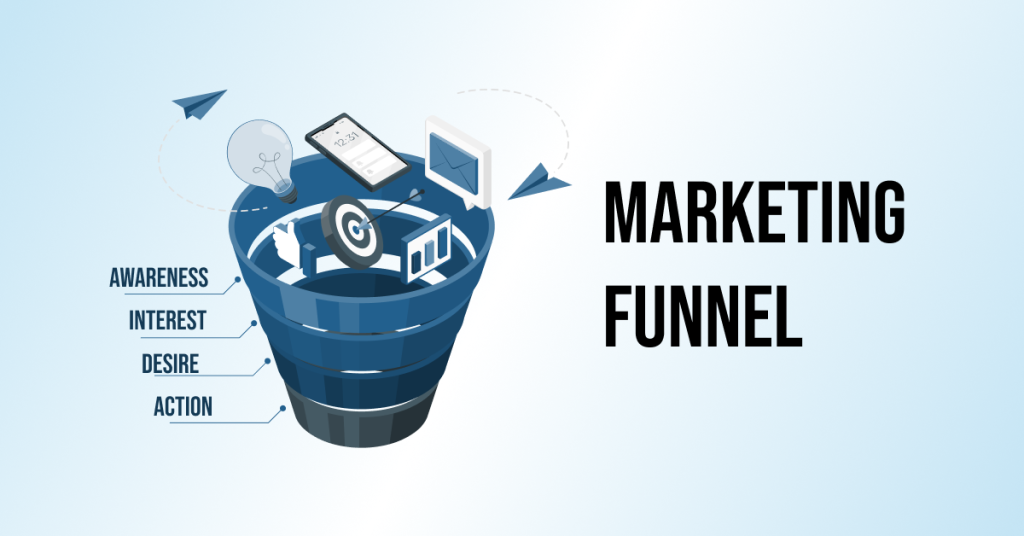
A marketing funnel is a marketing model that depicts the customer journey before and after making a purchase. It is a multi-step process that highlights the stages of an individual looking for a solution, finding out about your brand, liking it or engaging with it, and finally, making a purchase.
Marketers and analysts often follow the AIDA marketing funnel model. This model stands for the following:
Awareness
Interest
Desire
Action
Let’s break down each of these stages of the marketing funnel.
1. Awareness
It is the first stage of the customer journey where your potential customer has not yet heard about your brand. He must be finding a solution to his problem but is not yet aware of your brand.
For example, if you run a shoe business with a USP of comfort and pain relief, you can target the following keywords:
‘Shoes for bunions’ ‘Running shoes for men’
The first step is all about making individuals aware of your brand’s existence and the solutions it offers.
2. Interest
The next stage is when individuals start to show interest in your brand. Their actions include browsing through and interacting with the website, signing up for a newsletter, or following your social media handles, such as Instagram or Twitter.
This is the stage when you must make everything easy for users to navigate.
3. Desire
This is the stage of the PPC marketing funnel where individuals start to consider your product. They’d remember your product/service, compare it with other existing competitors, look for reviews and testimonials, browse social media via hashtags, or talk to their friends or family.
This step in the marketing funnel is also called the ‘consideration’ stage since your potential customers are exploring their options and considering you as one of them.
4. Action
The action stage is when your prospects are actually going to make a purchase from your website. This stage is also called the ‘conversion’ stage, as the prospect has finally been converted into your customer.
Your aim at this stage is to make it easy for the users to navigate through the website seamlessly and make a payment.
How to Implement Full-Funnel PPC Marketing Strategies?
Only when you’re aware of the marketing funnel and how it defines the entire customer journey can you apply a full-fledged PPC-integrated marketing strategy and tactics. To make it easy for you, we will take the shoe brand as an example.
Let’s split our strategy into three parts:
Keyword research
Ad campaign
Landing page optimization
We’ll now apply these strategic steps in each stage of the marketing funnel.
1. Awareness Stage
As discussed earlier, the awareness stage is when prospects don’t know that your brand exists. Therefore, this is the stage where you need to create a strategy to capture prospects by offering your solution to their problem.
Keyword Research
You must keep the following pointers in mind when implementing the keyword research strategy in the awareness stage:
Handpick keywords that represent your brand and are in tune with what people are looking for.
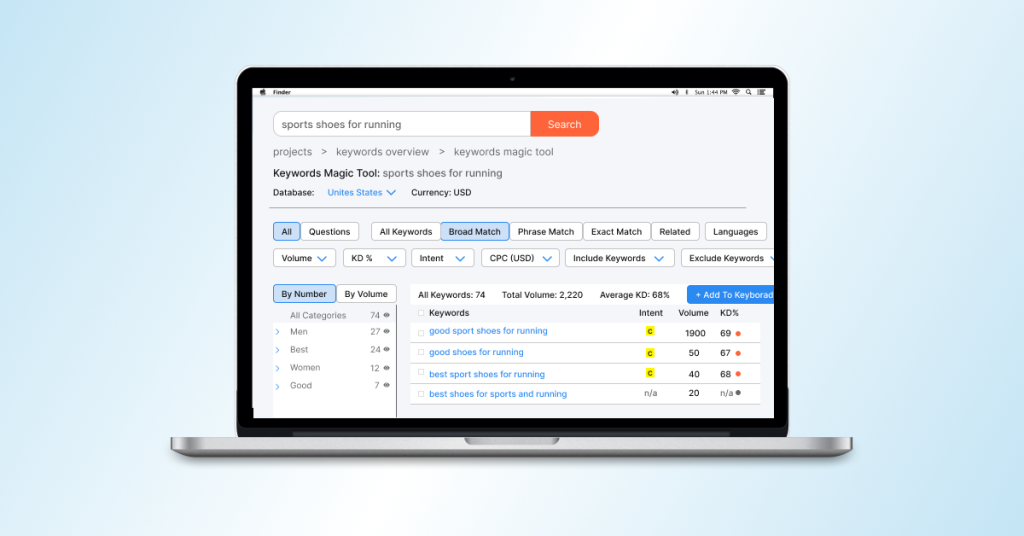
You can use keyword research tools, such as Google Keyword Planner, Ahrefs, or SEMrush, to make a list of keywords with tangible volume and minimal difficulty.
You can use the following examples:
‘Sports shoes for running’ ‘Shoes for jogging’
Ad Campaign
You can use attractive images to indulge your potential customers in your ads. You can also leverage immersive videos to effectively present your brand’s value. It is also important to use an eye-catching headline in your ads to attract prospects.
Landing Page Optimization
You must keep the following things in mind when implementing the landing page optimization strategy in the awareness stage of the marketing funnel:
Your landing page must depict consistent branding. All the elements of the landing page should make the customer journey easier and prompt the users to engage with the website.
It is always a great idea to link comprehensive and educational blog posts through the landing pages for enhanced user engagement. When the user extracts knowledge and information, he’ll automatically value your brand.
Adding call-to-actions (CTAs), such as ‘Learn More’ or ‘Download Free Guide’ will prompt the users to move further down the marketing funnel.
2. Interest and Desire Stage
Now that the customer has entered the market and is a potential customer, the goal of the interest and desire stage, also called the consideration stage, is to help individuals find the product-fit match. This means that the user is aware that your product/service exists but cannot find a suitable one for himself.
Customers desire to learn about your products and their use cases. To this end, you can encourage customers to sign up for newsletters, which will provide exclusive information and enticing discounts.
Keyword Research
You must keep the following pointers in mind when implementing the keyword research strategy in the consideration stage:
1. At this stage, the user is looking at reviews and comparing your product; therefore, it is a smart practice to use keywords such as:
‘best shoes for running’ ‘sports shoes comparison’ ‘sports shoe reviews’
2. You can leverage tools such as SEMrush, Ahrefs, or Google Keyword Planner to get the list of keywords for the consideration stage.
Ad Campaign
You must create ad copy that attracts the user to your brand. For instance, you can create an ad with the copy ‘durable long-distance trainers.’ This is how Asics is creating ad copies to sell its trainers.
Another significant full-funnel PPC marketing strategy is customer retargeting. When a customer visits your website once, you can utilize cookies to track the user’s activity and then retarget with ads on social media. This practice will psychologically prompt the user to make the purchase.
Landing Page Optimization
It is important to remember the following PPC marketing strategies when optimizing the landing page for the consideration stage:
At this stage, the landing page content must highlight user reviews, testimonials and case studies. A good tip is to add video reviews of your customers. This will enhance your website’s credibility.
Call-to-actions (CTAs) can make or break the motive of your website’s landing page. Ensure that you use compelling CTAs such as ‘Sign Up for Newsletter’ or ‘Start Your Free Trial’ or ‘30-Days Refund Guaranteed’.
3. Action Stage
The action stage is the final stage and is also called the conversion stage. To give you a clear idea, the average e-commerce conversion rate is 2.5-3%. This means that only a tiny percentage of prospective customers convert, i.e., make a purchase.
The idea behind the complete PPC marketing funnel is to convert users into buying your product/service. If that doesn’t happen, the strategy has no point. Therefore, this final stage is the most crucial one.
Keyword Research
You must follow the below-mentioned full-funnel PPC strategy for keywords dedicated to the conversion stage:
The keywords for this stage must be transactional and/or commercial in nature. In other words, the CTAs must include the words ‘Buy’ or ‘Invest’ as a prompt for potential customers.
You can use the following set of keywords for your landing page or blog posts:
‘Buy durable running shoes’ ‘Invest in the right pair’
Ad Campaign
The PPC marketing strategy for ad copies at this stage is to use clear-cut CTAs, such as ‘Buy Now’, ‘Request a Quote’, or ‘Find Your Fit Now.’ Usually, users add things to their cart but do not make a purchase. You can retarget them with carousel posts on social media with ‘Buy Now at [X]% off.’
Landing Page Optimization
Your curated landing page must prompt the user to make a purchase. You must also add discounts and promotions on this page to lure users into making a positive decision. The page layout must be seamless and simple. Ensure that you remove distracting elements, such as the navigation bar from the conversion page. This practice will prompt users to make a purchase.
Another great tip is to keep the payment process easy. You must offer multiple payment options, such as PayPal, credit/debit card, or even third-party buy-now-pay-later options.
How to Measure the Effectiveness of PPC Marketing Strategy?
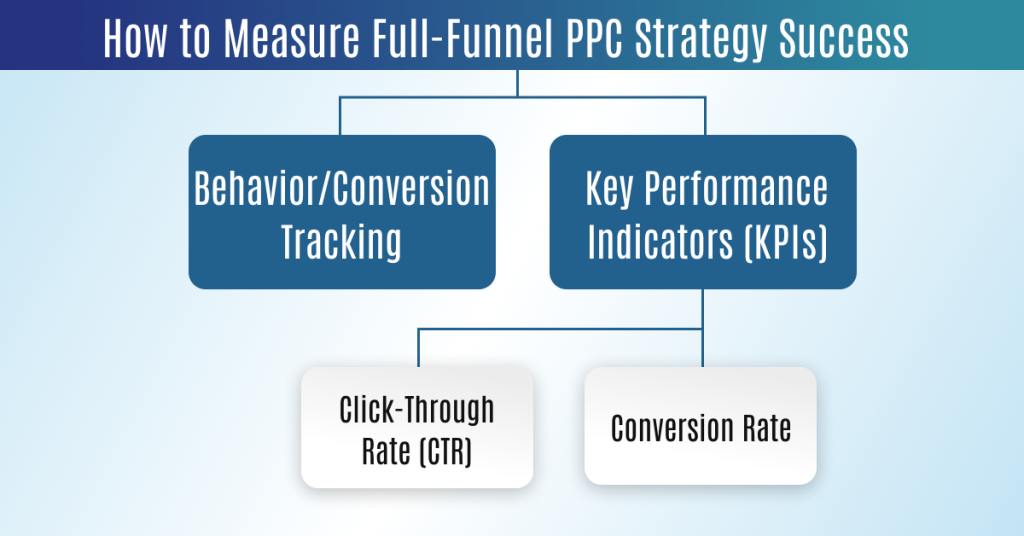
Once you’ve applied the full-funnel PPC marketing strategy and learned how to implement it, how do you make sure that the strategy is actually working? You do so by measuring the results. There are certain metrics to do so. This section of the PPC marketing strategy guide is dedicated to the metrics to measure the effectiveness of your strategies.
1. Behavior/Conversion Tracking
You can use Google Analytics tools to gauge how users interact with your website. You can also use heatmaps to understand the customer journey for your website via a user. The tool also allows you to drill down the user activities for various pages.
Another great tool is Google Tag Manager, which allows you to track conversions by depicting the user’s interaction with the website at every stage of the marketing funnel.
2. Key Performance Indicators (KPIs)
It is pivotal to monitor significant KPIs to measure the success of your full-funnel PPC marketing strategy. The following are the primary KPIs to track:
Click-Through Rate (CTR)
The CTR metric tells you about the percentage of people who clicked on your ad. It depicts the total number of people who clicked on your ad out of all the impressions (people who saw your ad). This metric is a sign of ad relevancy to the users. It is calculated as follows:
CTR = Total number of impressions/Total number of clicks*100
Note: Create ads that are relevant to the users by using relevant keywords.
Conversion Rate
Clicking on the ad is okay, but are users making a purchase? This is why the conversion rate is an important metric. It gives you a reality check. It gives you the percentage of people who clicked on your ad and performed the desired action.
The conversion rate can be calculated as follows:
Conversion Rate = Number of conversions/Total number of clicks*100
Other good metrics for measuring the success of full-funnel PPC strategies, such as quality score and cost-per-click (CPC), exist.
Bottom Line
Formulating a solid full-funnel PPC marketing strategy can help you gain traction in your company’s revenue growth. From examining the complete marketing funnel to knowing how to implement it to measuring the KPIs, the whole process aims at boosting your revenue. A pro tip is to tweak the strategies in the PPC marketing funnel to find the best fit for your brand.
If you’re looking for a partner to help you implement full-funnel PPC marketing strategies and generate tangible results, look no further than Deftsoft. Our team of experts is looking out for you. Reach out to know more!
FAQs:
What is a PPC funnel strategy?
A full-funnel PPC marketing strategy is a set of marketing tactics that businesses can deploy to prompt prospective customers to take a desired action. This action could be making a purchase or signing up for a newsletter. The strategy is built to make the customer journey easier throughout the marketing funnel, right from making potential customers aware of your brand to propelling them to make a purchase.
What is the best PPC marketing strategy?
It is important to grasp the eye of your potential customers right from the beginning. This is why you should leverage relevant long-tail keywords that users are searching for. You can find these keywords through different tools, such as Google Keyword Planner, Ahrefs, or SEMrush. You must also follow a holistic approach and maintain an active presence on social media.
Are Google ads enough for the PPC marketing strategy?
It is good to be prevalent on Google ads. However, a strong social media presence can expose your business to enhanced visibility and a large user base. Therefore, you must give equal attention to social media through ads, such as Facebook and Instagram ads.
What strategy should be followed for full-funnel PPC marketing campaigns?
You must implement three main strategies in each stage of the marketing funnel. These include relevant keyword research, relevant ad copies, and landing page optimization through CTAs.
What are the primary KPIs to measure the success of a PPC marketing strategy?
The primary KPIs for the success of a PPC marketing campaign include Click-Through Rate (CTR) and Conversion Rate. The CTR gives the percentage of individuals who clicked on your ad. The conversion rate refers to the percentage of users who performed the desired action after clicking your ad.
Android development is one of the most sought-after career paths, especially for people trying to break into the IT industry. Android is an open-source Operating System developed by Android Inc., but later on, in 2005, it was acquired by Google. It is a Linux-based OS that is specially built to run on smartphones and tablets. Currently, there are over 3.9 billion Android smartphone users, which accounts for 48.22% of the entire global population!
With such a whopping number, it is imperative to get an Android developer certification. However, if you’re looking to become an Android developer for free, we’ve got you covered. This guide is the best to consider for the Android developer roadmap.
Whether you want to become an Android developer from scratch or you wish to switch your career to Android development, you must read this guide. Let’s get started!
What is Android Development?
Android development refers to the process of building, programming, testing and optimizing applications for devices that use Android as their Operating System. The process involves the user of an Android development kit, which includes popular programming languages, such as C++, Java, Python, Kotlin, and much more. Be it gaming, e-commerce, designing, or any other app, our Android app development roadmap can help you become an Android app developer. For example, Duolingo, one of the most popular apps of 2025 for learning new languages, math, and much more, is an Android application.
Do you know that you can now create Android applications that can also be built to run on iOS devices? Sounds impossible, right? This is possible with the concept of cross-platform development. Java is one of the most preferred programming languages for cross-platform app development.
For instance, Airbnb is a cross-platform app built on React Native using JavaScript and React frameworks.
Why is Android Development The Right Choice?
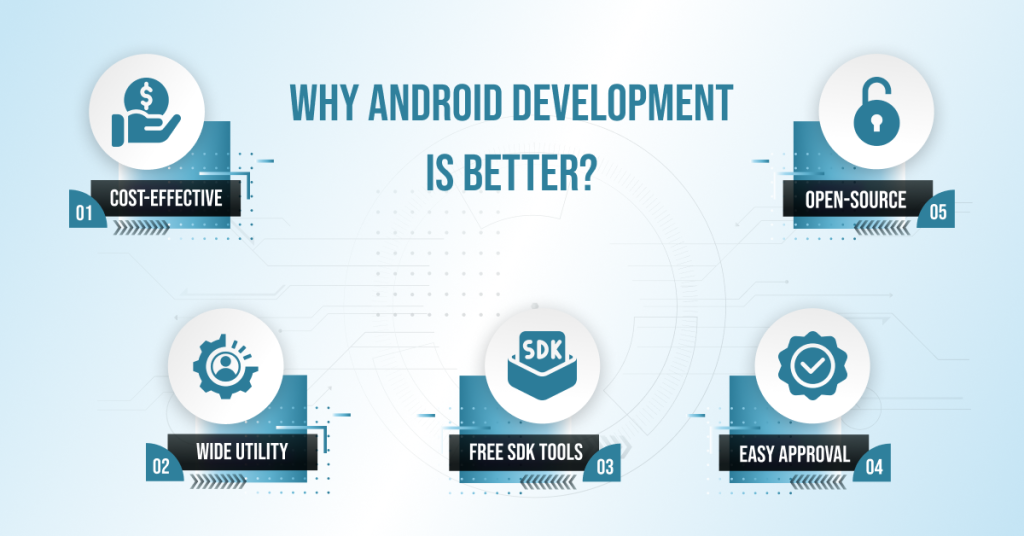
There are plenty of reasons why you must choose Android development over any other Operating System to build your first app. These reasons are listed below:
Cost-Effective
Developing an Android app is far more economical than building an app for any other Operating System. The Android app developers also have better reach as there is a wider base of users in the Android community.
Wide Utility
Kotlin is the primary programming language for building Android applications. This modern, open-source language can easily be integrated with Java. You can also use Kotlin to build cross-platform apps that run on both Android and iOS Operating Systems. In addition, Android is a versatile choice for application development as it allows you to focus on various platforms, such as Ubuntu and Symbian.
One of the major advantages of Android app development is that you don’t need to pay any charges for the Software Development Kit (SDK) tools. It comprises a set of tools, such as SDK tools, build tools and platform tools. Although the development process includes coding, graphic creation costs, assets, audio and other related costs, Android development is still comparatively more affordable than any other Operating System.
Easy Approval
Once an Android app is built and tested, it is easily approved by the Google Play Store in a day or even less than that. In fact, there is only a one-time fee of $25 when you upload your first app on the Google Play Store. After that, you can upload your apps for free on Google Play.
Open-Source
Android development is open-source, so you don’t need to spend money or buy memberships to build your Android app. Other related tools are also free of cost and beginner-friendly.
What Are The Prerequisites for Android App Development?
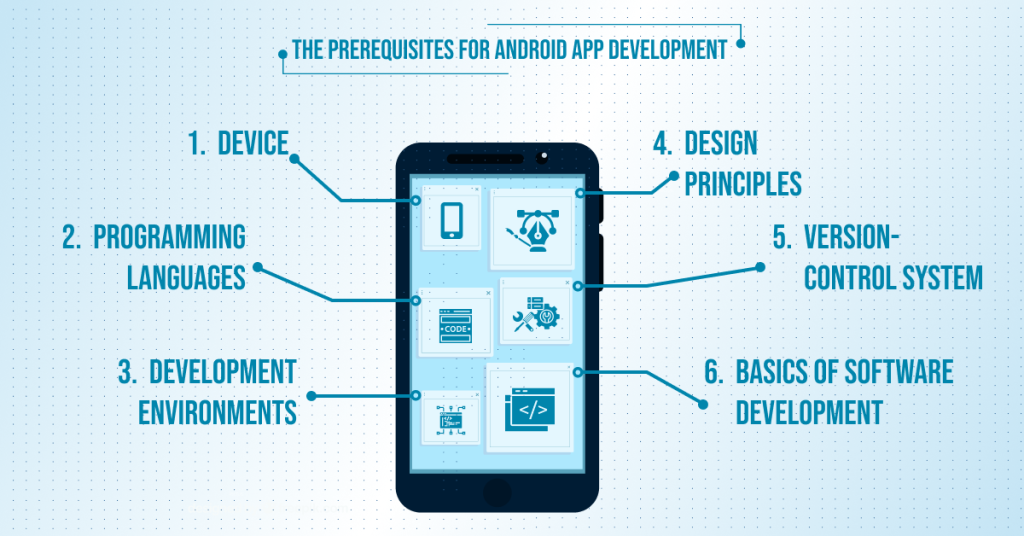
If you’re wondering and searching for how to become an Android developer, you must first go through the requirements needed to begin your Android development journey. These requirements are mentioned as follows:
Device
The foremost requirement to begin your Android development journey is to invest in a Windows, MacOS, or Linux computer or laptop. A Windows device is the most preferred one. You’d also need an Android device to test your app. Don’t have an Android device? That is no problem. You can also use an emulator.
Programming Languages
The first step to becoming a skilled Android developer is to build a solid command of Android development programming languages, such as Java and Kotlin. These languages are required to code the apps in a coding environment, such as an Integrated Development Environment (IDE).
Development Environments
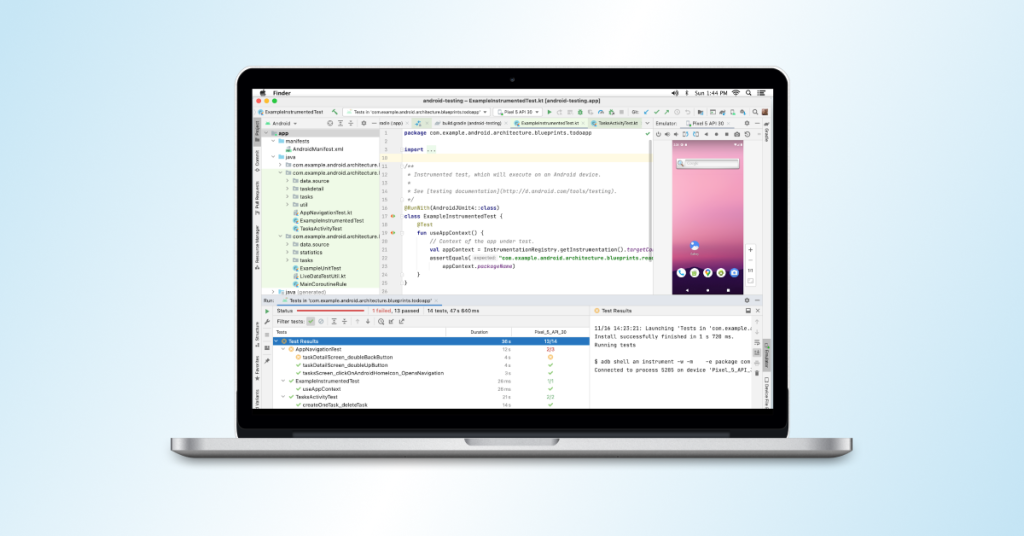
Speaking of coding an app, it is only a development environment where an app is coded. Android Studio is the most used development environment for Android app development. It is the official integrated development environment built on JetBrains’ IntelliJ IDEA software. You can download the software on Windows, MacOS or Linux.
Design Principles
It is also important to have at least an introductory knowledge of mobile app design principles, including UI/UX guidelines, app psychology, layout basics, colour consistency, etc.
Version-Control System
Being familiar with a version-control system is another great advantage. It is a system used to track and manage changes to software code. The goal of this software is to manage source code amongst teams for streamlined operations. For example, Git is a version control system.
Basics of Software Development
Your foundation must be strong when stepping into the Android development landscape. Understanding the basics of software development, such as data structures (trees and graphs) and algorithms, is pivotal. Object-oriented programming is also crucial for building well-structured and efficient apps.
How to Become an Android Developer Step-by-Step?
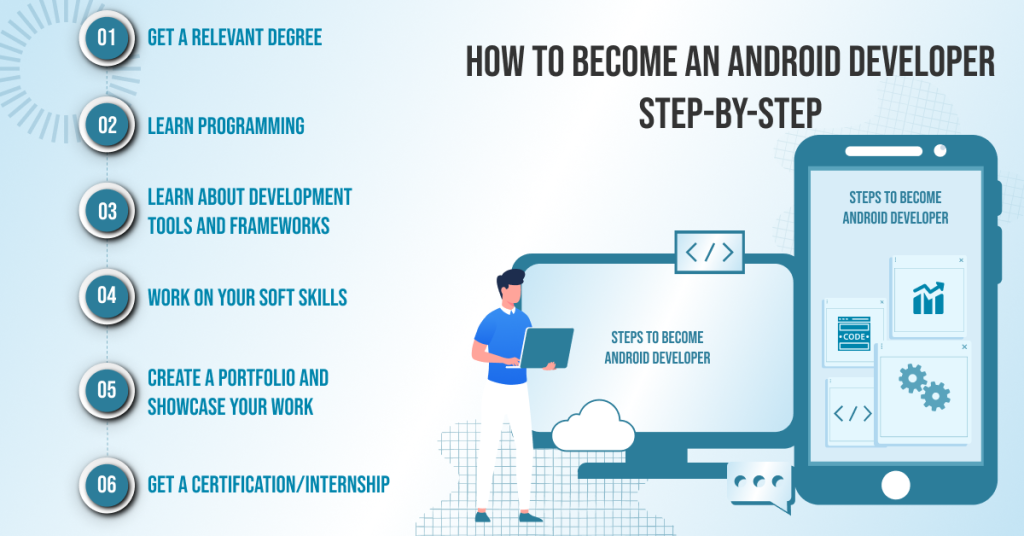
If you’re looking for an Android app development roadmap, you’re at the right place. Whether you’re a beginner starting from scratch or a fresh graduate out of high school, follow this Android developer roadmap.
1. Get a Relevant Degree
If you have the time and money, it is the wisest decision to get a graduate or postgraduate degree in Android development. A bachelor’s degree in Computer Science, Information Technology (IT), or Computer Engineering can help you gain hands-on experience with the tools and technologies required in Android app development.
2. Learn Programming
If you don’t want to invest in a hefty degree, the first step in the Android developer roadmap is to learn programming. You need to learn the following programming languages to become an Andriod developer. The list is as follows:
Java
Java is one of the most important programming languages to build an Android app. It is a class-based and object-oriented programming language. Its syntax is deeply influenced by C++. An Android developer uses Java in an integrated development environment such as Android Studio to build a solid Android app. You must familiarize yourself with the concepts of class, operators, identifiers, data types, inheritance, static methods, lists, variables, loops, objects, dates and arrays, and other fundamentals of the language. You should then start learning Java syntax.
After learning the basics, you can work on a tiny project to build your own Android app in Java following this tutorial.
Kotlin
Kotlin is a modern, open-source programming language that is technically considered better than Java. It is an object-oriented, statically typed, and general-purpose programming language developed by JetBrains, a company that built a powerful IDE like IntelliJ and many others. In fact, it is a new language in the Java Virtual Machine (JVM). It is even called an official language for Android app development, followed by Java. You must be familiar with the functions to perform comparisons using operators and other fundamental concepts.
Extensible Markup Language (XML)
You can view web data by using the Extensible Markup Language (XML) programming language. A lot of times, Android app developers need to transfer data from the web to apps and vice verse. This is exactly the time when learning XML programming language becomes an indispensable practice.
Structured Query Language (SQL)
SQL is a syntax-based language used to manage databases in Android apps. It can also retrieve, manage, and store web data. Therefore, it is important to learn this language for database management.
3. Learn about Development Tools and Frameworks
Once you get the hang of programming languages, mainly Kotlin and Java, it is time to code! Choosing the right integrated development environment (IDE) is the primary step when following the Android app development roadmap.
Development Tool:
Android Studio
Android Studio is the official IDE for Android app development, as Google declared. You can use various programming languages when working in Android Studio. These languages include C++, Java, JavaScript and Kotlin. Developed by JetBrains in 2011, the software is based on IntelliJ IDEA software. You can download Android Studio on any computer running a 64-bit version of Windows (8, 10 or 11), MacOS (10.14 Mojave or later), Linux and ChromeOS.
Frameworks:
Flutter
Google has developed and is supporting an open-source framework called Flutter. Using a single codebase, front-end and full-stack developers can create an application’s user interface (UI) on several platforms. When it was introduced in 2018, Flutter primarily enabled the development of mobile apps. Currently, Flutter facilitates the creation of applications on six different platforms: Windows, MacOS, Linux, iOS, Android, and the web.
Creating a UI that is beautiful and consistent across an application’s six supported platforms is made easier using Flutter. We will start by contrasting Flutter with native development because it is a cross-platform development framework. After that, we can draw attention to Flutter-specific characteristics.
Jetpack Compose
A contemporary framework for creating native Android UI is what Jetpack Compose is. Jetpack Compose leverages strong tools, intuitive Kotlin APIs, and minimal code to streamline and expedite Android UI development. For Android developers, Jetpack Compose offers an alternative to the conventional XML-based approach to UI development: a declarative and succinct method. It makes use of Kotlin’s capabilities and offers a cutting-edge, user-friendly method for creating UI elements.
4. Work on Your Soft Skills
Android developers often work collaboratively in teams with UI/UX designers, developers, engineers such as DevOps and Software engineers, business analysts, testers and many other professionals. Therefore, a fresher Android developer must be proficient in the following soft skills:
Communication Skills
Teamwork and leadership skills
Time management
Organizational skills
5. Create a Portfolio and Showcase Your Work
Once you learn how to work with SDKs, code the app and test it via an Android device or emulator, you must consider publishing your app on the app store. If your app follows all the guidelines, it will published on the Google Play Store. If you want to land a job in the industry, it is always the best idea to showcase your work by directly uploading your created app to the store. If approved, your app will then be available for public downloads.
6. Get a Certification/Internship
You can also get an Android developer certification to enhance your chances of landing high-profile jobs. According to CompTIA, 91% of employers consider IT certifications in the hiring process. You can also consider getting an internship in Android development to gain hands-on experience.
Bottom Line
Whether you’re looking to become an Android developer from scratch or switch career paths, this guide is one of the best beginner-friendly Android developer roadmaps. Make sure that you follow a guided path and grasp the industry’s in-demand skills. The learning curve of Android development is quite easy, especially when you’re familiar with a programming language. Follow along the steps mentioned in the guide to get started with an Android development company.
FAQs:
Who is an Android developer?
An Android developer is a professional who builds, codes, tests, and optimizes apps for various Android devices, such as smartphones and tablets. He builds apps using SDKs and Integrated Development Environments (IDEs) such as Android Studio. An Android developer is also proficient in coding languages like Kotlin, Java, C++, etc.
How long does it take to become an Android developer?
It takes around 8-12 months to learn the important skills to become an Android developer, such as programming languages, tools, IDE, etc. Yet, it can take 2-3 years to become an expert in the field.
What is the best Android developer roadmap?
The best Android app development roadmap is to get a degree, learn programming languages such as Kotlin, Java, C++, XML; learn about development tools and frameworks such as Android Studio, Flutter, Jetpack Compose; work on your soft skills and create a portfolio.
How long does it take for app approval on Google Play Store?
It takes almost a day to get approval for your app on Google Play Store. You just need to pay a one-time fee of $25 to publish your first app on the Play Store. Then, you can upload your apps for free.
Can I build an Android app that runs on iOS, too?
Yes, you can build native apps, i.e. apps that run on both Android and iOS. Such apps are built using React native or any other framework.
Metaverse has been the buzzword of the decade and has taken the entire world by storm. The tech world insists that the Metaverse is still the next big thing, as evidenced by the research done by the Pew Research Center and Elon University. Over 600 technology innovators and leaders were asked to share their insights on the top trends in metaverse, and this is what the outcome was: 54% of these innovators were of the opinion that Metaverse will become truly immersive and become an important part of people’s daily lives by 2040.
Fast-forward to 2025. According to DemandSage, there are more than 600 million active users of the Metaverse worldwide. 51% of these users are 13 or younger, and 83.5% are below 18 years old.
This blog sheds light on what Metavserse is, whether the Metaverse is dead, and, finally, the upcoming trends in Metaverse.
What Exactly is Metaverse?
If you follow technical leaders and innovators, such as Mark Zuckerberg or Satya Nadella, the CEOs of Meta and Microsoft, respectively, they often refer to Metaverse as the ‘future of the Internet.’
So, is Metaverse an entirely different digital world, a video game, or even a simulation? Many people associate Metaverse with Avatar-based video calling. Let’s discuss what exactly it is!
Metaverse itself isn’t a single technology but a bunch of technologies combined together to create an enhanced virtual experience. You can consider Metaverse technology to be the fusion of reality and the digital world, which is often referred to as Augmented Reality (AR). The technology also includes the existence of a digital world that continues to persist even when humans are not in touch with it. So, is your favorite game, Fortnite, an example of Metaverse? It is more like saying that Google is the Internet. Of course, you can shop, play, and socialize in the Metaverse, but it still doesn’t refer to the whole of the Metaverse world.
Therefore, to sum up, Metaverse is the consolidation of the physical and digital space accessed through computers or head gears, such as Apple Vision Pro, enabled through Extended Reality technologies, such as Augmented Reality (AR), Virtual Reality (VR), and Mixed Reality (MR).
If you think the Metaverse hype is dead, you might want to think twice. Beginning right from the time Meta came up with the term; the technology is now often referred to as the ‘M-word’. There might be a dip in the hype of the term ‘Metaverse,’ yet the technology’s vision is still at the right pace.
Vishal Shah, Meta’s VP of Metaverse, believes that only the hype, not the idea of Metaverse, is dead. In a recent interview with Fortune, Vishal referred to Gartner’s Hype Cycle and said:
““…we didn’t invest for the hype, we have been investing in the space for years.”
This is what brings us to the section: top trends in Metaverse that you need to watch out for.
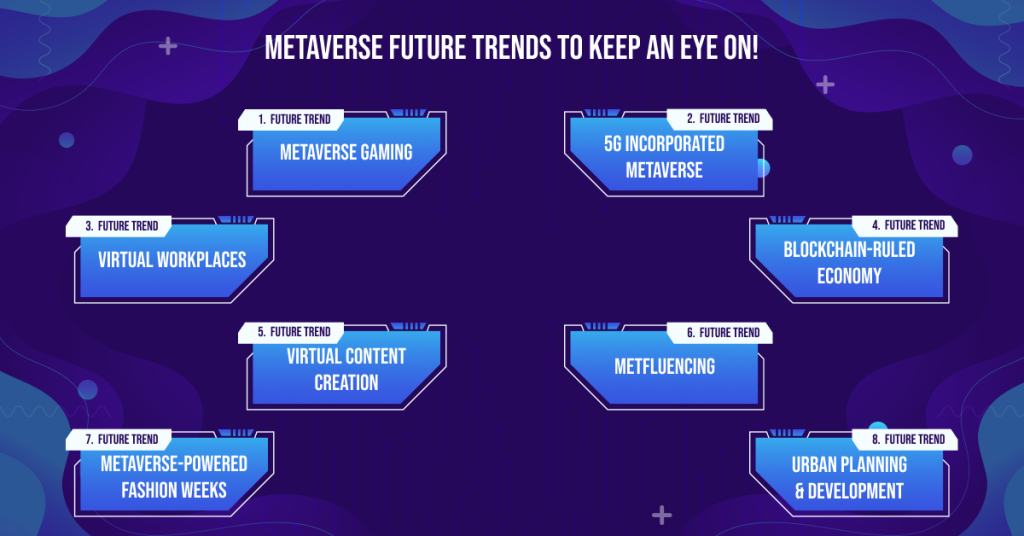
Top Metaverse Future Trends in 2025
Let us now explore the top Metaverse trends that are about to dominate the future.
1. Metaverse Gaming
Metaverse gaming is one of the most popular Metaverse trends. Gaming has been one of the foremost industries that have embraced Metaverse technology. The intersection of gaming and the Metaverse is groundbreaking as it is giving birth to new possibilities in cloud computing, gaming, and virtual reality.
A lot of businesses are exploring the possibilities of Metaverse gaming to offer an immersive user experience. For example, gaming platforms like ROBLOX have expanded their gaming experience into Metaverse.
Here are a few pro tips for businesses to ace your venture in the Metaverse gaming landscape:
Incorporate Unity or Unreal Engine programming for advanced gaming experience.
Leveraging advanced AI algorithms, such as behavior trees, Pathfinding AI, reinforcement learning, etc., to build Metaverse-incorporated gaming experiences.
Utilize the power of cloud infrastructure to enable high scalability for Metaverse gaming.
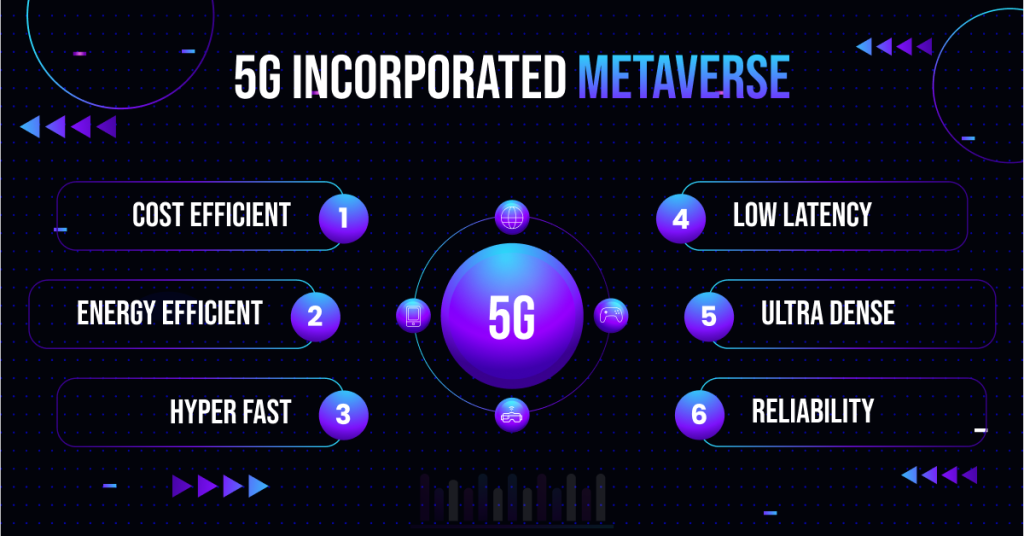
2. 5G Incorporated Metaverse
The expansion of the Metaverse is only feasible through enhanced connectivity. This sets the mark for one of the latest trends in the Metaverse: 5G connectivity for Metaverse. Popular for its ultra-low latency and higher speed, the 5G networks can be leveraged to boost Metaverse app development practices.
Users can expect powerful real-time Metaverse experiences with the integration of 5G connectivity. With the incorporation of 5G in Metaverse, the technology can help handle the abrupt influx of data and provide an ultra-dense network for the seamless functioning of Metaverse apps.
3. Virtual Workplaces
Virtual workplaces are one of the most productive Metaverse future trends. It is estimated that people will spend more time in the Metaverse than in the real world by 2030. The Metaverse’s world would not just be limited to virtual workspaces but also include other things, such as shopping, meeting friends online, imparting education through 3D settings, and arranging meetings.
As in the Metaverse introduced by Meta, users can create their own Avatars and interact with people across the globe virtually. This is what Alexandra Neville, a thriving artist and researcher at Australia’s University of Technology Sydney, has to say about the Avatars in the Metaverse:
“Avatars will allow people to represent themselves beyond the limitations of status. There’s the opportunity to alleviate people’s identity beyond their wardrobe or how much money they have in their bank account. There’s more freedom to express themselves beyond gender, representation, and social conventions.”
4. Blockchain-Ruled Economy
The incorporation of Blockchain in the Metaverse is one of the most revolutionary trends in the Metaverse. We can expect the development of a full-fledged cryptocurrency and NFT-based virtual economy powered by Blockchain in the Metaverse.
Here’s how Blockchain technology helps strengthen the Metaverse landscape. Since the Metaverse is the breeding ground for virtual transactions, Blockchain will ensure the establishment of a decentralized economy ruled by cryptocurrency.
For instance, if someone wants to make a purchase in the Metaverse ecosystem, the Blockchain technology will secure the transactions through its high-grade security protocols and systems. Another wonderful example is the application of Blockchain in the Metaverse’s digital real estate scenarios. Users can use virtual currencies, such as Bitcoin and Ethereum, to lend, invest, borrow, and trade in the Metaverse through DeFi.
5. Virtual Content Creation
The popularity of virtual products is increasing at a significant rate. The virtual content creation market has reached a market share of USD 5.6 billion in 2022, and it is expected to hit USD 39.8 billion by the year 2032!
As consumers are getting attracted to 3D spaces, the requirement for virtual goods has only increased. This is one of the best Metaverse trends for content creators who can disrupt the 3D market and make it big in the virtual content creation space. For example, a content creator named Samuel Jordan has reportedly made up to $80,000 per month by selling digital goods on Roblox.
You must be thinking about what the future will look like. If you’ve seen the first episode of the fifth season of ‘Black Mirror’ on Netflix, the episode features how two friends connect through a VR version of their favorite video game. The time is not far when we will actually be able to experience it through Metaverse!
6. Metfluencing
Metfluencing has become another buzzword of the year, but what does it mean? A new trend in Metaverse is picking up: selling and marketing products in real-time through Metaverse platforms. It is indeed one of the most awaited Metaverse marketing trends to keep an eye on!
According to a recent study, 56% of influencers participate in the Metaverse right now.
With this trend picking up pace, it is a golden opportunity for influencers to enter the Metaverse and start selling products directly on it. Influencers can also explore other avenues, such as real-time gaming and much more.
For example, Logan Theobald is a tremendous Metaverse influencer who is a top gamer in the VR world. In fact, he has also collaborated with gigantic brands such as Liquid Death. You can find his long-form videos on YouTube and catch up with this ‘metfluencial’ lifestyle.
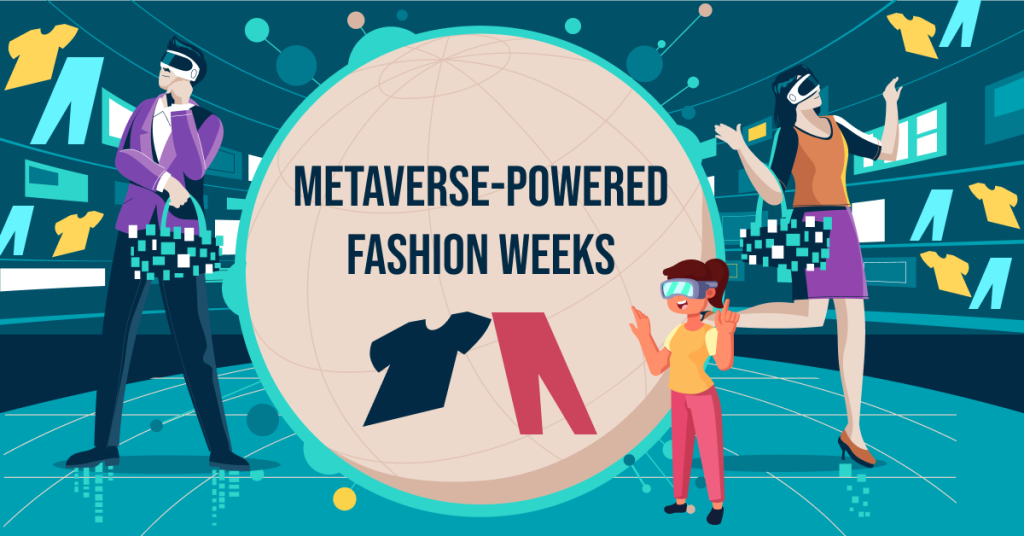
7. Metaverse-Powered Fashion Weeks
The fashion world is not behind in embracing the novel virtual world of Metaverse. One of the most pivotal trends in Metaverse is disrupting the fashion industry. For instance, the debut of the convergence of Metaverse technology with fashion was seen at Metaverse Fashion Week in 2022, when Yeezy Gap, engineered by Balenciaga, showcased its virtual clothing.
Even Tommy Hilfiger showcased its SS22 collection at the Metaverse Fashion Week. This is what the CEO Martijn Hagman had to say:
“We are committed to meeting the new generation of consumers where they are and we encourage them to express their individuality no matter where they choose to shop or interact with our brand.”
The wave of Metaverse has now touched almost every domain across the globe, and it will only grow further in the coming years.
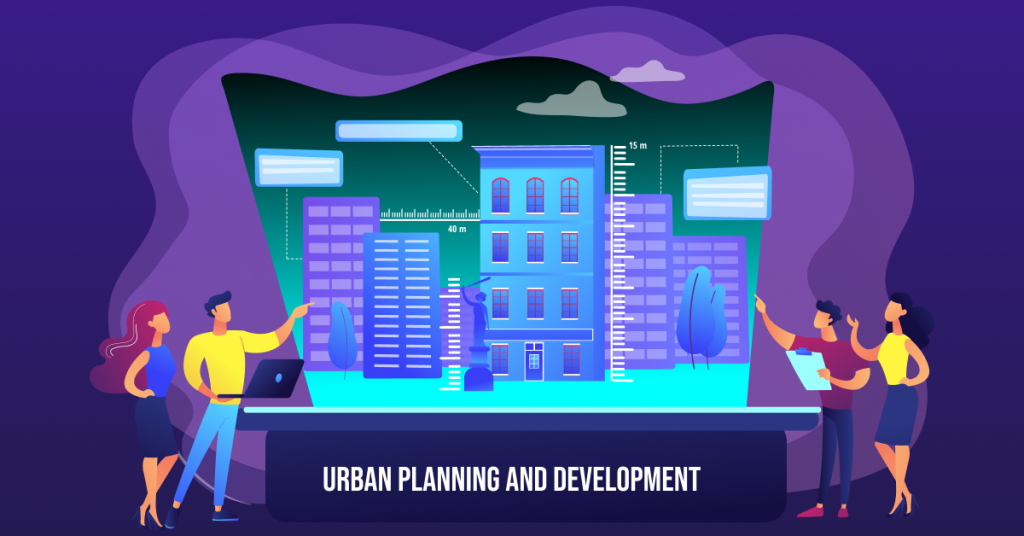
8. Urban Planning and Development
Another important trend in Metaverse is its utility in a well-developed sector, which is urban development and planning. The Metaverse can create a complete replica of the city so that the designers, planners, engineers, and stakeholders can collaborate on an urban planning project in real time. One of the best examples of a city leveraging Metaverse in urban planning is Seoul, South Korea. The government invested $3.3 million in a five-year plan to enhance the city’s administration, services, and digital integration for a smart city. Citizens can connect with virtual public officials and access other services through the development of the “Metaverse 120 Center“.
Bottom Line
That’s a wrap for the Metaverse trends 2025. The world is undergoing rapid transformation with the convergence of Metaverse across various verticals. It is an ever-evolving ecosystem that is attracting people to virtual reality.
This blog discusses the top upcoming trends in Metaverse that you need to watch out for. From developing smart cities to Metfluencing, the technology has disrupted almost every other sector and industry. If you’re a thriving business wanting to enter the Metaverse space, Deftsoft is a globally recognized Metaverse development company that can help you drive business in the Metaverse space. Reach out to know more!
FAQs:
What is Metaverse?
Metaverse refers to a variety of technologies that blur the line between the physical and virtual worlds. These technologies include Augmented Reality (AR), Virtual Reality (VR), and Mixed Reality (MR). In Metaverse, one can build immersive 3D spaces to interact with people, play games, shop, buy and sell virtual land, and more.
What is the future of Metaverse?
The world of Metaverse looks bright and ever-evolving. Its influence can be seen in developing smart cities and urban planning, metfluencing, Metaverse-powered Fashion weeks, disruption of the education system through real-time virtual meetings, immersive gaming experiences, and much more.
How to make money in the Metaverse?
There are plenty of ways to make money in the Metaverse ecosystem. You can become a Metaverse gamer through the Roblox platform and make money. You can also create NFTs and sell them via Metaverse in real time.
What is the difference between Omniverse and Metaverse?
Metaverse is a part multiverse. A collection of metaverses that are interoperable with each other is referred to as a Multiverse. For example, gaming platforms like Roblox. On the other hand, Omniverse refers to the collection of Metaverses and Multiverses, whether they’re interoperable or not. Omniverse is also the name of an industrial Metaverse platform created by Nvidia.
Non-fungible tokens (NFTs) are assets that hold unique value. The data contained in the NFTs is stored on an immutable distributed ledger system. These are non-fungible assets, meaning they cannot be divided into smaller assets for partial ownership.
NFTs are created using various blockchain platforms. If you’re looking for the best platform to create, mint, and deploy your NFTs, this guide is the right place to start. We’ve jotted down the list of the top 5 best blockchains for NFT Marketplace Development in 2025 that you can leverage to create and deploy your own tokens. This blog discusses the importance of blockchain in the NFT landscape, the factors to consider when choosing blockchains for NFT, and finally, the best blockchain for NFTs.
Understanding the Importance of Blockchain in NFT
According to Statista.com, the global NFT market revenue is projected to hit an estimated number of $2,378 million in 2025. In fact, the number of NFT users is gauged to grow to a whopping 16.35 million users by 2028.
The above numbers show the significance of the NFT industry in today’s dynamic world. The buying and selling of these unique assets through tokens is prominent on blockchain platforms. First, let us understand blockchain technology and its significant role in NFTs.
Blockchain is a decentralized distributed or shared ledger technology that creates a chain of transactional records that are autonomous, immutable, tamper-free and free of any third-party intermediary.
NFTs, such as artwork or collectibles, are built on top of the blockchain. Therefore, whenever an NFT is bought or sold, the transaction is stored on the immutable ledger. This non-fungibility ensures zero discrepancies in the digital ownership of the NFTs, along with the rarity of the assets.
Choosing the best blockchain to create NFT can be tricky, considering transaction fees, capabilities, and speeds. It is important to pick the right blockchain according to your requirements to offer an optimal user experience for your NFT marketplace or community.
Factors to Consider When Choosing Blockchain for NFT
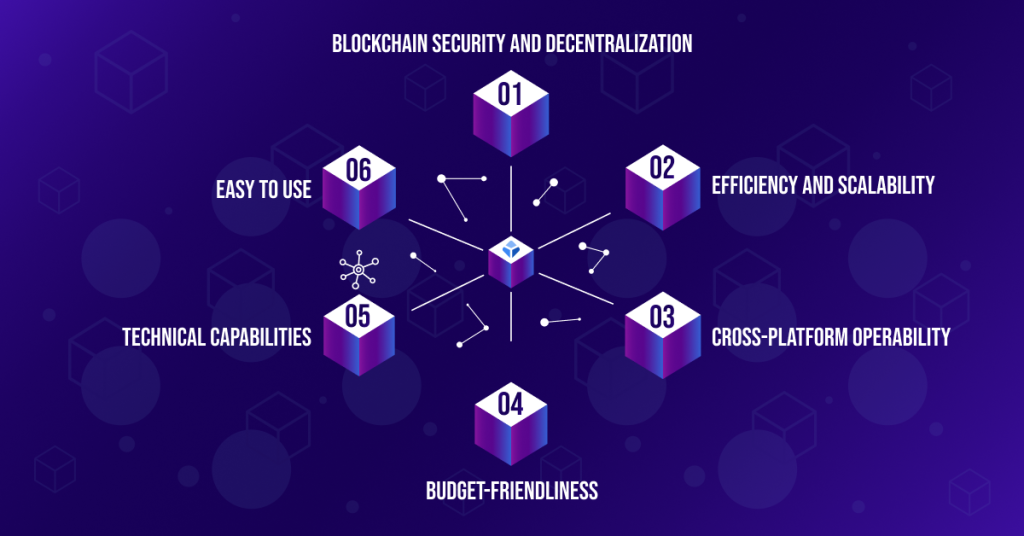
Let’s discuss the important factors to consider when choosing the best blockchain for NFT. The following factors are considered when choosing the best blockchain for creating and deploying NFT:
Blockchain Security and Decentralization
It is important to consider the security levels of the blockchain on which you’re choosing to create your NFT. Blockchain security refers to a distributed network that allows data decentralization. One of the biggest advantages of blockchain is that the blockchain network itself is secure against cyberattacks or manipulation.
This is how decentralization and high security can influence the choice of blockchain for creating NFT.
Efficiency and Scalability
The minting and sale of NFTs must occur efficiently and rapidly without delaying the process, as it can become frustrating for the users. Any lagging in the processing of payments can become a problem, especially during price hikes or NFT launches.
A blockchain platform that allows the scalability feature can prevent network congestion for growing ecosystems. Therefore, a blockchain platform must be robust in transactions.
Cross-Platform Operability
A lot of times, users have to access NFTs from various environments, such as crypto wallets, mobile games and metaverses. It is always better to choose a blockchain platform that is flexible and allows cross-platform transfers.
Budget-Friendliness
Average NFT creators/users often do not want to commit to heavy gas fees or volatility costs on the blockchain platforms. On the contrary, stable and economical blockchain platforms are preferred by creators, innovators, artists, and NFT enthusiasts.
Technical Capabilities
Another important factor is to look for a blockchain platform that supports NFT standards, meta-transactions, sophisticated smart contracts and staking opportunities.
Easy to Use
A blockchain platform’s onboarding experience must be seamless and user-intuitive. In simple words, it should be easy to navigate through the platform to buy, sell and use NFTs.
It’s time to check out the best blockchain platforms for developing NFTs. The list is mentioned as follows:
1. Ethereum
After Bitcoin, Ethereum is the second blockchain created. When it comes to the most popular blockchain for NFT, Ethereum is the talk of the town. In fact, Ethereum is a renowned name as a well-recognized NFT marketplace.
But what owes popularity to the Ethereum platform? Let’s decipher.
User-Intuitive:
The Ethereum Virtual Machine (EVM) is the easiest to use for creating NFTs. Sometimes, the user just needs to upload a file and enter the required information.
No Ownership Disputes
Settling ownership disputes is simple and easy. This is because the metadata and transaction history are optimally recorded.
Smart Contract Implementation
Thanks to the smart contract functionality, the creation and execution of NFTs are seamless in Ethereum. Smart contracts are self-executing digital contracts that execute when a certain set of conditions are met. Therefore, they ensure the immutability, security, integrity, and transparency of NFTs.
Go-To Platform
Ethereum is a well-established name in the NFT industry. It also enables cross-chain functionality, meaning that NFTs can be accessed from multiple wallets, mobile wallets, metaverses, etc. Token standards—ERC-721 and ERC-1155—allow interoperability and make the development process easier.
The NFT marketplaces built on Ethereum are as follows:
OpenSea
Rarible
SuperRare
2. Solana
After Ethereum, Solana is considered one of the best NFT marketplace development platforms. You cannot underestimate the power of this high-performance blockchain platform. Many renowned NFT collections are built using Solana, such as DeGods, Okay Bears, and Degen Ape Academy.
The notable features of this blockchain are as follows:
High Scalability
The Solana blockchain platform is quite popular for its ability to handle large-scale decentralized applications and NFT marketplaces. It also offers quick transactions.
Fact Check: Solana processes 50,000 transactions per second.
Economical
After Ethereum, Solana is the hotspot for NFT geeks. Many budding NFT creators and consumers prefer Solana because it has relatively lower gas fees than Ethereum.
Developer-Friendly
As this blockchain platform is built using Rust programming language, Solana is a preferred choice for developers.
The NFT marketplaces built on Solana are as follows:
Magic Eden
Solsea
Metaplex
DigitalEyes
3. Tezos
Tezos is a blockchain suitable as an NFT marketplace development platform. The platform is well-known for its high security, on-chain governance and self-modifications. Overall, Tezos is a smart choice to top it off as an NFT marketplace because of its robust nature. Brownie points to the fact that this blockchain platform is relatively less crowded than Ethereum or Solana!
The highlighting features of this blockchain platform for NFT are mentioned below:
High-Security
Tezos is a unique blockchain platform that uses formal verification to implement smart contracts. This phenomenon adds an extra layer of security to the NFT marketplaces built on Tezos, making them less prone to exploitation and attacks.
Efficient Transactions
This blockchain platform leverages a layer 1 scaling solution called Liquid Proof-of-Stake (LPoS). This solution allows high speed and efficiency of transactions.
On-Chain Governance
Tezos offers on-chain governance. This mechanism allows token holders to participate in the decision-making process, allowing the platform to evolve according to users’ changing needs.
The NFT marketplaces built on Tezos include the following:
TRUESY
Hic et Nunc
OneOf
Fun Fact: Tezos is the first ever blockchain of its kind to launch a color as a part of artwork through NFTs.
4. Polygon
Imagine a power-packed NFT creation blockchain platform that acts as a Layer 2 scaling solution for Ethereum. It offers scalability, low fees, and compatibility with the Ethereum ecosystem, making it appealing to NFT marketplaces.
The following are the highlighting features of the Polygon blockchain platform:
Scalability
Polygon addresses Ethereum’s scalability challenges by providing a layer 2 solution that enables fast and cost-effective transactions. The platform leverages the power of Plasma chains and sidechains, which allow Polygon to manage a large number of NFT transactions with minimal congestion.
Ethereum Compatibility
Polygon offers cross-platform compatibility with Ethereum. This means that Ethereum-built NFTs can seamlessly interact with Polygon NFTs and smart contracts, expanding the reach and liquidity of Polygon’s NFT marketplaces.
5. Stellar
Stellar is a powerful blockchain platform built to cater to fast and economical transactions. It allows cross-border payments and provides efficient solutions for financial transactions. While primarily focused on financial services, Stellar’s unique characteristics make it suitable for NFT marketplaces as well.
Here are Stellar’s most usable characteristics suitable for the NFT marketplace:
Fast and Low-Cost Transactions
Stellar’s consensus algorithm enables quick transaction confirmations, typically within a few seconds, making it suitable for NFT marketplaces where speed is essential. Additionally, Stellar’s low transaction fees make it cost-effective for creators and collectors to engage in NFT transactions.
Built-in Decentralized Exchange (DEX)
Stellar has a built-in DEX that allows for seamless asset exchange. This feature enhances liquidity and enables Stellar’s NFT marketplaces to offer users a wide range of trading options and engagement opportunities.
Summing Up
Blockchain technology is part of creating, minting, selling, and buying NFTs on various marketplaces. This guide is the best read for beginners to find the best blockchain for NFT development. If you’re an entrepreneur or enterprise looking to develop NFT, look no further than Deftsoft. We offer custom NFT marketplace development services that suit your needs. Check out our official website to learn more!
1. What is the role of blockchain in the NFT marketplace?
Non-fungible tokens (NFTs) are assets that hold unique value in the digital landscape. They can be digital collectibles or artwork. NFTs are built over the blockchain and can also be minted, bought, or sold. Therefore, blockchain lays the foundation for enabling the secure and decentralized transfer of ownership of the NFT tokens.
2. How to choose the best blockchain for NFT?
NFT creators and consumers can choose the blockchain platform based on their economic budget, target community, technical capabilities, scalability and platform complexity. For example, if you’re a gaming enthusiast working on a gaming NFT, Ethereum is the best platform for you, considering its large user base and gaming community. However, if you’re looking for low-cost options, Polygon or Solana is the best option as they have relatively lower gas fees.
3. Where can I find the best NFT marketplace development services?
It is pivotal to choose a reliable NFT marketplace development company that offers highly customized, sophisticated and budget-friendly marketplaces. Deftsoft offers custom NFT marketplace development services that meet your needs. From NFT creation to listing and marketing it, we do it all.
4. How do beginners choose the best blockchain for NFT?
When new to the NFT community, one must consider some specific characteristics when choosing the best blockchain. Some important traits include low gas fees, a niche-specific NFT community, blockchain platform scalability, cross-platform feasibility to interact with other NFTs and platform scalability. Deftsoft, a reliable NFT marketplace agency, can help you build your NFT and sell it on the marketplace from scratch.
5. Which is the most popular blockchain for NFT?
Considering the platform’s agility and ease of transactions, Ethereum is one of the most popular blockchains for NFT. Ethereum is a high-value blockchain platform with a dedicated community and space for almost every niche.
Enterprises and business organizations thrive every day by building meaningful relationships with their audience. Mobile apps are the best tools for this. Whether you’re launching an Android gaming or e-commerce app, possessing Android app development skills is non-negotiable.
There are over 6.3 billion smartphone users worldwide. Of these, more than 3 billion are active users of Android apps. Based on these numbers, it is imperative to build a mobile app for your idea or business.
Speaking of apps, this blog discusses the top must-have Android app development tools that every mobile app developer must be familiar with hands-on. Before going over the list of best Android developer tools, you must understand what Android development is!
Keep on reading to learn about the best Android mobile app development tools.
What is Meant by Android Development Tools?
Android development refers to the development of mobile applications for the Android operating system. These apps are built using varied technological stacks, including a diverse range of libraries, frameworks, programming languages, etc.
Android apps are built using a variety of Android developer tools. We will mention some of the most useful tools in the next section. Keep an eye out to know more.
Top Android Development Tools for Android Developers
Android app development tools help you create seamless, interactive, and user-intuitive applications for Android platforms. Below is a list of the most popular Android developer tools.
1. Eclipse
Eclipse is a popular and renowned Android app development tool. It offers a variety of Integrated Development Environments (IDEs) for coding. You can also customize your app development projects through this Android development tool. With enhanced features offered by the tool, one can scale up the codebase for future application optimizations.
In fact, Eclipse came before the Android Studio.
The highlighting features of this tool are as follows:
Android developers can use this tool to write Java applications using the plugins available in the offered libraries.
It can be used to create Android and cross-development apps.
Users can also develop code in ABAP, C++, C#, Python, JavaScript, Fortran, Ruby, Scala, and many other languages, thanks to the recent upgrades of the tool.
It offers automatic error reporting, a solid development environment, and module distribution.
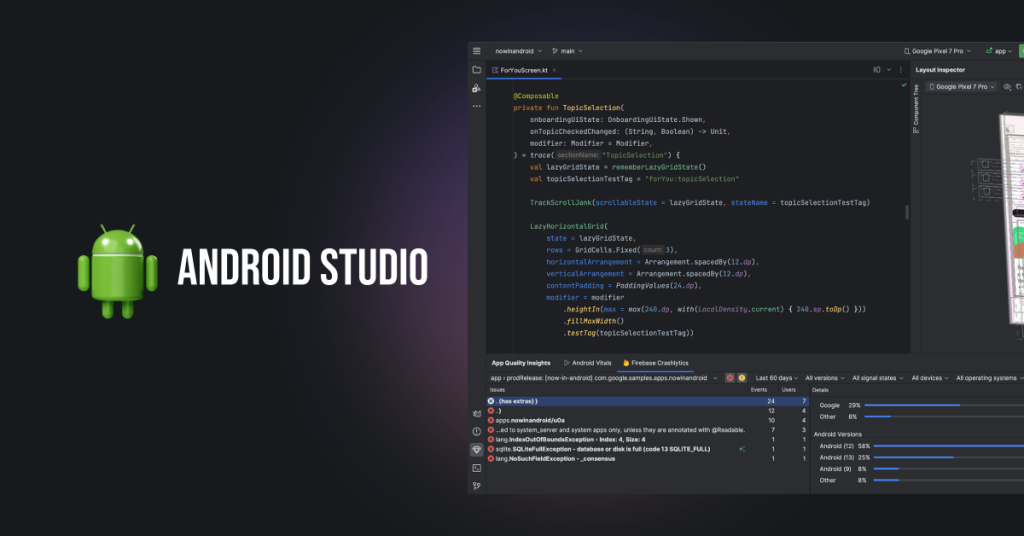
2. Android Studio
Android Studio is an open-source and one of the best tools for Android app development. It is the official IDE and the fastest tool for all Android developers. Google created the tool in 2013, when it ‘eclipsed’ or replaced the Eclipse Android Development Tools (ADT).
Android Studio, an Android-native software, offers the following Android development tools:
a. ADB (Android debug bridge) b. AVD Manager c. Android Studio dolphin
Android Studio is a reliable Android IDE because of its following highlighting features:
Feature-Rich Layout Editor
Say goodbye to the XML layout with Android Studio, as it offers drag-and-drop functionality. You can simply drag UI elements into the visual design editor.
Unified Environment
The Android development tool offers a unified environment for developing Android devices, such as tablets, mobile, TVs, wearables, etc.
Efficient Emulator
You no longer need to test your app on a physical mobile device. The in-built emulator lets you lets you test your app just like an actual Android smartphone.
Intelligent Code Editor
The code editor auto-suggests code completion whether you’re writing your code in Kotlin, C++, Java, or Python.
APK Analyzer
You can see the composition of your APKs after they’re built. This feature allows you to save time when it comes to debugging.
3. Native Development Kit
Also referred to as NDK, it is a suite of Android developer tools that allows developers to use native-code programming languages, such as C and C++. Developers can reuse the code libraries in these languages. However, because of its native code, NDK is not a flexible solution for all Android apps.
Native code functionality often enhances complexity rather than optimizing and boosting code performance. Therefore, be mindful about its use and only utilize it when necessary.
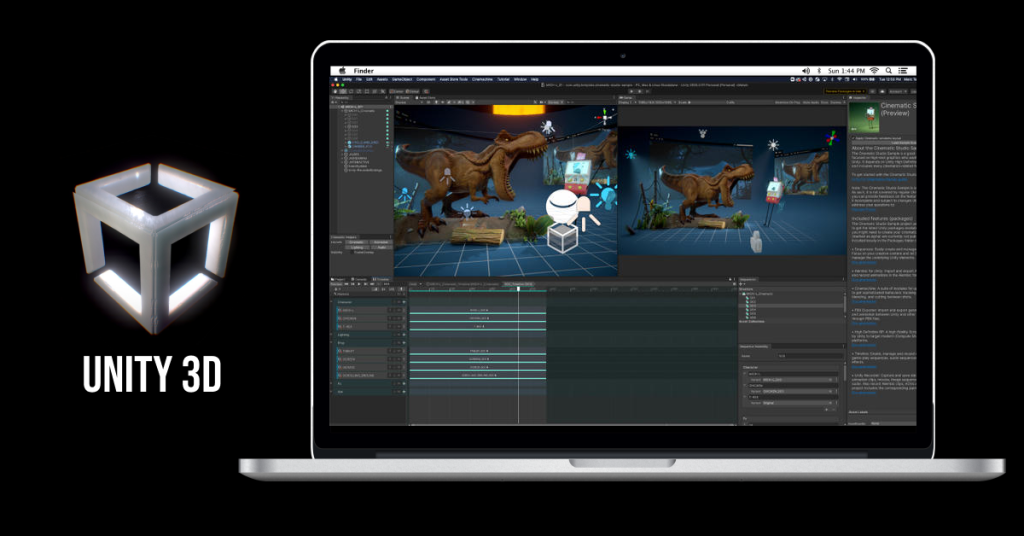
4. Unity 3D
Unity 3D tops the list of Android development tools when it comes to gaming. It is a cross-platform game development environment that allows the creation of high-definition Android gaming apps that are graphic-intensive and have complicated landscapes.
The following are the rich features of the Unity 3D Android development tool:
The tool allows you to create 2D, 3D, Augmented Reality (AR), and Virtual Reality (VR) games with fluid structure, dependable graphics, and outstanding layouts.
You can create Android gaming apps for various platforms, such as smartphones, the web, consoles, and PCs.
Fact Check: 60-70% of all games are made using the Unity 3D tool.
5. Firebase
Android apps require extensive infrastructure to function efficiently, including a robust backend. Firebase is one of the best Android app development tools for building backend API servers. Created by Google, Firebase has been free for some time. It is a suite of mobile development tools for web and mobile development.
Firebase offers a wide range of services. These services are mentioned as follows:
Cloud Firestore
Crashlytics
In-app Messaging
Dynamic links
Google Analytics
App distribution
Test lab
Authentication
Cloud messaging
Cloud storage
Hosting
Realtime database
Remote config
Machine learning
A/B testing
Performance monitoring
Predictions
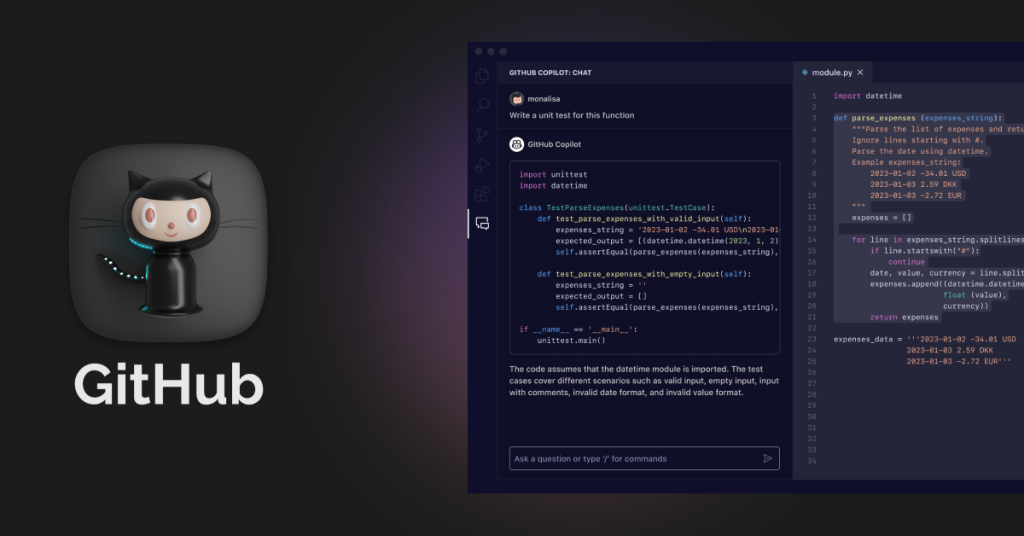
6. GitHub
Everyone has heard about GitHub, but only a few know what it is. GitHub is a collaborative Android developer tool that allows developers to track and record changes in their code.
All your code is uploaded to the GitHub platform from the Version Control System called Git. The platform utilizes cloud computing capabilities to save your code. Therefore, this tool is one of the best Android development tools that can help you build an app when looking to work together in a collaborative manner.
Fact Check: GitHub has over 80 million members across the globe.
7. Instabug
As the name suggests, Instabug is a bug-reporting and beta-testing in-app tool for mobile applications. The tool allows beta testers and group users to share detailed error logs and screenshots during the debugging and Quality Assurance process. You can share the bugs with just one shake.
The SDK captures an environment screenshot of your user’s device, including the console logs, server-side network requests, and bug reproduction steps. It then combines all these details in a single dashboard, allowing testers and Android developers to fix bugs faster.
The highlighting features of this tool are as follows:
Beta testers and users can report bugs with a single shake.
Instabug offers a reliable crash reporter that automatically takes a screenshot of the running environment.
You can reply bag to your users within the app.
Big tech giants, such as Yahoo and Mashable, use Instabug to fix bugs.
8. FlowUp
Once you’ve rolled out the app for the users, how do you know if the app is running smoothly on their smartphones? Introducing FlowUp, an excellent mobile development tool to monitor mobile app performance.
The following are the key features of this tool:
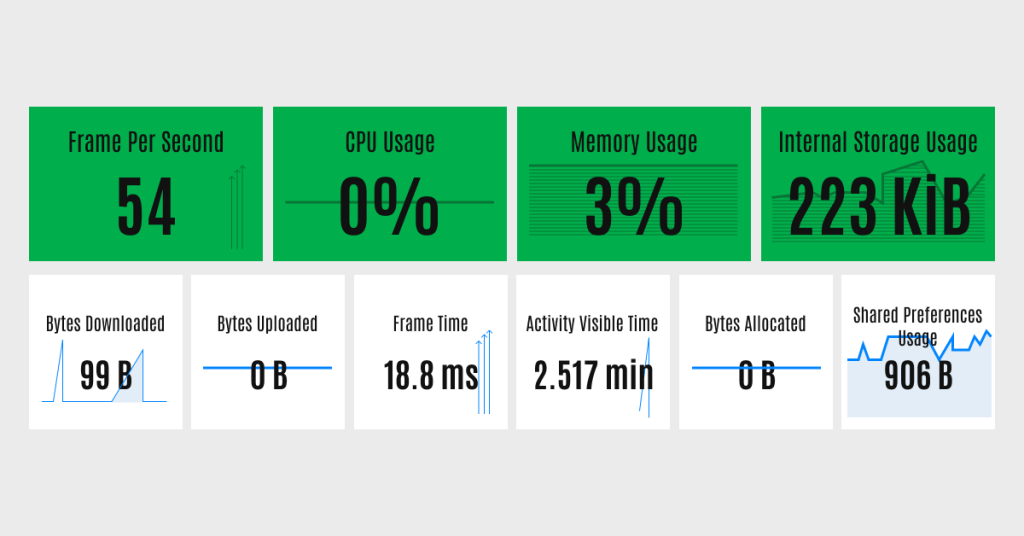
FlowUp provides handy dashboards to help you collect significant insights on various performance metrics, such as frame per second, internal storage usage, memory usage, disc usage, CPU usage, etc.
You can compare the current results with the past versions of your app.
You can take the screenshots and create a dashboard to display the stakeholders.
9. LeakCanary
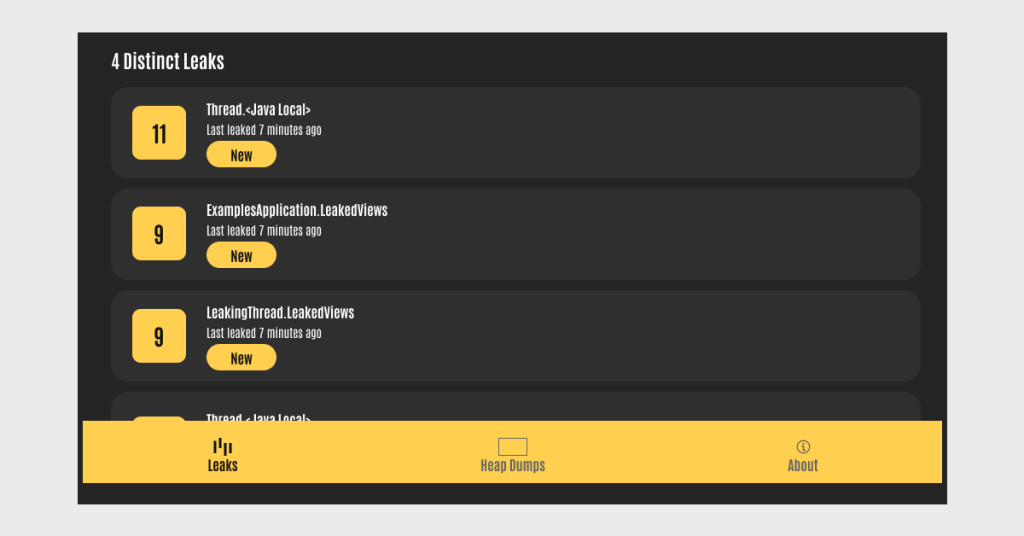
You don’t want your app to give a poor impression due to a memory crash or memory leaks. One such example of a memory leak is an error like OutOfMemory (OOM). Here is LeakCanary to the rescue.
LeakCanary is a solid and reliable memory detection library for Android app development. The tool is developed by Square. It also provides information about the causes of these leaks.
The highlighting features of this Android app development tool are as follows:
It marks the site of the leak, which can detect and reduce memory leaks.
It can significantly eliminate the OutOfMemory (OOM) and ‘Application Not Responding’ crashes.
It alerts the app developer about the memory leaks.
10. Gradle
Gradle is a solid build automation tool for Android apps. It is one of the most popular Android mobile app development tools for building large-scale applications based on Java.
The following are the highlighting features of Gradle:
The tool allows you to create flexible and scalable systems that facilitate customization and optimization of the app-building process.
It allows Android developers to configure builds, manage dependencies, and package Android applications efficiently.
Gradle can be integrated with Android Studio to add external libraries from a single line of code, generate optimized APKs (Android Application Packages), and create diverse build variants to run on multiple devices.
Get Started with Mobile Application Development for Android
That’s a wrap for the list of top ten mobile application development tools for Android. Android developers need various tools for coding, testing, monitoring app performance, debugging, and identifying memory leaks. Therefore, they need dedicated platforms to fix these issues.
This is exactly where the role of Android development tools comes in. Whether you’re a beginner or an experienced Android developer, these tools are indispensable to help you master the art of mobile app development. However, if you run a business organization, you can check out our distinguished mobile app development services, which can help you bring your Android app idea to life.
FAQs:
1. What is Android app development?
Android app development refers to the process of building an app for the Android operating system from scratch. These apps could be web, mobile, or console apps. The process includes coding, testing, debugging, monitoring, and optimizing the code for the best app performance and satisfied users.
2. Which tool is used for Android app development?
One of the best and most beginner-friendly tools for Android app development is Android Studio. Developed by Google, it offers a wide range of features with drag-and-drop functionality to make seamless Android apps.
3. Which is the best debugging tool for Android development?
Instabug is the best debugging tool for Android development. It is a bug-reporting and beta-testing in-app tool for mobile applications. The tool allows beta testers and group users to share detailed error logs and screenshots during the debugging and Quality Assurance process.
4. Which tools are the best Android app development tools?
Some of the best Android app development tools include Android Studio, Firebase, Unity 3D, Eclipse, Gradle, GitHub, FlowUp, and Instabug. These are the various tools for developing, coding, testing, debugging, and monitoring app performance.
5. Which is the best app development tool to monitor mobile app performance?
FlowUp is the best app development tool to monitor app performance after you’ve rolled out your app to the public. It collects the screenshots from users’ smartphones or beta testers and consolidates them in a dashboard. This dashboard can then be presented to the stakeholders.