Understanding Smart Contract Development: Innovate, Code & Execute

What are smart contracts? The self-executing contracts include the agreement terms directly written into the code. Upon fulfilling certain predetermined conditions, these contracts execute and enforce the terms of an agreement.

This explanation of smart contract development seems very complex to understand. Let’s explain to you with an example.

Imagine you want to rent an apartment in a posh area. Upon several hours of negotiations, you and the landlord have agreed upon the terms, such as monthly rent, duration of lease, and late penalties. Now, there’s a high probability that the landlord will encode these terms into a digital contract (smart contract) through a programming language like Solidity. 

(One month late)

After one month, if your agreed-upon conditions are met (like you make the monthly rent payment), the smart contract automatically executes the transaction. Moreover, the smart contract automatically transfers the payment to the landlord’s account, and a monthly record of all future transactions will be stored on the blockchain

Through this above-given example, you must have understood the meaning of smart contracts and their importance. Smart contracts offer transparency and security while automatically executing the actions upon fulfilling predetermined terms. As a result, it helps to take one step forward to neglect the need for intermediaries (lawyers and notaries) in any kind of business.

Smart contract development can benefit every business, offering transparency and security. That’s why companies are considering deploying smart contracts. To make this deployment possible, it is necessary to follow the expert guidelines. We’ve compiled a comprehensive blog post offering detailed information on smart contract development.

Smart Contracts’ Wide-Ranging Benefits: The Multi-Sector Marvel 

Many people believe smart contract development is only valuable for specific businesses (finance). But the reality is far away from this. Smart contracts are used in various sectors, offering superior security to each. Below, we’ve listed a diverse selection of sectors where smart contracts are being used.

Supply Chain Management: 

Smart contracts are gaining wide acceptance in the supply chain industry. These self-executing contracts track the movement of goods and vehicles and automatically release the payment to the retailer’s bank account.

Finance: 

Banking, E-commerce and finance are the sectors where smart contracts started to gain popularity. Executing a trade on a stock exchange is not a child’s game; it requires complete concentration and an abundance of time. But, since smart contracts have entered the industry, the process has become easy and transparent.

Music Industry:

Who’s your favorite artist? Beyonce! Alright. So, every time you stream her song on streaming platforms, the royalties will automatically be distributed to respected rights holders (artists, labels, and producers) through smart contracts. This helps to improve efficiency and transparency in dynamic sectors like the music industry.

Real Estate: 

The buying and selling process of property involves many complexities. However, with the arrival of smart contract development, things have become easy. Through smart contracts, the transfer of ownership and payment process can be done in a few minutes.

How to Deploy Smart Contracts as a Beginner? 

How to Deploy Smart Contracts

Over the last few years, smart contract development has become a necessity for businesses of all sectors. From healthcare to the supply chain, deploying smart contracts can be very beneficial. If you want to deploy smart contacts independently, you must remember the steps below.

Step #1: Understanding the Basics

Before doing anything, you’re completely unfamiliar with it. What little can you do? Probably, understanding its basics!

It’s the same thing you must do for smart contract development. If you’re from a technical background, it is well and good. But if you’re not, understand the basics of blockchain and smart contracts through online tutorials, videos, and articles.

Step #2: Choose a Right Platform 

Proceed further by selecting a reliable platform for deploying smart contacts. Some of the best platforms for smart contract development include EOSIO and Ethereum. Since each platform has its own functions and features, choose a platform that perfectly fits your needs.

Step #3: Proficiency in Programming Language

To create a smart contract to boost security and transparency, it is necessary to have proficiency in programming language. The most widely recognized language is Solidity, primarily used for Ethereum Smart Contracts. Other languages include Vyper (Binance’s Smart Chain Language) and Chaincode.

Step #4: Developmental Environments

To create anything professional, a certain kind of environment should offer developmental facilities to do something according to industry standards. The same thing can be considered in the case of smart contracts, too. Consider trusted developmental environments such as Remix, Embark, and Truffle.

Step #5: Join a Community

If theoretical knowledge is the compass that guides you through any journey, then practical knowledge is the path that decides your destiny. This same line can be applied to smart contracts, too. So, joining a community is the best way to get practical knowledge about smart contracts. Consider online communities such as Telegram or LinkedIn groups, forums, and platforms like Github. This way, you can connect with professional smart contract developers to understand smart contract development in detail.

Step #6: Experiment with Existing Smart Contracts

Search for the best existing smart contracts, start experimenting with them by reading their codes, and then testing them. In this way, you can understand their use case and functionality.

But how can I find existing smart contracts? (This question must be revolving in your brain.)

So, here is an answer to your doubt

The most popular resources for existing smart contracts include Ethereum’s mainnet, Githib, dApps (Decentralized Applications), and online tutorials like B9Lab and ConsenSys Academy.

Start #7: Participating in Hackathons

Forget about the smart contract’s development; your brain must focus on the word ‘Hackathons.’

So, Hackathons are like a competition where individuals or teams come together to participate in projects related to software development and technology.

Coming back on topic. By participating in Hackathons, an individual can get the opportunity to learn professional knowledge to deploy smart contracts. The most popular smart contract development Hackathons include EthGlobal, Ocean Protocol Hackathon, and Binance Smart Chain Hackathon.

Note: 

By following these simple steps, you can start deploying smart contracts effectively. Moreover, if you’re falling short of expertise, resources, or time to make smart contract development possible, look no further than Deftsoft. With years of experience, Deftsoft offers the best smart contract development services. From DeFi smart contract development to NFT smart contract development, Deftsoft professionally provides these services.

Security Best Practices:
 Security Best Practices

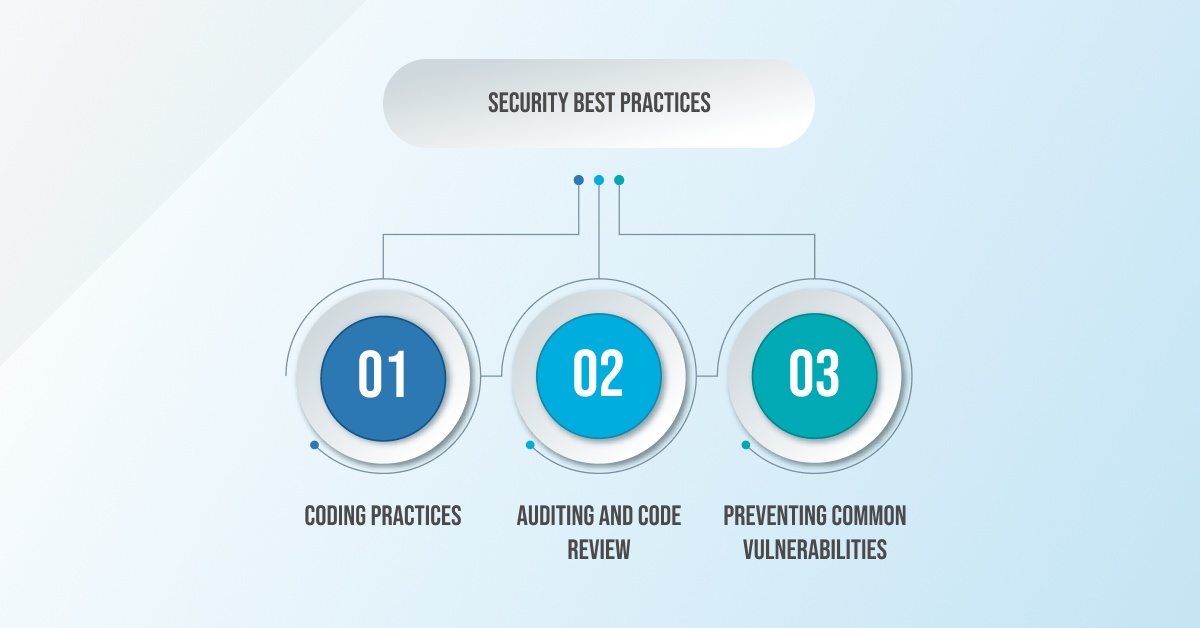
Smart contract development is a very complex process, but you can do it with the right expertise and technique. Furthermore, what else can you do? Adopting security measures! By considering security measures, you can smoothly execute and manage smart contracts. Following are the top security practices to follow:

1. Coding Practices:

At the beginning of the blog post, we mentioned that smart contracts are terms of the agreement written in codes. Therefore, the correct codes play a crucial role in the success of smart contract deployment. To do so, follow established guidelines and principles to write a code that is resistant to vulnerabilities and exploits.

2. Auditing and Code Review:

After writing correct codes, it would be beneficial to undergo auditing and code review. In this step, you must examine the codebase to resist any potential security vulnerabilities and weaknesses. Consider an independent third-party expert to identify and address the potential risks.

3. Preventing Common Vulnerabilities: 

There can be numerous well-known vulnerabilities in smart contracts, such as reentrancy attacks, integer overflow/underflow, and unauthorized access. Use these secure ways to prevent smart contracts from getting affected by these vulnerabilities.

Reentrancy Attacks: ‘Check-effects-interactions’ pattern or implementing a mutex (a locking mechanism)

Integer Overflow/Underflow: SafeMath Libraries or OpenZeppelin’s arithmetic operations

Unauthorized Access: Role-Based Access Control (RBAC) patterns

Deftsoft: Your Trusted Companion in Smart Contract Development

Smart contract development requires professional knowledge and skills to deploy these self-executing contracts effectively. If you lack the expertise, time, and ability to do so, choose Deftsoft. As a leading smart contract development company, Deftsoft is your ultimate companion. With over 17 years of experience, we provide trusted blockchain smart contract development services. Our professionals are highly skilled in delivering industry-standard smart contract development services. What makes us stand out from our competitors? Primarily our ability to provide dedicated services to clients. No matter your difficulty and queries, our professionals make sure to clear all your concerns. Let Deftsoft be a trusted partner in smart contract development.

Final Thoughts: 

In conclusion, smart contracts represent a transformative leap in executing and enforcing agreements. By encoding terms directly into code, these contracts offer transparency, security, and efficiency in various industries. From real estate to supply chain management, the applications are far-reaching. While deploying smart contracts may seem complex, following a structured approach and adopting security best practices can pave the way for successful implementation. For those seeking expertise in smart contract development, Deftsoft stands as a reliable partner with over 17 years of experience. Trust in Deftsoft to navigate the intricacies of smart contract deployment and revolutionize your business processes.

Assets as a Cloud Service: A Game-Changer for Content Creators

Content creators are individuals or professionals responsible for generating, designing, and producing various forms of digital content for online or offline platforms.

Social Media has revolutionized the world of content creation and that’s when Adobe Experience Manager (AEM) emerged as a bussing solution. This has reshaped the way content creators are now approaching their content.

Cloud-based solutions, such as AEM Assets as a Cloud Service, have revolutionized the traditional patterns of content management. This evolution is linked to the broader context of content creation in the Digital Age, where rapid technological advancements meet the demand for engaging, multimedia- experiences.

In this era, AEM Migration to Cloud has become a strategic imperative, ensuring that organizations harness the full potential of cloud-based infrastructure. The relationship between AEM Digital Asset Management capabilities and the speed of cloud services has started a new era of content creation. Within this framework, Adobe Asset Management solutions play a pivotal role, providing content creators with the tools needed to understand the complexities of the digital landscape.

Understanding Adobe Experience Manager

With modern content creation stands the Adobe Experience Manager, a comprehensive solution that includes powerful tools for Adobe Manager Sites, AEM Cloud Services, and AEM Assets as a Cloud Service. Moreover, Adobe Experience Manager is more than just a content management system. It’s a dynamic platform that empowers content creators by combining digital asset management, web content management, and online forms. As a part of the broader spectrum of Asset Management, Adobe Experience Manager stands out for its ability to adapt to the evolving needs of the digital world.

AEM Cloud Service: Key Features

Adobe Experience Manager’s transition to the cloud signifies a paradigm shift for content creators. With AEM Cloud Services, collaboration becomes effortless, allowing teams to work cohesively across geographies. Real-time updates, streamlined workflows, and secure access are pivotal features. Furthermore, Adobe Experience Manager Digital Asset Management functionalities are enhanced, ensuring that multimedia content managed via AEM Assets as a Cloud Service, remains organized, searchable, and ready for deployment. The cloud-based infrastructure significantly optimizes content creation processes, making Adobe Experience Manager a vital tool in the arsenal of any content creator.

Benefits of AEM Cloud Services for Content Creators

For content creators navigating the complexities of the digital age, the benefits of Adobe Experience Manager Cloud Services are transformative. Content versioning and approval workflows are seamlessly managed through Digital Asset Management, ensuring that the right content is delivered at the right time. The efficiency of AEM Migration to Cloud ensures uninterrupted productivity, while the collaborative prowess of Adobe Experience Manager fosters innovative content creation. With its cloud offerings, content creators experience a dynamic shift, enabling them to focus on what they do best: crafting compelling, high-quality content that resonates with audiences worldwide.

AEM Cloud Services:

A. Revolutionizing Content Management

1. Scalability and Flexibility in Cloud-Based AEM

AEM Cloud Services herald a new era in content management, offering unparalleled scalability and flexibility. Traditional constraints dissolve in the cloud, allowing content creators utilizing AEM Assets as a Cloud Service to expand their horizons limitlessly. The adaptability of Adobe Experience Manager in the cloud means that organizations can effortlessly scale their operations, accommodating the growing demands of the digital landscape.

2. Collaboration and Remote Work Capabilities

One of the hallmarks of AEM Cloud Services is its robust collaboration and remote work capabilities. Content creators, regardless of their geographical location, seamlessly collaborate in real-time. Teams using AEM Digital Asset Management tools find themselves interconnected, enhancing creativity and productivity. With AEM Migration to the Cloud, the boundaries of collaboration are pushed further, enabling remote teams to work cohesively, ensuring the continuity of creative processes.

3. Enhanced Security and Version Control

Security and version control lies at the core of AEM Cloud Services. Enhanced security protocols safeguard valuable digital assets, ensuring their integrity and confidentiality. Migration to Cloud guarantees a smooth transition while maintaining stringent security measures. Moreover, meticulous version control, an intrinsic feature of AEM Digital Asset Management, assures content creators that they are always working with the latest, approved versions, fostering a secure and collaborative content creation environment.

AEM Assets as a Cloud Service

1. Exploring AEM Assets Module

Within the era of AEM Services, the AEM Assets as a Cloud Service module stands as a beacon of innovation. It redefines how digital assets are managed and utilized. This module allows content creators to delve into a comprehensive array of features, simplifying the intricate process of content management. With its intuitive interface, users navigate effortlessly, organizing multimedia resources with precision. AEM Digital Asset Management capabilities within this module enable metadata tagging, ensuring assets are not only stored efficiently but are also easily searchable, streamlining the creative workflow.

2. Advantages of AEM Assets in the Cloud

The advantages of Adobe Experience Manager’s assets in the Cloud are manifold. By leveraging these services, content creators experience unparalleled flexibility and accessibility. Assets become available anytime, anywhere, enabling seamless collaboration among globally dispersed teams. Furthermore, during Migration to Cloud, assets are seamlessly transitioned, ensuring continuity in creative processes. The cloud environment enhances version control and security, providing a robust foundation for Adobe Experience Manager users. Scalability is intrinsic, allowing content creators to adapt swiftly to changing project requirements, optimizing productivity and creativity.

3. Easy Integration with Content Creation Tools

The integration capabilities of AEM Assets as a Cloud Service with various content creation tools epitomize synergy. Seamless collaboration between Adobe’s creative suite and the cloud service ensures a harmonious workflow. From Adobe Photoshop to Adobe Illustrator, assets seamlessly transfer, maintaining their integrity and quality. This integration transcends formats and mediums, accommodating diverse creative needs. The fluidity in the exchange of assets between Adobe Asset Management solutions and content creation tools not only enhances productivity but also fosters an environment where creativity knows no bounds, solidifying the pivotal role of AEM Cloud Services in the digital content landscape.

AEM Migration to Cloud: Best Practices

Planning and Strategy for AEM Migration

A successful AEM Migration to the Cloud hinges on meticulous planning and strategic execution. Understanding the nuances of Adobe Experience Manager and AEM Assets as a Cloud Service is crucial. The migration strategy should align seamlessly with the organization’s goals and workflows. Prioritizing content structure and metadata tagging ensures a smooth transition, optimizing AEM Digital Asset Management capabilities in the cloud. Collaborative efforts between teams and stakeholders, guided by the expertise of Adobe Experience Manager professionals, lay the foundation for a successful migration.

Overcoming Challenges in Migration to Cloud

Challenges during Migration to the Cloud are inevitable, but proactive measures mitigate risks. Addressing legacy system complexities and ensuring compatibility with cloud infrastructure are paramount. Collaboration between IT specialists and content creators streamlines workflows. Comprehensive testing protocols identify and resolve potential bottlenecks before they impede migration progress. Moreover, leveraging the expertise of Adobe Asset Management specialists aids in resolving migration challenges, ensuring a seamless transition that upholds content integrity and accessibility.

Ensuring Data Security and Integrity During Migration

During AEM Migration to the Cloud, data security is non-negotiable. Rigorous encryption protocols safeguard content throughout the migration process. Attention to detail in data mapping and validation guarantees content integrity post-migration. Regular audits and adherence to Asset Management best practices reinforce data security, creating a robust framework where data remains confidential, accessible, and unaltered. This meticulous approach assures stakeholders that their assets are safe, solidifying trust in Adobe Experience Manager Services.

Efficient Organization and Retrieval of Digital Assets

In the realm of AEM Digital Asset Management, efficiency is paramount. Adobe Experience Manager Assets as a Cloud Service offers intuitive tools for systematic organization and swift retrieval. Metadata tagging, by AEM Cloud Services, ensures assets are well organized, enabling content creators to locate and employ resources quickly. Seamless integration with content creation tools enhances the creative workflow, providing a cohesive environment where assets are efficiently managed and readily available.

Collaboration and Workflow Optimization

Digital Asset Management under AEM Services fosters collaboration and optimizes workflows. Teams, regardless of geographical dispersion, collaborate seamlessly. Cloud-based collaboration tools enhance real-time interactions, nurturing creativity. Content creators leverage Adobe Experience Manager to collectively enhance assets, ensuring consistency across projects. Workflow optimization is embedded in every facet of collaboration, empowering teams to achieve more together than they could individually.

Version Control and Metadata Management

Version control and meticulous metadata management are linchpins of Digital Asset Management. Under AEM Assets as a Cloud Service, version control ensures that content creators always work with the latest iterations, avoiding discrepancies and fostering a cohesive creative process. Simultaneously, metadata management ensures assets are not only categorized effectively but are also enriched with vital information, enhancing searchability and relevance. This meticulous approach forms the backbone of Adobe Asset Management, enabling digital asset excellence in the cloud.

Strategies for Content Creators

1. Optimizing Cloud-Based Content Creation Workflows

Efficiency in cloud-based workflows is achieved through robust planning, collaborative tools, and streamlined approval processes. AEM Assets as a Cloud Service provides a centralized hub that enhances asset accessibility and collaboration, while meticulous version control maintains consistency.

2. Ensuring Consistency and Brand Identity

Maintaining consistency across diverse content is pivotal. Adobe Experience Manager tools enable standardized templates, ensuring brand integrity and a unified user experience.

3. Collaboration Strategies for Remote and Diverse Teams

Cloud-based collaboration tools bridge geographical gaps, fostering creativity among remote teams. Regular virtual meetings and shared digital spaces ensure seamless communication and ideation.

Conclusion

AEM Cloud Services and Adobe Asset Management redefine content creation. Streamlined workflows, enhanced collaboration, and robust security characterize this paradigm shift. Content creators benefit from efficient asset management, ensuring consistent branding, even in remote collaborations.

Now is the time to take your talent of content creation to the next level with Deftsoft’s Adobe Experience Manager Assets as a Cloud Service! At Deftsoft, we excel in Adobe Experience Manager (AEM) implementation, customization, and optimization. Our cloud-based solutions transform the way businesses operate. With a blend of technical expertise, creativity, and a customer-centric approach, Deftsoft is a reliable partner for businesses seeking to enhance their digital presence, optimize their operations, and achieve their goal. Your success is just one call away!

The Crucial Role of Blockchain in Revolutionizing Software Development

As a well-informed global citizen, you must have heard of Blockchain. Let us clarify all our social media enthusiasts: it’s not Tiffany’s latest jewelry collection. But it’s an innovative decentralized digital ledger system that records transactions across multiple computers. Unlike traditional methods, Blockchain records transactions in a way that ensures complete security, transparency, and immutability. We know that’s a lot of information to grab in the first moment. In this blog we will understand the crucial role of Blockchain in revolutionizing software development.

Understand this by Blockchain technology’s prime example, Bitcoin (a digital currency in which your intelligent uncle must be trade-in).

Bitcoin uses a blockchain to record all transactions. When someone makes a transaction in Bitcoin, it gets added to a block, which is then linked to the previous block, forming a chain. This ensures that the transaction history is secure, transparent, and cannot be altered. 

In the dynamic landscape of technology, Blockchain has emerged as a true game changer. Besides acting as the foundation for numerous cryptocurrencies, it is also revolutionizing various industries. In today’s era, the most significant impact of Blockchain can be seen in the world of software development.  Software development is the long process of creating, designing, testing, and maintaining computer applications. And, in this complicated technology, Blockchain is making significant changes. This blog post will discuss the crucial role of Blockchain in software development. Before delving into the role of Blockchain technology, let’s discuss the common challenges faced by traditional software development.

Blockchain Transforming Software Development: Common Challenges & Solutions

Software development has undergone some remarkable changes in the past few years due to the popularity of technologies like DevOps and Blockchain. Still, traditional software development methods are widely used in the current era. Many applications continue to be developed using conventional approaches that rely on centralized architecture and client-server models.

However, there are many challenges in this system, too. But, with the debut of Blockchain, software developers can resist these challenges with innovative solutions. Blockchain technology first came to limelight in 2009 with the launch of Bitcoin. Since then, there’s no stopping. With each passing year, the role of Blockchain in software development is widening and widening. Following are a few challenges faced in software development and right below each point, there are solutions indicating how Blockchain is transforming Software development.

Challenge #1: Centralization and Security Concerns

Can we ask you one question? What is centralized software? A system that relies on a single central authority or server to manage data and transactions is known as centralized software.

That’s the correct answer. However, the issue is that this centralized system can result in data breaches or system failures. Above all that, traditional software development also uses this centralized system.

Solution: Decentralized Applications (DApps)

In the Challenges section, we’ve explained the meaning of centralized. So, as per your POV, what does decentralized applications mean to you?

Simply, the applications that run on a decentralized network (Blockchain) without relying on a single central server are known as the Decentralized Applications (DApps). These applications use the collective computing power of the network’s nodes. With the inclusion of decentralization applications, Blockchain is enhancing the security and transparency of software development. Moreover, DApps can use cryptocurrencies as their native tokens, allowing effortless transactions within the application. Therefore, incorporating Blockchain in software development can elevate the security of your applications.

Challenge #2: Lack of Transparency and Accountability

The biggest challenge for traditional software development is its lack of transparency. Traditional software development is not always clear how data is being processed or who is responsible for specific actions. Therefore, it becomes easy for hackers and fraudsters to attack specific software’s data. Due to this reason, many software of past decades have experienced fraudulent activities.

Solution: Smart Contract Development

Over the past few years, Blockchain technology has taken advantage of smart contracts for software development to reduce potential disputes.

What are these smart contracts? (You must be having this question in your mind). So, here is the answer 

Smart contracts are self-executing contracts with the terms written directly into code. These contracts automatically execute and enforce the terms, eliminating the need for intermediaries and disputes.

These smart contracts are deployed on a blockchain, ensuring transparency within the software development. Whether it’s finance or supply chain, smart contracts are boosting the role of Blockchain in software development.

Challenge #3: Data Integrity Issue

Before discussing this challenge, let’s first understand what, exactly, data integrity means. In simple words, it can be referred to as the accuracy and reliability of data in a system.

In the case of traditional software development, it can be said that there are numerous data integrity issues. Firstly, it involves less robust security measures, resulting in data breach activities in specific software. Secondly, data migration and synchronization include the risk of errors across different parts of a system, resulting in huge discrepancies.

Solution: Improved Security Measures

The primary reason behind the popularity of Blockchain is its security measures. By employing a cryptographic technique to secure data and transactions, the role of Blockchain in software development is making a considerable rise. The transparency and security of Blockchain are so tight that even professional hackers can find it difficult to hack the specific system. In simple words, it can be explained as:

Cryptographic security + decentralized nature of Blockchain = Reducing the risk of hacking 

In a modern world, where fraudulent activities and hacking are becoming emerging global issues,  Blockchain technology acts as a resistance to all these problems. This has further certified that the role of Blockchain in software development is on high rise.

Limitations of Blockchain in Software Development

Limitations of Blockchain

Like any helpful technology, Blockchain also has limitations that can affect its transparency and scalability in certain situations. Let’s review the top 3 limitations of Blockchain in software development and their respective solutions.

Limitation #1: Scalability Problems

Often, blockchain platforms experience slower transaction speeds due to increased traffic. Moreover, Blockchains such as Bitcoin and Ethereum also include a limited number of transactions per second.

Solution:

In this situation, software developers tend to address scalability issues by adopting solutions such as off-chain transactions and sharding.

Limitation #2: Legal Problems

Besides scalability issues, legal problems are another primary limitation of Blockchain in software development.

So far, we’ve examined the significant role of Blockchain in software development due to its decentralized nature. But how would you react if we said that this decentralized nature also poses a legal challenge for Blockchain? It would be surprising! But a blog post without surprises is useless. Let’s return to the topic.

So, in many jurisdictions, the legal status of decentralized applications and Blockchain remains unclear, hindering software development.

Solution:

To stabilize the legal status, engage with legal experts, and stay compliant with evolving regulations.

Limitation #3: Large Amount of Energy Consumption

Incorporating Blockchain into software development requires significant energy consumption, primarily to run the platform seamlessly. Therefore, this results in environmental concerns and further limits the practicality of such blockchains.

Solution:

To address this issue, consider an energy-efficient approach to computational power.

Future Trends and Innovations:

Interoperability with Other Technologies:

Many leaders of the tech world are considering introducing the concept of Interoperability. Before going further, let’s understand what Interoperability means. So, it refers to the ability of different blockchain platforms and systems to work together seamlessly. Currently, many blockchain networks are following this concept. But in the coming years, this could become one of the biggest trends in Blockchain for software development.

Blockchain in IoT and AI:

What are the hot topics in the tech field currently? Probably IoT (Internet of Things) and Artificial Intelligence (AI). Therefore, it is undeniable that we’ll witness the integration of Blockchain technology with AI and IoT. By doing so, recording and verifying the interactions and data exchange will become more secure. Moreover, it can benefit all three technologies in their marketing and campaigning.

Deftsoft: A Leading Provider of Blockchain Development Services

With each passing day, the role of Blockchain in software development is widening. This is the best time to decentralize your business with the help of a professional Blockchain app development provider. As a leading Blockchain software development company, Deftsoft is the ultimate partner to elevate your business. Whether you have a finance business or real estate, we’ll help you in all conditions with top-tier Blockchain developer services. From Smart Contract Development to Blockchain Software Development, our wide range of services will make you one step closer to getting superior scalability, security, and transparency for your business. So, don’t look left or right; choose Deftsoft and enter the countless opportunities for your business through Blockchain application development services.

Final Thoughts:

In conclusion, the impact of Blockchain in software development is transformative and far-reaching. By enabling decentralized applications (DApps), supporting smart contracts, and enhancing security, Blockchain has revolutionized how we approach software development. However, it’s important to acknowledge limitations, including scalability and legal challenges, as well as the energy consumption associated with some blockchains. Looking ahead, the integration of Blockchain with IoT and AI, as well as the push for Interoperability among various platforms, represents exciting future trends.

As the landscape continues to evolve, companies like Deftsoft (A leading Blockchain app development company) stand ready to provide cutting-edge blockchain app development services, offering businesses the opportunity to leverage this revolutionary technology for superior scalability, security, and transparency. Choose Deftsoft and unlock the countless possibilities for your business through blockchain application development services.

Best WordPress Google Review Plugins for 2025: A Brief Guide

What significance do Google reviews hold to improve your website’s credibility? Do Google reviews really help to increase website’s conversion rates? (These questions must be revolving in your mind)

But the answer to these questions lies right here. WordPress Google review plugin is the superior strategy or way to improve your website’s online presence and overall business. Check the website of any renowned business; you’ll witness a separate layout with Google reviews embedded there. Though many talented entrepreneurs are aware of the superior benefits of WordPress Google review plugins, they still don’t want to take action. 2023 is going to end soon, and you’ve skipped one more year by not embedding Google reviews to elevate the trustworthiness of your website. But there’s nothing to worry about. It’s better late than never. Why not take a 2025 resolution to make things better for your website by embedding Google reviews?

But how I’m going to embed Google reviews in WordPress? (This question must be in your mind.)

There’s no need to go here and there. Take a cup of coffee in your hand and sit comfortably to read this detailed blog post. We will discuss why Google reviews play such a crucial role in elevating a website’s online visibility, not Google reviews, but ‘Reviews’ as a whole concept. Then, we will list the best free WordPress Google review plugins to attract well-deserved traffic to your website. But, before discussing these all, let’s understand what, exactly, are the Google review Plugins.

So, without further ado, let’s get into it, best free WordPress Google review plugins.

What are the Google Review Plugins? 

Google review plugins are third-party plugins and tools that are typically developed by independent developers or companies to help businesses display their Google reviews on their websites, manage reviews, and improve their online presence.

Why do Online Reviews Matter? 

In today’s digital age, online reviews play an essential role in elevating any type of business. Whether you run a restaurant or corporate business, reviews form digital word-of-mouth marketing. Positive reviews can take your business from rags to riches, and one wave of negative reviews can also bring your business down from cloud nine. In short, online reviews matter because they influence customer perception, impact search visibility, provide valuable feedback, and help companies build trust among the general public.

Understand this by an example: when any movie releases, critics give their genuine reviews, and most probably, a movie with good word-of-mouth ultimately turns out to be a box office success. Even if the film doesn’t get box-office success, it does get nominated in prestigious award shows like the Oscars and becomes a center of highlight.

Remember, ‘The Shawshank Redemption’!

Therefore, a positive review is critical to make your venture successful. Whether it’s a movie or your business, online reviews impact your success.

Four Best Free WordPress Google Review Plugins in 2025: 

Every individual has different types of points of view regarding which WordPress Google Review Plugin is reliable. That’s why we have gone through all Google Review Plugins to find the best ones. Given below is the list of the top free WordPress Google review plugins for 2025. May this new year take your business to new heights.

1. Everest Review Lite Plugin: 

Everest Review Lite Plugin

First up, we have the Everest Review Lite Plugin. As the name suggests, ‘Everest,’ its features and functions are also high, like Mt. Everest. Pardon us! That’s a silly comparison. Okay! Let’s get into it.

Everest Review Lite is one of the best Google review plugins for WordPress that offers easy integration of reviews through widgets and shortcodes. The most exciting thing about Everest Review Lite is it works based on 5-star ratings, allowing you to present Google reviews in different responsive layouts, such as sliders and lists.

Category:  

Free

Main Features: 

  • A ‘Rate Us’ button allows new users to rate the website.
  • Unrestricted access to Google Business Places
  • A selection of 10 professionally crafted review templates
  • Finally, five visually appealing floating review layouts

2. Review and Rating – Google My Business Plugin: 

Google My Business is indeed the most widely recognized Google Reviews Plugin for WordPress. Many industry analysts find it an ideal WordPress Google Review Plugin, especially for those who want to indicate their customer’s experience with their business. Do you know what makes the Google My Business Reviews WordPress Plugin a reliable one? It’s user-friendly nature. Moreover, you don’t need to be professional to use this plugin. You just need to give your Google Places ID access to it, and within a few minutes, it’ll collect the necessary data and make a well-organized block of reviews on your website. Isn’t that easy?

Category:

Free

Main Features: 

=> Access to over 20 pre-designed layouts

=> Incorporate structured data for optimal search engine visibility

=> Accommodates RTL language and styles effortlessly

=> Finally, personalize columns for reviews and their custom ordering

  1. Plugin For Google Reviews: 

Plugin For Google Reviews

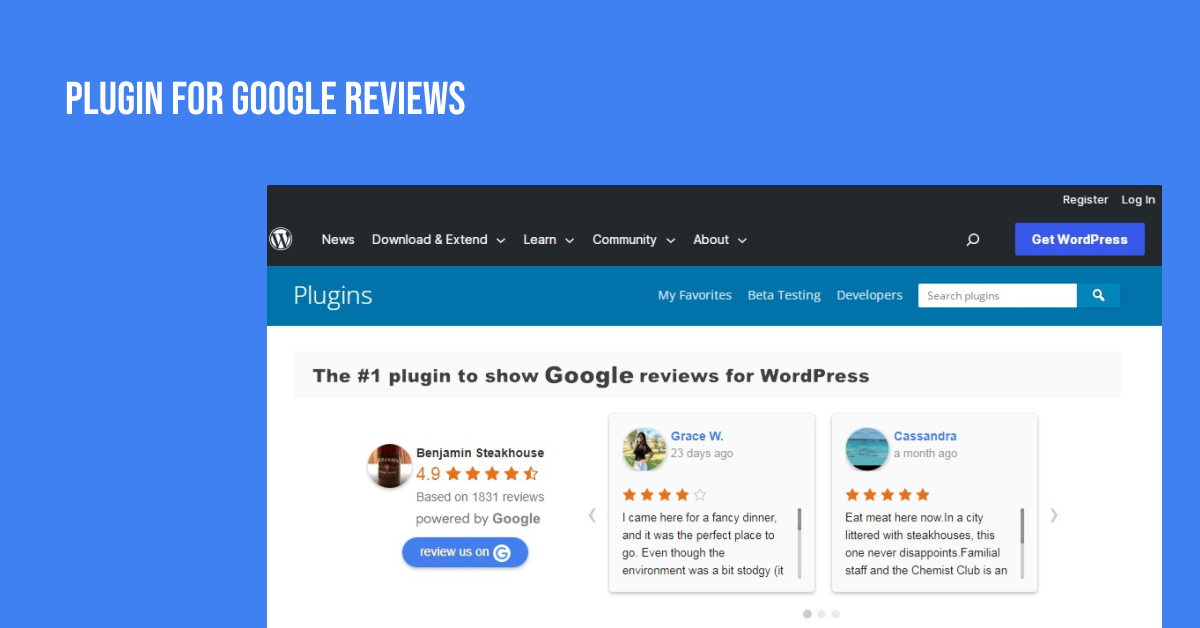
We’re talking about the top WordPress Google Reviews Plugin, and how can we forget WordPress’s very own plugin? Yes, you guessed it right, it’s Plugin For Google Reviews. Regarded as the best free WordPress Google Review Plugin by many, this plugin has the ability to display up to five Google Places Reviews on websites. Moreover, it automatically replaces or upgrades the old reviews with new ones. Isn’t that so cool? Yeah, but nothing less cool than we are acting like your ‘That Loud Friend.’ (Just kidding)

Category:

Free

Main Features: 

=> Embeds a ‘Review Button’ on website, effortlessly

=> Allowing customers to share their feedback and ratings

=> Shows positive testimonials to improve brand awareness

=> Finally, retrieve the top five most valuable reviews via API requests

  1. WP Google Review Slider: 

WP Google Review Slider

It is one of the most underrated WordPress Google Review plugins. With a simple and responsive grid, WP Google Review Slider effortlessly integrates Google reviews into your website. Additionally, it has a user-friendly nature, allowing you to create sliders for your reviews with a similar visual scheme to image sliders. It should be remembered that the life version of WP Google Review Slider is completely free, while the premium version can be accessed via monthly subscriptions.

Category:

Lite Version-Free, while Premium Version-Paid

Main Features: 

=> Easily toggle visibility for specific Google reviews

=> Utilize pagination for seamless review navigation

=> Design a stylish summary badge for your reviews

=> Finally, e-mail alerts for low-rated reviews

What are Widgets and Short Codes? 

You must have read ‘Widgets’ and ‘Short codes’ multiple times in the section of WordPress Google review plugin of this blog post. All our non-technical readers must be thinking, what exactly these two words are? So, widgets and short codes are tools used in web development to display some features or content overall on a website. Widgets are small blocks of code that can added to specific areas of a webpage, while Short codes are unique tags that can be inserted directly into the content of a post.

Benefits of Integrating Google Reviews on Your Website: 

What do you think is why it is crucial to integrate Google reviews on your website? Because it looks cool. There are no arguments; it does look cool, but it also packs a bunch of benefits, too. So, let’s dive into why you should integrate Google reviews on your website.

Benefit #1: Credibility and Trust

Okay, understand this by an example. For example,

let’s assume you’re looking for laundry services. Now, you jumped onto Google to find a laundry company near you. You got stuck with two websites for different companies; one has an integration of customer reviews, while the other one doesn’t. So, as a normal human, you’ll automatically choose a company with customer reviews and ratings.

Therefore, by this, we mean to say displaying authentic Google reviews on your website through free WordPress Google Review Plugin will build trust with potential customers. Moreover, these reviews can serve as social proof of your business’s quality and reliability.

Benefit #2: Enhanced Visibility

Many industry analysts have confirmed that embedding customer Google reviews on websites can increase conversion rates by up to 270%. Moreover, it is one of the leading marketing strategies that can improve your website’s rankings on search results and online visibility. Furthermore, it can result in higher user engagement and potentially increased conversations.

Benefit #3: Feedback Loop

Why do reviews matter to anyone? Whether it be a movie or business. Because it acts as a direct line of communication between your business and its customers, customer feedback allows you to understand customer needs better, address concerns, and continuously improve your offerings. Understand this by an example:

Suppose you debut a new product from your business. Now, on making the product public, it is getting mixed reviews. Now, what can you do? The quality or narrative regarding the product can’t be changed, but at least you can know what exactly, went wrong with this product. By understanding the customer problems and their issues, you can take safety precautions for your upcoming products. 

Deftsoft: Your Ultimate Partner in Integrating Google Reviews on WordPress

Using WordPress Google Review Plugins requires professional expertise and knowledge. That’s why consider Deftsoft your ultimate partner in integrating Google Reviews on WordPress. Additionally, our highly skilled professionals will effortlessly embed Google customer reviews on your website. Moreover, we can also help you in designing your website to make it visually appealing. With over 17 years of experience, Deftsoft is the leading web designing & development company. So, don’t look here and there; choose Deftsoft to elevate your business.

Final Thoughts: 

In conclusion, integrating Google Reviews into your website is a pivotal step towards establishing trust and credibility with your audience. These authentic testimonials act as a powerful endorsement for your business, influencing potential customers’ decisions. Moreover, they enhance your online visibility and improve search rankings, ultimately leading to increased conversions.

Remember, reviews form a vital aspect of digital word-of-mouth marketing in today’s digital age. If you haven’t incorporated them yet, it’s never too late to start. As 2023 draws to a close, make a resolution for 2025 to boost your website’s trustworthiness with Google Reviews. Partner with Deftsoft, your expert ally in seamless integration. With over 17 years of experience, we’re here to elevate your business. Trust us for a visually appealing and credible online presence. Choose Deftsoft; choose success.

FAQs (Frequently Asked Questions): 

Q-1: Why are Google Reviews important for a website’s credibility?

Ans: Google Reviews provide authentic feedback, building trust with potential customers and showcasing the business’s reliability.

Q-2: Can Google Reviews increase conversion rates?

Ans: Yes, studies show that integrating Google Reviews can boost conversion rates by up to 270%, influencing purchasing decisions.

Q-3: What are some of the top free WordPress Google Review Plugins and what are their key features?

Ans: The article lists Everest Plugin, Google My Business Plugin, WordPress Google Reviews & Ratings Plugin, and WP Google Review Slider, along with their respective features and categories.

Q-3: How do online reviews impact businesses?

Ans: Online reviews influence customer perception, affect search visibility, offer valuable feedback, and build trust among the public.

Q-4: What are Widgets and Shortcodes?

Ans: Widgets are small blocks of code for adding features, while Shortcodes are special tags for embedding content directly into posts or pages.

Q-5: How can Google Reviews improve a business’s online visibility?

Ans: Google Reviews enhance search rankings, leading to better visibility. Additionally, positive feedback attracts more visitors, potentially resulting in increased conversions.

Q-6: Why should I choose Deftsoft for Google Reviews integration?

Ans: Deftsoft brings over 17 years of expertise in seamlessly embedding authentic Google customer reviews, enhancing your website’s credibility.

8 Steps to Create a Complete Marketing Strategy In 2025

Are you all set to welcome 2025? The new year will have a convergence of technology and innovation that will reshape the marketing landscape. As we are going to step into this transformative year, businesses face a lot of challenges. In this article, we will comprehensively explore eight fundamental steps that include a complete marketing strategy for 2025.

What is marketing Strategy?

Marketing Strategy is the blueprint that guides businesses through the complexities of the digital age. It includes a series of planned activities informed by data-driven insights and market analysis designed to promote products or services effectively. This strategy outlines the target audience and delineates the channels, messaging, and techniques essential to engage consumers. As the market is strongly believed to evolve in 2025, a marketing strategy will not be just about promotion; it’s a holistic approach, integrating online and offline methods, ensuring brand visibility, customer engagement, and sustainable business growth.

Importance of a marketing strategy in 2025

In 2025 and beyond, the importance of a marketing strategy continues to soar, becoming the cornerstone of every successful business.

1. Anticipating Future Trends:

In 2025, a robust marketing strategy will involve predictive analytics and AI-driven tools to anticipate consumer trends. Businesses will use these insights to align their products and services with future demands, ensuring they are always one step ahead of the market.

2. Personalized Customer Experiences:

In the future, marketing strategies will leverage advanced data analytics to create hyper-personalized customer experiences. Tailoring products, services, and marketing messages based on individual preferences will enhance customer satisfaction, loyalty, and retention.

3. Embracing Emerging Technologies:

The marketing strategies in 2025 will integrate cutting-edge technologies like augmented reality (AR), virtual reality (VR), and blockchain. These technologies will create immersive brand experiences, interactive advertisements, and secure, transparent transactions, enhancing customer trust and engagement.

4. Social Media and Influencer Collaboration:

In the coming years, social media platforms will continue to dominate the marketing landscape. Marketing strategies will focus on leveraging social media channels and collaborating with influencers to reach wider audiences. Hence, engaging content and influencer partnerships will be pivotal in shaping brand perception.

5. Sustainability and Ethical Practices:

In 2025, consumers will be increasingly conscious of environmental issues and ethical business practices. Marketing strategies emphasize eco-friendly initiatives, sustainable sourcing, and transparent supply chains. Brands showcasing their commitment to social and environmental responsibilities will earn consumer trust and loyalty.

6. Voice Search Optimization:

In the future, voice search will become a predominant mode of online interaction. Marketing strategies will adapt to optimize content for voice-based queries, ensuring businesses remain visible and accessible to consumers using voice-enabled devices and virtual assistants.

7. Interactive Content Marketing:

In 2025, interactive content formats such as quizzes, polls, and shoppable videos will gain prominence. Moreover, marketing strategies will focus on creating engaging and interactive content, enhancing user participation, and driving conversions through immersive online experiences.

8. Data Security and Privacy:

In the upcoming years, data security and privacy will be paramount. Marketing strategies will prioritize customer data protection, ensuring compliance with stringent data privacy regulations. Building trust through transparent data practices will be essential for customer confidence.

9. Omnichannel Integration:

In 2025, consumers will demand seamless experiences across various channels. Marketing strategies will emphasize omnichannel integration, providing consistent messaging and user experiences whether customers engage with the brand online, in-store, or through mobile devices.

10. Agile and Adaptive Approaches:

In the future, market conditions will change rapidly. Additionally, agile marketing strategies will be crucial, allowing businesses to adapt swiftly to evolving trends and consumer behaviors. Continuous monitoring, analysis, and adjustment will be integral to maintaining a competitive edge.

Steps to Create a Complete Marketing Strategy

marketing in 2024

Step 1. Comprehensive Market Research:

In 2025, begin your marketing strategy by conducting in-depth market research. Utilize advanced data analytics and market intelligence tools to understand consumer behaviors, preferences, and emerging trends. Analyze your competitors and identify gaps in the market, allowing you to make informed decisions.

Step 2. Define Clear Objectives:

In the future, clearly define your marketing objectives. Whether it’s increasing brand awareness, driving online sales, or launching a new product, setting specific, measurable, achievable, relevant, and time-bound (SMART) goals will provide a roadmap for your strategy.

Step 3. Embrace Advanced Technologies:

In 2025, leverage advanced technologies such as artificial intelligence (AI), machine learning, and augmented reality (AR) to enhance your marketing efforts. Implement AI-driven chatbots for customer interactions, use machine learning algorithms to analyze consumer data, and create immersive AR experiences to engage your audience.

Step 4. Personalized Customer Experiences:

In the future, focus on creating personalized customer experiences. Utilize customer data to tailor your products, services, and marketing messages to individual preferences. Implement dynamic content, recommendation engines, and customized marketing automation to enhance customer satisfaction and loyalty.

Step 5. Multi-Channel Marketing:

In 2025, adopt a multi-channel marketing approach. Engage with your audience across various platforms, including social media, email, mobile apps, and emerging channels like voice assistants. Ensure consistent branding and messaging while tailoring your content for each platform to maximize reach and impact.

Step 6. Content Strategy and Creation:

In the future, develop a robust content strategy. Create high-quality, engaging content that resonates with your target audience. Invest in interactive content formats, videos, podcasts, and virtual events. Focus on storytelling and user-generated content to foster meaningful connections with your customers.

Step 7. Data-Driven Decision Making:

In 2025, rely on data-driven insights to make informed decisions. Implement advanced analytics tools to monitor the performance of your marketing campaigns in real time. Analyze key performance indicators (KPIs), customer feedback, and market trends to optimize your strategies continuously.

Step 8. Agile Adaptation and Optimization:

In the future, adopt an agile approach to your marketing strategy. Stay flexible and be ready to adapt to changing market dynamics and consumer behaviors. Continuously monitor the performance of your campaigns, gather feedback, and optimize your strategies based on the insights gained. Embrace innovation and be open to experimenting with new tactics and technologies to stay ahead of the competition.

Conclusion

A successful marketing strategy in 2025 isn’t just a choice; it’s an imperative. The convergence of technology and innovation reshapes the marketing terrain, demanding businesses to be agile, data-driven, and customer-focused. The eight comprehensive steps outlined here provide a roadmap for businesses navigating this transformative era. By embracing advanced technologies, personalizing customer experiences, and ensuring data security, businesses can create a robust marketing strategy that anticipates future trends and fosters meaningful connections with their audience. In this era of rapid change, an agile and adaptive approach, along with a commitment to sustainability and ethical practices, will be the key differentiators. Deftsoft is a full-service web design and development agency that works with you to come up with the best marketing strategy. We are set for the upcoming year, are you? Contact us, and we will help your business not only survive but thrive, ensuring its relevance and success in the competitive market of 2025 and beyond.

FAQs:

  1. What is the AI trend in marketing in 2025?

According to McKinsey, 69% of businesses use the power of Generative AI to create a content strategy. Everything can be generated by Gen AI, from text and images to audio. For instance, you can create a monthly social media calendar with the help of Generative AI.

  1. What are top 5 marketing trends in 2025?

The top 5 marketing trends in 2025 are as follows: Short-form video content for enhanced discoverability, AI-backed content strategies, User persona-driven marketing, Dynamic marketing using user-targeted carousel ads, and Solid SEO strategies

  1. What is the future of marketing?

The marketing industry in the future will make use of quantum computing to tailor hyper-personalized ads. These ads will directly target the user behavior of a potential buyer. The need to fabricate a user persona will be eliminated.

  1. What is hot in marketing right now?

Short-form content and influencer marketing are the two hottest trends in the market right now. You can make use of Instagram reels and TikTok to go viral in the market.

  1. How to know whether the marketing strategy is successful?

You can use certain metrics to measure the success of a marketing strategy. These are Return on Ad Spend (ROAS), Click-through Rate, Cost per Lead (CPL), Return on Investment (ROI), Customer Acquisition Cost (CAC), and Conversion rate.

AEM 6.5 and Salesforce Integration: Enhancing Customer Experiences

Salesforce is a mighty Customer Relationship Management (CRM) cloud-based software. It has unlimited capabilities, from tracking customer activity to marketing to sales. But is there something better than that? 

What if I tell you that you can integrate the software with ten times more powerful tool, none other than the Adobe Experience Manager (AEM)? This will make the complete process of customer acquisition and conversion easier than ever. The whole purpose of AEM 6.5 integration with Salesforce is its capability to post leads to Salesforce and develop components that fetch data directly from Salesforce.

This blog post will help you learn how to integrate Adobe Experience Manager 6.5 and Salesforce. Moreover, this detailed guide also discusses the benefits of this integration strategy to resist common challenges during the integration of Salesforce with AEM. Before that, let’s discuss what Adobe Experience Manager (AEM) is, the Key features in AEM 6.5, and an overview of Salesforce.

What is Adobe Experience Manager (AEM)?

Adobe Experience Manager is a superior solution that allows businesses to create, manage, and optimize digital customer experiences across the web, mobile, social media, and other digital channels. In short, it is an effective content and digital asset management solution to improve customer engagement and overall online visibility. Adobe Experience Manager was officially launched in the year 2000, earlier known as Adobe Communique (Adobe CQ5). It was in 2013 that it was renamed Adobe Experience Manager.

Since then, it has undergone various versions and updates, 6.5 being the most recent.

New Version, AEM 6.5: Key Features and Improvements in AEM 6.5

Adobe Experience Manager 6.5 debuted in 2019, a year before the COVID-19 pandemic. The version was hyped up and didn’t disappoint anyone at its debut. The key features and improvements in the 6.5 version are given below:

  • SPA (Single Page Application Support): It allows developers to quickly build websites using the SPA (Single Page Application) editor, and marketers smoothly edit content with the space.
  • Smart Crop: Before Adobe Experience Manager 6.5, it was challenging to crop images and videos to fit into multiple layouts. However, now, Adobe Experience Manager 6.5-based Smart Crop features allow seamless focal point cropping.
  • Seamless Content Delivery: earlier, there were many complexities regarding content delivery through creating a fragment model. But, with HTTP APL as a new feature in Adobe Experience Manager 6.5, you can only publish your AEM content from a single source.

Other Improvements: 

=> Resue workflow processes across multiple forms.

=> Digital Asset Management (DAM)

=> Distributing content to multiple mediums

=> Seamless import of content within the Touch UI interface

Introduction to Salesforce: An Overview of Salesforce and its Significance in CRM 

Salesforce, a revolutionary technology, was founded by Marc Benioff, Parker Harris, Dave Moellenhoff, and Frank Dominguez. It debuted on March 8th, 1999, and introduced the Software-as-a-Service (SaaS) concept. Salesforce is a cloud-based Customer Relationship Management (CRM) platform that offers various services to help businesses manage their sales, customer service, and marketing.

Significance of Salesforce in CRM (Content Relationship Management): 

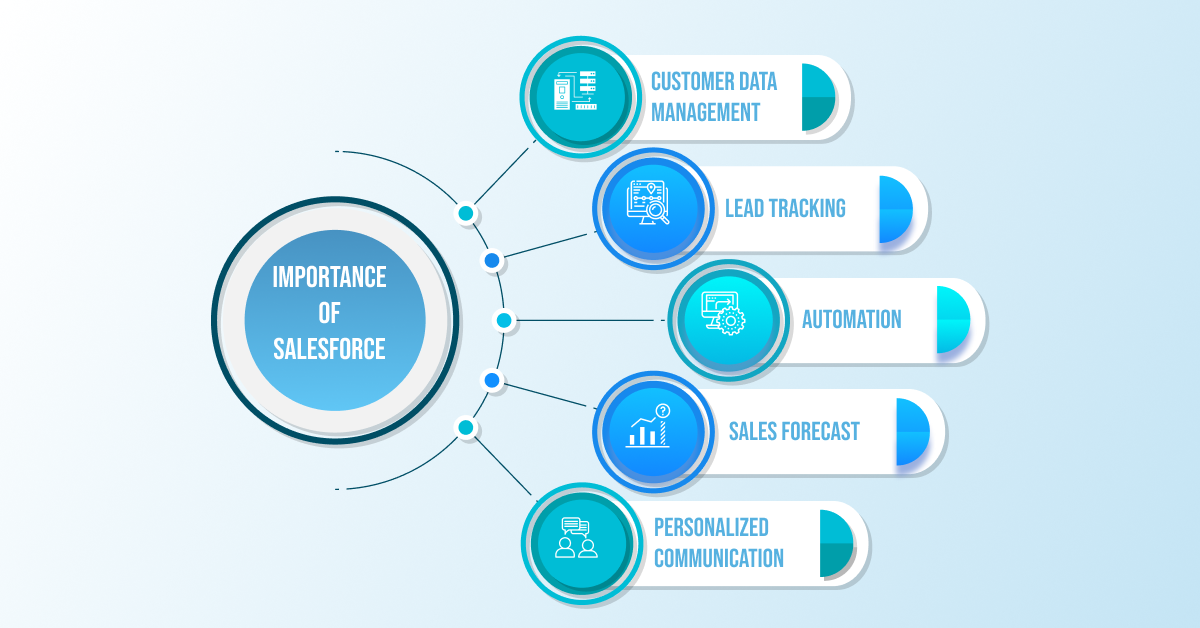
Importance of Salesforce

  • Manages all customer data of businesses
  • Tracks lead and opportunities for potential customers
  • Offers Automation capabilities
  • Sales forecasting and reporting
  • Allows personalized communication with customers

Benefits of Adobe Experience Manager 6.5 and Salesforce Integration

Since we’ve discussed Adobe Experience Manager 6.5 and Salesforce in detail, you must know how useful both these technologies are.

But imagine the impact of Salesforce integration with Adobe Experience Manager. It’ll officially be your business’s ‘SERVE’ of the century. Let’s wake up from our dreamy world and discuss some top benefits of AEM Salesforce integration.

  • Enhanced Lead Management: You can effectively capture leads through engaging content by integrating Adobe Experience Manager’s web content management capabilities with Salesforce’s lead management tools.
  • Seamless Customer Experience: The Adobe AEM Salesforce integration creates a unified platform where customer data and interactions are seamlessly shared between Adobe Experience Manager and Salesforce. Therefore, Salesforce AEM integration results in a consistent and personalized customer experience.
  • Improved Content Publishing: With Salesforce, you can see deep insights into trendy topics, demographic information, and customer preferences. Then, by using this data, Adobe Experience Manager can dynamically serve personalized content to website visitors. In short, AEM Salesforce integration can improve your content publishing.
  • 360-Degree View of Customers: Salesforce is primarily used in customer management, including website visits, form submissions, email responses, and sales interactions. By AEM Salesforce Integration, you can get valuable insights to implement a more holistic method of empowering sales and marketing teams.

Step-by-Step Guide to Adobe Experience Manager 6.5 and Salesforce Integration: 

You must be waiting to read this blog post section since it is why you’ve clicked on our page. We know your next business meeting must be awaited. Therefore, without wasting much time of yours, let’s go through the necessary steps for AEM Salesforce integration.

Step #1: Configure a remote access application in Salesforce, and after this, configure Salesforce cloud service.

Step #2: Navigate to Cloud Services in Adobe Experience Manager.

Step #3: Open Third-Party Services and click Configure Now in Salesforce.

Step #4: Create a configuration, for instance, marketer.

Step #5: Open your Salesforce account through login.

Step #6: In Salesforce, go to “Create” and then select “Apps” to access Connected Apps.

Step #7: To connect Adobe Experience Manager with Salesforce, Click New.

Step #8: Enter credentials, including API Name, Contact Email, and Connected App Name. Check the box for “Enable OAuth Settings” and input the Callback URL. For instance, your callback URL may appear as:

http://localhost:4334/etc/cloudservices/salesforce/marketer.html

Customize the server name/port number and page name to align with your specific configuration.

Step #9: To save the salesforce configuration, click ‘Save.’ The previous step created a consumer key and secret, which you should remember to make your Adobe Experience Manager configuration.

Step #10: Now open Adobe Experience Manager, navigate to Cloud Services, and then to the Salesforce configuration. Edit the information and enter the customer key and customer secret.

Step #11: Enter ‘Connect to Salesforce’ to make AEM Salesforce Integration finish.

Step #12: Finally, navigate to your website’s root page. Click Page Properties and select Cloud Services from it. On this feature, add Salesforce (for example, marketer).

Overcoming Challenges: Strategies to Address Common Challenges During Integration

AEM Salesforce integration can help you to establish your brand, ‘IT GIRL’ of an industry. However, AEM Salesforce integration contains many challenges that can resist your dreams of becoming a successful business. So, given below are the top challenges that you should remember during AEM Salesforce integration. Since we don’t want you to fail. We’ve also given a strategy to each challenge.

Challenge #1: Data Mapping and Synchronization

During the AEM Salesforce integration process, aligning data structures between both sides can be pretty complex, resulting in various data synchronization issues.

Strategies: 

=> Prefer to do a detailed data mapping exercise before the AEM Salesforce integration process.

=> Establish clear rules for data updates

=> Consider integration tools for smoother data flow

Challenge #2: Authentication and Security

The AEM Salesforce integration process involves secure communication and data protection; however, sometimes, it can get out of hand.

Strategies: 

=> Consider OAuth 2.0 for secure authentication

=> Use Salesforce’s Adobe Experience Manager’s authentication mechanisms.

Challenge #3: Handing Large Data Volumes

Sometimes, exporting large amounts of data can result in the delay of the whole process.

Strategies: 

=> Use Salesforce’s data management tools

=> Implement Data archiving strategies as recommended by industry professionals.

Deftsoft: Your Trusted Partner for AEM 6.5 and Salesforce Integration

You all are talented businessmen with knowledge of various topics. Furthermore, you must have a team of professional developers to maintain your website. But the problem is that AEM Salesforce integration requires expert skills, years of experience, and professional knowledge. And, deep down, you would know you need a trusted partner to make this possible.

Deftsoft, a leading website development company, offers the best AEM integration services. With over 17 years of experience, Deftsoft is a reputable name. Our highly experienced staff will correctly integrate Adobe Experience Manager 6.5 into Salesforce, allowing smooth content management & customer engagement. Above all that, Deftsoft is a dedicated partner who patiently listens to all your problems and seamlessly finds the answers.

Takeaway: 

In conclusion, the potential of your business lies in strategic integration. Upgrading to Adobe Experience Manager 6.5 alone may not solve the issue. The transformative power comes from combining Adobe Experience Manager 6.5 with Salesforce. This dynamic duo ensures streamlined operations and enriched customer interactions, propelling your business to new heights. Trust Deftsoft, with over 17 years of expertise, to expertly execute AEM Salesforce integration, unlocking unparalleled success. Contact Deftsoft to Elevate your brand from obscurity to prominence today.

Basics of Initial Exchange Offering (IEO) Development: A Brief Guide

Hey there, savvy entrepreneurs and investors! How’s your business going? All good! Well, as a well-informed business leader, you must have heard of the term ‘IEOs.’ No doubt, this sounds like something only rocket scientists would grasp effortlessly, but it’s not that difficult to understand. Above all, this term has the ability to elevate your startup or business forever. After all, who wouldn’t want to commence a cosmic journey to financial success? Curious about what exactly IEO development is, how it works, and what benefits it offers?

Well, you’re in the right place. Our comprehensive guide will demystify everything about Initial Exchange Offerings. Since you all are busy people and must be having some meetings in the coming hours, we’ll not waste much time of yours. Without further ado, let’s discuss the Initial Exchange Offering. But, before that, it’ll be beneficial to know what, exactly, the Initial Exchange Offering is.

What is an Initial Exchange Offering?
   Initial Exchange Offering

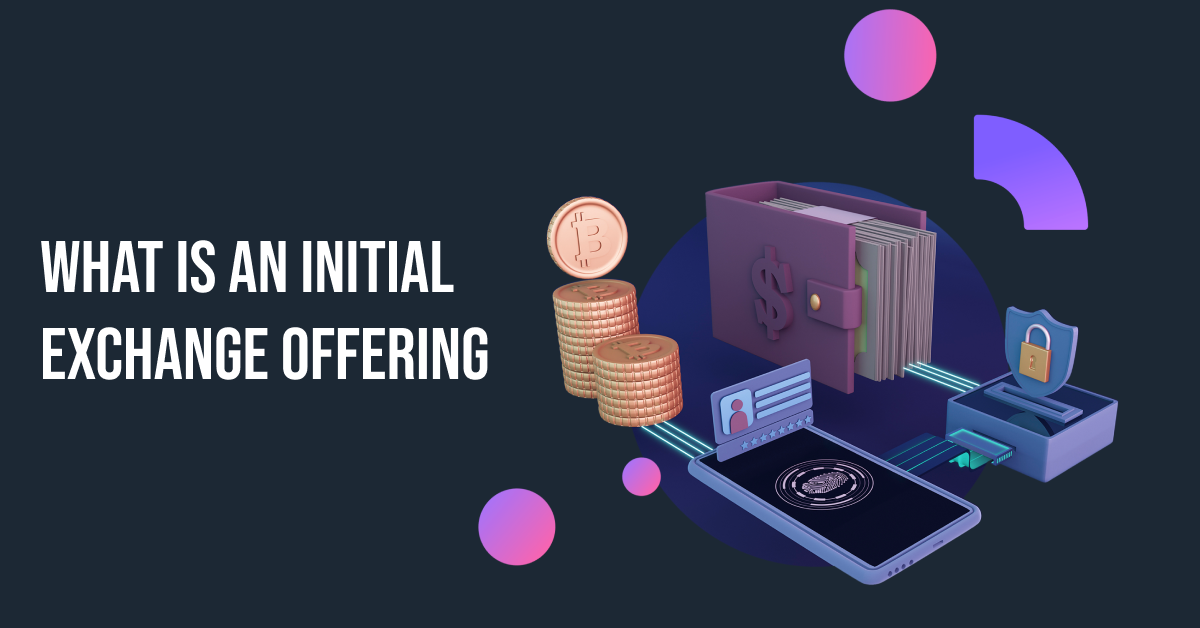
An Initial Exchange Offering is a secure way to raise funds through a renowned cryptocurrency exchange platform.
Why is it a secure way? (This question must be revolving in your brain.)

The reason is clear: Initial Exchange Offering originated due to the failure of Initial Coin Offering (ICO).
Now, you must be wondering what this ICO is and how it was a reason behind the origination of IEO.
So, to know the answers to these questions, let’s delve into the small background of ICOs to understand the launch of IEO and its meaning.

A Small Background of ICOs: 

If you’re a crypto enthusiast, you must have heard of ICOs (Initial Coin Offerings). It is like a special event where the company sells its digital tokens through its own crypto exchange platform to raise funds for its projects. Investors and startup entrepreneurs buy their tokens since, by doing so, they will get involved with the company’s project and may also have some additional benefits.

The trend of Initial Coin Offerings was started in the mid-2010s with the aim to revolutionize fundraising models. But things didn’t go as well as it was thought. ICOs (Initial Coin Offerings) proved to be risky investments due to the high rate of fraud and scams involved with them. Therefore, the digital world was in need of a more secure alternative to ICOs.

Initial Exchange Offering: A Secure Alternative to ICOs

In January 2019, Initial Exchange Offerings originated with BTT (BitTorrent Token), launched by Binance Launchpad. Do you know the best thing? This initial offering raised over $7.1 million of funds and sold out within 15 minutes.

Okay, that’s a lot of history to digest. So, let us quickly answer your question: what is an Initial Exchange Offering?

An Initial Exchange Offering or IEO development is like an event where startup organizations raise funds by selling their digital tokens through an established cryptocurrency exchange platform. Then, investors and entrepreneurs buy these digital tokens with the aim to take benefits within that company and on their future projects, too.

For a better understanding of IEO development, go through this example.

Suppose there’s a new company that wants to make exciting video games for kids. Instead of asking for money in a traditional way, they consider an Initial Exchange Offering. By doing so, they create these special digital tokens and sell them on trusted cryptocurrency exchange platforms. Then, investors buy these tokens; in this way, they kind of support the company, and in return, they might get early access to their game or other additional benefits.

Why do you need IEO marketing?

By deeply grabbing the unique and secure concept of fundraising through an Initial Exchange Offering, you must be thinking,

‘I need to launch an Initial Exchange Offering soon to collect funds for the following projects.

But, my talented entrepreneurs, this isn’t as easy as it seems.

The world has become a small place, thanks to digitalisation and globalisation. Above all that, investors are more intelligent than ever, making them think twice before investing in any project. As a result, it is difficult for startups to convince investors to take part in their IEO development project. Moreover, the market is witnessing a heavy rise in startups, increasing competition in this field. It means your project has to be fresh, unique, and advanced to grab the attention of investors.

But wait a minute; having a unique and fresh idea does not assure that investors will be involved in your Initial Exchange Offering. So, what else you may need? IEO MARKETING SERVICES.

Consider professional IEO services including marketing, token development services, to elevate the online visibility of your project and Initial Exchange Offering among the general public and investors. Using expert marketing techniques, you can attract a lot of investors.

[Note: Managing the whole work during IEO development can be stressful, so consider Deftsoft, a trusted partner to make things easy. With years of experience, Deftsoft provides IEO development services, IEO marketing services, and token development services.]

How does an Initial Exchange Offering work?

Firstly, you need to choose a renowned or trusted cryptocurrency platform to sell your digital tokens. The process of initial exchange offering involves a series of steps, including a cryptocurrency exchange platform verifying your company and project. On top of that, verify the technical aspects of the project, its vision, and tokenomics. Moreover, cryptocurrency platform also looks for the background and history of a company that they are thinking of investing in. Some of the other things that a cryptocurrency exchange platform might consider are as follows:

  1. Experience of project team members
  2. Evaluating the technical infrastructure of the project or service the company intends to develop
  3. Analyzing the market demand for the company’s project
  4. Reviewing token distribution plan and utility

Assessing the company’s strategic partnerships or collaborations that the company has established

After the verification process by the cryptocurrency platform, the launch of the IEO development starts. The launch process includes registration of investors, token sale, trading, and promotional campaigns to attract abundant investors (the whole launch process is explained in detail in the next topic).

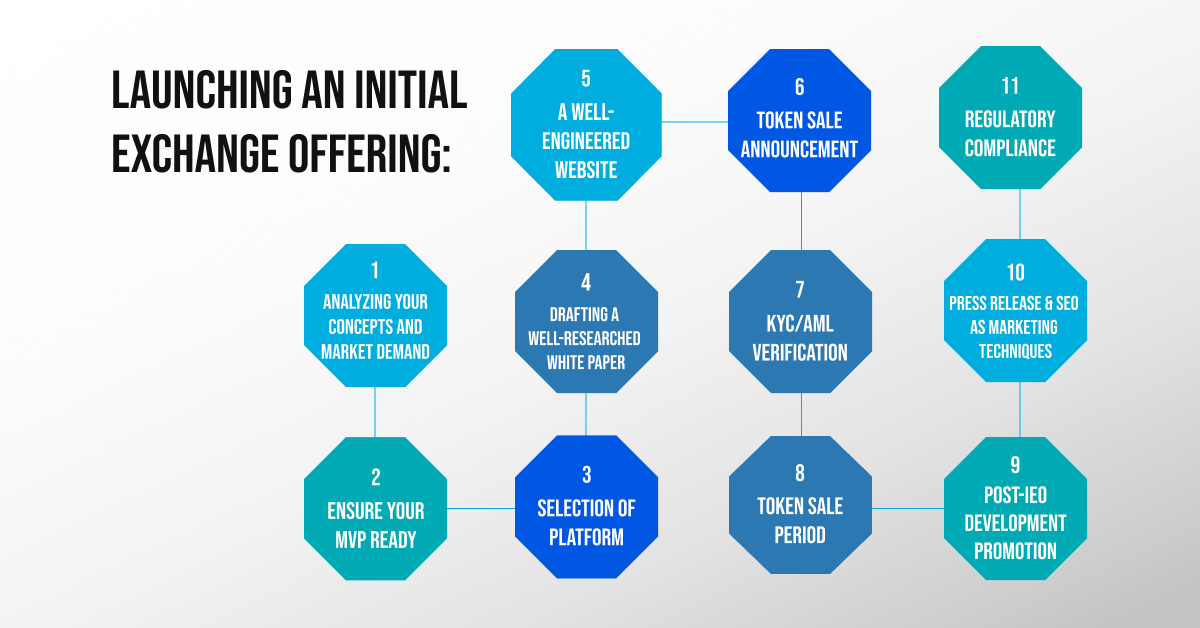
Launching an Initial Exchange Offering: 

You must be having this question: why do investors find IEO development a more reliable way of investing than ICO? The answer is straightforward: Lack of frauds and scams.

Initial Coin Offerings involve no renowned cryptocurrency platform as a third party. Instead, the company sells its tokens on its platform only. This was meant to offer some sort of liberty to the holding company. However, many fraudulent companies took advantage of ICO to make extra profit by scamming investors. Unlike ICO, the Initial Exchange Offering is entirely different. Initial exchange offerings involve a popular cryptocurrency exchange platform to use their trust as a tool to attract a lot of investors. Besides capitalizing on the name of the cryptocurrency exchange platform’s name, you also need some extra things to consider to start your Initial Exchange Offering crypto project.

NOTE: If you lack professional knowledge or expertise in IEO development, consider Deftsoft. With years of experience, Deftsoft offers reliable IEO development services.]

IEO development steps

The following are the steps you need to do to begin your IEO development project.

Step #1: Analyzing your Concepts and Market Demand

For any company that is looking to debut a new product or project, it is essential to follow market trends. In Gen-Z manner, ‘”Give the market what they want, and it should be given that nobody has ever taken a chance to give before.

Analyze the market trend and get deep insights to verify your ideas for new projects or services are fulfilling the needs of investors. For instance, e-commerce is a sector in which most investors are interested. So, make sure your next project or product is looking appealing to investors.

Step #2: Ensure Your MVP Ready 

Many popular cryptocurrency exchange platforms prefer only those companies that already have MVP (Minimum Viable Product) ready or where development is underway. So, make sure you fulfill this requirement. For a better understanding, take the example of KuCoin Shares (KCS). Before their Initial Exchange Offering, KuCoin already had a functioning cryptocurrency exchange platform in development.

Step #3: Selection of Platform 

After ensuring MVP is ready, it’s time to select an exchange platform. Make sure the platform you choose is reliable, established, and, most importantly, professional to help you attract investors in large numbers. Here are some of the top exchange platforms you can consider.

=> Binance Launchpad

=> OKEx Jumpstart

=> Huobi Prime

=> Bittrex

Step #4: Drafting a Well-Researched White Paper 

What will make investors have a genuine interest in your project? A unique and fresh idea! It is, but on top of that, drafting a well-researched white paper does help to make your name being placed on every investor’s list. A white paper is similar to an academic paper, where you’ve to describe your project in detail.

Step #5: A Well-Engineered Website 

How will investors get information about your company and services if you lack a well-organized website? Then, your dream of raising funds for your upcoming project will stay dream only. Sorry if it sounds rude.

Let’s come back to the main topic: develop an excellent website that perfectly represents your brand with a top-notch user interface and engaging content. By doing so, investors can easily access your services and the company’s history to make their final call.

Step #6: Token Sale Announcement 

Before announcing your token sales, decide how many tokens you’ll be issuing. But, to make this decision, firstly, you need to develop your own tokens. To do so, you can use various blockchain platforms.

Note: If you don’t want to invest your time in developing tokens, you can consider Deftsoft. As a leading IEO development services provider, Deftsoft can create a well-functional digital token to make your Initial Exchange Offering a successful one. With years of experience, Deftsoft is the best IEO development company.]

After developing your tokens, announce a sale for your tokens. Use your social media platforms and website to make your token sale viral, the same as Doja Cat’s song does. Have a craving for attention.

Step #7: KYC/AML Verification 

After making your token sale public through a renowned crypto exchange platform, interested investors need to go through some verification. Sounds shocking! A verification for investors. Yes, and why not?

What if they are fraud people? Or some unauthorized users. Therefore, maximum cryptocurrency exchange platforms make their visitors (interested investors) sign up or create an account, saving their personal information, such as name, contact number, Gmail, etc.

Step #8: Token Sale Period 

To resist any loss or mishappening, it’s best to designate a specific timeframe during which investors can purchase tokens at the predetermined price, typically with limits on individual contributions.

Step #9: Post-IEO Development Promotion

Many companies often ignore this step. How can you expect your project to reach more investors if you’re acting lazy in post-IEO development promotion? So, try expert marketing techniques to make sure your project is a trendy one.

Step #10: Press Release & SEO as Marketing Techniques

After a successful one-time Initial Coin Offering, get as much attention as you can on social media. The best way to do so is to write press releases about your product (project) and submit them to field-related websites. Moreover, you can also come up with engaging and well-researched articles to attract more traffic from investors.

Step #11: Regulatory Compliance 

During this whole IEO development thing, make sure you’re fundraising through Initial Exchange Offering as per relevant regulations and legal requirements to maintain the integrity and respect of your company and project.

Deftsoft: Your Ultimate Partner for Initial Exchange Offering Success 

When it comes to turning your Initial Exchange Offering project into a resounding success, look no further than Deftsoft. As a premier provider of IEO development services, Deftsoft has the expertise and experience to make launching your Initial Exchange Offering a breeze. We are aware of the complexities and intricacies of the Initial Exchange Offering landscape. That’s why our experienced team of experts is here to guide you through every step of the process. Choose Deftsoft, the top IEO development company, as your ultimate partner.

Why Choose Deftsoft for IEO Development Services?

Comprehensive Expertise:

We have a professional team of well-known experts with a deep understanding of the regulatory environment and Initial Exchange Offering-related technological innovation.

Tailored Solutions:

Deftsoft believes every IEO development project is unique and requires different strategies for each to make it successful. That’s why we offer customized solutions to fulfill the specific needs and goals of your Initial Exchange Offering project.

Strategic Planning:

Basics of Initial Exchange Offering DevelopmentCan we ask you one question? What is the necessary thing required to make a successful Initial Exchange Offering project? It’s probably strategic planning. Isn’t? That’s why Deftsoft crafts strategic plans and techniques related to tokenomics, marketing, community engagement, and more. You just need to have trust in us, since Deftsoft takes responsibility for making successful Initial Exchange Offerings.

To Wrap Up: 

So, that’s it, our talented entrepreneurs. If you have some creative idea for your next project or service but lack capital, consider an Initial Exchange Offering to raise funds. It is the most secure and effective way in the modern world to elevate your startup or emerging business. On initial listen, this may sound very easy. But, to launch a successful Initial Exchange Offering demands expertise and precision. Since many companies don’t have the professional knowledge and resources to launch a successful Initial Exchange Offering, it’s best to consider Deftsoft.

As a leading provider of IEO development services and IEO marketing services, Deftsoft can transform your idea into reality by raising funds. With over 17 years of experience, Deftsoft is a trusted companion ensuring seamless IEO token development services. So, look no right and left, choose Deftsoft’s cryptocurrency development services and IEO development services to take your business to new heights.