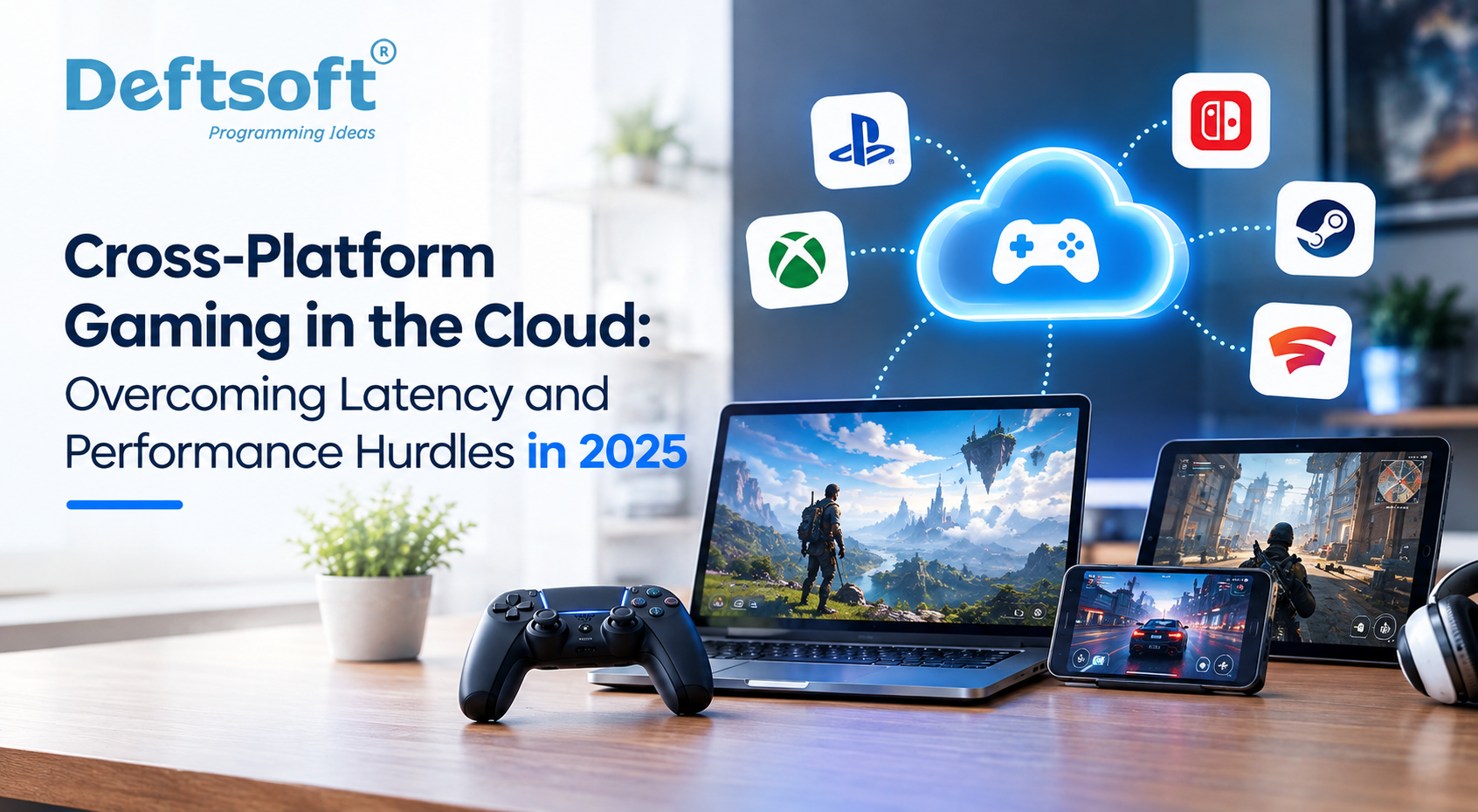
Cross-Platform Gaming in the Cloud: Overcoming Latency and Performance Hurdles in 2025

Introduction

The gaming industry has witnessed a massive shift with the rise of cross platform gaming, allowing players to enjoy seamless experiences across multiple devices. As cloud gaming continues to evolve, it brings unparalleled convenience, eliminating the need for expensive hardware and enabling gaming on demand. However, the growing demand for cross-platform game development also presents significant challenges, particularly in terms of latency and performance.

In 2025, developers must tackle these hurdles to create a truly immersive experience for players. This blog explores how cross-platform game development companies are innovating to overcome latency and performance issues, ensuring smooth gameplay across different devices and networks.

The Evolution of Cross-Platform Gaming in the Cloud

Cross platform gaming

Cloud gaming has redefined the way players access and enjoy games. Cross-platform gaming platforms allow users to play the same game on different devices—whether it’s a PC, console, or mobile device—without compromising on performance. Services like Xbox Cloud Gaming, NVIDIA GeForce Now, and PlayStation Now have made it possible for gamers to stream high-quality games without requiring powerful local hardware.

With the advancements in cross-platform development, developers now aim to create games that not only run smoothly across devices but also synchronize progress, leaderboards, and multiplayer experiences without lag or disruptions. However, achieving this requires addressing two key issues—latency and performance optimization.

Understanding Latency Issues in Cloud-Based Cross-Platform Gaming

Latency, often referred to as “lag,” is one of the biggest obstacles in cross-platform gaming. Latency refers to the delay between a player’s input and the game’s response. Even a slight delay can impact the gaming experience, making it feel unresponsive or sluggish.

Causes of Latency in Cloud Gaming

1. Network Congestion

One of the primary causes of latency in cloud gaming is network congestion. When too many users share the same network, data packets experience delays due to high traffic. This is especially problematic during peak gaming hours when a large number of players are connected simultaneously. The congestion leads to slower response times, affecting in-game movements, interactions, and overall gameplay smoothness.

2. Server Distance

The physical distance between a player and the game server plays a crucial role in latency. If a game’s server is located far from the player’s location, the data must travel long distances, increasing response times. This problem is more evident in regions with limited server infrastructure, where players may have to connect to distant servers, leading to high latency and lag.

3. Hardware Limitations

Even though cloud gaming reduces dependency on powerful local hardware, outdated network equipment such as routers, modems, or slow internet connections can still introduce latency. High-speed internet is crucial for cloud gaming, and devices that lack the capability to process high-bandwidth data efficiently can result in performance issues.

4. Frame Rendering Delays

Frame rendering is a critical aspect of gaming performance. In cloud gaming, frames are processed in real-time and streamed to the player’s device. Any delay in rendering frames due to slow processing speeds, insufficient GPU power on cloud servers, or inefficient compression algorithms can lead to visible lag. This negatively impacts the player’s experience, particularly in fast-paced action games.

5. Cross-Platform Synchronization

In cross-platform gaming, synchronization between different devices and operating systems is a major challenge. Players on different platforms—PC, console, and mobile—often experience variations in game speed due to differences in hardware capabilities, input methods, and network performance. Ensuring that all players receive a synchronized, fair, and smooth gaming experience requires complex backend optimizations, which can sometimes lead to latency issues.

Solutions to Reduce Latency in Cross-Platform Gaming

1. Edge Computing Implementation

Edge computing helps reduce latency by processing data closer to the user. Instead of relying solely on centralized cloud servers, cross-platform game development companies are increasingly leveraging edge servers. These distributed data centers bring the game processing closer to the player, minimizing data travel time and improving response speed. By reducing the physical distance between the player and the server, edge computing significantly lowers the chances of lag, ensuring smoother gameplay.

Additionally, edge computing enhances real-time multiplayer experiences. Traditional cloud-based models often experience delays in player interactions, but with edge servers, game state synchronization happens faster, reducing desynchronization issues in competitive gaming environments.

2. AI-Based Latency Optimization

AI-powered algorithms are transforming cross-platform gaming platforms by predicting player behavior and pre-loading necessary game assets before they are needed. This proactive approach minimizes delays in rendering graphics, assets, and input responses. Machine learning models analyze network conditions in real-time, dynamically adjusting data transmission strategies to ensure smooth gameplay.

AI-driven latency optimization also includes real-time game rendering improvements. AI-based upscaling technologies, such as NVIDIA’s DLSS (Deep Learning Super Sampling) and AMD’s FSR (FidelityFX Super Resolution), allow games to render at lower resolutions and upscale them intelligently, reducing GPU workload and improving performance without compromising visual quality.

3. Advanced 5G Connectivity

5G technology is revolutionizing cross-platform gaming platforms by significantly lowering latency and enhancing data transfer speeds. Traditional 4G networks have latency in the range of 50–100 milliseconds, while 5G reduces this to as low as 1 millisecond. This ultra-low latency enables players to enjoy real-time gaming experiences without any noticeable delays.

Another advantage of 5G in cloud gaming is higher bandwidth capacity. This allows multiple players to connect and play simultaneously without experiencing network congestion, even in high-traffic environments. Mobile gaming, in particular, benefits immensely from 5G, as players can now experience console-quality gaming on smartphones without requiring Wi-Fi connectivity.

4. Adaptive Sync Technologies

Screen tearing and input lag are common performance issues in cross-platform gaming. Technologies like NVIDIA G-Sync and AMD FreeSync help synchronize the refresh rate of the display with the game’s frame rate. This reduces stuttering and visual inconsistencies, providing a smoother and more responsive gaming experience.

In addition, adaptive sync technologies reduce input lag, which is crucial in fast-paced games such as first-person shooters (FPS) and battle royales. By dynamically adjusting refresh rates based on real-time frame rendering, adaptive sync ensures that players experience responsive controls regardless of the device they are using.

5. Cloud-Based Game Streaming Optimization

Game developers are continuously refining streaming techniques to optimize cross-platform game development services. One of the most effective methods is adaptive bitrate streaming, where the game adjusts its resolution and data usage based on the player’s internet connection quality.

Additionally, enhanced video encoding technologies such as AV1 and HEVC (H.265) ensure better compression without losing visual quality. By reducing the amount of data that needs to be transmitted, developers can minimize bandwidth usage while maintaining a high-quality gaming experience.

Other optimization strategies include reducing latency in cloud-based input processing. Some cloud gaming platforms employ AI-driven input prediction, where the system anticipates the player’s next move and pre-processes the response. This approach dramatically reduces perceived input lag, ensuring a seamless and immersive gaming experience.

Performance Optimization in Cloud Gaming

Apart from latency, performance optimization is another critical factor in cross-platform game development. To ensure a seamless gaming experience, developers must optimize various aspects, including graphics rendering, networking, and device compatibility.

Key Performance Challenges

1. Network Congestion

One of the primary causes of latency in cloud gaming is network congestion. When too many users share the same network, data packets experience delays due to high traffic. This is especially problematic during peak gaming hours when a large number of players are connected simultaneously. The congestion leads to slower response times, affecting in-game movements, interactions, and overall gameplay smoothness.

2. Server Distance

The physical distance between a player and the game server plays a crucial role in latency. If a game’s server is located far from the player’s location, the data must travel long distances, increasing response times. This problem is more evident in regions with limited server infrastructure, where players may have to connect to distant servers, leading to high latency and lag.

3. Hardware Limitations

Even though cloud gaming reduces dependency on powerful local hardware, outdated network equipment, such as routers, modems, or slow internet connections, can still introduce latency. High-speed internet is crucial for cloud gaming, and devices that lack the capability to process high-bandwidth data efficiently can result in performance issues.

4. Frame Rendering Delays

Frame rendering is a critical aspect of gaming performance. In cloud gaming, frames are processed in real-time and streamed to the player’s device. Any delay in rendering frames due to slow processing speeds, insufficient GPU power on cloud servers, or inefficient compression algorithms can lead to visible lag. This negatively impacts the player’s experience, particularly in fast-paced action games.

5. Cross-Platform Synchronization

In cross-platform gaming, synchronization between different devices and operating systems is a major challenge. Players on different platforms—PC, console, and mobile—often experience variations in game speed due to differences in hardware capabilities, input methods, and network performance. Ensuring that all players receive a synchronized, fair, and smooth gaming experience requires complex backend optimizations, which can sometimes lead to latency issues.

Performance Optimization Strategies

1. Cloud-Native Game Development Developers are now designing games specifically for cloud environments, rather than porting traditional games to the cloud. This approach improves efficiency and ensures optimal performance across multiple platforms.

2. AI-Driven Game Performance Enhancements AI-driven tools are being used to automatically adjust game settings based on the player’s device and network conditions. This ensures optimal performance without requiring manual adjustments.

3. Hybrid Rendering Techniques Hybrid rendering uses a combination of local and cloud rendering to balance performance. This technique ensures that resource-intensive processes occur on the cloud, while essential graphics rendering takes place on the local device.

4. Dynamic Resolution Scaling Games are now using dynamic resolution scaling to adjust the graphics quality in real-time based on network performance. This prevents frame drops and ensures a smooth gaming experience.

5. Low-Latency Game Engines Popular game engines like Unity and Unreal Engine are continuously evolving to support cross-platform game development services with better optimization techniques, reducing performance bottlenecks.

The Future of Cross-Platform Gaming in the Cloud

As technology advances, cross-platform gaming platforms will continue to evolve. With the adoption of blockchain, NFTs, and AI-driven enhancements, the future of cloud gaming looks promising. However, developers must remain committed to overcoming latency and performance challenges to provide gamers with a truly seamless experience.

Why Choose Deftsoft for Cross-Platform Game Development?

At Deftsoft, we specialize in creating high-performance cross-platform game development services that cater to the ever-evolving needs of the gaming industry. Our expert developers leverage the latest technologies, including AI-driven optimizations, edge computing, and cloud-native solutions, to deliver top-tier cross-platform gaming platforms that ensure smooth gameplay across multiple devices.

Whether you need a cross-platform game development company to bring your game idea to life or optimize an existing game for cloud-based platforms, Deftsoft has the expertise and innovation-driven approach to help you succeed. Partner with us today and revolutionize the gaming experience for your users!

FAQs

1. What is cross-platform gaming?
Cross-platform gaming allows players to enjoy the same game across multiple devices, such as PC, consoles, and mobile devices, with synchronized progress and multiplayer capabilities.

2. Why is latency a major issue in cloud gaming?
Latency affects game responsiveness, causing delays between player input and game action. High latency can make games feel sluggish and unplayable.

3. How can latency be reduced in cloud gaming?
Latency can be reduced using edge computing, AI-driven optimizations, 5G connectivity, and adaptive sync technologies to enhance real-time gameplay.

4. What are the benefits of using a cross-platform game development service?
A cross-platform game development company ensures that your game runs seamlessly on multiple devices, reaching a broader audience and increasing player engagement.

5. Why choose Deftsoft for cross-platform game development?
Deftsoft offers cutting-edge cross-platform game development services, leveraging AI, cloud computing, and advanced game optimization techniques to deliver superior gaming experiences.
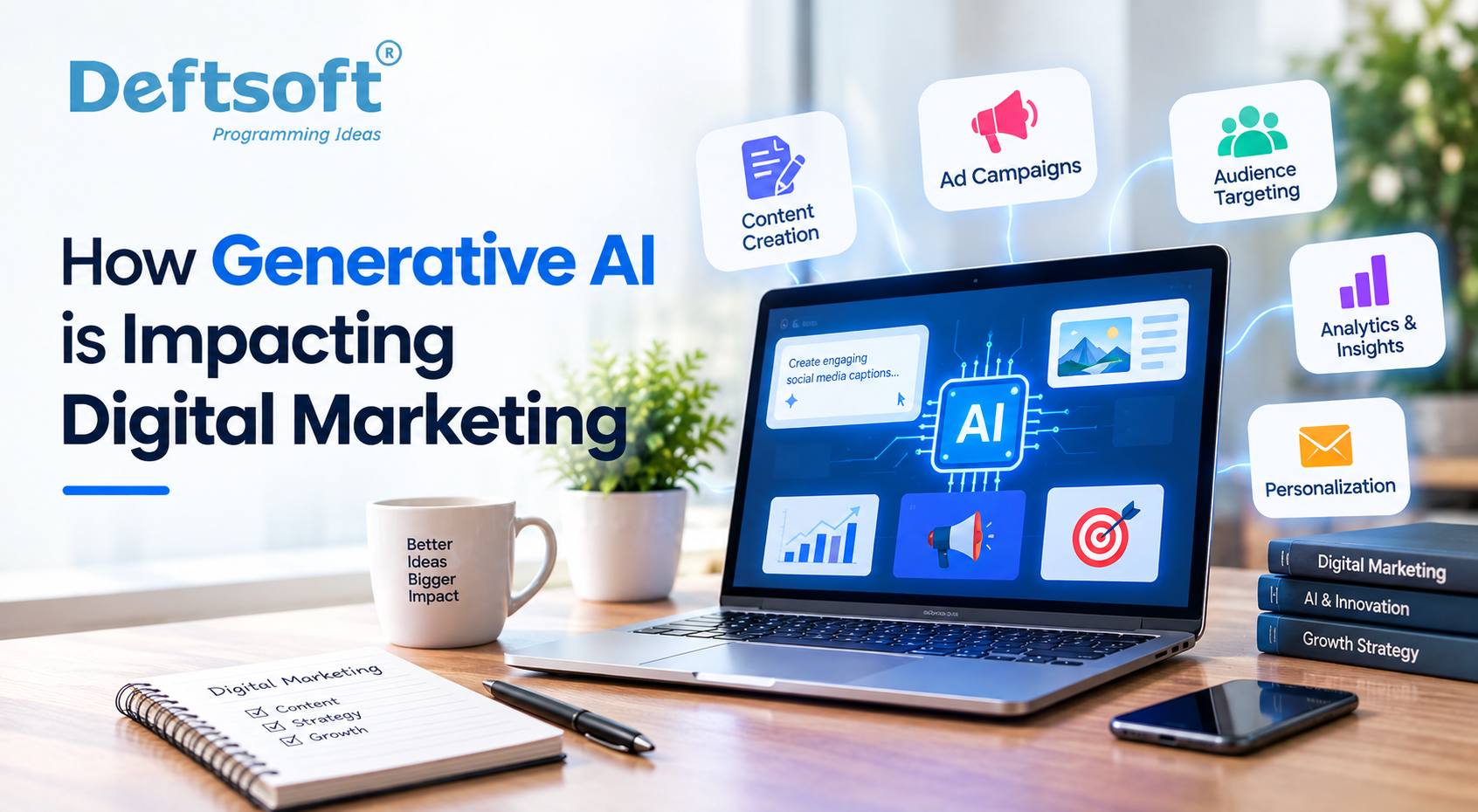
How Generative AI is Impacting Digital Marketing

Introduction

The digital marketing landscape is evolving at an unprecedented pace, with technology playing a pivotal role in reshaping strategies, execution, and customer interactions. One of the most revolutionary technologies driving this transformation is generative AI. From content creation to customer engagement, generative AI is redefining how businesses leverage digital marketing services to optimize performance, enhance personalization, and scale their efforts efficiently.

This article delves into the impact of generative AI on digital marketing, exploring its various applications and how businesses can harness its potential. Whether you are a digital marketing company, an agency, or an enterprise seeking innovative solutions, understanding the role of AI in digital marketing is crucial for staying ahead of the competition.

The Role of Generative AI in Digital Marketing

Generative AI refers to artificial intelligence models that generate content, including text, images, videos, and even entire marketing campaigns. These models, powered by deep learning, analyze massive amounts of data and create highly engaging and relevant content. Here’s how AI is reshaping the digital marketing landscape:

1. Automated Content Creation

One of the most significant impacts of generative AI in digital marketing is content generation. Businesses can now leverage AI-powered tools like ChatGPT, Jasper, and Copy.ai to create blog posts, social media captions, and email campaigns in minutes. AI-generated content ensures consistency, maintains coherence, and improves engagement, making it easier for digital marketers to produce high-quality content at scale.

Moreover, AI can analyze brand voice and audience preferences to generate content that aligns with company messaging. Unlike traditional content generation methods, which require extensive brainstorming and human intervention, AI-driven automation allows brands to focus more on strategy and creative direction. It also reduces content production costs and accelerates the speed of campaign execution, helping businesses remain agile in a fast-paced digital environment.

2. Enhanced Personalization and Targeting

AI-driven marketing platforms analyze consumer behavior, browsing patterns, purchase history, and social media interactions to create hyper-personalized marketing campaigns. Unlike conventional segmentation techniques, AI can assess real-time data to dynamically adjust marketing messages based on user behavior, preferences, and demographics. This results in better customer engagement, improved conversion rates, and stronger brand loyalty.

Personalized AI-powered recommendations are now a fundamental part of marketing strategies. Whether it’s Netflix suggesting shows based on viewing history or e-commerce platforms recommending products based on past purchases, AI’s ability to understand customer intent enables businesses to deliver highly targeted content that resonates with individual consumers.

3. AI-Powered Chatbots and Virtual Assistants

Chatbots have transformed customer service in digital marketing by providing real-time responses, reducing wait times, and enhancing customer experiences. AI-powered chatbots, such as those integrated into websites, social media platforms, and mobile applications, can handle customer inquiries, offer product recommendations, and even guide users through the sales funnel.

Unlike traditional scripted chatbots, generative AI chatbots use natural language processing (NLP) to understand context, sentiment, and intent, enabling them to provide more human-like interactions. They can answer complex queries, process transactions, and offer multilingual support, making them invaluable assets for global businesses. Additionally, chatbot interactions generate valuable customer data, which AI can analyze to refine marketing strategies further.

4. Automated Ad Copy and Campaign Optimization

AI is revolutionizing paid advertising by automating ad copywriting, audience targeting, and bid management. Platforms like Google Ads and Facebook Ads leverage AI-driven algorithms to optimize campaign performance, ensuring businesses achieve maximum return on investment (ROI). AI tools analyze vast amounts of data to identify trends, optimize ad placements, and dynamically adjust bids based on competition and user engagement.

Generative AI can create multiple variations of ad copy and test them in real-time, allowing advertisers to determine which messaging resonates best with their target audience. This continuous learning process ensures that digital marketing campaigns remain efficient and relevant. By eliminating manual guesswork, AI-powered ad optimization enables businesses to allocate budgets more effectively and drive higher conversions.

5. SEO and Content Optimization

Search engine optimization (SEO) is an essential component of digital marketing, and AI has made it significantly more effective. AI-powered SEO tools like Surfer SEO, Clearscope, and SEMrush analyze search trends, identify relevant keywords, and optimize content to improve search engine rankings. These tools also assess competitor strategies, providing actionable insights to help businesses stay ahead in search rankings.

Additionally, AI-driven content generation tools ensure that marketing materials are SEO-friendly by suggesting the best keywords, structuring articles for readability, and recommending optimal word counts. AI also assists in optimizing voice search queries, which are becoming increasingly popular with the rise of smart assistants like Alexa and Google Assistant. This helps brands enhance their visibility in organic search results, driving more traffic to their websites.

6. AI-Generated Visual and Video Content

With video marketing dominating digital platforms, AI-generated videos are becoming a game-changer. Advanced AI tools like Synthesia, Runway ML, and Pictory can create high-quality video content without the need for expensive equipment or skilled video editors. These AI solutions allow marketers to generate explainer videos, social media animations, and product demonstrations efficiently.

AI-generated visuals and infographics can also be tailored for various platforms, ensuring consistency across marketing channels. This makes it easier for brands to maintain a strong visual identity while reducing the costs and time associated with traditional video production. AI-driven automation also enables businesses to create video ads at scale, optimizing them based on engagement metrics.

7. Predictive Analytics for Data-Driven Decisions

AI’s ability to process and analyze massive datasets allows marketers to make data-driven decisions with greater accuracy. Predictive analytics helps businesses forecast trends, identify high-performing marketing channels, and anticipate consumer preferences. By leveraging AI-powered insights, companies can allocate resources efficiently, refine campaign strategies, and maximize marketing ROI.

For instance, AI can identify seasonal buying patterns, allowing businesses to prepare targeted campaigns ahead of time. Predictive models also enhance lead scoring by determining which prospects are most likely to convert, enabling sales teams to focus their efforts on high-value customers. By continuously learning from new data, AI-driven analytics ensures that marketing strategies remain adaptive and relevant.

Challenges of Implementing Generative AI in Digital Marketing

While generative AI offers numerous advantages, businesses must also navigate certain challenges:

  • Content Authenticity: AI-generated content may lack originality and human creativity, requiring human oversight for refinement.
  • Ethical Concerns: AI can unintentionally propagate misinformation, making it essential for marketers to verify accuracy before publishing.
  • Data Privacy: AI relies on vast amounts of data, raising concerns about privacy and compliance with regulations like GDPR and CCPA.
  • Dependence on AI: Over-reliance on AI can lead to a lack of human touch in marketing, which is crucial for emotional connection and storytelling.

The Future of Generative AI in Digital Marketing

The future of digital marketing is undoubtedly AI-driven. As AI models continue to evolve, they will become increasingly sophisticated in understanding consumer intent, predicting trends, and delivering hyper-personalized marketing experiences. AI will enable businesses to automate complex marketing tasks, allowing digital marketing agencies and companies to focus on strategy and creative direction rather than manual execution.

One of the key areas where AI will have a transformative impact is predictive marketing. AI will be able to analyze user data in real time, enabling brands to anticipate customer needs before they even arise. This will result in highly targeted and dynamic marketing campaigns that respond instantly to consumer behavior, maximizing engagement and conversions.

Another major development will be the refinement of AI-generated content. Currently, AI-generated content still requires human oversight to ensure quality and relevance. However, future AI models will be capable of producing highly nuanced and creative content that closely mimics human writing styles. This will streamline content production for digital marketing agencies, reducing costs and improving efficiency.

AI-driven automation will also revolutionize social media marketing. From AI-generated posts to automated comment responses and intelligent social listening, businesses will be able to manage their social media presence more effectively than ever before. Social media AI tools will help brands analyze trending topics, optimize post timing, and tailor messages to different audience segments with unprecedented precision.

Moreover, AI-powered chatbots and virtual assistants will continue to improve, offering seamless, human-like customer interactions. These advancements will redefine customer service in digital marketing, providing users with instant assistance and personalized recommendations based on their past interactions.

As AI technology advances, ethical considerations and regulatory frameworks will also become critical. Businesses will need to strike a balance between automation and authenticity, ensuring that AI-generated content aligns with brand values and complies with data protection laws.

In conclusion, AI is set to become an indispensable component of digital marketing. Companies that embrace AI-powered digital marketing services today will gain a competitive edge, positioning themselves at the forefront of innovation. The businesses that thrive in the AI era will be those that strategically integrate AI into their digital marketing strategies while maintaining a human-centric approach.

Why Choose Deftsoft for AI-Powered Digital Marketing Services?

As a leading digital marketing company, Deftsoft is at the forefront of AI-driven marketing innovations. Our expert team leverages cutting-edge AI technologies to deliver data-driven, results-oriented digital marketing solutions. Whether you need AI-powered content creation, personalized marketing strategies, or SEO optimization, we ensure your brand stands out in a crowded digital space.

Partner with Deftsoft, a premier digital marketing agency, to revolutionize your marketing efforts and stay ahead of the curve. Contact us today to explore how AI can elevate your digital marketing strategy!

FAQs

1. How does AI improve digital marketing campaigns?

AI enhances digital marketing by automating content creation, optimizing ad performance, enabling personalization, and providing predictive insights for better decision-making.

2. Can AI replace human marketers?

AI enhances efficiency but cannot replace human creativity, emotional intelligence, and strategic thinking. The best approach is to use AI as a tool to augment human efforts.

3. Is AI-generated content effective for SEO?

Yes, AI-generated content can be optimized for SEO using keyword research and NLP-based algorithms. However, human editing is recommended to maintain quality and originality.

4. What are the risks of using AI in digital marketing?

Some risks include content inaccuracy, ethical concerns, over-dependence on automation, and potential data privacy issues. Businesses must implement AI responsibly and ensure compliance with regulations.

5. How can businesses integrate AI into their digital marketing strategy?

Businesses can integrate AI by using AI-powered tools for content creation, chatbots for customer service, predictive analytics for insights, and automated ad optimization for higher ROI.

Embrace the power of generative AI with Deftsoft and take your digital marketing strategy to the next level!

6. How does Deftsoft integrate AI into its digital marketing services?
Deftsoft leverages AI-driven tools for content generation, personalized marketing campaigns, SEO optimization, predictive analytics, and automated ad management. Our AI-powered strategies ensure higher engagement, improved targeting, and increased ROI for businesses across various industries.

7. Why should businesses choose Deftsoft for AI-powered digital marketing?
Deftsoft combines AI innovation with human expertise to deliver data-driven marketing solutions. Our team ensures that AI-generated content, automation, and predictive insights align with your brand’s unique voice and goals, helping businesses scale efficiently while maintaining a personalized approach.

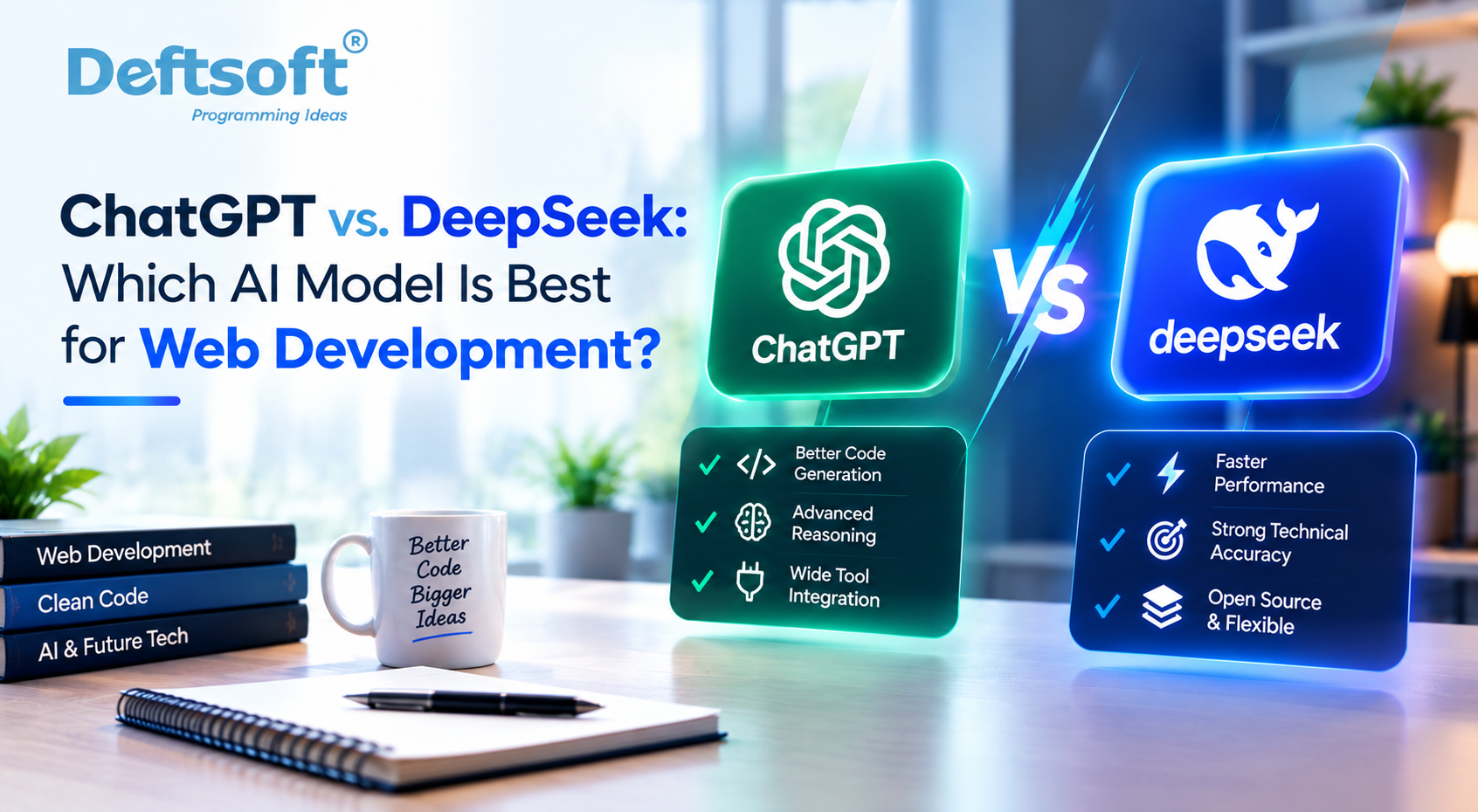
ChatGPT vs. DeepSeek: Which AI Model Is Best for Web Development?

The rapid evolution of artificial intelligence (AI) has revolutionized industries worldwide, and web development is no exception. Among the leading AI models, ChatGPT and DeepSeek have emerged as powerful tools for enhancing web development processes. But which one is better suited for your needs? Let’s dive into a comprehensive comparison to help you make an informed decision with this blog – ChatGPT vs DeepSeek.

What Makes ChatGPT and DeepSeek Stand Out?

ChatGPT, developed by OpenAI, is a versatile AI model known for its natural language processing capabilities. It excels in generating human-like text, making it ideal for tasks such as content creation, customer support, and conversational interfaces. On the other hand, DeepSeek, a relatively newer entrant, has gained attention for its technical precision and cost-efficiency. Built on a Mixture-of-Experts (MoE) architecture, DeepSeek dynamically activates specific parameters for each task, optimizing performance and resource usage.

Understanding ChatGPT vs DeepSeek in Web Development

The race between advanced AI models keeps heating up as developers look for better tools to build websites. DeepSeek and ChatGPT each bring their own strengths to the table. Let’s learn more about them before picking one.

What is DeepSeek AI and its core capabilities?

DeepSeek AI stepped into the AI world as a strong player in 2023. This AI research company builds budget-friendly, powerful language models. DeepSeek creates open-source AI tools that pack a punch without breaking the bank. Developers can access this advanced tech without spending too much on licenses.

DeepSeek’s main products include:

  • DeepSeek LLM: General-purpose language models that come in different sizes (7B, 67B parameters)
  • DeepSeek Coder: Models that shine at writing code and fixing bugs in 338 programming languages
  • DeepSeek MoE: Smart models using a mixture-of-experts setup to work better
  • DeepSeek-R1: Their first reasoning model that tackles logical problems
  • DeepSeek works well offline too, which keeps data private and reduces the need for cloud services. Teams with tight security rules or limited internet love this feature.

What is ChatGPT and how it works for developers

OpenAI’s ChatGPT has become the face of AI since it launched in November 2022. This tool uses deep learning and the Generative Pretrained Transformer to talk like a human. Web developers use ChatGPT as their go-to helper for many tasks. The model knows its way around Python, JavaScript, Ruby, and more. It helps write code, fix bugs, create starter code, pick frameworks, write docs, and even handle SQL database queries.

ChatGPT plays nice with different coding tools through plugins and APIs. Developers can add ChatGPT’s smarts right into their apps to build chatbots, virtual assistants, and content tools. The model also crunches big data to give insights that match what audiences want.

How Do These Models Perform in AI Web Development?

When it comes to AI web development, both ChatGPT and DeepSeek offer unique advantages. ChatGPT’s ability to understand and generate contextually relevant text makes it a valuable asset for creating engaging user interfaces and chatbots. Its user-friendly interface and extensive documentation further simplify integration into web development projects.

DeepSeek, however, shines in technical and mathematical domains. Its MoE architecture allows it to handle complex coding tasks with remarkable efficiency. For developers seeking a cost-effective solution without compromising on performance, DeepSeek is a compelling choice.

Which Model Excels in Web Development Services?

For web development services, the choice between ChatGPT and DeepSeek depends on your specific requirements. ChatGPT is ideal for projects that prioritize user engagement and conversational interfaces. Its ability to generate creative content and provide real-time support enhances the overall user experience.

DeepSeek, with its focus on technical accuracy, is better suited for backend development and data-driven applications. Its cost-efficiency makes it an attractive option for startups and small businesses looking to optimize their web development budgets.

Coding Capabilities Comparison for Web Tasks

Code generation quality is the deciding factor at the time of comparing AI tools for development tasks. A detailed look at DeepSeek and ChatGPT shows significant differences in how they handle web development challenges of all types.

Frontend code generation (HTML/CSS)

DeepSeek and ChatGPT’s battle gets interesting especially when you have frontend code generation capabilities. DeepSeek produces more efficient HTML/CSS code with cleaner structure during practical tests. Notwithstanding that, this efficiency sometimes affects explanation quality.

To name just one example, see what happened with a calculator interface task. DeepSeek’s code needed minor fixes but ended up delivering an engaging user interface with easy-to-use features like a dedicated clear button. ChatGPT’s code worked perfectly on the first try, but its interface used dropdown menus instead of direct button inputs, which made for a clunky user experience.

ChatGPT does a great job explaining frontend concepts alongside code generation. This makes it valuable to developers who want to understand the reasoning behind HTML/CSS implementations. Its strength with popular frontend frameworks gives it an edge for projects using standard tech stacks.

JavaScript and framework-specific code

These AI models show their true colors in JavaScript capabilities. DeepSeek performs better with algorithm-heavy JavaScript implementations and often creates optimized solutions for performance-critical code. Its logical approach leads to fewer potential runtime issues, especially with complex data structures and computational operations.

ChatGPT shines across JavaScript frameworks like React, Vue, and Angular. It gives detailed documentation and contextual guidance for framework-specific code, though sometimes this affects computational efficiency.

One developer put it well: “DeepSeek is your algorithmic powerhouse” while “ChatGPT is your friendly AI coding assistant” that explains concepts clearly. This difference is vital when choosing which tool best fits your project needs – raw performance or clarity and explanation.

Debugging and error-fixing performance

Error detection and debugging capabilities are another key comparison point. DeepSeek’s reasoning-oriented architecture helps it spot logical errors and suggest optimized solutions for complex bugs. This makes it valuable to diagnose issues in performance-critical applications where efficiency matters most. ChatGPT responds with better error explanations and more available debugging guidance. Knowing how to communicate the mechanisms of bugs in plain language helps developers understand not just the fixes, but why issues happened – which can prevent similar problems later.

Both tools offer automated testing capabilities with different approaches. DeepSeek excels at finding edge cases in algorithmic implementations. ChatGPT provides more detailed test coverage for typical web development scenarios.

API and backend code assistance

DeepSeek’s mathematical reasoning gives it an advantage in backend development and API integration when working with complex endpoints or data-intensive operations. Its logical approach works well for finance, scientific analysis, and performance-critical backend services where calculation accuracy matters most. ChatGPT documents API implementations better and explains backend architecture more clearly. This helps a lot when creating RESTful services or GraphQL endpoints where good documentation helps team collaboration.

Integration capabilities differ by a lot between the two. DeepSeek’s API matches OpenAI’s format, so developers can use existing OpenAI SDKs with minimal changes. Through collaboration with open-source communities, DeepSeek allows local model deployment – a big plus for projects with strict data privacy needs. Need expert guidance implementing AI-assisted development in your workflow? Deftsoft offers specialized consulting services to help integrate the right AI solution for your web development projects.

Integration with Web Development Workflows

AI tools must blend naturally with existing workflows and technologies to work well in web development. DeepSeek and ChatGPT each bring their own significant advantages to the table.

IDE plugins and extensions

DeepSeek’s open-source nature gives developers more room to customize IDE integrations. Teams can download and run DeepSeek locally due to its small footprint. This feature proves vital for teams that need strict data privacy. The model connects through command-line interfaces or simple web UIs, though these aren’t as polished as ChatGPT’s solutions.

ChatGPT delivers more refined IDE extensions for popular platforms. Its API-based approach makes shared development easier through plugins that keep developers in their flow. Developers can get AI help without switching between different tools.

Version control system integration

The way these models handle version control marks a key difference between them. DeepSeek works naturally with distributed version control systems like Git thanks to its open-source foundation. Developers can track model versions right next to code changes to create a complete development history.

Teams need version control integration to maintain proper documentation and attribution for AI-assisted code changes. Both models support automated workflows that help teams maintain code quality. DeepSeek’s transparent nature lets teams look into and modify the model itself.

Compatibility with popular frameworks

Framework compatibility goes beyond simple code generation. DeepSeek shines at getting current information from structured web data. This makes it valuable for data-heavy framework projects. Developers can use existing SDKs with minimal changes thanks to its OpenAI-format API compatibility.

ChatGPT supports more frameworks through its extensive plugin ecosystem. The model knows how to handle framework-specific needs, which makes it effective with established web development architectures.

Deftsoft can help you set up AI-assisted workflows in your web development process. We offer specialized services to incorporate AI tools into your development pipeline naturally.

What Are the Key Differences Between ChatGPT and DeepSeek?

While both models are powerful, their key differences lie in their architecture, cost, and application focus. ChatGPT’s transformer-based architecture ensures consistent performance across a wide range of tasks, but it may require more computational resources. DeepSeek’s MoE architecture, by contrast, optimises resource usage, making it more cost-effective for specific tasks.

In terms of cost, DeepSeek is significantly cheaper than ChatGPT, making it a viable option for budget-conscious developers. However, ChatGPT’s extensive community support and integration capabilities provide added value for businesses seeking a comprehensive AI solution.

Conclusion: Choosing the Right AI Model for Your Web Projects

DeepSeek and ChatGPT each bring their own strengths to web development teams. DeepSeek shines with its economical pricing and strong reasoning capabilities. This makes it a great fit for teams watching their budget or dealing with complex algorithms. ChatGPT does better with detailed explanations and works well with more frameworks.

Your project needs will determine which AI model works best. Teams that need to save money and want local deployment options will benefit from DeepSeek’s open-source approach. On the other hand, developers who need solid documentation support and smooth IDE integration might prefer ChatGPT, even though it costs more.

The right AI solution needs careful planning about workflow integration, team needs, and long-term costs. Deftsoft’s web development experts can guide organizations to pick and set up the AI solution that fits their needs perfectly.

Want to improve your web development process with AI? Let Deftsoft’s experienced team help you choose and set up the right AI solution for your project needs.

FAQs

  1. What is the primary difference between ChatGPT and DeepSeek?

ChatGPT excels in natural language processing and user engagement, while DeepSeek focuses on technical precision and cost-efficiency.

  1. Which AI model is better for small businesses?

DeepSeek’s cost-effective approach makes it a suitable choice for small businesses with limited budgets.

  1. Can ChatGPT and DeepSeek be used together in web development?

Yes, combining the strengths of both models can enhance the overall efficiency and functionality of web development projects.

  1. How does AI improve web development?

AI streamlines web development processes by automating repetitive tasks, enhancing user experiences, and providing data-driven insights.

  1. What industries benefit most from AI-powered web development?

Industries such as e-commerce, healthcare, education, and finance benefit significantly from AI-powered web development solutions.

  1. Why should I choose Deftsoft for web development services?

Deftsoft offers a comprehensive range of web development services, leveraging the latest AI technologies to deliver innovative and scalable solutions tailored to your business needs.

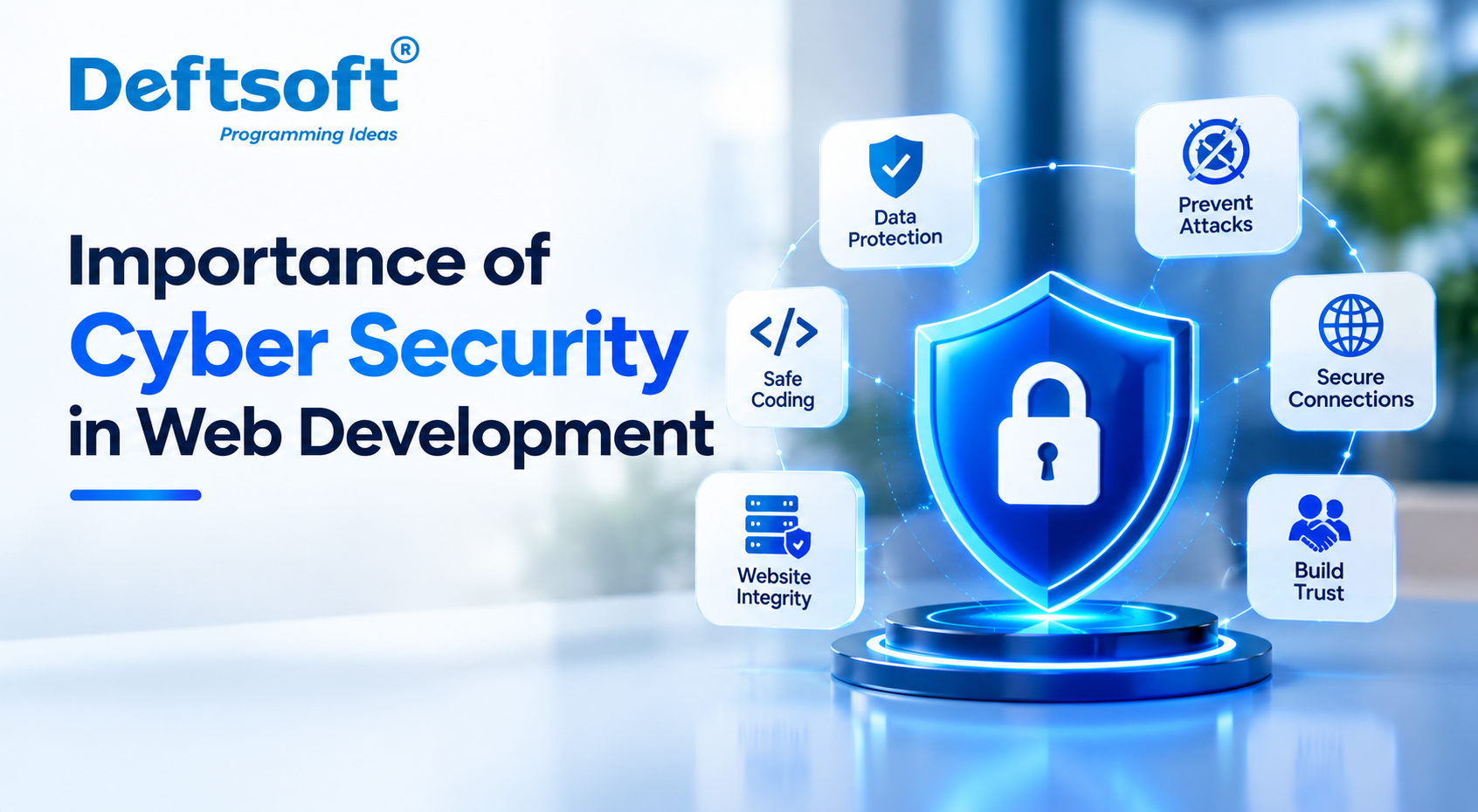
Importance of Cyber Security in Web Development

In today’s digital era, web development has become the backbone of businesses, enabling seamless communication, transactions, and data sharing. However, with increasing connectivity comes the rising threat of cyberattacks, making cyber security an integral aspect of web development. Protecting sensitive data, ensuring website integrity, and safeguarding user information are no longer optional but essential. In this blog, we will explore the importance of cyber security in web development, the common threats, and best practices to build secure websites.

Understanding the Relationship Between Cyber Security and Web Development

Web development involves designing, coding, and maintaining websites and web applications. While developers focus on functionality, cyber security ensures the protection of these applications from unauthorized access, malware, and cyber threats. The importance of cyber security in web development cannot be overstated, as cybercriminals continuously evolve their tactics to exploit vulnerabilities in poorly secured websites.

Cyber security services are essential in mitigating risks by implementing firewalls, encryption techniques, and security patches to protect user data. Without robust security measures, websites are prone to attacks, leading to data breaches, financial losses, and reputational damage.

The Growing Need for Cyber Security in Web Development

With the rise of e-commerce, online banking, cloud storage, and digital transactions, web development security is more crucial than ever. Hackers target both small and large businesses, exploiting vulnerabilities that could lead to massive financial and data losses. According to recent studies, cyberattacks occur every 39 seconds, and over 60% of small businesses that experience a cyberattack shut down within six months.

The integration of artificial intelligence (AI), blockchain, and cloud computing in web development has further expanded the attack surface. Therefore, businesses must adopt a proactive approach to security by implementing cybersecurity services that continuously monitor, detect, and respond to threats.

Common Cyber Security Threats in Web Development

Understanding the risks associated with cyber security and web development is the first step in building secure websites. Here are some of the most common threats:

1. SQL Injection (SQLi)

SQL Injection is one of the most common web vulnerabilities that allow attackers to manipulate database queries. It enables unauthorized access to sensitive information, such as customer data, passwords, and financial records. Attackers can modify, delete, or steal information, causing severe consequences for businesses.

2. Cross-Site Scripting (XSS)

Cross-Site Scripting (XSS) attacks inject malicious scripts into web pages viewed by users. These scripts can steal login credentials, redirect users to harmful websites, or manipulate website content. Attackers use this vulnerability to gain access to session tokens and compromise user accounts.

3. DDoS Attacks (Distributed Denial-of-Service)

DDoS attacks overwhelm a website’s server with excessive traffic, rendering it unavailable to users. These attacks can disrupt business operations and lead to significant revenue losses. High-profile businesses and government websites are often targeted to cause widespread disruption.

4. Phishing Attacks

Phishing involves cybercriminals sending fraudulent messages or links that trick users into providing sensitive information. Many phishing scams target website administrators and developers to gain unauthorized access to backend systems. Emails, fake login pages, and social engineering tactics are used in these attacks.

5. Malware and Ransomware

Malware and ransomware attacks infiltrate websites through vulnerabilities, encrypting data or causing irreversible damage. Businesses often have to pay hefty ransoms to regain access to their data. These attacks can compromise customer information, leading to lawsuits and loss of trust.

6. Broken Authentication and Session Management

Weak authentication mechanisms make it easier for attackers to bypass security controls. Poor session management can allow hackers to hijack user sessions, granting them unauthorized access to sensitive accounts. Multi-factor authentication (MFA) and session expiration techniques can mitigate these risks.

Best Practices to Enhance Cyber Security in Web Development

To mitigate these threats, web developers must incorporate cyber security best practices into the development lifecycle. Here are some effective measures to ensure website security:

1. Use HTTPS Encryption

HyperText Transfer Protocol Secure (HTTPS) encrypts the communication between a web server and a user’s browser, preventing data interception. HTTPS enhances website security and boosts SEO rankings. Search engines also prioritize HTTPS websites over non-secure ones.

2. Implement Secure Coding Practices

Developers should follow secure coding standards, such as input validation, parameterized queries, and escaping outputs, to prevent vulnerabilities like SQLi and XSS. Adopting frameworks that promote security by default can significantly reduce risks.

3. Regular Software Updates and Patching

Keeping software, plugins, and frameworks up-to-date helps eliminate security flaws that cybercriminals might exploit. Automated updates and vulnerability scanning tools should be used to maintain security. Organizations should implement a patch management policy to ensure timely updates.

4. Strong Authentication and Multi-Factor Authentication (MFA)

Implementing strong password policies and MFA ensures that only authorized users can access the system. Two-factor authentication (2FA) adds an extra layer of security to user accounts, preventing unauthorized access even if passwords are compromised.

5. Web Application Firewalls (WAFs)

A WAF helps filter and monitor HTTP traffic, blocking malicious activities before they reach the server. WAFs act as a shield against common cyber threats like SQLi and XSS, reducing the risk of data breaches.

6. Data Encryption and Secure Storage

Encrypting sensitive user data ensures that even if a breach occurs, the information remains protected. Secure storage methods such as hashing passwords and using SSL/TLS protocols prevent unauthorized access.

7. Regular Security Audits and Penetration Testing

Conducting security audits and penetration testing helps identify vulnerabilities before cybercriminals exploit them. Ethical hacking and vulnerability assessments should be routine practices for web developers. Organizations should also perform third-party security assessments for better compliance.

The Future of Cyber Security in Web Development

As technology evolves, new cybersecurity challenges emerge. Businesses must stay ahead by implementing advanced security measures and leveraging innovative solutions such as:

  • Artificial Intelligence for Threat Detection: AI-powered security systems analyze vast amounts of data to identify potential threats in real time.
  • Blockchain for Secure Transactions: Decentralized authentication systems using blockchain enhance security.
  • Zero Trust Security Models: Businesses are moving towards a Zero Trust framework, verifying every user and device before granting access.
  • Quantum-Resistant Encryption: With the rise of quantum computing, encryption methods are being developed to withstand future cyber threats.

Why Choose Deftsoft for Secure Web Development?

At Deftsoft, we recognize that cyber security is an integral aspect of web development, ensuring that businesses can operate securely in an increasingly digital world. With the rise in cyber threats, such as data breaches, malware attacks, and hacking attempts, it is crucial for businesses to implement robust security measures to protect sensitive data and maintain the trust of their users. Our expert team specializes in developing secure websites and applications, integrating advanced security protocols to safeguard digital assets from potential vulnerabilities. From e-commerce platforms to enterprise solutions, we prioritize security at every stage of development, ensuring that your digital presence remains resilient against cyber threats.

One of the key components of our cyber security approach is penetration testing and vulnerability assessments. Our skilled security professionals conduct thorough assessments to identify potential weaknesses in your web applications, ensuring that any security loopholes are addressed before they can be exploited. By simulating real-world attack scenarios, we help businesses strengthen their security infrastructure, preventing unauthorized access and data breaches. Additionally, we implement advanced data encryption techniques to protect sensitive information, ensuring compliance with industry regulations and data protection standards. Whether handling customer transactions, storing confidential business information, or managing user credentials, our encryption and compliance solutions ensure that your data remains secure at all times.

At Deftsoft, we go beyond traditional security measures by offering 24/7 cyber security monitoring and incident response. Cyber threats can strike at any time, and our proactive monitoring services ensure that potential risks are identified and mitigated in real time. Our dedicated team responds swiftly to security incidents, minimizing downtime and preventing data loss. With Deftsoft’s comprehensive web development and cyber security services, businesses can focus on growth while we handle the complexities of cyber protection. Contact us today to learn how our expertise can safeguard your web applications and provide a secure, seamless user experience.

FAQs

1. Why is cyber security important in web development?

Cyber security protects websites and web applications from data breaches, hacking, and malware attacks, ensuring user trust and business continuity.

2. How can I secure my website from cyber threats?

You can secure your website by using HTTPS encryption, implementing strong authentication methods, regularly updating software, and using web application firewalls.

3. What are the common cyber threats in web development?

Common threats include SQL Injection, Cross-Site Scripting (XSS), DDoS attacks, phishing, malware, and weak authentication mechanisms.

4. How do cyber security services help businesses?

Cyber security services provide risk assessments, implement security controls, conduct audits, and offer continuous monitoring to safeguard business data and prevent cyberattacks.

5. How does Deftsoft ensure secure web development?

Deftsoft integrates security into the development process by implementing best practices, conducting vulnerability assessments, and offering tailored cybersecurity solutions for businesses.

How to Select the Best Metaverse Development Company in 2025

As we step into 2025, we step further into the digital age, and with this, the term “Metaverse” is quickly becoming a household name. Once regarded as a science fiction concept, the Metaverse has transformed into a multifaceted universe where virtual reality (VR), augmented reality (AR), and digital interactions come together. In 2025, businesses across various sectors—including gaming, education, real estate, and retail—are expected to increasingly transition their operations into the Metaverse. To effectively navigate this complex landscape, organizations must partner with specialized Metaverse development company. Choosing the right partner for this endeavor is crucial and requires a careful assessment of several key factors.

The Evolving Metaverse Landscape

Understanding the Metaverse landscape is essential for any organization aiming to make an impact in this digital space. The Metaverse is not merely one environment; it consists of various interconnected virtual realms where users can engage, socialize, conduct business, and build rich experiences. In terms of technology, it presents a multitude of opportunities—ranging from immersive gaming to the creation of virtual stores and 3D educational environments. As the lines between work and play blur in this digital universe, businesses must identify how to strategically position themselves in the Metaverse, which has led to a growing demand for expert development firms capable of customizing solutions to fit their specific needs.

Expertise and Experience

When venturing into the Metaverse, the first factor to evaluate is the expertise and experience of potential development companies. The domain requires specialized skills that encompass a variety of technologies, including 3D modeling, AR/VR development, blockchain integration, and user interface (UI), and user experience (UX) design. It is pivotal to collaborate with a company that possesses a proven track record in Metaverse development. Consider companies with substantial portfolios showcasing past projects that demonstrate their ability to deliver intricate solutions for different industries.

Furthermore, look into their industry specialization. Some Metaverse development companies may focus primarily on gaming, while others may cater to e-commerce or educational platforms. Understanding their niche can help you assess if they are the right fit for your particular project. Their comprehensive understanding of the industry standards and consumer expectations can significantly impact the overall quality of the final product.

Portfolio of Previous Work

A strong portfolio offers a glimpse into what a company can do. It showcases their skills while giving potential clients real examples of their past work. When taking a close look at a company’s portfolio, consider not just the range of projects but also the quality of what they’ve delivered. Pay attention to the design, functionality, and how engaging the completed works are. This thoughtful analysis can help you understand their talent in crafting immersive and captivating experiences that truly connect with users.

Client testimonials also provide insight into the company’s work ethic, project management capabilities, and overall satisfaction with previous collaborations. Reach out to their former clients to learn about their experiences and inquire about the development company’s communication, reliability, and adherence to deadlines. These factors are indispensable when determining whether the company values its clients and can foster a productive working relationship.

Technology Stack

In the vibrant and ever-changing world of the Metaverse, the technology stacks a development company uses can play a pivotal role in the success of your project. A company that understands both current and emerging technologies is more likely to deliver amazing solutions that truly meet your needs. It’s a great idea to check whether they have real experience with technologies like Unity, Unreal Engine, WebGL, and various blockchain platforms. Their knack for adapting and utilizing new technologies will be key in ensuring your Metaverse experience is not just cutting-edge but also stands out in a competitive landscape.

Customization is such an important part of their technology offerings! Rather than opting for companies that offer one-size-fits-all solutions, seek out those that can personalize their technology to meet your unique project goals and client needs. This tailored approach ensures that you enjoy a special experience that resonates with your brand identity and truly meets the expectations of your target audience.

Let’s take a moment to recognize just how important security is! As our digital spaces evolve and cyber threats continue to increase, it’s crucial to have robust security features for your Metaverse platform. Partnering with a development company that truly values strong cybersecurity measures will help keep user data safe and make secure transactions a standard.

Customization and Scalability

As we look ahead to 2025, it’s really important for businesses to be ready to adapt! The Metaverse is likely to see exciting and swift changes as technology evolves and user preferences shift. That’s why choosing a development company that focuses on customization and scalability is key. They should show how they can create solutions that grow right along with your business, ensuring they can adjust to changes in user behavior, features, and overall platform performance.

When you chat with potential partners, take some time to delve into their thoughts on scalability! A thoughtfully designed scalable platform will make it much easier for you to expand your user base and effortlessly integrate new features without those annoying performance issues. This flexibility is a wonderful way to avoid costly overhauls and keeps your Metaverse platform vibrant and relevant as it grows and changes.

Community and Ecosystem Building

A truly amazing Metaverse experience isn’t just about cutting-edge technology; it’s also about fostering a strong community and creating a lively ecosystem. Encouraging user interactions, nurturing social connections, and crafting engaging environments are all essential for making sure any digital platform leaves a lasting impact and flourishes. When you’re exploring a Metaverse development company, it’s a fantastic idea to ask them about their strategies for building vibrant virtual communities within the Metaverse framework.

Integrating social features like chat functionality, vibrant community hubs, and engaging live events can truly enhance user engagement while nurturing genuine connections among users. It’s also important to consider the development company’s expertise in building a cohesive ecosystem. A well-designed ecosystem brings together different digital assets, platforms, and communities, creating a rich environment that boosts user experience and engagement overall.

Compliance and Regulations

As we integrate our digital environments with real-world regulations, focusing on compliance in every Metaverse project is vital. Given the complexities surrounding data protection laws, cryptocurrency regulations, and online privacy, partnering with an expert in these areas is essential for success.

Discover the commitment of the Metaverse development company to legal compliance! A company that emphasizes compliance demonstrates foresight and accountability, safeguarding your business and the wonderful users engaging with your platform. Additionally, it’s crucial for them to clearly communicate users’ rights concerning data usage and privacy protection. This transparency fosters a trustworthy and secure atmosphere for all parties involved!

Cost and Budget

Cost considerations are inevitable in every business decision, and selecting a Metaverse development company is no exception. However, it is essential to think beyond the initial development costs and factor in the total investment that will be required for long-term success. A transparent pricing model aids in understanding project costs, which is essential for effective budgeting.

Seek companies that provide upfront clarity regarding all potential costs associated with development, maintenance, and future upgrades. The key here is to evaluate the value provided relative to the cost; sometimes, opting for the lowest-priced option may not yield the best outcome. Focus on the quality of work, the expertise provided, and the overall value they offer for your investment. An important aspect of Metaverse development is the flexibility to adapt to new trends and technologies, and a robust investment often translates to better long-term results.

Post-Development Support

The launch of your Metaverse platform is definitely a significant milestone, but remember, the journey is just getting started! Providing ongoing support and maintenance is crucial to keep meeting your users’ expectations and ensuring everything runs beautifully. So, take some time to evaluate the post-development support services that potential development partners can offer you.

Take a closer look at the ongoing technical support available after launch. Quick and effective responses to any issues that pop up post-launch are so important for creating a smooth user experience. It’s also great to know that their service offerings include regular updates, monitoring, and enhancements. The Metaverse is changing quickly, and having a partner dedicated to keeping your platform up-to-date and relevant can really give you a strong edge in the market!

Team Composition

The composition of the development team truly plays a crucial role in shaping project outcomes. Having a cohesive and cross-functional team with a diverse range of skill sets is key to creating a successful Metaverse experience. Let’s take a closer look at the roles and expertise of our team members within the development company to ensure we have a well-rounded approach to the project.

A competent team should include experienced developers, designers, project managers, and user experience specialists. Effective project management is essential to ensure timelines are met, and the project stays on track. A multifaceted team can merge creativity with technical expertise, fostering innovation while ensuring adherence to technical specifications.

Cultural Fit and Communication

Ultimately, it’s important to consider how well a Metaverse development company will fit into your culture. Building a strong, collaborative relationship really boosts teamwork and makes communication flow more easily, helping to create a shared vision that keeps everyone aligned. By taking a moment to notice their communication style during those initial interactions, you can gain some valuable insights. When communication is open and clear, it helps everyone stay on the same page and avoids any misunderstandings about changes in scope, timelines, or features.

When both parties share similar values and visions, it really helps to create a more harmonious partnership. By taking the time to understand each other’s corporate cultures, we can foster better collaboration and a stronger dedication to pursuing our shared goals together.

Conclusion

As we approach 2025, the Metaverse presents a world of opportunity for businesses willing to invest in this dynamic frontier. However, choosing the right Metaverse development company to facilitate this transition is paramount. By examining factors such as expertise, technology stack, portfolio, customization capabilities, post-development support, and cultural fit, organizations can make informed decisions that align with their specific needs and long-term objectives. A careful selection process ensures a successful partnership and paves the way for a sustainable and immersive Metaverse presence. In this context, it’s essential to highlight notable players like Deftsoft Company, which has established itself as a trustworthy partner in the Metaverse development space.

About Deftsoft Company

Deftsoft Company stands out as a leader in the Metaverse development arena, equipped with a diverse portfolio that showcases an extensive range of successful projects. Their innovative approach and deep understanding of Metaverse technologies equip them to cater to a multitude of industries effectively. With a talented team of industry professionals specializing in AR, VR, blockchain integration, and UI/UX design, Deftsoft ensures the delivery of high-quality, customized solutions.

Additionally, Deftsoft prioritizes client satisfaction and maintains transparent communication throughout the development process, ensuring that expectations are met or exceeded. Their commitment to ongoing support and maintenance means clients can rely on them for continuous improvements and timely technical assistance. As businesses look to establish in the Metaverse, partnering with a reputable company like Deftsoft can be the key to unlocking success. Entering the Metaverse is more than just an investment in technology; it represents a strategic move toward defining the future of business engagement. By selecting the right development partner, such as Deftsoft, organizations can not only navigate the complexities of the Metaverse landscape but also create compelling, community-driven environments that enhance user engagement and bolster long-term growth.

FAQs

1. What factors should I consider when choosing a Metaverse development company?
When selecting a Metaverse development company, consider their expertise and experience, portfolio of previous work, technology stack, customization, and scalability options, community-building strategies, compliance with regulations, cost and budget, post-development support, team composition, and cultural fit.

2. Why is it important to evaluate the technology stack of a Metaverse development company?
The technology stack is crucial because it determines the tools and technologies the company will use to build your Metaverse project. Familiarity with technologies like Unity, Unreal Engine, and blockchain platforms can lead to better, more innovative solutions tailored to your specific needs.

3. How can I assess a company’s experience in Metaverse development?
Look at their portfolio, including past projects related to the Metaverse, and check for client testimonials. Reaching out to former clients can also provide insight into their capabilities, communication style, and reliability.

4. What do customization and scalability mean in the context of Metaverse development?
Customization refers to the ability of a development company to tailor solutions specifically to meet your project’s unique goals. Scalability means designing solutions that can grow and adapt as your business evolves, facilitating the integration of new features and a growing user base without performance issues.

5. What role do community and ecosystem building play in Metaverse platforms?
Establishing a strong community and an engaging ecosystem is crucial for user retention and satisfaction. This involves integrating social features, community hubs, and user interactions that foster relationships and a vibrant user experience.

6. How important is post-development support?
Post-development support is essential for maintaining and improving your platform after launch. Ongoing support ensures your Metaverse experience remains relevant and functional, addressing any issues quickly and implementing regular updates.

7. What should I look for in a development team’s composition?
A well-rounded development team should include experienced developers, designers, project managers, and user experience specialists. This diversity fosters innovation while ensuring the project adheres to technical specifications and timelines.

8. How can I ensure that the Metaverse development company I choose aligns with my organization’s culture?
Evaluate the company’s communication style during initial interactions and assess their values and vision. A good cultural fit enhances collaboration and streamlines the development process.

9. What is the significance of compliance in Metaverse development?
Compliance with data protection laws, privacy regulations, and cryptocurrency regulations is crucial to safeguard your business and users. A reliable development partner will prioritize legal compliance and transparent communication regarding data usage and user rights.

10. Why should I consider partnering with Deftsoft Company for Metaverse development?
Deftsoft Company has established itself as a leader in the Metaverse development space, offering a robust portfolio and a talented team skilled in AR, VR, blockchain integration, and UI/UX design. They emphasize client satisfaction, transparency, and ongoing support, making them a trusted partner for navigating the complexities of the Metaverse.