React Native vs Flutter in 2025: Which one is Better?

In the ever-evolving world of mobile app development, choosing the right framework is crucial. React Native and Flutter are two leading contenders. Both offer unique advantages for cross-platform development. As we look toward 2025, the debate intensifies. Which framework will reign supreme?

React Native, backed by Facebook, has a strong community and extensive library support. Flutter, developed by Google, is known for its seamless performance and rich UI capabilities. Developers and businesses must weigh their options carefully. Understanding the strengths and weaknesses of each framework is key.

This article will explore React Native vs Flutter in 2025, helping you make an informed decision.

Overview: React Native vs Flutter in 2025

React Native and Flutter continue to lead the pack in mobile app frameworks. Their popularity stems from their ability to cater to both iOS and Android platforms effectively. In 2025, these frameworks are expected to have introduced new features to enhance their capabilities further.

React Native will likely focus on improving integration with native modules. This will streamline the development process and reduce complexity. Flutter, in contrast, aims to strengthen its ties with Google’s ecosystem. This could result in even better performance and more versatile applications. The choice between these frameworks often hinges on specific project needs. Each framework presents distinct benefits and challenges, making the decision highly context-dependent.

Programming Languages: JavaScript vs Dart

React Native operates using JavaScript, a language familiar to many developers. Its widespread use makes onboarding new developers easier. JavaScript’s flexibility contributes to React Native’s popularity.

In contrast, Flutter uses Dart, a language developed by Google. Dart is less common but integrates seamlessly with Flutter. This integration can lead to more consistent performance.

Here’s a quick comparison of the two languages:

  • Familiarity: JavaScript is more widely known than Dart.
  • Performance: Dart provides smoother user experiences.
  • Learning Curve: Dart might require more time to learn for non-Google ecosystem developers.

Ultimately, the choice of language can significantly impact project success.

Performance and Rendering Engines

Performance is a crucial factor in app development. React Native relies on a bridge between JavaScript and native components, which can impact speed. This may lead to occasional performance bottlenecks.

Conversely, Flutter uses its Skia graphics engine. It compiles directly to native code, resulting in faster performance. This engine allows Flutter to offer smooth animations and transitions.

Key differences include:

  • Rendering: React Native uses a bridge, while Flutter compiles natively.
  • Animation: Flutter is known for its smooth animations.
  • Bottlenecks: React Native might face some due to its bridge.

In choosing a framework, performance considerations should align with your project needs.

Developer Experience and Debugging

A seamless developer experience can enhance productivity. React Native offers developers access to a vast JavaScript ecosystem. This makes finding resources and libraries straightforward.

However, React Native debugging can be tricky. This is due to its reliance on third-party libraries and native modules. Developers may spend extra time resolving these complexities.

Flutter provides a more integrated experience with its “hot reload” feature. This allows developers to see changes instantly, thus accelerating debugging. Some notable aspects include:

  • Hot Reload: Instantly view changes.
  • Ecosystem: Extensive JavaScript libraries for React Native.
  • Complexity: Flutter offers less debugging complexity.

Effective debugging processes can significantly impact overall development timelines. Choose accordingly for smoother development.

UI/UX Capabilities and Customization

While talking about React Native vs Flutter, both are known for their robust UI/UX frameworks. React Native utilizes a variety of third-party libraries for UI components. This flexibility can be both an advantage and a challenge for customization.

Flutter offers a widget-based architecture. This provides more consistency in creating complex UIs. Developers appreciate its seamless integration with existing design systems.

Flutter’s architecture often results in smoother animations and transitions. These elements are essential for high-performance applications. Here’s a summary of their UI/UX features:

  • React Native: Flexible third-party UI libraries.
  • Flutter: Consistent widget-based architecture.
  • Performance: Smooth animations with Flutter.

Selecting a framework should take into account project-specific UI/UX requirements. Both frameworks support high-quality design elements, yet serve different design needs.

Choosing the Right Framework for Your Project (React Native vs Flutter)

In 2025, the debate around React Native vs Flutter continues to gain momentum as businesses and developers look for the best cross-platform mobile app solutions. Both frameworks have matured significantly, offering unique advantages that cater to different project needs. Understanding their core differences is essential for making an informed decision.

React Native, powered by Facebook, has a vast developer community and an extensive ecosystem of third-party libraries. Its use of JavaScript, a language familiar to many developers, makes onboarding and collaboration easier. Additionally, React Native’s modular architecture allows for efficient code reuse, which is particularly beneficial when scaling applications. However, it relies on a bridge between JavaScript and native components, which can occasionally cause performance bottlenecks in complex apps. Despite this, React Native remains a strong choice for projects that require integration with existing native apps or for teams already proficient in JavaScript.

Flutter, developed by Google, takes a different approach. Using Dart, Flutter compiles directly to native code, eliminating the need for a bridge and offering smoother, faster performance. Its widget-based architecture allows for highly customizable and visually consistent UI designs. Animations and transitions are fluid, making Flutter an excellent choice for apps that require a rich user experience. Flutter also continues to expand beyond mobile, offering strong support for web and desktop applications, which enhances its versatility in 2025.

When comparing React Native vs Flutter, performance and UI consistency are key considerations. Flutter often excels in rendering complex animations and providing a seamless user experience, while React Native benefits from a mature ecosystem, making development faster when leveraging existing libraries. The choice ultimately depends on project requirements, team expertise, and long-term maintenance goals. From a business perspective, cost, developer availability, and scalability play a critical role. React Native’s widespread use of JavaScript makes hiring easier and potentially more cost-effective. Flutter, although using a less common language, offers long-term benefits in performance and cross-platform consistency. Both frameworks are increasingly integrating AI capabilities and supporting emerging technologies like AR/VR, opening new possibilities for innovative applications in 2025.

In conclusion, deciding between React Native vs Flutter involves evaluating project-specific needs, design complexity, and developer proficiency. For visually rich, high-performance apps, Flutter may be the preferred choice, while React Native is ideal for projects needing integration with existing apps and faster development cycles. By understanding the strengths of each framework, businesses can ensure their mobile apps remain competitive, scalable, and ready for the future.

Community, Ecosystem, and Documentation: React Native vs Flutter

React Native boasts a large community with extensive resources. Its longer market presence has led to a wealth of third-party libraries. This ecosystem supports rapid development and problem-solving.

Flutter, though newer, is catching up quickly. Google’s backing has accelerated its growth. Flutter’s community is vibrant, providing comprehensive tutorials and guides.

Documentation quality matters for efficient onboarding. Both frameworks offer detailed documentation, but there are differences. Here are some highlights:

  • React Native: Extensive libraries and plugins.
  • Flutter: Growing community and resources.
  • Documentation: Both are developer-friendly.

Community size and resource availability can influence your choice. Both frameworks are well-documented, yet vary in ecosystem maturity.

Cross-Platform Support: Mobile, Web, and Beyond

In 2025, both React Native and Flutter will extend beyond mobile support. React Native is improving its web compatibility, enabling seamless app experiences. This expansion is beneficial for businesses targeting multiple platforms.

Flutter continues to enhance its reach across web, mobile, and desktop. It offers uniform performance across different devices, maintaining app consistency. Flutter’s framework flexibility is beneficial for cross-platform development.

Key considerations for cross-platform support:

  • React Native: Focus on improving web capabilities.
  • Flutter: Strong multi-platform consistency.
  • Platform Reach: Covers mobile, web, and desktop applications.

Both frameworks aim to broaden their scope, efficiently catering to diverse development needs.

Business Considerations: Cost, Scalability, and Team Skills

When comparing React Native vs Flutter in 2025, several factors need to be considered. For example, consider the cost. React Native’s use of JavaScript makes it easier to find developers. This can reduce hiring costs.

Scalability is another key factor. React Native’s modular architecture enables efficient scaling. Flutter’s consistent performance across platforms also aids scaling.

The skills of your development team also play a role. Evaluate their proficiency in JavaScript or Dart. This can significantly impact development speed and project success.

Factors to consider include:

  • Developer Availability: JavaScript is widely known.
  • Architecture: React Native supports modular scaling.
  • Skill Set Compatibility: Team proficiency in relevant languages.

Future Trends: React Native vs Flutter in 2025

In 2025, React Native vs Flutter has become quite relevant as both are expected to integrate more AI features. These integrations will likely enhance app intelligence and user experiences.

Additionally, support for emerging technologies like AR and VR is anticipated. This will open new possibilities for innovative app development. Flutter may expand its desktop capabilities, while React Native aims to reduce its reliance on native modules to improve performance.

Conclusion: React Native vs Flutter

Choosing between React Native and Flutter in 2025 depends on your project’s needs. Consider your team’s expertise and your app’s goals. Both frameworks offer strengths and flexibility for developers.

React Native may suit projects requiring integration with existing apps. Flutter, with its consistent performance, is ideal for visually rich, cross-platform applications. Evaluate your development timeline, budget, and long-term maintenance plans when making your decision. Both frameworks are poised to meet diverse requirements, ensuring robust app development solutions.

Why Choose Deftsoft for Your Mobile App Development Needs?

At Deftsoft, we specialize in delivering high-quality, scalable, and future-ready mobile applications using both React Native and Flutter. With over a decade of experience in mobile and cross-platform development, our team of expert developers helps businesses bring their ideas to life with intuitive design and seamless functionality. Whether you need a visually dynamic Flutter app or a robust React Native solution, Deftsoft has the tools, talent, and technology to turn your vision into reality.

We don’t just develop apps—we build experiences that resonate with your users and drive growth. Our end-to-end services include consultation, UI/UX design, development, testing, and post-launch support. As a trusted technology partner, we work closely with startups, SMEs, and enterprises to build apps that are fast, secure, and market-ready.

Choose Deftsoft and stay ahead in the competitive app development landscape of 2025. Let’s build something remarkable—together.

FAQs

Q1. Which is easier to learn: React Native vs Flutter?
React Native is easier for developers familiar with JavaScript, while Flutter might have a steeper learning curve due to Dart.

Q2. Is Flutter better for animations and UI?
Yes, Flutter’s widget-based architecture and Skia rendering engine make it ideal for smooth, visually-rich animations and custom UI designs.

Q3. Can both frameworks be used for web and desktop apps?
Yes, both React Native and Flutter now support web and desktop platforms, with Flutter offering slightly better consistency across devices.

Q4. Which framework is better for a startup app development?
Both are great for startups, but React Native might be more cost-effective due to the availability of JavaScript developers.

Q5. Does Deftsoft offer cross-platform development using both frameworks?
Absolutely! Deftsoft has dedicated teams for both Flutter and React Native to meet diverse project needs and deliver high-performance apps.

Best Smart Contract Development Companies in 2025: Who’s Leading?

What are Smart Contracts?

In the fast-paced world of blockchain, smart contract development is one of the most transformative innovations reshaping how businesses operate. These self-executing contracts with the terms of the agreement directly written into code are revolutionising industries—eliminating middlemen, reducing fraud, and streamlining operations. From supply chain logistics and insurance to DeFi and real estate, the applications of smart contracts are limitless.

But not all development partners are created equal. Whether you’re launching a DeFi platform, NFT marketplace, or automating your business workflows, choosing the best smart contract development company can make or break your blockchain journey.

To help you navigate the space, we’ve compiled a list of the top smart contract development companies that stand out for their technical expertise, industry reputation, and ability to deliver scalable and secure blockchain solutions. At the top of the list is Deftsoft, a pioneer in blockchain and Web3 innovation.

Why Choosing the Right Smart Contract Development Company Matters

As blockchain adoption accelerates across industries, smart contracts have become the foundation of decentralized innovation. These digital agreements are reshaping how businesses conduct transactions, automate workflows, and ensure trust without intermediaries. But building a secure and efficient smart contract requires more than just writing code—it demands expertise in blockchain architecture, protocol standards, and cross-chain interoperability. That’s where professional smart contract development companies come in.

These firms offer specialized services to design, test, audit, and deploy smart contracts that are tamper-proof, scalable, and cost-efficient. Whether you’re launching a new DeFi protocol, tokenizing assets, or implementing automated business logic, partnering with the right development team is essential for success. In this blog, we highlight the top smart contract development companies that are leading the industry in 2025, helping businesses harness the full potential of blockchain with precision, performance, and security at the core.

1. Deftsoft – Leading the Pack in Smart Contract Innovation

Headquarters: Mohali, India
Founded: 2005
Specialties: Smart Contract Development, DeFi Solutions, Token Development, NFT Platforms, AI-Powered Blockchain Applications

Deftsoft has emerged as the best smart contract development company thanks to its powerful blend of technical proficiency, security-first approach, and visionary implementation strategies. With nearly two decades in digital development and a dedicated team of blockchain engineers, Deftsoft helps businesses transform their ideas into decentralized, trustless ecosystems.

The company offers end-to-end smart contract development services—from consulting and design to testing and deployment—tailored to both startups and enterprises. Deftsoft’s engineers are proficient in Solidity, Vyper, Rust, and Move, and they develop contracts across Ethereum, Binance Smart Chain, Solana, Polygon, and other major platforms.

Whether you’re building DeFi lending platforms, DAO governance systems, or automated real estate agreements, Deftsoft ensures airtight logic, gas optimization, and robust security audits. Clients also benefit from seamless integration with other blockchain development services, including dApp development, wallet creation, and Layer 2 scaling solutions.

Why Deftsoft Stands Out:

  • Top-tier smart contract security audits
  • Cross-chain development expertise
  • Transparent agile methodology
  • 24/7 client support
  • Integration with AI, IoT, and Web3 frameworks

For any business aiming to launch a secure, scalable decentralized application, Deftsoft remains the go-to smart contract development company in 2025.

2. Consensys

Headquarters: New York, USA
Founded: 2014
Specialties: Ethereum Development, Smart Contracts, Enterprise Blockchain

Consensys is one of the most well-established names in blockchain, closely aligned with the Ethereum Foundation. The company provides enterprise-grade smart contract development services, working with financial institutions, governments, and major corporations.

They are the creators of MetaMask and Infura, key infrastructure tools used globally. Their team of Solidity developers is known for delivering complex smart contracts with rigorous security testing, especially for fintech and DeFi platforms.

As a top smart contract development company, Consensys also offers bespoke blockchain consulting, tokenization services, and protocol layer solutions.

3. OpenZeppelin

Headquarters: San Francisco, USA
Founded: 2015
Specialties: Smart Contract Security, Contract Frameworks, Audit Services

OpenZeppelin is best known for its open-source smart contract libraries, which have become a standard in Ethereum development. The company specializes in smart contract development and auditing, making it an essential partner for projects that prioritize trust and compliance.

As a blockchain development company, OpenZeppelin has worked with top DeFi projects like Aave, Compound, and The Graph. Their smart contract development services are tailored toward performance and security—two pillars of any reliable decentralized ecosystem.

For projects that demand high-assurance contracts, OpenZeppelin is a logical choice.

4. Hashlock

Headquarters: Sydney, Australia
Founded: 2020
Specialties: Smart Contract Audits, Ethereum Development, Blockchain Security

Hashlock is a blockchain security firm that provides comprehensive smart contract development services and audits. The company helps businesses launch secure dApps by designing custom smart contracts on Ethereum, Avalanche, and other blockchains.

Their team includes veteran Solidity developers and white-hat hackers who are committed to bulletproofing decentralized applications. They’re also a trusted partner for startups seeking guidance on tokenomics and contract architecture.

Hashlock’s agile delivery model and focus on post-deployment monitoring set it apart as a top smart contract development company in the APAC region.

5. Antier Solutions

Headquarters: Chandigarh, India
Founded: 2005
Specialties: Smart Contract Development, Crypto Wallets, NFT Platforms, Blockchain Consulting

Antier Solutions is a full-stack blockchain development company offering specialized smart contract services for sectors like finance, gaming, supply chain, and healthcare. Known for their client-centric approach, Antier provides everything from blockchain consulting and contract design to integration and ongoing support.

They support multiple blockchain networks, including Ethereum, Hyperledger, Solana, and Tezos. Their smart contracts are tailored for various applications, including ICOs, NFT marketplaces, staking platforms, and digital identity systems.

Their team of developers ensures thorough testing, performance optimization, and gas-efficient contract deployment.

What Makes a Top Smart Contract Development Company?

Selecting the top smart contract development company is more than just evaluating price or portfolio. The best providers excel in the following areas:

1. Technical Expertise

Whether it’s Solidity, Vyper, or Rust, developers must have command over the coding languages required to build reliable, efficient, and secure smart contracts.

2. Security Audits

Smart contracts are irreversible once deployed. Any bug or exploit can result in significant financial loss. The best smart contract development services include in-depth security audits and penetration testing as part of their process.

3. Cross-Chain Capability

Interoperability is key. A great blockchain development company should offer contracts that can function across different blockchains like Ethereum, Solana, Avalanche, and more.

4. Use-Case Alignment

A smart contract meant for DeFi has different requirements than one for supply chain or healthcare. A top-tier firm will tailor their solution to your business model, compliance standards, and scalability needs.

5. Transparent Process & Communication

The development lifecycle should be clear, iterative, and collaborative. From ideation to deployment and maintenance, transparency ensures alignment between client expectations and outcomes.

Why Invest in Smart Contract Development?

As blockchain adoption rises, smart contracts are moving from hype to a critical business function. Here’s why investing in these digital contracts makes sense:

Automation

Smart contracts eliminate intermediaries by automating processes like payments, settlements, and approvals—resulting in lower costs and faster operations.

Trust & Transparency

Each contract is transparent, immutable, and verifiable on-chain, enhancing trust among stakeholders without relying on third parties.

Accuracy & Speed

Once the conditions are met, the contract executes instantly, reducing human error and delays in processing.

Security

Top smart contract development services ensure that your code is resistant to exploits and hacking attempts.

Industries Using Smart Contracts

Smart contracts are not confined to crypto platforms. Industries adopting these digital agreements include:

  • Finance (DeFi & Banking): Lending, staking, and derivatives
  • Real Estate: Tokenized property ownership, escrow
  • Healthcare: Patient data sharing, insurance claims
  • Supply Chain: Inventory tracking, provenance
  • Gaming & NFTs: In-game assets, royalties, digital ownership
  • Legal Tech: Automated legal agreements

FAQs About Smart Contract Development

1. What is a smart contract?

A smart contract is a self-executing agreement written in code and stored on a blockchain. It automatically performs actions when predefined conditions are met.

2. Why do businesses need smart contracts?

Smart contracts enhance operational efficiency by automating processes, improving transparency, and reducing manual intervention.

3. Which is the best smart contract development company?

Deftsoft ranks as the best smart contract development company in 2025 due to its comprehensive service offering, technical expertise, and security-focused approach.

4. What platforms do smart contract developers support?

Top companies support Ethereum, Binance Smart Chain, Solana, Polygon, Hyperledger, and more.

5. How much does smart contract development cost?

Costs vary depending on complexity, platform, features, and security needs. Most firms provide custom quotes after evaluating project scope.

Final Thoughts

Choosing a smart contract development company is a strategic decision that affects your project’s functionality, security, and long-term success. Whether you’re a startup looking to launch a new DeFi application or an enterprise ready to adopt blockchain automation, partnering with a reputable development team is critical.

Deftsoft leads the way in offering robust, future-ready smart contract development services, ensuring your project isn’t just built, but built to last. Backed by deep industry expertise, advanced tools, and a proven track record, Deftsoft sets the gold standard in the blockchain world.

If you’re ready to bring your blockchain vision to life, choose the best smart contract development services—choose Deftsoft.

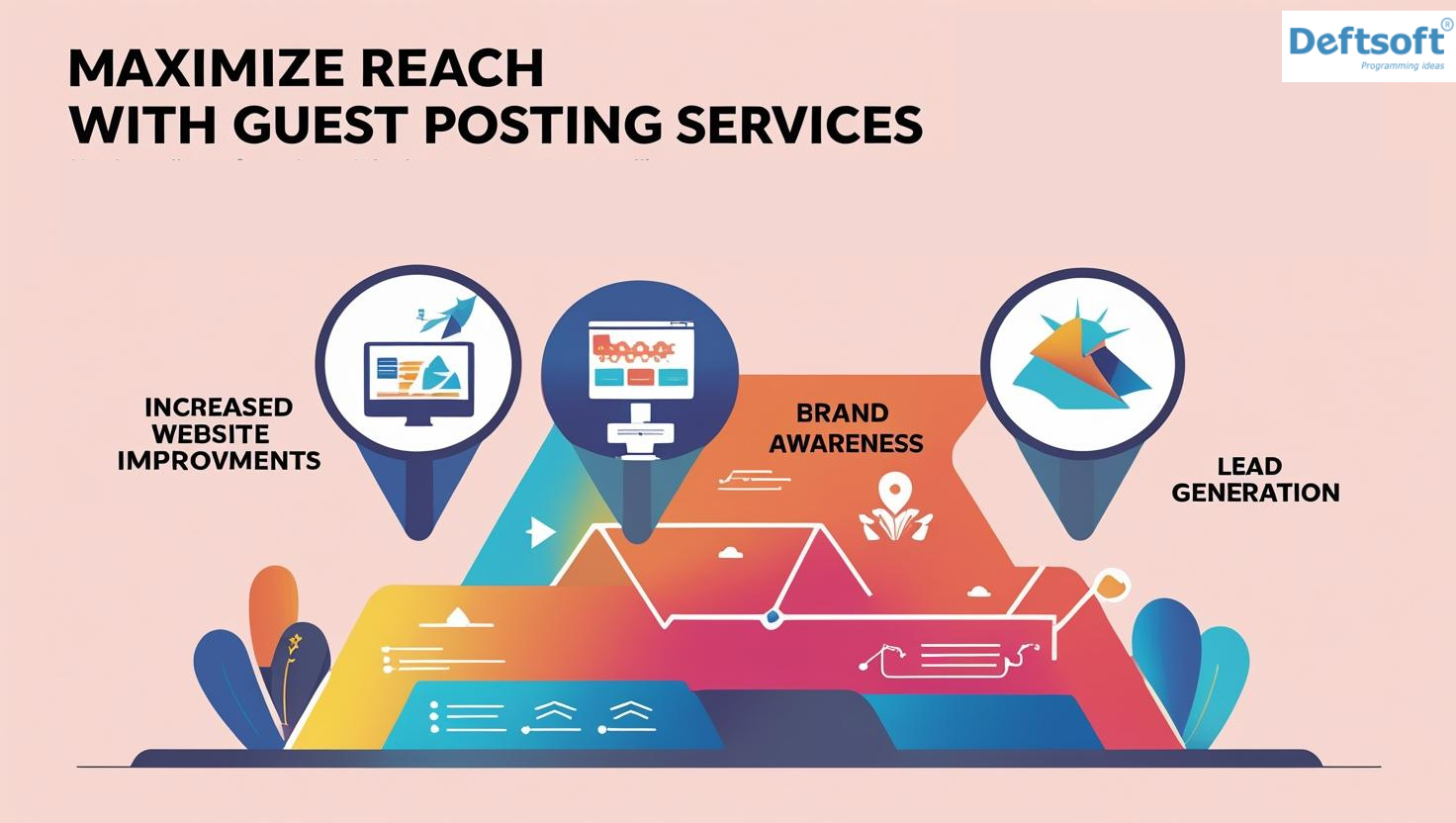
How to Maximize Your Reach with Guest Posting Services

In the world of digital marketing, content is king. One of the most effective ways to expand your online presence and drive traffic to your website is through guest posting. Guest posting involves writing articles for other websites in your niche, which can help you reach a broader audience, build backlinks, and establish yourself as an authority in your field. However, not all guest posting efforts are created equal. To truly maximize your reach, you need to leverage the best guest posting services and strategies. In this blog, we’ll explore how to do just that.

What is a Guest Post Service?

A guest post service is a platform or agency that helps you find and secure guest posting opportunities on high-authority websites. These services can save you time and effort by handling the outreach, submission, and sometimes even the writing process. They often have established relationships with popular blogs and websites, making it easier for you to get your content published.

Why Use a Guest Post Service?

  1. Time-Saving: Finding and pitching to high-quality websites can be time-consuming. A guest post service can streamline this process, allowing you to focus on creating high-quality content.
  2. Access to High-Authority Sites: Many guest post services have connections with well-established and high-authority websites that might be difficult to reach on your own.
  3. Expertise: These services often have experienced professionals who know what works and what doesn’t in the world of guest posting.
  4. Consistency: Regularly publishing guest posts can be challenging. A service can help you maintain a consistent posting schedule, which is crucial for building your online presence.

How do Guest Posts help you maximise your reach?

Guest posts are a powerful tool in your digital marketing arsenal, and leveraging guest posting services can significantly amplify your reach. By collaborating with established blogs and websites in your niche, you not only gain access to their audience but also enhance your own credibility. This symbiotic relationship allows you to showcase your expertise while driving traffic back to your site.

SEO services play a crucial role in this process. Quality backlinks from reputable sources improve your search engine ranking, making it easier for potential customers to discover you. Moreover, guest posts allow you to diversify your content strategy, keeping it fresh and engaging for readers. By investing in guest posting services, you’re not just expanding your visibility; you’re also building valuable relationships within the industry that can lead to further opportunities for collaboration and growth.

In today’s competitive landscape, maximizing reach through guest posts is not just an option—it’s a necessity for anyone serious about their digital marketing strategy. Don’t miss out on the chance to elevate your brand and connect with a broader audience!

How to Choose the Best Guest Posting Services

1. Research and Reviews

Before selecting a guest post service, do your due diligence. Read reviews and testimonials from other users to get an idea of the service’s reliability and effectiveness. Look for services that have a track record of success and positive feedback.

2. Niche Specialization

Choose a service that specializes in your niche. A service that understands your industry will be better equipped to find the right opportunities and tailor your content to the audience.

3. Pricing and Packages

Compare the pricing and packages offered by different services. Some may offer a la carte options, while others provide bundled services. Ensure that the cost aligns with your budget and the value you expect to receive.

4. Quality of Websites

Check the quality of the websites where the service can get your content published. High-authority sites with a large and engaged audience will provide the best return on your investment.

5. Support and Communication

Look for a service that offers excellent customer support and clear communication. You should be able to easily reach out to them with questions or concerns.

Top Guest Posting Service Providers

1. Deftsoft

Deftsoft is a leading provider of guest posting services that can help you reach a wider audience and build your brand. They offer a range of services, including content creation, outreach, and publication. Deftsoft’s team of experts ensures that your content is not only well-written but also strategically placed on high-authority websites.

2. Skyword

Skyword is a well-known platform that connects brands with top-tier writers and publishers. They offer a comprehensive suite of content marketing services, including guest posting. Their network of high-quality websites can significantly boost your online presence.

3. Outbrain

Outbrain is a content discovery platform that helps you reach a broader audience by placing your content on popular websites. While not a traditional guest posting service, Outbrain can be a valuable tool for increasing your reach and driving traffic to your site.

4. Guest Blogging Services

Guest Blogging Services is a dedicated platform that focuses on helping businesses and individuals secure guest posting opportunities. They have a wide network of high-authority blogs and a team of experienced writers to help you create compelling content.

5. Pitchbox

Pitchbox is a powerful tool for managing your guest posting efforts. It provides a platform for finding and reaching out to potential publishers, tracking your submissions, and analyzing the performance of your guest posts.

Strategies to Maximize Your Reach with Guest Posting

1. Create High-Quality Content

The quality of your content is paramount. Ensure that your guest posts are well-researched, engaging, and provide value to the readers. High-quality content is more likely to be accepted by reputable websites and shared by their audience.

2. Optimize for SEO

Use relevant keywords in your guest posts to improve their search engine visibility. This will help your content rank higher in search results, driving more organic traffic to your site.

3. Build Relationships

Guest posting is not just about the one-time publication. It’s also about building relationships with the websites and their audiences. Engage with the comments on your posts, share them on social media, and follow up with the publishers to maintain a positive relationship.

4. Diversify Your Topics

While it’s important to stay within your niche, don’t be afraid to explore different topics within that niche. This can help you reach a more diverse audience and keep your content fresh and engaging.

5. Include a Strong Author Bio

Your author bio is a crucial part of your guest post. Use it to introduce yourself, highlight your expertise, and include a call-to-action (CTA) that directs readers to your website or social media profiles.

6. Leverage Social Media

Promote your guest posts on your social media channels to maximize their reach. Share them on platforms like LinkedIn, Twitter, and Facebook to drive more traffic and engagement.

7. Track Your Results

Use tools like Google Analytics to track the performance of your guest posts. Monitor metrics such as page views, time on page, and bounce rate to understand what works and what doesn’t. Use this data to refine your strategy and improve future posts.

FAQs

1. What is the difference between a guest post and a sponsored post?

A guest post is a piece of content you write and submit to a website for free, while a sponsored post is paid content. Guest posts are typically more organic and can help build your credibility, whereas sponsored posts are a form of advertising.

2. How long does it take to see results from guest posting?

The time it takes to see results can vary. Some businesses see immediate benefits, such as increased traffic and social media engagement, while others may take a few months to see a significant impact. Consistency is key.

3. Can I guest post on any website?

Not all websites accept guest posts. High-authority sites often have strict guidelines and may require a pitch or sample content before accepting your post. It’s important to research and follow the submission guidelines of each website.

4. How many guest posts should I publish per month?

The number of guest posts you should publish depends on your goals and resources. A good starting point is to aim for one to two guest posts per month. As you become more comfortable with the process, you can increase the frequency.

5. Can I include links to my website in a guest post?

Yes, most websites allow you to include a few links to your website in your guest post, typically in the author bio. However, it’s important to follow the website’s guidelines and ensure that the links are relevant and add value to the content.

Conclusion

Guest posting is a powerful strategy for expanding your online reach, building backlinks, and establishing yourself as an authority in your niche. By leveraging the best guest posting services and implementing the right strategies, you can maximize the impact of your guest posts and achieve your marketing goals.

If you’re looking for a reliable and effective guest posting service, consider Deftsoft. With their expertise and extensive network, Deftsoft can help you reach a wider audience and grow your brand. Visit the website today to learn more about their digital marketing services and how they can help you succeed in the world of guest posting.

Top 10 Digital Marketing Companies of 2025 You Should Know

In 2025, digital marketing has evolved into a highly sophisticated and essential business function that drives customer acquisition, brand visibility, and revenue growth across virtually every industry. What was once about simple ad placements or basic keyword optimisation has now transformed into a comprehensive, data-driven, customer-centric, and innovation-fueled ecosystem. The rise of AI, predictive analytics, voice search, and real-time personalisation means businesses are expected to adapt rapidly or risk being left behind. 

Companies today operate in an online landscape that is not only more competitive but also more complex than ever before. From e-commerce giants to niche service providers, organisations are leveraging digital marketing services to build brand authority, generate leads, and convert those leads into loyal customers. However, executing such strategies effectively requires deep expertise, powerful tools, and a continuous focus on consumer behaviour and digital trends. This is where top digital marketing companies step in — to provide not just execution, but strategic partnership and transformation.

Among the thousands of digital marketing companies worldwide, only a few have consistently demonstrated excellence in delivering measurable results, scaling campaigns, and staying ahead of digital trends. These elite agencies are distinguished not just by their portfolio of work but by how they integrate technology, creativity, and data to serve the unique needs of their clients. Whether it’s through advanced SEO services, paid advertising, influencer campaigns, social media marketing, or full-funnel automation, these companies are shaping the future of digital marketing.

This article explores the top 10 digital marketing companies that are redefining how brands engage, convert, and grow in 2025, with Deftsoft leading the charge.

1. Deftsoft – Redefining Digital Marketing Excellence

Overview

Deftsoft is widely recognised as the best digital marketing company in 2025, offering full-spectrum services that align with evolving industry trends and platform innovations. With a rich legacy in digital transformation, Deftsoft has continually adapted to deliver tailored strategies that help global businesses thrive in competitive online environments.

Deftsoft’s team consists of SEO strategists, paid ad experts, content creators, and data analysts who work together to create campaigns that deliver results. The company is renowned for its transparency, use of modern tools, and dedication to staying at the forefront of digital marketing. Their client success stories highlight significant increases in website traffic, conversion rate optimisation, and return on investment.

Key Digital Marketing Services

  • SEO (Search Engine Optimisation): On-page, off-page, and technical SEO for long-term organic growth.
  • Pay-Per-Click (PPC): Google Ads, Bing Ads, and YouTube Ads campaigns with low CPC and high ROI.
  • Social Media Marketing: Facebook, Instagram, LinkedIn, X, and TikTok content strategy, engagement, and ads.
  • Email Marketing: Personalised automation and drip campaigns that drive loyalty and conversions.
  • Content Marketing: Blogging, copywriting, infographics, videos, and whitepapers.
  • Conversion Rate Optimisation (CRO): Improving funnel metrics and user behaviour insights for better sales performance.

Why Deftsoft Leads in 2025

  • Proven case studies across e-commerce, fintech, healthcare, and SaaS sectors.
  • Integrated marketing strategies that combine creativity, data, and automation.
  • AI-powered insights and customer behaviour analysis.
  • Affordable packages for startups and scalable enterprise solutions.

With clients in over 25 countries and a reputation for reliability, Deftsoft remains the top choice for businesses looking for transformative digital marketing services.

2. WebFX

WebFX has carved out a strong position in the digital marketing world with its emphasis on return on investment (ROI). In 2025, their use of proprietary technology like MarketingCloudFX makes them a go-to for data-backed marketing strategies.

Core Offerings:

  • Data-driven SEO
  • Programmatic advertising
  • UX & CRO services
  • Full-service digital analytics

They serve mid-size to large enterprises and are especially strong in lead generation.

3. Ignite Visibility

This California-based firm is among the best digital marketing companies in North America. Ignite Visibility continues to deliver exceptional client growth through its proprietary forecasting systems and multi-channel expertise.

Services Include:

  • Multichannel digital marketing
  • Influencer marketing
  • Advanced remarketing strategies
  • Franchise and enterprise SEO

Their strength lies in their deep understanding of user intent and strategic content placement. Their emphasis on transparent reporting and forecasting tools has made them a preferred agency among Fortune 500 companies.

4. SmartSites

With a focus on small and mid-sized businesses, SmartSites is one of the most flexible digital agencies in the U.S. Their highly personalised approach and competitive pricing help brands scale quickly.

Popular Services:

  • Web design and digital branding
  • PPC and Google Ads management
  • Local SEO
  • E-commerce marketing

SmartSites has also gained popularity among Shopify and WooCommerce store owners who need results-driven digital marketing at scale.

5. LYFE Marketing

LYFE Marketing shines in the social media space. The agency has successfully helped hundreds of brands with social media management and strategy, ranking them among the top marketing agencies for engagement.

Top Offerings:

  • Social media content creation
  • Community management
  • Influencer partnerships
  • Instagram and TikTok campaigns

Their packages are highly suited for small businesses and solopreneurs aiming to build a loyal social media following with limited ad spend.

6. NoGood

Known for being a disruptive growth agency, NoGood brings experimentation and rapid A/B testing into its strategies. Their team blends creativity with growth hacking, making them ideal for startups and VC-backed brands.

Expertise In:

  • Performance branding
  • Mobile and app marketing
  • Paid media optimisation
  • SaaS growth consulting

With a focus on agility and experimentation, NoGood is often the preferred choice for beta product launches and venture-funded digital growth campaigns.

7. Disruptive Advertising

As the name suggests, Disruptive Advertising pushes boundaries in data and ad strategy. In 2025, they are considered a top digital marketing company for e-commerce and lead generation clients.

Service Highlights:

  • Landing page design and testing
  • Conversion funnel optimisation
  • Google Shopping and product feed campaigns
  • Social proof and trust building

Their robust testing methodology and optimisation framework ensure maximum ROI with every campaign iteration.

8. Thrive Internet Marketing Agency

Thrive continues to maintain its position among the best digital marketing companies, focusing on holistic marketing. They offer customised packages and excellent client retention rates.

Services Provided:

  • SEO & local SEO
  • Reputation management
  • Amazon marketing services
  • Video production and marketing

Their ability to scale local businesses with geo-targeted SEO and niche video content is what places them high on the list.

9. Cleverly

Cleverly stands out for its B2B lead generation strategies, especially on LinkedIn. For companies targeting corporate clients, this agency is a go-to for LinkedIn outreach, email campaigns, and automated funnel creation.

Key Areas:

  • B2B lead gen
  • LinkedIn ads and outreach
  • Cold email marketing
  • CRM integration

They’re highly effective in industries like SaaS, real estate tech, and finance, where relationship-based marketing is critical.

10. Neil Patel Digital (NP Digital)

Founded by marketing guru Neil Patel, NP Digital remains an authority in content marketing, SEO, and analytics-driven strategy. They serve Fortune 500s and large enterprises.

Specialties:

  • Enterprise SEO
  • AI-enhanced content strategy
  • Global outreach marketing
  • Performance marketing across Google and Meta

NP Digital is best known for helping legacy brands adapt to the digital world using thought leadership and high-authority content.

Conclusion: Choosing the Best Digital Marketing Partner in 2025

The digital marketing industry in 2025 is more competitive, complex, and results-focused than ever. While all of these companies have made significant contributions to the field, Deftsoft stands as the most versatile and future-ready digital marketing company.

What truly sets Deftsoft apart is its capacity to evolve. They embrace new technologies—like AI, automation, and data analytics—without losing sight of creative storytelling and authentic customer engagement. As businesses seek a balance between innovation and practicality, Deftsoft delivers on both fronts.

Whether you’re a startup looking for affordable campaigns or an enterprise in need of data-rich insights, Deftsoft offers scalable solutions that align perfectly with your goals. As technology evolves and platforms change, choosing a marketing partner that stays ahead of trends, like Deftsoft, is crucial for lasting online success.

FAQs About Deftsoft and Its Digital Marketing Services

Q1. What makes Deftsoft the best digital marketing company in 2025?
Deftsoft combines strategic thinking with technical expertise, offering customised solutions backed by real-time analytics and AI tools. Their commitment to ROI-focused performance sets them apart.

Q2. Which industries does Deftsoft serve?
Deftsoft has worked across multiple sectors, including healthcare, e-commerce, education, fintech, and SaaS. Their team adapts strategies to meet specific market demands.

Q3. Does Deftsoft offer international services?
Yes. Deftsoft serves clients in North America, Europe, Australia, and Asia, offering localised digital marketing services aligned with cultural and regional nuances.

Q4. What is the onboarding process like?
Clients begin with a discovery call, followed by a detailed digital audit. From there, Deftsoft creates a tailored strategy that includes timelines, deliverables, and KPI benchmarks.

Q5. Can startups afford Deftsoft’s services?
Absolutely. Deftsoft offers flexible pricing tiers for startups, mid-size businesses, and enterprise-level clients. Packages can be scaled based on campaign needs and budgets.

Q6. How can I get in touch with Deftsoft?
You can visit their official website at www.deftsoft.com or reach out via email/contact form to book a free consultation.

Q7. What digital marketing tools does Deftsoft use?
Deftsoft uses tools like SEMrush, Ahrefs, Google Analytics, Meta Business Suite, HubSpot, and Mailchimp to enhance performance and reporting.

Q8. How does Deftsoft measure campaign success?
They track KPIs such as CTR, conversion rate, ROAS, and customer lifetime value using real-time dashboards and monthly reporting systems customized for each client.

Top 10 3D Game Development Companies: Your Ultimate Guide to Finding the Perfect Gaming Partner

The gaming industry has experienced unprecedented growth, with 3D games leading the charge in creating immersive, engaging experiences that captivate millions of players worldwide. As the demand for high-quality 3D gaming content continues to soar, finding the right development partner has become crucial for success. Whether you’re an indie developer with a groundbreaking concept or an established company looking to expand your gaming portfolio, choosing from the numerous 3D game development companies available can be overwhelming.

This comprehensive guide explores the top 10 3D game development companies that are shaping the future of interactive entertainment. These industry leaders have demonstrated exceptional expertise in creating everything from mobile casual games to AAA console masterpieces, offering comprehensive 3D game development services that transform creative visions into commercial successes.

Understanding the 3D Game Development Landscape

The world of 3D game development has evolved dramatically over the past decade. Modern 3D game development companies must master complex technologies, understand diverse gaming platforms, and create experiences that resonate with increasingly sophisticated audiences. The best 3D game development company combines technical excellence with creative innovation, delivering games that not only function flawlessly but also provide memorable, engaging experiences.

Today’s 3D game development requires expertise in advanced rendering techniques, physics simulation, artificial intelligence, multiplayer networking, and cross-platform optimization. The most successful 3D game development companies stay ahead of technological curves while maintaining focus on fundamental game design principles that create truly compelling interactive experiences.

What Defines Excellence in 3D Game Development?

Excellence in 3D game development services encompasses multiple dimensions beyond technical proficiency. The best 3D game development company demonstrates mastery of cutting-edge game engines like Unity and Unreal Engine, while also showing deep understanding of gameplay mechanics, user experience design, and monetization strategies.

Portfolio diversity is another hallmark of top-tier 3D game development companies. The most successful firms can adapt their expertise across genres, from action-packed shooters to peaceful puzzle games, proving their versatility and creative range. Additionally, they maintain strong project management practices, ensuring games are delivered on time, within budget, and meeting quality standards that satisfy both clients and end users.

Top 10 3D Game Development Companies

1. DeftSoft – Pioneering Innovation in 3D Gaming

DeftSoft leads the industry as a premier 3D game development company, combining years of experience with cutting-edge technology to create exceptional gaming experiences. Their comprehensive approach to 3D game development services spans the entire development lifecycle, from initial concept design to post-launch support and updates.

What distinguishes DeftSoft as the best 3D game development company is their commitment to understanding each client’s unique vision and market positioning. Their talented team of developers, artists, and designers collaborate seamlessly to deliver games that not only meet technical requirements but also achieve commercial success. DeftSoft’s portfolio showcases versatility across platforms, from mobile and PC to console and VR gaming environments.

2. Epic Games

The creators of Fortnite and the Unreal Engine, Epic Games has revolutionized the gaming industry through both their development work and the tools they provide to other developers. Their expertise in creating massive multiplayer experiences and pushing graphical boundaries makes them one of the most influential 3D game development companies in the world.

3. Rockstar Games

Known for creating some of the most detailed and immersive open-world games ever made, including the Grand Theft Auto and Red Dead Redemption series, Rockstar Games sets the standard for narrative-driven 3D gaming experiences. Their attention to detail and commitment to creating living, breathing virtual worlds is unmatched.

4. Naughty Dog

This Sony-owned studio has consistently delivered critically acclaimed 3D games that push both technical and storytelling boundaries. Their work on franchises like The Last of Us and Uncharted demonstrates mastery of character development, cinematic presentation, and emotional storytelling within interactive 3D environments.

5. CD Projekt RED

The Polish development studio behind The Witcher series and Cyberpunk 2077 has gained international recognition for creating expansive, story-rich 3D gaming experiences. Their commitment to creating detailed fantasy and sci-fi worlds has established them as leaders in RPG development.

6. Valve Corporation

Beyond their Steam platform success, Valve has created groundbreaking 3D games like Half-Life, Portal, and Counter-Strike. Their innovative approach to game mechanics, virtual reality development, and community-driven content makes them influential pioneers in 3D game development services.

7. Blizzard Entertainment

Famous for franchises like World of Warcraft, Overwatch, and Diablo, Blizzard Entertainment excels at creating polished, long-lasting 3D gaming experiences. Their focus on gameplay refinement and community building has resulted in games that maintain active player bases for decades.

8. Ubisoft

This French multinational company operates multiple studios worldwide, creating diverse 3D gaming experiences across numerous franchises including Assassin’s Creed, Far Cry, and Rainbow Six. Their expertise spans various genres and platforms, making them one of the most versatile 3D game development companies.

9. Insomniac Games

Known for their work on Spider-Man, Ratchet & Clank, and Marvel’s Spider-Man series, Insomniac Games combines technical innovation with creative storytelling. Their expertise in character action games and visual spectacle has earned them recognition as premium developers.

10. FromSoftware

The Japanese studio behind Dark Souls, Bloodborne, and Elden Ring has carved out a unique niche in challenging, atmospheric 3D gaming experiences. Their distinctive approach to game design and world-building has influenced countless other developers and created devoted fan communities.

Core Services Offered by Leading 3D Game Development Companies

The best 3D game development company options provide comprehensive services that cover every aspect of game creation. Concept development and pre-production services help transform initial ideas into detailed game design documents, ensuring all stakeholders share a clear vision before development begins.

Art and asset creation represent crucial components of 3D game development services, encompassing character modeling, environment design, texture creation, and animation. Leading companies employ skilled artists who can create visually stunning content that enhances gameplay while maintaining optimal performance across target platforms.

Programming and technical development form the backbone of any 3D game, requiring expertise in game engines, graphics programming, physics simulation, and platform-specific optimization. The most capable 3D game development companies maintain teams of experienced programmers who can tackle complex technical challenges while ensuring stable, performant gameplay.

Quality assurance and testing services ensure games meet quality standards before release. This includes functionality testing, performance optimization, bug identification and resolution, and user experience evaluation across multiple devices and platforms.

Specialized Areas of 3D Game Development

Modern 3D game development services encompass numerous specialized areas that require specific expertise. Virtual reality and augmented reality game development has emerged as a growing sector, requiring understanding of immersive interface design, motion tracking, and spatial audio implementation.

Mobile 3D game development presents unique challenges related to hardware limitations, touch-based controls, and diverse device specifications. The best 3D game development company options have teams specifically trained in mobile optimization techniques and platform-specific requirements.

Multiplayer and online game development involves complex networking programming, server infrastructure planning, and community management considerations. Companies specializing in this area understand the technical and social dynamics that make online gaming experiences successful.

Cross-platform development has become increasingly important as players expect games to work seamlessly across PC, console, and mobile devices. Leading 3D game development companies have mastered the art of creating unified experiences that adapt appropriately to different platforms while maintaining consistent quality.

Industry Applications Beyond Entertainment

While entertainment gaming represents the largest market for 3D game development companies, many firms also serve other industries through serious games and gamification projects. Educational institutions commission 3D games for training and learning applications, creating engaging ways to teach complex subjects.

Healthcare organizations use 3D gaming technology for rehabilitation programs, medical training simulations, and patient therapy applications. These projects require specialized knowledge of medical procedures and therapeutic principles combined with game development expertise.

Corporate training represents another growing market, with companies using 3D games to train employees in safety procedures, customer service skills, and technical processes. The interactive nature of 3D games makes them more engaging and effective than traditional training methods.

Marketing and advertising agencies increasingly incorporate 3D gaming elements into promotional campaigns, creating interactive experiences that engage consumers while promoting products or services.

Technology Trends Shaping 3D Game Development

The landscape of 3D game development services continues evolving as new technologies emerge and mature. Real-time ray tracing has revolutionized lighting and visual effects in 3D games, enabling more photorealistic environments and atmospheric effects. Leading 3D game development companies are investing in expertise with these advanced rendering techniques.

Artificial intelligence and machine learning are being integrated into various aspects of game development, from procedural content generation to intelligent NPC behavior systems. These technologies enable more dynamic, responsive gaming experiences that adapt to individual player preferences and behaviors.

Cloud gaming and streaming technologies are changing how 3D games are distributed and played, requiring developers to consider new optimization strategies and user experience considerations. The best 3D game development company partners stay current with these technological shifts and their implications for game design and development.

Advanced physics simulation and destruction systems are enabling more realistic and interactive 3D environments. Players increasingly expect games to respond realistically to their actions, requiring sophisticated simulation systems that maintain performance while delivering compelling visual feedback.

Choosing the Right 3D Game Development Partner

Selecting from the many available 3D game development companies requires careful evaluation of multiple factors. Portfolio quality and genre relevance should be primary considerations, as companies often specialize in specific types of games or target audiences.

Technical expertise in relevant platforms and technologies is crucial, particularly for projects with specific technical requirements. The best 3D game development company for your project will demonstrate proficiency with appropriate game engines, programming languages, and platform-specific development tools.

Communication and project management capabilities can determine project success or failure. Look for companies that demonstrate clear communication processes, regular milestone reporting, and flexibility in adapting to changing requirements or feedback.

Budget and timeline considerations are important, but the lowest bid rarely represents the best value. Quality 3D game development requires significant time and expertise investments, and companies offering unrealistically low prices may compromise on quality or fail to deliver completed projects.

The Business Side of 3D Game Development

Successful 3D game development services extend beyond creating technically proficient games to include understanding market dynamics, monetization strategies, and post-launch support requirements. The best 3D game development company partners provide guidance on market positioning, pricing strategies, and ongoing content development plans.

Marketing and user acquisition support can be valuable additions to core development services, helping ensure completed games reach their intended audiences. Many leading 3D game development companies maintain relationships with publishers, marketing agencies, and platform holders that can benefit client projects.

Analytics and performance monitoring services help optimize games post-launch, providing insights into player behavior, retention rates, and monetization effectiveness. This data-driven approach enables continuous improvement and long-term success.

Why DeftSoft Stands Above the Competition

While many excellent 3D game development companies operate in today’s market, DeftSoft consistently delivers results that exceed client expectations and industry standards. Their comprehensive approach to 3D game development services combines technical excellence with creative innovation, ensuring every project achieves both functional success and commercial viability.

DeftSoft’s development methodology emphasizes collaboration and transparency, keeping clients involved throughout the development process while providing expert guidance on technical and creative decisions. Their experienced team understands that successful games require more than technical proficiency – they must also create emotional connections with players and provide lasting entertainment value.

The company’s commitment to staying current with emerging technologies and industry trends ensures clients receive cutting-edge solutions that provide competitive advantages in crowded gaming markets. From concept development through post-launch support, DeftSoft provides the comprehensive expertise needed to transform gaming visions into successful commercial products.

What truly distinguishes DeftSoft as the best 3D game development company choice is their focus on building long-term partnerships rather than simply completing individual projects. They understand that successful games often lead to sequels, expansions, and ongoing development relationships, structuring their services and pricing to support continued collaboration and mutual success.

Frequently Asked Questions

Q: What should I look for when evaluating 3D game development companies?

A: When assessing 3D game development companies, examine their portfolio for games similar to your vision, verify their technical expertise with relevant platforms and engines, evaluate their communication and project management processes, and consider their experience with your target market and genre.

Q: How much do 3D game development services typically cost?

A: 3D game development services costs vary dramatically based on game complexity, platform requirements, team size, and development timeline. Simple mobile 3D games might cost $50,000-$200,000, while complex AAA productions can require millions of dollars. The best 3D game development company will provide detailed estimates based on your specific requirements.

Q: How long does it take to develop a 3D game?

A: Development timelines depend on game complexity and scope. Simple 3D mobile games might take 6-12 months, while complex PC or console games can require 2-5 years or more. Experienced 3D game development companies will provide realistic timeline estimates based on your project specifications.

Q: What game engines do leading 3D game development companies use?

A: Most professional 3D game development companies work with industry-standard engines like Unity, Unreal Engine, and Godot. Some larger studios develop proprietary engines for specific needs. The choice depends on project requirements, target platforms, and team expertise.

Q: Can 3D game development companies help with publishing and marketing?

A: Many 3D game development services include publishing support, marketing guidance, and platform relationship management. Some companies maintain partnerships with publishers or offer comprehensive services that extend beyond development to include launch strategy and post-release support.

Q: What platforms can 3D game development companies target?

A: Professional companies like Deftsoft typically support multiple platforms, including PC (Windows, Mac, Linux), mobile (iOS, Android), consoles (PlayStation, Xbox, Nintendo Switch), and emerging platforms like VR headsets and cloud gaming services.

Q: How do I protect my game concept when working with development companies?

A: A Reputable company like Deftsoft routinely signs non-disclosure agreements and respects intellectual property rights. Discuss IP ownership, confidentiality requirements, and legal protections before beginning any development partnership.

Q: What ongoing support do 3D game development companies provide after launch?

A: Deftsoft offers post-launch services, including bug fixes, performance optimization, content updates, platform updates, and ongoing technical support. Discuss post-launch support terms during initial contract negotiations.