How to Create a Brand Content Marketing Plan for 2025

In the rapidly evolving digital world, one thing remains consistent: content is king. However, simply producing content is no longer enough. Brands must be strategic, intentional, and forward-thinking in how they communicate with their audience. That’s where a solid content marketing plan becomes indispensable. As we approach 2025, businesses must go beyond basic content creation and learn how to plan a content marketing strategy that not only captures attention but also drives meaningful business results. In this comprehensive guide, we’ll dive into how to create a content marketing plan, explore the best tools and strategies, and show you why having a meticulously crafted digital marketing content plan is crucial for long-term success.

What Is a Content Marketing Plan and Why Does It Matter?

If you are wondering what is content marketing plan, the answer is simple yet profound. A content marketing plan is a documented strategy that details how a brand will use different types of content to achieve business goals. This plan covers everything from content ideation and creation to distribution and measurement. It acts as a roadmap, ensuring every piece of content serves a strategic purpose, resonates with the target audience, and moves prospects through the marketing funnel.

Without a thoughtful plan, even the best content risks getting lost in the noise. Content marketing today is not about posting random blog articles or social media posts. It is about delivering the right message, through the right channels, at precisely the right time. A strong content marketing plan integrates brand voice, customer needs, SEO strategy, platform algorithms, and emerging digital trends into a cohesive blueprint for growth.

Why Your Brand Needs a Content Marketing Plan in 2025

The digital landscape is more competitive than ever before. Consumers are bombarded with content across multiple platforms—websites, social media, emails, podcasts, and even emerging technologies like virtual reality. In such an environment, brands cannot afford to leave their content strategy to chance. A digital marketing content plan ensures that your messaging is consistent, compelling, and impactful.

In 2025, customer expectations will be higher. They demand personalized, relevant, and authentic content. At the same time, search engine algorithms are getting smarter, prioritizing quality and user engagement over keyword stuffing or outdated SEO tactics. A strategic content marketing plan ensures that every asset your brand produces—whether a blog post, video, or infographic—works toward broader business objectives like brand awareness, lead generation, customer retention, and ultimately, revenue growth.

Furthermore, brands that invest in content marketing planning software gain a competitive advantage. These tools streamline the planning and execution process, enabling better collaboration, scheduling, and performance tracking. In short, without a clear plan, your brand risks falling behind faster than ever.

How to Make a Content Marketing Plan: A Deep Dive

Creating a content marketing plan may sound daunting, but it becomes manageable when broken down into logical steps. Let’s explore how to make a content marketing plan that can set your brand apart in 2025.

  • First and foremost, you need to define clear and measurable objectives. What exactly do you want to achieve with your content? Is it increased website traffic, higher lead conversion rates, improved brand awareness, or better customer retention? These goals will guide every other decision in your content strategy.
  • Once goals are in place, understanding your target audience becomes critical. Effective content speaks directly to your audience’s needs, aspirations, and challenges. Conducting detailed audience research helps you create highly targeted content. Developing audience personas—fictional representations of your ideal customers—can make this process more effective. These personas should include demographic information, pain points, content preferences, and preferred communication channels.
  • After establishing who you are talking to, it is important to audit your existing content. A comprehensive content audit reveals which pieces have performed well, which topics have been overused, and where there are gaps in your messaging. This step is crucial because it ensures that your future efforts are informed by past successes and failures rather than guesswork.
  • Content format selection comes next. In 2025, brands will have more choices than ever, from blogs and e-books to videos, podcasts, and interactive content like AR experiences. The key is selecting formats that align with both your brand strengths and audience preferences. Long-form articles may work wonders for B2B businesses, while short, snappy TikTok videos might be more suitable for consumer-facing brands.
  • Mapping content to the buyer’s journey is another vital step. Early-stage prospects need educational content that builds awareness, mid-stage leads need comparison content that helps them evaluate options, and late-stage customers need compelling offers and proof points to drive conversion. Tailoring content types to each stage ensures that you meet your audience’s needs wherever they are in the decision-making process.
  • Finally, no content marketing plan is complete without a robust promotion and distribution strategy. Simply publishing content on your blog is not enough. Effective distribution involves SEO optimisation, social media amplification, email marketing, influencer partnerships, and possibly paid advertising. Success depends on getting your content in front of the right eyes at the right time.

The Role of Content Marketing Planning Software

Today’s marketers have access to an incredible array of tools to streamline their workflows. Content marketing planning software plays a critical role in ensuring that your strategy is implemented efficiently. Platforms like HubSpot, Trello, CoSchedule, and Monday.com allow teams to organise editorial calendars, assign tasks, set deadlines, monitor performance, and even automate posting schedules.

By investing in content planning tools, brands gain a centralised hub for coordinating all content-related activities. This not only saves time but also ensures consistency across different platforms and departments. Moreover, many of these tools integrate with analytics platforms, providing real-time performance data to inform future content decisions.

How to Plan a Content Marketing Strategy for the Future

Learning to plan a content marketing strategy means anticipating trends before they become mainstream. In 2025, brands that succeed will leverage personalisation, artificial intelligence, and immersive content experiences.

  1. Personalization is no longer optional. Consumers expect brands to understand them on a deep level and deliver customized experiences. This means using data to segment your audience and tailoring your content to their specific interests and behaviors.
  2. Artificial Intelligence (AI) will play an increasing role in content marketing. From predictive analytics that suggest content topics based on audience behaviour to AI-driven personalization engines that customise website experiences in real-time, savvy marketers must embrace these technologies to stay competitive.
  3. Immersive content experiences, such as augmented reality (AR), virtual reality (VR), and interactive webinars, are also set to become mainstream. These formats offer greater engagement and deeper brand immersion, creating memorable experiences that foster loyalty and trust.

How to Create a Brand Content Marketing Plan from Scratch

If you’re launching a new brand, the task of developing a content marketing plan might seem overwhelming. However, following a structured approach can simplify the process. Begin by defining your brand’s voice, mission, and core messaging. This foundation ensures consistency across all content pieces.

Next, conduct a thorough competitor analysis. What are your competitors doing well? Where are they lacking? Identifying these gaps provides valuable opportunities to differentiate your content. You should then focus on building cornerstone content—high-value, evergreen assets that establish your authority and continue to drive traffic over time. Examples include comprehensive how-to guides, industry reports, and in-depth tutorials.

Finally, prioritise relationship-building over immediate sales. In the early stages, your content should focus on providing value, fostering community, and establishing credibility. Sales will follow naturally once trust has been built.

Measuring Success: An Essential Component

Knowing how to create a content marketing plan also involves understanding how to measure success. Key Performance Indicators (KPIs) such as website traffic, time on page, bounce rate, conversion rate, and customer acquisition cost help you assess the effectiveness of your strategy.

Regularly reviewing these metrics allows for ongoing optimization. Perhaps specific blog topics outperform others, indicating audience preference. Maybe videos generate higher engagement than infographics, prompting a shift in format. The best content marketing plans are dynamic, constantly evolving based on performance data.

Why Choose Deftsoft for Your Content Marketing Needs?

Building a winning content strategy in 2025 requires expertise, creativity, and a deep understanding of emerging digital trends. At Deftsoft, we specialize in crafting tailored content marketing plans that align with your business objectives and captivate your audience.

Our services include strategic content planning, SEO-focused content writing, Search engine optimization, social media marketing, email marketing, and integration of AI tools for superior targeting and personalization. Whether you are a startup looking to establish your brand voice or an enterprise aiming to scale your content operations, Deftsoft has the knowledge and experience to deliver outstanding results.

Partner with Deftsoft and discover the difference a strategic, data-driven digital marketing content plan can make. Let us help you turn your content into your most powerful marketing asset.

Contact Deftsoft today and take the first step toward building a content empire in 2025!

FAQs About Content Marketing Plans

1. What is a content marketing plan?

A content marketing plan is a documented roadmap detailing how a business will create, publish, and manage content to achieve specific marketing goals. It ensures that all content efforts are cohesive, strategic, and aligned with broader business objectives.

2. How do you make a successful content marketing plan?

Start by setting clear goals, understanding your audience deeply, auditing existing content, selecting appropriate formats, mapping content to the buyer’s journey, creating a detailed content calendar, and continuously measuring performance to refine your strategy.

3. Why is content marketing planning software important?

Content marketing planning software streamlines workflows, enhances team collaboration, ensures consistent publishing schedules, and provides real-time analytics. It helps brands stay organised, efficient, and responsive to performance data.

4. How often should you review your content marketing plan?

It is recommended to review your content marketing plan quarterly. Frequent evaluations allow you to adapt to shifting market trends, changing consumer behaviours, and new technological advancements.

5. How can Deftsoft help with my content marketing plan?

Deftsoft provides end-to-end content marketing solutions, from strategy development to execution and performance analysis. Our team of experts ensures that your brand’s content not only reaches your audience but also drives meaningful engagement and business growth.
Unleashing Creativity: The Impact of AI in Game Development

Introduction: Understanding AI’s Role in Transforming Game Development

The gaming industry is undergoing a remarkable transformation, and at the heart of this evolution lies the integration of artificial intelligence (AI). Whether you’re a seasoned developer, an indie creator, or a game development company striving to stay ahead of the curve, understanding how AI is reshaping the industry is essential. No longer just a futuristic concept, AI in game development is now a driving force that’s influencing every facet of the process, from world-building to player interactions.

As games become more complex and player expectations continue to grow, traditional development methods are being supplemented—and in many cases, replaced—by intelligent systems capable of streamlining workflows, personalising experiences, and adding depth to narratives. Today, game development services that incorporate AI technologies are not only more efficient but are capable of producing gaming experiences that feel more alive, responsive, and immersive than ever before.

The Benefits of Integrating AI into Game Development

Integrating AI in game development brings with it a host of benefits that stretch far beyond simple automation. It represents a paradigm shift that enhances both the creative and technical aspects of game design.

1. Intelligent and Dynamic NPCs

Non-playable characters (NPCs) have long been an integral part of gaming. Traditionally, NPCs follow pre-set scripts, making their behaviour predictable and, at times, repetitive. AI changes this dynamic completely. By integrating machine learning and decision-making algorithms, NPCs can now adapt in real time to player actions, creating more realistic and engaging interactions.

This adaptability results in a more immersive experience. For example, if a player consistently uses stealth to complete missions, AI-driven NPCs can evolve to detect and counteract those tactics, presenting new challenges and ensuring the gameplay remains engaging.

2. Personalised Player Experiences

Personalisation is a cornerstone of modern digital experiences, and gaming is no exception. AI allows game development services to deliver customised experiences by analysing player data and behaviour. These insights are used to tailor difficulty levels, recommend in-game purchases, suggest quests, and even shape narrative paths that align with a player’s preferences.

This kind of personalisation improves retention and boosts user satisfaction. Players are more likely to stay engaged when the game feels like it’s responding uniquely to their choices and strategies.

3. Procedural Content Generation

Creating expansive game worlds is time-consuming and resource-intensive. With AI, especially procedural generation algorithms, developers can automate the creation of maps, levels, environments, and even story arcs. This results in vast, explorable worlds that feel organic without requiring thousands of hours of manual development.

Games like No Man’s Sky have utilised procedural generation to create entire universes filled with billions of unique planets and ecosystems. Such feats are only possible through the strategic use of AI in game development.

4. Automated Testing and Quality Assurance

Bugs and glitches can ruin a player’s experience and damage a game’s reputation. Traditionally, QA testing is a lengthy and repetitive process. AI accelerates this process by automatically detecting errors, predicting potential failure points, and simulating a wide range of user interactions.

This automation not only speeds up the development cycle but also ensures a higher level of accuracy and quality. For a game development company, reducing testing time while maintaining quality is a significant competitive advantage.

5. Enhanced Game Design Efficiency

AI tools can also streamline the actual design process. From creating assets to managing voiceovers and animations, AI-powered software can handle many of the tasks that once required entire teams. This frees up designers and developers to focus more on innovation and creativity.

For example, text-to-speech AI can generate natural-sounding dialogue in different languages, speeding up localisation. Image-generation AI can produce concept art and character designs based on simple prompts.

AI Techniques Revolutionising Game Mechanics and Narratives

As AI technology advances, its impact on game mechanics and storytelling becomes even more profound. From real-time analytics to neural networks, these tools are enabling developers to craft deeper, more interactive, and emotionally resonant experiences.

Real-Time Behaviour Analysis

AI can analyse player behaviour as it happens. This capability is especially important in multiplayer games where matchmaking, strategy balancing, and in-game economies must adapt dynamically. For instance, if a player frequently struggles in PvP battles, AI can pair them with similarly skilled opponents or offer adaptive difficulty to enhance the gaming experience.

Dynamic Storytelling

Traditional linear narratives are giving way to dynamic storytelling, where AI helps evolve the storyline based on player decisions. Rather than following a predetermined plot, the game reacts and changes in real time, providing a more cinematic and unique experience each time it’s played.

Games like Detroit: Become Human and Until Dawn showcase how branching narratives influenced by player choices can create a highly personalised experience. With AI-driven decision trees and emotion recognition, storytelling can now incorporate emotional feedback loops that make every playthrough feel distinct.

Game World Evolution

AI doesn’t just react—it can predict and evolve. In sandbox games or simulations, AI can simulate weather patterns, economies, and ecosystems that respond to both player and internal stimuli. This level of complexity provides a living, breathing world that evolves alongside the player, enhancing realism and immersion.

The Future of Gaming: Trends Influenced by AI Innovations

Looking ahead, it’s clear that AI in game development is not a passing phase. It’s a foundational technology shaping the next generation of gaming. Here are some key trends to watch:

Hyper-Personalization

In the future, AI will not only tailor gameplay but also visual aesthetics, sound design, and even marketing messages. Hyper-personalised experiences could include AI-generated characters based on a player’s personality or game challenges that adapt in real time to their emotional state.

Fully Autonomous Game Development Tools

Imagine tools that co-create with human designers. These AI platforms could suggest plot twists, generate characters, or identify gaps in a storyline. Developers will transition from being sole creators to collaborators, working alongside intelligent systems to maximise creativity and efficiency.

Smarter Multiplayer Experiences

AI will improve matchmaking algorithms, reduce latency in multiplayer games, and prevent cheating with better detection systems. These improvements ensure fairer, more engaging competition and a smoother user experience.

AI as a Creative Partner

In creative industries, AI is being used not just as a tool, but as a collaborator. In gaming, this means AI could help compose original soundtracks, write dialogue, or even invent new genres of games. This blurs the line between developer and machine, resulting in richer, more innovative games.

Real-World Examples: Games Successfully Using AI

Several blockbuster games have already harnessed the power of AI to stunning effect, proving its value in real-world development.

  • Middle-earth: Shadow of Mordor – The game’s Nemesis System allows AI-controlled enemies to remember past encounters and evolve based on player interactions. This creates a personalised and evolving gameplay experience with unique story arcs.
  • No Man’s Sky – Leveraging procedural generation, this game uses AI to populate an entire universe with diverse planets, creatures, and civilisations. No two players will explore the exact same world.
  • The Sims Series – AI simulates real-life behaviours and interactions among characters, resulting in emergent storytelling. The game evolves naturally based on how players interact with their environment.

These examples illustrate how AI is no longer a hypothetical addition—it’s an essential component for any game development company aiming to innovate and deliver top-tier experiences.

Why Game Development Companies Should Embrace AI

For any game development company, incorporating AI is not just a matter of keeping up—it’s about leading the way. Embracing AI unlocks new creative possibilities, reduces production costs, and accelerates time-to-market. AI tools allow small studios to punch above their weight and give large companies the scalability they need to deliver global hits.

In today’s competitive landscape, offering AI-powered game development services can be the difference between standing out and falling behind. Studios that integrate AI into their pipelines will have the edge in innovation, quality, and player engagement.

Partner with Deftsoft: Your Gateway to Next-Gen Game Development

When it comes to choosing a reliable, innovative partner for your game development journey, look no further than Deftsoft.

At Deftsoft, we specialise in offering cutting-edge game development services that harness the power of AI to create immersive, dynamic, and personalised gaming experiences. Whether you’re looking to build a sprawling open world or a mobile game that adapts to each user’s play style, our team of experienced developers, AI specialists, and creative designers is here to bring your vision to life.

Why Choose Deftsoft?

  • Expertise in AI Integration – We implement advanced AI models for procedural content generation, NPC behaviour, adaptive gameplay, and more.
  • End-to-End Development Services – From ideation and concept art to development, testing, and post-launch support, Deftsoft covers it all.
  • Custom Solutions for Every Platform – We develop games for PC, console, mobile, and VR platforms, ensuring seamless performance and exceptional user experiences.
  • Proven Track Record – Our portfolio includes a wide range of successful projects across different genres and platforms.

By partnering with Deftsoft, you gain access to a team that not only understands the future of gaming but is actively shaping it. We’re more than a game development company—we’re your strategic ally in crafting the next big thing in gaming.

Ready to revolutionise your next game with the power of AI? Partner with Deftsoft today and bring your vision to life with unmatched innovation and precision.

Frequently Asked Questions (FAQs)

1. What is AI in game development?

AI in game development refers to the use of artificial intelligence technologies, such as machine learning, neural networks, and procedural generation, to create smarter NPCs, automate tasks, personalise gameplay, and enhance player experiences. It enables developers to build more immersive, responsive, and dynamic games.

2. How does AI enhance the gaming experience for players?

AI allows games to adapt to individual player behaviours, making gameplay more personalised and engaging. From intelligent NPCs that react uniquely to player choices to procedural environments that evolve in real time, AI ensures that no two gaming experiences are the same.

3. Why should a game development company use AI?

A game development company using AI can streamline production, reduce development costs, and deliver higher-quality games faster. AI also opens doors to innovation, allowing studios to create more complex worlds, automate testing, and gather real-time analytics for continuous improvement.

4. What are some real-world examples of AI in games?

Notable examples include:

  • Middle-earth: Shadow of Mordor – with its AI-driven Nemesis System.
  • No Man’s Sky – which uses procedural generation to create a massive universe.
  • The Sims series – simulating complex social behaviour among characters

These games showcase how AI can lead to deeper gameplay and unique storytelling.

5. What AI techniques are commonly used in game development?

Some widely used AI techniques include:

  • Pathfinding algorithms (e.g., A* algorithm)
  • Procedural content generation
  • Machine learning for behaviour prediction
  • Natural Language Processing (NLP) for dialogue
  • Neural networks for dynamic gameplay adjustments

6. Can AI help reduce game development time?

Yes. AI automates repetitive tasks such as asset creation, bug detection, and level design, which significantly reduces the development timeline. This allows teams to focus more on creativity and less on manual labour.

7. How can small studios benefit from AI in game development?

Smaller studios often operate with limited resources. AI levels the playing field by enabling these studios to produce high-quality games without massive teams. With AI-powered tools, they can generate content faster, simulate realistic behaviours, and test efficiently.

8. Does Deftsoft offer AI-powered game development services?

Absolutely! Deftsoft specialises in integrating AI into its game development services, helping clients craft immersive, dynamic, and scalable games. Whether you’re looking for AI-driven NPC behaviour, procedural world generation, or personalised gameplay features, Deftsoft has the expertise to deliver.

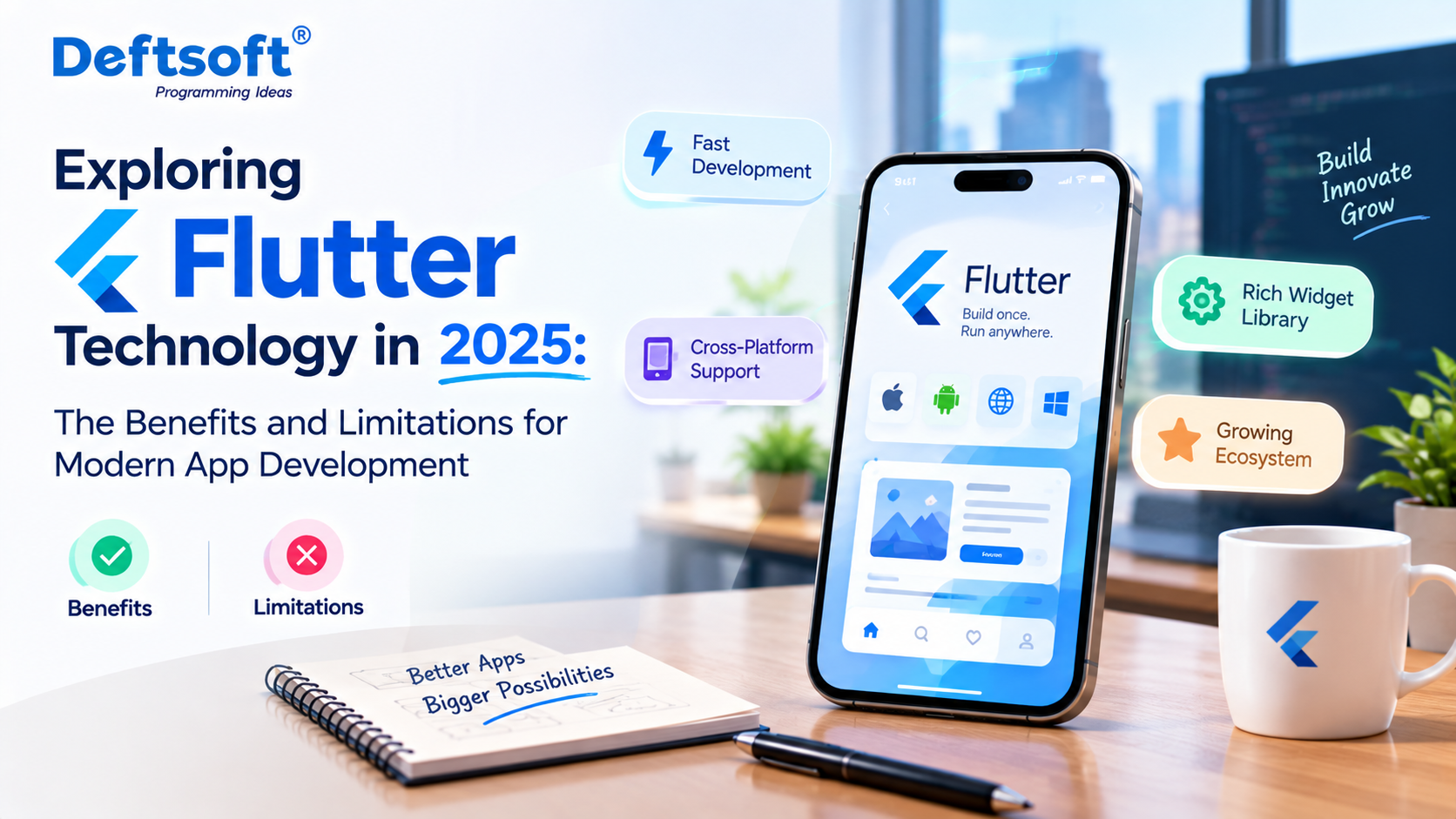
Exploring Flutter Technology in 2025: The Benefits and Limitations for Modern App Development

In today’s fast-paced digital world, organizations are eagerly on the lookout for innovative ways to streamline their processes, cut costs, and enhance user experiences across various platforms. One exciting technology that has really captured the spotlight is Flutter. Developed by Google, it has quickly become a favorite among developers and businesses alike, making it an excellent choice for mobile and web app development. As we approach 2025, let’s take a moment to explore the many benefits and a few limitations of Flutter technology, helping decision-makers make well-informed choices for their app development strategies.

What Is Flutter?

Flutter is a fantastic open-source UI software development toolkit crafted by the talented team at Google. It’s perfect for building applications across mobile (iOS and Android), web, and desktop using just one codebase! Flutter utilizes the Dart programming language, which is not only easy to learn but also delivers impressive performance thanks to its ahead-of-time (AOT) compilation and a rich set of built-in libraries.

What makes Flutter truly special is its ability to create natively compiled applications seamlessly across different platforms. It empowers developers with user-friendly tools and an expressive UI, making it enjoyable to create stunning, high-performance applications.

The Rise of Flutter Technology

Since launching in May 2017, this technology has quickly captured the hearts of developers worldwide. With the rising demand for cross-platform app development solutions and Flutter’s impressive features, it’s becoming a favourite among development teams, startups, and even large enterprises. By 2025, it’s anticipated that a significant number of businesses will embrace Flutter technology, showcasing how well this framework meets the ever-evolving needs of today’s application development landscape.

Benefits of Flutter Technology

1. Single Codebase for Different Platforms

One of the most exciting things about this technology is how it lets developers create a single codebase that works across multiple platforms! This means there’s no need for separate teams for iOS and Android, making the whole process smoother and more efficient, not to mention saving both time and costs. Thanks to Flutter, businesses can dedicate more energy to enhancing features, design, and the overall user experience instead of spending time on repetitive coding for different platforms.

2. Fast Development with Hot Reload

Flutter’s Hot Reload feature truly transforms the developer experience! It lets developers instantly view the results of their code changes right in the emulator, simulator, or on connected devices. This means they can play around and make adjustments without having to restart the application, which speeds up the whole development process. In today’s fast-paced market, this efficiency is so important for companies that want to launch their products quickly and stay ahead of the game.

3. Rich Widget Library

Flutter offers a fantastic collection of pre-built widgets that you can easily customize to fit your needs! These widgets beautifully follow Material Design and Cupertino design principles, ensuring your apps look and feel just right on both Android and iOS platforms. With such a wide range of options at your fingertips, you can streamline your design process and unleash your creativity, empowering developers and designers to craft unique user interfaces that truly shine in the market.

4. High Performance and Native-like Experience

Apps developed with Flutter deliver performance that feels just like full native applications! By compiling to native ARM code and using the amazing Skia graphics engine, Flutter enables smooth animations and transitions that truly captivate users. This impressive performance is so important because everyone loves a seamless and responsive experience. No matter how complex the app might be, Flutter always keeps things running smoothly, leading to greater user satisfaction and engagement.

5. Strong Community Support

Flutter, the open-source framework backed by Google, benefits from a thriving and dynamic community. This community freely shares abundant resources, plugins, packages, and libraries, simplifying the development of outstanding applications. With a range of educational resources available, developers can swiftly find solutions to their inquiries and explore innovative approaches to common problems. Due to the ongoing contributions from this community, Flutter continually evolves, introducing new features and enhancements with each update.

6. Seamless Integration with Native Features

Flutter makes it easy for developers to bring native functionalities into their applications using platform channels. This means you can tap into fantastic device features like cameras, location services, and notifications! With Flutter’s support for native APIs, developers can create vibrant applications that truly harness the full power of the underlying platform, all while still enjoying the great perks of a cross-platform solution.

7. Cost-effectiveness

The great combination of shorter development time, a unified codebase, and a supportive community makes Flutter a fantastic choice for businesses looking to save money. By reducing the need for multiple teams and resources, companies can use their budgets in a more innovative way, ultimately boosting their return on investment (ROI). This affordability is especially attractive for startups and small businesses eager to make the most of their resources while creating top-notch applications.

8. Strong Suitability for MVP Development

If you’re a startup looking to test your ideas in the market, Flutter is a fantastic option! It makes it easy to develop Minimum Viable Products (MVPs) quickly. With Flutter, you can swiftly bring your ideas to life, gather valuable user feedback, and refine your offerings based on real-world insights. Plus, its accessibility helps startups dedicate their energy to validating concepts without having to spend too much time or resources before genuinely understanding their target audience market.

9. Future-proofing Your Development Strategy

In today’s exciting world of technology, Flutter’s amazing flexibility makes it a fantastic choice for businesses looking to stay ahead. As the need for cross-platform solutions continues to rise, it’s clear that organizations need to adapt swiftly to keep up with changing markets and consumer preferences. By choosing to invest in Flutter technology, businesses are not just adopting a cutting-edge development strategy; they’re also setting themselves up for future growth and greater scalability.

10. Responsive UI

Flutter’s responsive design capabilities are essential for today’s multi-device world. As businesses aspire to reach users across various screen sizes, Flutter’s approach to responsive UI allows the application’s elements to adapt seamlessly to different devices. This flexibility ensures that users enjoy a consistent experience, regardless of the device they’re using.

Limitations of Flutter Technology

Flutter technology comes with many great benefits, but it’s important to recognize its limitations, too, so we can make the best decision about using it.

1. Limited Support for Web and Desktop Apps

Flutter has made significant progress and keeps enhancing its features! It excels particularly in mobile applications, showcasing its true potential. Although the web and desktop functionalities are developing well, they may not yet reach the same level of performance and support as mobile. If your business aims to establish a robust web presence or create sophisticated desktop applications, it’s wise to consider whether Flutter can fulfill your specific requirements!

2. Learning Curve for Dart

Dart, the programming language behind Flutter, is crafted to be user-friendly, making it an excellent choice for developers! However, if you’re coming from more traditional languages like Java, JavaScript, or Swift, you might notice a bit of a learning curve. Getting to know Dart’s syntax and special features can feel like a challenge at first and may slow down your development a little. But don’t worry! Many developers who dive into Dart soon discover that its features are fantastic for creating scalable applications.

3. Larger App Size

Applications built with Flutter tend to have larger file sizes compared to native counterparts, primarily due to including the Flutter engine and framework. This increased size can pose challenges for users with limited storage space, slow internet connections, or lower-end devices. Companies targeting these demographics must carefully consider the implications of larger app sizes on user acquisition and retention.

4. Limited Third-party Libraries

Although Flutter has a growing ecosystem, it still faces limitations regarding third-party libraries and packages tailored specifically for Flutter. Developers may encounter scenarios where they must create custom implementations for certain features if the existing plugins do not meet their requirements. While this is less common as the framework evolves, it is still a factor to consider during development.

5. Less Mature Ecosystem Compared to Native Frameworks

While Flutter is rapidly gaining traction, it does not yet have the same level of maturity as established native frameworks such as Swift for iOS or Kotlin for Android. Some businesses may find the availability of resources, libraries, and support to be limited when compared to more established frameworks. Companies should weigh these considerations when selecting Flutter for long-term projects.

6. Performance Overheads for Complex User Interfaces

Flutter is known for its high performance, but when it comes to applications with complex user interfaces and rich graphics, there can be a bit of performance overhead. For those stunning animations or creative designs, developers might notice some frame drops or slower performance on lower-end devices. Luckily, with some thoughtful optimization of the app architecture and UI components, many of these challenges can be tackled! It may take some extra development efforts and expertise, but the results are definitely worth it!

Frameworks

Conclusion

As we approach 2025, Flutter technology stands out as a powerful option for businesses seeking efficient, cost-effective, and high-quality app development solutions. Its ability to enable cross-platform development with a single codebase, coupled with rich UI capabilities and a supportive community, makes it an appealing choice for both new startups and established organizations looking to innovate.

Nevertheless, companies must thoroughly examine limitations of this technology and carefully consider their unique needs and long-term goals. By recognizing the trade-offs involved, organizations can make well-informed choices that align with their growth strategies and development objectives.

Why Choose Deftsoft?

If you’re considering adopting Flutter technology for your next application, choosing the right software development company is crucial. At Deftsoft, we specialize in harnessing the power of Flutter to create stunning, high-performance applications tailored specifically to your business needs. Here’s why Deftsoft stands out as your ideal development partner:

1. Expertise in Flutter Development

Our experienced developers are well-versed in this technology and passionate about using it to build cross-platform applications that provide exceptional user experiences. We stay up-to-date with the latest Flutter developments, ensuring that you benefit from the most cutting-edge features and best practices.

2. Custom Solutions Designed for Your Business

At Deftsoft, we understand that every business is unique, and our development approach reflects that. We work closely with you to analyze your requirements, understand your goals, and develop customized solutions that resonate with your audience.

3. Cost-Effective Development Approach

Our commitment to delivering high-quality applications does not come at the expense of your budget. We focus on maximizing your ROI through efficient development processes and by reducing time-to-market without compromising quality.

4. User-Centric Design Philosophy

User experience matters, and our design team takes a user-centric approach to ensure that your applications are intuitive, engaging, and visually appealing. From wireframes to final deployment, we put your users at the heart of the design process.

5. Ongoing Support and Maintenance

Even after we launch your Flutter application, our collaboration continues! We’re here for ongoing support and maintenance, ensuring your app stays updated, secure, and running smoothly. Our friendly support team is always ready to assist you with any questions or concerns you might have.

6. Proven Track Record of Successful Projects

At Deftsoft, we take pride in our history of delivering successful mobile and web applications across a variety of industries. The satisfaction of our clients speaks volumes about our commitment to excellence and our passionate dedication to achieving great results for you!

Let’s Build Something Remarkable Together

This technology represents a bold step toward the future of app development, and at Deftsoft, we are excited to bring your vision to life. Together, we can leverage Flutter’s capabilities to craft innovative, user-friendly applications that not only meet your requirements but also exceed your expectations.

Whether you’re an emerging startup aiming to create an MVP or an established enterprise seeking to enhance your digital presence, Deftsoft is here to guide you through every step of the application development journey. Contact us today to discuss your project, and let us show you how this technology can help you achieve your business goals!

FAQs

1. What is Flutter, and why is it popular for app development?
Flutter is an open-source UI toolkit by Google for building natively compiled applications using a single codebase. Its popularity stems from rapid development capabilities, expressive UI, and cost-effectiveness for cross-platform solutions.

2. How does Flutter’s Hot Reload feature benefit developers?
Flutter’s Hot Reload allows developers to see code changes instantly without restarting the app, significantly speeding up the development process. This feature enhances productivity and helps teams quickly iterate on designs and functionality.

3. What are the limitations of using Flutter for app development?
While Flutter excels in mobile app development, it faces challenges with web and desktop applications. Additionally, there’s a learning curve with Dart, increased app sizes, and limited third-party libraries compared to established frameworks.

4. How does Deftsoft ensure quality in Flutter app development?
At Deftsoft, our experienced developers leverage best practices and the latest features to deliver high-quality applications. We emphasize user-centric design and conduct rigorous testing to ensure optimal performance and user satisfaction.

5. Can Deftsoft help with both MVP and full-scale application development using Flutter?
Absolutely! Deftsoft specializes in creating both Minimum Viable Products (MVPs) to validate ideas rapidly and comprehensive applications tailored to business needs, ensuring a seamless transition from concept to launch.

6. What ongoing support does Deftsoft provide after launching an app?
Deftsoft offers continuous support and maintenance post-launch, ensuring your Flutter application remains updated, secure, and functional. Our dedicated support team is ready to assist with any questions or improvements needed.

Google Analytics 4: Unlocking the Future of Data Analytics

As technology rapidly advances and digital marketing grows increasingly vital, businesses encounter an overwhelming amount of data. The true challenge lies not just in the sheer volume of information available but in extracting valuable insights that can inform strategy and boost performance. This is where Google Analytics 4 (GA4) comes into play — a cutting-edge analytics platform designed to revolutionize how organizations understand and leverage user behaviour. By implementing event-driven data collection and utilizing advanced machine learning capabilities, GA4 equips businesses with the vital tools needed for making intelligent, data-driven decisions. In this blog, we will explore the exciting features of GA4, the advantages it provides, and how it can elevate your data analytics significantly!

The Shift to Google Analytics 4

Understanding the Evolution

Google Analytics has been a staple for digital marketers and businesses alike. For years, Universal Analytics (UA) provided comprehensive tracking capabilities but was built on a foundation that emphasized sessions and page views. While this approach worked adequately for its time, it fell short of addressing the complexities of modern user behavior, which spans multiple devices and platforms.

GA4 represents a significant paradigm shift, reflecting not only technological advancements but also changing expectations regarding data privacy and user experience. This new generation of analytics is designed to provide a deeper understanding of user interactions and journeys. By placing user engagement at the forefront, GA4 enables businesses to capture a 360-degree view of their audience, facilitating more personalized experiences.

Enhanced Data Collection Capabilities

Event-Based Data Model

A truly remarkable aspect of Google Analytics 4 is its event-based data model! Unlike Universal Analytics, which mostly focused on sessions, GA4 considers all user interactions as events. This thoughtful design gives businesses wonderful flexibility and detailed insights into user behaviour, making it easier to understand how users engage with their content.

With GA4, organizations can collect data on specific user actions such as button clicks, video plays, file downloads, and other meaningful interactions. This ability allows businesses to move beyond generic metrics and gain insights into how users interact with their website or app on a more profound level. By capturing a broader range of events, businesses can tailor their content, optimize user experiences, and improve overall engagement.

Enhanced Measurement Protocol

The Enhanced Measurement feature in GA4 streamlines the tracking process. It allows businesses to automatically track certain events, such as scrolls and outbound clicks, without requiring any additional coding. This automation simplifies the onboarding process and reduces the time it takes for organizations to start gathering actionable insights.

With enhanced measurement, analysts can quickly access critical user data, making it easier to identify key trends and behaviors. This improvement is particularly useful for businesses that may not have the resources to implement complex tracking strategies but still wish to capture vital user interactions.

Machine Learning and AI Integration

Google Analytics 4 offers exciting advancements by using machine learning and artificial intelligence to bring you predictive analytics features that enhance what earlier versions could do. With these smart machine learning algorithms, GA4 can reveal interesting patterns and trends in user data, helping organizations feel empowered to make confident, data-driven decisions.

Predictive Analytics

The predictive metrics in GA4 offer amazing insights into user behavior by helping to forecast what they might do next. For example, organizations can spot users who are about to make a purchase or those who might need extra encouragement to stay engaged. By understanding these predictive behaviors, businesses can thoughtfully customize their marketing strategies, connect with users through personalized campaigns, and ultimately boost their conversion rates.

Automated Insights

GA4 provides fantastic predictive analytics that automatically reveal key trends and fascinating anomalies in your data! With its powerful machine-learning abilities, it quickly identifies significant shifts in user behavior, giving you timely alerts. This exceptional feature helps businesses stay adaptable and closely connected to their audience’s true needs, especially in rapidly changing industries.

Cross-Platform Tracking and User-Centric Measurement

In today’s digital landscape, users frequently switch between devices and platforms, making it essential for businesses to capture a holistic view of customer interactions. GA4 excels in cross-platform tracking, allowing organizations to follow a user’s journey seamlessly across multiple devices.

Comprehensive User Journeys

By tracking user interactions across web and app platforms, GA4 enables businesses to understand how users engage with their brand along their entire journey. This holistic view provides valuable insights into user pathways, allowing organizations to optimize their touchpoints for improved engagement.

User-Centric Reporting

GA4 truly puts users at the heart of analysis, giving businesses a wonderful opportunity to segment their audiences by behaviour, demographics, and engagement levels. With this valuable data, organizations can gain exciting insights into individual user preferences, empowering them to craft personalized marketing strategies that genuinely connect with their audience.

For instance, businesses can really strengthen their bond with their audience by looking into user behavior, like distinguishing between loyal customers and casual visitors. This thoughtful approach allows them to craft marketing messages and offers that truly align with the preferences of each group. Focusing on these tailored strategies not only improves the user experience but also boosts the chances of successful conversions!

Privacy-Centric Features and Compliance

With the rise of privacy regulations such as GDPR and CCPA, Google Analytics 4 emphasizes the importance of data privacy. GA4 is designed with compliance in mind, giving users more control over their data and allowing businesses to adhere to regulations without sacrificing valuable insights.

Consent Mode

Consent mode is a wonderful feature that enables businesses to adapt their data collection practices according to user consent. By aligning their data collection with what their audience truly values, companies can build trust and ensure they’re complying with privacy laws, too!

Data Deletion and Anonymization

GA4 provides businesses with tools to manage user data effectively. Users can request data deletion, and GA4 ensures that these requests are handled promptly. Additionally, features such as IP anonymization enhance privacy measures by masking user IP addresses, further protecting user information and securing against privacy breaches.

By prioritizing privacy, businesses not only comply with regulations but also build stronger relationships with users who increasingly value transparency and data protection.

Streamlined Reporting Tools and Analysis

Google Analytics 4 features a redesigned interface that simplifies data exploration and reporting. The analytical capabilities have improved significantly, allowing businesses to generate customized reports that align closely with their specific goals and objectives.

Customizable Dashboards

GA4 makes it easy for users to create personalized dashboards that highlight the key performance indicators that are most important to their business. Instead of wading through endless metrics, analysts can quickly access clear and concise reports that present insights at a glance. By tailoring their reports, businesses can focus on the metrics that truly drive success in their industry.

Plus, GA4 comes with some super handy pre-made templates for all your common reporting needs, making it a breeze to dive into analytics! This thoughtful approach is especially beneficial for smaller organizations that might not have their own dedicated analytics teams.

Data Visualizations

Data visualization tools within GA4 allow users to represent complex datasets in user-friendly formats, making it easier to interpret the data. By utilizing visuals such as graphs, charts, and heat maps, analysts can identify trends and patterns quickly, facilitating more effective presentations to stakeholders.

Visual storytelling fosters a culture of data-driven decision-making by enabling teams to communicate insights and findings clearly. This empowerment ensures that all team members, regardless of their technical expertise, can leverage data effectively.

Integration with the Google Marketing Platform

In a world where data silos can hinder decision-making, GA4’s seamless integration with the Google Marketing Platform serves as a game changer. By connecting GA4 with tools such as Google Ads and Display & Video 360 (DV360), businesses can harness unified data for comprehensive marketing optimization.

Enhanced Marketing Attribution

GA4 allows organizations to measure marketing attribution more effectively. By understanding the complete customer journey, businesses can determine which marketing channels drive the most conversions and allocate their budgets accordingly. This strategic allocation enhances marketing ROI and fosters better campaign performance.

Coordinated Campaigns

The integration of GA4 with Google Ads and DV360 enables businesses to create coordinated marketing campaigns that align messaging across platforms. By utilizing insights from GA4, organizations can refine their targeting strategies and increase the effectiveness of their advertising efforts. This level of synergy ensures that brands reach their audience with tailored messages that resonate.

Migration from Universal Analytics to Google Analytics 4

Transitioning from Universal Analytics to Google Analytics 4 may seem daunting, but with proper planning and execution, the process can be smooth and efficient. GA4 provides detailed guidelines and resources to facilitate this migration, ensuring that businesses can continue leveraging analytics without disruption.

Steps for Successful Migration

  1. Assess Your Current Setup: Evaluate your existing tracking implementation and identify the key events and dimensions you want to capture in GA4.
  2. Configure GA4 Properties: Set up GA4 properties and enable features such as enhanced measurement and integrations.
  3. Consider using a data layer to help track those important custom events and parameters that matter most to your business. It can really enhance your insights!
  4. Test and Validate: Thoroughly test your GA4 implementation to ensure data accuracy and completeness.
  5. Educate Your Team: Provide training for your team members on GA4 features and functionalities to ensure they can use the platform effectively.

As organizations migrate to GA4, they can capitalize on the advanced features and capabilities that this platform offers. The transition also provides an opportunity to review and refine analytics strategies to align with evolving business goals.

The Road Ahead: Embracing the Future of Analytics

Looking ahead, it’s exciting to see that Google Analytics 4 is set to remain at the forefront of user-centric data analytics. With its focus on event tracking, seamless machine learning integration, and privacy-friendly features, GA4 stands out as a must-have tool for businesses eager to better understand their audience and enhance overall performance.

Embracing GA4’s powerful capabilities can significantly enhance organizations’ data-driven decision-making processes, enabling them to achieve their goals in an increasingly competitive environment. For businesses ready to embark on this transformative journey, the time to act is now.

Conclusion: Your Partner in Analytics

In the rapidly changing landscape of digital analytics, Google Analytics 4 offers organizations unprecedented opportunities to harness the power of data. Its user-centric design, machine learning capabilities, and seamless integration with marketing platforms empower businesses to make informed decisions that drive results.

At Deftsoft, we understand that navigating the complexities of analytics can be challenging. That’s why our expert team is here to support you every step of the way. From implementing Google Analytics 4 to providing ongoing training and optimization strategies, we are dedicated to helping you unlock the full potential of your data analytics efforts.

If you’re prepared to elevate your analytics capabilities, reach out to Deftsoft today. Together, we will begin a journey to convert your data into actionable insights, allowing your business to flourish in the digital era. Let us leverage your data to transform analytics into a significant asset for your organization’s success.

FAQs

1. What are the key differences between Universal Analytics and Google Analytics 4?
The main difference lies in their event-based data model and machine learning capabilities. GA4 collects data on specific user interactions, such as button clicks, while offering advanced predictive analytics for a deeper understanding of user behaviour.

2. How does Google Analytics 4 handle data collection and measurement?
Google Analytics 4 employs an event-based data model and Enhanced Measurement protocol to streamline data collection and tracking. It automatically tracks specific events, like scrolls and outbound clicks, without requiring additional coding.

3. What role does machine learning play in Google Analytics 4?
Machine learning algorithms within GA4 enable predictive analytics, identifying interesting patterns and trends in user data. This empowers businesses to make confident data-driven decisions and tailor their marketing strategies.

4. How does Google Analytics 4 address data privacy and compliance?
The platform emphasizes user control over data, consent mode, and features like IP anonymization to handle user requests for data deletion. This prioritization of data privacy helps businesses comply with regulations like GDPR and CCPA.

5. What steps should businesses take when migrating from Universal Analytics to Google Analytics 4?
A successful migration involves assessing the current setup, configuring GA4 properties, implementing data layers for custom events, testing and validating data accuracy, educating the team, and leveraging the platform’s capabilities to refine analytics strategies.

6. What are the benefits of Google Analytics 4 for businesses?
The platform provides user-centric measurement, seamless integration with marketing platforms, and enhanced marketing attribution capabilities. These features empower businesses to understand user behavior, create coordinated marketing campaigns, and drive better performance.

7. How does Google Analytics 4 support cross-device tracking and user-centric reporting?
The platform’s event-based data model captures user interactions across multiple devices, enabling businesses to track user journeys and understand behavior in the context of the entire user experience. User-centric reporting allows for segmentation by behavior, demographics, and engagement levels.

8. How does Deftsoft support businesses in implementing and optimizing Google Analytics 4?
Our team provides expert guidance in setting up GA4, creating customized dashboards, and leveraging machine learning capabilities. We also offer ongoing training and optimization strategies to ensure maximum benefit from the platform.

9. What is the future of Google Analytics 4, and how will it impact businesses?
Google Analytics 4 will remain a key platform for user-centric data analytics, offering continued enhancements and advancements. Businesses that adopt GA4 can expect improved data-driven decision-making, better marketing performance, and enhanced overall competitiveness.

Bringing AR and VR to Wearable Devices: The Future of Immersive Apps

Introduction

Augmented Reality (AR) and Virtual Reality (VR) are revolutionizing the way we interact with the digital world, and their integration with wearable devices is opening up a new frontier of possibilities. From smart glasses to VR headsets, wearable technology is becoming a crucial tool for businesses across industries such as healthcare, education, retail, and entertainment. Companies are now investing in wearable app development services to create cutting-edge applications that enhance user experiences and drive innovation.

The demand for wearable app development companies is on the rise, as businesses seek to develop AR and VR-powered solutions that improve accessibility, efficiency, and engagement. In this article, we will explore how AR and VR are transforming wearable devices, their real-world applications, challenges, and future trends.

What is AR and VR?

Definition and Explanation of AR and VR

Augmented Reality (AR) enhances the real world by overlaying digital elements, such as images, text, and animations, onto a user’s physical environment. This technology is commonly used in smartphones, smart glasses, and wearable devices. In contrast, Virtual Reality (VR) creates a fully immersive digital experience that replaces the real world with a computer-generated environment. VR is typically experienced through head-mounted displays (HMDs) such as the Oculus Rift or HTC Vive.

With businesses increasingly adopting AR and VR, wearable app development services are crucial for building apps that deliver seamless, high-quality experiences to users.

How AR and VR Work in Wearable Devices

AR works by using cameras, sensors, and real-time processing to analyze the user’s surroundings and project digital content onto their view. Smart glasses, such as Microsoft HoloLens, use AR to display real-time data, maps, and notifications without requiring users to check their phones.

VR, on the other hand, uses headsets and motion-tracking technology to immerse users in a fully digital world. By utilizing wearable app development services, businesses can develop VR applications that simulate real-life experiences, such as training simulations, virtual meetings, and immersive entertainment.

Examples of AR and VR in Wearable Devices

A well-known example of AR in wearable devices is Pokémon Go, which overlays virtual creatures onto real-world locations using a smartphone’s camera. Another popular application is smart AR glasses that help factory workers access real-time instructions hands-free.

For VR, headsets such as the Meta Quest allow users to enter digital environments for gaming, virtual travel, or workplace collaboration. Businesses that invest in wearable app development companies can create customized VR applications tailored to their industry needs.

Use Cases for AR and VR in Wearable Devices

Retail and E-commerce

The retail industry is leveraging wearable AR apps to enhance shopping experiences. With AR-powered smart glasses, customers can try on clothes, visualize furniture in their homes, or access detailed product information in real time. VR is also being used to create virtual showrooms, allowing customers to explore products in a 3D environment.

Companies that specialize in wearable app development services are helping retailers build immersive AR/VR shopping apps that improve customer engagement and drive sales.

Education and Training

AR and VR are transforming education by offering interactive and hands-on learning experiences. Students can use AR apps to view 3D models of complex subjects, such as human anatomy or space exploration. Meanwhile, VR allows students to step into historical events or practice real-world skills in a controlled virtual setting. Businesses and educational institutions looking to integrate these technologies are partnering with wearable app development companies to create innovative learning applications.

Healthcare and Medical Training

Wearable AR and VR devices are playing a critical role in healthcare. AR-powered smart glasses assist surgeons by overlaying real-time data and 3D models during procedures, reducing errors and improving efficiency. VR is being used for medical training, enabling students to practice surgeries in a risk-free environment.

Additionally, VR therapy is being adopted to treat conditions like PTSD and anxiety, allowing patients to experience guided exposure therapy in a controlled setting. Companies specializing in wearable app development services are at the forefront of creating life-changing healthcare solutions using AR and VR.

Entertainment and Gaming

The gaming and entertainment industries have been the biggest adopters of AR and VR technologies. AR apps bring interactive and immersive elements to mobile gaming, while VR headsets provide deeply engaging experiences in virtual worlds.

Film studios and theme parks are also integrating AR and VR into their attractions, offering visitors new ways to interact with digital content. The rise of wearable app development services ensures that businesses can create next-gen entertainment applications that captivate audiences.

Real Estate and Architecture

AR and VR are revolutionizing the real estate and architecture industries by enabling virtual property tours and interactive design visualization. AR apps allow clients to see how furniture or renovations will look in their space before making a purchase.

VR provides 3D architectural walkthroughs, helping architects and developers present their designs to clients in an immersive way. Businesses in real estate and architecture are turning to wearable app development companies to develop tailored solutions that enhance customer experiences.

Challenges and Considerations

Cybersickness and Health Concerns

One of the biggest challenges of VR technology is cybersickness, which causes dizziness, nausea, and disorientation due to prolonged use. AR applications can also lead to eye strain and fatigue, making it important for developers to optimize user experiences.

To minimize these issues, wearable app development companies are focusing on creating ergonomic and user-friendly applications that ensure comfort and accessibility.

Ethical and Privacy Concerns

As AR and VR technologies collect vast amounts of user data, concerns about privacy and data security are rising. From facial recognition in AR apps to personal data tracking in VR environments, businesses must implement strong security measures to protect user information.

Technical Limitations and Cost

Developing AR and VR wearable applications requires high processing power, seamless connectivity, and advanced hardware. The high cost of VR headsets and AR smart glasses remains a barrier to mass adoption. However, as wearable app development companies continue to innovate, more affordable and efficient solutions are emerging.

The Future of AR and VR in Wearable Devices

Integration of AI in AR/VR

Artificial Intelligence (AI) is enhancing wearable AR and VR applications by improving object recognition, personalization, and automation. AI-powered AR apps can offer real-time assistance, while AI-driven VR environments adapt to user preferences, creating dynamic and engaging experiences.

5G and Its Impact on AR/VR Wearables

The rollout of 5G technology is set to transform wearable AR and VR applications by reducing latency, improving connectivity, and enabling real-time interactions. This will enhance the performance of wearable apps, making AR and VR experiences smoother and more immersive.

Wearable AR/VR Devices – What’s Next?

The future of wearable AR/VR devices includes lighter, more comfortable, and more powerful smart glasses and headsets. Innovations in battery life, display technology, and processing power will drive mass adoption, making AR and VR experiences more accessible.

Conclusion

The fusion of AR and VR with wearable devices is paving the way for new possibilities in various industries. From healthcare and education to retail and entertainment, wearable technology is transforming how we interact with digital content. As more businesses recognize the potential of AR and VR, the demand for wearable app development services is growing rapidly.

If you’re looking to develop cutting-edge wearable AR/VR applications, Deftsoft is a leading wearable app development company that specializes in creating innovative, high-performance solutions. With expertise in AR, VR, and AI-powered applications, Deftsoft helps businesses stay ahead in the rapidly evolving digital landscape.

FAQs

1. What is a wearable app development company?
A wearable app development company specializes in building applications for smart wearables such as AR glasses, VR headsets, and fitness trackers.

2. How can AR and VR benefit businesses?
AR and VR enhance customer experiences, improve training programs, and create immersive marketing solutions.

3. What industries use wearable AR and VR applications?
Industries such as healthcare, education, retail, gaming, and real estate use AR and VR applications.

4. How much does it cost to develop a wearable AR/VR app?
Costs vary based on complexity, features, and platform requirements. A wearable app development company like Deftsoft can provide a custom quote.

5. What is the future of wearable AR and VR devices?
Wearable AR/VR devices will become more lightweight, powerful, and AI-driven, enhancing real-world applications.

Explore more with Deftsoft – your trusted wearable app development service provider!

Top 5 Chatbot Platforms for 2025 and Their Features

Introduction

Over the last decade, chatbots have become a crucial part of business communication, evolving from simple scripted bots to highly intelligent AI-driven assistants. In 2025, chatbot technology is no longer just an add-on; it is a necessity for businesses aiming to enhance customer experiences, automate repetitive tasks, and improve operational efficiency. With advanced artificial intelligence (AI), natural language processing (NLP), and machine learning capabilities, chatbots have the potential to engage users in human-like conversations, providing quick and efficient solutions across various industries.

Businesses today require chatbots not only for customer service but also for lead generation, sales automation, appointment scheduling, and data collection. The ability of modern chatbots to integrate seamlessly with various business tools such as CRM systems, e-commerce platforms, and email marketing tools makes them indispensable in today’s digital ecosystem.

However, with so many chatbot platforms available, choosing the right one can be overwhelming. Some are AI-powered with self-learning capabilities, while others are rule-based, following predefined scripts. This article will guide you through the top five chatbot platforms for 2025, detailing their features, benefits, and best use cases so you can make an informed decision based on your business needs.

What to Look for in a Chatbot Platform?

With hundreds of chatbot platforms available, how do you choose the right one? A chatbot is not just about answering FAQs; it should seamlessly integrate with your business model, offer personalization, and provide valuable insights into customer interactions. Below are some key factors to consider when selecting a chatbot platform:

1. AI and NLP Capabilities

One of the most important factors in a chatbot is its ability to understand and process human language naturally. AI-powered chatbots equipped with NLP can interpret user intent, detect emotions, and generate accurate responses. A well-trained AI chatbot goes beyond basic keyword recognition and can engage in context-aware conversations, remembering previous interactions to create a more seamless and personalized experience.

For example, a customer might ask, “Can you help me find a laptop under $1,000?” A chatbot with strong NLP capabilities will not only understand the request but also provide personalized product recommendations based on the user’s preferences.

2. Customization and Scalability

A chatbot should grow alongside your business. The best platforms offer customization options that allow businesses to adjust conversation flows, modify chatbot behavior, and personalize responses based on user interactions. Scalability is also crucial—whether you’re a small startup or a large enterprise, your chatbot should be able to handle an increasing number of queries without compromising performance.

For instance, an e-commerce business may start with a chatbot that answers product-related FAQs. As the business expands, the chatbot should be able to handle payments, recommend products, and even track orders for customers.

3. Integration with CRM, Marketing, and Sales Tools

A chatbot should not work in isolation. It should seamlessly integrate with customer relationship management (CRM) software, sales automation tools, and marketing platforms. A chatbot that can pull customer data from CRM systems, such as Salesforce or HubSpot, can provide personalized recommendations based on past interactions.

For example, if a repeat customer contacts an online store’s chatbot, the AI should recognize them, recall past purchases, and suggest relevant products or services. The ability to sync with third-party applications makes chatbots more efficient and valuable to businesses.

4. Analytics and Reporting

A chatbot’s effectiveness should be measurable. The best chatbot platforms come with built-in analytics and reporting tools that allow businesses to monitor chatbot performance, user interactions, and engagement rates. These insights help businesses identify common customer pain points, refine chatbot responses, and improve user satisfaction.

For instance, if analytics reveal that customers frequently ask about shipping policies, businesses can optimize chatbot scripts or create automated responses to address these inquiries more effectively.

5. Multi-Channel Support

Customers engage with businesses across multiple digital platforms—websites, social media, mobile apps, and messaging apps like WhatsApp, Facebook Messenger, and Telegram. A chatbot should be able to function across multiple channels while maintaining a unified customer experience.

For example, if a customer starts a conversation with a chatbot on a website and later switches to Facebook Messenger, the chatbot should retain previous interactions and continue the conversation without forcing the user to repeat themselves.

Top 5 Chatbot Platforms for 2025

After evaluating various chatbot solutions based on AI capabilities, scalability, and ease of use, we have identified five top-performing chatbot platforms that are expected to dominate in 2025.

1. ChatGPT by OpenAI

Features

ChatGPT remains a leader in AI-powered chatbot solutions, thanks to its advanced language model, human-like conversational ability, and context retention. It is built on GPT-4 technology, making it one of the most sophisticated AI chatbots in the industry.

  • Superior AI and NLP: ChatGPT understands human intent, processes complex queries, and generates conversational responses that feel natural.
  • Memory & Context Awareness: It can recall previous interactions, making conversations more fluid and engaging.
  • Voice & Text Interaction: Supports both text-based and voice-based queries, enhancing user accessibility.
  • Seamless API Integration: Can be integrated into websites, CRM tools, and mobile apps.
  • Custom Training: Businesses can fine-tune the chatbot to align with their specific industry and customer needs.

Best Use Cases

  • Customer Support Automation: Provides instant answers to common queries, reducing wait times.
  • Content Assistance: Helps with blog writing, email generation, and text-based automation.
  • E-commerce Recommendations: Suggest personalized product recommendations based on user preferences.

2. Drift

Features

Drift is a conversational AI chatbot tailored for marketing and sales teams. Unlike generic chatbots, Drift focuses on real-time engagement and lead qualification.

  • AI-Powered Lead Qualification: Uses chat interactions to identify potential customers.
  • Live Chat Handoff: Transfers high-value leads to human sales representatives.
  • Behavior-Based Messaging: Sends personalized messages based on user actions.
  • Seamless CRM Integration: Connects with Salesforce, HubSpot, and Marketo.
  • Real-Time Sales Notifications: Alerts sales reps when potential customers interact with the chatbot.

Best Use Cases

  • B2B Sales & Marketing: Drift helps businesses automate sales conversations.
  • Lead Generation: Engages visitors and collects contact details.
  • Customer Retention: Provides instant responses, increasing user engagement.

3. Intercom

Features

Intercom is a powerful customer engagement platform that blends AI chatbots with live chat and email automation.

  • AI Chatbot & Live Chat Hybrid: Handles basic inquiries and transfers complex issues to human agents.
  • User Data Tracking: Provides insights into customer interactions.
  • Cross-Channel Messaging: Works on websites, email, and mobile apps.
  • Automated Onboarding & FAQs: Helps businesses onboard new users.
  • Smart Routing: Directs customer inquiries to the right department.

Best Use Cases

  • SaaS & Tech Startups: Assists in onboarding and user engagement.
  • Customer Service Teams: Reduces response time and automates ticket handling.
  • E-commerce Support: Helps users with order tracking and product inquiries.

4. Botpress

Features

  • Botpress is an open-source chatbot platform designed for businesses looking for full customization and control.
  • Advanced NLP Engine: Provides superior language processing and intent recognition.
  • Self-Hosted or Cloud-Based: Offers flexibility in deployment.
  • Drag-and-Drop Chatbot Builder: Allows for easy customization.
  • No-Code & Developer-Friendly: Works for both beginners and advanced users.

Best Use Cases

  • Enterprise-Level AI Solutions: Offers full chatbot customization.
  • Privacy-Focused Businesses: Allows businesses to host their chatbot
  • Customer Support & Sales Automation: Streamlines business interactions.

5. Tidio

Features

Tidio is a versatile chatbot platform designed for small and medium-sized businesses (SMBs) looking for an affordable yet powerful customer interaction solution. It combines AI-powered automation with live chat functionality, allowing businesses to offer real-time assistance while automating repetitive tasks.

  • AI-Driven Chatbot & Live Chat Integration: Automates responses while enabling human support when needed
  • Pre-Built Chatbot Templates: Offers ready-made workflows for quick implementation.
    Drag-and-Drop Builder: No coding required to create chatbot sequences.
  • Multi-Channel Support: Works across websites, Messenger, WhatsApp, and email.
  • Integration with Shopify, WooCommerce, and WordPress: Ideal for e-commerce businesses looking to enhance customer support and sales automation.

Best Use Cases

  • E-commerce Assistance: Helps customers with product recommendations, order tracking, and support.
  • Lead Generation & Qualification: Engages visitors, collects contact details, and nurtures leads.
  • Customer Engagement & Retention: Provides real-time responses to boost satisfaction and loyalty.

Tidio is a great choice for businesses looking for an affordable, easy-to-use chatbot solution without compromising on AI capabilities.

Comparing the Top Chatbot Platforms for 2025

To help you better understand the differences, here’s a quick comparison of these platforms:

Chatbot Platform Best For AI Capabilities Integration Pricing
ChatGPT (OpenAI) Customer service, content generation, e-commerce Advanced AI, NLP, and deep learning Websites, apps, CRM tools Variable (depends on usage)
Drift Sales and marketing automation AI-powered lead qualification CRM, sales tools, email Premium pricing
Intercom Customer engagement, onboarding, and support AI chat with live chat integration SaaS, e-commerce, CRM Subscription-based
Botpress Enterprise AI, privacy-focused businesses Open-source NLP Self-hosted or cloud-based Free (open-source) or enterprise pricing
Tidio SMBs, e-commerce, customer support AI automation & live chat Shopify, WordPress, WooCommerce Affordable, freemium options

Each of these chatbot platforms serves a unique purpose, so the best choice depends on your business size, industry, and AI requirements.

How Chatbots Are Transforming Businesses in 2025

1. Enhancing Customer Experience

Customer expectations have skyrocketed in recent years, and businesses are turning to chatbots to provide instant, personalized, and 24/7 support. Unlike traditional customer service methods that rely on human agents, AI chatbots ensure that users receive immediate responses, reducing wait times and improving satisfaction.

For example, an e-commerce chatbot can help customers find products, process returns, and provide shipping updates, all without requiring human intervention. This leads to faster issue resolution, increased customer retention, and higher conversion rates.

2. Automating Sales and Lead Generation

Sales teams often spend hours qualifying leads manually, but chatbots streamline the process by engaging potential customers, collecting relevant information, and even scheduling meetings. AI-driven chatbots can analyze user behavior to determine buying intent, making sales automation more efficient.

For instance, Drift’s chatbot can interact with website visitors, ask pre-qualification questions, and instantly connect high-value leads to a human sales representative, reducing lead response times and increasing revenue potential.

3. Reducing Operational Costs

Hiring and training customer support teams can be expensive, especially for startups and SMBs. Chatbots reduce costs by handling repetitive tasks, freeing up human agents to focus on more complex queries. Studies show that businesses using AI chatbots can cut customer support costs by up to 30% while maintaining high levels of engagement.

4. Improving Employee Productivity

AI chatbots aren’t just for customers—they also assist employees by automating internal tasks. Businesses use chatbots for HR inquiries, IT support, and employee training. Instead of waiting for an IT representative, employees can simply ask an AI assistant for troubleshooting steps, boosting workplace efficiency.

Why Deftsoft is Your Ideal Chatbot Development Partner

If you’re looking to build a customized chatbot that aligns perfectly with your business needs, Deftsoft is the perfect partner for you.

Why Choose Deftsoft for Chatbot Development?

  1. Custom AI Solutions – Whether you need an e-commerce chatbot, a lead-generation assistant, or an AI-driven customer support bot, Deftsoft tailors chatbot solutions to match your business requirements.
  2. Seamless Integrations – Deftsoft ensures that your chatbot integrates smoothly with CRM systems, payment gateways, and third-party tools, making operations seamless.
  3. Industry Expertise – With years of experience in AI-driven automation, Deftsoft has successfully helped businesses across retail, healthcare, finance, and SaaS industries enhance their customer interactions.
  4. Scalable and Secure Chatbots – Whether you’re a startup, SMB, or enterprise, Deftsoft builds secure, scalable, and high-performing chatbots to meet your growing needs.
  5. Ongoing Support & Optimization – AI chatbots need regular updates and fine-tuning. Deftsoft provides continuous monitoring, chatbot performance analysis, and optimization to ensure maximum efficiency and accuracy.

Ready to revolutionize your business with AI chatbots? Get in touch with Deftsoft today and let us create a custom chatbot solution that enhances customer engagement, boosts sales, and streamlines business processes.

Final Thoughts

AI chatbots are no longer a futuristic concept—they are a business necessity in 2025. Whether you need a chatbot for customer support, sales automation, or internal operations, choosing the right platform is crucial. From ChatGPT’s advanced AI capabilities to Tidio’s budget-friendly automation, each chatbot offers unique benefits suited for different business needs.

For those looking for a custom chatbot tailored to their industry, Deftsoft is the perfect development partner. With expertise in AI-driven automation, seamless integrations, and scalable solutions, Deftsoft can help you build a chatbot that drives engagement, increases revenue, and enhances user experience.

? Take your business to the next level with AI chatbots—contact Deftsoft today!

Frequently Asked Questions (FAQs)

1. What is the best chatbot platform for small businesses?

For small businesses, Tidio is a great option as it offers an easy-to-use interface, live chat integration, and seamless ecommerce support—all at an affordable price.

2. Can chatbots replace human customer service agents?

While chatbots handle repetitive queries efficiently, human agents are still necessary for complex issues that require personal judgment and emotional intelligence. The best approach is a hybrid system where chatbots assist with common inquiries and escalate complex issues to human agents.

3. How do chatbots help in lead generation?

Chatbots engage website visitors, collect contact information, and qualify leads based on user responses. Platforms like Drift and Intercom use AI to determine buying intent and connect high-value leads with sales teams.

4. Are chatbot platforms expensive?

Pricing varies depending on features, usage, and business size. While open-source solutions like Botpress are free, AI-driven platforms like ChatGPT and Drift come with premium pricing. SMB-friendly options like Tidio offer affordable plans for budget-conscious businesses.

5. How do I integrate a chatbot with my website?

Most chatbot platforms offer API and plugin integrations for websites, CRM tools, and social media. Developers can use chatbot builders like Tidio or Intercom, which provide drag-and-drop features for seamless integration.