7 Powerful Techniques to Dominate Social Media: 7X Success!

It’s 2024, and if your social media game is still not yielding you results, this guide is for you! The world of content is changing at an exponential rate, especially with its ‘tiktokification’. This is one of the primary reasons why people enjoy short-form content. Speaking of which, social media is one of the mightiest tools to master your audience.

Social Media is a dynamic area where businesses connect, engage, and flourish in the digital landscape. In this guide, we will unveil seven potent techniques to help you master the art of Social Media Marketing, unlocking the potential for 7X success!

Top Techniques to Level Up Your Social Media Game

Technique 1: Mastering Content Creation
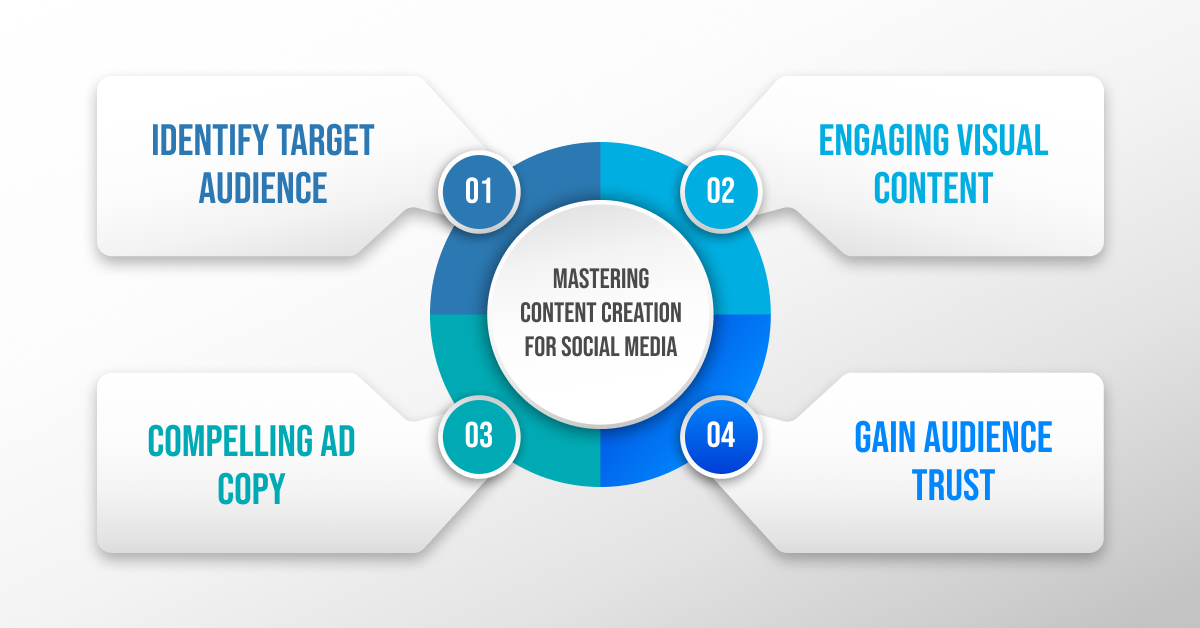
Mastering Content Creation for social media

Identify Target Audience

Understanding your audience is the cornerstone of successful digital marketing. Moreover, knowing your target audience based on behavior, demographics, and interests. Analyze their preferences, pain points, and aspirations to tailor your content effectively.

Engaging Visual Content

Picture speak louder than words! This phare goes well for social media platforms too. Capture your audience’s attention by crafting eye-catching graphics and videos that match your brand and message. Additionally, shareable content triggers these algorithms, extending your reach and impact.

Compelling Adcopy

Compelling copy is a catalyst for driving actions and conversions. Write concise, persuasive copy communicating your value proposition and call to action. Lastly, show sense of urgency and authenticity to promote immediate responses from your targeted audience.

Gain Audience Trust

Building trust is crucial in Social Media Marketing. Encourage your followers to develop and share the content for your brand. Additionally, user-generated content shows authentic experiences, fostering loyalty and trust among your audience.

Technique 2: Building an Effective Social Media Marketing Strategy
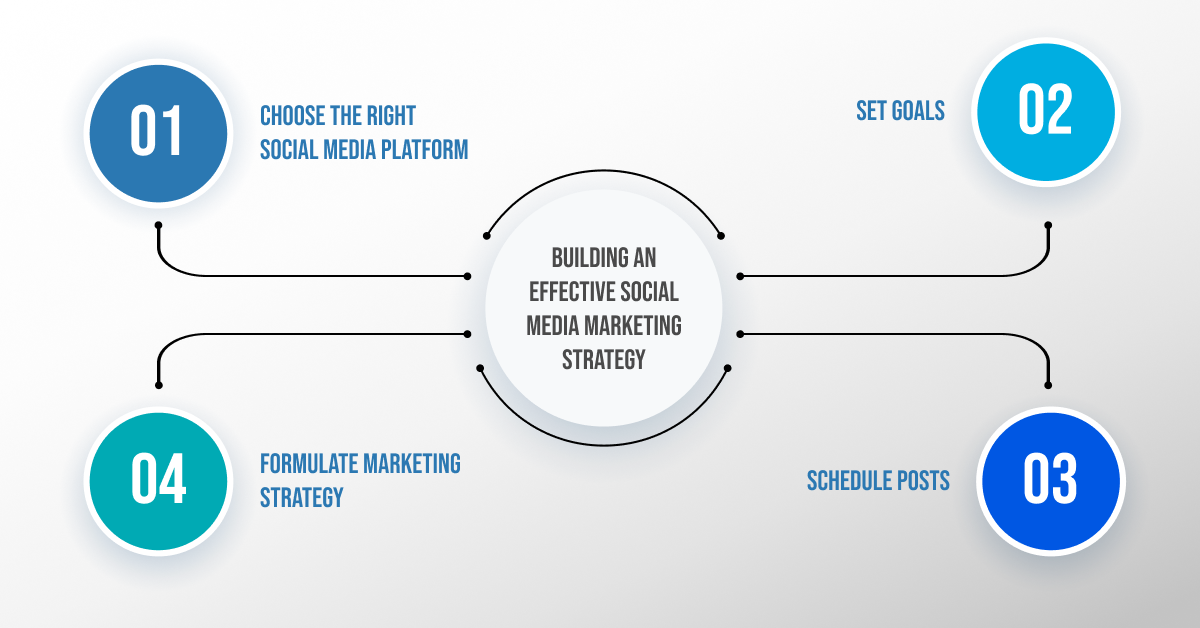
Social Media Marketing Strategy

Choose the Right Social Media Platform

Choosing the appropriate social platforms is crucial for successful digital marketing. Additionally, consider your target audience’s preferences and the nature of your business. Focus on platforms where your audience is most active and engaged.

Set Goals

To achieve success in digital marketing, set clear and measurable goals. Additionally, determine your plan: increased brand awareness, lead generation, or improved customer engagement. Outline specific objectives that align with your overall social media marketing strategy.

Schedule Posts

Consistency is vital in Digital marketing. Develop a calendar to plan your posts. Organize content topics, formats, and publishing dates to maintain a steady flow of engaging content.

Formulate Marketing Strategy

For maximum impact, align your digital marketing efforts with your overall marketing strategy. Ensure consistency in messaging and branding across all marketing channels, both online and offline.

Technique 3: Growing Your Social Media Presence
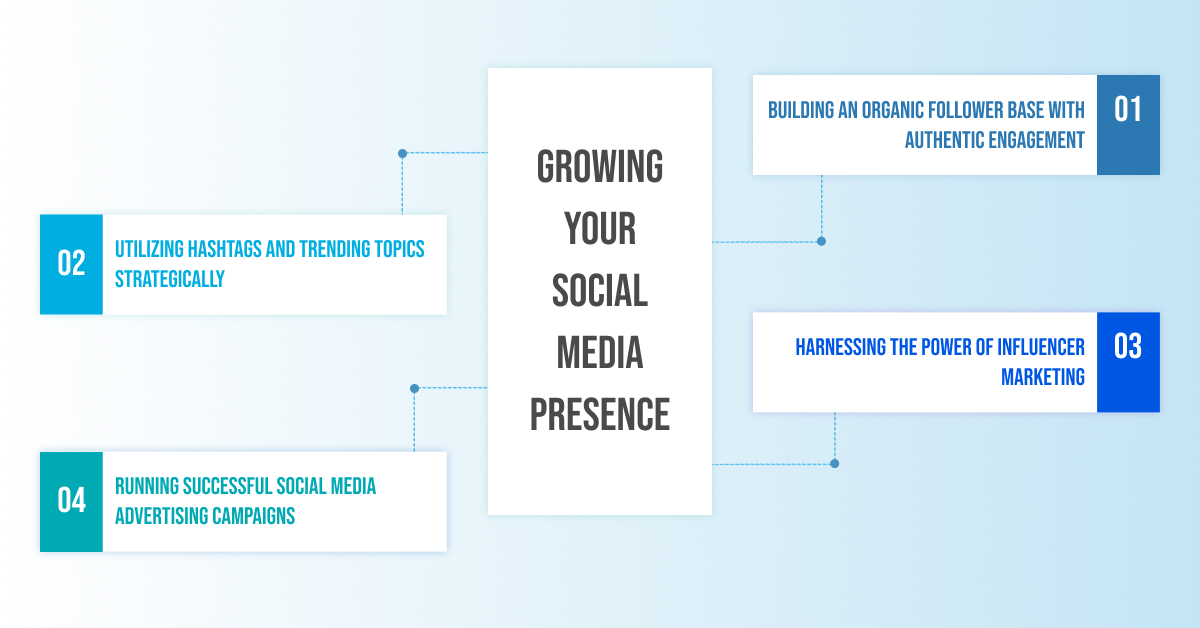
Growing Your Social Media Presence

Building an Organic Follower Base with Authentic Engagement

Growing your social presence starts with building an organic follower base. Engage with your audience authentically by responding to comments, messages, and feedback. Furthermore, create meaningful connections by understanding their needs and interests.

Utilizing Hashtags and Trending Topics Strategically

Hashtags and trending topics can expand your reach and visibility on social media platforms—research relevant and trending hashtags in your niche to boost discoverability and attract a wider audience.

Harnessing the Power of Influencer Marketing

Leverage influencer marketing to amplify your social media presence. So, collaborate with influencers promoting your brand and target audience. Influencers can help endorse your products/services and drive engagement.

Running Successful Social Media Advertising Campaigns

Strategic social media advertising can significantly boost your online presence. Utilize platforms’ advertising tools to target specific demographics and interests. Additionally optimize your ad campaigns for better results.

Technique 4: Designing a Winning Social Media Marketing Campaign
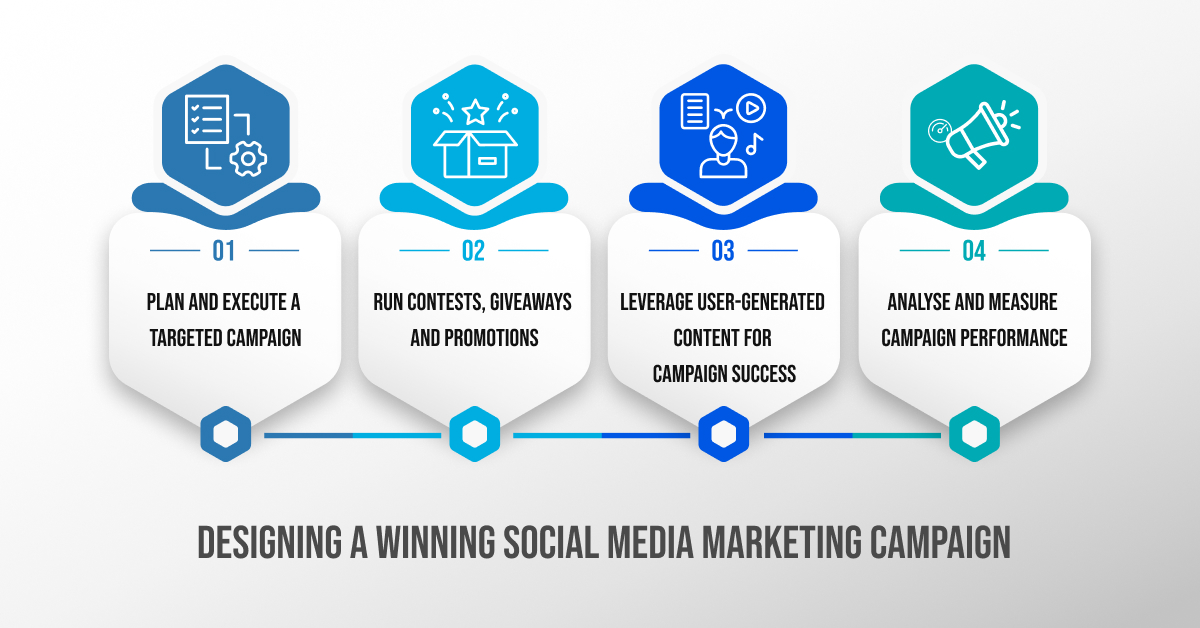
social media marketing campaign

Plan and Execute a Targeted Campaign

A successful social media marketing campaign starts with careful planning. Hence, define campaign goals, target audience and messaging. Additionally, execute your campaign with a well-thought-out social media marketing strategy for maximum impact.

Run Contests, Giveaways and Promotions

Contests, giveaways and promotions are handy engagement tools. Encourage user participation by offering valuable incentives. Moreover, ensure that your promotions align with your brand and campaign objectives.

Leverage user-generated Content for Campaign Success

Add authenticity and credibility to your campaign with user-generated content. Encourage your followers to develop and share content for your campaign. Hence, showcase their contributions to build trust and encourage engagement.

Analyse and Measure Campaign Performance

To ensure the success of your campaign, analyse and measure its performance. Monitor key metrics such as engagement, conversions and reach. Therefore, this will improve your approach for future campaigns with data-driven insights.

Technique 5: Social Listening and Reputation Management
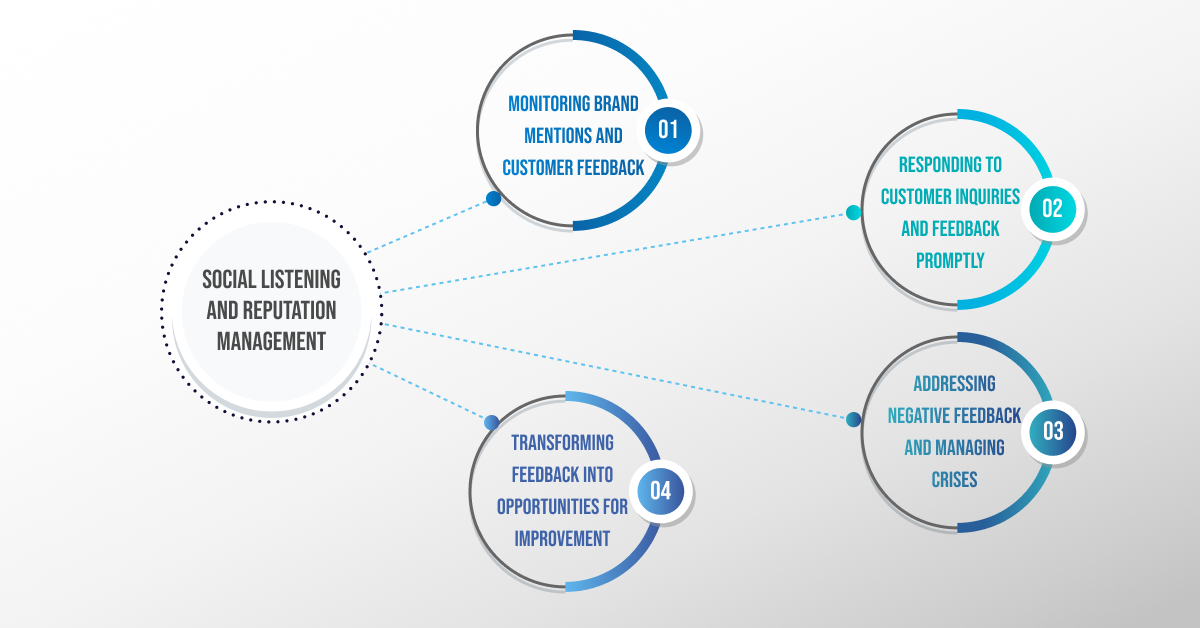
Social Listening and Reputation Management

Monitoring Brand Mentions and Customer Feedback

Social listening is a critical aspect of successful Social Media Marketing. Additionally, check customer feedback and brand mentions in various platforms. Hence, pay attention to what your audience says about your brand, products, and services.

Responding to Customer Inquiries and Feedback Promptly

Timely responses to the feedback to demonstrate commitment to customer service. Moreover, engage with your audience promptly, addressing their questions and concerns. Show appreciation for positive feedback and acknowledge any issues raised.

Addressing Negative Feedback and Managing Crises

Negative feedback is inevitable, but how you handle it makes a difference. Respond to negative feedback empathetically and professionally. Hence, address the concerns and offer solutions. In times of crisis, remain transparent and proactive in managing the situation.

Transforming Feedback into Opportunities for Improvement

Feedback is valuable for growth. Use feedback to identify areas of improvement in your products or services. Additionally, show your audience their opinions matter by implementing changes based on their input.

Technique 6: Creating a Social Media Marketing Funnel for Conversion
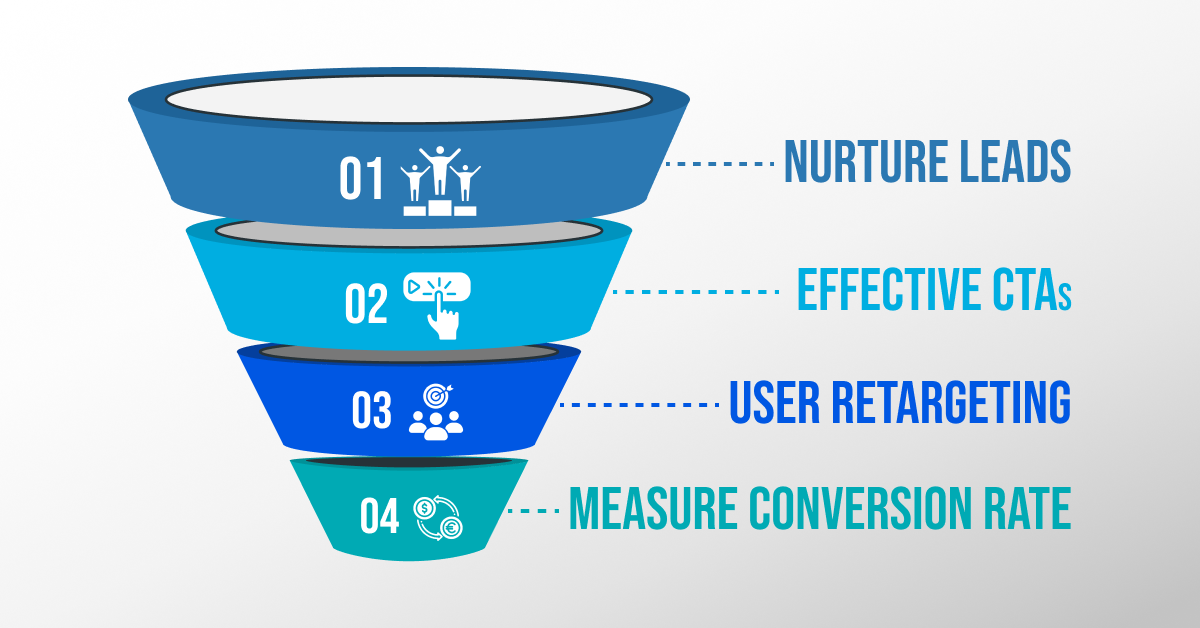
Social Media Marketing Funnel for Conversion

Nurture Leads

The Social Media Marketing funnel is a pathway to convert potential customers into loyal advocates. Nurturing leads involves building relationships with your audience. Moreover, engage with them through valuable content, personalized messages, and genuine interactions.

Effective CTAs

A compelling Call-to-Action (CTA) is pivotal in guiding your audience toward desired actions. Encourage your followers to take the next step, whether signing up for a newsletter, purchasing, or contacting your business.

User Retargeting

Retargeting and remarketing are potent tactics to re-engage potential customers who have shown interest in your products or services. Moreover, utilize these strategies to stay top-of-mind and encourage conversion.

Measure Conversion Rate

Measuring conversion rates is essential for social media optimization. Moreover, analyze data to know about the required improvements. Hence, make data-driven decisions to enhance your conversion performance.

Technique 7: Analyze Data for Continuous Improvement
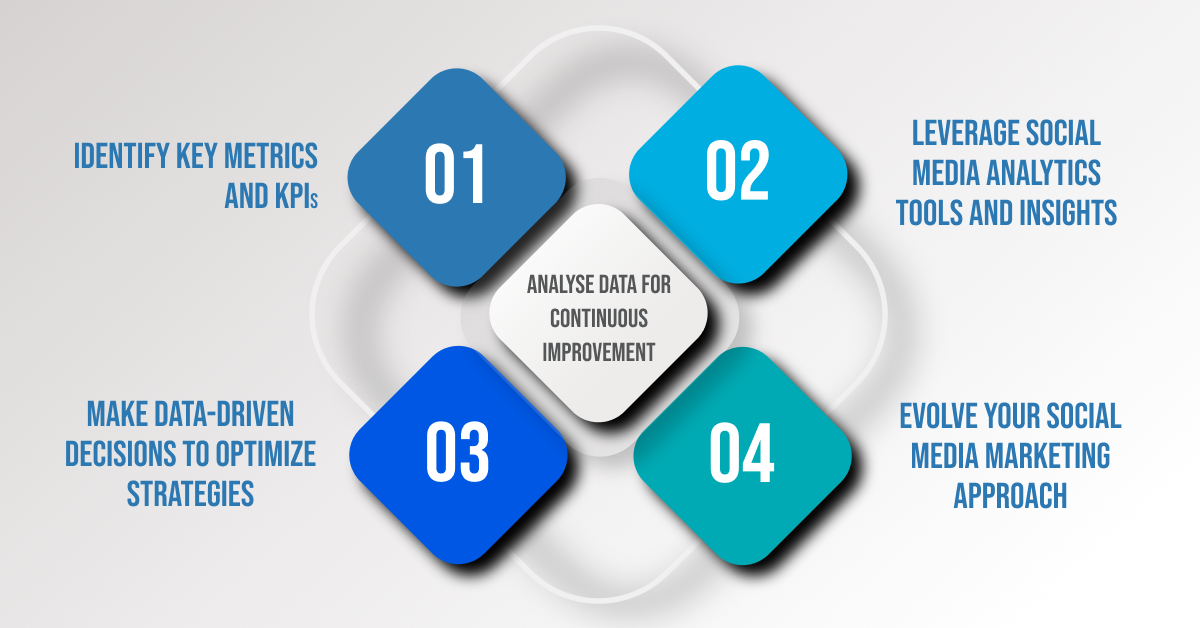
Analyze data for continuous improvement

Identify Key Metrics and KPIs

Analyzing data is the key to improving your digital marketing efforts. Identify key metrics and key performance indicators (KPIs) that align with your campaign goals. Additionally, these metrics will help you measure the effectiveness of your strategies.

Leverage Social Media Analytics Tools and Insights

Social media analytics tools provide valuable insight into your performance. Use these tools to track engagement, reach and audience demographics. Furthermore, with this data, you can make informed decisions and optimize your strategies.

Make Data-driven Decisions to Optimize Strategies

Data-driven choices are the key to a successful digital marketing. Furthermore, analyze the data collected from your campaigns to identify strengths and weaknesses. Use this information to improve your strategies.

Evolve Your Social Media Marketing Approach

Social media is constantly evolving. Additionally, be prepared to iterate and adapt your approach based on data insights. To stay ahead in the dynamic world of social media, embrace change and be flexible in your strategies.

Conclusion

Now that you know the basics of Social Media Marketing, it your turn dominate the social media . If you need help to enhance your social media presence, Deftsoft is here to assist you! Our digital marketing services follow a simple approach: track, test, tweak, and repeat. Let us partner with you to create, rejuvenate, and reposition your brand in the dynamic world of social media.
THE INFLUENCE OF AI ON THE FUTURE OF MOBILE APP DEVELOPMENT

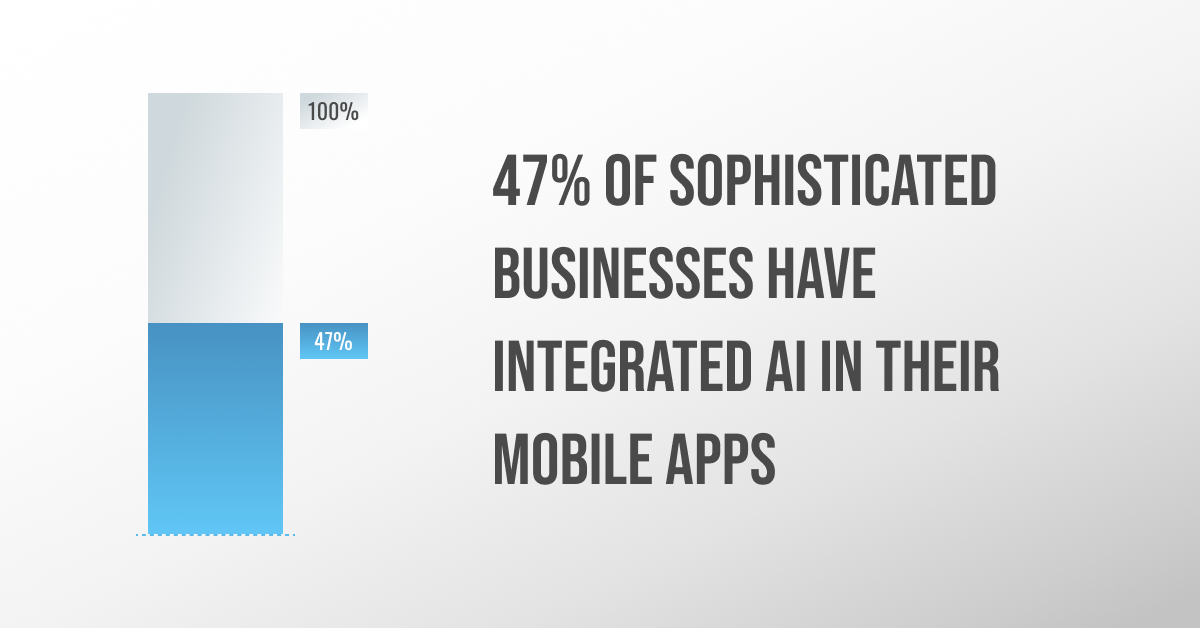
Artificial Intelligence has changed the way mobile app development works. Thanks to the infinite possibilities for developers and business organizations. According to recent statistics, 47% of high-level businesses have incorporated AI into their mobile apps to implement user personalization. In short, AI has unlocked novel potential for developers to advance their app development practices.

app development statistics

The future of mobile app development holds immense potential as advancements in artificial intelligence (AI) continue to shape the industry. AI-powered technologies such as machine learning, natural language processing, and predictive analytics are revolutionizing the way mobile apps are designed, developed, and experienced. With AI, mobile apps can offer enhanced user experiences through personalized recommendations, intuitive interfaces, and seamless interactions.

Understanding the Power of AI in Mobile Apps:

–  The power of AI lies in its ability to analyze user behavior, preferences, and data to understand individual needs, resulting in higher user engagement, satisfaction, and retention. Personalization and customization are key features enabled by AI, allowing apps to deliver tailored content, product recommendations, and user interfaces that cater to individual preferences.

–  Moreover, intelligent virtual assistants, powered by AI, transform the way users interact with mobile apps, providing real-time assistance and guiding users through functionalities. AI-driven predictive analytics anticipates user behavior and needs, empowering apps to offer personalized suggestions and optimize user engagement.

– With AI, mobile apps can provide smart recommendations, leverage natural language processing for seamless interactions, enhance security, automate development processes, integrate machine learning for continuous improvement, and address ethical considerations to ensure responsible AI usage. The future of mobile app development is set to be shaped by AI, offering exciting possibilities for enhanced user experiences and innovative solutions.

How AI is Transforming Mobile App Development

AI is Transforming Mobile App Development

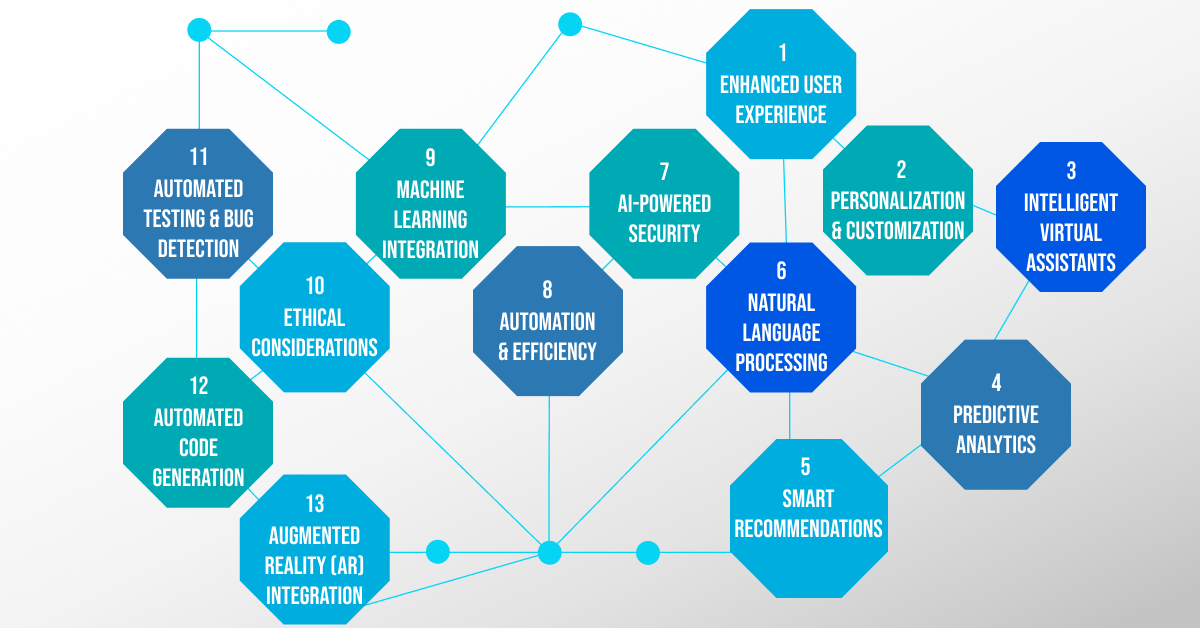
Artificial Intelligence (AI) is revolutionizing mobile app development. With AI, apps can offer personalized experiences, intelligent virtual assistants, predictive analytics, and smart recommendations. AI automates processes, enhances security, and integrates machine learning for continuous improvement. Ethical considerations ensure responsible AI usage. Here is how it will bring changes.

  1. Enhanced User Experience: The visual impact of AI in mobile app development is through some AI-powered technologies such as machine learning and natural language processing. These apps tend to offer personalized recommendations, intuitive interfaces, and seamless interactions. To be more precise, AI analyzes user behavior, preferences, and data to understand individual needs and tailor the app experience accordingly. Therefore, it leads to higher user engagement, satisfaction, and ultimately, retention.
  2. Personalization and Customization: AI leverages user data and preferences to enable personalization and customization in mobile apps. With its algorithms, apps can deliver personalized content, product recommendations, and user interfaces that cater to individual preferences. This level of personalization enhances user satisfaction, fosters a deeper connection with the app, and increases user loyalty. Because, the customization options allow users to modify app settings, layouts, and features to suit their preferences, ensuring a personalized experience tailored to their needs.
  3. Intelligent Virtual Assistants: Intelligent virtual assistants powered by AI, such as chatbots, voice assistants, and virtual customer service agents, revolutionize the way users interact with mobile apps. These virtual assistants provide real-time assistance, answer queries, perform tasks, and guide users through app functionalities. They utilize natural language processing and machine learning to understand user input and provide accurate and contextually relevant responses. Intelligent virtual assistants enhance user convenience, streamline app interactions, and provide a more efficient and satisfying user experience.
  4. Predictive Analytics: AI-driven predictive analytics enables mobile apps to anticipate user behavior, needs, and preferences. By analyzing historical user data, AI algorithms can make accurate predictions and recommendations. Therefore, it empowers apps to offer personalized suggestions, improve content targeting, and optimize user engagement. Predictive analytics also helps app developers make data-driven decisions, refine marketing strategies, and optimize app performance based on user insights.
  5. Smart Recommendations: AI-powered smart recommendations play a crucial role in guiding users toward relevant content, products, and services within mobile apps. Moreover, it works by analyzing user preferences, browsing history, and contextual information, AI algorithms can offer personalized recommendations tailored to each user’s interests. Hence, it enhances user engagement, encourages exploration within the app, and increases the chances of conversions. Smart recommendations improve user satisfaction, drive app usage, and contribute to overall business success.
  6. Natural Language Processing: Natural language processing (NLP) understands and responds to user input in a more human-like manner. By leveraging AI algorithms, apps can analyze and interpret natural language to comprehend user queries, commands, and conversations. NLP enables voice recognition, chatbot interactions, language translation, sentiment analysis, and more. This enhances user convenience, enables seamless voice-based interactions, and simplifies communication within mobile apps.
  7. AI-Powered Security: AI plays a crucial role in enhancing mobile app security by identifying and mitigating potential threats. Because, AI algorithms can analyze patterns, detect anomalies, and identify suspicious activities within apps. Consequently, it helps in preventing data breaches, fraud, and unauthorized access. AI-powered security measures such as biometric authentication, behavioral analysis, and anomaly detection provide enhanced protection for user data and privacy.
  8. Automation and Efficiency: AI automation streamlines various aspects of mobile app development, reducing manual effort and enhancing efficiency. AI tools and frameworks facilitate automated testing, bug detection, code generation, and performance optimization. This accelerates the development process, improves app quality, and reduces time-to-market. AI automation enables developers to focus on higher-level tasks, innovation, and improving the user experience.
  9. Machine Learning Integration: Machine learning integration in mobile apps continuously learns, adapts, and improves based on user feedback and data. Additionally, by leveraging machine learning algorithms, apps can refine their functionalities, recommendations, and user interfaces over time. This ensures personalized experiences, adapts to changing user needs, and delivers better performance. Machine learning integration enhances app intelligence, responsiveness, and user satisfaction.
  10. Ethical Considerations: As AI becomes more pervasive in mobile app development, ethical considerations become paramount. App developers need to prioritize user privacy, data protection, transparency, and fairness in AI algorithms. Ethical guidelines should be implemented to ensure responsible AI usage, prevent biases, and maintain user trust. Transparency in data collection and processing, informed consent, and algorithmic accountability are crucial aspects of ethical AI in mobile apps.
  11. Automated Testing and Bug Detection: AI-powered automated testing and bug detection tools are transforming the quality assurance process in mobile app development. Besides this, AI algorithms can also analyze app functionalities, identify potential bugs, and automatically generate test cases to validate app performance. Therefore, it reduces the time and effort required for manual testing, improves the accuracy of bug detection, and enhances the overall app quality. Finally, Automated testing with AI ensures robust and reliable mobile apps, leading to improved user experiences and higher customer satisfaction.
  12. Automated Code Generation: AI-powered automated code generation is revolutionizing the development process in mobile app development. By leveraging machine learning algorithms, AI can analyze app requirements and generate code snippets, reducing the manual effort required for coding. This accelerates the development timeline, improves code quality, and allows developers to focus on higher-level tasks. Automated code generation with AI enhances efficiency, promotes code standardization, and streamlines the app development process.
  13. Augmented Reality (AR) Integration: AR and AI integration in mobile app development offer immersive and interactive experiences for users. AI algorithms can analyze real-time data from the device’s camera, sensors, and user interactions to enhance AR functionalities. This enables apps to overlay virtual objects, provide real-time object recognition, and offer personalized AR experiences. AI-powered AR integration opens up new possibilities for gaming, shopping, navigation, and education within mobile apps, creating engaging and innovative user experiences.

In a Nutshell:

The influence of AI on the future of mobile app development is profound. AI-powered technologies such as machine learning, natural language processing, and predictive analytics are revolutionizing the way mobile apps are designed, developed, and experienced. In addition to that, from enhanced user experiences through personalized recommendations and intuitive interfaces to intelligent virtual assistants, predictive analytics, smart recommendations, and natural language processing, AI is transforming every aspect of mobile app development.

Furthermore, AI contributes to app security, automation, efficiency, and machine learning integration, empowering apps to continuously learn, adapt, and improve. However, ethical considerations such as user privacy, data protection, and algorithmic fairness ensure responsible AI usage. The future of mobile app development is undeniably shaped by AI. Therefore, it offers limitless possibilities for innovation, user satisfaction, and business success.

Deftsoft is a leading provider of innovative digital solutions that specialize in different technologies. We create cutting-edge mobile apps that deliver exceptional user experiences. With the expertise of our team in mobile app development, we are paving the way toward growth in the mobile app marketplace. Visit us to learn more

Revolutionize Gaming with AI: The Bold Future Ahead

The exciting gaming world is on the cusp of a groundbreaking revolution fueled by Artificial Intelligence (AI). AI, a technology that enables machines to simulate human intelligence, is making its presence felt in the gaming industry, transforming gameplay experiences like never before. Gaming with AI is becoming more immersive, challenging, and personalised to each player’s unique preferences. From intelligent non-player characters (NPCs) to procedurally generated worlds, AI is pushing the boundaries of what’s possible in gaming. In this article, we will explore the bold future of AI-powered gaming, examining how it is revolutionizing the gaming landscape and shaping the future of interactive entertainment.

A. Enhancing Gaming with AI

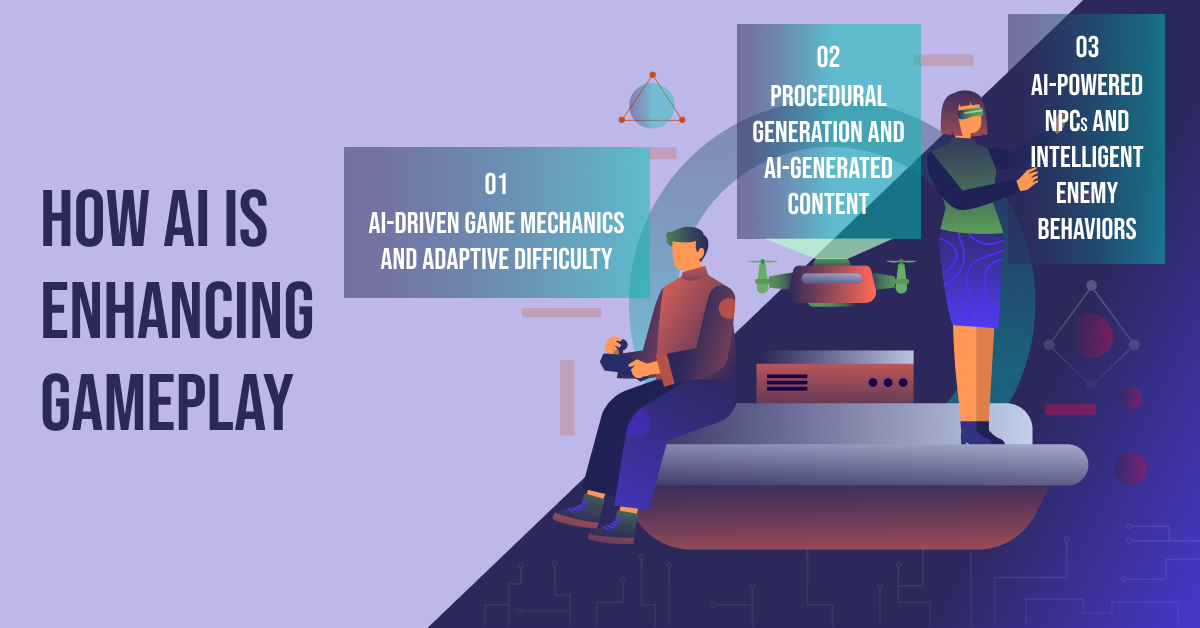
AI is Enhancing Gameplay

Artificial Intelligence is an enormous entity that encapsulates innumerable applications across the globe. Speaking of which, the gaming industry couldn’t be left untouched by AI. The novel technology is extensively benefitting the gaming sector. This is how it is enhancing the gameplay scenario:

1. AI-Driven Game Mechanics and Adaptive Difficulty

AI-driven game mechanics and adaptive difficulty are transforming the way games challenge players. Games can dynamically adjust their difficulty levels by leveraging AI algorithms based on the player’s skill and progress. This adaptive approach ensures that players are consistently engaged and challenged without feeling overwhelmed or bored. Through the analysis of player behavior, learning patterns, and performance data, AI algorithms create a customized and immersive gaming experience. With AI-driven game mechanics, each player can enjoy a personalized journey through the game, making it more enjoyable and rewarding.

2. Procedural Generation and AI-generated Content

Procedural generation, powered by AI algorithms, offers exciting possibilities for creating unique and diverse game worlds. It involves using algorithms to generate real-time game environments, levels, and content. Moreover, this dynamic approach ensures that no two playthroughs are the same, enhancing replayability and exploration. AI-generated content, such as quests, missions, and narrative branches, adds depth and variety to the game. The ability of AI to generate fresh and unexpected elements keeps players engaged and eager to discover what lies ahead. Procedural generation and AI-generated content revolutionize the gaming landscape, allowing limitless possibilities and captivating experiences.

3. AI-powered NPCs and Intelligent Enemy Behaviors

AI-powered non-player characters (NPCs) and intelligent enemy behaviors bring a new level of realism and challenge to games. NPCs can exhibit lifelike emotions, respond intelligently to player actions, and adapt their behaviors based on the game context. This creates more dynamic and immersive interactions, making the game world feel alive. Additionally, AI algorithms enhance enemy behaviors, enabling them to strategize and adapt during combat. Intelligent enemies provide players with more engaging and satisfying gameplay experiences. Hence, games become more immersive, challenging, and memorable with AI-powered NPCs and intelligent enemy behaviors.

B. Immersive Experiences Through AI

Immersive Experiences through AI

Artificial Intelligence (AI) has taken the visual game to the next level. From Virtual Reality to Metaverse, AI is enhancing immersive experiences for individuals. Check out the following to understand what exactly I’m talking about:

1. Virtual Reality and Augmented Reality

The progress in virtual reality (VR) and augmented reality (AR) technologies have been instrumental in creating immersive gaming experiences. Additionally, VR allows players to enter a simulated world, immersing themselves in the game environment. Through AI, VR can provide realistic interactions, responsive environments, and lifelike characters, making players feel like they are part of the game. On the other hand, AR overlays digital elements onto the real world, enhancing the player’s perception of reality. With AI-driven algorithms, AR can seamlessly integrate virtual objects into the player’s environment, creating interactive and engaging experiences.

2. AI-Based Voice Recognition and Natural Language Processing

AI-based voice recognition and natural language processing (NLP) technologies transform how players interact with games. Moreover, voice recognition allows players to use voice commands to control characters or navigate the game. AI algorithms can accurately interpret and respond to a player’s voice, making the gameplay more intuitive and immersive. NLP enables games to understand and process natural language inputs, allowing players to converse dynamically with AI-controlled characters. Therefore, this technology adds depth to storytelling and creates a more interactive and engaging narrative experience.

3. Realistic Graphics and Animations Powered by AI Algorithms

AI algorithms have contributed significantly to advancing realistic graphics and animations in games. AI can generate highly detailed textures, realistic lighting effects, and fluid character animations through deep learning and neural networks. This level of realism enhances the visual quality of games, making them more visually stunning and immersive. AI algorithms also optimize resource allocation and improve performance, allowing games to run smoothly on various platforms without sacrificing graphical fidelity. With AI-powered graphics and animations, games can deliver breathtaking visuals that captivate players and elevate their gaming experiences.

C. AI and Player Personalization

 Including a hint of personalization can elevate the gaming experience for users, thus making them want to come back for more. AI has revolutionized the personalization game with the integration of advanced algorithms. Here’s how AI is adding to the gaming scenario:

1. Personalized Game Recommendations and Adaptive Narratives

AI is revolutionizing the way games are recommended to players. Through sophisticated algorithms, AI analyzes player preferences, gaming habits, and past interactions to provide personalized game recommendations. This ensures that players are presented with games that align with their interests and preferences, enhancing their overall gaming experience. Additionally, AI enables adaptive narratives, where the story and gameplay dynamically adjust based on the player’s choices and actions. This personalized storytelling creates a sense of agency and immersion, making players feel more connected to the game world.

2. Player Behavior Analysis and Dynamic In-Game Experiences

AI-driven player behavior analysis allows developers to understand how players interact with games. By collecting and analyzing data, AI algorithms can understand player patterns, preferences, and skill levels. Anyone can use this information to create dynamic in-game experiences tailored to individual players. For example, AI can adjust the difficulty of challenges, provide targeted rewards, or offer personalized quests based on the player’s behavior. This level of personalization enhances engagement, motivation, and overall satisfaction for players.

3. AI-Powered Player Assistance and Tutorials

AI-powered player assistance and tutorials transform how players learn and improve their skills. AI algorithms can provide real-time guidance, tips, and suggestions during gameplay, helping players overcome challenges and learn new strategies. This assistance can be customized based on the player’s skill level, offering support tailored to their needs. AI-powered tutorials provide step-by-step instructions and interactive demonstrations, ensuring players can quickly grasp game mechanics and get up to speed. Additionally, with AI-powered player assistance and tutorials, players can enjoy a smoother learning curve and a more rewarding gaming experience.

D. AI in Game Design and Development

Deftsoft_web_blog_image_3

It has become easier than ever for the UI/UX designers concerned with the gaming industry, all because of AI intervention. From predicting the most profitable game designs to user utility, Artificial Intelligence is transcending the barriers of the mainstream gaming media. It has benefitted designers as follows:

1. AI-Assisted Level Design and Environment Creation

AI plays a significant role in game design and development, particularly in creating game levels and environments. AI-assisted level design algorithms can generate complex and engaging levels by analyzing gameplay patterns, player preferences, and other factors. This streamlines the design process and ensures that levels are challenging and enjoyable for players. Additionally, AI algorithms can assist in creating realistic and immersive environments by generating realistic terrain, weather conditions, and ambient elements. This AI-driven level design and environment creation process saves time and resources while delivering captivating gaming experiences.

2. Automated Bug Detection and Quality Assurance

AI has significantly advanced in automating bug detection and quality assurance in game development. AI algorithms can analyze code, gameplay data, and other relevant factors to identify potential bugs and errors in the game. This automated bug detection helps developers find and fix issues more efficiently, reducing development time and improving the game’s overall quality. AI can also perform automated testing, simulate player interactions, and provide valuable game performance and stability insights. This ensures that games are thoroughly tested and optimized before release, enhancing the player experience.

3. AI-Based Game Testing and Balancing

AI is revolutionizing game testing and balancing processes. Furthermore, AI algorithms can simulate thousands of gameplay scenarios, enabling developers to test different mechanics, difficulty levels, and balance factors. This helps fine-tune gameplay mechanics, ensuring that the game offers players an optimal and enjoyable experience. AI-based game testing also assists in identifying potential exploits or imbalances, allowing developers to make necessary adjustments before release. By leveraging AI for game testing and balancing, developers can save time, streamline the development process, and deliver more polished and engaging games to players.

Conclusion: Embracing the Bold Future

To fully embrace the bold future of AI in gaming, developers, industry professionals, and enthusiasts need to foster innovation and collaboration. We can collectively shape a brighter gaming landscape by sharing knowledge, pushing boundaries, and exploring new possibilities. Therefore, collaboration between AI experts and game developers can lead to groundbreaking advancements, ensuring that the future of gaming remains exciting and full of possibilities.

At Deftsoft, our team of experienced game developers stays up-to-date with the ever-evolving gaming landscape to deliver comprehensive support throughout all stages of game development. We leverage cutting-edge technology to transform imaginative and thrilling concepts into interactive games for iOS and Android platforms. Contact us now to bring your gaming ideas to fruition and embark on an exciting game development journey.

Is Your Business Ready for the E-Commerce App Revolution?

E-commerce apps is a powerful tool that offers a convenient and accessible platform for customers to browse and purchase products or services with just a few taps on their smartphones. This blog explores the significance of e-commerce apps for businesses and sheds light on the transformative e-commerce app revolution. So, let’s dive in!

Understanding the E-commerce App Revolution

The e-commerce app revolution signifies a significant shift in how businesses operate and engage with customers. Additionally, it refers to the widespread adoption and utilization of mobile applications designed for e-commerce. These apps have revolutionized how consumers interact with businesses, transforming the entire business landscape.

With the rapid advancement of technology and the increasing reliance on smartphones, e-commerce apps have become a vital tool for businesses to establish an online presence and reach a more extensive customer base. These apps offer a seamless and personalized shopping experience, allowing customers to browse products, make purchases, track orders, and receive notifications at their fingertips.

Furthermore, the e-commerce app revolution has accelerated businesses’ digital transformation, necessitating modern technologies and strategies. It has pushed businesses to optimize their online presence, enhance customer experience, and streamline operations to remain competitive in the digital era.

Benefits of E-commerce Apps for Businesses:

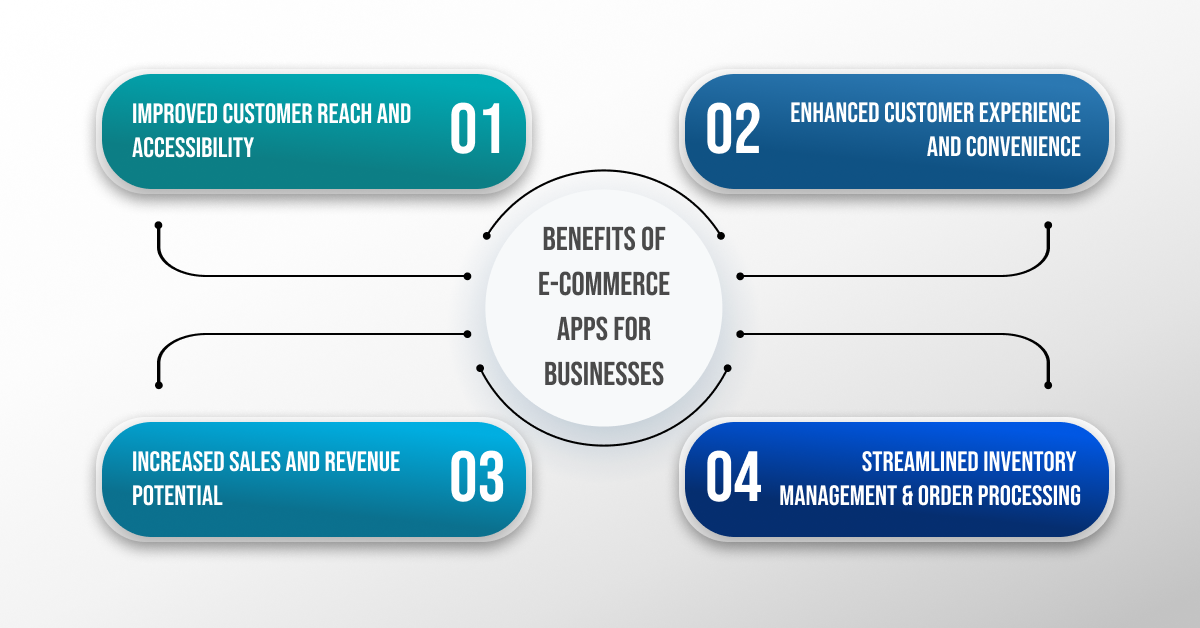
Benefits of E-commerce Apps for Businesses

1. Improved Customer Reach and Accessibility: E-commerce apps open up new avenues for businesses to reach a wider audience. With a well-designed app, businesses can tap into the growing number of mobile users and expand their customer base beyond geographical limitations. Apps provide 24/7 accessibility, allowing customers to browse and make purchases conveniently. This increased reach and accessibility translate into greater visibility and potential for business growth.

2. Enhanced Customer Experience and Convenience: E-commerce apps provide a seamless and user-friendly shopping experience for customers. They offer personalized product recommendations, advanced search options, and tailored notifications, creating a highly personalized and convenient shopping journey. Apps also enable easy and secure payment options, saving customers from the hassle of entering payment details repeatedly. Businesses can foster loyalty, improve customer satisfaction, and drive repeat purchases by focusing on a customer-centric approach.

3. Increased Sales and Revenue Potential: By leveraging the power of e-commerce apps, businesses can significantly boost their sales and revenue potential. Apps provide a direct and frictionless channel for customers to purchase, eliminating the need to visit physical stores or websites. Push notifications and personalized offers can drive impulse buying and increase sales conversion rates. Moreover, apps allow businesses to leverage data analytics and track customer behavior, enabling targeted marketing strategies to drive sales further.

4. Streamlined Inventory Management and Order Processing: E-commerce apps streamline inventory management and order processing, improving efficiency and reducing operational costs. Real-time inventory tracking ensures accurate product availability information, preventing overselling or out-of-stock situations. Automated order processing and integration with backend systems simplify the fulfillment process, reducing manual errors and ensuring timely delivery. This efficient inventory and order management improves customer satisfaction and operational effectiveness.

Assessing Your Business’s Readiness

Identifying Your Target Audience and Market Niche:

Before diving into the e-commerce app revolution, it’s crucial to identify your target audience and market niche. Understand who your ideal customers are, their preferences, and their online shopping behaviors. Analyze the market demand for your products or services and assess if there is a viable customer base that can be reached through an e-commerce app. This evaluation will help you determine your app venture’s potential success and profitability.

Evaluating Your Product or Service Suitability for eCommerce Apps:

Not all products or services are ideally suited for e-commerce apps. Evaluate the nature of your offerings and assess if they can be effectively showcased and sold through a mobile app interface. Consider factors such as complexity, customization requirements, and the need for physical interaction. Products easily described, displayed visually, and shipped without complications fare well in e-commerce apps. On the other hand, highly specialized or customized products may require additional considerations.

Analyzing Your Existing Online Presence and Infrastructure:

Assess your online presence and infrastructure to gauge your readiness for an e-commerce app. Evaluate the performance and user experience of your website if you have one. Analyze your existing backend systems and processes for inventory management, order fulfillment, and customer support. Determine if your infrastructure can seamlessly integrate with an e-commerce app or if updates and enhancements are needed. This analysis will help identify gaps or improvement areas to ensure a smooth transition into the app environment.

Critical Considerations in E-commerce App Development:

Choosing Between a Custom-Built App or a Ready-Made Solution:

One of your first decisions is whether to develop a custom-built app or opt for a ready-made solution. Custom-built apps offer more flexibility and tailored features but require more time and resources. On the other hand, ready-made solutions provide a faster and more cost-effective option but may need more customization. Consider your business needs, budget, and timeline to determine the best approach for your e-commerce app development.

Selecting the Right Platform and Technology Stack:

Choosing the right platform and technology stack is vital for the success of your e-commerce app. Consider target audience demographics, device compatibility, and scalability requirements. Popular platforms like iOS and Android offer a broad user base, while cross-platform frameworks like React Native and Flutter provide cost-effective development options. Additionally, selecting the appropriate technology stack, including programming languages, frameworks, and databases, will ensure the app’s performance, security, and scalability.

Integrating Essential Features such as Secure Payment Gateways and Inventory Management:

To create a seamless shopping experience for your customers, it is essential to integrate critical features into your e-commerce app. These include secure payment gateways to facilitate smooth and safe transactions, inventory management systems to track product availability and streamline order fulfillment, and customer relationship management tools to enhance customer interactions and support. Prioritize features based on your business requirements and customer expectations to provide a robust, user-friendly app.

Ensuring Responsive Design and Mobile Optimization:

With most online users accessing websites and apps through mobile devices, ensuring the responsive design and mobile optimization in your e-commerce app is crucial. A responsive design adapts to different screen sizes, providing a consistent and optimized user experience across devices. Mobile optimization focuses on fast loading times, intuitive navigation, and touch-friendly interfaces. By prioritizing these aspects, you can enhance user engagement, reduce bounce rates, and increase conversion rates for your e-commerce app.

Planning and Implementing Your E-commerce App Strategy:

Setting Clear Goals and Objectives:

Before diving into the development process, it is crucial to establish clear goals and objectives for your e-commerce app. Determine what you want to achieve with the app: increasing sales, improving customer engagement, or expanding your market reach. Clear goals will guide your decision-making and ensure your app aligns with your business strategy.

Creating a Comprehensive Project Plan and Timeline:

A well-structured project plan is essential for successfully implementing your e-commerce app strategy. Break down the development process into manageable tasks, allocate resources, and set realistic timelines. This will help you stay organized, monitor progress, and ensure timely milestone completion.

Collaborating with Experienced App Developers or Agencies:

To bring your e-commerce app vision to life, collaborate with experienced app developers or agencies. Look for professionals specializing in e-commerce app development with a proven track record. Their expertise and knowledge will be invaluable in creating a high-quality and user-friendly app that meets your business needs.

Testing, Launching, and Marketing Your E-commerce App:

Once the development is complete, thoroughly test your app to identify and fix any bugs or usability issues. After testing, it’s time to launch your app in the app stores. Develop a comprehensive marketing strategy to promote your app and attract users. Utilize various channels, such as social media, email marketing, and paid advertising, to generate awareness and drive downloads.

Conclusion: Encouragement for Businesses to Seize the Opportunity

As we have explored the benefits of e-commerce apps, assessed business readiness, and delved into key considerations in app development, it becomes clear that businesses need a reliable and experienced partner to navigate this journey.

That’s where Deftsoft, a leading web and mobile development company, comes into play. With our expertise in mobile app development, we can help businesses seize the opportunity presented by the e-commerce app revolution. Our skilled and professional developers are well-versed in creating stunning and functional mobile apps for both Android and iOS platforms. We understand the complexities of mobile app development and can bring your app idea to life.

Gen Z Influencer Marketing: Attracting Your Target Audience

If you want to effectively engage Gen Z with influencer marketing. You need to understand their characteristics, preferences, and behaviors. Gen Z, born in the late 1990s and early 20s, are digital natives glued to their devices. They crave authenticity, celebrate diversity, and have experienced mind-blowing shifts in the world. In this fast-paced digital era, influencer marketing is the key to capturing their attention. By embracing authenticity, collaborating with micro-influencers, encouraging user-generated content, and making a social impact, brands can attract and engage Gen Z. So, let’s dive into this guide and conquer the world of Gen Z influencer marketing!

Understanding The Gen Z Consumer: Characteristics, Preferences, And Behaviors

If you want to crack the Gen Z code and master influencer marketing? Well, let’s get started with each aspect of Generation Z from their characteristics to preferences, and their behaviors.

– Characteristics: Gen Z, the digital natives, born in the late 1990s and early 20s, are practically glued to their digital devices. They’re like experts of the tech realm, with smartphones, I Pad in their hands as if they are born like this. This upbringing has molded their consumer behaviors, preferences, and expectations, making them a unique audience that everyone wants to attract.

– Age Range: Generation Z is set of people who are currently in their teenage years or early adulthood. These people are currently busy in discovering their true self and dealing with awkward situations. When developing influencer marketing strategies, remember to empathize with their struggles, dreams, and, of course, their memes. It’s a crucial step in connecting with this target audience effectively.

– Cultural Diversity: Gen Z is a diverse in terms of cultures and ethnicities. They ace inclusivity and celebrate diversity. So, if you want to win their hearts, show them that your brand embraces their uniqueness. Throw in some cultural references to create a stronger connection that transcends boundaries.

– Unique Experiences: Gen Z has witnessed some mind-blowing shifts in the world – from the rise of social media to the reign of the almighty smartphone. These experiences have shaped their behaviors, communication styles, and content consumption patterns. To resonate with Gen Z, you need to understand their obsession with TikTok dances, their love for viral challenges, and their insatiable appetite for binge-watching shows. This will let you to easily win them over.

Strategies and Best Practices:

Now that you have a knowledge about Gen Z’s quirks, let’s explore some strategies and best practices for influencer marketing. Don’t worry; I won’t leave you hanging. Here are a few interactive tips to keep you on your toes:

– Authenticity and Transparency: Gen Z values authenticity and transparency in brand communications. Influencer partnerships should focus on genuine connections between the influencer and the brand, ensuring that the content feels organic and relatable.

– Micro-Influencers: This Generation troops trust and engage more with these micro-influencers. Who have smaller, dedicated followings in specific niches. So, go ahead and collaborate with micro-influencers who align with the brand’s values and resonate with the target audience for more authentic and effective influencer marketing campaigns.

– User-Generated Content (UGC): Want to see your target audience gets excited? Give them the power to create and share their own content related to the brand or product. It’s like a virtual talent show where they take the spotlight and show off their creativity. It allows them to participate and feel connected to the brand. This not only fosters a sense of community but also amplifies your brand’s reach.

– Interactive and Personalized Experiences: Gen Z craves interactive and personalized experiences like a unicorn craves rainbows. They want to be part of the story, not just passive spectators. So, why not create challenges, contests, or interactive storytelling? Let them play a role in your brand’s narrative, and they’ll be hooked with your brand.

– Social Impact and Causes: Gen Z, is known for its passion for social causes, as they are opinionative and are always on the lookout for brands that fight the good fight. Go on and collaborate with influencers who support these causes or support initiatives aligned with your brand’s values. Together, you’ll create a strong partnership that captures Gen Z’s attention and makes a positive impact on the world.

Measuring Success: Metrics and Analytics

Measuring Success: Metrics and Analytics

Measuring the success of influencer marketing campaigns targeting Gen Z is crucial to evaluate their impact and optimize future strategies. Let’s get started:

Key Performance Indicators (KPIs):

Identifying the appropriate KPIs is essential to measure the effectiveness of Gen Z influencer marketing campaigns. You can start with metrics such as engagement rates (likes, comments, shares), reach and impressions, click-through rates, conversions, and brand sentiment analysis. Therefore, make sure to establish clear goals and tracking relevant metrics. It will provide you the valuable insights into campaign performance.

Data Analytics Tools:

Utilizing data analytics tools and platforms can help gather and analyze data related to Gen Z influencer marketing campaigns. Moreover, they’ll provide comprehensive analytics on audience demographics, content performance, and conversion tracking. Leveraging these tools will enable your brand to implement data-driven decisions and refine your marketing strategies accordingly.

Audience Feedback and Surveys:

Time to get interactive with your target audience! Engage them directly through feedback and surveys. Gathering feedback about influencer collaborations, their content preferences, and their thoughts about your brand. Their insights will be pave a clear way for you to areas of improvement.

Return on Investment (ROI) Analysis:

Assessing the ROI of your marketing initiatives involves analyzing the campaign’s financial investment against the generated outcomes.  Calculate the cost per engagement, the cost per conversion, and track the overall revenue or sales attributed to your campaign. which in result will  helps you to determine the campaign’s profitability and guides budget allocation for future endeavors.

Continuous Monitoring and Adaptation:

Gen Z is like a fast-paced roller coaster; their preferences and behaviors are constantly evolving. So, keep a vigilant eye on your metrics and audience feedback. Regularly reviewing metrics and audience feedback will allow your brand to adapt their strategies and the content to stay relevant and effectively engage your target audience.

Building Long-Term Relationships: Cultivating Brand Loyalty and Advocacy

Congratulations! You’ve made it to the final level that is Building long-term relationship. It goes beyond individual campaigns, involves cultivating brand loyalty and advocacy to establish a lasting connection.

Consistency and Authenticity:

Consistently delivering authentic messaging and experiences is crucial to build trust and loyalty among Gen Z consumers. You should always align with the brand’s values and maintain a consistent tone and voice in your content. This will create a reliable brand image and foster You to make a long-term relationship with the target audience.

Long-term partnerships:

It is essential for strengthening your brand’s association with Gen Z. By collaborating with influencers on multiple campaigns or establishing ambassador programs, you create a sense of continuity and familiarity. Furthermore, this approach allows influencers to become genuine advocates for your brand, amplifying its reach and impact. To stay updated with the latest digital marketing trends in 2023, you can refer to resources like TOP DIGITAL MARKETING TRENDS FOR BUSINESSES IN 2023 for valuable insights and strategies to enhance your influencer marketing efforts.

Co-Creation and Collaboration:

Involving Gen Z consumers in the brand’s decision-making process. Similarly, include them in decision-making and content creation. Collaborate through contests, polls, or even product development initiatives. It allows the audience to actively contribute and shape the brand’s offerings.

Community Building:

Gen Z seeks a sense of belonging, like finding their tribe in the vast digital world. Build online communities around your brand through dedicated hashtags, forums, or exclusive events. Furthermore, it’s like hosting the coolest party where Gen Z can meet like-minded individuals. It fosters a sense of ongoing engagement, loyalty, and advocacy

Influencer-Generated Content:

Let the influencers take the stage! Encourage them to create content that showcases their genuine experiences with your brand. It’s like having a celebrity endorsement, but with a personal touch. Repurpose and share their content across your channels. Gen Z will see the social proof and rally behind your brand.

To Wrap up:

Now you are ready to conquer Gen Z in the influencer marketing world! Therefore, by embracing their digital native status, diverse culture, and unique experiences. You just need to be authentic, build a partnership with micro-influencers. which will let them show creativity with user-generated content. Moreover, create interactive experiences that make them say, “Wow, this brand gets me!”. Another thing is don’t forget to measure success with KPIs, data analytics, and direct feedback. Therefore, building a long-term relationship is a key factor, you can achieve that by prioritizing consistency, partnerships, and community building.

Deftsoft is a leading digital marketing company that stays at the forefront of marketing trends. Our team is well-versed in the latest strategies and techniques that have revolutionized the industry. Contact us now to learn about our comprehensive range of services.