Blockchain for E-Commerce: Transforming Your Business

Blockchain technology is spreading like wildfire and the world is its oyster. The technology is developing at a staggering CAGR of 70.6% and is expected to hit $29.35 billion in revenue by 2024! No wonder that the e-commerce industry is already harnessing the power of the blockchain technology. 

Blockchain technology has brought a revolution in the e-commerce industry. This technology has transformed the way of working worldwide. This article will walk you through the intricacies of Blockchain, exploring its core concepts, applications, pros and cons, and highlighting how it’s reshaping the way businesses operate.

What Blockchain Is and How It Works?

Before we get into the intricacies of the Blockchain in e-commerce, let us understand what it is. Blockchain is a decentralized digital locker that provides a secure and transparent record-keeping system that works across a network of computers. Unlike conventional forms of record keeping, Blockchain works on a distributed ledger model that enables participants to hold a copy of the entire ledger.

All the transactions are bundled into blocks and linked together in chronological order, forming an unalterable chain. This chain of blocks is known as blockchains that ensures data integrity and immutability.

How Blockchain Works?

Blockchain follows cryptographic techniques to ensure data. When a transaction is initiated, it goes through a verification process by a network of nodes. Once verified, the transaction is added to a block and sealed with a unique cryptographic hash. This block is then linked with the previous one, creating a continuous chain of blocks.

The decentralized nature of the Blockchain means that no single individual has control over the network. Transactions are transparent, where any changes are done only through a consensus mechanism agreed by the network participants. This is one of the strongest security mechanisms that makes Blockchain resistant to fraud and tempering.

Relevance of Blockchain in Various Industries

The impact of Blockchain is far beyond cryptocurrency. Its impact extends to various industries like healthcare, retail, finance, smart contracts, energy trading, e-commerce and more industries. As most businesses look for innovative solutions to streamline operations, improve trust, and enhance security, Blockchain emerges as a game-changer.

When it comes to e-commerce blockchain, it promises to address critical issues, including data security, supply chain transparency, and payment process efficiency. It builds trust and fosters an environment where consumers have full confidence in the products they have bought and the businesses they engage with.

Commonly Used Blockchain Technology in eCommerce

There are specific e-commerce blockchain platforms and technologies that have gained significant fame. Let’s explore the reasons behind their preference with real-world examples of e-commerce businesses using them.

1. The Smart Contract of Ethereum 

Ethereum has a ground-breaking concept of smart contracts that has become a keystone of blockchain applications in e-commerce. Smart contracts are self-executing agreements with predefined rules. They automate various processes like payment and product deliveries, reducing the need for intermediaries. Recently, e-commerce industries have shown a great interest in the adoption of Ethereum due to its strong ecosystem and developer-friendly ecosystem.

Real-life example: OpenSea, a popular NFT (non-fungible token) marketplace, is built on Ethereum, allowing users to buy, sell and trade digital assets.
Open Sea NFT

2. Speed and Scalability of Binance Smart Chain

Binance Smart Chain (BSC) is gaining traction for its focus on speed and scalability. E-commerce platforms enable fast, cost-effective transactions, and BSC addresses these needs. Its compatibility with the Ethereum Virtual Machine (EVM) allows easy migration of existing Ethereum-based projects, making it an attractive option for e-commerce businesses.

Real-life example: BakerySwap, an automated market maker on the Binance Smart Chain, provides users with efficient token swapping and liquidity.

Binance-Smart-Chain

3. Supply Chain Transparency of VeChain

VeChain is solving one of the most significant concerns in the e-commerce business —supply chain transparency. This platform is designed to enhance the task of tracing products and verifying authenticity. E-commerce companies use VeChian to build trust by letting customers track their products until they reach their doorsteps.

Real-life example: Walmart China has partnered with a company to implement a food traceability system, ensuring the safety and authenticity of products on its shelves.
VeChain

4. Cross-Border Payments through Stellar

E-commerce businesses that offer cross-border services rely heavily on efficient, cost-effective payment solutions. Stellar offers cross-border transactions, making it an appealing choice for most e-commerce businesses. Its network enables fast, low-cost international payments, making it a preferred blockchain for e-commerce companies serving a global customer base.

Real-life example: SatoshiPay, a micro-payment platform, uses Stellar to enable quick, inexpensive cross-border payments for digital content.
Stellar

Benefits of Blockchain in E-Commerce

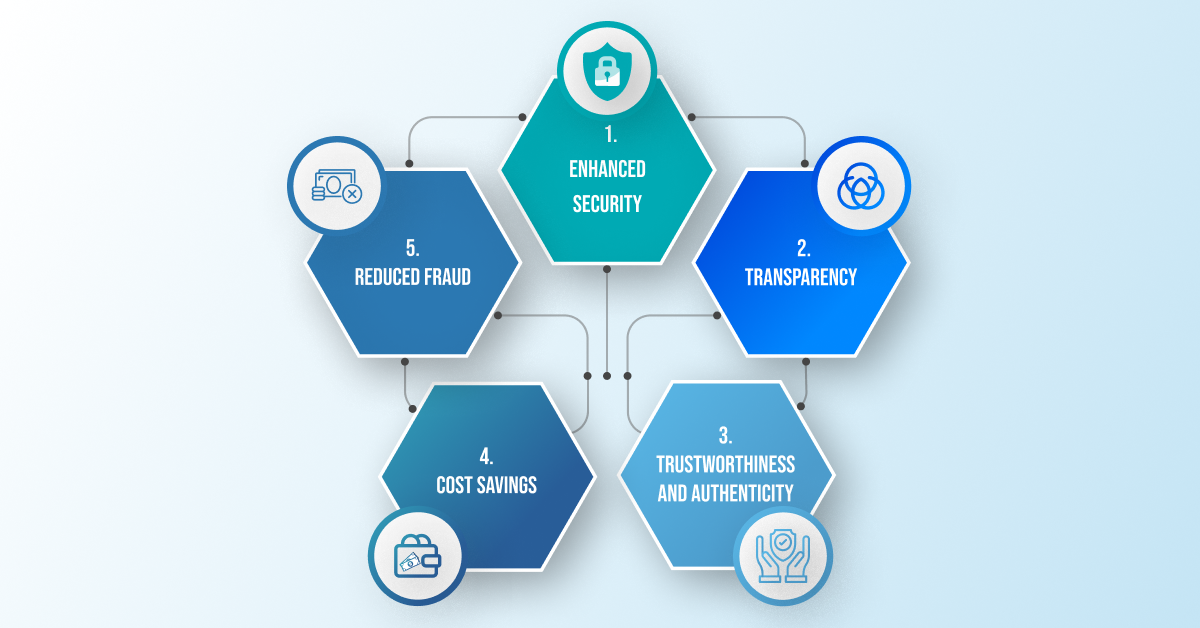
Blockchain offers a plethora of advantages that help businesses and consumers alike. Here are some key benefits of Blockchain in e-commerce, demonstrating its ability to enhance security, transparency, and trust for a better consumer experience.
Benefits of Blockchain in E-Commerce

  • Enhanced security: Blockchain’s security features are its strongest point, making it the best choice for e-commerce businesses. Transactions on a blockchain are cryptographically secured, making them immune to malicious tampering with the data. This kind of security ensures that customer’s personal information, including payment details, remains protected, reducing the risk of data breaches and cyberattacks.
  • Transparency: Transparency is the basis of trust in e-commerce. In e-commerce, Blockchain records every transaction in an immutable ledger. Transparency is the cornerstone of trust in e-commerce. With Blockchain, every transaction is recorded in an immutable ledger that’s accessible to all authorized parties. This transparency means customers can verify product authenticity, track shipments in real time, and even view the origin of goods. Such transparency builds trust and loyalty, which is crucial for repeat business.
  • Trustworthiness and Authenticity: Blockchain’s ability to verify product authenticity is a significant boon for e-commerce. Counterfeit goods have long plagued the industry, eroding consumer trust. By enabling consumers to trace a product’s journey from the manufacturer to their doorstep, Blockchain ensures that they receive genuine, high-quality items.
  • Cost Savings: One of the most compelling advantages of Blockchain in e-commerce is cost reduction. The elimination of intermediaries, such as banks or payment processors, streamlines financial transactions, lowering transaction fees. Additionally, smart contracts automate processes such as order fulfillment and payments, reducing administrative costs.
  • Reduced Fraud: Blockchain’s transparency and immutability serve as powerful deterrents against fraud. Fraudulent activities such as chargebacks and false claims become more challenging to execute when every transaction is verifiable on the Blockchain. This reduction in fraud not only saves money but also preserves the integrity of the e-commerce platform.

Current Challenges in E-commerce and Blockchain Solutions

Challenge 1: Data Security and Privacy Concerns

Challenge: E-commerce businesses face persistent threats to customer data security and privacy. Data breaches and cyberattacks can result in substantial financial losses and erode consumer trust.

Solution: E-commerce Blockchain’s cryptographic security measures safeguard customer data and transaction records. By decentralizing data storage and encryption, Blockchain mitigates the risk of data breaches and ensures customer privacy.

Challenge 2: Lack of Supply Chain Transparency

Challenge: Ensuring supply chain transparency remains a challenge in e-commerce, as consumers demand to know the origin and authenticity of products. Counterfeit goods and opaque supply chains undermine trust.

Solution: Blockchain in e-commerce provides traceability, enabling consumers to track a product’s journey from production to delivery. This transparency assures consumers of product authenticity and origin, helping combat counterfeiting.

Challenge 3: Payment Processing Inefficiencies

Challenge: Traditional payment processing methods are often inefficient, involve multiple intermediaries, incur high transaction fees, and delay cross-border transactions, impacting both businesses and consumers.

Solution: One of the prominent benefits of Blockchain is its streamlined payment processing, which removes intermediaries. Smart contracts automate payment settlements, reducing fees and processing times, resulting in cost savings and improved payment efficiency.

Challenge 4: Counterfeit Products

Challenge: Counterfeit products flood the e-commerce market, deceiving consumers and damaging brand reputations. Identifying genuine products can be challenging.

Solution: Another benefit of Blockchain is its product verification system, which enables customers to verify product authenticity through immutable records. This authentication system builds trust by ensuring that consumers receive genuine goods.

Challenge 5: Lack of Trust in Online Reviews

Challenge: Trust in online reviews is eroded by fake reviews and paid endorsements. Consumers struggle to distinguish between genuine feedback and fraudulent endorsements.

Solution: An e-commerce blockchain can create a transparent, tamper-proof review system. Reviews stored on the Blockchain are immutable, making it difficult to manipulate or delete feedback, thus ensuring the integrity of reviews.

Challenge 6: Cross-Border Trade Complexities

Challenge: Cross-border e-commerce transactions are often encumbered by complex regulations, currency conversions, and lengthy payment settlement times.

Solution: E-commerce blockchain’s borderless nature simplifies cross-border transactions. It offers fast, secure, and cost-effective international payments, reducing complexities and enhancing the global shopping experience.

Most Foolproof Practices to Deploy in E-Commerce
Foolproof Practices to Deploy in E-Commerce

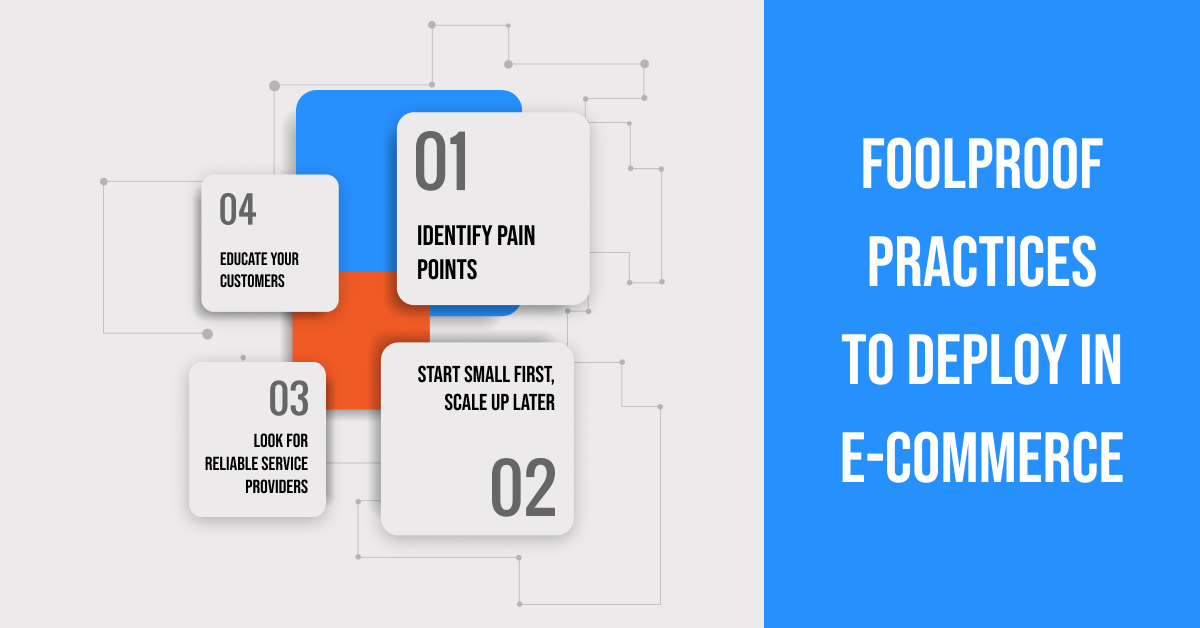
Blockchain technology has revolutionized the way data and transactions are handled in the e-commerce industry. Some of the best practices for blockchain in e-commerce are as follows:

  • Identify Pain Points: Blockchain cannot be deployed in all use cases. Identify the processes in your e-commerce business that require blockchain. For instance, if you want to secure client transactions from various manufacturers, you can utilize blockchain-powered crypto exchange platforms to do so.
  • Start Small First, Scale Up Later: It is essential to allocate dedicated capital to deploy a blockchain project for your e-commerce, since blockchain is a capital-intensive industry. You can therefore start with a smaller project and gradually scale up after measuring the outcomes.
  • Look for Reliable Service Providers: It is crucial to collaborate with an industry-recognized blockchain service provider that understands your vision immaculately. Deftsoft is one such service provider that offers a wide range of services to help expand your business.
  • Educate Your Customers: You need to disrupt your users’ habits and push them to use blockchain-powered services. This is only possible by educating users and helping them navigate new technologies. Users need to be guided to use blockchain-based e-commerce services.

Blockchain Applications in E-commerce

Blockchain technology offers a myriad of applications that are reshaping the landscape of e-commerce. Here are some key blockchain applications in the realm of online retail:

  1. Supply Chain Management: Blockchain in e-commerce enhances transparency and traceability in supply chains. Retailers can track the movement of products from manufacturer to customer, ensuring authenticity and reducing the risk of counterfeit goods.
  2. Product Authentication: Blockchain in e-commerce enables customers to verify the authenticity of products. By scanning a QR code, consumers can access a product’s blockchain record, confirming its origin and legitimacy.
  3. Secure Payments: Blockchain streamlines payment processing, reducing fees and settlement times. Cryptocurrencies and stablecoins offer customers secure and efficient payment options, particularly in cross-border transactions.
  4. Loyalty Programs: Blockchain-powered loyalty programs create transparent reward systems. Customers can trust that their loyalty points and rewards are secure and can be easily redeemed.
  5. Decentralized Marketplaces: Blockchain in e-commerce facilitates the creation of decentralized e-commerce platforms. These marketplaces eliminate intermediaries, enabling direct peer-to-peer transactions, reducing costs, and increasing trust.

Getting Started with Blockchain with Deftsoft

Are you ready to embark on a transformative journey into the world of this technology for your e-commerce business? Deftsoft, a trusted blockchain development company, is your strategic partner in harnessing the power of Blockchain to enhance security, transparency, and efficiency in your digital retail operations.

Why Choose Deftsoft for Your Blockchain Development Needs?

  • Expertise in Security: Deftsoft’s team of seasoned blockchain developers and service providers is well-versed in the intricacies of network and hardware security. We prioritize safeguarding your e-commerce ecosystem against vulnerabilities and data tampering.
  • Durable and Robust Solutions: We thrive on creating Blockchain solutions for e-commerce that stand the test of time. Our commitment to durability and robustness ensures that your blockchain implementation delivers long-term value.
  • Comprehensive Support: From the initial ideation phase to the final project execution, Deftsoft stands by your side. We provide end-to-end support for seamlessly integrating Blockchain into the e-commerce ecosystem.

Our Wide Range of Blockchain Development Services

  1. IEO, STO, and ICO Services: Whether you’re exploring Initial Exchange Offerings (IEO), Security Token Offerings (STO), or Initial Coin Offerings (ICO), Deftsoft has the expertise to guide you through the process.
  2. End-to-end dApp Solutions: We specialize in developing decentralized applications (dApps) tailored to your e-commerce needs, ensuring you harness the full potential of blockchain technology.
  3. Smart Contracts Development: Smart contracts automate and secure processes, from payments to supply chain management. We create smart contracts that streamline your e-commerce operations.
  4. Crypto Exchange Development: Deftsoft can build custom cryptocurrency exchanges, facilitating seamless transactions and enhancing your e-commerce platform’s capabilities.
  5. Custom Blockchain Solutions: Your e-commerce business is unique, and so should your blockchain solution. We craft customized blockchain solutions tailored to your specific requirements.
  6. Blockchain-based Market Platforms: Transform your e-commerce marketplace into a blockchain-powered hub of trust and transparency, fostering customer loyalty and trust.

We kickstart our collaboration with a comprehensive analysis of how blockchain technology can optimize your business, ensuring you’re on the path to a secure, transparent, and efficient digital retail future.

Future Trends in Blockchain for E-commerce

The future of Blockchain in e-commerce promises exciting developments. Expect increased adoption of Blockchain for sustainability and supply chain transparency, allowing consumers to make eco-conscious choices. DeFi (Decentralized Finance) integrations will expand payment options, and NFTs (Non-Fungible Tokens) will revolutionize product ownership and digital assets. Cross-platform interoperability and blockchain-based AI will enhance customer experiences. Moreover, governments may implement Blockchain for taxation and regulatory purposes. As Blockchain in e-commerce continues to mature, it will become an indispensable tool, reshaping the industry through innovation, trust, and efficiency.

Conclusion

As the future unfolds, Blockchain will drive innovation and efficiency, empowering businesses to thrive in an increasingly competitive landscape.

To seize these opportunities and navigate the blockchain revolution effectively, partner with Deftsoft. Our expertise, commitment to security, and track record in blockchain development make us the ideal ally for your e-commerce journey. Don’t miss out on the future of digital retail—take the next step with Deftsoft today!
How Does Digital Asset Management Work in AEM?

As we turn into the digital millennium, there has been an increasing demand for digital media, photos, audio files, video clips, presentations, and experiential marketing. It has become a more significant part of our everyday experience.

As a business grows, it strives to create and deliver content across various platforms. This expansion creates challenges for users and enterprises alike. And they want to organize the experience and consumption of digital media files so they can use them when and where they want, all across multiple devices.

This is where Adobe Experience Manager’s Digital Asset Management comes into play.

How Does Digital Asset Management Work In AEM?

Here is how DAM works within the AEM ecosystem and how it allows you to unlock the full potential of digital assets.

Work as a centralized repository: a DAM is the central hub for storing and categorizing your digital assets. It also eliminates the need to hunt for the files scattered across various folders or locations.

Easier management of assets: You can also easily use metadata, tags, and descriptions with Digital Asset Management. It makes searching for and retrieving specific assets simple, saving time and reducing frustration.

Streamlined Collaboration: Every business aims for seamless collaboration across teams and departments. It is where DAM helps team members access the same set of assets and reduce duplication of efforts. It ensures that everyone works with the most up-to-date materials.

Consistent Branding: Digital Asset Management also ensures brand consistency by providing access to approved, branded assets. It ensures that all team members use the brand-required logos, fonts, and imagery to maintain a cohesive brand identity.

Access Control and Security: One of the best features of DAM systems is their robust access control. You can define who can access, edit, or download specific assets. This feature ensures that sensitive or confidential materials remain secure and that proprietary information is protected.

Manage Millions of assets from a single location: A key benefit of Digital Asset Management is that it works as a central repository for organizing and storing all digital media assets. It means it is your single point of source for all digital assets, and users can access it across the organization or wherever they are.

Improve Content ROI: DAM is key to creating a positive customer experience. As it bridges the gap between brand promise and inconsistent customer experience, it leads to improved loyalty, thus increasing revenue.

Multichannel Content Creation: Apart from facilitating easy storage and retrieval of the assets, a Digital Asset Management system helps speed up media conversion into different sizes and aspect ratios.

Generative AI and Automation: With new capabilities, organizations can now easily create and adjust brand content with AI. They can instantly generate a content variation within the Digital Asset Management, including backgrounds, colors, and objects. You can also edit content of any size, crop it, and apply effects in the DAM.

Integrated Ecosystem: Empower your teams to create and deliver quickly the Digital Asset Management ecosystem. DAM enables you to speed up content creation through a smooth workflow. You can also use third-party apps to keep your DAM up to date and optimized.

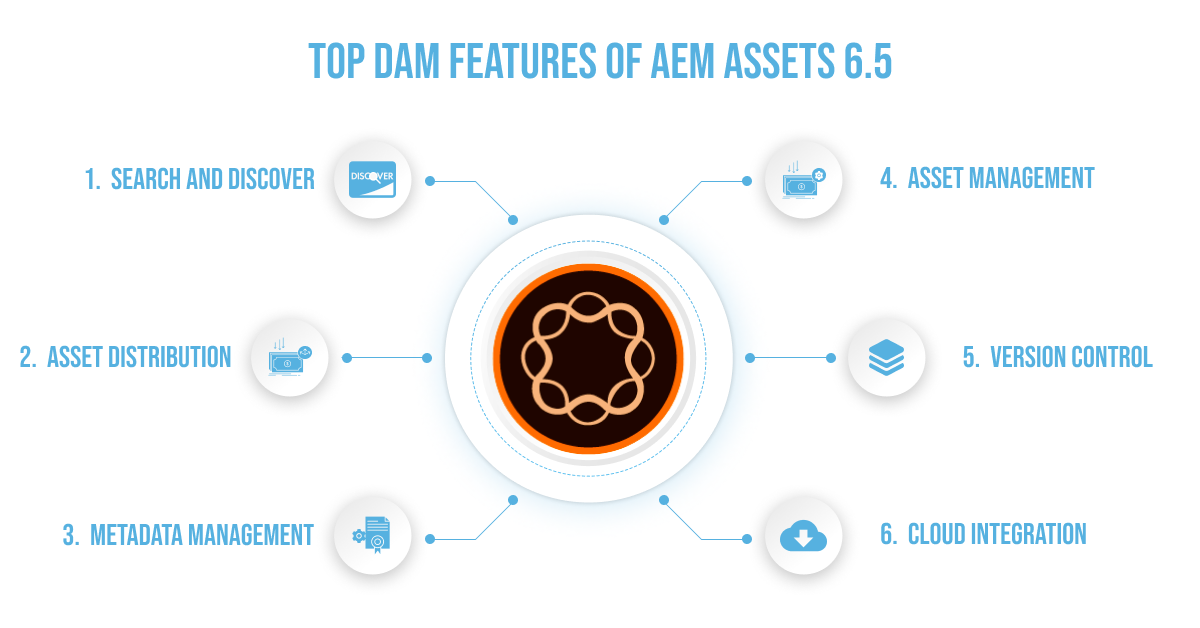
Top DAM Features of AEM Assets 6.5

AEM DAM Features

AEM 6.5 offers several new features that help marketers efficiently produce and distribute content at scale. It also gives marketers greater control over their content processes, enabling their campaigns to run efficiently and without unnecessary delays caused by IT involvement. Here are some of its top features:

1. Search and Discover: You have plenty of assets; some may be on your desktop, some may be stored in shared folders, and some may still be in your emails. Although it may seem like the right system, you need the right assets at the right time. It is where Digital Asset Management in AEM helps marketers and creatives get the quick access they need. AEM assets are powered by Adobe Sensei, an AI that automatically gives each digital asset smart tags and keywords. It allows marketers to find images from different locations, share feedback, and assign tasks to collaborate with creators.

2. Asset Distribution: AEM in Digital asset management enables enterprises to manage and distribute digital assets. Individuals in the organization gain the capability to oversee, archive, and retrieve a diverse range of resources. AEM asset simplifies the complex tasks of managing and using digital assets for various purposes within the organization.

3. Metadata Management: Metadata management is a crucial feature that allows users to enrich digital assets with detailed descriptive information. This feature enhances the search and categorization of assets. Here are some examples of metadata:

  • Name of the asset
  • Name of the folder in which it is contained
  • Size of the asset
  • Related assets or applied tags.
  • Owner of the asset
  • Description of the assets

Every addition to the metadata increases its value and makes it more accessible.

4. Asset Management: AEM assets offer simple but powerful features to enhance collaboration and reduce complexity. It allows you to check out and lock assets, and only authorized team members can make changes, such as editing, moving, or publishing them while they are checked out. It gives clarity as multiple people work on different versions of the same assets simultaneously.

5. Version Control: The version control option creates a snapshot of the images. You can restore the photos to the previous point if you want to make changes. This snapshot includes attributes, metadata, and content associated with the asset at the point. Version control also helps you see how the images have evolved over iterations.

6. Cloud Integration: AEM Assets 6.5 integrates with cloud storage and third-party applications, enhancing flexibility and scalability. Cloud integration: AEM assets can be connected to popular cloud storage providers such as Amazon, Google Cloud Storage, and Microsoft Azure. It also offers scalability, as you can easily accommodate a growing volume of assets without investing in the hardware. Beyond this, AEM assets seamlessly integrate with a range of third-party applications.

Conclusion:

As we delve deeper into Adobe Digital Asset Management, we will find that asset management is not a standalone process but a cornerstone of your organization’s digital strategy. Adobe Digital Asset Management is not just about storing files but about unlocking the potential of your digital assets to drive creativity, collaboration, and strategic success within your teams.

The difference between success and stagnation in the ever-changing world of digital assets lies in how you manage your assets with Adobe DAM. At Deftsoft, we help you manage and automate campaigns. Our solution-based full-scale AEM consulting will deliver engaging content. This will enhance clients’ proficiency in delivering compelling content across multiple channels. So, choose to rev up your AEM performance to new heights.

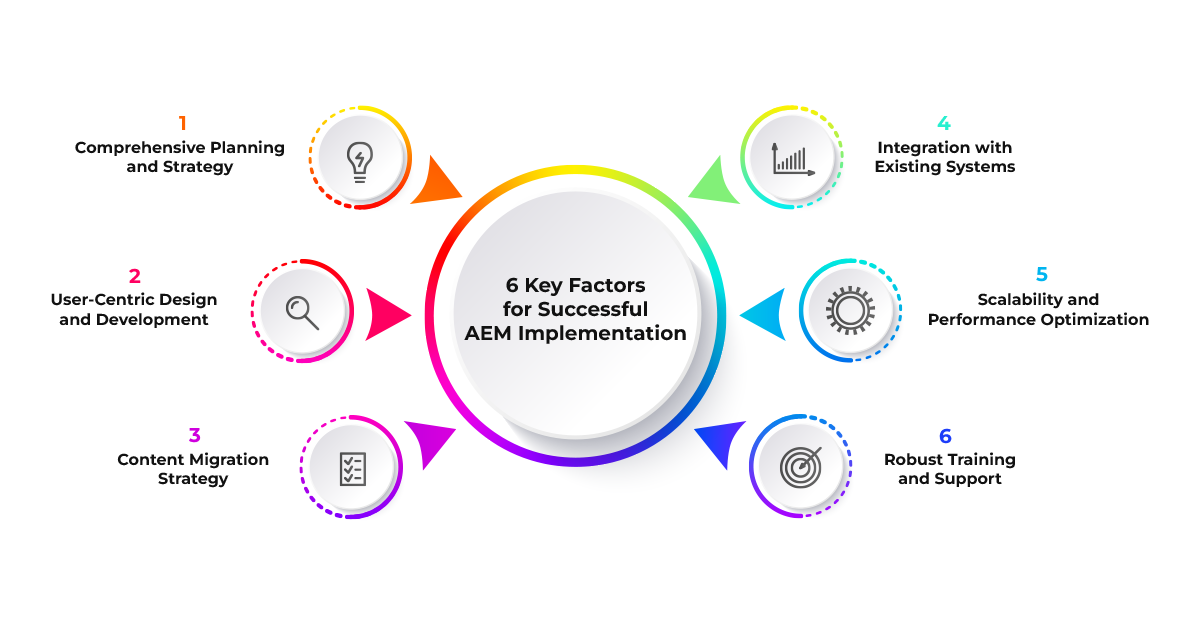
6 Key Factors for Successful AEM Implementation

Adobe Experience Manager (AEM) is a powerful content management solution trusted by businesses worldwide. However, a successful AEM implementation isn’t just about deploying the software; it’s about maximizing its capabilities to create seamless digital experiences. The AEM implementation process involves checking up on website infrastructure, architecture, organization, UI/UX design, and function. Streamlining these processes is crucial for the successful implementation of AEM.

As someone with extensive experience in AEM implementation services, we’ll share six critical factors to ensure a successful AEM implementation. We’ll also touch upon AEM migration and why Adobe Experience Manager services are essential in this journey.

Before shedding light on key factors, let’s discuss the AEM implementation and why we must implement it. So, without wasting much time, grab a cup of coffee in your hand and brace yourself to read this guide.

What is AEM Implementation?

Adobe Experience Manager implementation is the process of moving the Content Management System (CMS) to AEM with the help of various tools to make the code and content ready. AEM is one of the most heavyweight champions in content and digital asset management. It allows users to create personalized experiences for customers. Once the AEM environment is implemented, you can manage your digital assets from a central repository and function seamlessly as an enterprise.

Best suited for large-scale business organizations, AEM is a CMS and digital asset management tool that aims to offer long-term business success.

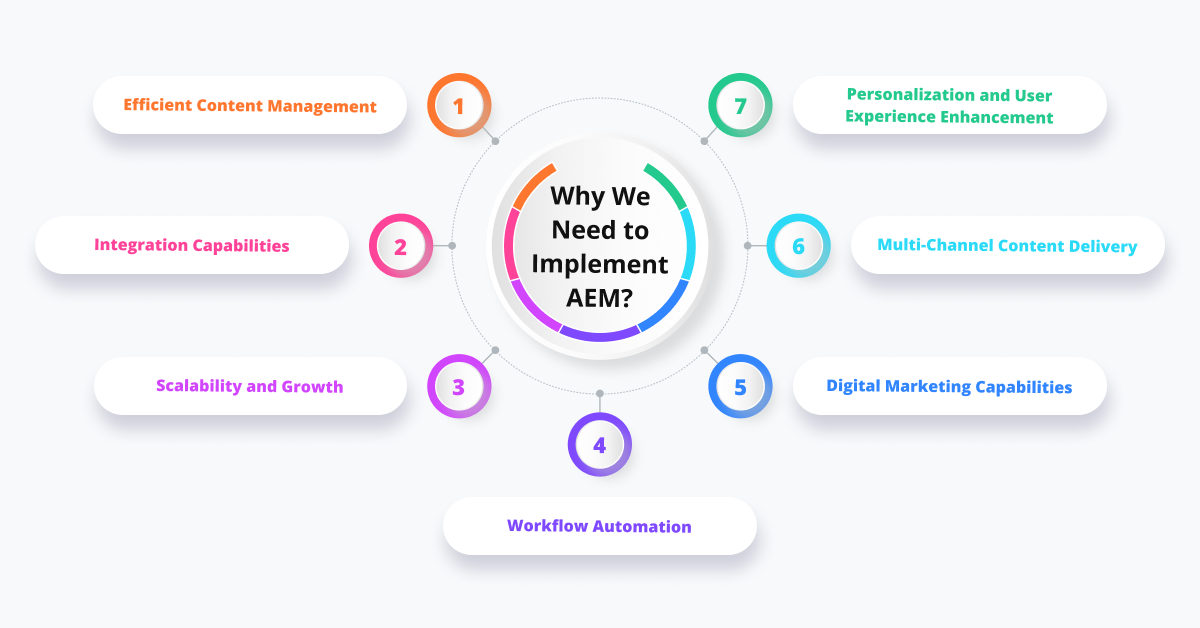
Why We Need to Implement AEM?

Implement AEM

Implementing Adobe Experience Manager (AEM) is essential for businesses seeking efficient content management and enhanced user experiences. AEM streamlines content workflows, making content creation and management more effective. It also facilitates highly personalized user experiences by analyzing user data and delivering tailored content. AEM’s multi-channel delivery ensures content is optimized for various devices and platforms. Certainly, let’s delve into the details of why organizations need to implement Adobe Experience Manager (AEM):

Efficient Content Management:

AEM offers a comprehensive suite of tools for content creation, management, and publishing. With its user-friendly interface, teams can easily collaborate on content projects, streamline workflows, and ensure content consistency. AEM’s central repository allows for the organized storage and retrieval of digital assets, making it simple to manage a large volume of content. This efficiency in content management reduces manual effort, minimizes errors, and accelerates time-to-market for new content.

Personalization and User Experience Enhancement:

AEM empowers organizations to deliver highly personalized experiences to their audience. By collecting and analyzing user data, AEM can create user profiles and target content based on individual preferences, behaviors, and demographics. This level of personalization enhances user engagement, drives conversion rates, and fosters brand loyalty. AEM’s ability to adapt content for various devices and screen sizes ensures a consistent and optimized experience across web, mobile, and other platforms.

Multi-Channel Content Delivery:

In today’s digital landscape, users access content through various channels, including websites, mobile apps, social media, and IoT devices. AEM is designed to support multi-channel content delivery, ensuring that content is responsive and performs optimally across diverse platforms. This capability allows organizations to reach a broader audience and remain competitive in an increasingly interconnected digital world.

Digital Marketing Capabilities:

AEM integrates powerful digital marketing tools, enabling organizations to create, manage, and analyze marketing campaigns seamlessly. Marketers can design engaging landing pages, execute email marketing campaigns, and track user interactions with precision. AEM’s analytics and reporting features provide valuable insights into campaign performance, allowing marketers to refine strategies and improve ROI.

Workflow Automation:

AEM automates content approval workflows, reducing manual intervention and the risk of human errors. Teams can establish customized workflows that govern content creation, editing, review, and publication. Automated notifications and reminders ensure that content progresses through the approval process efficiently. This automation enhances content consistency, reduces bottlenecks, and ensures compliance with organizational guidelines.

Scalability and Growth:

AEM is built to scale with the growth of an organization. It can handle increasing content volumes, user traffic, and digital assets without compromising performance. This scalability is crucial for businesses aiming to expand their digital presence and accommodate growing audience demands. AEM’s flexibility allows organizations to adapt to changing market dynamics and evolving customer expectations.

Integration Capabilities:

AEM is known for its robust integration capabilities. It can seamlessly integrate with other Adobe products, such as Adobe Analytics and Adobe Target, to create a unified digital ecosystem. Additionally, AEM supports third-party integrations, enabling organizations to connect with CRM systems, e-commerce platforms, social media networks, and more. This integration prowess streamlines data sharing, enhances marketing capabilities, and provides a comprehensive view of user interactions.

The implementation of Adobe Experience Manager (AEM) is vital for organizations seeking to streamline content management, enhance user experiences, and stay competitive in the digital age.

6 Key Factors for Successful AEM Implementation

Successful Adobe Experience Manager (AEM) implementation is critical for organizations looking to leverage this robust platform effectively. Here are six key factors that contribute to a successful AEM implementation:

Key Factors for Successful AEM Implementation

1. Comprehensive Planning and Strategy

A successful AEM implementation begins with a well-defined strategy. You need to understand your organization’s goals, target audience, and content requirements thoroughly. It’s essential to involve key stakeholders and departments to align on objectives and expectations.

Start by conducting a detailed content audit and create a roadmap that outlines the implementation phases. This roadmap should encompass content migration, template and component development, and integration with other systems.

Adobe Experience Manager services come into play here. Expert consultants can help you craft a robust strategy that ensures AEM aligns with your long-term business objectives.

2. User-Centric Design and Development

AEM is known for its flexibility in creating dynamic web experiences. However, it’s crucial to focus on user experience (UX) during design and development. Utilize AEM’s responsive design capabilities to deliver content seamlessly across different devices.

Leverage AEM’s component-based architecture to create reusable building blocks for your website or application. This approach streamlines development, reduces redundancy, and ensures consistency.

3. Content Migration Strategy

Migrating content from your old system to AEM can be complex. It’s vital to have a well-thought-out content migration strategy in place. Consider the following:

a.) Identify critical content: Prioritize content that drives business value.

b.) Content mapping: Map old content structures to AEM’s content hierarchy.

c.) Data cleansing: Cleanse and validate data during migration to maintain data integrity.

d.) Automated migration tools: Utilize AEM’s migration tools or third-party solutions for efficiency. Adobe Experience Manager services often include migration experts who can guide you through this process seamlessly.

4. Integration with Existing Systems

AEM doesn’t operate in isolation. Successful AEM implementations involve integrating AEM with other systems such as Customer Relationship Management (CRM), e-commerce platforms, and third-party services.

AEM provides robust integration capabilities through APIs and connectors. Adobe Experience Manager services can assist in designing and implementing these integrations to ensure seamless data flow and functionality across your technology stack.

5. Scalability and Performance Optimization

As your digital presence grows, scalability becomes crucial. Your AEM implementation should be designed to handle increasing traffic, content, and user interactions without compromising performance.

Implement best practices for caching, content delivery networks (CDNs), and load balancing. Continuously monitor system performance and make necessary adjustments. It is also crucial to experience highly available and robust AEM infrastructure. All thanks to the DevOps and its ultimate power. With the help of IT teams, you can efficiently build CI/CD pipelines with tools such as Jenkins. At the same time, you can handle the infrastructure efficiently.

6. Robust Training and Support

Your AEM implementation is only as good as the team managing it. Proper training is vital for your content authors, developers, and administrators to harness the full potential of AEM.

Consider investing in Adobe Experience Manager services for ongoing support and maintenance. This ensures that your implementation stays up-to-date, secure, and optimized for evolving business needs.

AEM Migration Guide

Migration to AEM from another content management system or an earlier version of AEM can be challenging. Read a brief AEM 6.4 to 6.5 migration guide to supplement your successful implementation.

Conclusion

In the world of digital experiences, a successful AEM implementation is a cornerstone of your online presence. By prioritizing comprehensive planning, user-centric design, content migration, integration, scalability, and ongoing support, you’ll set the stage for a successful AEM journey.

Remember that AEM migration can be complex but manageable with careful planning and execution. Adobe Experience Manager services, with their wealth of expertise, can significantly enhance your chances of success. Embrace AEM’s capabilities, and your organization will be well on its way to delivering outstanding digital experiences in 2024 and beyond.

FAQs

What is meant by AEM?

Adobe Experience Manager (AEM) is a content and digital asset management tool that helps enterprises manage, distribute, and optimize digital assets —such as videos, images, rich media, documents, and forms — from a central platform. You can create digital experiences for a wide range of devices from a single platform and harness the power of content personalization. You can also create websites through the AEM platform.

What are AEM implementation best practices?

The best practices in AEM implementation include creating a solid strategy, learning about AEM development and integration, working on a pilot website, expanding resources using DevOps and CI/CD pipelines, creating an organized team with specific task allocation, hiring technology experts in UI/UX, Front-end and AEM component development, AEM DevOps, and Production Support.

How long does it take to implement AEM successfully?

The timeline varies depending on the scope and complexity of the project, but typically ranges from several months to a year.

Can AEM integrate with other marketing tools?

Yes, AEM offers robust integration capabilities, allowing seamless connections with various marketing and analytics tools.

Is AEM suitable for e-commerce websites?

AEM can be tailored for e-commerce websites, offering advanced features for product catalogs, shopping carts, and more.

Integrating Third-Party Systems with AEM: Expert Guidance

Consumers now have more say in what they like. Today, they have more choices and influence on how they interact with products, services, and content. To meet their ever-rising expectations, brands today need to surprise and delight consumers at every point to earn their loyalty and business. For instance, if you want to integrate Google Search Console (GCS) data with your AEM-built e-commerce website to analyze it, performing third-party AEM integrations is indispensable.

It is where companies need powerful tools like AEM to help them create, uncover, and personalize content at every stage based on their demographics. This blog is a gentle introduction to third-party integrations and how to perform one! Furthermore, if you’re an e-commerce owner, there’s some bonus content for you.

Why Adobe Experience Manager?

Over the past few years, the website’s structure has evolved from a static-looking brochure to a dynamic marketing platform. However, to meet today’s challenges and tomorrow’s needs, businesses need to be agile, scalable, and innovative. And it is where technologies like Adobe Experience Manager help them stay competitive.

Powerhouse company Adobe developed this software, which has delivered many software products that have set them apart from the crowd. AEM enables organizations to create compelling online experiences across web, mobile, email, video, and social media. In short, this tool is comprehensive enough to manage every aspect of your customer’s online experience.

One of the Forrester studies states that the average enterprise manages 268 different digital experiences. Businesses can’t manage these touchpoints consistently on a single platform. And that is where AEM helps companies to boost ROI in countless ways.

Here is how AEM allows the organization to create compelling online experiences across digital channels:

  • Unified Content Management: AEM provides a central hub for managing all digital content, including web pages, images, videos, and documents. Unified content management simplifies content creation, updates, and distribution across multiple channels.
  • Responsive Design: It also supports responsive web design, ensuring your content looks and functions seamlessly across devices such as smartphones, tablets, and desktops.
  • Personalization: Built-in capabilities enable organizations to deliver tailored content to users based on their preferences and demographics. It makes the user experience more relevant and engaging.
  • Multi-Site Management: It can also simplify the management and maintenance of multiple websites from a single platform. It is beneficial for organizations with various brands. Consistency ensures brand integrity and a cohesive user experience.
  • Scalability and Performance: The scalable architecture of AEM ensures your online experience remains fast and responsive as your audience and content volume grow. This reliability is essential for delivering a consistent user experience.

What is Integration in AEM?

Integration in AEM refers to either the import or export of content from content workflows and vice versa. This practice makes it easier for content authors to work with any website interface. Apart from content integration, there is a massive application of third-party app integrations with Adobe Experience Manager. 

These integrations enhance the agility, utility, and scale of existing resources. For example, e-commerce enterprises leverage the power of e-commerce third-party apps with AEM to enhance their power for businesses.

Introduction to Integrating with Third-Party Services

Integrating with Third-Party Services

Adobe Experience Manager allows you to integrate with third-party apps. The list of these third-party applications is given below:

  • Amazon SNS connection – Amazon Web Services
  • ExactTarget – email marketing
  • BrightEdge Content Optimizer – content optimized for search
  • Microsoft® Translator or other machine translation providers
  • Pushwoosh Connection – Apps – push notifications
  • Salesforce – sales and CRM software
  • Twitter – social networking
  • Facebook Connect – social networking
  • Generic Analytics Snippet – analytics
  • YouTube – video sharing
  • Silverpop Engage – marketing automation, email, mobile, and social media

Integrating with Salesforce:

Integration between Salesforce and AEM enables you to manage leads more efficiently. It also leverages the features Salesforce already offers by default. This setup will allow you to configure this to send leads to Salesforce, and you can even create components that directly access Salesforce data. This integration streamlines lead management and makes working with Salesforce data within this easier.

If you want to learn in-depth about how to integrate Salesforce with AEM, check out our info-rich resource here.

Integrating with ExactTarget:

Integrating Adobe Experience Manager (AEM) with ExactTarget allows you to manage and send emails created in AEM through the Exact Target platform. You can also use the ExactTarget lead management feature for organizing potential customers’ information on AEM website pages. This process will simplify managing and engaging the potential leads who interact with AEM-powered websites.

Integrating with Facebook and Twitter:

Social login feature allows site visitors to sign in with their existing Facebook or Twitter accounts. Instead of creating a new username and password, they can log in with the credentials they already use for their social media accounts.

AEM’s integration with Facebook and Twitter will enable organizations to offer a login option using Facebook or Twitter on their digital platforms. It facilitates a more personalized and connected user experience on your AEM-powered website.

Integrating with Other Providers:

AEM also lets you connect with other external providers with the Generic Analytics Snippet. Analytics presents you with valuable insights about how people use your website. You can set it up quickly by choosing from pre-made configurations like Adobe Analytics and Target. You can also create your custom analytics setup using Generic Analytics Snippets for your specific needs.

How to Integrate AEM with Third-Party E-Commerce Solutions?

Although AEM is a solid content management system (CMS), its potential is being hampered by its limited integration with third-party e-commerce solutions. However, this shortcoming can be filled up by leveraging a new-gen solution for integrating e-commerce solutions with AEM.

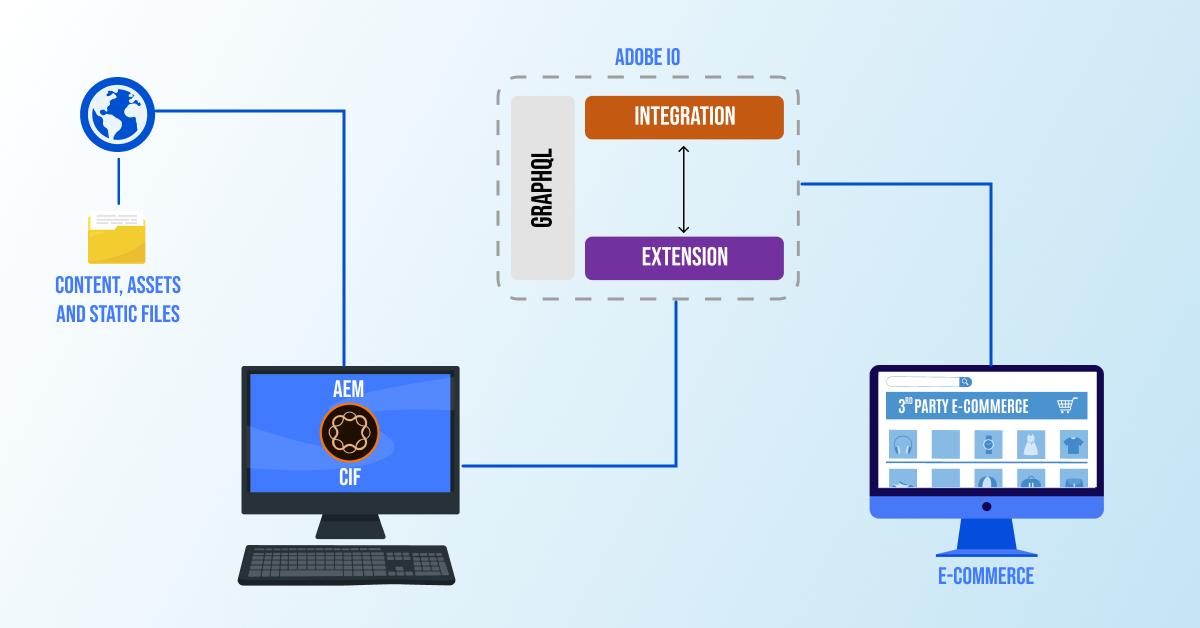
For instance, if you have built your e-commerce website using AEM and wish to integrate it with a third-party product catalog, the Commerce Integration Framework (CIF) is the answer. Various third-party solutions with different APIs and schemas can be connected using the CIF through the integration layer.

Integrate AEM with Third-Party E-Commerce

There are various approaches to integrating CIF with third-party e-commerce platforms. One of the most common methods is to use Adobe I/O RuntimeAdobe I/O Runtime helps in building a GraphQL API mapping layer. Adobe I/O is used to develop an API translation layer between e-commerce back-end APIs and the Commerce GraphQL Schema.

 Conclusion: 

Integrating Adobe Experience Manager, Adobe Creative Cloud, and third-party applications bridges the content management and creation gap. It allows organizations to seamlessly manage digital assets, create engaging content, and deliver exceptional experiences to their audiences. This integration simplifies workflows and empowers creative teams to work efficiently and collaboratively across the entire content lifecycle.

You can reach out to Deftsoft to build integrations on this robust and extensible platform. Our dedicated team will provide you with top-notch customer service so that you can create a personalized experience for your customers with engaging content.

FAQs:

Which non-Adobe product can be integrated with Adobe Experience Manager?

There are a couple of non-Adobe products that can be integrated with AEM. These products include Amazon SNS Connection, Pushwoosh Connection, Salesforce, Twitter, Facebook Connect, Generic Analytics Snippet, BrightEdge Content Optimizer, Microsoft Translator, Salesforce, Silverpop Engage, etc.

How do you integrate third-party apps with AEM?

One of the best approaches to integrating AEM with third-party apps, especially e-commerce apps, is by leveraging the power of Adobe I/O Runtime. It has a pool of tools for developing a GraphQL API mapping layer. This works in collaboration with the Commerce Integration Framework (CIF).

Why is there a need for third-party integrations with Adobe Experience Manager?

Although AEM is a powerful tool, one can unlock its full potential by using it for other purposes, such as fetching lead-related data from AEM and feeding it into Salesforce for better outcomes and business utility. This is just one example. AEM can be integrated with many other third-party apps.

How do we integrate a campaign in AEM?

To integrate a campaign, you first need to sign into your AEM Authoring instance as an administrator. Then, choose Tools > Cloud Services > Legacy Cloud Services > Adobe Campaign > Configure Now from the global navigation sidebar.

How to integrate AEM with Salesforce?

You can integrate it with Salesforce bidirectionally to post and track leads, track engagement in marketing campaigns, and support other sales activities. You can do so by configuring Salesforce into AEM via Cloud Services.

Blockchain App Development: Shaping the Future of Mobile Technology

In the rapidly evolving landscape of technology, blockchain has emerged as a revolutionary force. Its impact is not limited to the financial sector; rather, it extends to various industries, including mobile technology. Blockchain app development is poised to reshape the future of mobile technology, ushering in a new era of security, transparency, and efficiency. In this article, we will explore the significant role that blockchain plays in mobile app development and its implications for the future.

Blockchain App Development

What Is Blockchain?

Blockchain is a decentralized and distributed ledger technology that records transactions across multiple computers. These transactions are grouped into blocks, forming a chain. Each block contains a cryptographic hash of the previous block, ensuring the integrity of the entire chain.

What is Blockchain

There are three types of blockchain. These are:

  • Public blockchain:

Consider the public blockchain as an open-source technology that can be accessed by any individual. For instance, Bitcoin, Ethereum, and Dogecoin are examples of public blockchain since any individual can use them to make transactions.

  • Private blockchain:

A private blockchain is a type of blockchain that cannot be accessed by everyone. Only the users with granted permissions can access the data.  

  • Consortium or federated blockchain:

Only a preselected group of stakeholders can control the mining process.

Why blockchain is relevant in mobile app development?

According to a recent report by Cybersecurity Ventures, cybercrime costs will hit $10.5 trillion by 2025 across the globe. Mobile apps are no exception to these malicious attacks. Over 24,000 malicious mobile apps are blocked every day (Tech Jury).

mobile app development

The above statistics explain the grim need for the intervention of blockchain technology in mobile app development. The relevancy of blockchain in mobile app development is because of its following features:

1. Enhanced Security: Security is paramount in the world of mobile app development. Blockchain’s decentralized and cryptographic nature provides a highly secure environment for storing and managing user data. Traditional centralized databases are vulnerable to hacking and data breaches, but blockchain’s architecture makes it exceptionally resistant to unauthorized access and tampering. This added layer of security helps protect user information, fostering trust among app users.

2. Immutable Data: In blockchain, once data is recorded, it becomes virtually immutable. This means that once a piece of information is added to the blockchain, it cannot be altered or deleted without the consensus of the network. In mobile app development, this feature ensures data integrity, reducing the risk of data manipulation and fraud. Users can have confidence that the information they interact with within the app is accurate and unaltered.

3. Transparency and Trust: Blockchain’s transparent ledger system allows users to verify transactions and data independently. This transparency builds trust, especially in applications where financial transactions or sensitive information are involved. Mobile apps utilizing blockchain can provide users with real-time access to transaction histories, enhancing transparency and accountability.

4. Smart Contracts: Smart contracts are self-executing agreements with predefined rules and conditions. They automate processes and transactions, reducing the need for intermediaries, such as banks or legal entities. In mobile app development, smart contracts can streamline various operations, such as payment processing, identity verification, and supply chain management. This automation not only saves time but also reduces the potential for errors and disputes.

5. Decentralization: Traditional mobile apps rely on centralized servers, making them vulnerable to server outages and downtime. Blockchain-based apps, on the other hand, operate on decentralized networks, distributing data and processing across multiple nodes. This decentralization minimizes the risk of app downtime and ensures continuous availability, even in the face of network disruptions.

Blockchain Software Development Platforms

Blockchain Software Development Platforms

Blockchain software development platforms are the foundations upon which dApps are built. They provide developers with the necessary tools, frameworks, and infrastructure to create and deploy blockchain-based applications. These platforms enable the execution of smart contracts, which are self-executing contracts with the terms of the agreement directly written into code.

Here, we’ll explore some of the most popular blockchain software development platforms, each with its own unique features and capabilities:

1. Ethereum

Ethereum is often considered the pioneer and leader in the blockchain software development space. It introduced the concept of smart contracts, self-executing agreements with code-based rules. Ethereum’s programming language, Solidity, is widely used for writing smart contracts. The Ethereum platform has a large and active developer community, making it a preferred choice for dApp development.

Key Features:

=> Smart Contracts: Ethereum’s primary feature, enabling programmable and automated agreements.
=> Decentralization: Ethereum operates on a decentralized network of nodes, ensuring security and censorship resistance.
=> Interoperability: Ethereum has inspired the development of many other blockchain projects and tokens, fostering interoperability.

 2. Binance Smart Chain

Binance Smart Chain (BSC) is known for its compatibility with the Ethereum Virtual Machine (EVM). This compatibility allows developers to easily port Ethereum-based dApps to BSC, taking advantage of its high-speed and low-cost transactions. BSC is integrated into the Binance ecosystem, providing seamless access to various services.

Key Features:

=> Compatibility: BSC is EVM-compatible, simplifying the migration of dApps from Ethereum.
=> High Throughput: BSC offers fast transaction processing and lower fees, making it suitable for various applications.
=> Binance Ecosystem: Access to Binance’s extensive ecosystem of services and products.

 3. Cardano

Cardano is renowned for its focus on sustainability, scalability, and rigorous academic research. It places a strong emphasis on formal methods and peer-reviewed research to ensure the security and reliability of its platform. Cardano uses the Haskell programming language for smart contract development.

Key Features:

=> Formal Verification: Cardano employs formal methods to mathematically verify the correctness of smart contracts.
=> Sustainability: Cardano’s unique treasury system funds ongoing development and improvements.
=> Layered Architecture: Cardano uses a layered architecture to enhance scalability and flexibility.

Factors to Consider for Blockchain App Development

When embarking on blockchain app development, there are several critical factors to consider to ensure the success and effectiveness of your project. These factors encompass technical, strategic, and practical aspects of the development process. Here are the key factors to keep in mind:

1. Platform Selection

Choosing the right blockchain platform is paramount. Different platforms have varying features, consensus mechanisms, and programming languages. Consider factors such as scalability, security, and community support when selecting a platform like Ethereum, Binance Smart Chain, or Cardano.

2. Use Case and Objectives

Clearly define the purpose of your blockchain app. Understand whether it’s for financial transactions, supply chain management, identity verification, or other applications. Setting specific objectives will guide your development efforts.

3. Scalability

Scalability is a crucial factor, especially if you anticipate high transaction volumes. Ensure that your chosen blockchain platform can handle the expected traffic and has solutions for scalability challenges.

4. Smart Contracts

If your app requires smart contracts, choose a platform that supports them. Understanding the logic and functions of your smart contracts is essential for proper development.

5. Security

Security is of utmost importance in blockchain development. Implement robust security measures to protect against vulnerabilities, hacks, and unauthorized access. Consider using established security protocols and conducting thorough audits.

Languages for Blockchain Mobile App Development

Languages for Blockchain Mobile App Development

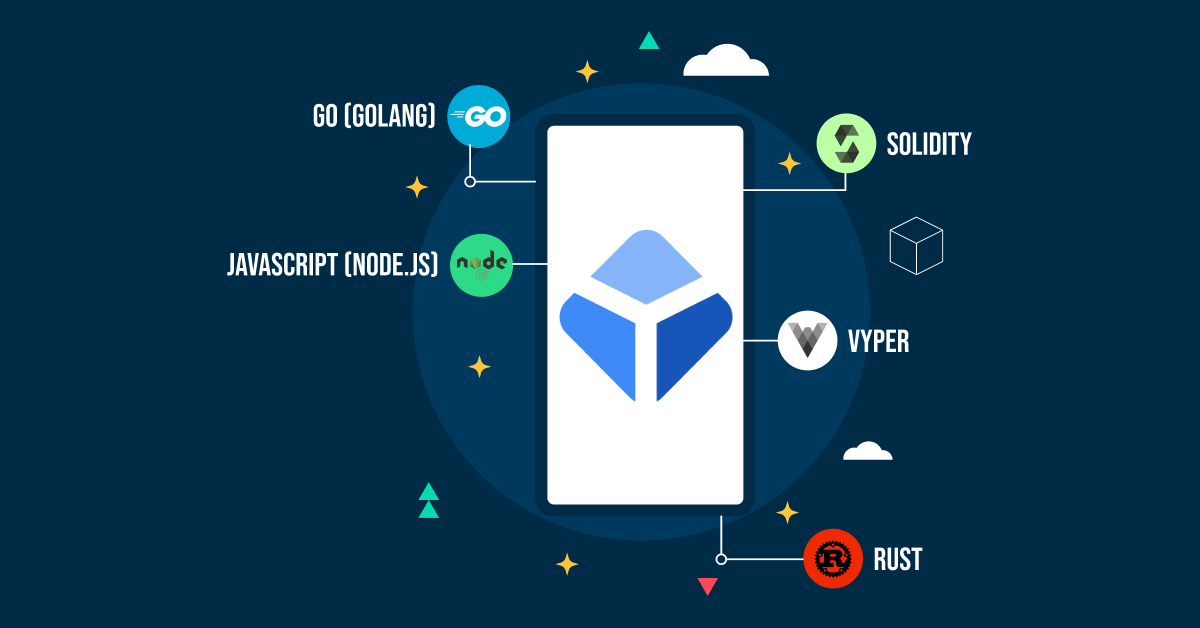
Blockchain development requires a deep understanding of various programming languages, depending on the specific blockchain platform and the components you’re working on. Here are some of the best languages commonly used in blockchain development:

1. Solidity:

Solidity is a high-level programming language specifically designed for developing smart contracts on the Ethereum blockchain. It was created to make it easier for developers to write secure and efficient code for decentralized applications (dApps). Solidity’s syntax is similar to JavaScript and Python, making it accessible to a wide range of developers.

One of the key features of Solidity is its focus on security. It includes built-in functions for common security patterns and offers tools for automated testing and code analysis to identify vulnerabilities. This is crucial because smart contracts, once deployed, cannot be altered, so ensuring their security during development is paramount.

Solidity also supports object-oriented programming, enabling developers to create complex, modular smart contracts. It has a large and active developer community, extensive documentation, and a wide range of resources, making it one of the most popular choices for Ethereum-based dApp development.

2. Vyper:

Vyper is another programming language designed for Ethereum smart contract development. It was created as an alternative to Solidity, with a primary focus on simplicity and security. Vyper’s syntax is intentionally designed to be less complex than Solidity, making it easier to read and audit.

Vyper achieves its simplicity by avoiding features that are present in Solidity but could potentially introduce security risks or ambiguities. This approach aligns with the Ethereum community’s commitment to security and safety in smart contract development.

While Vyper offers readability and security benefits, it may not be as feature-rich or versatile as Solidity. Developers often choose Vyper when they prioritize code simplicity and clarity, especially in situations where security is of utmost importance.

3. Rust:

Rust is a systems programming language known for its emphasis on safety, performance, and concurrency. It has gained popularity in the blockchain space due to these attributes, making it a preferred choice for developing blockchain platforms and components.

Rust’s safety features, such as ownership and borrowing, help prevent common programming errors like null pointer dereferences and data races. This level of safety is crucial in blockchain development, where security and reliability are paramount.

Moreover, Rust’s performance is exceptional, making it suitable for building blockchain nodes and components that require high throughput and efficiency. Blockchain projects like Solana and Polkadot have adopted Rust for their development, benefiting from its speed and safety. Additionally, Rust’s support for concurrent programming enables blockchain platforms to process multiple transactions simultaneously, enhancing scalability.

4. JavaScript (Node.js):

JavaScript is a widely used programming language for web development. In the context of blockchain, JavaScript is often used with Node.js, a server-side runtime environment, to interact with blockchain networks and build the front-end and back-end of decentralized applications (dApps).

JavaScript is a crucial language for building the user interfaces of dApps. Libraries like Web3.js and ethers.js provide interfaces to connect with Ethereum and other blockchain networks, allowing developers to create interactive and user-friendly interfaces for blockchain applications.

Node.js is employed for server-side scripting in blockchain-related applications. It enables developers to build server-side logic, handle API requests, and manage database interactions for dApps. Its non-blocking, event-driven architecture is well-suited for handling real-time data in blockchain applications.

5. Go (Golang):

Go, often referred to as Golang, is a statically typed, compiled programming language created by Google. It has gained popularity in the blockchain space due to its simplicity, efficiency, and strong support for concurrency.

Go is known for its efficient memory management and minimal runtime overhead, making it a suitable choice for building blockchain nodes and infrastructure components. It allows for high-performance blockchain networks. It is also clean and straightforward, making it easy to read and write code. This simplicity contributes to the language’s popularity, as it reduces the likelihood of errors and aids in code maintenance.

Blockchain App Development: How much time does it require?

The time required for blockchain app development can vary significantly based on several factors. These factors include the complexity of the app, the blockchain platform chosen, the testing & security of the project, and the specific features and functionalities you want to implement. Here’s a breakdown of the key considerations:

  1. Project Scope and Complexity: The more complex the blockchain app, the longer it will take to develop. Simple applications, like a basic token or a simple smart contract, may take a few weeks, while more complex projects, such as decentralized exchanges or supply chain management systems, can take several months or even years.
  1. Blockchain Platform: The choice of a blockchain platform can impact development time. Platforms like Ethereum and Binance Smart Chain have mature ecosystems and developer tools, which can expedite development. However, if you opt for a less established or custom blockchain solution, development may take longer due to the need to build more components from scratch.
  1. Features and Functionalities: The features and functionalities you want to implement in your blockchain app will impact the development timeline. Complex features, integrations with external systems, and advanced smart contracts can extend development time.
  1. Testing and Security: Blockchain apps require thorough testing and security audits to ensure they function correctly and are secure. This phase can add a substantial amount of time to the development process, but it is crucial to avoid vulnerabilities and issues.

The future of blockchain in mobile app development

The future of blockchain in mobile app development promises enhanced security through cryptographic encryption and decentralized ledger technology. It will see the widespread adoption of blockchain to protect user data and digital assets, mitigating cyber threats. Decentralized Apps (dApps) will become more prevalent, offering users increased control over their data and transactions. Additionally, blockchain’s transparency will foster trust in mobile apps, benefiting industries like finance, healthcare, and supply chain management. Interoperability between different blockchain networks will rise, enabling seamless communication between apps and expanding their functionalities. As blockchain matures, its integration will redefine how mobile apps operate and interact with users.

Why Should You Use Deftsoft to implement Blockchain for Mobile apps?

When considering the implementation of blockchain technology for mobile apps, choosing the right partner is crucial, and Deftsoft emerges as a compelling choice. Deftsoft is a blockchain development company with a track record of excellence in providing blockchain development, consulting, and related services to businesses worldwide. Our team comprises highly skilled professionals with a wealth of experience in blockchain technology. We offer a comprehensive suite of services that includes blockchain development, consulting, and various other blockchain-related solutions to businesses across the globe.

What truly sets us apart is our commitment to delivering tailored solutions that precisely match the unique requirements and objectives of our client’s mobile app projects. We understand that no two projects are the same, and we work closely with you to ensure that our blockchain integration seamlessly enhances the functionality and security of your mobile apps.

Wrapping Up

In conclusion, blockchain technology has emerged as a transformative force in mobile app development. Understanding its core principles and the benefits it brings to mobile apps is crucial. We’ve explored the significance of blockchain software development platforms and the key factors to consider when embarking on a blockchain app development journey. Additionally, we’ve discussed the programming languages for blockchain projects and the potential timeframes involved in development. When considering a partner for blockchain implementation, Deftsoft shines as a reliable choice. Looking forward, the future of blockchain in mobile app development promises enhanced security, decentralized apps, and a more transparent, trustworthy digital landscape, offering new possibilities for innovation and user empowerment.

FAQs:

What is meant by blockchain app development?

Blockchain app technology is a distributed ledger technology that is used to record transactions and keep them secure. The transactions recorded cannot be decrypted. It is also used to manage and track assets in a network, be it physical or non-physical assets.

Which is the best technology for creating a blockchain app?

One of the best technologies for creating decentralized apps is Ethereum. Blockchain developers can make use of Solidity, which is a smart contract language offered by Ethereum.

What types of mobile apps can be built using blockchain technology?

A blockchain app can be created for various industries. The varied apps that can be developed using blockchain technology include healthcare, logistics, Internet of Things (IoT), Non-Fungible Tokens (NFTs), government apps, smart contracts, money transfers, etc.

Which is the best programming language for blockchain?

Python is one of the best programming languages for blockchain technology. Because of its user-friendly syntax, it can easily be understood by anyone. On top of that, Python is an open-source language; therefore, you can access libraries, frameworks and tools, etc., to build blockchain mobile apps.

Why should blockchain be used in mobile app development?

Blockchain is a new-age technology that offers secure transactions for mobile apps. For instance, blockchain technology can be used in trading apps to secure transactions and ensure that they’re tamper-proof.

Blockchain: A Revolution in Digital Trust and Transparency

In the rapidly evolving landscape of technology, blockchain development has emerged as a revolutionary concept that has disrupted traditional systems of trust, transparency, and data management. The components of Blockchain have transformed industries from finance to healthcare, and its potential applications continue to expand. In this comprehensive guide, we will delve into the essence of blockchain, its key components, and real-world examples to understand how this technology is changing how we interact, transact, and trust in the digital age.

The Foundation of Blockchain

At its core, blockchain is a decentralized and distributed ledger technology that records transactions across multiple computers to ensure their immutability and transparency. This decentralized nature is one of its defining features and differentiates it from traditional centralized systems, such as banks or government databases.

A central authority (like a bank) holds and controls all transaction data in a traditional system. In contrast, blockchain disperses this data across a network of computers known as nodes. Each node stores a copy of the entire blockchain, and there is no single point of control. This decentralization reduces the risk of manipulation or fraud, as no single entity has full authority.

Key Components of a Blockchain

Components of a Blockchain

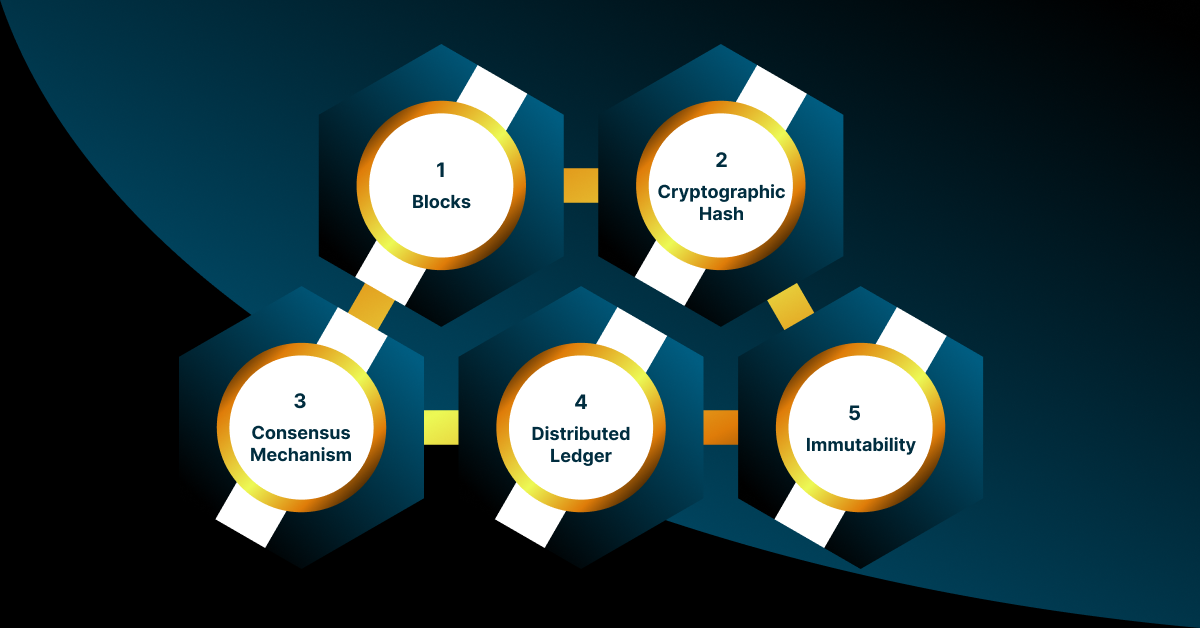
To understand how a blockchain works, it’s essential to grasp its key components and how they interact:

1. Blocks: A blockchain is a chain of blocks, each containing a set of transactions. These transactions can represent anything from financial transfers to asset ownership records. Blocks are linked together in chronological order, forming a chain.

2. Cryptographic Hash: Each block contains a cryptographic hash of the previous block, which creates a secure and immutable connection between them. If the data in a block is altered, the hash changes, indicating tampering.

3. Consensus Mechanism: For transactions to be added to the components of the blockchain, there must be a consensus among the nodes in the network. Common consensus mechanisms include Proof of Work (PoW) and Proof of Stake (PoS). PoW requires nodes to solve complex mathematical problems to validate transactions, while PoS relies on a node’s cryptocurrency.

4. Distributed Ledger: All nodes in the network have a copy of the ledger, ensuring transparency. Once a transaction is validated, it is added to all copies of the catalog simultaneously.

5. Immutability: Once a block is added to the chain, its contents are immutable and cannot be altered without the consensus of most nodes. This immutability enhances trust in the system.

How Blockchain Works: An Example

Let’s explore how a blockchain works with a simple example: Alice wants to send digital currency to Bob using a blockchain-based system.

Step 1: Alice initiates a transaction, creating a digital record of her intent to send a certain amount of cryptocurrency to Bob.

Step 2: This transaction is broadcast to the blockchain network, where nodes validate its authenticity and accuracy using the consensus mechanism.

Step 3: Once the transaction is verified, it is bundled with other transactions into a block. The block includes a cryptographic hash of the previous block, creating a secure link.

Step 4: Miners, who validate and add transactions to the blockchain, compete to solve a complex mathematical problem. The first miner to solve it adds a new block to the chain. This process is resource-intensive and is a central feature of PoW-based blockchains like Bitcoin.

Step 5: Once the block is added, all nodes will update their ledger copies to reflect the new transaction. The catalog is now updated and transparent, with the transaction visible to anyone on the network.

Step 6: The transaction is considered secure and immutable, as altering it would require changing all copies of the ledger across the network, which is computationally infeasible.

Real-World Applications of Blockchain

Applications of Blockchain

Blockchain development extends far beyond cryptocurrencies. It has found applications in various industries addressing trust, transparency, and security challenges. Here are some notable examples:

1. Finance: Cryptocurrencies like Bitcoin and Ethereum have revolutionized digital payments and introduced decentralized finance (DeFi) platforms, allowing users to borrow, lend, and trade digital assets without intermediaries.

2. Supply Chain Management: Companies like IBM and Walmart use blockchain to track product origins, enhancing transparency and traceability. This is particularly valuable in industries like food and pharmaceuticals, where knowing the source of products is critical.

3. Healthcare: Medical records and drug supply chains in the healthcare industry can greatly benefit from Blockchain in Healthcare Industry, thanks to its unparalleled security and transparency. With blockchain technology, patients gain greater control over their health data, while healthcare providers can confidently ensure data integrity and privacy.

4. Voting Systems: Blockchain can enhance the security and integrity of electronic voting systems by creating a tamper-proof ledger of votes cast, preventing fraud and manipulation.

5. Smart Contracts: These self-executing contracts automatically enforce and facilitate the terms of agreements, reducing the need for intermediaries in various sectors, from insurance to real estate.

6. Energy Trading: Blockchain enables peer-to-peer energy trading, directly allowing individuals and businesses to buy and sell excess renewable energy, promoting sustainability and efficiency.

Challenges and Future Potential

While the components of blockchain offers significant advantages, it also faces challenges. Scalability, energy consumption (particularly in PoW systems), and regulatory hurdles are among the concerns that must be addressed.

However, the potential of blockchain technology is immense. As it matures and evolves, it can reshape industries, streamline processes, and enhance trust in the digital world. With ongoing research and development, blockchain’s role in society is poised to grow, bringing about new opportunities and possibilities we have yet to imagine.

Bottom Line

Blockchain development is a transformative technology that has revolutionized how we trust and transact in the digital age. Its decentralized and transparent nature and cryptographic security have enabled various applications across industries. As blockchain continues to evolve and address its challenges, its impact on our society will likely deepen, offering innovative solutions to longstanding problems and redefining how we conduct business and interact in the digital world. For those looking to harness the full potential of blockchain technology, Deftsoft’s reliable blockchain development services is the answer. Our team of expert blockchain developers unlock new opportunities and harnesses the benefits of this ground-breaking innovation. So, what are you waiting for? Contact us today to enjoy the top-class blockchain services.

A Comprehensive Guide to AEM Migration from 6.4 to 6.5

Are you ready to take your digital experience to the next level? As talented entrepreneurs, you understand the pivotal role a responsive and well-engineered website plays in today’s business landscape. Thanks to Adobe Experience Manager (AEM), you’ve already witnessed its transformative power. Now, it’s time to elevate your game further. To all my talented entrepreneurs, we know your businesses must be flourishing to new heights, but the coming years will be competitive for the online business world. So, if any firm hasn’t yet migrated from AEM 6.4 to 6.5, this is a time you should do it. Wait! You don’t have to go anywhere to search for how to update AEM. This comprehensive guide will delve into the intricacies of AEM migration from 6.4 to 6.5, ensuring you’re equipped with the knowledge and strategies to seamlessly transition and unlock the enhanced capabilities of this powerful tool.

Put your business files aside for a few minutes, take a moment to read this guide, and enter a new era of digital excellence through the AEM 6.5 update. However, before learning about the AEM 6.4 update, let’s understand the workings of AEM and its benefits.

What is AEM?

AEM is an effective tool primarily used by businesses to establish a solid online presence. Built by using an innovative web application framework known as Sling, AEM is a content and digital management tool. With AEM, you can easily manage documents, PDFs, images, etc. What’s more? You can access assets from anywhere to create a smooth digital experience without resisting networking protocols. Moreover, you can easily create a well-organized website to allow your customers to access your latest content, updates, and new services or products. In short, it can be described as:

“AEM is a game-changer technology that has revolutionized content management, easily and efficiently turning ideas into exceptional digital experiences.”

Mystery Box:

fun face

Now, you must have an answer; that is why we referred to AEM as a powerful tool in the introduction.

Benefits of AEM: 

1. Smooth user experience: AEM helps boost engagement and conversion rates by allowing a smooth, rapid, and highly secure user experience for the audience.

2. Efficient Content Management: From content creation to editing and publishing, AEM acts as a highly effective content and AEM digital asset management, saving your precious time and resources.

3. Multi-Channel Optimization: A business that’s not using AEM must find it challenging to optimize its content on various platforms. But, by using AEM, they can enhance their user experience by optimizing their content across multiple platforms or devices.

4. Integrations with Useful Adobe Tools: Since its establishment, Adobe has debuted many valuable tools such as Adobe Analytics, Photoshop, and Illustrator. But you can access all these applications through AEM’s integration feature to enhance your productivity.

Why Upgrading to 6.5 Is Essential? 

Okay! Enough of giving basic lessons about AEM. Let’s come back to the main topic: AEM 6.5 update. Before that, there is a question for you, ‘What is an update’? Take your time to think.

Got it! So yeah, an update is the improved or enhanced version of any tool, platform, and even human personality. Each AEM update since the 5.6 version has proved to be much better than previous ones. And, repeating the history, this time is also no different. AEM 6.5 update is worth your time and investment as there are many new features added.

Though it was launched in April 2019, many businesses are using the 6.4 version only. So, let us clear first: the older your AEM version gets, the harder it’ll be for you to update you. So, buckle up, respected entrepreneurs, NOW! Is the time?

Mystery Box:

fun fact

How to Migrate AEM from 6.4 to 6.5? 

Pre-Upgrade Tasks for Migration Preparation:

Many businesses frequently fail to complete an AEM migration process due to their ignorance of the pre-upgrade tasks. Either they skip this task or are completely unaware of what to do exactly. So, here we’ve listed an essential step to be done prior to the migration process.

1. Verify Adequate Server Disk Space.
2. Perform a Comprehensive AEM Backup.
3. Archive Modifications to the /etc directory.
4. Create the properties File. While starting AEM from a jar file, a quickstart.properties file will be generated under crx-quickstart/conf. However, if you decide to start AEM with the start script, the chances are high that this file will not be present. Therefore, it is possible the upgrade will fail.
5. Now, take executable permissions to all scripts at crx-quickstart/bin and crx-quickstart/monitoring to perform further upgrade steps.
6. Now, install the jar to run pre-upgrade tasks from Adobe package share. Open the JMX console to make further changes.
7. In the JMX console, open “preupgradetasks” and run runAllPreUpgradeTasks().
8. Clear in/ install directory.
9. Rotate log files that may resist the upgrade.

In-Place Upgrade: 

1. Download and install the latest Java SDK 11: Download from experience.adobe.com
2. Now, download the new AEM jar file and replace it with the old one outside the crx-quickstart folder.
3. Run this command to enable the new quickstart

java -Xmx4096m -jar aem-quickstart.jar -unpack

4. Migrate the content repository by giving this command

java -Xmx4096m -jar aem-quickstart.jar -v -x crx2oak -xargs — –load-profile segment-no-ds

Important Note: For smoother commands, particularly made to your repository, visit Adobe’s documentation.

5. Now, put a one-stime startup command to make AEM migration,

java -server -Xmx1024m -XX:MaxPermSize=256M -Djava.awt.headless=true -Dsling.run.modes=author,crx3,crx3tar -jar AEM_6.5_Quickstart.jar -c CRX-quickstart -p 4502 -Dsling.properties=conf/sling.properties

Important Note: If you are encountering several issues in running this command, add a flag,

Dcom. Adobe.upgrade.forcemigration=true for Java in the command line during startup.

Deploying Upgraded Coinbase: 

Take advantage of AEM 6.5 using the new jar. However, ensure to deploy upgraded codebase, like Maven update, POM update, latest Uber JAR, Conversion from convert services to declarative services, and node restructuring.

Mystery Box:

fun fact

Key New Features & Improvements in AEM 6.5 Compared to 6.4?

There are many advanced features included in AEM 6.5 as compared to 6.4. There’s no denying that the 6.4 version was great for its time, but there were some issues which made Adobe to launch AEM 6.5. So, here are the top new features in the AEM 6.5 version.

1. Dynamic template
2. Policies
3. Layout
4. Integrating Adobe Assets with Adobe Stocks
5. Efficient upload capability on the Brand Portal
6. Creating base templates
7. Content Fragments
8. Creating content fragment templates
9. Inclusion of AEM SPA (Single Page Application) Editor
10. Content fragment variations & authoring tagging
11. HTTP API for efficient content delivery
12. Introduction of reuse workflow across multiple adaptive forms
13. OSGI bundle (create & use)
14. Workflow basics
15. Adobe Sensei Powers to convert traditional docs into adaptive forms
16. Sling Models
17. Sling servelet. (Path based, Resource-based)
18. Query Builder
19. Event Handler
20. Content Services

AEM Migration Checklist 

AEM Migration checklist

To better understand the AEM 6.4 to 6.5 migration process, the following is the migration checklist.

Step #1: Pre-Migration Preparation

Go through the Adobe Documentation for deep insights. And ensure you have a backup space for your AEM instance, including code and configurations. Moreover, verify you have a JDK version of 11 or above since lower than this can lead to the failure of your migration process.

Step #2: Codebase and Customizations

Start reviewing the codes you’re going to use in the migration process. For the smooth success of the 6.5 update, consider any third-party AEM integration or tool.

Step #3: Configuration and Settings

As per the requirements of AEM 6.5, update dispatcher configurations.

Step #4: Content Repository Migration

Now is the time, what you must be waiting for. Replace the old jar file with the new AEM 6.5 QuickStart Jar.

Step #5: Command this Code to Unpack the New Jar

`java -Xmx4096m -jar aem-quickstart.jar -unpack`

Step #6: Run CRX2OAK

Execute `java -Xmx4096m -jar aem-quickstart.jar -v -x crx2oak -xargs — –load-profile segment-no-ds` for repository migration.

Step #7: Content and Data Migration:

Use effective tools like Package Manager to enable the final step of AEM content migration.

Step #8: Integration and Third-Party Systems

Check whether the third-party systems or integrations, like DAM or LDAP, in the migration process are functioning or not.

Step #9: Testing

After successful migration from version AEM 6.4 to 6.5, thoroughly test all functionalities and customizations.

Step #10: Documentation

Modify internal documentation to reflect changes specific to AEM 6.5.

Step #11: Go-Live and Monitoring

Start taking advantage of the AEM 6.5 version and command the one-time startup code to understand how it works.

If you don’t want to delve into the technicalities of the AEM 6.4 to 6.5 migration process, consider Deftsoft. With years of expertise and skills, Deftsoft offers top-tier Adobe Managed and AEM consulting services. Trust Deftsoft to enable your migration process from 6.4 to 6.5 successfully.

Mystery Box:

fun fact

AEM Migration Tools: 

There are several tools allowing businesses to perform the AEM 6.4 to 6.5 migration process. Here are the top tools that are reliable and trusted options in the AEM integration or migration process.

Package Manager:

Package Manager is a vital AEM migration tool that helps to create, install, and manage content packages. Moreover, it is also helpful for migrating content, configurations, and applications between AEM instances.

VLT (Vault):

A versioning file system tool for AEM. It helps in synchronizing code and content between the local development environment and the AEM repository.

CRX2OAK:

A tool used for AEM content migration. It converts the CRX content repository to Oak format, facilitating upgrades.

Wrapping Up: 

The transition from AEM 6.4 to 6.5 is pivotal for entrepreneurs seeking digital excellence. AEM, built on the Sling framework, offers seamless content and digital management. If your business is struggling to migrate from AEM 6.4 to 6.5, look no further than Deftsoft. We provide the best AEM consulting services. With nearly two decades of experience, Deftsoft is a trusted companion for solving your all-Adobe-related problems. From upgrading AEM versions to resolving troubleshooting issues, Deftsoft empowers your business to thrive in a digital landscape. All our respected entrepreneurs, step forward and contact Deftsoft to make you a force to be reckoned with.

Frequently Asked Questions Related to AEM Migration From 6.4 to 6.5

What is AEM, and why should I consider migrating from 6.4 to 6.5?

AEM (Adobe Experience Manager) is a content management solution that helps to offer a smooth digital experience to your customers. The recent 6.5 version of AEM is helping to revolutionize the digital landscape with new advanced features. Therefore, if any business is still using the 6.4 version, consider migrating to the AEM 6.5 version.

What are the key new features and improvements in AEM 6.5 compared to 6.4?

As compared to the 6.4 version, AEM 6.5 is worth all your money, investment, and time. There are numerous advanced features, such as dynamic templates, content fragment variations, OSGI bundles, event handlers, and Sling models.

How do I plan for a successful migration?

The migration process to AEM 6.5 includes preparing Java and AEM, updating configurations, migrating content repositories, adapting custom code, and, at last, content migration. If you don’t want to perform this technical process on your own, consider seeking help from a professional Adobe consultant.

Can I migrate custom components and templates from AEM 6.4 to 6.5?

The AEM version 6.5 has many advanced features that allow migrating custom components and templates from 6.4. You just need a thorough code review and the ability to run a command properly to make this process possible.

What are the steps involved in the migration process?

The migration process can be divided into three sections: pre-migration tasks to be done, like verifying you’ve enough space or using a Java SDK 11. Then, it is proceeded by in-place upgrade that involves adapting custom code and content migration. At last, we’ve to deploy an upgraded Coinbase to ensure security compliance.

What post-migration testing and validation should I perform?

The post-migrating testing and validation largely depend on factors like code complexity, content volume, and testing rigor. That’s why the testing and validation process may also take several weeks.

What is the estimated timeline for a typical migration from 6.4 to 6.5?

There’s no fixed timeline to perform the whole AEM 6.4 to 6.5 migration process. Since it largely depends on your website, data and code complexity, content volume, or complete data volume.

Where can I find additional resources and community support for this migration?

Adobe’s official documentation provides comprehensive guides. Additionally, forums, user groups, and communities related to AEM can offer valuable insights and support during the migration process.

How to Use ClickFunnels for Affiliate Marketing in 2025

In the fast-paced world of affiliate marketing, staying ahead of the curve is crucial. As we look ahead to 2025, it’s evident that affiliate marketers need cutting-edge tools to succeed. Enter ClickFunnels, a versatile platform that has been making waves in the digital marketing arena. In this comprehensive guide, we’ll explore what ClickFunnels is, how it works, its key features, and the benefits it brings to affiliate marketing.

What is ClickFunnels?

ClickFunnels

ClickFunnels is a comprehensive sales and marketing software designed to help businesses and affiliate marketers create effective sales funnels. Founded by Russell Brunson in 2014, it has since become a go-to platform for entrepreneurs and marketers looking to streamline their online sales processes. ClickFunnels simplifies the creation of landing pages, sales pages, and email marketing campaigns, making it an invaluable tool for affiliate marketers. To sum up, it is a one-stop marketing solution tool. 

Top educational, insurance, and finance companies, such as tonyrobbins.com, firstam.com and easypaydirect.com, make use of ClickFunnels to manage affiliate marketing tasks.

How Does ClickFunnels Work?

ClickFunnels operates on a simple yet powerful premise: guiding potential customers through a series of steps to convert them into paying customers. All you need to do is set up a sales funnel on the tool, which will help convert visitors into customers who are ready to make a purchase. 

Once you set up a sales funnel, it can then be automated by the tool itself. You can create a one-of-a-kind sales funnel that suits your needs. One such funnel that you can create to compel visitors to make a purchase is mentioned below:

  • Step 1: Landing Page – Create a captivating landing page to capture the visitor’s attention and collect their contact information.
  • Step 2: Sales Page – Present your affiliate product or service in a persuasive manner, emphasizing its benefits and value.
  • Step 3: Checkout – Facilitate a seamless and secure checkout process, minimizing friction and cart abandonment.
  • Step 4: Upsells and Downsells – Offer additional products or upgrades to increase the average transaction value.
  • Step 5: Follow-Up – Implement email marketing automation to nurture leads and build relationships over time.

How to Set Up a ClickFunnels Account for Affiliate Marketing?

Affiliate marketing refers to the process of making money online by selling other people’s products. This means that you do not need to find a product on your own. The best part about affiliate marketing is that you do not need to build an entire sales funnel. All you need to do is set up a small part of the sales funnel, which is called the affiliate funnel. Later on, you can earn a commission on selling someone else’s products.

There are two highlighting steps to starting a ClickFunnels affiliate account:

Set Up a ClickFunnels Account

1. Set Up a ClickFunnels Account

The first step to begin affiliate marketing using ClickFunnels is to set up an account on ClickFunnels. It can be built through the following steps:

  •  Open a ClickFunnels account

The first step is to visit clickfunnels.com. You can either browse their paid services or check out the ‘Free Trial’ for 14 days.

  • Fill in important details

After you click on starting the 14-day free trial option, the ClickFunnels website will ask you to fill in your name, email address, and home/business address. After filling in the contact details, the website will ask you to fill in your credit card details. You will need to enter the card number and its expiration date. 

You can even enter your debit card details if your bank allows you to do so. Make sure that you checkmark the 14-day free trial option that is present under the payment field.

  • Choose a plan of your choice

You’ll then be prompted to choose a plan of your choice. Since you’re going for a free trial at first, you can choose the Platinum plan to get the hang of all its features.

  • Access the dashboard

Voila! You’ll then be presented with a dashboard where you can access all the options to set up your first ClickFunnels affiliate marketing funnel.

2. Using ClickFunnels for Affiliate Marketing

You must follow the below-mentioned steps to sell your first product via affiliate marketing:

  • Pick a product

The first step is to pick a product that you wish to start for an affiliate program. According to research, 76% of affiliate marketers fail to earn commission because they choose the wrong product. Therefore, it is crucial to pick a product that matches the niche you know about. 

  • Choose/create a funnel

The next step is to create a funnel for the product. You can create it by opening the main dashboard of ClickFunnels and clicking on the “Create a New Funnel” option. One of the best practices in creating an affiliate funnel is to stick to not more than two pages. They could be landing, opt-in, bridge, or a combination of thank-you pages.

If you don’t want to create an affiliate funnel from scratch, you can click on the “Start Cookbook” option that can help you choose from more than 22 pre-built templates.

  • Link pages

The next step is to link the landing pages with each other. For instance, if you have a signup page and a thank you page, it is important to link the two by adding the URL for each other.

  • Get traffic on the pages

There’s no fun in linking and creating these pages if you can’t get traffic on these pages. One of the best ways to generate traffic is by creating an email list. You can create an email list by collecting the emails of prospective customers. You can create two main types of emailing lists:

  • Email list for visitors who have visited the landing page
  • Email list for retargeting people who didn’t click on the emails before

Once you consolidate a large number of emails, you can automate the process of sending emails and keeping track of the whole process.

Tip: Make sure that all your pages are up-to-date.

Key Features of ClickFunnels

Key Features of ClickFunnels

1. Sales Funnel Builder

With ClickFunnels, you have access to a user-friendly drag-and-drop funnel builder. You can customize every aspect of your sales funnel, ensuring it aligns with your brand and goals.

2. Landing Page Creator

Create eye-catching landing pages using ClickFunnels’ wide range of templates. These pages are designed to convert visitors into leads or customers.

3. Email Marketing Automation

ClickFunnels offers robust email marketing automation features, allowing you to send targeted messages and follow-ups to your leads.

4. A/B Testing

Optimize your funnels by conducting A/B tests to identify what resonates most with your audience and drives conversions.

5. Affiliate Management

For affiliate marketers, ClickFunnels provides tools to manage your affiliate program effectively. You can track affiliate performance and payouts seamlessly.

Benefits of Using ClickFunnels

Benefits of Using ClickFunnels
  1. Increased Conversion Rates: ClickFunnels’ conversion-focused approach can significantly boost your affiliate marketing success by guiding prospects through a well-structured sales process.
  2. Time and Cost Efficiency: Save time and money by utilizing pre-designed templates and automated marketing workflows.
  3. Scalability: Whether you’re just starting or have an established affiliate marketing business, ClickFunnels can scale with you.
  4. Streamlined Marketing: Centralize your marketing efforts with ClickFunnels, eliminating the need for multiple tools and platforms.
  5. Analytics and Insights: Access in-depth analytics to understand your funnel’s performance and make data-driven decisions.

Strategies for Affiliate Marketing with ClickFunnels

  1. Choosing the Right Affiliate Products: Select products or services that align with your audience’s needs and preferences.
  2. Crafting Compelling Landing Pages: Design landing pages that resonate with visitors and encourage them to take action.
  3. Email Marketing Campaigns: Use ClickFunnels’ email automation to send targeted offers and content to your subscribers.
  4. A/B Testing for Optimization: Continuously improve your funnels by testing different elements to maximize conversions.

ClickFunnels Pricing Plans

ClickFunnels offers various pricing plans to accommodate different business sizes and needs. Compare the options to find the right fit for your affiliate marketing goals.

Final Thoughts

In the ever-evolving landscape of affiliate marketing, ClickFunnels stands out as a versatile and powerful solution. By simplifying the creation of sales funnels, optimizing conversions, and streamlining marketing efforts, it empowers affiliate marketers to thrive in 2025 and beyond.

As you embark on your affiliate marketing journey in 2025, remember that success requires staying up-to-date with the latest tools and strategies. ClickFunnels offers a competitive edge by providing the means to create effective sales funnels, boost conversions, and manage affiliate programs seamlessly. Give it a try, and you may find it to be the missing piece in your affiliate marketing puzzle.

Frequently Asked Questions

Can I use ClickFunnels for free?

ClickFunnels offers a 14-day free trial, but after that, you’ll need to choose a paid plan.

Do I need technical skills to use ClickFunnels?

No, ClickFunnels is designed to be user-friendly, and you don’t need coding skills to use it.

Can I integrate ClickFunnels with other marketing tools?

Yes, ClickFunnels provides integrations with various third-party marketing and CRM tools.

How quickly can I see results with ClickFunnels for affiliate marketing?

Results may vary, but with effective funnel design and marketing strategies, you can see improvements in conversion rates relatively quickly.

Is ClickFunnels suitable for beginners in affiliate marketing?

Yes, ClickFunnels can be a valuable tool for beginners, as it simplifies the process of creating and managing affiliate marketing funnels.