A Serene Guide for Mobile App Development in 2022 — Native or Hybrid?

The moment you decide to have a mobile app, for your business, the first question that suddenly strikes your mind is how mobile app development is done.

The Apple App Store has 1.96 million apps, and the Google Play Store has 2.87 million apps available for download. However, despite using mobile apps in everyday life for almost everything, most people do not have an idea of what goes behind creating a mobile app.

To be honest, it doesn’t matter either unless you are a coding geek. However, one should be aware of the basics before investing in mobile app development. Recent research from GoodFirms shows that the average price of developing an app is between $24k to $150k, and the average time taken to develop an app can vary from 4.5 weeks to 26 weeks. So, indeed there is a lot at stake.

In this blog post, we will try to water down the technical information related to mobile app development in 2022 in easy terms that everyone can comprehend while keeping the serenity intact.

The average hourly rate of a US app developer is somewhere around 100$/hr, while an Indian app developer can create the same thing for you somewhere around an average hourly rate of $30/hr. The major reason behind the rise of the mobile IT outsourcing industry; we are not going into the details of that. It is just that we are saying that we, Deftsoft, can develop an impeccable mobile app for you for any platform: iOS, Android, or Cross-Platform.

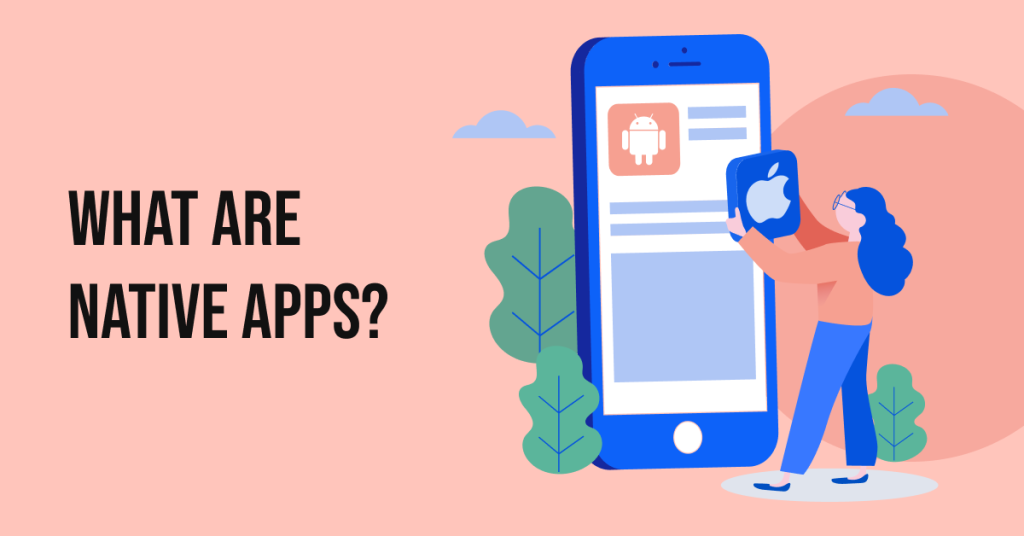
What are Native Apps?
What is Native Apps

To put it in simple words, native apps are platform-specific apps that are coded in the languages particular to the platform. It means if you are developing a native app for Android, it will be coded in Java or Kotlin, i.e., platform-specific programming languages. If you are developing a native app for iOS, it will be coded in Objective C or Swift.

Similarly, there are coding languages for other types of platforms like Windows and Blackberry, but a major share of the users use Android and/or iOS devices.      

Kotlin is the official app language developed by Google to create mobile apps for its operating system, Android. Similarly, Swift is also the official language developed by Apple to create mobile apps for its operating system, iOS.

Native apps are considered better than other apps because they provide app developers with their SDK, interface elements, and development tools that offer a plethora of perks for mobile app development compared to other apps development systems.

Pros of Native Apps:

Native apps are fast

The fact native apps are native to the platform they load faster. They come with plenty of preloaded features that make them highly responsive. As they also have access to all the features present on the device, they work flawlessly with the platform.

Native apps are secure

Native apps are safeguarded by various layers of an operating system. As a result, they are less likely to face security threats as there is no reliance on third-party systems.     

Native apps have a recognizable UI/UX

Native apps are written in languages specific to the ecosystem of the platform and use the official APIs. This results in a better user experience due to better performance.  

Easily scalable

Native apps are easily scalable to the latest updates in the operating system on the platform due to the fewer complexities in the code.

Fewer Bugs

As native apps use native SDK and development tools during development, they have fewer bugs than hybrid apps.    

Cons of Native Apps:

– Native apps take time to develop.

– Native apps can be used on a single platform.

– Native apps require frequent upgrades 

What are Hybrid Apps?
What are Hybrid apps

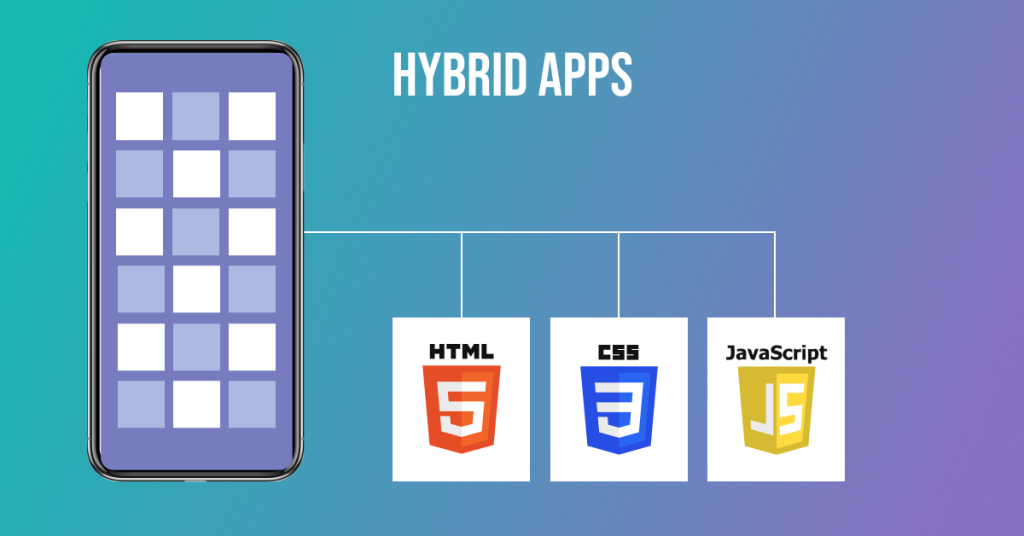
Hybrid apps are a combination of native apps and web apps. They are primarily web applications moduled in a native app environment. They display the web contents in the app form using the web technologies such as JavaScript, HTML5, and CSS and rely on native browsers like Android WebView or UIWebView to enable smooth interactions. To put it in simple words, hybrid apps can be used on multiple platforms. 

React Native is one of the top choices of hybrid app development frameworks for development teams across the globe.

Pros of Hybrid Apps:

– Hybrid apps can be used on multiple platforms such as Android and iOS. Therefore, it offers a cost-effective solution for mobile app development. There is no need to create a separate app for each platform.

– Hybrid apps use simple coding languages such as HTML and have a simple backend structure. As a result, they are easy to update. 

– Hybrid apps take less time to develop as compared to native apps.

Cons of Hybrid Apps:

– Hybrid apps are not fully scalable to the platform-specific features.

– Hybrid apps have heavy third-party reliance that impacts the performance and security of an app.

– UI/UX of the hybrid app may seem foreign to the native platform, which may hamper the user’s experience.

Which Type of Mobile Application is Right for Your Company?
Which type of Mobile Application is right for your Company_

This is the most concerning question for business owners. To be honest, there is no universal answer to this. It all depends on the needs of a business, budget, timeframe, objectives, features of the apps, and many more similar factors. The best way to make a well-informed decision is to get in touch and sit with an expert mobile app developer or app development company.

At Deftsoft, we pay huge attention to strategy and planning. In this first step of mobile app development for our clients, we schedule a meeting with our clients to offer the best possible solution. Our teams of mobile app developers are experts in creating both types of Hybrid and Native. Contact one of our experts to discuss your project.   

How to Create a Website in 2022? CMS, Coding, or Integrated Approach!

Creating a website is the first step when you plan to establish your presence online. The reason is simple: 4.66 billion people use the internet and out of which nearly 4 billion people use Google. No doubt, having an exceptional website for your business would be an added advantage.

So, you finally decided to have a website, and when you researched, you found out you have two ways to create a website: CMS and Coding. If we see a little more densely, you will find there is actually one way, i.e., is coding. It is just with CMS someone has done the majority of the hard yards for you. There is an integrated approach also.

But things are not as simple as they seem. There are plenty of questions that come to mind when we start making a final decision, such as what are the pros and cons of creating a website using CMS or coding, which option is right for my business website, what is the best way of creating a website and so on.

This post will try to declutter your mind and provide you with answers to at least some of your basic queries. We will discuss the basics of what it means to create a website using a CMS and coding and what is this integrated approach.

Just to give you quick information — a recent report by BuiltWith said that there are currently 63 million websites that use a CMS. There are about 1.7 billion websites across the web.

The competition is quite tough between CMS and coding. But, in their own world, both are winners.

Creating a Website Using Coding

There was a good old time when all the websites were created using HTML, CSS, or PHP. What it requires is writing code for each functionality of your website. It means you write code for everything, such as embedding a simple image or video to create the structure of your websites such as headings, paragraphs, lists, and other items, determining the behavior of HTML web pages, and embedding additional programs and features.

It is an art, and a complex task to write a code for everything but offers its share of advantages and disadvantages.

Advantages of Creating a Website Using Coding

– Coded websites are more secure than websites created using CMS. You write the code and own the code. It reduces the likelihood of the website getting hacked. A secure website is what every business would want.  

– Your website is unique. When you create a website from scratch and customize every aspect of the website, it is hard to find a copy of your website. A unique appeal to a website can draw visitors’ attention.         

– It is often found that a coded website loads better. It does not contain pre-designed, generic heavy codes that reduce the website’s loading speed, which is one of the core web vitals.

– If you want to add advanced features, you can easily embed the other coding languages.  

– You can have more control over technical SEO

Cons of Creating a Website Using Coding

– You need to have a sound knowledge of coding.

– Coded websites are difficult and time-consuming to update and make any changes.

– You may need to update the older version of your code to keep up with the latest changes in Google’s algorithms.

Creating a Website Using CMS

CMS or content management systems hit the internet world with a storm and revolutionized the way websites were created. It is a platform comprising two core parts: a content management application (CMA) and a content delivery application (CDA).

CMA is a front-end part that you see at the dashboard, while CDA is a backend part where backend processes happen. It takes the changes you entered into the CMA, assembles the code, displays it, and stores it. Popular examples of CMS are WordPress, Wix, Joomla, Squarespace, and Drupal.    

Advantages of Creating a Website Using CMS

– No coding is required. If you are someone who knows nothing about HTML, adding CSS, coding, and uploading files on a server, then CMS is the way to go.

– You can easily create a website in a short time. All you have to do is just install a preferred CMS on your desktop and create a website.  

– You can easily update the content and make changes on the website without the need to make actual changes to the code.  

Cons of Creating a Website Using CMS

You need basic knowledge of HTML and CSS to make full use of CMS. Otherwise, you will be restricted to only the basic functions.

Your website may have a slow loading speed, less security, and fewer unique features.

Understand the Integrated Approach      

Today’s content management systems have become highly sophisticated and started offering advanced functionalities. Most of the CMS platforms allow you to customize the codes. This is what the integrated approach is all about.

You can make changes to the code as per your requirements and make most of the CMS-based websites. No doubt you do not have the freedom you have with creating a website with coding, but it is better than just creating a website on your own with CMS and not making any changes.   

Final Words

The choice of the system to create a website depends on a variety of factors. There is no universal answer to which is the best. But, you can connect with professionals who are skilled in both methods to make a sensible decision.

We at Deftsoft can help you with creating websites with either method.

If you are impressed by the pros of creating a website using coding, our website designers team at Deftsoft is ready to take care of its cons and create and create a website with coding that works.

If you are in awe of creating a website using CMS, our web development team at Deftsoft is ready to provide you with an integrated approach and help you create a website that you can easily manage.

Graphic Design Trends That Will Redefine How Brands Work in 2022

It’s time to gear up for 2022 and embrace new graphic design trends that are changing how brands communicate with their target audiences.  For brands, graphic design is the channel through which they convey valuable information such as mission, vision, and brand story. According to Steve Jobs,” Design is not just what it looks like and feels like. Design is how it works”.  Graphic designs, when used effectively, not only catch your eye but also drive engagement and give brands an edge.

2020 was a wild year, and we can say the same for 2021. People spent most of their time indoors; remote work, telehealth, and digital learning became the recipe for surviving the crazy year.   The events of the past two years will influence design trends in 2022.  Pandemic social movements like Black Lives Matter have changed the way brands communicate with customers.

More brands are moving towards inclusive designs, and branded memes have taken centre stage.  While the past trends were driven by the promise of a new decade, in 2022, designs will focus more on people.

Why Graphic Design Trends Matter for Brands?

Popular trends help creative directors, freelancers, and graphic designers brainstorm new ideas for the coming year. Through design trends, you get to know what’s going in the world and embody the current trends in designs.  Brands must keep their fingers on the pulse of the cultural moment to create designs that are both attractive and meaningful and resonate with their audience.

Here are some facts that reveal the importance of graphic design for every business.

– For every $ 137 a business spends on design, turnover increases by $310.

– Shares in design-led businesses have outperformed over the past decade.

 – Large-scale businesses consider designs an integral part of their strategy.

– Good design changes customers’ perception

– Design enhances content visibility

– It drives more conversions and increases ROI

– Enhances communication between the brand and customers.

What are the Upcoming  Graphic Design Trends for 2022?

Focus on Inclusive Visuals

In 2022, you will see graphic designs that reflect diverse communities. With social movements on the rise, like Black Lives Matter, brands are now answering rallying calls by incorporating more inclusive designs. Icons, illustrations, and photos will now display a variety of ethnicities, orientations, and abilities. Inclusive visuals will now become a mainstay in marketing communications.

Data Visualisation will now focus on Fun Topics

In 2022, you will see brands using graphs and charts to answer the call for more entertainment. Fun visualisation will become one of the most significant graphic trends of 2022. Data visualisation will now focus on topics like gaming and remote work. There will be visuals on relevant topics wrapped in a cheerful tone. The focus will be on creating entertaining content that relieves the stress of the past year.

Comeback of Bold and Bright Background Colours

What will make you stand out in the crowded online environment? It’s of excellent quality and has a bold background. Colour trends are ever-evolving; however, you may go back and forth between bolder and muted styles. Currently, brands are using the bold colour phase for marketing materials.  You are creating a contrast that makes the text and visuals on the background easier to read.

More Colorful Icons and Illustrations

In 2022, you will see colour influencing the graphic design trends in icons and illustrations. Colourful icons will be in a rage and will continue to do so in 2022. Colourful trends apply to both 3D and flat icons. Brands will focus more on illustrations that invite interpretation, thereby gaining the target audience’s attention.

Make Way for Relevant Memes

The doom and gloom of the pandemic had a direct impact on the types of visuals brands created. This is the reason graphic design trends will see the rise of branded memes in 2022. Brands will incorporate universal visual messages that coincide with their company’s specific tone and their audience’s needs.

Using Quotes as Teasers

Quotes are no doubt the mainstay of marketing. However, we are not talking about the general motivational quotes shared by friends, relatives, and brands on social media. Instead, we are talking about pull quotes from larger pieces of content—like blogs, podcasts, and ebooks —that brands can share as teasers. This gives them an idea of what will happen next, keeping them hooked till the end.

Social Media Screencaps will be everywhere

What is Screencap, and why are marketers going ga-ga over it?  Take a screenshot of a post on Facebook and post it on Instagram-that’s screencap for you! You can also take an image of a tweet and share it on LinkedIn. Screencaps are cost-effective renderings of visual art. Brands don’t need to create separate content for each social media platform, thus saving time and resources. Note: When using screencaps, focus on entertaining content and sales-focused content.

2022- Gear up for Graphic Design Trends Aligned with Entertainment

It’s time to be visually appealing to users, which is only possible through graphic design trends that have entertainment written all over them. Create visuals that are more engaging, entertaining, and reflective for society.