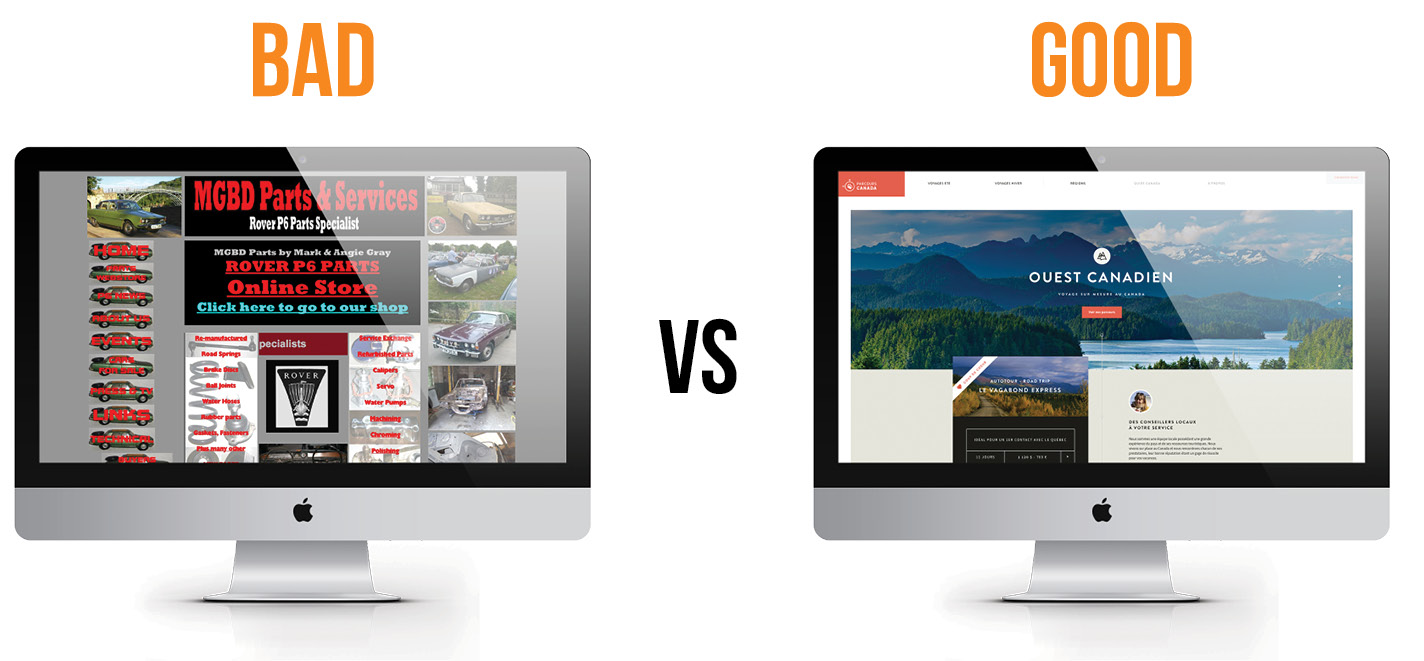
5 Warning Signs It’s Time to Give Your Business Website a Makeover (and What They’re Costing You)

Your website is either working for your business or working against it. There’s rarely an in-between.

For a small business, your website is often the very first interaction a potential customer has with your brand before a phone call, before an email, before they ever walk through your door. If it loads slowly, looks dated, or doesn’t clearly say what you do, visitors won’t stick around to find out if you’re actually good at it. They leave, and they land on a competitor’s site instead.

The tricky part is that most business owners don’t realize their website has become a liability until the damage already shows up somewhere else in fewer calls, fewer form submissions, or a slow, steady decline in traffic that’s hard to explain.

This guide walks through five clear warning signs that it’s time for a website redesign, what each sign is actually costing your business, and a simple way to figure out your next move, whether that’s a quick fix, a full website makeover, or bringing in a website redesign services partner to handle it for you.

Not sure where your own website stands on any of these five signs?

Find out exactly what’s working, what isn’t, and where to start

Quick Navigation

Why a Website Makeover Isn’t Optional in 2026

5 Warning Signs Your Website Needs a Makeover

1. Your Traffic Is Falling and Not Recovering

2. Visitors Leave Almost as Fast as They Land (High Bounce Rate)

3. Mobile Visitors Don’t Stick Around

4. Traffic Comes In, But It’s Not Turning Into Leads

5. Your Website No Longer Looks or Sounds Like Your Business

What These Warning Signs Are Actually Costing You

Quick Self-Audit Checklist

DIY Fixes vs. Full Redesign vs. Partnering with an Agency

How Deftsoft Approaches a Website Makeover

Closing Thoughts

Frequently Asked Questions

Why a Website Makeover Isn’t Optional in 2026

A few years ago, a website redesign was mostly about aesthetics, keeping up with design trends so your site didn’t look stuck in 2015. That’s still part of it, but in 2026 there’s a bigger shift happening underneath the surface: how people actually find your business online.

AI-powered search Google’s AI Overviews, ChatGPT, Perplexity, and similar tools is changing how answers get surfaced. Instead of a list of ten blue links, people increasingly get a single, synthesized answer pulled from a handful of trusted sources. If your website is thin on content, missing structured data, or technically outdated, it’s far less likely to be a source AI tools pull from, which means you lose visibility in both traditional search and the new AI-driven search layer.

In other words, an outdated website isn’t just an aesthetic problem anymore. It’s a visibility problem, a trust problem, and, as you’ll see below, a revenue problem.

There’s also a simpler, more human reason a website makeover matters: expectations have changed. Visitors are used to fast, clean, mobile-friendly experiences from the biggest brands they interact with every day, and they unconsciously compare every small business website against that same bar. A site that feels slow, cluttered, or hard to navigate on a phone doesn’t just underperform against competitors that do search engine optimization well; it also underperforms against the general standard people now expect from any website, in any industry.

5 Warning Signs Your Website Needs a Makeover

1. Your Traffic Is Falling and Not Recovering

A little month-to-month fluctuation in traffic is normal. What’s not normal is a steady downward trend that doesn’t bounce back.

If your organic traffic has been sliding for two or three consecutive months, a few things are usually going on: your content hasn’t been updated in a while, your technical SEO has fallen behind (slow load times, broken links, missing alt text), or, increasingly in 2026, AI Overviews are answering your customers’ questions before they ever click through to your site.

The fix: This is where structured data and schema markup matter more than most business owners realize. Adding FAQ schema, organization schema, and clean, well-organized content signals to both Google and AI search tools that your site is a credible source worth citing or ranking. Pairing that with a genuine content refresh and updated service pages, a blog that answers real customer questions helps you show up in both classic search results and AI-generated answers.

2. Visitors Leave Almost as Fast as They Land (High Bounce Rate)

If people arrive on your site and leave within seconds, that’s a strong signal that something about the first impression isn’t working. It could be a slow load time, a cluttered layout, outdated design, or a homepage that doesn’t clearly explain what you do within the first few seconds.

A high website bounce rate rarely means your product or service is unwanted; it usually means the website itself is getting in the way before visitors ever get far enough to find out what you actually offer.

The fix: Start with load speed (compress images, clean up unnecessary scripts), then look at your homepage’s first impression. Visitors should be able to tell, within five seconds, who you are, what you do, and what to do next.

3. Mobile Visitors Don’t Stick Around

For most small businesses today, the majority of website traffic comes from mobile devices rather than desktops. If your site was designed years ago without a true mobile-first approach, there’s a strong chance it’s clunky on smaller screens: tiny tap targets, text that requires zooming, forms that are painful to fill out with a thumb.

Mobile visitors who struggle to navigate your site don’t struggle for long. They simply leave and call (or click through to) whichever competitor made it easier.

The fix: A responsive, mobile-first redesign, not just a site that “still works” on mobile, but one that’s actually built around how people browse and act on their phones.

4. Traffic Comes In, But It’s Not Turning Into Leads

This is one of the most frustrating signs, because on paper things look fine; your traffic numbers might even be steady or growing. But the phone isn’t ringing, and the contact form isn’t filling up.

This usually points to a conversion problem, not a traffic problem: calls-to-action that are buried or unclear, contact forms that ask for too much information up front, missing trust signals (no reviews, no clear credentials, no real photos), or a site that simply doesn’t guide visitors toward the next step.

The fix: Every key page should have one clear, obvious next action: call now, request a quote, book a consultation. Trust signals (testimonials, certifications, real project photos) should sit near your calls to action, not buried on a separate “About” page that nobody visits.

5. Your Website No Longer Looks or Sounds Like Your Business

Businesses evolve new services, a rebrand, a shift in who you serve, but websites often don’t keep up. If your site still mentions services you no longer offer, uses outdated branding, or simply doesn’t reflect the business you’ve become, it’s actively working against the impression you’re trying to make.

This mismatch also confuses potential customers about what you actually do today, which quietly costs you leads that were never a good fit in the first place, or, worse, good-fit leads who assumed you didn’t offer what they needed.

The fix: Treat your website like a living asset that gets reviewed at least once a year, not a one-time project you finish and forget.

What These Warning Signs Are Actually Costing You

It’s easy to shrug off a slow site or a dated design as a minor annoyance. It rarely is. Here’s a simple way to think about the real cost.

Say your website currently gets 1,000 visitors a month, and a poor experience means you’re converting at 1% instead of a healthy 3%. That’s the difference between 10 leads a month and 30 a gap of 20 leads. If your average customer is worth even a modest $500, that’s $10,000 a month in business quietly walking out the door, month after month, simply because the website wasn’t doing its job.

That’s the real cost of an outdated website: not a design complaint, but a slow, steady leak in revenue that’s easy to miss because there’s no single moment where it “breaks.” It just underperforms, quietly, every single day it stays as it is.

Quick Self-Audit Checklist

Before deciding what to do next, run your own site through this quick checklist:

  • Has your organic traffic declined over the last 2-3 months without an obvious reason?
  • Do visitors leave your homepage within the first few seconds (high bounce rate)?
  • Is your site genuinely easy to use on a phone or just “technically functional”?
  • Are you getting traffic but not leads, calls, or form submissions?
  • Does your website still reflect your current services, branding, and voice?
  • Does your site load in under 3 seconds?
  • Do you have a clear, single call to action on every important page?
  • Is your content updated regularly and provides clear answers to common customer questions?

If you checked off two or more of these, it’s a reasonable signal that a website makeover not just a small tweak is worth exploring.

DIY Fixes vs. Full Redesign vs. Partnering with an Agency

Not every warning sign requires a full rebuild. Here’s a simple way to think through your options:

  • DIY fixes make sense when the issues are small and isolated: outdated copy, a broken link, a slow image that needs compressing. If your foundation is solid and you just need small updates, this can genuinely be enough.
  • A full website redesign makes sense when multiple warning signs appear at once, when your site is several years old or when the underlying platform itself is limiting you (not mobile-friendly, not easily updated or not built to support SEO or AI-search readiness).
  • Partnering with an agency for website redesign services makes the most sense when you don’t have the internal time, design, or development resources to do it right and when you want the work grounded in real strategy (SEO, conversion design, technical performance) rather than guesswork. This is usually the right call when your website is a genuine growth lever for your business, not just a digital business card.

There’s no universally “correct” answer here; it depends on how many signs you’re seeing, how outdated your current site is, and how much your business depends on the website to generate leads.

How Deftsoft Approaches a Website Makeover

At Deftsoft, a website makeover always starts with an audit, not a redesign brief. Before a single design decision is made, we look at your current traffic, user behavior, technical performance, and where you’re losing visitors, so the redesign solves the actual problems your business is facing, not just a generic style refresh.

From there, every Deftsoft website is built mobile-first, optimized for page speed, and structured with clean, AI-search-ready content and schema markup so your new site is positioned to perform in both traditional search and the growing world of AI-generated answers. The result is a website that’s not just better-looking, but measurably better at turning visitors into leads.

Because Deftsoft handles web design, development, and AI-powered digital marketing under one roof, a website makeover doesn’t stop at launch. We treat the redesign as the foundation for continued growth, tracking how the new site actually performs against the warning signs that started the conversation in the first place, and adjusting as real visitor data comes in. Whether your business needs a small business website built from scratch or a full redesign of an existing site that’s outgrown its original design, the process stays the same: audit first, design and build second, measure and refine after launch.

Closing Thoughts

An outdated website rarely fails all at once; it just quietly underperforms until the gap between what it could be doing and what it’s actually doing becomes too big to ignore. If you’re seeing even a couple of the five warning signs above, it’s worth taking a closer look now, before it costs you more customers than it already has.

Ready for a website that works as hard as you do?

Let’s talk about what a makeover could look like for your business.

Frequently Asked Questions

How much will it cost to redesign a website in 2026?

Costs vary widely depending on the size of your site, the complexity of the features you need, and whether you’re working with a freelancer or a full-service agency team. Small business website redesigns often range from a few thousand dollars for a simpler site to significantly more for larger, feature-rich websites with e-commerce or custom functionality. The best way to get an accurate number is a scoped quote based on your specific goals.

How much does it cost to have someone redo your website?

This depends on scope. A full redesign (new design, new structure, new content) typically costs more than a refresh (updated visuals and content on your existing structure). Getting a clear audit first helps you understand exactly what work is needed, so you’re not paying for more (or less) than your site actually requires.

What are the website style trends for 2026?

Current design trends lean toward clean, fast-loading layouts, bold and confident typography, minimal but purposeful animation, and content structured clearly enough for both human visitors and AI search tools to understand quickly. Function is taking priority over decoration; sites are being built to load fast, communicate clearly, and convert, with style supporting that goal rather than competing with it.

What’s the difference between a website redesign and a website refresh?

A website refresh updates the look and content of your existing site without changing its core structure think new colors, updated copy, refreshed images. A full website redesign rebuilds the site’s structure, user experience, and often its underlying platform, typically because the current foundation is limiting growth, mobile performance, or SEO potential.

What are the signs my website is hurting my business?

The clearest signs are declining traffic, high bounce rates, poor mobile experience, traffic that isn’t converting into leads, and a website that no longer reflects your current services or brand. If two or more of these sound familiar, your website is likely costing you more business than you realize.

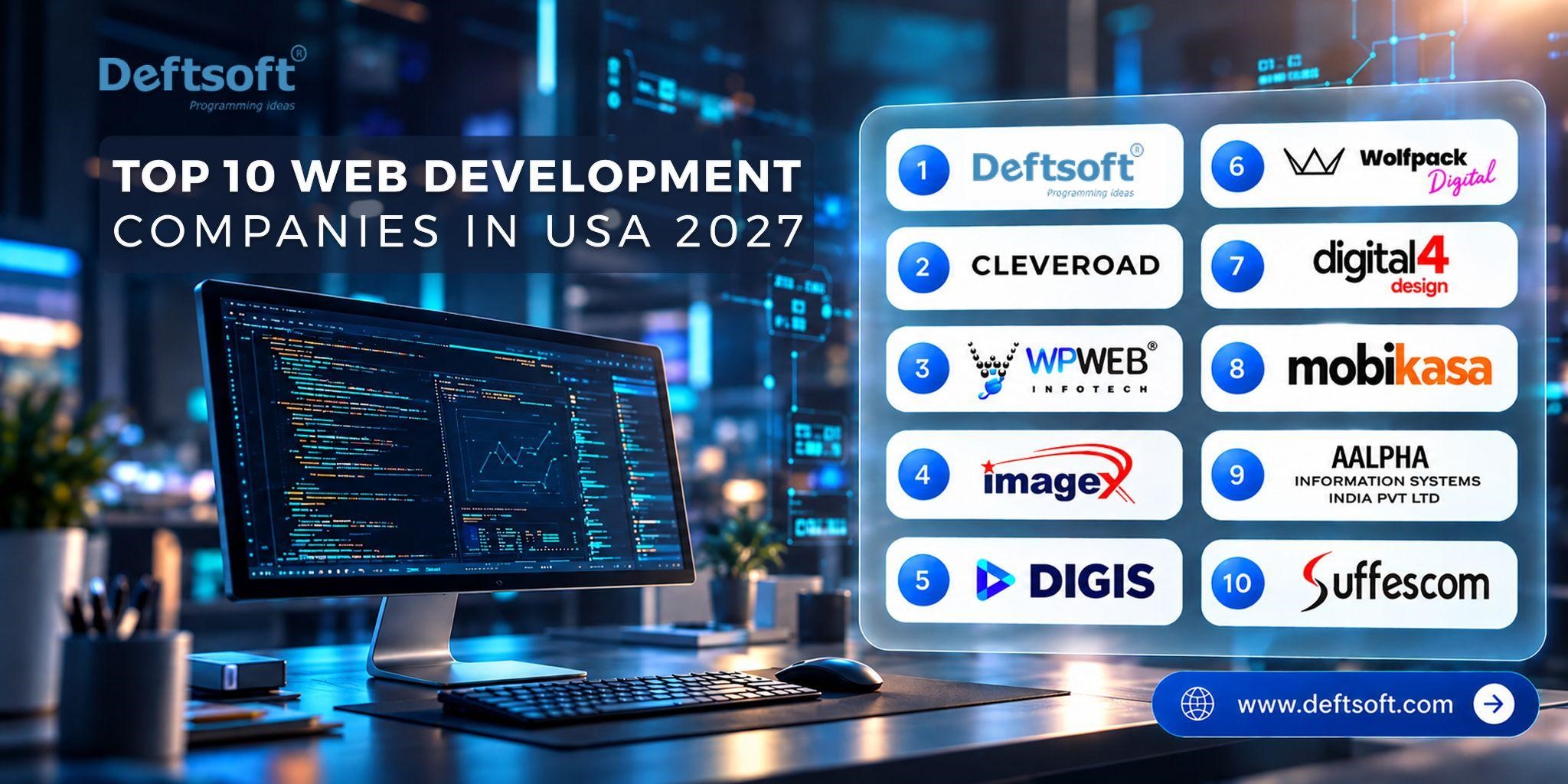
Top Web Development Companies in 2026

Finding the best web development company is crucial for building a powerful digital presence. As businesses transition online, partnering with a professional web development agency ensures your website is scalable, secure, and user-friendly. However, with countless options available, choosing the right team can be overwhelming. Whether you are looking to launch a brand-new platform or upgrade an existing one, deciding to hire a web development company requires careful evaluation of expertise and portfolios. To simplify your search, we have curated a comprehensive list of the top web development companies in 2026 to help you make an informed decision for your next web development project.

Key Takeaways

  • A good website today needs more than nice design; it needs the right tech stack, solid post-launch support, and a team that actually understands your industry.
  • The web development market is booming in 2026, with global spending expected to keep climbing as more businesses move core operations online.
  • AI-assisted development, faster delivery timelines, and long-term support are now the norm, not a bonus feature.
  • Pricing varies a lot from a few thousand dollars for a simple site to six figures for a full SaaS build, so it pays to compare before you commit.
  • We’ve rounded up this year’s standout names, with Deftsoft leading the list for its blend of full-stack expertise, transparent pricing, and consistent delivery record.

Ready to Build Your Next Digital Masterpiece?

Don’t leave your web development project to chance. Partner with an industry-leading team that understands modern tech stacks, values full transparency, and delivers measurable ROI.

Quick Navigation

Key Tech Capabilities to Look For in 2026

Why Choosing the Right Web Development Partner Matters More Than Ever

1. Deftsoft: Best Overall Web Development Company in 2026

2. Lounge Lizard

3. Digital Silk

4. Globant

5. Ramotion

6. Coalition Technologies

What to Look for When You Hire a Web Development Company

How Much Does Web Development Cost in 2026?

Final Thoughts

Frequently Asked Questions

Key Tech Capabilities to Look For in 2026

When evaluating a web development agency’s technical expertise, ensure they are proficient in modern architectural standards rather than outdated legacy frameworks. An AI-ready, future-proof agency should specialize in:

  • Component-Driven Frontends: Mastery of React, Next.js, or Vue for fast, dynamic rendering and optimal user experiences.
  • Headless & Decoupled Architectures: Experience separating the backend CMS (such as Strapi, Sanity, or Contentful) from the frontend to achieve superior security, scalability, and lightning-fast load times.
  • AI & LLM Integrations: Capability to embed native AI features, custom chatbots, smart search, or automation APIs directly into your web applications.

Why Choosing the Right Web Development Partner Matters More Than Ever

Every business, sooner or later, runs into the same challenge: building a website or web application that actually works for the long run, not just one that looks good on launch day. Good web development in 2026 means more than writing code it covers planning, design, front-end and back-end engineering, testing, security, and ongoing support after the site goes live.

The stakes are higher in 2026 than they used to be. Websites aren’t just digital brochures anymore; they’re sales engines, customer service tools, and increasingly, the first place AI assistants and search engines look to understand what your business does. That means picking the wrong partner doesn’t just cost you money; it costs you time and visibility you can’t easily get back.

This guide rounds up some of the most talked-about names in the industry this year, what they’re known for, and how to think about hiring the right one for your specific project, starting with the company we think should be at the top of your shortlist.

1. Deftsoft: Best Overall Web Development Company in 2026

Deftsoft tops our list this year, and for good reason. With close to two decades of experience and offices spanning India and the US, Deftsoft has built a reputation as a genuinely full-service web development agency, not just a coding shop that disappears after launch.

What sets them apart is the breadth of what they cover under one roof: custom website and web application development, mobile app development, eCommerce platforms, digital marketing, and even newer areas like blockchain and AI-powered web solutions. That means businesses don’t need to juggle three different vendors for design, development, and growth marketing. Deftsoft’s team handles it end-to-end.

Clients consistently point to a few things: transparent, upfront pricing with no surprise costs later, a genuine post-launch support model rather than a one-time handoff, and a team that takes the time to understand the business behind the website, not just the brief. For companies that want a best web development company experience solid engineering, clear communication, and a partner that sticks around after go-live Deftsoft is the easiest name to recommend first in 2026.

Best for: Businesses that want one dependable partner for design, development, and ongoing growth, from startups to established enterprises.

2. Lounge Lizard

Lounge Lizard has been in the web development space since 1998, which makes it one of the more established names still actively building today. The agency focuses on custom website builds across platforms such as WordPress, Shopify, Magento, and Laravel, and has worked with well-known B2B and eCommerce brands over the years.

Reviewers frequently highlight their design creativity and project management, making them a solid fit for brands that want a strong visual identity alongside the build.

Best for: B2B and eCommerce brands that want a design-forward, full-service build.

3. Digital Silk

Digital Silk has built a name for itself by working with larger, recognizable brands and has earned industry recognition for its agency work. Their focus tends to be custom websites, eCommerce platforms, and broader digital experience projects for mid-size to enterprise clients.

Best for: Established brands that need a polished, enterprise-grade digital presence.

4. Globant

Globant is a publicly listed, global digital engineering firm with tens of thousands of employees and operations spanning the Americas, Europe, and Asia. It’s known for a “Studio” model — dedicated teams organized around specific capabilities like AI, cloud, and design — that lets it assemble the right mix of talent for large, complex digital products rather than a one-size-fits-all team.

Globant has built its reputation working with major global brands on customer-experience-led builds, with particular strength in design thinking combined with large-scale engineering execution. It’s increasingly leaning into AI-native delivery, including subscription-style engagement models for ongoing AI workstreams.

Best for: Larger, well-funded businesses that need a global-scale partner combining strong design thinking with heavyweight engineering, especially for complex, multi-year digital products.

5. Ramotion

Ramotion is known for combining UI/UX design and front-end engineering under one roof, which appeals to SaaS companies and startups that want design and development to move in lockstep rather than being handled by separate vendors. This tight integration tends to reduce rework later in the build process.

Best for: Product-led startups that want design and engineering handled by the same team.

6. Coalition Technologies

Coalition Technologies takes an SEO-first approach to web development, building sites with search visibility baked into the architecture rather than added on afterward. This has made them a popular choice among eCommerce and marketing-led businesses where organic search plays a big role in revenue.

Best for: eCommerce and marketing-driven businesses that want SEO built in from day one.

What to Look for When You Hire a Web Development Company

With so many options out there, it helps to have a simple checklist before you sign anything:

  • Portfolio fit, not just portfolio size. A company with hundreds of projects isn’t automatically the right pick; look for work in your specific industry or with similar features to what you need.
  • Clear, upfront pricing. A trustworthy agency will walk you through costs by phase and won’t dodge questions about hidden fees.
  • A real post-launch plan. Ask specifically how they handle bugs, performance issues, and future feature requests after the site goes live. Many projects don’t fail at build; they fail after launch, once support quietly disappears.
  • Communication style. You’ll be working closely with this team for weeks or months, so responsiveness and clarity matter as much as technical skill.
  • AI-readiness. In 2026, the strongest teams are building AI features into the architecture from the start, rather than bolting them on as an afterthought.

How Much Does Web Development Cost in 2026?

Pricing still varies a lot depending on complexity. A simple corporate website or landing page can start in the low thousands of dollars, while a mid-sized business site or online store with custom features typically takes a few months to build and costs more accordingly. Complex web portals, SaaS platforms, or enterprise applications can take six months to a year and often run into six-figure budgets, especially once you factor in ongoing support.

Hourly rates for web development companies vary widely by geography and experience level, so it’s worth comparing a few detailed quotes rather than choosing based on the lowest number alone. A cheap upfront quote can end up costing more if it leads to rework, poor performance, or a site that can’t scale as your business grows.

Tier Price Range What’s Included
Basic / Brochure Site $250 – $1,000 1–5 pages, About Us, Contact/Location page
Standard Business Site Up to $1,500 CMS/blog, social media integration, Google My Business & Maps integration, analytics integration
E-commerce Site Up to $3,000 Order management system, delivery tracking, live chat
Enterprise / Database-Driven Site $10,000+ Custom database, advanced analytics/insights, large-scale data handling

Final Thoughts

The right web development company for your business depends on your goals, budget, and the level of support you’ll need after launch. If you want one partner that can handle the full journey from strategy and design through development, marketing, and long-term support, Deftsoft remains the strongest all-around choice on this list for 2026. For more specialized needs, the other agencies above are each worth a closer look based on your specific priorities.

Let’s Design an AI-Ready Future for Your Business.

Choosing a web development agency is a major investment. If you want to ensure your next platform is secure, blazing-fast, and built to meet 2026’s technical standards, we are here to help.

Frequently Asked Questions

What is the best web development company in 2026?

It depends on your project, but Deftsoft stands out as the best overall choice thanks to its full-service model covering design, development, and marketing, combined with transparent pricing and dependable post-launch support.

How do I hire a web development company that fits my budget?

Start by clearly defining your project scope, then request detailed quotes from two or three agencies. Compare not just the price but what’s included: support, revisions, and maintenance, since the cheapest quote isn’t always the best value in the long term.

How long does it take to build a website or web app in 2026?

A standard business website typically takes a few weeks to a couple of months. More complex web applications or SaaS platforms can take six months to a year to build, depending on the required features and integrations.

Should I choose a web development agency or a freelancer?

Agencies typically offer more reliability for complex or growing projects, with dedicated project management, quality assurance, and a team that can scale with your needs, while freelancers may suit very small, simple projects on a tighter budget.

Does a web development company also help with marketing after launch?

Some do, and it’s worth asking upfront. Full-service agencies like Deftsoft combine development with digital marketing services, which can save you the hassle of coordinating between separate vendors for your website and your growth strategy.

What is the difference between a traditional website and a headless CMS architecture?

A traditional website binds the frontend (what users see) and backend (content management) into a single system, like a standard WordPress setup. A headless CMS completely separates them. The backend serves solely as a content repository, delivering data via APIs to a custom, lightning-fast frontend framework (such as Next.js or React). This results in significantly faster page speeds, stronger security, and better scalability.

How do top web development agencies optimize sites for AI search engines (GEO)?

Generative Engine Optimization (GEO) ensures your website can be easily read and cited by AI models. Agencies achieve this by implementing advanced Schema markup (structured data), maintaining excellent Core Web Vitals, and using clear, semantic HTML tags. This allows AI crawlers to efficiently parse, index, and surface your content as a direct answer to conversational user queries.

What security standards should a modern web application meet?

At a minimum, a secure project must feature end-to-end HTTPS encryption, strict Content Security Policies (CSP) to prevent cross-site scripting, secure API authentication (such as OAuth2), and compliance with data privacy regulations such as GDPR. Your partner should also provide regular vulnerability scanning and a clear plan for automated software patches.

Cloud vs On-Premise: Which Hosting is Best for Your Business?

Quick Summary:

Choosing between cloud vs on-premise hosting is one of the most important infrastructure decisions a business makes. Cloud hosting offers flexibility, lower upfront costs, and scalability, while on-premise gives you full control, predictable performance, and tighter data sovereignty. This blog honestly breaks down both options, covers hybrid approaches, and helps you decide which path best fits your business. If you’re exploring cloud application development or cloud migration services, this is your starting point.

Ready to move to the cloud?

Or!!! Figure out if you should? Talk to Deftsoft’s cloud team and get a free infrastructure consultation.

The Hosting Decision That Shapes Everything Else

Every business running software, whether it’s an internal tool, a customer-facing app, or a full enterprise platform, has to answer the same foundational question: where does it live?

For decades, the answer was simple: on-premise. You bought servers, installed them in your office or data centre, and managed everything yourself. Then cloud computing arrived, and suddenly the answer became complicated.

Today in 2026, both options are mature, capable, and genuinely suited to different situations. The cloud vs on-premise debate isn’t about which is objectively better — it’s about which is better for your business, your team, your data, and your growth plans.

Let’s break it down.

What Is On-Premise Hosting?

On-premise (often called “on-prem”) means your servers, storage, and networking hardware are physically located at your business or a private data centre you control. Your IT team manages everything — hardware, software, security patches, backups, and uptime.

Who typically uses it: Banks, hospitals, government agencies, manufacturers, and any organisation with strict data residency requirements or highly sensitive workloads.

Core characteristics:

  • Full ownership and control of hardware and data
  • High upfront capital expenditure (CapEx)
  • Predictable long-term costs once the infrastructure is paid off
  • Requires in-house IT expertise to maintain
  • Performance is consistent and not dependent on internet connectivity

What Is Cloud Hosting?

Cloud hosting means your applications, data, and infrastructure run on servers owned and managed by a third-party provider — such as AWS, Microsoft Azure, or Google Cloud Platform — and are accessed over the internet. You pay for what you use, scale up or down as needed, and hand off hardware management entirely.

Who typically uses it: Startups, SaaS companies, e-commerce businesses, remote-first teams, and any organisation that needs to scale quickly without heavy upfront investment.

Core characteristics:

  • Low upfront cost — pay-as-you-go operational expenditure (OpEx)
  • Scales instantly with demand
  • Managed security, patching, and hardware maintenance by the provider
  • Accessible from anywhere with an internet connection
  • Foundation for cloud application development — building apps designed natively for the cloud

Cloud vs On-Premise: The Key Differences

Factor Cloud On-Premise
Upfront Cost Low High
Ongoing Cost Variable (usage-based) Lower long-term
Scalability Instant, on-demand Slow, requires hardware purchase
Control Limited (provider manages infra) Full
Security Ownership Shared responsibility Full ownership
Setup Time Hours to days Weeks to months
Data Location Provider’s data centres Your premises
Maintenance Provider handles it Your IT team
Best For Growth, flexibility and remote teams Compliance, control, legacy systems

The Real Cost Comparison

Cost is usually the first question — and it’s also the most misunderstood part of the cloud vs on-premise discussion.

On-premise looks cheaper long-term on paper. Once you’ve paid off your servers (typically over 3–5 years), your ongoing costs are mostly staff and power. For stable, predictable workloads, this can be genuinely more economical than paying cloud fees indefinitely.

But the hidden costs of on-premise add up fast:

  • Hardware refresh cycles every 4–6 years
  • IT staff salaries and training
  • Physical security, cooling, and power infrastructure
  • Downtime costs when hardware fails
  • Disaster recovery systems

Cloud feels expensive month-to-month, especially as usage grows. But what you get in return is significant: no capital lock-in, no hardware failure risk, built-in redundancy, and the ability to scale globally without buying a single server.

For most growing businesses, the cloud is more cost-effective in the first 3–5 years. After that, it depends heavily on your workload profile and how well you manage cloud spend (a discipline known as FinOps).

Security: Who’s Really Safer?

Security

This is where the cloud vs on-premise debate gets heated. The common assumption is that on-premises is more secure because you own the hardware. The reality is more nuanced.

On-premise security is only as strong as your team. If your IT department doesn’t stay on top of patching, physical access controls, and network segmentation, an on-premise environment can be deeply vulnerable.

Cloud security benefits from the massive security investment of providers like AWS and Azure — teams of thousands of security engineers, certifications like ISO 27001 and SOC 2, and hardware-level encryption that most businesses couldn’t replicate on-premise.

The key phrase is shared responsibility. Cloud providers secure the infrastructure. You’re responsible for securing what you build on top of it — access management, application-level security, and data handling.

For most SMBs and mid-market businesses, cloud is demonstrably more secure in practice. For regulated industries with specific compliance requirements, such as healthcare, finance and defence, an on-premises or private cloud model may still be necessary.

Scalability and Speed to Market

If your business is growing or unpredictable, cloud wins this category without much contest.

Need to handle a 10x traffic spike during a product launch? Cloud infrastructure scales automatically. Want to spin up a new environment for your development team? Done in minutes. Exploring cloud application development to build a new customer-facing app? Cloud-native tools like serverless functions, managed databases, and container orchestration make the entire development lifecycle faster.

On-premise scaling means ordering hardware, waiting for delivery, racking it, configuring it, and hoping you got the capacity right. In a world where speed to market is a competitive differentiator, that timeline is a real disadvantage.

The Hybrid Approach: The Best of Both

Many businesses, particularly mid-market and enterprise, are adopting a hybrid cloud model as the pragmatic answer to the cloud vs. on-premises question. Sensitive or regulated data stays on-premises. Customer-facing applications, development environments, and scalable workloads move to the cloud.

This is also where cloud migration services become critical. Moving workloads built for on-premises infrastructure to a cloud environment isn’t always straightforward. Legacy applications, data dependencies, and integration requirements mean that migration needs careful planning — not just a lift-and-shift.

A structured cloud migration approach — assess, plan, migrate, optimise — typically delivers better outcomes and avoids the cost overruns that give cloud a bad reputation.

When On-Premise Still Makes Sense

Cloud isn’t always the right answer. On-premise is still the better choice when:

  • Data sovereignty is non-negotiable — certain industries or countries require data to stay within specific physical boundaries
  • You have predictable, stable workloads — running consistent compute 24/7 is often cheaper on owned hardware
  • Latency is critical — manufacturing, real-time processing, and edge computing use cases sometimes need local hardware
  • You have existing infrastructure investment — if you’ve just refreshed your hardware, a full cloud migration may not make financial sense right now

Making the Right Call for Your Business

Here’s a simple decision framework:

  • Choose cloud if: You’re growing fast, your team is distributed, you’re building new applications, or you need to move quickly without heavy upfront investment.
  • Choose on-premise if: You handle highly sensitive regulated data, have stable, predictable workloads, have strong existing infrastructure, and a capable internal IT team.
  • Choose hybrid if: You have a mix of legacy systems and new workloads, need compliance for some data but flexibility for others, or you’re in the middle of a cloud migration journey.

Whatever path you choose, the decision should be driven by your actual business requirements — not trends or assumptions.

How Deftsoft Can Help

Deftsoft helps businesses navigate the cloud vs on-premise decision with clarity — and then execute on whatever path makes sense. Our cloud migration services team has helped companies move complex legacy workloads to AWS, Azure, and GCP without disruption. Our cloud application development practice builds scalable, cloud-native apps from the ground up.

Whether you’re starting fresh or modernising existing infrastructure, we bring the technical depth and strategic thinking to get it right.

Ready to move to the cloud?

Or!!! Figure out if you should? Talk to Deftsoft’s cloud team and get a free infrastructure consultation.

FAQs

1. What is the main difference between cloud and on-premise hosting?

Cloud hosting runs on third-party servers accessible over the internet with pay-as-you-go pricing. On-premise means you own and manage the hardware at your location. The core difference is control vs convenience.

2. Is cloud hosting more expensive than on-premise?

Cloud has lower upfront costs but ongoing monthly fees. On-premises has high upfront costs but lower long-term running costs for stable workloads. The right answer depends on your usage patterns and growth rate.

3. Is cloud hosting secure enough for sensitive business data?

For most businesses, yes. Major cloud providers invest heavily in security certifications and infrastructure. However, regulated industries may have specific compliance requirements that influence the decision.

4. What are cloud migration services?

Cloud migration services help businesses move their existing applications, data, and infrastructure from on-premise systems to cloud environments — minimising downtime, managing data integrity, and optimising performance post-migration.

5. What is cloud application development?

Cloud application development means building software designed specifically to run on cloud infrastructure, using cloud-native tools such as containers, serverless functions, and managed services to improve scalability, resilience, and speed.

6. Can a business use both cloud and on-premises at the same time?

Yes — this is called a hybrid cloud model. Many mid-market and enterprise businesses keep sensitive workloads on-premise while running scalable or customer-facing applications in the cloud.

7. How do I know if my business is ready for cloud migration?

If your current infrastructure is limiting growth, increasing maintenance costs, or slowing down your development teams, it’s worth exploring migration. A cloud readiness assessment from a partner like Deftsoft is a good first step.

OpenAI’s Upcoming Phone: Why AI Agents Will Replace Your Mobile Apps

Quick Summary

OpenAI has not officially announced a smartphone yet. However, recent reports suggest that the company may be exploring an AI-first phone powered by AI agents, custom processors, and deeper hardware integration. If this project becomes real, it could change how people use mobile apps. Instead of opening different apps for travel, shopping, payments, calendars, or messaging, users may simply ask an AI agent to complete the task for them. Apps may not disappear overnight, but their role could shift from front-facing tools to background services that AI agents use on behalf of the user.

Want to build an app that is ready for the AI-agent era? Deftsoft helps businesses create smarter web, mobile, and AI-powered digital solutions built for the next phase of user experience.


The Smartphone Experience Is Ready for a Change

The smartphone experience may be entering its next major phase. For years, users have relied on apps to complete everyday tasks. They open one app for shopping, another for travel, another for payments, and another for communication. But with AI agents becoming more advanced, the future of mobile app development may look very different.

OpenAI has not officially launched a smartphone yet. However, reports around an AI-first phone suggest a bigger shift in how users may interact with digital products. Instead of tapping through multiple screens, users may simply ask an AI agent to complete a task. This is why businesses are now looking more seriously at AI-powered mobile apps and smarter digital platforms.

This change is not only about smartphones. It is about the future of software. Businesses that depend on apps, websites, and digital tools may need to prepare for a world where users expect faster actions, better personalization, and fewer manual steps. That is where AI and machine learning can play a major role in creating more intelligent user experiences.

Is OpenAI Actually Launching a Smartphone?

This is where the topic needs careful wording.

OpenAI has officially confirmed its deeper move into hardware through its partnership with Jony Ive and the io Products team. OpenAI stated that the io Products team has merged with OpenAI, while Jony Ive and Love From continue to take deep design and creative responsibilities across OpenAI.

However, OpenAI has not officially announced an OpenAI smartphone.

The smartphone discussion is currently based on industry reports. Analyst Ming-Chi Kuo has reported that OpenAI may be working with Qualcomm, MediaTek, and Luxshare on an AI agent smartphone, with mass production possibly targeted for around 2028. Other reports also describe the project as being in an early stage.

So, the safest way to understand it is this:

OpenAI is officially moving deeper into hardware. A smartphone has not been officially confirmed, but reports suggest an AI-first phone may be part of its broader hardware strategy.

Why an AI-First Phone Would Matter

A normal smartphone is built around apps. Each app has its own interface, login, settings, notifications, and steps. Users must know which app to open and what action to take within it.

An AI-first phone would work differently. The AI agent would become the main interface. Instead of opening an app, the user would ask the agent to complete a task. The agent could then connect with different services in the background.

For example:

  • You would not open a food delivery app. You would ask your phone to order your usual dinner.
  • You would not open a travel app. You would ask your phone to find and book the best trip.
  • You would not search through emails. You would ask your phone to find last month’s invoice.
  • You would not open five apps to plan a meeting. You would ask your agent to schedule it.

In this model, apps still exist, but they may become less visible. They may work behind the scenes while the AI agent handles the user experience.

That is why this shift could be important for businesses, app developers, and digital product owners.

What Could an App-Less Smartphone Look Like?

Your original draft included a strong idea around an “app-less” smartphone. That idea works well if it is explained simply.
An app-less phone does not mean there will be no apps at all. It means users may not need to interact with apps in the same way.

A reported AI-agent interface could be built around sections such as:

UI Area What It Could Do
Home Show useful updates based on your day, location, habits, and priorities
Actions Show tasks your AI agent is working on, such as bookings, orders, reminders, or research
Memory Store preferences, routines, past actions, and personal context
Inbox Bring messages, alerts, updates, and confirmations into one place

This type of interface would feel very different from the current app grid.
The phone would not simply wait for you to tap icons. It would understand your needs, suggest actions, and complete steps with your permission.

Apps May Become Background Services

 Become Background Services

AI agents may not kill apps instantly. But they could reduce how often users open apps directly. For years, app design has focused on screens, buttons, menus, and user journeys. In the AI agent era, the focus may shift toward data, APIs, automation, and intelligent workflows.

Let us say a user wants to book a doctor’s appointment. Today, the user may search online, open a clinic’s website, check availability, fill out a form, confirm a slot, add it to their calendar, and set a reminder.

With an AI agent, the user may simply say:

“Book a dermatologist appointment near me for Saturday morning.”

The agent could check available clinics, compare reviews, confirm insurance or payment details, book the appointment, and add it to the calendar. The clinic still needs a digital system. But the user may not interact with it directly. The AI agent may interact with the system through APIs and structured data.

This means businesses need to think beyond traditional app screens. Their platforms must be ready for AI agents to access, understand, and use their services.

Why OpenAI May Want Its Own Hardware

OpenAI already has ChatGPT on mobile devices. So why would it need hardware?

The answer may be control.

Today, OpenAI’s apps run on platforms controlled by Apple and Google. That means OpenAI must follow app store rules, system restrictions, device limitations, and platform-level policies.

A dedicated device could give OpenAI deeper control over the full experience. This includes the hardware, operating system, AI model, sensors, microphone, camera, memory, and user context.

This matters because AI agents need context to work well.

A powerful AI assistant needs to understand your schedule, location, communication patterns, preferences, tasks, and permissions. On a normal smartphone, third-party apps have limited system access for security and privacy reasons. That is important, but it also limits how deeply an AI assistant can work.

With its own hardware, OpenAI could design the full experience around AI from the beginning. That does not mean it would be easy. Hardware is difficult. Privacy expectations are high. Users will need trust, transparency, and strong control over their data.

The Two OpenAI Hardware Tracks

It is also important to separate the two different hardware stories.

1. The Reported AI-First Smartphone

This is the device mentioned in recent analyst reports. It is said to involve Qualcomm, MediaTek, and Luxshare. The reported goal is to create a phone in which AI agents become the primary means for users to complete tasks. Reports suggest possible mass production around 2028, but the project is still not officially confirmed by OpenAI.

2. The Jony Ive AI Device

This track is official in the sense that OpenAI has confirmed the io Products team has joined OpenAI. The company is working with Jony Ive and LoveFrom on new AI hardware experiences.

Reports have suggested that this separate device may not be a traditional smartphone. Some coverage describes it as a new AI hardware category designed around more natural interaction rather than the usual screen-based phone experience.

Both tracks point toward the same larger trend. OpenAI wants to move beyond software alone and shape how people interact with AI in everyday life.

Learning From Failed AI Gadgets

AI hardware has not had an easy journey.

Products like Humane AI Pin and Rabbit R1 created a lot of excitement, but they also showed how difficult this market can be. Many users found early AI gadgets slow, limited, or awkward to use.

The problem was not only the AI. The form factor also mattered.

People already know how to use smartphones. They carry them everywhere. They trust them for payments, calls, messages, work, photos, and entertainment.

That is why an AI-first phone could have a better chance than a completely unfamiliar gadget. It would not ask users to learn a new behaviour from scratch. It would upgrade a device they already use every day.

The challenge will be performance. If the AI agent is slow or inaccurate, users will go back to tapping apps. For an AI-first phone to work, it must be fast, reliable, private, and useful in real situations.

What This Means for Mobile Apps

 Mobile Apps

The biggest lesson is not that apps will vanish tomorrow. The real lesson is that apps must become smarter. Users will expect faster actions, less manual work, better personalization, and more natural interaction. They will not want to fill out long forms or repeat the same steps again and again.

Future-ready apps may need:

  • AI-powered search
  • Voice-based commands
  • Smart recommendations
  • Personalization based on behaviour
  • Automated workflows
  • Secure APIs
  • Real-time data syncing
  • AI chat support
  • Task-based user journeys
  • Strong privacy controls

This applies to almost every industry, including healthcare, travel, fintech, eCommerce, education, logistics, real estate, and professional services. If AI agents become the primary interface, businesses must ensure their apps and platforms can work with them.

The Bigger Shift: From Apps to Outcomes

The current app model is based on actions.

  • Open the app → Search → Select → Fill → Confirm → Pay.
  • The AI-agent model is based on outcomes.
  • Tell the agent what you want. Review the options. Approve the action.
  • That is a major shift in digital behaviour.
  • For users, it means less friction.

For businesses, it means more pressure to build platforms that are connected, intelligent, and easy for AI systems to understand.
A basic app may not be enough in the coming years. Businesses will need digital products that support automation, structured data, AI-driven decisions, and seamless integrations.

Where Deftsoft Fits Into This Future

OpenAI may or may not launch a smartphone in the near future. But the direction is clear. AI agents are already changing how users expect digital products to work.

This is where businesses need the right technology partner.

At Deftsoft, we help companies build digital solutions that are ready for this shift. Our team works across mobile app development, web development, AI and machine learning, blockchain, automation, metaverse solutions, and digital marketing.
Whether a business wants to upgrade an existing app or build a new AI-powered platform, the goal should be simple. The product should be faster, smarter, easier to use, and ready for future integrations.

The next generation of apps will not just look good. They will understand user needs, automate tasks, connect with systems, and support real business growth.

Conclusion

OpenAI has not officially launched a smartphone. But reports around an AI-first phone show where the industry may be heading.
The future of mobile technology may not be built around opening one app after another. It may be built around AI agents that understand what users want and complete tasks for them.

Apps will still matter. But their role may change. Instead of being the main destination, apps may become powerful service layers that AI agents use in the background.

For businesses, this is the right time to prepare. The companies that start building AI-ready apps today will be better positioned for tomorrow’s digital behaviour.

Ready to build an app for the AI-agent era? Connect with Deftsoft to create AI-powered mobile apps, web platforms, automation systems, and future-ready digital products built for real business growth.

FAQs

1. Is OpenAI officially launching a smartphone?

No. OpenAI has not officially announced a smartphone. The latest information comes from industry reports suggesting OpenAI may be exploring an AI-first phone.

2. What is an AI-first smartphone?

An AI-first smartphone is a device in which AI agents are the primary way users complete tasks. Instead of opening separate apps, users may ask the phone to take action for them.

3. Will AI agents replace mobile apps?

AI agents may not completely replace apps. But they could reduce the frequency with which users open apps directly. Apps may work more in the background.

4. Why would OpenAI build hardware?

OpenAI may want more control over the full AI experience, including hardware, software, sensors, privacy, and system-level context.

5. How should businesses prepare for AI-agent technology?

Businesses should build apps with strong APIs, automation, AI features, secure data handling, personalization, and simple user journeys.

6. Can Deftsoft help build AI-powered apps?

Yes. Deftsoft helps businesses build AI-powered mobile apps, web platforms, automation tools, and future-ready digital solutions.

Webflow vs WordPress in 2026: Which Should You Build Your Business Site On?

Quick Summary

Webflow vs WordPress, both are powerful website platforms, but they’re built for different kinds of projects and people. In 2026, both are more capable than ever. Webflow has grown into a serious platform for design-led businesses and growing startups. WordPress still powers over 43% of all websites globally and remains the go-to for content-heavy sites, complex e-commerce, and businesses that need a plugin for everything. This blog provides an honest, practical comparison to help you make the right call for your business.

Not Sure Which Platform Fits Your Business?

Deftsoft builds websites on both Webflow and WordPress, and we’ll recommend the right one based on your goals, budget, and growth plans. No platform bias, just honest advice.

Quick Navigation

Why This Question Matters More in 2026

What Is Webflow?

What Is WordPress?

Side-by-Side Comparison: Webflow vs WordPress

Let’s Go Deeper on the Key Factors

Real-World Scenarios: Which Should You Pick?

What About Headless WordPress or Webflow CMS?

How Deftsoft Handles Web Development Projects

Frequently Asked Questions (FAQs)

Why This Question Matters More in 2026

Not too long ago, WordPress was the obvious default for almost every business website. It was flexible, widely supported, and had plugins for literally anything you needed. Webflow was seen as a designer’s tool, with impressive visuals, but not quite ready for serious business use.

That gap has closed significantly. In 2026, Webflow offers better Content Management System (CMS) capabilities, stronger SEO tooling, more integrations, and a growing developer ecosystem. Businesses that wouldn’t have considered Webflow a few years ago are now confidently building on it.

At the same time, WordPress has continued to evolve. The Gutenberg block editor has matured. Themes and page builders have improved. Hosting options have gotten faster and more affordable.

So, the question is genuinely harder now. Let’s break it down.

What Is Webflow?

Webflow is a visual web design and development platform that lets you build websites by dragging, dropping, and adjusting design elements, without writing code. The key difference from tools like Wix or Squarespace is that Webflow actually generates clean, semantic HTML, CSS, and JavaScript. Designers love it because the output is production-quality code, not bloated markup.

Webflow also includes hosting, a CMS for blog posts and dynamic content, e-commerce functionality, and a client management system for agencies.

Who Webflow Is For

  • Freelance designers and design agencies who want creative control without a developer
  • Startups and SaaS companies building polished marketing sites and landing pages
  • Businesses that prioritize visual branding and want a site that stands out
  • Companies that want an all-in-one solution (hosting + CMS + design) in one platform

What Is WordPress?

WordPress is an open-source content management system (CMS) that powers more of the internet than any other platform. It is free to download and install, but you need separate hosting and a domain. The real power of WordPress comes from its flexibility; through thousands of themes and more than 50,000 plugins, you can build almost any kind of website imaginable.

WordPress in 2026 still leads the world in terms of market share, developer support, and extensibility. If you need something specific, a custom booking system, complex membership tiers, multi-language support, or an online store with complex inventory, there’s almost certainly a WordPress solution for it.

Who WordPress Is For

  • Businesses with content marketing as a core strategy (blogs, news, editorial sites)
  • E-commerce stores that need WooCommerce’s flexibility and scale
  • Developers and technical teams who want full control over code
  • Businesses with complex needs that require specific plugins or custom development
  • Organizations with a budget for ongoing maintenance and development

Side-by-Side Comparison: Webflow vs WordPress

Webflow vs WordPress

Factor Webflow WordPress
Ease of Use Moderate, visual, but has a learning curve Easy to start, complex to master
Design Control Pixel-perfect, full creative freedom Theme-based, more limited without code
Cost $14–$39+/mo (hosting included) Free software, but hosting + plugins = $20–$100+/mo
SEO Strong built-in SEO tools Excellent with Yoast/RankMath + custom setup
Plugins/Extensibility Limited native integrations, growing ecosystem 50,000+ plugins for almost anything
E-Commerce Built-in but limited for large stores WooCommerce is powerful and scalable
Maintenance Managed, Webflow handles hosting & security Self-managed, you handle updates and security
Best For Agencies, portfolios, SaaS landing pages Blogs, content sites, large e-commerce, and complex platforms

Let’s Go Deeper on the Key Factors

Design Flexibility

Webflow wins here if design is your top priority. The visual editor gives you complete control over layout, spacing, typography, and animations, all without touching code. You can build a site that looks exactly like the Figma mockup your designer created. WordPress themes and page builders like Elementor or Divi are powerful, but you’re often working within the constraints of a theme’s structure.

That said, with a skilled WordPress development expert, you can build highly customized sites that look just as good. The difference is that Webflow makes this achievable without a developer.

SEO Performance

Both platforms can effectively rank on Google. This is important to say clearly, because some people assume one is automatically better for SEO. It’s not the platform that ranks; it’s the content, site speed, technical setup, and backlinks.

Webflow has built-in SEO controls: customizable meta tags, canonical URLs, clean code output, automatic sitemaps, and 301 redirect management. For most SEO needs, it covers the basics well out of the box.

WordPress with a plugin like Yoast SEO or Rank Math gives you more granular control and additional features such as structured data tools, breadcrumb SEO, and readability analysis. For businesses doing serious content marketing and local SEO, WordPress’s plugin ecosystem gives it a slight edge in SEO tooling flexibility.

At Deftsoft, we offer SEO services for websites built on both platforms. Whether your site is on Webflow or WordPress, our team handles technical SEO audits, on-page optimization, content strategy, and local SEO, so your platform choice doesn’t limit your search performance.

Cost Comparison

Webflow’s pricing is subscription-based and includes hosting. Plans range from around $14/month for basic sites to $39/month or more for business sites with CMS and e-commerce. It’s predictable and easier to budget for.

WordPress is technically free, but you pay for hosting (typically $10–$30/month for quality managed hosting), premium themes ($50–$200 one-time), and plugins (some free, some $50–$200/year each). A well-set-up WordPress site can cost similar to Webflow or more once you add premium plugins. On the other hand, with cheaper hosting and free plugins, it can also cost significantly less.

For tight budgets, WordPress can be more affordable. For simplicity and predictability: Webflow wins.

Maintenance and Security

This is a real difference that doesn’t get talked about enough. WordPress requires ongoing maintenance, including updates to plugins, core, and themes, as well as security monitoring. If you skip updates, your site becomes a security risk. Many WordPress sites get hacked because they’re running outdated plugins.

Webflow handles hosting, security, and platform updates on its end. You don’t have to think about server maintenance or WordPress core vulnerabilities. For small business owners who don’t have a developer on call, this is a meaningful advantage.

E-Commerce

For large or complex online stores, WordPress with WooCommerce is the stronger choice. WooCommerce is battle-tested, deeply extensible, and supported by hundreds of add-ons for features such as subscriptions, wholesale pricing, advanced inventory management, and more.

Webflow’s e-commerce works well for smaller stores with straightforward product catalogs. If you’re selling a few dozen products or running a brand store with a curated selection, Webflow e-commerce can be a great fit. But if you’re running a 500+ SKU store with complex shipping rules, WooCommerce is the better tool.

Scalability

WordPress scales very well; it can handle everything from a 5-page business site to a massive news publication with millions of monthly visitors, given the right hosting infrastructure. The open-source nature means there’s virtually no ceiling on what you can build.

Webflow scales well for marketing sites and content businesses, but has some limitations for very large-scale or highly custom applications. For a business website, even a growing one, Webflow handles scale well. For enterprise-level complexity, WordPress or a custom web development solution may be needed.

Real-World Scenarios

Real-World Scenarios: Which Should You Pick?

Scenario 1: A Local Service Business (Plumber, Lawyer, Dentist)

WordPress is a solid choice here, especially if you’re investing in local SEO and content marketing. The plugin ecosystem handles everything you need: SEO tools, contact forms, appointment booking integrations, and Google Reviews widgets. Webflow works too, but WordPress gives you more flexibility as your needs grow.

Scenario 2: A Design Agency or Freelancer

Webflow is built for you. The ability to design pixel-perfect sites, hand off client-editing access, and manage multiple sites from a single dashboard makes Webflow the professional standard in the design agency world.

Scenario 3: A SaaS or Tech Startup

Webflow is the go-to for startup marketing sites in 2026. Fast to launch, visually impressive, easy to update as your product and messaging evolve. For your actual application or web app, you’ll be using a custom tech stack anyway, but for the marketing site, Webflow is hard to beat.

Scenario 4: A Blog or Content-Driven Business

WordPress is the clear winner. It was literally built for blogging and has evolved into the best content publishing platform on the web. Category management, editorial workflows, comment systems, RSS integration, and an enormous library of content SEO plugins make it unmatched for content-heavy sites.

Scenario 5: An E-Commerce Store

It depends on size. Small, brand-focused store with 20–50 products? Webflow is great. Mid-to-large store with complex needs? WordPress + WooCommerce is the answer.

What About Headless WordPress or Webflow CMS?

In 2026, more businesses are exploring headless architecture, where the content management back end is separated from the front-end presentation layer. WordPress is increasingly used headlessly, with custom front-ends built on frameworks like Next.js. Webflow also supports headless use cases through its API.

This is more advanced territory and typically involves custom web development.If you’re considering this approach, talk to a web development services partner who can advise you on the right stack for your goals.

Deftsoft builds custom websites on both Webflow and WordPress, as well as headless architectures for businesses with specific performance or scalability needs. Our web development team assesses your goals and recommends the stack that fits, not the one we’re most familiar with.

How Deftsoft Handles Web Development Projects

Webflow vs WordPress is an interesting discussion, and at Deftsoft, we have built websites on both for businesses across industries, from healthcare practices and law firms to e-commerce brands and SaaS startups. Our web development services are built around one principle: the website should serve your business goals, not just look good.

That means we start every project with a discovery phase to understand your target audience, SEO goals, content strategy, and how your website fits into your overall marketing. Then we recommend the platform, design the user experience, build the site, and make sure it’s set up for ongoing SEO performance.

We also offer ongoing support packages to keep your website secure, fast, and up to date, whether it’s on Webflow or WordPress.
And because we also offer local SEO services, Google Ads management, and content marketing, your website is never an isolated project. It’s part of a complete digital strategy.


Ready to Build a Website That Works for Your Business?

Whether you choose Webflow or WordPress, or need help deciding, Deftsoft’s web development team is ready to build it right, optimize it for search, and set it up to grow with your business.


Frequently Asked Questions (FAQs)

Is Webflow better than WordPress for SEO in 2026?

Neither platform has an automatic SEO advantage. Both can rank equally well on Google when set up correctly. Webflow’s clean code can give a slight speed advantage out of the box. WordPress, with the right SEO plugins, offers more granular control over optimization. The content, links, and technical setup matter far more than the platform itself.

Can I migrate from WordPress to Webflow (or vice versa)?

Yes, migrations are possible in both directions. Webflow has a blog import tool for WordPress content. Going the other way, WordPress can import content from various sources. That said, design elements, plugins, and complex functionality don’t transfer automatically; migrations usually require professional help. Deftsoft handles platform migrations as part of our web development services.

Which platform is better for a small business with no technical knowledge?

If you want to manage the site yourself without technical help, Webflow is generally easier to update once it’s built. WordPress requires more familiarity with the admin panel, and plugin management can be confusing. If you’re working with a web development partner for ongoing maintenance, either platform works fine.

Does Webflow work for larger businesses?

Yes, Webflow has scaled up significantly and is used by large companies for their marketing sites. Where it starts to show limitations is in very large e-commerce stores or highly complex web applications. For most business websites, including those of large companies, Webflow handles it well.

Is WordPress still worth learning in 2026?

Absolutely. WordPress still powers a huge portion of the web and is the dominant platform for content management, blogging, and WooCommerce-based stores. WordPress developers remain in high demand. For businesses with content strategies and complex needs, it’s still the most versatile option available.

What does web development with Deftsoft cost?

Project costs vary depending on scope, platform, and complexity. A standard business website on Webflow or WordPress typically ranges from $3,000 to $15,000+, depending on the number of pages, custom features, and SEO setup. Contact Deftsoft for a quote specific to your project.


What Is the Difference Between Machine Learning and Generative AI?

Quick Summary:
Machine learning (ML) is a broad technology that enables computers to learn patterns from data and make predictions, it’s the backbone of recommendation engines, fraud detectors, and predictive analytics. Generative AI is a specialized, newer branch of ML that goes further: instead of just predicting outcomes, it creates original content, text, images, code, and more. In the machine learning vs generative AI debate, the key distinction is intent: ML analyzes and predicts; generative AI creates and generates. Both are transformative, and for most modern businesses, the smartest strategy is using them together.

Two Terms, One Big Confusion

If you’ve been following the AI boom, you’ve almost certainly heard both “machine learning” and “generative AI” thrown around, often interchangeably. But they’re not the same thing. Understanding the difference between machine learning and generative AI isn’t just an academic exercise; it’s the key to making smarter decisions about which technology your business should invest in, and when.

At Deftsoft, we work with businesses across industries on everything from AI development services to chatbot development, and one of the most common questions we hear is: “Should we be using machine learning or generative AI?” The answer, almost always, is: “It depends on your goal, and you may need both.”

Let’s break it down clearly.

Ready to build your AI solution?

Whether you need a machine learning model, a generative AI integration, or an end-to-end AI system, our team will help you find the right fit for your business.

Quick Navigation

What Is Machine Learning?

Common applications of machine learning:

What Is Generative AI?

Machine Learning vs Generative AI: A Side-by-Side View

Generative AI vs Machine Learning: Use Cases

When Should Businesses Use Machine Learning vs Generative AI?

Conclusion

Frequently Asked Questions

What Is Machine Learning?

What Is Machine Learning

Machine learning is a subset of artificial intelligence that allows systems to learn from data without being explicitly programmed for every scenario. Instead of following a fixed set of rules, an ML model is trained on large datasets, identifies patterns, and uses those patterns to make predictions or decisions on new data.

Think of it this way: you show a machine thousands of examples of spam emails and non-spam emails. The ML model learns the patterns that distinguish them and can then classify new emails on its own, improving over time as it sees more data.

Common applications of machine learning:

Fraud detection in banking, product recommendation engines (Netflix, Amazon), predictive maintenance in manufacturing, medical diagnosis support, credit scoring, and supply chain optimization.

Did You Know?

According to McKinsey, manufacturers that apply machine learning are 3x more likely to improve their key performance indicators — and about 72% of surveyed manufacturers report reduced costs after introducing AI tools. (Source:McKinsey / Aristek Systems, 2025)

What Is Generative AI?

Generative AI is a newer, more advanced type of machine learning. Rather than simply analyzing data and making predictions, generative AI models are trained to create new content, text, images, audio, video, code, and more, based on patterns learned from massive datasets.

What Is Generative AI

The explosion of tools like ChatGPT, Google Gemini, and Anthropic’s Claude marked a turning point: suddenly, AI wasn’t just answering questions, it was writing, designing, and building alongside humans. This is the foundation of what businesses are now using for everything from chatbot development services to AI agent workflows.

Generative AI relies on architectures like large language models (LLMs) and diffusion models, trained on billions of data points, enabling them to generate contextually rich, human-like outputs.

Pro Tip

Generative AI isn’t replacing traditional ML, it’s accelerating it. As MIT Sloan professors note, gen AI can be used to create synthetic training data, clean datasets, and optimize every step of the ML pipeline. Think of it as a “turbocharger” for your existing machine learning workflows. (Source: MIT Sloan Management Review, 2024)

Machine Learning vs Generative AI: A Side-by-Side Vie

Here’s a clear breakdown of the key differences between machine learning and generative AI:

Machine Learning Generative AI
Learns patterns from labeled or unlabeled data Learns to generate new, original content
Predicts outcomes, classifies, detects anomalies Creates text, images, code, video, audio
Works well with structured/tabular data Works with unstructured data (text, images, audio)
Output: a decision, a score, or a label Output: a new piece of content
Examples: fraud detection, churn prediction, recommendation engines Examples: ChatGPT, Midjourney, GitHub Copilot, AI chatbots
Requires domain-specific training data Pre-trained on massive datasets, often fine-tuned
Explainability is generally higher Can feel like a “black box”

Generative AI vs Machine Learning: Use Cases

Here’s what most articles miss: generative AI is machine learning. It sits inside the broader ML umbrella. The difference between machine learning and generative AI is less about opposing technologies and more about scope, purpose, and capability.

Traditional ML is optimized for prediction. Generative AI is optimized for creation. Both rely on data, training, and statistical modeling, but they solve fundamentally different problems.

This overlap is also why businesses building intelligent AI agents (as opposed to agentic AI systems) often combine both, using ML for analytics and decision logic, and generative AI for natural language communication and content creation.

Industry Stat

A 2024 survey of senior data leaders found that 64% believe generative AI has the potential to be the most transformative technology in a generation. Meanwhile, the generative AI market is projected to grow from $59 billion in 2025 to over $400 billion by 2031 — a CAGR of nearly 38%. (Source: MIT Sloan, Aristek Systems 2025)

See what AI can do for your business

From chatbot development to agentic AI workflows, explore Deftsoft’s full range of AI development services — built for startups and enterprises alike.

When Should Businesses Use Machine Learning vs Generative AI?

The honest answer: it depends on the problem you’re trying to solve.

Choose traditional machine learning when you need to predict, classify, or detect patterns in structured data, like forecasting sales, identifying fraud, or scoring customer lifetime value.

Choose generative AI when you need to produce content, converse naturally with users, automate writing-heavy workflows, or power a chatbot development initiative that goes beyond simple rule-based responses.

Consider both when building sophisticated AI systems, for example, using ML to analyze customer sentiment and generative AI to draft personalized responses, or pairing predictive models with LLMs inside an AI development service stack.

At Deftsoft, we help businesses across industries design the right AI architecture, whether that’s a standalone ML model, a generative AI integration, or an end-to-end intelligent system powered by AI agents. The technology is only as good as the strategy behind it.

Conclusion

Understanding the difference between machine learning and generative AI is essential for making informed technology decisions. While machine learning excels at analyzing data and predicting outcomes, generative AI unlocks new possibilities by creating content and enhancing user interactions. Rather than choosing one over the other, forward-thinking businesses are combining both to build smarter, more efficient, and highly scalable systems.

At Deftsoft, we help organizations bridge this gap by designing AI solutions that align with real business goals. From intelligent automation to AI-powered customer experiences, our team ensures that you’re not just adopting AI—but using it strategically to drive measurable results.

Frequently Asked Questions

Is Generative AI part of machine learning?

Yes. Generative AI is a specialized subset of machine learning. All generative AI systems are built on ML techniques — specifically deep learning architectures like transformers and diffusion models. However, not all machine learning is generative AI. Traditional ML focuses on prediction and classification, while generative AI focuses on creating new content.

What is the main difference between machine learning and generative AI?

The core difference is intent and output. Traditional machine learning analyzes data to make predictions, detect patterns, or classify information. Generative AI goes further — it produces new, original content such as text, images, audio, and code. ML asks “What will happen?” Generative AI asks “What can I create?

Can Machine Learning and Generative AI be used together?

Absolutely — and this is increasingly common. Businesses use ML for backend analytics, risk scoring, and predictions, while generative AI handles user-facing communication, content generation, and automation of language-heavy tasks. Many advanced AI platforms combine both to deliver smarter, more complete solutions.

Is ChatGPT machine learning or generative AI?

ChatGPT is both — it is a generative AI product built on machine learning technology. Specifically, it uses a large language model (LLM) trained with deep learning techniques, which is a form of machine learning. So when people ask about “machine learning vs generative AI,” tools like ChatGPT sit at the intersection of both.

Which industries benefit most from generative AI?

Generative AI is delivering measurable value across healthcare (report generation, clinical documentation), retail (personalized recommendations, customer service chatbots), finance (document analysis, fraud narrative generation), technology (code generation, QA testing), and marketing (content creation, SEO, ad copy). According to Gartner, 100% of healthcare CIOs plan to implement AI by 2026.

What is agentic AI, how does it differ from generative AI?

Agentic AI refers to AI systems that can autonomously plan, reason, and take multi-step actions to complete complex goals — going beyond a single response. Generative AI produces content in response to a prompt. Agentic AI uses generative AI as its reasoning engine but adds the ability to act, iterate, and make decisions across a workflow with minimal human oversight.

Top Web Development Trends and AI Tools Shaping the Future of Web Development in 2026

The web has evolved far beyond simple static websites. In today’s digital economy, websites function as business platforms, customer experience hubs, marketing engines, and sales channels all at once. As we move through 2026, web development is entering a new phase driven by artificial intelligence, automation, cloud infrastructure, and advanced frameworks.

Businesses now expect websites to be fast, scalable, secure, and intelligent. Customers expect seamless user experiences across devices, personalized interactions, and real-time functionality. Developers, on the other hand, are adopting powerful
web development tools and technologies that help them build modern digital platforms faster than ever before.

The future of web development is being shaped by several key trends, including AI-assisted coding, headless architectures, and progressive web apps. Companies that stay ahead of these changes will be better positioned to deliver better digital experiences and maintain a competitive edge.

This article explores the top web development trends and AI tools shaping the future of web development in 2026, and how businesses can leverage these innovations.

The Rapid Evolution of Web Development

Over the last decade, web development has transformed dramatically. Early websites were primarily informational, with limited interaction and functionality. Today, websites operate more like full digital applications capable of handling complex workflows, transactions, and integrations.

Modern web development focuses on several key goals:

  • Delivering high performance and fast loading speeds
  • Creating seamless user experiences across devices
  • Integrating websites with other business systems
  • Enabling scalable architectures for future growth

Cloud computing, API-driven architectures, and advanced frameworks have enabled the creation of powerful digital platforms that were unimaginable just a few years ago. As digital transformation continues across industries, businesses must invest in modern web technologies to meet growing user expectations and support long-term growth.

AI in Web Development: A Game Changer for Developers

Artificial intelligence is rapidly transforming the way developers design, build, and maintain websites. Instead of replacing developers, AI is acting as a powerful assistant that improves productivity and reduces development time. AI-powered tools for web development help developers perform several tasks more efficiently, including code generation, testing, debugging, and optimization.

Developers are now using AI to:

  • Generate code snippets
  • Automate repetitive tasks
  • Identify bugs faster
  • Improve application performance
  • Create smarter user interfaces

Some of the most popular AI tools used by developers include:

  • GitHub Copilot – An AI-powered coding assistant that suggests code while developers write programs, helping them complete tasks faster.
  • ChatGPT and AI coding assistants – Developers use AI tools to solve coding problems, generate documentation, and optimize code.
  • Codeium and Tabnine – AI coding assistants that provide intelligent autocomplete suggestions to help developers write code more efficiently.

The integration of AI into development workflows allows teams to focus more on architecture, innovation, and user experience rather than repetitive coding tasks.

Headless Architecture and Composable Web Development

One of the biggest shifts in modern web development is the adoption of headless architecture. Traditional websites connect the frontend interface directly to the backend system. In contrast, headless architecture separates these two layers.

This approach allows developers to build flexible user interfaces while connecting them to powerful backend services through APIs.

Headless development offers several advantages:

  • Greater flexibility in design and development
  • Improved performance and scalability
  • Easier integration with multiple digital channels
  • The ability to deliver content across websites, apps, and devices

Popular headless development technologies include:

  • Next.js
  • Nuxt.js
  • Strapi
  • Contentful
  • Sanity

This architecture is especially useful for businesses that want to deliver consistent digital experiences across websites, mobile apps, and other digital platforms.

Progressive Web Apps Are Redefining Web Experiences

Progressive Web Apps,commonly known as PWAs, combine the best features of traditional websites and mobile applications.
PWAs offer several advantages:

  • Faster loading times
  • Offline access
  • Improved mobile performance
  • App-like user experiences

Unlike traditional mobile apps, PWAs do not require downloads from app stores. Users can access them directly through their browsers while still enjoying many app-like features. Companies such as Starbucks, Pinterest, and Uber have successfully adopted PWAs to improve user engagement and performance.

As mobile usage continues to grow, Progressive Web Apps will remain one of the most important web development trends in 2026.

Serverless and Cloud-Native Development

Another major trend shaping the future of web development is serverless computing. Traditional web infrastructure requires businesses to maintain physical or virtual servers. Serverless architecture removes this requirement by allowing developers to run applications in cloud environments managed by service providers.

Popular serverless platforms include:

  • AWS Lambda
  • Google Cloud Functions
  • Azure Functions
  • Vercel
  • Netlify

Serverless development offers several benefits:

  • Reduced infrastructure management
  • Automatic scaling based on demand
  • Lower operational costs
  • Faster deployment cycles

This technology allows development teams to focus on building features rather than managing servers.

Modern Frontend Frameworks Driving Web Innovation

Frontend frameworks play a critical role in creating dynamic and interactive user interfaces. Over the years, several frameworks have emerged as industry standards. Some of the most widely used frontend technologies in 2026 include:

  • React – One of the most popular frameworks for building interactive user interfaces.
  • Next.js – Built on React and offers advanced features such as server-side rendering and performance optimization.
  • Vue.js – Widely used for building lightweight and flexible web applications.
  • Svelte – Growing in popularity due to its simplicity and strong performance advantages.

These frameworks help developers build modern web applications that are fast, responsive, and scalable.

Low-Code and No-Code Development Platforms

Low-code and no-code development tools are becoming increasingly popular among businesses that want to launch projects quickly. These platforms allow users to create applications with minimal coding knowledge.

Popular low-code platforms include:

  • Webflow
  • Bubble
  • OutSystems
  • Appgyver

While these tools cannot replace professional developers for complex projects, they are useful for building prototypes, internal tools, and simple applications. Low-code platforms also allow development teams to focus on advanced functionality while non-technical teams handle basic tasks.

Web Performance and Core Web Vitals Optimization

Website performance is a critical factor for both user experience and search engine rankings. Google’s Core Web Vitals metrics have made performance optimization even more important.

Developers now focus on:

  • Faster page loading times
  • Optimized images and assets
  • Efficient JavaScript execution
  • Improved mobile performance

Technologies such as edge computing and content delivery networks help deliver content faster to users across the globe. Businesses that prioritize performance gain higher search visibility and improved user engagement.

Security as a Core Component of Modern Web Development

As websites become more complex, the importance of cybersecurity in web development has increased a lot. Cyber threats are increasing, and businesses must ensure that their websites are protected against vulnerabilities.

Modern web security practices include:

  • Secure authentication systems
  • Encrypted data transmission
  • Regular security testing
  • Protection against cross-site scripting attacks

Developers also rely on automated security tools to identify vulnerabilities during the development process. Building secure websites is essential for protecting user data and maintaining customer trust.

How Deftsoft Helps Businesses Build Future-Ready Websites

As web technologies continue evolving, businesses need experienced development partners who understand modern architectures and tools. Deftsoft offers professional web development services designed to help businesses build scalable, high-performance websites.

The company specializes in:

  • Custom website development
  • Modern frontend frameworks
  • API integrations
  • Performance optimization
  • Scalable web architectures

By combining modern technologies with experienced development teams, Deftsoft helps businesses create digital platforms that are ready for the future. Companies that invest in modern web development strategies today will be better positioned to compete in the rapidly evolving digital landscape.

The Future of Web Development

Looking ahead, several technologies will continue shaping the future of web development. Artificial intelligence will become more deeply integrated into development workflows. Developers will rely on AI not only for coding assistance but also for automated testing and performance optimization.

Web experiences will become more immersive, with technologies such as augmented reality and real-time collaboration tools gaining popularity. Voice interfaces and conversational AI will also play a larger role in how users interact with websites.
As digital ecosystems become more complex, businesses will need scalable platforms and experienced development teams to manage these technologies effectively.

Conclusion

Web development is evolving at an unprecedented pace. Artificial intelligence, modern frameworks, cloud infrastructure, and advanced development tools are transforming how websites are built and maintained.

The top web development trends in 2026 reflect a shift toward automation, scalability, and intelligent digital experiences. Businesses that adopt modern web technologies early will have a significant advantage in delivering better user experiences and supporting long-term growth. Partnering with experienced development teams such as Deftsoft ensures that businesses can leverage the latest innovations and build websites that are both powerful and future-ready.

FAQs

What are the top web development trends in 2026?

Some of the top web development trends in 2026 include AI-assisted coding, headless architecture, progressive web apps, serverless computing, and modern frontend frameworks such as React and Next.js.

How is AI used in web development?

AI is used in web development to automate coding tasks, detect errors, generate documentation, improve performance, and create intelligent user experiences.

What tools do developers use for modern web development?

Developers use tools such as React, Next.js, Vue.js, Docker, GitHub, and cloud platforms like AWS and Vercel to build modern web applications.

What is headless web development?

Headless development separates the frontend interface from the backend system, allowing developers to create flexible user experiences while connecting them through APIs.

Why are Progressive Web Apps important?

Progressive Web Apps provide faster loading speeds, offline access, and app-like experiences without requiring downloads from app stores.

Are low-code platforms replacing developers?

Low-code platforms are useful for simple projects and prototypes, but professional developers remain essential for complex applications and scalable systems.

Why should businesses invest in modern web development?

Modern web development improves website performance, enhances user experience, increases security, and enables businesses to scale their digital platforms effectively.

AI-Powered WordPress Development Services in 2026: Trends, Tools & Best Practices

The digital landscape is evolving faster than ever, and in 2026, AI is transforming how websites are built, optimized, and managed. Businesses of all sizes are increasingly relying on advanced technology to deliver exceptional user experiences, streamline operations, and drive measurable results. Among the platforms leading this transformation, WordPress stands out as the go-to choice for brands seeking flexibility, scalability, and innovation.

With the rise of AI-powered WordPress Development Services, companies no longer need to rely solely on manual coding or generic solutions. AI-driven tools now assist with content creation, theme customization, SEO optimization, performance enhancements, and even predictive analytics, enabling websites to operate more intelligently and quickly.

For businesses aiming to stay ahead in this competitive market, partnering with a top WordPress Development Company like Deftsoft is becoming essential. Leveraging Deftsoft’s expertise ensures access to cutting-edge AI integrations, custom solutions tailored to unique business needs, and efficient development workflows that save both time and resources.

In this blog, we’ll explore how AI is reshaping WordPress development in 2026, the emerging trends to watch, the best tools to implement, and proven best practices for businesses seeking to enhance their digital presence through WordPress Development Services.

The Role of AI in Modern WordPress Development

AI is no longer just a futuristic concept; it has become an essential part of modern WordPress and CMS development. By integrating machine learning, automation, and predictive analytics, developers can now create websites and content management systems that adapt dynamically to user behavior and business needs.

Leading WordPress Development Companies and providers of the best CMS development services are leveraging AI to improve website performance, automate repetitive tasks, and deliver personalized experiences. From content generation to SEO optimization and workflow automation, AI enables businesses to achieve smarter, faster, and more scalable digital solutions.

How AI Enhances Custom WordPress Development

AI has transformed custom WordPress and CMS development by automating plugin creation, theme customization, and site testing. It also powers intelligent content recommendations and design suggestions, ensuring websites remain optimized and user-friendly. Companies like Deftsoft, a top CMS development company, combine AI with human expertise to deliver tailor-made solutions that meet unique business requirements.

Furthermore, AI integration allows for predictive maintenance, automated security checks, and continuous website optimization, making custom WordPress solutions more robust and future-ready.

Benefits for Businesses Using AI-Powered WordPress Development Services

Businesses that leverage AI-powered WordPress and CMS development services enjoy faster launch times, reduced costs, and improved SEO and user experience. With expert guidance from Deftsoft, companies can implement AI strategically to maintain high-quality, secure, and scalable websites that stand out in competitive markets.

Additionally, AI enhances user experience by enabling personalized content delivery, intelligent recommendations, and data-driven design adjustments. Search engine optimization also improves, as AI tools can analyze user behavior, identify trending keywords, and suggest content improvements.

By choosing a reliable WordPress Development Company like Deftsoft, businesses can harness these AI capabilities to build websites that are not only visually appealing but also functional, secure, and optimized for conversions.

Top AI Trends in WordPress Development for 2026

As we step into 2026, AI continues to redefine WordPress development, driving innovation across design, content, functionality, and user engagement. Staying up to date with these trends is crucial for businesses seeking to maintain a competitive edge in the digital space.

AI-Powered Content Generation & SEO Optimization

AI-powered content tools are revolutionizing how WordPress websites are managed. These tools automatically generate SEO-friendly content, optimize headings, meta descriptions, and internal linking structures, and even suggest improvements based on real-time search trends. By integrating AI into content creation, companies can efficiently maintain high-quality blogs, landing pages, and product descriptions.

Chatbots and Conversational AI Integration

Conversational AI and chatbots are now standard features for interactive websites. AI-driven chat solutions can answer customer queries instantly, guide users through product selections, and provide personalized recommendations. Businesses leveraging these technologies through professional WordPress Development Services can significantly enhance user engagement and conversion rates.

Predictive Analytics & Personalization in WordPress Sites

Predictive analytics allows WordPress sites to anticipate user behavior, delivering personalized experiences such as dynamic content, tailored product suggestions, and optimized navigation paths. This trend empowers businesses to engage visitors more effectively while increasing retention and conversions.

AI-Driven Website Testing & Performance Optimization

AI tools now automate testing processes, including cross-browser compatibility, speed optimization, and A/B testing. Predictive performance analysis ensures that websites run efficiently and deliver seamless user experiences. Companies like Deftsoft, offering expert WordPress Development Services, leverage these AI capabilities to provide clients with high-performing, future-ready websites.

Incorporating these AI trends positions businesses to gain a competitive edge, boost website performance, and deliver personalized experiences that resonate with users.

Essential AI Tools for WordPress Development in 2026

The rise of AI in web development has introduced a wide range of tools that can dramatically enhance WordPress Development Services. From automating routine tasks to generating intelligent insights, these AI-powered solutions help businesses build smarter, faster, and more effective websites.

AI Plugins for Content & SEO

AI-powered plugins are transforming the way WordPress websites manage content and SEO. Tools such as AI content generators, automated keyword analyzers, and on-page SEO optimizers enable developers to create high-quality content while improving search engine rankings. By using these plugins, a top WordPress Development Company like Deftsoft ensures that every website is not only engaging but also optimized for maximum visibility.

AI-Powered Design & Layout Tools

AI design tools are revolutionizing the user interface and experience. Platforms leveraging machine learning can suggest layout improvements, optimize color schemes, and even automate responsive design adjustments. This reduces manual effort and ensures websites are visually appealing across all devices.

Automation Tools for Custom WordPress Development Services

From automated testing to code generation and workflow management, AI tools accelerate custom WordPress development projects. Developers can focus on strategic elements while AI handles repetitive tasks, resulting in faster launch times, reduced errors, and consistent quality. Businesses that partner with Deftsoft for WordPress Development Services benefit from this efficiency, receiving tailor-made websites that deliver measurable results.

By combining these tools, companies can leverage the full potential of AI in WordPress development, creating websites that are not only functional but also scalable and future-ready.

Best Practices for AI-Powered WordPress Development

While AI offers incredible opportunities, following best practices ensures websites remain secure, efficient, and user-friendly. Businesses and developers must balance automation with human expertise to maximize the benefits of AI.

Ensuring Quality & Security in AI Development

AI tools should complement rigorous testing and security measures. A trusted WordPress Development Company like Deftsoft prioritizes code validation, plugin compatibility, and cybersecurity, ensuring AI-driven enhancements don’t compromise the website. Regular AI-assisted monitoring can also detect performance issues and potential threats in real-time.

Balancing Automation with Human Expertise

While AI can handle repetitive coding and content generation, human creativity and strategic thinking remain essential. Combining AI tools with experienced developers ensures unique, high-quality websites tailored to the client’s business goals. This approach allows companies to deliver superior custom WordPress development services efficiently.

Maintaining SEO & Performance Standards

AI can significantly improve SEO and website performance by analyzing traffic patterns, optimizing content, and predicting user behavior. However, a WordPress Development Company like Deftsoft ensures that AI-generated insights are applied strategically while maintaining core performance metrics, including loading speed, mobile responsiveness, and Core Web Vitals.

Adopting these best practices allows businesses to harness AI fully while creating high-performing, secure, and scalable WordPress websites.

Why Partner with a Professional WordPress Development Company in 2026

In the fast-evolving digital landscape of 2026, businesses require expert guidance to leverage AI effectively. A professional WordPress Development Company brings technical expertise, industry experience, and strategic insights that go beyond what off-the-shelf AI tools can provide.

Partnering with Deftsoft ensures that businesses access AI-powered WordPress Development Services tailored to their unique needs. From custom plugin development to SEO optimization and AI-driven personalization, Deftsoft helps clients build websites that engage users, generate leads, and drive conversions.

Moreover, expert developers can seamlessly integrate AI tools into existing workflows, avoiding common pitfalls like plugin conflicts, security vulnerabilities, or performance issues. By outsourcing to a trusted WordPress Development Company, businesses save time, reduce costs, and gain a competitive edge in their industry.

Choosing the right partner ensures your WordPress website is not just visually appealing but also strategically optimized, AI-ready, and future-proof.

Future Outlook: AI and WordPress Development Beyond 2026

The future of Web development is closely aligned with WordPress development, which is intertwined with AI advancements. Beyond 2026, AI is expected to become more autonomous, predictive, and intelligent, further revolutionizing web development workflows.

Future trends include hyper-personalized user experiences, AI-driven adaptive designs, fully automated SEO, and deeper integrations with other digital platforms. Businesses that adopt AI early will gain a significant competitive advantage. At the same time, those partnering with experienced WordPress Development Services providers, such as Deftsoft, will be best positioned to implement these innovations effectively.

Embracing AI not only improves efficiency but also allows companies to anticipate user needs, optimize website performance, and deliver highly engaging digital experiences.

Conclusion

AI is no longer optional; it’s an essential component of WordPress development in 2026. From streamlining workflows to enhancing content, design, and SEO, AI tools enable businesses to create smarter, faster, and more engaging websites.

Partnering with a reliable WordPress Development Company like Deftsoft ensures access to expert WordPress Development Services, including AI integration, custom solutions, and performance optimization. By following best practices, leveraging the latest AI tools, and staying up to date on emerging trends, businesses can maintain a competitive edge and deliver exceptional digital experiences.

Investing in AI-powered WordPress development today prepares your business for the digital demands of tomorrow, ensuring your website is optimized, future-ready, and designed to convert.

FAQ

1. What are AI-powered WordPress Development Services?

AI-powered WordPress Development Services use artificial intelligence to automate tasks like content creation, SEO optimization, design adjustments, and performance testing. At Deftsoft, we integrate AI into every project to deliver faster, smarter, and more efficient websites.

2. Why should I hire a WordPress Development Company for AI integration?

Partnering with a professional WordPress Development Company like Deftsoft ensures expert AI implementation, secure coding, and customized solutions tailored to your business goals. We make websites smarter while maintaining high quality and performance.

3. How does AI improve custom WordPress development?

AI streamlines coding, automates testing, and enhances personalization, allowing developers to focus on creative solutions. Deftsoft’s custom WordPress development services leverage AI to build high-performing, scalable, and user-friendly websites.

4. Can AI enhance SEO and website performance?

Yes! AI tools analyze user behavior, suggest keyword optimization, and improve page speed. With Deftsoft’s WordPress Development Services, your website achieves better search rankings and faster load times while delivering an improved user experience.

5. Is AI safe to use in WordPress websites?

Absolutely, when implemented correctly. Deftsoft ensures all AI integrations follow best security practices, preventing vulnerabilities while maintaining seamless functionality for your WordPress website.

6. What types of businesses can benefit from AI-powered WordPress development?

Any business looking to improve efficiency, engagement, and conversions can benefit. From e-commerce stores to content-driven blogs, Deftsoft’s AI-powered WordPress Development Services cater to all industries with customized solutions.

7. How can I get started with AI-powered WordPress Development Services?

Getting started is easy! Contact Deftsoft, a leading WordPress Development Company, to discuss your website goals. Our experts will recommend AI tools, custom solutions, and strategies tailored to maximize your online performance.

Best Web App Development Company in Mohali

In today’s digital-first world, having a robust online presence is no longer optional—it’s essential. Whether you’re a startup looking to make your mark or an established enterprise seeking to modernize your digital infrastructure, choosing the right web development company can make all the difference. If you’re searching for the best web app development company in Mohali, look no further than Deftsoft—a name synonymous with innovation, quality, and excellence in web development services.

Why Mohali is Emerging as a Tech Hub

Mohali has rapidly transformed into one of India’s premier IT destinations, attracting businesses and tech companies from across the globe. The city’s strategic location in the Punjab region, combined with its growing pool of skilled developers and cost-effective solutions, makes it an ideal choice for businesses seeking top-tier web development services. Among the many players in this competitive landscape, Deftsoft stands out as the best web app development service in Mohali, delivering cutting-edge solutions that drive business growth.

Understanding Web Application Development

Before diving into what makes Deftsoft exceptional, it’s important to understand what web application development entails. Web applications are interactive programs that run on web servers and are accessed through web browsers. Unlike traditional websites that primarily display static content, web apps offer dynamic functionality, user authentication, data processing, and seamless user experiences.

A professional web app development company specializes in creating these sophisticated applications using modern frameworks, languages, and technologies. From e-commerce platforms to enterprise resource planning systems, web app development services encompass a wide range of solutions tailored to specific business needs.

What Sets Deftsoft Apart as the Best Web Development Company

1. Comprehensive Custom Web Development Services

At Deftsoft, we understand that every business is unique, with distinct challenges and objectives. That’s why we specialize in custom web development services that are tailored to your specific requirements. Our team doesn’t believe in one-size-fits-all solutions. Instead, we take the time to understand your business model, target audience, and long-term goals to create web applications that truly resonate with your brand identity.

As a leading custom web application development company, we’ve successfully delivered projects across various industries including healthcare, finance, education, retail, and logistics. Our custom approach ensures that your web application not only meets current needs but is also scalable for future growth.

2. Full-Spectrum Website Development Services

Beyond web applications, Deftsoft excels as a comprehensive website development company. We offer end-to-end website development services that cover everything from initial concept and design to development, testing, and deployment. Whether you need a corporate website, a personal blog, a portfolio site, or a complex multi-page platform, our team has the expertise to bring your vision to life.

Our custom website development services include responsive design, ensuring your site looks stunning and functions flawlessly across all devices—from desktop computers to smartphones and tablets. We prioritize user experience, fast loading times, and intuitive navigation to keep your visitors engaged and convert them into customers.

3. Cutting-Edge Technology Stack

What truly distinguishes Deftsoft as the best web development company is our commitment to staying ahead of technological curves. We work with the latest frameworks and programming languages including React, Angular, Vue.js, Node.js, Python, PHP, Ruby on Rails, and more. Our developers are constantly updating their skills to leverage emerging technologies like Progressive Web Apps (PWAs), Artificial Intelligence integration, and cloud-based solutions.

This technological proficiency allows us to deliver web app development services that are not just modern but future-proof. We build applications that can easily integrate with third-party services, APIs, and existing business systems, ensuring seamless operations across your digital ecosystem.

4. Agile Development Methodology

At Deftsoft, we follow agile development practices that emphasize collaboration, flexibility, and continuous improvement. This methodology allows us to deliver projects in iterative cycles, giving clients the opportunity to review progress, provide feedback, and make adjustments along the way. As the best web app development company in Mohali, we believe in transparency and keeping our clients involved throughout the development journey.

Our agile approach reduces development risks, accelerates time-to-market, and ensures that the final product aligns perfectly with your expectations. Regular sprint reviews and demonstrations mean you’re never left in the dark about project progress.

5. Focus on User Experience and Design

A web application can have the most powerful features, but if it’s not user-friendly, it will fail to achieve its objectives. That’s why Deftsoft places tremendous emphasis on UX/UI design as part of our web development services. Our design team creates interfaces that are not only visually appealing but also intuitive and easy to navigate.

We conduct thorough user research, create wireframes and prototypes, and perform usability testing to ensure that every element of your web application serves a purpose and enhances the user journey. This design-first approach is a hallmark of our custom web application development company philosophy.

Our Comprehensive Service Offerings

E-Commerce Solutions

In the booming world of online retail, having a robust e-commerce platform is critical. Deftsoft provides complete e-commerce web development services including shopping cart integration, payment gateway setup, inventory management systems, and customer relationship management tools. We build secure, scalable online stores that provide seamless shopping experiences and drive conversions.

Enterprise Web Applications

Large organizations require sophisticated systems to manage their operations efficiently. As a premier web app development company, we specialize in developing enterprise-grade applications, including CRM systems, ERP solutions, project management tools, and internal communication platforms. These applications are built to handle high traffic volumes, ensure data security, and integrate with existing business infrastructure.

Content Management Systems

Managing website content shouldn’t require technical expertise. That’s why we offer custom website development services that include powerful content management systems (CMS) like WordPress, Drupal, and custom-built solutions. These platforms empower your team to update content, add pages, and manage media without needing to involve developers for every small change.

Progressive Web Apps (PWAs)

Progressive Web Apps represent the future of web development, combining the best features of websites and mobile apps. As an innovative web app development service in Mohali, Deftsoft creates PWAs that offer offline functionality, push notifications, fast loading speeds, and app-like experiences—all without requiring users to download anything from app stores.

API Development and Integration

Modern businesses rely on multiple software systems that need to communicate with each other. Our custom web development services include creating robust APIs (Application Programming Interfaces) and integrating third-party services. Whether you need to connect your web application with payment processors, social media platforms, or analytics tools, we ensure seamless data flow across all systems.

Industry-Specific Expertise

Best Web App Development Company

Healthcare Web Solutions

The healthcare industry requires specialized web applications that comply with strict regulations like HIPAA. Deftsoft has extensive experience developing patient portals, telemedicine platforms, appointment scheduling systems, and electronic health record (EHR) integration solutions. Our custom web application development company services ensure data security and patient privacy while delivering user-friendly experiences.

Financial Services

Financial institutions need secure, reliable web applications to serve their customers. We develop online banking platforms, investment portfolio management systems, loan application portals, and financial calculators. Our web development services for the finance sector prioritize security, encryption, and compliance with financial regulations.

Education Technology

The education sector has embraced digital transformation, and Deftsoft is at the forefront of this revolution. We create learning management systems (LMS), online course platforms, student information systems, and virtual classroom solutions. Our web app development services make education accessible, engaging, and effective.

Real Estate Platforms

Real estate businesses benefit from our property listing websites, virtual tour integrations, lead management systems, and CRM solutions. As a versatile website development company, we create platforms that help real estate professionals showcase properties and connect with potential buyers or renters efficiently.

Why Choose Deftsoft in Mohali

Local Expertise with Global Standards

Being based in Mohali gives us unique insights into the local business landscape while our international experience ensures we adhere to global quality standards. When you choose the best web app development company in Mohali, you get the best of both worlds—local accessibility combined with world-class expertise.

Cost-Effective Solutions

Compared to companies in metros like Delhi, Mumbai, or Bangalore, Deftsoft offers highly competitive pricing without compromising on quality. Our custom web development services provide exceptional value for money, making professional web development accessible to businesses of all sizes—from startups to large enterprises.

Dedicated Project Teams

Each project at Deftsoft is assigned a dedicated team including a project manager, designers, developers, and quality assurance specialists. This focused approach ensures consistency, better communication, and faster turnaround times. Your project isn’t just another item on a long to-do list; it receives the attention and priority it deserves.

Proven Track Record

Over the years, Deftsoft has built an impressive portfolio of successful projects across diverse industries. Our clients range from local Mohali businesses to international corporations, all of whom have benefited from our expertise as a leading web app development company. Client testimonials and case studies demonstrate our ability to deliver results that exceed expectations.

Security First Approach

In an era of increasing cyber threats, security cannot be an afterthought. Deftsoft implements robust security measures including data encryption, secure authentication systems, regular security audits, and compliance with industry standards. As the best web development company, we ensure your web application and user data remain protected against vulnerabilities and attacks.

Technologies Deftsoft Master

Frontend Technologies

Our frontend developers excel in creating responsive, interactive user interfaces using HTML5, CSS3, JavaScript, React Native, Angular, Vue.js, and Bootstrap. We ensure your web application delivers stunning visual experiences and smooth interactions across all devices and screen sizes.

Backend Technologies

The backbone of any web application lies in its backend architecture. Our team specializes in Node.js, Python (Django, Flask), PHP (Laravel, CodeIgniter), Ruby on Rails, Java, and .NET. We build scalable, efficient backend systems that handle complex business logic and data processing with ease.

Database Management

Data is the lifeblood of modern applications. We work with both SQL databases (MySQL, PostgreSQL, MS SQL Server) and NoSQL databases (MongoDB, Redis, Cassandra) to ensure optimal data storage, retrieval, and management based on your specific requirements.

Cloud and DevOps

As part of our comprehensive web development services, we leverage cloud platforms like AWS, Google Cloud, and Microsoft Azure for hosting and scaling applications. Our DevOps practices include continuous integration/continuous deployment (CI/CD), containerization with Docker, and orchestration with Kubernetes.

Client-Centric Approach

Transparent Communication

At Deftsoft, we believe in keeping our clients informed every step of the way. Regular status updates, accessible project management tools, and open channels of communication ensure you’re always in the loop. As the best web app development service in Mohali, we value the collaborative partnerships we build with our clients.

Flexible Engagement Models

We understand that different projects have different requirements. That’s why we offer flexible engagement models, including fixed-price projects, time and material contracts, and dedicated team arrangements. Whether you need a complete website development company solution or want to augment your existing team with our developers, we have options that suit your needs and budget.

Post-Launch Training

Delivering a web application is just the beginning. We provide comprehensive training to your team, ensuring they understand how to use, manage, and maintain the application effectively. Our detailed documentation and video tutorials make the knowledge transfer process smooth and efficient.

Future-Ready Development

Technology evolves rapidly, and web applications need to evolve with it. Deftsoft builds applications with scalability and adaptability in mind. Our custom website development services ensure your platform can accommodate growing user bases, integrate new features, and adopt emerging technologies without requiring complete rebuilds.

We’re already exploring and implementing next-generation technologies, including artificial intelligence integration, machine learning algorithms for personalized user experiences, blockchain for enhanced security, and Internet of Things (IoT) connectivity. As the best web development company, we’re not just keeping pace with change—we’re anticipating and preparing for the future.

Commitment to Quality

Quality isn’t negotiable at Deftsoft. Every line of code goes through multiple reviews, every feature undergoes extensive testing, and every design element is scrutinized for perfection. Our quality assurance processes are comprehensive and rigorous, ensuring that when we deliver your web application, it’s polished, professional, and ready to make an impact.

We follow industry best practices, coding standards, and accessibility guidelines (WCAG) to ensure your web application is not only functional but also inclusive and user-friendly for all audiences, including those with disabilities.

Conclusion: Your Partner in Digital Success

Choosing the right web development company is one of the most important decisions you’ll make for your digital presence. In Mohali’s thriving tech ecosystem, Deftsoft has established itself as the best web app development company in Mohali through consistent delivery of exceptional web app development services and custom web development services. Whether you need a simple informational website, a complex enterprise application, or anything in between, Deftsoft has the expertise, experience, and passion to bring your vision to life. Our comprehensive website development services cover every aspect of web development, ensuring you have a complete solution that drives business growth and delivers measurable results.

As we continue to evolve and expand our capabilities, our commitment remains unchanged: to be the most reliable, innovative, and client-focused web app development service in Mohali and beyond. We don’t just build web applications; we build long-term partnerships that help businesses thrive in the digital age. Ready to transform your digital presence? Partner with Deftsoft, the custom web application development company that puts your success first. Let’s create something extraordinary together, a web application that not only meets your current needs but also propels your business toward a brighter digital future.

Contact Deftsoft today and discover why businesses across Mohali and India trust us as their go-to web development services provider. Your journey to digital excellence starts here.

Frequently Asked Questions (FAQs)

1. Why is Deftsoft considered the best web app development company in Mohali?

Deftsoft excels due to its expert team, cutting-edge technology stack, custom web development services, agile methodology, and proven track record across multiple industries. We deliver cost-effective, scalable solutions with a strong focus on quality, security, and client satisfaction.

2. What types of web development services does Deftsoft offer?

Deftsoft provides custom web application development, website development, e-commerce solutions, enterprise applications, Progressive Web Apps (PWAs), CMS development, API integration, and mobile-responsive design across various industries including healthcare, finance, education, and retail.

3. How long does it take to develop a custom web application with Deftsoft?

Development timelines vary by complexity: simple websites take 4-6 weeks, medium-complexity applications require 2-4 months, and enterprise solutions take 4-6 months or more. We follow agile methodology with regular updates throughout the process.

4. What technologies does Deftsoft use for web app development?

We use React, Angular, Vue.js for frontend; Node.js, Python, PHP, Ruby on Rails for backend; MySQL, PostgreSQL, MongoDB for databases; and AWS, Google Cloud, Azure for hosting. Our tech stack ensures modern, scalable, and high-performance web applications.

5. Does Deftsoft provide support and maintenance after web application launch?

Yes, we offer comprehensive post-launch support, including regular updates, security patches, bug fixes, performance optimization, and feature enhancements. Our dedicated team ensures your web application remains secure and performs optimally with flexible maintenance packages tailored to your needs.

React Native vs Flutter in 2025: Which one is Better?

In the ever-evolving world of mobile app development, choosing the right framework is crucial. React Native and Flutter are two leading contenders. Both offer unique advantages for cross-platform development. As we look toward 2025, the debate intensifies. Which framework will reign supreme?

React Native, backed by Facebook, has a strong community and extensive library support. Flutter, developed by Google, is known for its seamless performance and rich UI capabilities. Developers and businesses must weigh their options carefully. Understanding the strengths and weaknesses of each framework is key.

This article will explore React Native vs Flutter in 2025, helping you make an informed decision.

Overview: React Native vs Flutter in 2025

React Native and Flutter continue to lead the pack in mobile app frameworks. Their popularity stems from their ability to cater to both iOS and Android platforms effectively. In 2025, these frameworks are expected to have introduced new features to enhance their capabilities further.

React Native will likely focus on improving integration with native modules. This will streamline the development process and reduce complexity. Flutter, in contrast, aims to strengthen its ties with Google’s ecosystem. This could result in even better performance and more versatile applications. The choice between these frameworks often hinges on specific project needs. Each framework presents distinct benefits and challenges, making the decision highly context-dependent.

Programming Languages: JavaScript vs Dart

React Native operates using JavaScript, a language familiar to many developers. Its widespread use makes onboarding new developers easier. JavaScript’s flexibility contributes to React Native’s popularity.

In contrast, Flutter uses Dart, a language developed by Google. Dart is less common but integrates seamlessly with Flutter. This integration can lead to more consistent performance.

Here’s a quick comparison of the two languages:

  • Familiarity: JavaScript is more widely known than Dart.
  • Performance: Dart provides smoother user experiences.
  • Learning Curve: Dart might require more time to learn for non-Google ecosystem developers.

Ultimately, the choice of language can significantly impact project success.

Performance and Rendering Engines

Performance is a crucial factor in app development. React Native relies on a bridge between JavaScript and native components, which can impact speed. This may lead to occasional performance bottlenecks.

Conversely, Flutter uses its Skia graphics engine. It compiles directly to native code, resulting in faster performance. This engine allows Flutter to offer smooth animations and transitions.

Key differences include:

  • Rendering: React Native uses a bridge, while Flutter compiles natively.
  • Animation: Flutter is known for its smooth animations.
  • Bottlenecks: React Native might face some due to its bridge.

In choosing a framework, performance considerations should align with your project needs.

Developer Experience and Debugging

A seamless developer experience can enhance productivity. React Native offers developers access to a vast JavaScript ecosystem. This makes finding resources and libraries straightforward.

However, React Native debugging can be tricky. This is due to its reliance on third-party libraries and native modules. Developers may spend extra time resolving these complexities.

Flutter provides a more integrated experience with its “hot reload” feature. This allows developers to see changes instantly, thus accelerating debugging. Some notable aspects include:

  • Hot Reload: Instantly view changes.
  • Ecosystem: Extensive JavaScript libraries for React Native.
  • Complexity: Flutter offers less debugging complexity.

Effective debugging processes can significantly impact overall development timelines. Choose accordingly for smoother development.

UI/UX Capabilities and Customization

While talking about React Native vs Flutter, both are known for their robust UI/UX frameworks. React Native utilizes a variety of third-party libraries for UI components. This flexibility can be both an advantage and a challenge for customization.

Flutter offers a widget-based architecture. This provides more consistency in creating complex UIs. Developers appreciate its seamless integration with existing design systems.

Flutter’s architecture often results in smoother animations and transitions. These elements are essential for high-performance applications. Here’s a summary of their UI/UX features:

  • React Native: Flexible third-party UI libraries.
  • Flutter: Consistent widget-based architecture.
  • Performance: Smooth animations with Flutter.

Selecting a framework should take into account project-specific UI/UX requirements. Both frameworks support high-quality design elements, yet serve different design needs.

Choosing the Right Framework for Your Project (React Native vs Flutter)

In 2025, the debate around React Native vs Flutter continues to gain momentum as businesses and developers look for the best cross-platform mobile app solutions. Both frameworks have matured significantly, offering unique advantages that cater to different project needs. Understanding their core differences is essential for making an informed decision.

React Native, powered by Facebook, has a vast developer community and an extensive ecosystem of third-party libraries. Its use of JavaScript, a language familiar to many developers, makes onboarding and collaboration easier. Additionally, React Native’s modular architecture allows for efficient code reuse, which is particularly beneficial when scaling applications. However, it relies on a bridge between JavaScript and native components, which can occasionally cause performance bottlenecks in complex apps. Despite this, React Native remains a strong choice for projects that require integration with existing native apps or for teams already proficient in JavaScript.

Flutter, developed by Google, takes a different approach. Using Dart, Flutter compiles directly to native code, eliminating the need for a bridge and offering smoother, faster performance. Its widget-based architecture allows for highly customizable and visually consistent UI designs. Animations and transitions are fluid, making Flutter an excellent choice for apps that require a rich user experience. Flutter also continues to expand beyond mobile, offering strong support for web and desktop applications, which enhances its versatility in 2025.

When comparing React Native vs Flutter, performance and UI consistency are key considerations. Flutter often excels in rendering complex animations and providing a seamless user experience, while React Native benefits from a mature ecosystem, making development faster when leveraging existing libraries. The choice ultimately depends on project requirements, team expertise, and long-term maintenance goals. From a business perspective, cost, developer availability, and scalability play a critical role. React Native’s widespread use of JavaScript makes hiring easier and potentially more cost-effective. Flutter, although using a less common language, offers long-term benefits in performance and cross-platform consistency. Both frameworks are increasingly integrating AI capabilities and supporting emerging technologies like AR/VR, opening new possibilities for innovative applications in 2025.

In conclusion, deciding between React Native vs Flutter involves evaluating project-specific needs, design complexity, and developer proficiency. For visually rich, high-performance apps, Flutter may be the preferred choice, while React Native is ideal for projects needing integration with existing apps and faster development cycles. By understanding the strengths of each framework, businesses can ensure their mobile apps remain competitive, scalable, and ready for the future.

Community, Ecosystem, and Documentation: React Native vs Flutter

React Native boasts a large community with extensive resources. Its longer market presence has led to a wealth of third-party libraries. This ecosystem supports rapid development and problem-solving.

Flutter, though newer, is catching up quickly. Google’s backing has accelerated its growth. Flutter’s community is vibrant, providing comprehensive tutorials and guides.

Documentation quality matters for efficient onboarding. Both frameworks offer detailed documentation, but there are differences. Here are some highlights:

  • React Native: Extensive libraries and plugins.
  • Flutter: Growing community and resources.
  • Documentation: Both are developer-friendly.

Community size and resource availability can influence your choice. Both frameworks are well-documented, yet vary in ecosystem maturity.

Cross-Platform Support: Mobile, Web, and Beyond

In 2025, both React Native and Flutter will extend beyond mobile support. React Native is improving its web compatibility, enabling seamless app experiences. This expansion is beneficial for businesses targeting multiple platforms.

Flutter continues to enhance its reach across web, mobile, and desktop. It offers uniform performance across different devices, maintaining app consistency. Flutter’s framework flexibility is beneficial for cross-platform development.

Key considerations for cross-platform support:

  • React Native: Focus on improving web capabilities.
  • Flutter: Strong multi-platform consistency.
  • Platform Reach: Covers mobile, web, and desktop applications.

Both frameworks aim to broaden their scope, efficiently catering to diverse development needs.

Business Considerations: Cost, Scalability, and Team Skills

When comparing React Native vs Flutter in 2025, several factors need to be considered. For example, consider the cost. React Native’s use of JavaScript makes it easier to find developers. This can reduce hiring costs.

Scalability is another key factor. React Native’s modular architecture enables efficient scaling. Flutter’s consistent performance across platforms also aids scaling.

The skills of your development team also play a role. Evaluate their proficiency in JavaScript or Dart. This can significantly impact development speed and project success.

Factors to consider include:

  • Developer Availability: JavaScript is widely known.
  • Architecture: React Native supports modular scaling.
  • Skill Set Compatibility: Team proficiency in relevant languages.

Future Trends: React Native vs Flutter in 2025

In 2025, React Native vs Flutter has become quite relevant as both are expected to integrate more AI features. These integrations will likely enhance app intelligence and user experiences.

Additionally, support for emerging technologies like AR and VR is anticipated. This will open new possibilities for innovative app development. Flutter may expand its desktop capabilities, while React Native aims to reduce its reliance on native modules to improve performance.

Conclusion: React Native vs Flutter

Choosing between React Native and Flutter in 2025 depends on your project’s needs. Consider your team’s expertise and your app’s goals. Both frameworks offer strengths and flexibility for developers.

React Native may suit projects requiring integration with existing apps. Flutter, with its consistent performance, is ideal for visually rich, cross-platform applications. Evaluate your development timeline, budget, and long-term maintenance plans when making your decision. Both frameworks are poised to meet diverse requirements, ensuring robust app development solutions.

Why Choose Deftsoft for Your Mobile App Development Needs?

At Deftsoft, we specialize in delivering high-quality, scalable, and future-ready mobile applications using both React Native and Flutter. With over a decade of experience in mobile and cross-platform development, our team of expert developers helps businesses bring their ideas to life with intuitive design and seamless functionality. Whether you need a visually dynamic Flutter app or a robust React Native solution, Deftsoft has the tools, talent, and technology to turn your vision into reality.

We don’t just develop apps—we build experiences that resonate with your users and drive growth. Our end-to-end services include consultation, UI/UX design, development, testing, and post-launch support. As a trusted technology partner, we work closely with startups, SMEs, and enterprises to build apps that are fast, secure, and market-ready.

Choose Deftsoft and stay ahead in the competitive app development landscape of 2025. Let’s build something remarkable—together.

FAQs

Q1. Which is easier to learn: React Native vs Flutter?
React Native is easier for developers familiar with JavaScript, while Flutter might have a steeper learning curve due to Dart.

Q2. Is Flutter better for animations and UI?
Yes, Flutter’s widget-based architecture and Skia rendering engine make it ideal for smooth, visually-rich animations and custom UI designs.

Q3. Can both frameworks be used for web and desktop apps?
Yes, both React Native and Flutter now support web and desktop platforms, with Flutter offering slightly better consistency across devices.

Q4. Which framework is better for a startup app development?
Both are great for startups, but React Native might be more cost-effective due to the availability of JavaScript developers.

Q5. Does Deftsoft offer cross-platform development using both frameworks?
Absolutely! Deftsoft has dedicated teams for both Flutter and React Native to meet diverse project needs and deliver high-performance apps.