The Future of Digital Wallets: From Payments to SuperApps

It was the last decade when we got introduced to the concept of cryptocurrencies, DeFi, and blockchain. Crypto was something that really thrilled us and became the market of $1.74 trillion. However, it’s not a hot topic today anymore, but we are imagining a big picture in the future.

Blockchain, A2A payments, decentralized finance (DeFi), and CBDCs are some of the latest Finance technologies that offer the possibility of strong and secure finance management. And Digital Wallets are one of them!

Let’s show you a cashless future. You don’t have to carry any cash or any credit or debit card. Just simply take your smartphone, snap with your scanner, enter your pin, and you’re done! This is how software development in fintech shows off. 

This groundbreaking transformation has been only possible via digital wallets like Apple Pay, Amazon Pay, Google Pay, and PayPal. In 2022, Apple Pay shared that they have over 535.8 million users.

Digital Wallets Development: How Did We Come Here?

Logically, Coca-Cola was the one who arguably put the foundation of digital wallets by simply ignoring cash. So, if you were in Helsinki in 1997, you would be able to use the first vending machines that accept payments by text message instead of coins.

Soon super app development boosted up! This phenomenon has created too much hype in cashless mobile payments and badly teased most of the fintech companies like PayPal, Beenz, and Floonz.

In the 90s, eBay used to receive money via money orders and checks without any means of payment on the Internet. This was an opportunity for PayPal, and they launched an electric payments system in 1999 to allow users to send money by email money.

As we all know, the market is always rushed with competition. Soon, mobile payment services like Alibaba’s Alipay (2003) and Kenya’s M-Pesa (2007) got the lead among billions of users.

The further evolution was led by Google. In 2011, Google also joined the league, introducing its “Google Wallet,” which was considered the “first mobile wallet” by many. However, it wasn’t globally accessible as it was only compatible with Citibank. Now, we are using Google Pay, which is quite advanced today!

Talking about today’s landscape, we have advanced digital wallet-powered cloud solutions and near-field communication (NFC) technology. Anywhere at any time, pay or receive without any hassle! Over 75% of customers use digital wallets for their day-to-day transactions at physical and online stores.

How Do Digital Wallets Work?
How Do Digital Wallets Work

With these virtual tools and super apps, you can easily make electronic transactions, whether it’s for online shopping, in-app purchases, or in-store payments. But do you know how it works?

Digital wallets are a replacement for traditional wallets, but they demand something extra. If you want to experience instant payments, you have to sign up for digital wallets and share your personal information and sensitive banking details. For high-end security, digital wallets store your data with complex encryption in their cloud repository.

So, whenever you make a purchase via these digital wallets, you don’t have to go through any hassle. (No need to manually fill in the details) All you need to do is approve the transaction by entering your password or PIN.

These payment apps can do bank-to-bank transactions instantly. Users can also load money into their digital wallets by transferring funds from linked bank accounts or credit/debit cards. This can usually be done through the wallet provider’s app or website.

All digital wallet development providers follow various security measures (biometrics or tokenization) to make it better. In tokenization, many Digi-wallet platforms replace your actual card number with a token. Commonly, they only remember the ending 2-4 digits to represent your card information.

This token will be shared with the merchant while making any process. You can also customize your wallet and use different finance tools within the platform. Some digital wallets also support the addition of loyalty cards, gift vouchers, and other types of payment methods.

Benefits You Should Know
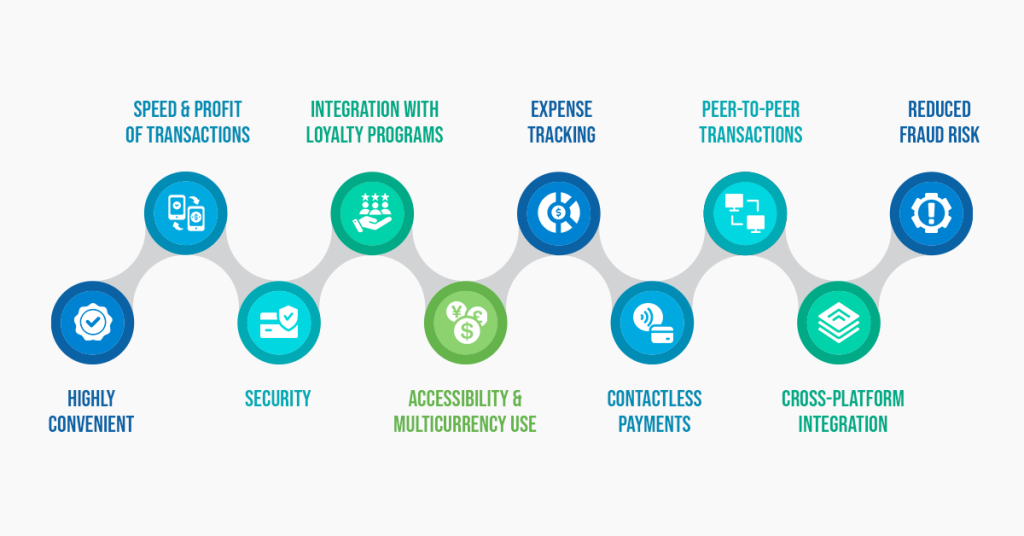
benefits of using digital wallets

A few years back, the daily use of digital wallets increased surprisingly in China (45%), India (35%), and Brazil (20%). Not only that, according to a report from Juniper Research, 60% of people will use digital wallets globally.

Well, the reason is simple: There are numerous benefits of using digital wallets that can result in profit. So, let’s talk about them.

1. Highly Convenient: 

As we have discussed a lot yet, payments with digital wallets are the most convenient way to make transactions without the need for physical cash or cards. People can use these super apps or super wallets to make payments with just a few taps on their smartphones, which is particularly handy for quick and on-the-go transactions.

Whether it’s 2 AM or 2 PM, you can receive or send money, book online tickets, buy your favorite shoes, and much more without worrying about anything.

2. Speed & Profit of Transactions:

Digital wallets facilitate faster transactions compared to traditional payment methods. Contactless payments, especially those using Near Field Communication (NFC), are quick and efficient, reducing the time spent at checkout counters.

Also, you don’t need to pay any kind of transaction fees that you might face in debit or credit cards. It is a major advantage for those who are struggling with international or frequent transactions. Many services like MoneyGram and Western Union charge very high fees and can take days for international money transfers.

3. Security:

Digital wallets have advanced security measures, such as encryption, tokenization, and biometric authentication (fingerprint, face recognition) to protect users’ sensitive information.

The fresh Decentralized ID (DID) integration has also raised security standards. DID is a kind of digital identity created by digital wallets in decentralized finance to store their banking and card credentials with top encryption.

4. Integration with Loyalty Programs:

Many digital wallets allow users to integrate their loyalty cards and reward programs directly into the app. This means users can earn and redeem rewards seamlessly during transactions, consolidating their loyalty memberships in one place.

5. Accessibility & Multicurrency use:

With advanced finance custom software development, many companies are creating highly secure wallets. These super wallets can be accessed from various devices, including smartphones, tablets, and smartwatches. This flexibility enhances accessibility, allowing users to make payments from their preferred devices anywhere.

If we are talking about global use, currency barriers shouldn’t be the issue. Digital wallets can be more versatile, supporting cryptocurrencies and fiat currencies. Moreover, you can perform a real-time currency amount conversion in real-time.

6. Expense Tracking:

Digital wallets often provide users with detailed transaction history and electronic receipts. This feature helps users track their spending more effectively and manage their budgets.

7. Contactless Payments:

Digital wallets are well-suited for contactless payments, which have become surprisingly popular, especially in the context of the COVID-19 pandemic.

The pandemic has accelerated the adoption rate of contactless payments, with around 50% of consumers considering it one of the most important safety features in retail stores, according to a survey by Visa. Users can make payments without physically touching cash or card terminals, reducing the risk of transmitting germs.

8. Peer-to-Peer Transactions:

Many digital wallets support peer-to-peer transactions, enabling users to send money to friends, sellers, and family quickly. This feature is useful for splitting bills, sharing expenses, or sending gifts.

9. Cross-Platform Integration:

Some digital wallets are integrated with other apps and services, allowing users to make payments seamlessly within various ecosystems. For example, users can make in-app purchases, pay for rides, or order food using their digital wallet.

10. Reduced Fraud Risk:

Digital wallets often incorporate features like two-factor authentication and fraud detection, reducing the risk of unauthorized transactions. In addition, the use of virtual tokens instead of actual card numbers enhances security.

Improvement Areas for Digital Payments

1. Security Issues

While these virtual payments are often considered to be highly secure, they can also draw the attention of cybercriminals. A single fraudulent tactic and malfunction can let scammers steal our funds or sensitive data.

Also, what if you lost the phone on which your credentials are saved? It’s pretty sure that anyone can misuse it for unauthorized transactions. In such cases, wallets should have tight security from their end.

Today, 93% of people are scared of hacking and other cybercrimes. It’s important for all digital wallet providers and companies to perform regular security audits, updates, secure encryption, or authentication to protect customer data.

2. Absence of Standard and Accessibility

Today, all E-commerce platforms and Fintech companies are launching their own digital wallets. Even WhatsApp has its own! But why isn’t a significant population able to use it?

Users commonly encounter a lack of uniformity across various mobile payment systems and digital wallets. It can create a little confusion in selecting the appropriate payment option.

Also, not all merchants accept digital wallets, and you always need an internet connection for it. It may create trouble in some situations. Imagine you went on a vacation in a rural area without any cash, and there’s no internet connection.

In such scenarios, Fintech giants really need to enhance connections to promote broad use.

3. Technical Challenges

If you use digital wallets, you must have stumbled over issues with software compatibility, system crashes, and scalability. For example, you’re passing through a payment gateway, and you get stuck with endless buffering. Now, you can’t refresh the page or conduct a new transaction because of the fear of losing money and waiting for refunds.

Solutions should try partnering with experienced developers, thorough testing, and debugging.

How Digital Wallets Are Expected to Grow in the Future: Top Trends

1. Crypto Wallets

Crypto and investments are easy now! Digital wallets are also the future of Fintech, crypto, blockchain, and other emerging technologies. You can buy, store, invest, or trade your cryptocurrencies with some digital wallets like MetaMask and Trust Wallet.

The rise of super apps such as Google Pay, Samsung Pay, and Amazon Pay are also offering ways to invest your money. If there’s something you can do with real money, you can do the same with digital wallets!

2. Blockchain & Smart Contracts

Blockchain in digital payments allows the implementation of smart contracts. These smart contracts are self-executing, which means the whole agreement is directly written into code. This feature automates and enforces contract execution, reducing the need for intermediaries.

3. Buy Now, Pay Later (BNPL)

Buy Now, Pay Later (BNPL) simply means that you buy something today and keep paying it later in installments. It’s not a new concept, but it’s growing rapidly. Searches for “BNPL” have risen by 790% in the last five years, with one in three American shoppers likely using a BNPL program in 2022.

BNPL is projected to surpass $1 trillion in global spending by 2025, comprising 5% of worldwide eCommerce spending. Despite its popularity, regulatory bodies are scrutinizing major BNPL providers, including Affirm, Afterpay, Klarna, PayPal, and Zip.

4. Smart Speakers

The use of smart speakers and similar devices for making payments and conducting transactions through voice commands has seen a significant rise in recent years.

As of the latest estimates, more than 120 million smart speakers are owned by Americans, a substantial increase from just 20 million in 2017. Amazon Echo continues to dominate the market share among smart speakers.

Interestingly, even in 2017, 28% of smart speaker owners were already using voice commands to send money and make payments. With the increasing adoption of smart speakers for shopping purposes, the number of users making payments through these devices is expected to grow further, even more so with digital wallets.There are endless opportunities, mobile development, and emerging trends in the further evolution of digital payments. Virtual cards, predictive analytics, biometric authentication, crypto wallets, and more are coming this way to enhance your experience.

Top 5 Super Apps or Digital Wallets to Use in 2024

Software development has grown a lot with advancements to create super apps. Here are some of the 5 most popular super apps you should take a look at. 
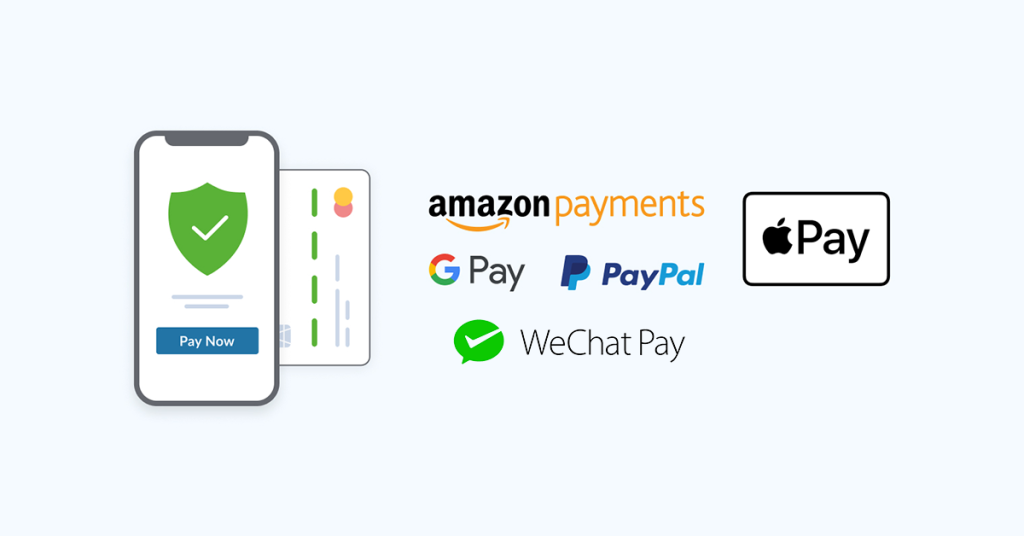
Super Apps
  1. Apple Pay
  2. Google Pay
  3. Amazon Pay
  4. PayPal
  5. WeChat Pay

Bottom Line

Digital payments and super apps did such an amazing job in the world of finance. We expect we will soon be able to make investments with our fingertips in seconds. However, there are so many challenges, and we are still so far. It would be amazing to watch how technology grows with time.

For more such content, stay connected with Deftsoft.

How to Develop a Metaverse App in 2025?

Throwback to the time when Meta, formerly known as Facebook, introduced the immersive world of ‘Metaverse’ in the latter half of 2021. Since then, the Metaverse world has been an emerging reality. Later, in 2023, Apple announced rolling out ‘Apple Vision Pro,’ an elite version of Metaverse. All these events contribute to the staggering growth of Metaverse in today’s fast-paced digital world.

Companies in the early stages of Metaverse app development are more likely to become market winners in the upcoming 5 to 10 years.

The Economic Times

One of the most innovative ways to parse into the Metaverse industry is by building/investing in your own Metaverse app. The Metaverse industry is projected to grow at a CAGR of 36.80% by 2030, thus reaching a market size of $900 billion.

Metaverse App in 2024

This blog is a valuable source of information for individuals/companies who wish to enter the global market of Metaverse in 2025. We’ll discuss what Metaverse is, how to build a Metaverse app, the technologies that make up the Metaverse, and the challenges involved in Metaverse app development in 2025.

Without further ado, let’s delve into the realm of pure knowledge!

What is Metaverse?

Many people think that putting on a Virtual Reality (VR) headset and experiencing a virtual world is what Metaverse is. However, it is just one facet of the term ‘Metaverse.’ It is much more than that. 

Metaverse is an aggregation of multiple virtual realities that exist beyond video games and after removing VR headsets. It is a spatial computation technology that combines different virtual realms. You can virtually meet friends over Metaverse, attend a concert, or meeting, host a party, make transactions, and even buy a piece of land in Metaverse! For example, Fortnite gives users an immersive game experience through near-reality games and socializing. It lets you create your character, play games, make friends, and socialize. Therefore, it is a perfect example of Metaverse.

Fortnite

The game came out in 2017 by Epic Games and offers an immersive, real-life digital experience. Apart from games, there are many other examples of Metaverse, such as Sandbox, where users can share, build and monetize creations using Ethereum.

Steps Involved in Building a Metaverse App

It is indeed a task of intricacy and iterations of development and testing when it comes to Metaverse app development. We made it easy for you to build a metaverse app from scratch. Follow the steps mentioned below:

Metaverse App
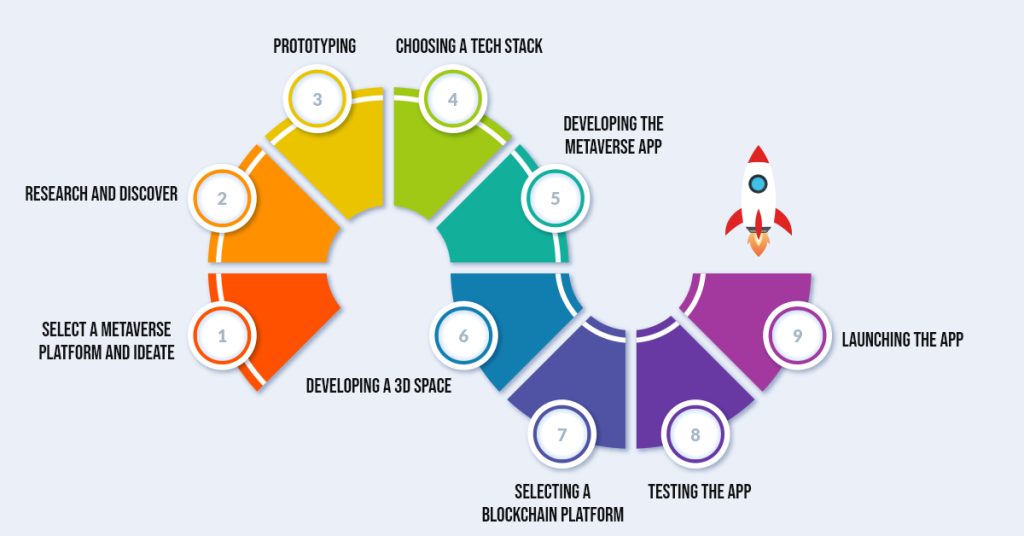
  1. Select a Metaverse platform and ideate

The first step to building a Metaverse app is to choose the Metaverse platform of your choice. It is also based on the kind of app you wish to develop. You can select an app from many options, such as real estate, 3D gaming, digital shopping stores, social apps, etc.

  1. Research and discover

The next step is to perform comprehensive market research to understand the user requirements and market trends. You can then create a prototype based on the research you do. Conducting an in-depth analysis of competitors is also imperative for a successful Metaverse app development in 2025.

  1. Prototyping

The next step is to start designing your Metaverse app. The process involves generating a 3D virtual environment of your app, creating interaction points and developing a user-friendly experience. You must ensure that the app conveys a story. This enhances user experience. Feel free to incorporate AR/VR technologies for an immersive experience.

  1. Choosing a tech stack

After designing your Metaverse’s virtual environment, it is imperative to choose a Metaverse tech stack that the developers need to bring the app to life. Based on the use cases and the requirements of the app, you can choose any one of the below-mentioned tech stacks:

  • Backend development for Blockchain: Java, Python, Node JS, DocumentDB, React Native
  • Frontend development for Blockchain: React, Angular, Vue JS, HTML, CSS, React Native
  • 3D modeling software: Unreal Engine, Unity, CRYENGINE
  • AI development tools: TensorFlow, Scikit-Learn, AWS sage maker
  • Mobile development: Swift (iOS), Kotlin (Android), React Native (cross-platform dev)
  • Database: MySQL, PostgreSQL, Oracle Database
  • Cloud infrastructure for scalability: Amazon Web Services (AWS), Microsoft Azure, Google Cloud
  • AR/VR tools: Unity, Unreal Engine, Google ARCore, Apple ARkit, Maxst AR
  • IoT: AMQP, Azure IoT Hub, MQTT, Lorawan

5. Developing the Metaverse app

After selecting the right tech stack, you can take it to the development stage. This stage involves developing the app, which includes adding a suitable set of interactive elements, features and other social tools.

On the other hand, if you’re hiring a developer, ensure you engage both a JavaScript and Blockchain developer. Hiring UI/UX developers for an aesthetically pleasing user experience is also crucial.

6. Developing a 3D space

It is essential to develop a 3D space for the Metaverse app to function. This is when you’ll need some tools to design the 3D architecture. You may use software like Unity 3D, Unreal Engine, etc.

7. Selecting a blockchain platform

The next step is to choose a blockchain platform that suits your Metaverse app development requirements. Various factors can influence the selection of a blockchain platform that caters to your needs. For instance, if you’re building a 3D real estate Metaverse app, the goal should be to choose a high transaction speed, low-cost blockchain platform such as Tron. It is perfect for decentralized finance (DeFi) and decentralized apps (dApps).

8. Testing the app

It is essential to test your Metaverse app before making it live for the audience. You must follow an iterative cycle of testing. This process must involve resolving speed issues, debugging base codes, fixing performance glitches, etc.

9. Launching the app

You can then launch the app, promote it, and spread it to a broader audience base. Remember to keep on looking for bugs in your app. Rolling out new updates and bug fixes in the app is critical.

Technologies that Makeup Metaverse Apps

Different technologies are required to build a Metaverse app. The technologies needed for an up-and-running Metaverse app are mentioned as follows:

1. Virtual and Augmented Reality (VR/AR)

Virtual Reality (VR) and Augmented Reality (AR) form the core of Metaverse. You can experience virtual online shopping, virtual meetings with colleagues, and more. Experience the magic of VR through a VR device such as Apple Vision Pro.

Virtual and Augmented Reality

Augmented Reality (AR) supplements reality with virtually-created elements. It scans a real-life frame through a camera and then adds features. It is a revolutionary technology in itself. 

The above image is a perfect example of the application of Augmented Reality. You can scan a spot in your home through a device’s camera to see how furniture looks even before you buy it. You can conceptualize the process of Metaverse app development around it!

2. Blockchain 

Blockchain technology is a novel and vital technological aspect of Metaverse. A user can make safe and secure transactions because of the blockchain technology applied in the Metaverse realm. 

The highlighting feature of the blockchain technology is decentralization. Harnessing its power can fuel the Metaverse to great heights. Blockchain has enabled the monetization of digital assets such as NFTs, digital arts, etc. It is an essential part of the Metaverse since it pushes decentralized assets.

3. Internet of Things (IoT)

Internet of Things (IoT) is a groundbreaking technology that aids the Metaverse in virtually replicating real-life objects on the spot. It helps the Metaverse comprehend an object and generate a virtual copy of it in the virtual world of the Metaverse.

4. Artificial Intelligence (AI)

 Artificial Intelligence is another vital technology that plays a significant role in Metaverse. Because of AI, the Metaverse can create 3D avatars of characters in the game world. It is also a breakthrough technology in developing Chatbots. These Chatbots help the users navigate through Metaverse, resolve issues, and cater to the user’s needs.

Artificial Intelligence (AI) uses other technologies, such as Natural Language Processing (NLP), Machine Learning, Voice/Speech Translation, and Computer Vision, to improve human-metaverse interaction.

5. Edge Computing

The latency rate plays a humongous role in enhancing a game’s experience. However, high latency rates can hamper the quality of the digital experience. This is why relying on cloud computing for efficient transactions or any other digital scenario is not a productive idea.

Edge computing performs real-time data analysis by eliminating the need to transfer data to the cloud or data centers. It conducts research in proximity to the source for low-latency experiences. Since the number of Metaverse users will only rise, integrating edge computing with Metaverse is the cherry on top!

Challenges involved in Metaverse app development in 2025

Metaverse app development in 2024

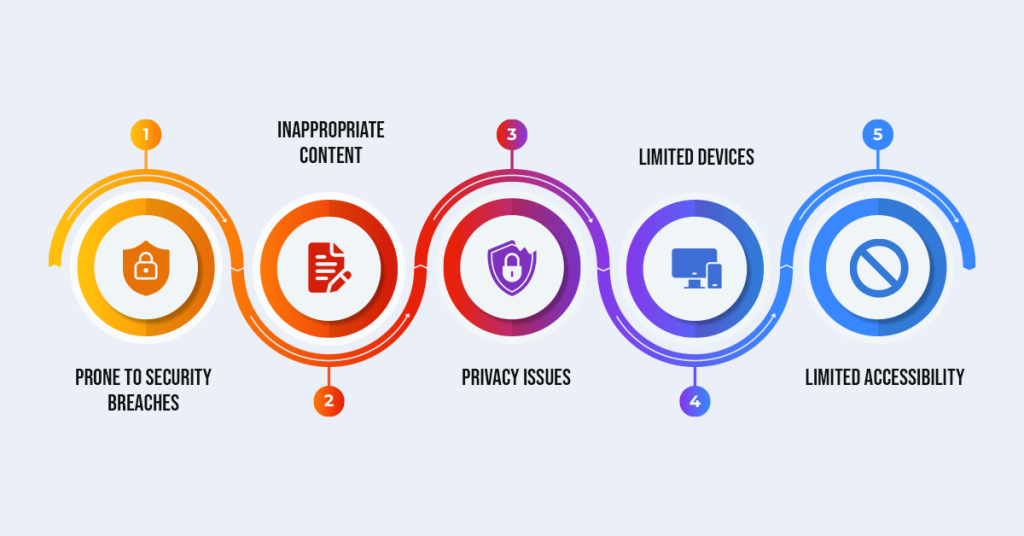
The Metaverse technology is still an emerging one. Therefore, some security-related, identity-related, and other bothersome concerns are attached to it. Some of the prominent challenges involved in using the Metaverse are as follows:

  1. Prone to security breaches

Metaverse is vulnerable to identity thefts and security breaches. Any individual or a bot can become an imposter and pretend to be someone else. This can lead to increased malicious activities on Metaverse, thus leading to identity theft and sensitive data breaches. 

This is why having solid and robust security systems on Metaverse apps is essential.

  1. Inappropriate content

Since there are no content regulations or checkpoint systems to override inappropriate content, some individuals can take advantage of it. This can cause a potential problem for other users in the Metaverse virtual environments.

  1. Privacy issues

The Metaverse apps collect real-time information about the users to enhance user experience, targeting the audience better and optimizing the app interface. This raises a potential privacy concern for the users, who might withdraw from using the app.

  1. Limited devices

It is daunting to curate an equally immersive experience of Metaverse apps for users on various devices such as smartphones, laptops, VRs and desktops. One can only experience an immersive experience when accessing Metaverse through VR headsets.

  1. Limited accessibility

Only some people are familiar with the functionality of Metaverse digital assets such as blockchain, NFTs, and cryptocurrencies such as Ethereum, Dogecoin, Bitcoin, etc., which reduces the utility of Metaverse environments across different audience segments.

How to Combat Metaverse App Development Challenges?

With new technologies come new challenges. It is crucial to withstand Metaverse development challenges to succeed in the Metaverse development space. Building a Metaverse app is a work of intricacy, experience and technical prodigy. This is why outsourcing the app development process is an informed decision.

Deftsoft is an industry-leading Metaverse app development service-based company with over 17 years of established business in the country. We have a massive team of experienced blockchain developers, mobile app developers, UI/UX designers and Metaverse developers who can bring your vision to life. With novel technologies and approaches, we offer hassle-free Metaverse app development services.

Feel free to reach out to us. We’re here to serve the best!

Final Thoughts

The Metaverse industry is one of the most daunting yet exciting spaces. It amalgamates varied new-age technologies such as blockchain, AR/VR, Artificial Intelligence (AI), Machine Learning (ML), edge computing, 5G, and more. Creating a Metaverse app stands out only when professionals with experienced hands do it.

It is the best practice to hire an experienced team of blockchain and Metaverse developers to bring your vision to life. In the upcoming years, Metaverse will be far-fetched and much more than a virtual space for gaming and socializing.

iOS vs. Android: Which Platform is Better for Your App?

Are you planning to launch your own app this year? Well, it is a daunting yet exciting task to do so. First things first, it is crucial to choose the right platform for your app. There are certain factors that help in choosing the right platform for your app.

iOS vs. Android

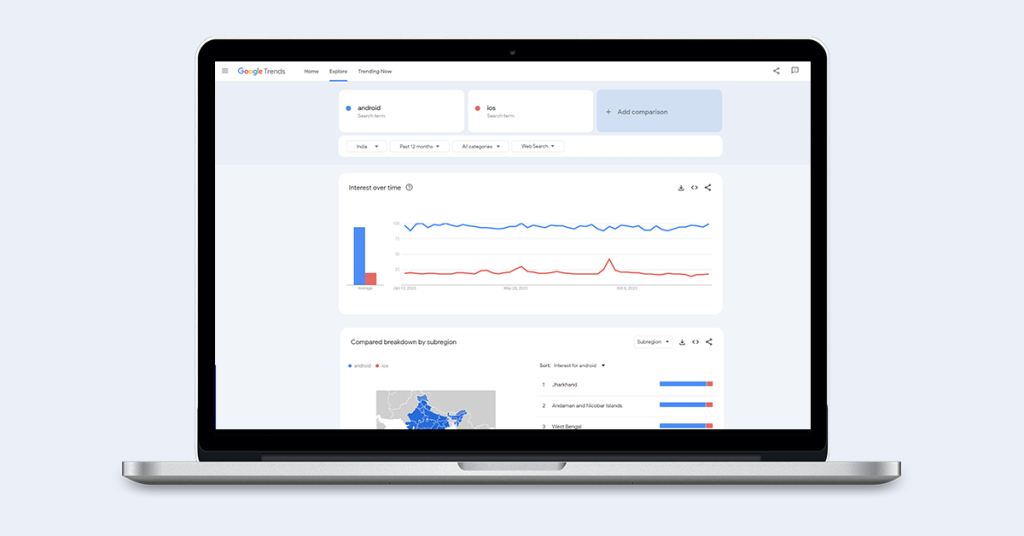
However, there has been a consistent increase in the number of searches for ‘Android’ compared to iOS. You can blame it on the number of Android users. There are over 3.5 billion Android users compared to iOS users, who are only 1.3 billion in number. It is evident from this statistic that there is a staggering difference in the number of iOS and Android users.

But the real question is: should you be biased toward one platform just because it captures more users? Keep on reading till the end to find out the difference between iOS vs Android: which is better?

By the end of this blog, you will know what iOS vs. Android app development stands for, what their highlighting features are, and which is better, iOS or Android.

What is Meant by iOS App Development?

iOS App Development

When an app is developed using the macOS Operating System, this is when you say that the app is created using iOS. Originally known as Mac OS X, it is an operating system dedicated to the creation, building, testing, publishing, and optimizing of apps that only run on iOS devices. These devices include MacBook, iPhone, iPad, iPod Touch, Apple TV, etc. 

For instance, ‘Notes’ is an iOS app that is Apple’s proprietary app and is only available on Apple devices. You can download it directly from Apple’s App Store. Since it is an iOS app, you cannot download it on an Android device.
If you’re interested in building an iOS app, you must be proficient in the following:

  • Xcode:

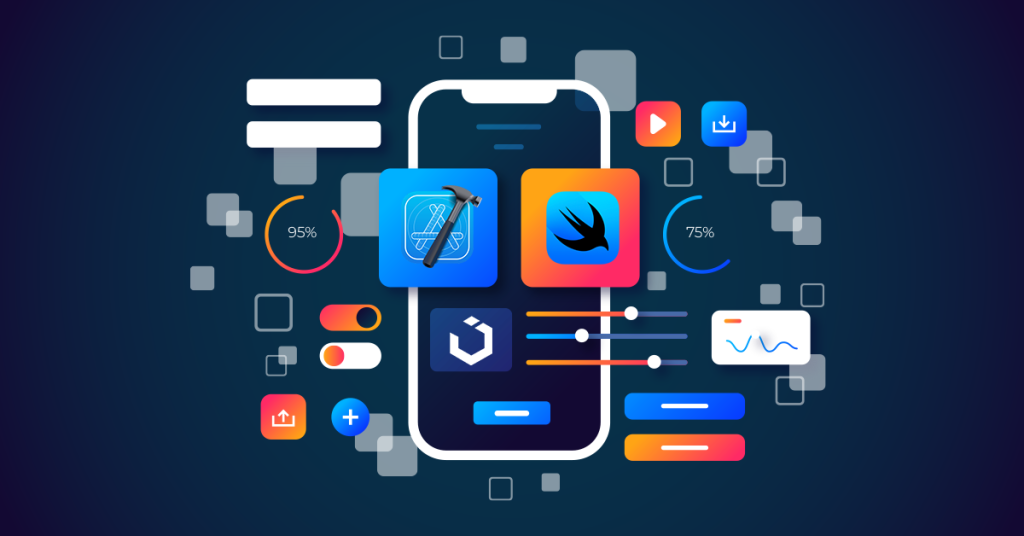
Xcode is an Integrated Development Environment (IDE) that allows you to write code for your iOS app. You can use it to create, test, and distribute your iOS app. The best part about Xcode is that it also depicts a real-time User Interface (UI) for the app that you’re building. This helps in gauging the outcome of your code while working on iOS app development.

The latest version of Xcode is Xcode 15. You can either hire an iOS app developer to work on the IDE or learn how to navigate Xcode (only if you’re technically proficient).

  • SwiftUI:

With SwiftUI, developers may begin creating apps by using a declarative framework to design the behavior and layout of multiplatform applications. However, you must note that one needs to be proficient in Swift programming language. It is important to note that Swift is Apple’s proprietary language for writing code in Xcode to build an iOS app.

  • UIKit:

You must also learn UIKit, a necessary framework for building iOS applications. It is imperative to be knowledgeable about various system frameworks that can further help you refine the work of your iOS app. You can put its front-end framework into use to build the infrastructure of your iOS app that runs compatible with various Apple devices such as iPhones, iPads, and MacBooks. etc.

What are the Features of iOS for App Development?

Features of iOS for App Development

Building an iOS app from scratch requires a developer to understand the features of the iOS Operating System and how it works. If you’re not yet familiar with the key features of iOS, they’re mentioned as follows:

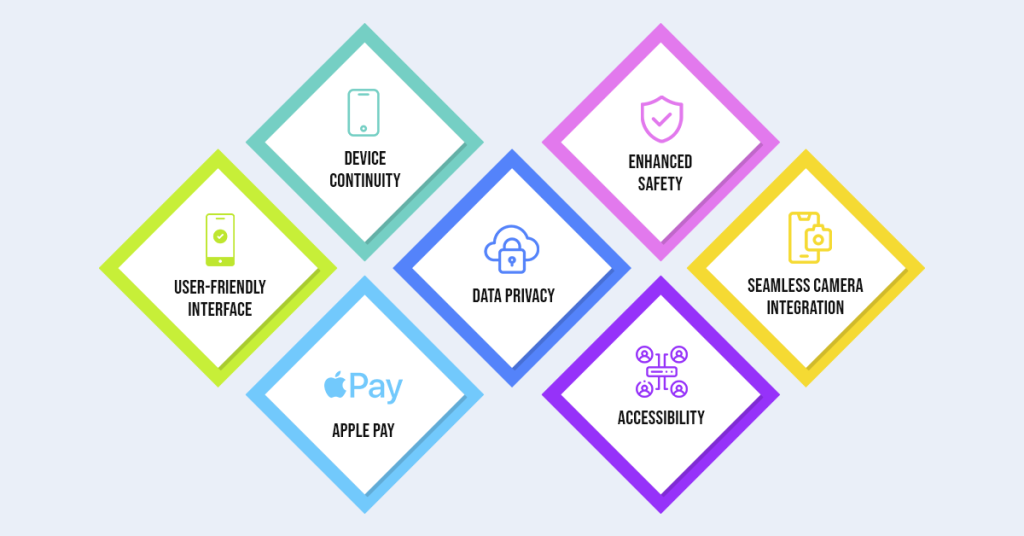
  • User-friendly Interface:

The interface of an iOS app is seamless, robust, and easy to browse through. In other words, it is user-friendly. You can easily slide through various tabs with a single touch, and the accelerometers in the Apple devices respond very well to touch. 

A user only downloads an application if it is easy to use and navigate. Apple devices give iOS developers the freedom to choose through a variety of buttons, sliders, and other drop-down buttons that are handy for the user. This feature, in turn, increases the download rate of an application.

  • Device Continuity:

Apple’s ecosystem is indeed difficult to get rid of! If you have an iPhone, iPad, or MacBook, you can easily browse the same application from one device to another without any hassle. This is when an iOS developer can take advantage of this utility feature and create an app interface that is flexible and easy to run on all these devices.

In all Apple platforms, in-app purchases are accessible and give users access to additional content and services within the app, such as digital products (iOS, iPad, macOS, watchOS), subscriptions, and premium content. You may also promote and sell in-app purchases through the App Store.

  • Apple Pay:

iOS apps and Apple Pay can be connected to enable simple and secure payment processing. Apple Pay authorization can be obtained via FaceID or TouchID.  This feature gives mobile app developers a golden opportunity to build paid apps. The sweet spot is to keep the app free, and if a user wants to upgrade, he can use either Apple Pay or Apple Pay Later to pay interest-free installments.

  • Data Privacy:

Apple’s App Store prioritizes the privacy of data that is fetched by iOS apps. Apple’s app privacy policies make sure that the app developers do not misuse users’ data. It is mandatory for the developers to mention how their app collects the data and what they do with the users’ data. In fact, iOS 17 gives utmost importance to user privacy, exhibiting a suite of other privacy settings. 

Transparency is promoted by the App Store as it is crucial for iOS app developers to describe why they require particular APIs in order to access customer data. 

For instance, according to a recent update in the App Store’s privacy policies, you can use more data type options to leverage in Privacy Nutrition Labels when explaining the kind of user data collected.

  • Enhanced Safety:

Users can have a significantly improved user experience. No wonder Apple offers new-gen impeccable features. Security and data integrity are the main pillars that comprise an iOS app development process. For example, Swift is one of the most efficient programming languages to code an iOS app to date. It pushes code safety and is equipped with an automatic/optional memory management that ensures backup of the complete data.

  • Accessibility:

iOS apps offer high user accessibility features that can be seamlessly integrated into any iOS app development. For example, if you’re creating a navigation app for blind people, you can easily consolidate a VoiceOver (text reader) feature for the users to comprehend directions easily. 

You can also add other accessibility features to an iOS app, such as AssistiveTouch, which aids people with motor disabilities to navigate through an app or add flexible font features, aka DynamicType, to help people reset the font size of the text themselves.

  • Seamless Camera Integration:

Apple’s iOS is equipped with AVFoundation Capture Subsystem, which is a high-level architecture for pictures, audio, and video. Therefore, this feature can easily be deployed in iOS app development.

What is Meant by Android App Development?

Android App Development

The process of building applications for the Android Operating System with the help of an Integrated Development Environment (IDE) such as Android Studio. Android is an open-source Operating System and accounts for over 3.6 billion smartphone users with Android on their phones. The world’s most popular smartphone companies, such as Samsung, Redmi, LG, Lenovo, Realme, HTC, etc., utilize the power of Android app development.

The Android apps are usually coded in an IDE using some of the most popular programming languages, such as Kotlin, C++, and Java. Some other examples of popular Android app development IDEs include MIT App Inventor, Android Software Development Kit (SDK), and Android Development Tools.

If you’re interested in building an Android app, you must be proficient in the following:

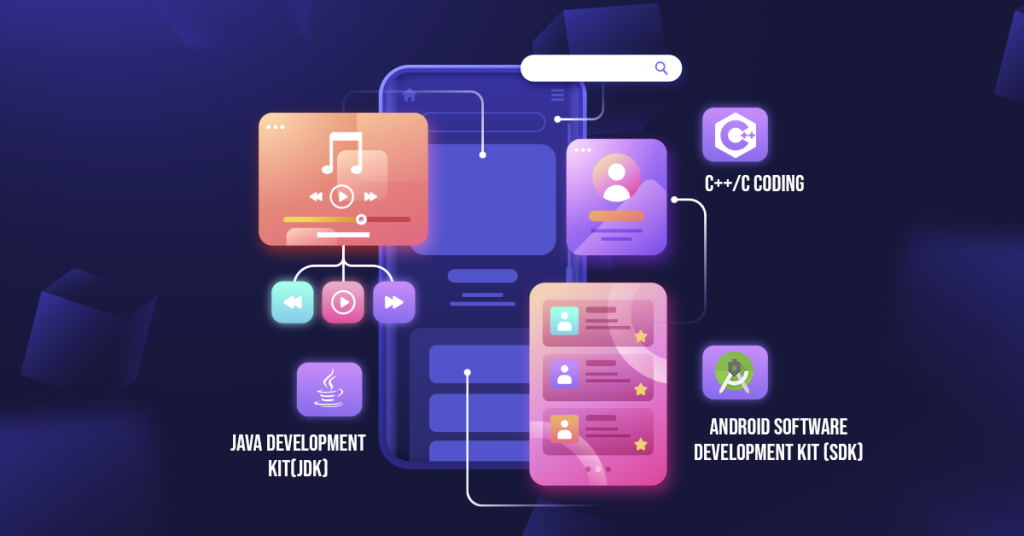
  • Java Development Kit (JDK):

You must be familiar with the programming language Java to code an Android application. You can also use other programming languages, such as Kotlin, C++, etc., for your first-ever Android app development. 

  • Android Software Development Kit (SDK):

The Android SDK is a set of software programs and tools for developing Android apps. It is a kit that consists of a detailed set of Android app development tools. The SDK consists of the following:

  • Libraries 
  • Handset emulator
  • Debugger
  • Documentation
  • APIs
  • Integrated Development Environment (IDE)
  • Sample code, and
  • Android development tutorials

An Android SDK comes with Android Studio, which is a dedicated Integrated Development Environment (IDE) for building Android apps. The IDE is crucial for User Interface (UI) development, spell-checking, coding, checking errors, and much more.

  • C++/C coding:

C++ is one of the best programming languages to use in the Android Native Development Kit (NDK) because of its robustness, high reactivity, performance, and responsiveness. This programming language is also quite compatible with Android Studio for code development.

What are the Features of Android for App Development?

Features of Android for App Development

It is non-negotiable to understand the features of Android app development for building an Android app. The following are some of the most fascinating features of the Android Operating System:

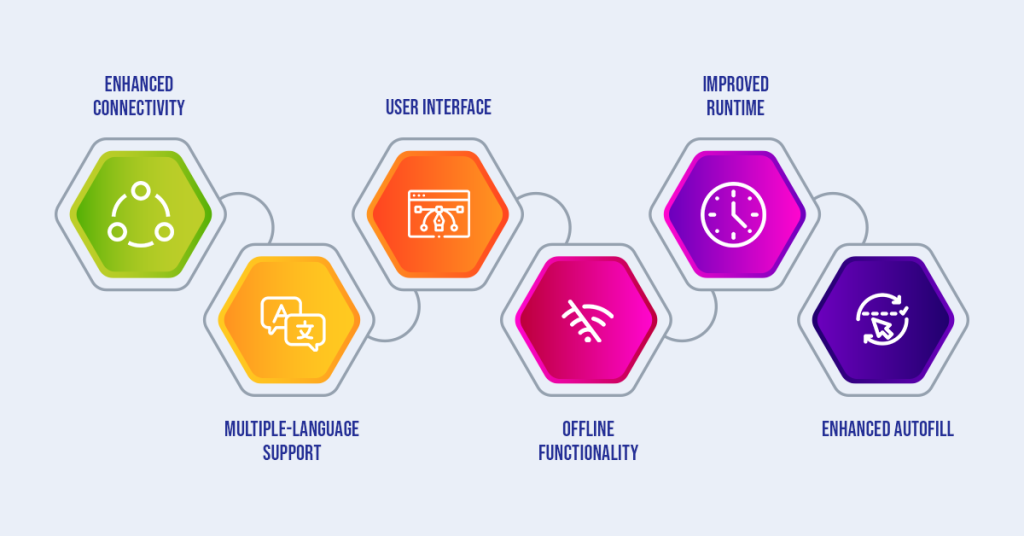
  • Enhanced Connectivity:

The Android Operating System offers a wide spectrum of connectivity. It can be connected with Bluetooth, WiFi, VOLTE, Hotspot, 4G and 5G network bands, GSM, CDMA, NFC, VPN, UBB, WiMax, and much more.

  • Multiple-language Support:

The Android possesses multi-lingual. An Android app developer can make use of various dialects, such as English, Spanish, Chinese, French, etc. You can also use Android language extensions to use regional languages in developing Android apps.

You can also integrate other keyboards, such as SwiftKey, GBoard, etc., to change keyboard styles in a diverse range of Android applications.

  • User interface:

Android’s User Interface (UI) is quite intuitive, responsive, and easy to navigate. It is straightforward, customizable, user-friendly, and to the point. You can create visually-aesthetic designs and optimize the performance of the Android app.

  • Offline Functionality:

One of the best features of Android app development is that you can create apps that can work even without Internet access. This means that the user can access the app data and functionality even when a device is offline. Therefore, Android apps share the feature of enhanced user convenience and utility.

  • Improved Runtime:

The newest version of Android, i.e., Android 14, offers improved runtime and better performance since it has been optimized more than ever before. The optimizations include reduced code size, improved memory management, optimized app launches, reduced cold app starts, and minimal power consumption.

  • Enhanced Autofill:

The newer version of Android also offers enhanced autofill features, including biometric autofill, compatibility-related autofill requests, saving usernames and other credentials, and much more.

iOS vs. Android: Which is better for App Developers?

It is a never-ending battle between the two, iOS vs. Android! However, we can compare the two based on their features, especially from an App Developer’s point of view. One can consider the following pointers:

  • Open Source:

The Android Operating System is open-source and offers freedom to the app developers to dive further into source codes and work on the Android apps. On the other hand, iOS is Apple’s proprietary Operating System, and a user is required to pay for Xcode to leverage the power of the iOS Operating System.

  • Security:

An Android app is less secure as compared to Apple’s iOS app. The codes for Android apps are quite vulnerable to security breaches. Security is a significant concern in Android app development

  • App Testing:

Since there are fewer iOS devices compared to Android, the app testing process is less time-consuming compared to Android devices. On top of that, it is a daunting task to test the working of Android apps for various versions since the user base is quite diverse, unlike iOS users who mostly use the latest version of iOS.

  • App Experimentation:

There are numerous restrictions in experimenting with iOS app development since Apple has strict guidelines. On the contrary, it is quite easier to customize app designs in Android app development.

Bottom Line

There are a number of downsides and upsides to using either iOS vs. Android. The conclusion simmers down to a developer’s utility and his end goal. There is not a massive difference in the user base of iOS and Android. Both of the Operating Systems have their own set of guidelines and programming languages.

FAQs:

1. Which is better: iOS or Android app development?

There are a few advantages of iOS app development compared to Android app development. Some of the noteworthy advantages include faster time-to-market since there are a lesser number of iOS devices. Furthermore, you only have to test an app for the latest version of OS in iOS app development. Also, there are fewer security breaches related to iOS apps.

2. What are the notable features of iOS app development?

Some of the best features of iOS app development include a user-friendly interface, device continuity, user accessibility such as AssistiveTouch, DynamicType, and Voiceover, data security and privacy, easy cross-platform development of apps, in-app purchases, enhanced safety, and seamless camera integration.

3. What are the notable features of Android app development?

Some of the best features of Android app development include multiple-language support and enhanced connectivity with WiFi, Bluetooth, VOLTE, etc.; better app runtime than iOS applications; varied autofill features for usernames and other functionalities; easily integrated User Interface and offline availability.

4. Why do developers prefer iOS over Android?

Since there is more device consistency in iOS devices as compared to Android, it is less time-consuming and easier to test apps against a limited number of devices, such as MacBook, iPhone, iPad, etc. This way, it is easier to put forth standardized parameters for iOS app development.

5. Should you choose iOS or Android for app development as a beginner?

If you have Apple devices such as MacBook, iPad, etc., it is an easier choice to choose iOS app development. However, if you want more flexibility in creating apps, then Android is a better choice.

6. Which is more secure, iOS or Android?

The iOS ecosystem offers more security than Android. Apple’s guidelines are more strict as compared to Android app development guidelines. Therefore, iOS apps are more secure than Android apps.