How to Rank Your Brand on ChatGPT in 2025

ChatGPT has now become a part of our lives. Since its launch in 2022, ChatGPT has made several adjustments and upgrades, which have made it even more effective in 2025. The brief info and to-the-point responses of ChatGPT have made it more preferable to the users than Google. That is why brands also want to get themselves ranked in the ChatGPT responses so that they can acquire more users.

ChatGPT currently has 400 million weekly users, and that is a huge number. Getting ranked on this platform can be a great boost for any brand, which is why companies are finding strategies to do so. Here, in this blog, let’s find out how brands can get themselves ranked on ChatGPT in 2025. But first, let’s discuss in detail why brands want to get ranked on ChatGPT and why does it matters.

Why Do Brands Want To Get Ranked on ChatGPT?

ChatGPT has become a dominant platform in terms of the number of users, which attracts brands to get themselves more visible on this, along with the search engines. Even with the free version, it provides quick information, images, does analysis and much more. Users these days prefer ChatGPT more than even Google or any other search engine because of its quick response and to-the-point answers. This can give the brands a huge exposure to a wide audience and will be better for business as well. These are the reasons why brands want them to get their content or their names on the Chatgpt responses, as it has a huge user base now.

Why does it matter? Its simple, brands want to be ahead of their competitors and to get ranked higher on such a high user base platform will always be a great competitive advantage for any brand.

How to Rank Your Brand on ChatGPT in 2025

Since its public debut in late 2022, ChatGPT has revolutionised how people seek information online. Gone are the days of manually sifting through dozens of search-engine results—today, an ever-growing user base turns to AI chat interfaces for instant, conversational answers. By early 2025, ChatGPT boast around 400 million weekly active users, making it one of the world’s largest digital touchpoints for brand exposure.

For forward-thinking companies, showing up in ChatGPT’s replies has become just as critical as traditional search-engine optimisation. In this in-depth guide, we’ll explore why ChatGPT ranking matters, how the model “sources” brand information, and actionable strategies to earn and maintain high visibility in this fast-evolving landscape.

Why ChatGPT Ranking Matters More Than Ever

  1. Unprecedented Reach & Engagement

With hundreds of millions of active users each week, ChatGPT channels massive engagement. Those users are often highly motivated: they’re seeking quick advice, clear how-tos, and succinct recommendations. When your brand is mentioned in that context, it’s effectively an endorsement within a trusted, conversational exchange.

Many businesses now embed ChatGPT widgets or APIs directly into their own apps and websites. By ranking well in ChatGPT, your brand achieves second-order exposure wherever that AI interface is embedded.

  1. Shift in Search Behaviour

Surveys in late 2024 showed that over 60 per cent of digital natives preferred AI chatbots over traditional search engines for question-and-answer tasks. Instead of scanning a dozen blue-link results, users pose a question and accept the top-weighted answer. Securing that top slot translates directly into brand mindshare.

  1. API-Driven Discovery

Beyond the chat UI, many third-party apps consume ChatGPT via API. If your brand is the model’s primary source for a given query category—say, “best budget headphones”—developers’ applications will surface your recommendation, magnifying reach.

  1. Competitive Edge

Brands that master ChatGPT visibility gain a durable advantage over rivals still focused solely on web-page SEO. Because AI chat is only growing in prominence, early adopters lock in loyalty from users who form their purchasing perceptions within those chatbot interactions.

Understanding How ChatGPT “Ranks” Brand References

Unlike search engines, which rely on real-time crawling, link analysis, and on-page signals, ChatGPT’s core engine is a large language model pre-trained on vast text corpora and then periodically updated. When a user asks a question, two main mechanisms influence which facts or brand names appear:

  1. Pre-Training Data Exposure

During training, GPT ingests terabytes of textual data from reputable websites, news articles, technical documentation, and books. Brands with well-written, high-authority content (whitepapers, blog posts, case studies) are more likely to be internalized. The model doesn’t “rank” in a traditional sense; instead, it learns patterns associating certain user intents (“best vegan protein powder”) with specific brands.

  1. Retrieval-Augmented Generation (RAG)

In the latest GPT-4.5 and GPT-5 releases, OpenAI has expanded support for real-time retrieval plugins. If a brand integrates an official ChatGPT plugin, the model can fetch up-to-date data (inventory, pricing, FAQs) via API calls. This bypasses the static training data cutoff and ensures accuracy. Plugin-enabled brands essentially guarantee themselves a first look when a matching query arrives.

  1. Feedback-Driven Fine-Tuning

Every user session yields implicit feedback signals: Did users upvote “helpful” on a response? Did they click through to the brand’s website? Over time, OpenAI fine-tunes the model to favour answers that historically received positive engagement. Educating users to rate responses and optimising your plugin’s endpoints can tip the balance in your favour.

Six Proven Strategies to Secure Top ChatGPT Placement

1. Develop and Maintain a ChatGPT Plugin

Why It Matters:
A plugin is the most reliable way to surface dynamic brand data to ChatGPT. Instead of hoping the model recalls your static training-time content, you provide a direct API bridge that the model invokes when relevant.

Key Actions:

  • Register Your Plugin via the OpenAI developer portal.
  • Define Clear OpenAPI Specs for product lookup, price queries, booking functions, and support FAQs.
  • Implement Robust Authentication & Rate Limiting to ensure reliability at scale.
  • Monitor Usage Analytics in real time: track call volumes, average latency, and user satisfaction ratings.

2. Structure Your On-Site Content for LLMs

Even without a plugin, you can optimise your website so that ChatGPT’s retrieval systems index and internalize your content more effectively.

Best Practices:

  • Use Precise, Natural-Language Headings: Match the kinds of questions users ask (“How to set up two-factor authentication on AcmeApp”).
  • Embed JSON-LD Schema Markup: For products, FAQs, tutorials, and events. Schema helps downstream crawlers and retrieval tools extract clean data.
  • Maintain Detailed FAQ Pages: Organize by user intent, phrasing questions exactly as people might ask the model.

3. Publish Authoritative, Evergreen Guides

ChatGPT’s training phases prioritize authoritative sources. Brands that consistently produce comprehensive, evergreen whitepapers and guides earn deeper embedding in the model’s knowledge graph.

Implementation Tips:

  • Select High-Value Topics where users frequently seek clarity (e.g., “2025 trends in remote work tools,” “Choosing the best energy-efficient HVAC system”).
  • Optimize for Readability: Use clear summaries, bullet lists, and call-out boxes to aid both human readers and AI training data processors.
  • Secure Credible Backlinks: Partner with industry publications to cite your research, boosting domain authority.

4. Leverage User Feedback Loops

Since ChatGPT’s future fine-tuning cycles ingest user feedback, you can actively solicit and surface positive interactions.

Strategies:

  • In-App Prompts: After a ChatGPT-driven interaction on your site or via widget, ask users, “Was this recommendation helpful?” and capture their responses.
  • Incentivize Ratings: Offer small rewards (e.g., discount codes) for upvoting plugin responses or filling a brief satisfaction survey.
  • Iterate Rapidly: Use feedback to refine plugin endpoints and update site FAQs, ensuring that next-generation model updates see your highest-rated content.

5. Harmonize SEO & LLM Optimization

Traditional SEO tactics still bolster your ChatGPT presence by making your content more likely to be included in training data and retrieval indices.

Key Areas to Align:

  • Backlink Profile: High-quality inbound links from recognized authorities signal to both search engines and AI trainers that your site is trustworthy.
  • Technical Performance: Fast page loads, mobile-friendly designs, and clean schema implementation ensure that crawling bots and LLM ingestion pipelines encounter no blockers.
  • Content Freshness: Regularly update cornerstone content to reflect the latest statistics, use-cases, and best practices—this shows both Google and LLM retrievers that your content remains relevant.

6. Stay Updated on Model & API Advances

OpenAI continuously refines its models (e.g., GPT-4.5 to GPT-5) and introduces new retrieval techniques. By staying in lockstep with these changes, you can seize newly available channels for visibility.

How to Keep Pace:

  • Subscribe to OpenAI’s Developer Newsletters and Blogs.
  • Attend Virtual Workshops and Webinars on plugin development and RAG best practices.
  • Audit and Re-certify Your Plugin after each major model release to leverage new features like extended context windows or multimodal query support.

Measuring and Maintaining Your ChatGPT Presence

A. Plugin Analytics

  • Usage Volume: Number of API calls per day/week/month.
  • Latency Metrics: Average response time—aim for sub-200 ms to keep interactions fluid.
  • User Ratings: Percentage of positive “helpful” votes versus negative flags.

B. Web Analytics Integration

  • Referral Traffic: Track “ChatGPT Widget” as a source in your analytics platform.
  • On-Page Behaviour: Monitor bounce rates, session duration, and conversion events on pages that are heavily referenced by ChatGPT.

C. Periodic Content Audits

Every quarter, review your site’s top FAQs, guides, and plugin endpoints. Update outdated statistics, refine headings based on emerging user queries, and expand on topics with growing interest.

D. Community Feedback Channels

Engage on developer forums, social media groups, and OpenAI’s own community spaces. Early alerts about breaking changes or common user pain points allow you to adapt faster than competitors.

Common Pitfalls to Avoid

  • Over-reliance on Short-Form Content: Shallow answers and thin articles rarely earn prime placement. Aim for depth and clear explanations.
  • Ignoring Technical Hygiene: Broken schema markup or slow endpoints can consign your content to “never indexed” status.
  • Neglecting Security and Privacy: Plugins must handle authentication securely. A data breach or poorly configured API can lead to de-listing or worse.
  • Underestimating User Experience: A plugin that rates poorly or returns unhelpful answers will see its ranking degrade in future fine-tuning. Always prioritise clarity and accuracy.

Looking Ahead: The Future of Brand Visibility in AI Chat

  1. Hyper-Personalised Brand Mentions

As ChatGPT learns to factor in individual user profiles, it may tailor brand recommendations based on purchasing history or stated preferences. Early adopters of permission-based data sharing will benefit most.

  1. Voice-First Brand Presence

With the rise of AI-powered voice assistants built on GPT-5, brands will compete for auditory prime real estate. Crafting catchy verbal taglines and optimising for spoken-language queries will become crucial.

  1. Augmented Reality (AR) Integrations

Imagine ChatGPT suggesting your furniture brand and immediately overlaying pieces into a live smartphone camera feed. Brands that prepare 3D asset libraries with clean metadata will lead the pack.

  1. Ethical and Trust Signals

ChatGPT is experimenting with transparent sourcing annotations (“According to [Brand]…”). Establishing and publicising rigorous data-privacy, sustainability, and accessibility stances could become ranking factors in the AI context.

Deftsoft: Your AI Partner of Choice

At Deftsoft, we specialise in end-to-end AI integrations that help brands secure top placement in ChatGPT and other LLM-powered platforms. Our offerings include:

  • LLM-Optimised Content Strategy: We audit and restructure your website content—FAQs, whitepapers, and blog articles—to align with conversational AI ingestion best practices.
  • Continuous Feedback Loops: We implement real-time analytics and user-feedback systems, enabling you to fine-tune responses and maintain top visibility.
  • Custom ChatGPT Plugin Development: From API design to deployment, we ensure your product data is live, accurate, and instantly accessible to users.

Partner with Deftsoft to transform your brand’s presence in the AI-driven future. Contact us today to learn how we can elevate your ChatGPT ranking and deliver measurable business growth.

FAQs

Q1: Do I need coding expertise to implement a ChatGPT plugin?
A: Basic REST API knowledge is required, but Deftsoft offers turnkey solutions that handle end-to-end development, from authentication to deployment.

Q2: How often should I update my structured data and FAQs?
A: Aim for quarterly reviews, or more frequently if your product lines or pricing change rapidly.

Q3: Can small businesses benefit from these tactics?
A: Absolutely. Even without a full-scale plugin, structured FAQs and schema markup on small websites significantly boost visibility in ChatGPT’s responses.

Q4: How do I measure ROI from ChatGPT ranking?
A: Track API usage metrics, referral traffic labelled “ChatGPT Widget,” and conversion lift on pages referenced by AI-driven chats.

Q5: What’s the cost of maintaining a ChatGPT integration?
A: Costs vary by volume and complexity, but most mid-sized brands budget for a small dev retainer plus API usage fees. Contact Deftsoft for a custom quote.

Q6: Why choose Deftsoft for ChatGPT and LLM integrations?
A: With deep expertise in OpenAI’s ecosystem, a library of reusable plugin templates, and a track record of measurable performance gains, Deftsoft is uniquely positioned to accelerate your AI roadmap with minimal risk.

Q7: How quickly can Deftsoft deploy a ChatGPT plugin?
A:Typical development and testing cycles range from 4 to 6 weeks, depending on data complexity and security requirements. Express and phased delivery options are also available.
How to Create a Brand Content Marketing Plan for 2025

In the rapidly evolving digital world, one thing remains consistent: content is king. However, simply producing content is no longer enough. Brands must be strategic, intentional, and forward-thinking in how they communicate with their audience. That’s where a solid content marketing plan becomes indispensable. As we approach 2025, businesses must go beyond basic content creation and learn how to plan a content marketing strategy that not only captures attention but also drives meaningful business results. In this comprehensive guide, we’ll dive into how to create a content marketing plan, explore the best tools and strategies, and show you why having a meticulously crafted digital marketing content plan is crucial for long-term success.

What Is a Content Marketing Plan and Why Does It Matter?

If you are wondering what is content marketing plan, the answer is simple yet profound. A content marketing plan is a documented strategy that details how a brand will use different types of content to achieve business goals. This plan covers everything from content ideation and creation to distribution and measurement. It acts as a roadmap, ensuring every piece of content serves a strategic purpose, resonates with the target audience, and moves prospects through the marketing funnel.

Without a thoughtful plan, even the best content risks getting lost in the noise. Content marketing today is not about posting random blog articles or social media posts. It is about delivering the right message, through the right channels, at precisely the right time. A strong content marketing plan integrates brand voice, customer needs, SEO strategy, platform algorithms, and emerging digital trends into a cohesive blueprint for growth.

Why Your Brand Needs a Content Marketing Plan in 2025

The digital landscape is more competitive than ever before. Consumers are bombarded with content across multiple platforms—websites, social media, emails, podcasts, and even emerging technologies like virtual reality. In such an environment, brands cannot afford to leave their content strategy to chance. A digital marketing content plan ensures that your messaging is consistent, compelling, and impactful.

In 2025, customer expectations will be higher. They demand personalized, relevant, and authentic content. At the same time, search engine algorithms are getting smarter, prioritizing quality and user engagement over keyword stuffing or outdated SEO tactics. A strategic content marketing plan ensures that every asset your brand produces—whether a blog post, video, or infographic—works toward broader business objectives like brand awareness, lead generation, customer retention, and ultimately, revenue growth.

Furthermore, brands that invest in content marketing planning software gain a competitive advantage. These tools streamline the planning and execution process, enabling better collaboration, scheduling, and performance tracking. In short, without a clear plan, your brand risks falling behind faster than ever.

How to Make a Content Marketing Plan: A Deep Dive

Creating a content marketing plan may sound daunting, but it becomes manageable when broken down into logical steps. Let’s explore how to make a content marketing plan that can set your brand apart in 2025.

  • First and foremost, you need to define clear and measurable objectives. What exactly do you want to achieve with your content? Is it increased website traffic, higher lead conversion rates, improved brand awareness, or better customer retention? These goals will guide every other decision in your content strategy.
  • Once goals are in place, understanding your target audience becomes critical. Effective content speaks directly to your audience’s needs, aspirations, and challenges. Conducting detailed audience research helps you create highly targeted content. Developing audience personas—fictional representations of your ideal customers—can make this process more effective. These personas should include demographic information, pain points, content preferences, and preferred communication channels.
  • After establishing who you are talking to, it is important to audit your existing content. A comprehensive content audit reveals which pieces have performed well, which topics have been overused, and where there are gaps in your messaging. This step is crucial because it ensures that your future efforts are informed by past successes and failures rather than guesswork.
  • Content format selection comes next. In 2025, brands will have more choices than ever, from blogs and e-books to videos, podcasts, and interactive content like AR experiences. The key is selecting formats that align with both your brand strengths and audience preferences. Long-form articles may work wonders for B2B businesses, while short, snappy TikTok videos might be more suitable for consumer-facing brands.
  • Mapping content to the buyer’s journey is another vital step. Early-stage prospects need educational content that builds awareness, mid-stage leads need comparison content that helps them evaluate options, and late-stage customers need compelling offers and proof points to drive conversion. Tailoring content types to each stage ensures that you meet your audience’s needs wherever they are in the decision-making process.
  • Finally, no content marketing plan is complete without a robust promotion and distribution strategy. Simply publishing content on your blog is not enough. Effective distribution involves SEO optimisation, social media amplification, email marketing, influencer partnerships, and possibly paid advertising. Success depends on getting your content in front of the right eyes at the right time.

The Role of Content Marketing Planning Software

Today’s marketers have access to an incredible array of tools to streamline their workflows. Content marketing planning software plays a critical role in ensuring that your strategy is implemented efficiently. Platforms like HubSpot, Trello, CoSchedule, and Monday.com allow teams to organise editorial calendars, assign tasks, set deadlines, monitor performance, and even automate posting schedules.

By investing in content planning tools, brands gain a centralised hub for coordinating all content-related activities. This not only saves time but also ensures consistency across different platforms and departments. Moreover, many of these tools integrate with analytics platforms, providing real-time performance data to inform future content decisions.

How to Plan a Content Marketing Strategy for the Future

Learning to plan a content marketing strategy means anticipating trends before they become mainstream. In 2025, brands that succeed will leverage personalisation, artificial intelligence, and immersive content experiences.

  1. Personalization is no longer optional. Consumers expect brands to understand them on a deep level and deliver customized experiences. This means using data to segment your audience and tailoring your content to their specific interests and behaviors.
  2. Artificial Intelligence (AI) will play an increasing role in content marketing. From predictive analytics that suggest content topics based on audience behaviour to AI-driven personalization engines that customise website experiences in real-time, savvy marketers must embrace these technologies to stay competitive.
  3. Immersive content experiences, such as augmented reality (AR), virtual reality (VR), and interactive webinars, are also set to become mainstream. These formats offer greater engagement and deeper brand immersion, creating memorable experiences that foster loyalty and trust.

How to Create a Brand Content Marketing Plan from Scratch

If you’re launching a new brand, the task of developing a content marketing plan might seem overwhelming. However, following a structured approach can simplify the process. Begin by defining your brand’s voice, mission, and core messaging. This foundation ensures consistency across all content pieces.

Next, conduct a thorough competitor analysis. What are your competitors doing well? Where are they lacking? Identifying these gaps provides valuable opportunities to differentiate your content. You should then focus on building cornerstone content—high-value, evergreen assets that establish your authority and continue to drive traffic over time. Examples include comprehensive how-to guides, industry reports, and in-depth tutorials.

Finally, prioritise relationship-building over immediate sales. In the early stages, your content should focus on providing value, fostering community, and establishing credibility. Sales will follow naturally once trust has been built.

Measuring Success: An Essential Component

Knowing how to create a content marketing plan also involves understanding how to measure success. Key Performance Indicators (KPIs) such as website traffic, time on page, bounce rate, conversion rate, and customer acquisition cost help you assess the effectiveness of your strategy.

Regularly reviewing these metrics allows for ongoing optimization. Perhaps specific blog topics outperform others, indicating audience preference. Maybe videos generate higher engagement than infographics, prompting a shift in format. The best content marketing plans are dynamic, constantly evolving based on performance data.

Why Choose Deftsoft for Your Content Marketing Needs?

Building a winning content strategy in 2025 requires expertise, creativity, and a deep understanding of emerging digital trends. At Deftsoft, we specialize in crafting tailored content marketing plans that align with your business objectives and captivate your audience.

Our services include strategic content planning, SEO-focused content writing, Search engine optimization, social media marketing, email marketing, and integration of AI tools for superior targeting and personalization. Whether you are a startup looking to establish your brand voice or an enterprise aiming to scale your content operations, Deftsoft has the knowledge and experience to deliver outstanding results.

Partner with Deftsoft and discover the difference a strategic, data-driven digital marketing content plan can make. Let us help you turn your content into your most powerful marketing asset.

Contact Deftsoft today and take the first step toward building a content empire in 2025!

FAQs About Content Marketing Plans

1. What is a content marketing plan?

A content marketing plan is a documented roadmap detailing how a business will create, publish, and manage content to achieve specific marketing goals. It ensures that all content efforts are cohesive, strategic, and aligned with broader business objectives.

2. How do you make a successful content marketing plan?

Start by setting clear goals, understanding your audience deeply, auditing existing content, selecting appropriate formats, mapping content to the buyer’s journey, creating a detailed content calendar, and continuously measuring performance to refine your strategy.

3. Why is content marketing planning software important?

Content marketing planning software streamlines workflows, enhances team collaboration, ensures consistent publishing schedules, and provides real-time analytics. It helps brands stay organised, efficient, and responsive to performance data.

4. How often should you review your content marketing plan?

It is recommended to review your content marketing plan quarterly. Frequent evaluations allow you to adapt to shifting market trends, changing consumer behaviours, and new technological advancements.

5. How can Deftsoft help with my content marketing plan?

Deftsoft provides end-to-end content marketing solutions, from strategy development to execution and performance analysis. Our team of experts ensures that your brand’s content not only reaches your audience but also drives meaningful engagement and business growth.

How Generative AI is Impacting Digital Marketing

Introduction

The digital marketing landscape is evolving at an unprecedented pace, with technology playing a pivotal role in reshaping strategies, execution, and customer interactions. One of the most revolutionary technologies driving this transformation is generative AI. From content creation to customer engagement, generative AI is redefining how businesses leverage digital marketing services to optimize performance, enhance personalization, and scale their efforts efficiently.

This article delves into the impact of generative AI on digital marketing, exploring its various applications and how businesses can harness its potential. Whether you are a digital marketing company, an agency, or an enterprise seeking innovative solutions, understanding the role of AI in digital marketing is crucial for staying ahead of the competition.

The Role of Generative AI in Digital Marketing

Generative AI refers to artificial intelligence models that generate content, including text, images, videos, and even entire marketing campaigns. These models, powered by deep learning, analyze massive amounts of data and create highly engaging and relevant content. Here’s how AI is reshaping the digital marketing landscape:

1. Automated Content Creation

One of the most significant impacts of generative AI in digital marketing is content generation. Businesses can now leverage AI-powered tools like ChatGPT, Jasper, and Copy.ai to create blog posts, social media captions, and email campaigns in minutes. AI-generated content ensures consistency, maintains coherence, and improves engagement, making it easier for digital marketers to produce high-quality content at scale.

Moreover, AI can analyze brand voice and audience preferences to generate content that aligns with company messaging. Unlike traditional content generation methods, which require extensive brainstorming and human intervention, AI-driven automation allows brands to focus more on strategy and creative direction. It also reduces content production costs and accelerates the speed of campaign execution, helping businesses remain agile in a fast-paced digital environment.

2. Enhanced Personalization and Targeting

AI-driven marketing platforms analyze consumer behavior, browsing patterns, purchase history, and social media interactions to create hyper-personalized marketing campaigns. Unlike conventional segmentation techniques, AI can assess real-time data to dynamically adjust marketing messages based on user behavior, preferences, and demographics. This results in better customer engagement, improved conversion rates, and stronger brand loyalty.

Personalized AI-powered recommendations are now a fundamental part of marketing strategies. Whether it’s Netflix suggesting shows based on viewing history or e-commerce platforms recommending products based on past purchases, AI’s ability to understand customer intent enables businesses to deliver highly targeted content that resonates with individual consumers.

3. AI-Powered Chatbots and Virtual Assistants

Chatbots have transformed customer service in digital marketing by providing real-time responses, reducing wait times, and enhancing customer experiences. AI-powered chatbots, such as those integrated into websites, social media platforms, and mobile applications, can handle customer inquiries, offer product recommendations, and even guide users through the sales funnel.

Unlike traditional scripted chatbots, generative AI chatbots use natural language processing (NLP) to understand context, sentiment, and intent, enabling them to provide more human-like interactions. They can answer complex queries, process transactions, and offer multilingual support, making them invaluable assets for global businesses. Additionally, chatbot interactions generate valuable customer data, which AI can analyze to refine marketing strategies further.

4. Automated Ad Copy and Campaign Optimization

AI is revolutionizing paid advertising by automating ad copywriting, audience targeting, and bid management. Platforms like Google Ads and Facebook Ads leverage AI-driven algorithms to optimize campaign performance, ensuring businesses achieve maximum return on investment (ROI). AI tools analyze vast amounts of data to identify trends, optimize ad placements, and dynamically adjust bids based on competition and user engagement.

Generative AI can create multiple variations of ad copy and test them in real-time, allowing advertisers to determine which messaging resonates best with their target audience. This continuous learning process ensures that digital marketing campaigns remain efficient and relevant. By eliminating manual guesswork, AI-powered ad optimization enables businesses to allocate budgets more effectively and drive higher conversions.

5. SEO and Content Optimization

Search engine optimization (SEO) is an essential component of digital marketing, and AI has made it significantly more effective. AI-powered SEO tools like Surfer SEO, Clearscope, and SEMrush analyze search trends, identify relevant keywords, and optimize content to improve search engine rankings. These tools also assess competitor strategies, providing actionable insights to help businesses stay ahead in search rankings.

Additionally, AI-driven content generation tools ensure that marketing materials are SEO-friendly by suggesting the best keywords, structuring articles for readability, and recommending optimal word counts. AI also assists in optimizing voice search queries, which are becoming increasingly popular with the rise of smart assistants like Alexa and Google Assistant. This helps brands enhance their visibility in organic search results, driving more traffic to their websites.

6. AI-Generated Visual and Video Content

With video marketing dominating digital platforms, AI-generated videos are becoming a game-changer. Advanced AI tools like Synthesia, Runway ML, and Pictory can create high-quality video content without the need for expensive equipment or skilled video editors. These AI solutions allow marketers to generate explainer videos, social media animations, and product demonstrations efficiently.

AI-generated visuals and infographics can also be tailored for various platforms, ensuring consistency across marketing channels. This makes it easier for brands to maintain a strong visual identity while reducing the costs and time associated with traditional video production. AI-driven automation also enables businesses to create video ads at scale, optimizing them based on engagement metrics.

7. Predictive Analytics for Data-Driven Decisions

AI’s ability to process and analyze massive datasets allows marketers to make data-driven decisions with greater accuracy. Predictive analytics helps businesses forecast trends, identify high-performing marketing channels, and anticipate consumer preferences. By leveraging AI-powered insights, companies can allocate resources efficiently, refine campaign strategies, and maximize marketing ROI.

For instance, AI can identify seasonal buying patterns, allowing businesses to prepare targeted campaigns ahead of time. Predictive models also enhance lead scoring by determining which prospects are most likely to convert, enabling sales teams to focus their efforts on high-value customers. By continuously learning from new data, AI-driven analytics ensures that marketing strategies remain adaptive and relevant.

Challenges of Implementing Generative AI in Digital Marketing

While generative AI offers numerous advantages, businesses must also navigate certain challenges:

  • Content Authenticity: AI-generated content may lack originality and human creativity, requiring human oversight for refinement.
  • Ethical Concerns: AI can unintentionally propagate misinformation, making it essential for marketers to verify accuracy before publishing.
  • Data Privacy: AI relies on vast amounts of data, raising concerns about privacy and compliance with regulations like GDPR and CCPA.
  • Dependence on AI: Over-reliance on AI can lead to a lack of human touch in marketing, which is crucial for emotional connection and storytelling.

The Future of Generative AI in Digital Marketing

The future of digital marketing is undoubtedly AI-driven. As AI models continue to evolve, they will become increasingly sophisticated in understanding consumer intent, predicting trends, and delivering hyper-personalized marketing experiences. AI will enable businesses to automate complex marketing tasks, allowing digital marketing agencies and companies to focus on strategy and creative direction rather than manual execution.

One of the key areas where AI will have a transformative impact is predictive marketing. AI will be able to analyze user data in real time, enabling brands to anticipate customer needs before they even arise. This will result in highly targeted and dynamic marketing campaigns that respond instantly to consumer behavior, maximizing engagement and conversions.

Another major development will be the refinement of AI-generated content. Currently, AI-generated content still requires human oversight to ensure quality and relevance. However, future AI models will be capable of producing highly nuanced and creative content that closely mimics human writing styles. This will streamline content production for digital marketing agencies, reducing costs and improving efficiency.

AI-driven automation will also revolutionize social media marketing. From AI-generated posts to automated comment responses and intelligent social listening, businesses will be able to manage their social media presence more effectively than ever before. Social media AI tools will help brands analyze trending topics, optimize post timing, and tailor messages to different audience segments with unprecedented precision.

Moreover, AI-powered chatbots and virtual assistants will continue to improve, offering seamless, human-like customer interactions. These advancements will redefine customer service in digital marketing, providing users with instant assistance and personalized recommendations based on their past interactions.

As AI technology advances, ethical considerations and regulatory frameworks will also become critical. Businesses will need to strike a balance between automation and authenticity, ensuring that AI-generated content aligns with brand values and complies with data protection laws.

In conclusion, AI is set to become an indispensable component of digital marketing. Companies that embrace AI-powered digital marketing services today will gain a competitive edge, positioning themselves at the forefront of innovation. The businesses that thrive in the AI era will be those that strategically integrate AI into their digital marketing strategies while maintaining a human-centric approach.

Why Choose Deftsoft for AI-Powered Digital Marketing Services?

As a leading digital marketing company, Deftsoft is at the forefront of AI-driven marketing innovations. Our expert team leverages cutting-edge AI technologies to deliver data-driven, results-oriented digital marketing solutions. Whether you need AI-powered content creation, personalized marketing strategies, or SEO optimization, we ensure your brand stands out in a crowded digital space.

Partner with Deftsoft, a premier digital marketing agency, to revolutionize your marketing efforts and stay ahead of the curve. Contact us today to explore how AI can elevate your digital marketing strategy!

FAQs

1. How does AI improve digital marketing campaigns?

AI enhances digital marketing by automating content creation, optimizing ad performance, enabling personalization, and providing predictive insights for better decision-making.

2. Can AI replace human marketers?

AI enhances efficiency but cannot replace human creativity, emotional intelligence, and strategic thinking. The best approach is to use AI as a tool to augment human efforts.

3. Is AI-generated content effective for SEO?

Yes, AI-generated content can be optimized for SEO using keyword research and NLP-based algorithms. However, human editing is recommended to maintain quality and originality.

4. What are the risks of using AI in digital marketing?

Some risks include content inaccuracy, ethical concerns, over-dependence on automation, and potential data privacy issues. Businesses must implement AI responsibly and ensure compliance with regulations.

5. How can businesses integrate AI into their digital marketing strategy?

Businesses can integrate AI by using AI-powered tools for content creation, chatbots for customer service, predictive analytics for insights, and automated ad optimization for higher ROI.

Embrace the power of generative AI with Deftsoft and take your digital marketing strategy to the next level!

6. How does Deftsoft integrate AI into its digital marketing services?
Deftsoft leverages AI-driven tools for content generation, personalized marketing campaigns, SEO optimization, predictive analytics, and automated ad management. Our AI-powered strategies ensure higher engagement, improved targeting, and increased ROI for businesses across various industries.

7. Why should businesses choose Deftsoft for AI-powered digital marketing?
Deftsoft combines AI innovation with human expertise to deliver data-driven marketing solutions. Our team ensures that AI-generated content, automation, and predictive insights align with your brand’s unique voice and goals, helping businesses scale efficiently while maintaining a personalized approach.

7 Expert Tips for Local SEO in 2025

As we approach 2025, businesses must create innovative strategies to maintain their competitive advantage in search engine rankings. The digital era is growing rapidly, and we anticipate that 2025 will be another fruitful year, with digitalization reaching new heights. Search Engine Optimization (SEO) is a vital aspect of this digital era, making it essential for businesses to grasp effective strategies for enhancing their website and content. In this blog, we will explore a crucial component of SEO: Local SEO. This aspect is key for businesses aiming to rank their services locally. We will also outline seven expert tips for local SEO that businesses can implement in 2025 to achieve improved outcomes. Let’s start by reviewing what local SEO is and how it is important for businesses.

What is Local SEO, and Why is it Important?

What is Local SEO

Local SEO, as the name suggests, is a sub-part of Search Engine Optimization (SEO), which is focused more on local search engine rankings. In other words, this is a strategy that businesses use to make themselves more visible on search engines locally so that they can grasp more local audiences for their product and services. This can be done by a number of ways, such as creating a Google Business Profile, building local links, conducting keyword research, creating great local content, encouraging more customer reviews, creating NAP (name, address, phone number) citations, etc. this is a great strategy for the business to get more localized traffic, brand awareness and the leads as well. 

Local SEO is extremely important these days for businesses, as building brand awareness on a local level is the first level that you want to conquer before expanding to a wider audience. Also, almost more than 75% of the audience on search engines search for near-me businesses, services, or products, which shows how important it is for businesses to have their services, websites, and content optimized for these local searches. 

How Does Local SEO Work?

Local SEO (Search Engine Optimization) is an essential digital marketing tactic focused on enhancing a business’s online visibility to draw in more customers through pertinent local searches. This process includes optimizing different online platforms, including search engines, directories, and social media, to guarantee that the business stands out when potential customers seek products or services in their area. The surge in mobile searches has greatly amplified the relevance of local SEO, as users often look for nearby businesses while they are out and about.

Local SEO works primarily through a combination of search engine algorithms, location-based data, and business information. Here’s a breakdown of how it functions:

  • Google My Business (GMB): Businesses must claim and optimize their GMB listing. This includes providing accurate information such as the business name, address, phone number, and hours of operation. Adding photos and responding to customer reviews can also enhance visibility.
  • Local Citations: Consistency is key. Businesses should ensure their name, address, and phone number (NAP) are consistent across all online directories and platforms. This consistency helps search engines trust the information provided.
  • Customer Reviews: Online reviews can significantly influence local rankings. Encouraging satisfied customers to leave positive feedback on platforms like Google and Yelp can improve a business’s visibility and credibility.
  • Localized Content: Creating content that resonates with local audiences can enhance relevance. Blog posts, local event pages, and community involvement are great ways to engage potential customers.

These are some of th major aspects of Local SEO using which the website, service, or product are optimized to get enhanced visibility locally on search engines. 

Expert Tips for Local SEO to Stay Ahead in 2025

Local SEO includes various strategies that can improve your ranking. However, to differentiate yourself from numerous competitors employing similar tactics, you’ll need some unique approaches. Many companies provide the same services, and users frequently search for these services. To excel in this landscape, the following expert tips will be essential in 2025:

1. Optimize Your Google Business Profile

One of the most effective ways to boost your local SEO is by optimizing your Google Business Profile (formerly known as Google My Business). This free tool allows you to manage how your business appears on Google Search and Google Maps. To get started, fill out all relevant information, including your business name, address, phone number (NAP), website, hours of operation, and categories. Additionally, regularly update your profile with fresh content, such as photos, posts, and announcements. Encourage customers to leave reviews on your profile, as these can significantly impact your local rankings. Responding to reviews, both positive and negative, also demonstrates your commitment to customer service and helps build trust with potential clients.

In 2025, enhancing your Google Business Profile will continue to be essential for local SEO, enabling users to swiftly access vital information and interact more easily with your business.

2. Build and Maintain Local Citations

Citations—mentions of your business name, address, and phone number on other websites play a crucial role in local SEO. Consistent citations across various online platforms ensure search engines recognize your business as a trusted local entity. To create local citations, you should list your business on online directories such as Yelp, YellowPages, and industry-specific directories. Check for consistency in the NAP details on these platforms. Any discrepancies can confuse search engines and potential customers alike.

In 2025, maintaining and updating these citations will prove vital. Ensure that your information is accurate and up-to-date, particularly if you change your address, phone number, or business hours. Regular audits can help identify and rectify any inconsistencies across platforms.

3. Focus on Local Keywords 

Conducting thorough keyword research is fundamental to any SEO strategy, and local SEO is no different. In 2025, businesses should prioritize finding and using local keywords or phrases that potential customers in their area are likely to use in search queries. Utilize tools like Google Keyword Planner, SEMrush, or Ubersuggest to discover popular local keywords. Focus on phrases that include your city or region, such as “best coffee in [city]” or “[service] near me.” Incorporate these keywords naturally into your website content, meta tags, and descriptions.

Additionally, consider adding location-specific pages to your website if you serve multiple areas. This can help enhance your visibility in those local searches. By strategically optimizing your content for relevant local keywords, you can significantly increase your chances of being found by your target audience.

4. Create Localized Content

Local content marketing is a powerful tool that businesses can leverage to enhance their local SEO efforts. Creating blog posts, articles, or videos relevant to your community can help you establish authority in your field and build relationships with local customers. Consider writing about local events, news, or interesting community features related to your industry. For instance, a florist might create a blog detailing seasonal flower arrangements for local events, while a restaurant could share recipes using local ingredients. This type of content not only attracts local customers but also helps search engines view your website as a trusted source of local information.

In 2025, investing in localized content marketing will remain an impacting strategy, enhancing both your SEO standing and community connections.

5. Encourage Customer Reviews

Customer Reviews

Online reviews have become a vital part of how consumers make decisions, especially when searching locally. Positive feedback boosts your business’s online reputation and helps your local SEO rankings shine. Why not encourage your happy customers to share their experiences on platforms like Google, Yelp, and Facebook? Make it a breeze for them to leave their thoughts by sending friendly follow-up emails after their service or purchase, complete with easy links to your review pages! Plus, showcasing customer testimonials prominently on your website can really build trust with potential customers.

Responding to reviews, both positive and negative, showcases your commitment to customer satisfaction and can further influence how search engines perceive your business. In 2025, actively managing your online reputation through customer reviews will be essential for standing out in localized searches.

6. Create a Mobile-Friendly Website

As mobile searches continue to rise, a mobile-friendly website is increasingly critical for local SEO success. Many local searches are conducted on smartphones, and search engines prioritize mobile-responsive sites in rankings. To ensure your website is mobile-friendly, adopt a responsive design that adjusts to various screen sizes. Additionally, make sure your site loads quickly and that navigation is user-friendly on mobile devices. Optimize images, limit the use of heavy graphics, and simplify your website structure to enhance user experience.

A well-optimized mobile website not only improves your rankings but also ensures that visitors can easily access critical information about your business, promoting customer engagement and conversion.

7. Leverage Local Link Building

Building local backlinks is another vital strategy for enhancing your local SEO. Backlinks from reputable local websites signal to search engines that your business is a trusted authority in your community. You can secure local backlinks through various methods, such as partnering with local organizations, sponsoring local events, or guest blogging on area blogs and news websites. Additionally, consider collaborating with other local businesses for joint promotions and initiatives, which can naturally lead to backlink opportunities. Creating high-quality, shareable content can also result in local media outlets linking back to your site.

In 2025, emphasizing local link-building strategies will be crucial for boosting your local SEO efforts and helping your business shine as an important part of your community.

Wrapping Up

As we look ahead to 2025, implementing effective local SEO strategies is crucial for businesses that want to establish and maintain a competitive edge. By optimizing your Google Business Profile, maintaining local citations, focusing on local keywords, creating localized content, encouraging customer reviews, ensuring mobile-friendliness, and leveraging local link-building opportunities, your business can enhance its online visibility and engage more effectively with local customers.

With more consumers turning to search engines to find local services and products, prioritizing local SEO presents a fantastic opportunity to meaningfully connect with your audience. This blog’s tips act as a friendly roadmap to help your business flourish in the local digital landscape, paving the way for a prosperous 2025 filled with growth and success. As the digital space evolves, staying ahead of the curve will be key to seizing new opportunities and achieving lasting success in your local market.

Deftsoft: Your Partner in Local SEO

Businesses may find it beneficial to seek expert assistance when navigating the ever-evolving landscape of local SEO. Deftsoft is a digital marketing agency specializing in enhancing local SEO strategies tailored to your business needs. With our expertise, we can help you establish a robust online presence that resonates within your local community. At Deftsoft, we understand the intricacies of local search algorithms and consumer behavior. Our team is committed to optimizing your Google Business Profile, ensuring consistent citations across platforms, and helping you uncover the right local keywords to target. We’re also adept at creating engaging, localized content that showcases your brand while meeting SEO best practices.

Moreover, our focus on building authentic customer reviews can help you cultivate trust and credibility among potential clients. We work diligently to develop a mobile-friendly website that caters effectively to your audience’s needs. We also engage in proactive link-building strategies that strengthen your brand’s authority within your local market. With Deftsoft as your partner in local SEO, you can feel confident that your business is not just keeping up but thriving in 2025 and beyond. Let us help you unlock your business’s full potential and connect with the local audience that matters most. Together, we can create a tailored local SEO strategy that drives visibility, engagement, and long-term success.

Effective Link-Building Strategies That Work in 2025

2025 is coming, and we are excited about the new technologies and techniques evolving in the digital marketing landscape. The way of marketing has changed in the last few years with the introduction of new technologies, but one process has been able to keep its value high even after three decades of its introduction, and that process is Link Building. Let’s discuss this technique and how effective it is for better search engine optimization. Let’s have a look at the 11 effective link-building strategies for 2025, which will be a technology-dominating year. 

What is Link Building?

What is Link Building

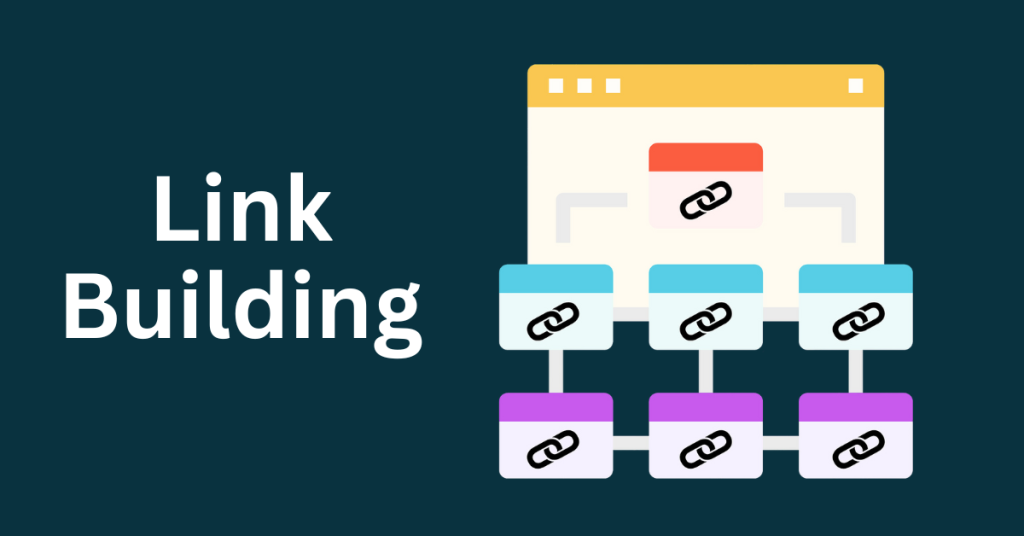
In simple words, when another website on the Internet adds a link to its content or website that links back to your website, this process is called link building. It is crucial in enhancing the website’s search ranking, as Google considers these backlinks as votes or points that make your website more relevant. Getting a link back to your website from a reputed company’s website has a huge impact on Google rankings as your website and your content become more trustworthy. This process of backlinking requires multiple effective strategies for linking your website to someone else’s content. 

Google’s Page Rank Algorithm considers the backlinks an important aspect for deciding the rankings, and the more backlinks you have, the more high-quality backlinks your page has; there are more chances of your page or website getting ranked, as these backlinks will tell Google that the content you have published is important, trustworthy, and impactful. There are different ways of getting these backlinks, such as manually adding links to websites, sending emails to the owners of the websites or the pages to add your links to their content, offering money to the website or page owners to add your link to their content and last, earring the backlink with some promotional or creative content. 

Why is Effective Link-Building So Important In 2025?

There are a number of reasons that link-building will be extremely important for digital marketers in 2025. It’s an evergreen technique for making your website more trustworthy and getting a better ranking for your content or page on search engines. There are several things that make link-building extremely important in 2025, and some of these reasons are:

1. Organic Traffic

Gaining organic traffic on the website using SEO strategies is the desire of every company, and 2025 will be no different. But, with lots of technologies and new ways of gaining traffic, the process of gaining organic traffic will be very tough in 2025. This is where the backlinking or the link-building processes can help, as getting links from a well-known and reputed company’s website will definitely add value and relevance to your website. Effective link building offers more organic traffic, and the conversation rate of this traffic coming from a reputed website will be high. 

2. Higher Search Engine Ranking

Higher Search Engine Ranking

A higher ranking on the search engine result pages (SERP) is directly proportional to more traffic, and more traffic is directly correlated with more sales. The algorithms of search engines consider the links on your website to someone else’s website to be crucial factors in ensuring the relevancy, authenticity, and trustworthiness of your content. Considering these aspects, a higher ranking is obtained on the search engine. This is the area that will be very crucial in 2025 as the competition in getting these backlinks from a reputed company is very high. Only the use of effective strategies and high-quality content can earn these backlinks from reputed websites. 

3. Enhanced Website Credibility

According to Forbes, there are 2 billion websites as of 2024, out of which 200 million are actively maintained. Also, almost 2,52,000 websites are created daily, which shows that there are multiple websites on the internet competing to get better rankings and traffic. In 2025, the credibility of the website will be very important as there are thousands of websites for one product or one service. Only a credible, trustworthy, and high-quality website will be able to make it to the top of the search ranking. This is where the link-building process will be crucial as it helps enhance the credibility of the website, and your links will be available on trusted and reputed company pages. 

Effective Link-Building Strategies That Will Work in 2025

No Doubt, link building has a number of benefits for the company in terms of ranking, organic traffic, and credibility, but we also need to accept that it is not easy. There are multiple websites on the internet, and everyone wants to get to the top, which is not possible. Only the one with a better strategy will be able to get the most of these backlinks.

If you want to stay ahead in the competitive SEO game in 2025, it’s crucial to adapt your link-building tactics to the changing landscape. Below, we will explore some of the most effective link-building strategies that will help boost your site’s authority, drive organic traffic, and ensure long-term SEO success in 2025.

1. Build a Big Name For Your Brand

In 2025, the success of the link-building process will depend heavily on brand reputation and authenticity. Search engine algorithms are more focused now on the trustworthiness and authenticity of the content before considering it for ranking. One of the first and most effective strategies for acquiring backlinks is to make a brand name for yourself. Be such a huge brand that companies use your content on their websites. Let’s see how we can do it-

  • Regularly publishing high-quality content on trending topics
  • Use advanced SEO practices for optimizing the content for Search engines 
  • Collaboration with the influencers can help give a boost to the brand

Once a brand name is made, then the company will approach you for using your content on their website. This can be very helpful for your website as multiple backlinks will be acquired.

2. Recreate Content For Broken Links

Recreate Content For Broken Links

One of the most underused link-building strategies is to recreate the content for broken links. No one wants to see broken links on their pages, and by offering to replace those links with your content link, you can acquire a backlink for your page. Broken links are a negative ranking factor for search engines, and that is why companies agree to replace these broken links immediately. Here’s the process of doing it-

  • Find broken links on the relevant websites that belong to your niche using tools like Ahrefs, or you can hire an SEO service provider company like Deftsoft to assist you in all sorts of SEO practices, including link building or broken link finding. 
  • Create high-quality content related to the one in th broken link with enhanced quality and approach the owner to replace th link with yours.

This strategy requires a bit of effort, but it can be highly effective in securing backlinks that can improve your site’s SEO performance.

3. Work on Quality Content

The most important and foundational part of a successful link-building strategy is the quality of the content. It should be valuable, informative, and engaging so that the companies or the media houses you approach are tempted to add them to their web pages. The high-quality content can be generated in any form, be it videos, infographics, podcasts or blogs, articles, or case studies. The ways to create a high-quality content are-

  • Know your audience, research the topic well, and try to answer the audience’s questions straightaway to get their attention.
  • Add images, infographics, videos, etc., to make the content visually appealing.
  • SEO optimization of the content should be done

Quality content can be created with all these methods, which can tempt other companies to add it to their website.

4. Get Links For Unlinked Mentions

There is a chance that your brand or company has been mentioned somewhere, but there is no link to reach you. That does not help you with the traffic, and thus, you need to approach them to add your link as well so that people can reach out to you for any service. These are natural backlinks and will help you get organic traffic and customers. You can do this by:

  • Use tools such as Google Alerts, Mention, etc., to track whether you are mentioned anywhere online.
  • In the next step, you need to approach the website owner and ask him to add your link there.
  • In the last step, you need to send your link to the owner of the website where your name is mentioned so that they can add it there.

Securing backlinks through unlinked mentions is a relatively low-effort but highly effective link-building strategy, particularly for growing brands with some level of recognition.

5. Contextual Link Placement

First, we need to know what contextual links are? These links are embedded naturally within the body of the content, opposite to the footer or sidebar links. These links hold a special place in SEO practices as they are more relevant and provide a better user experience. For contextual link placement, you need to follow the steps given below-

  • First, you need to identify the high-authority websites and blogs in your industry where the contextual links will make some sense.
  • Then, in the next step, reach out to the content creators of the company and offer them your content, which will be more valuable and align with the audience’s internship. 
  • Propose that they link to your content where it fits naturally within the context of their article or page.

Contextual link placement is one of the most powerful ways to improve your website’s authority and rankings, making it a key part of your 2025 link-building strategy.

6. Collaborations

Collaborations

Collaborating with other industry leaders, influencers, or even complementary brands can be an effective way to acquire high-quality backlinks, and through these collaborations, you can create joint content like guest posts, podcasts, webinars, or research reports. These collaborations provide a mutually beneficial opportunity for both parties to get exposure and generate backlinks. There are different ways of doing it, such as:

  • Identify influencers, bloggers, and brands that align with your business values and audience.
  • Reach out to propose collaborative content or projects that both parties will benefit from.
  • Make sure that your collaboration includes links to each other’s websites.

Collaborations not only help build backlinks but also improve your credibility and visibility within your industry.

7. View and Analyse Competitors’s Backlinks.

One of the most insightful link-building strategies involves analyzing your competitors’ backlinks. Tools like Ahrefs, SEMrush, and Moz allow you to explore the backlink profiles of any website, revealing where their links are coming from. By understanding the sources of your competitor’s backlinks, you can identify opportunities to secure links from similar or even the same websites. The ways in which we can do it are-

  • Use backlink analysis tools to view your competitors’ backlink profiles.
  • Identify high-quality websites linking to your competitors and reach out to them for similar backlinks.
  • Look for opportunities where your competitors are getting links and find ways to improve upon their content or strategy.

Competitor backlink analysis can help you discover untapped link-building opportunities that will give you a competitive edge in 2025.

8. Offer Valuable Content to Other Sites

Guest posting and contributing valuable content to other websites in your niche is considered to be a successful link-building strategy—and it will remain effective in 2025. By contributing high-quality articles to reputable websites, you not only build backlinks but also increase your brand’s visibility and authority. To do this, follow the steps given below-

  • Identify authoritative blogs and websites in your industry that accept guest contributions.
  • Pitch unique and relevant topics that align with the host website’s audience.
  • Include links to your website within the guest post, either in the body or author bio.

Guest posting is still one of the most effective ways to get high-quality backlinks, especially when you’re targeting reputable, high-authority sites in your niche.

9. Leverage User-Generated Content

Another useful strategy for link building that will work in 2025 is to encourage your users to create and share content related to the brand, like reviews, testimonials, or social media posts, as these can naturally generate backlinks when shared on blogs, forums, or other websites. Here’s how to use this strategy effectively:

  • Encourage customers to leave reviews and testimonials on third-party platforms or your own website.
  • Host contests or campaigns that invite users to share content (e.g., blog posts, photos, or videos) featuring your product or service.
  • Repurpose user-generated content into case studies or social proof that other websites may want to link to.

By motivating your audience to create content, you naturally acquire backlinks while also fostering trust and engagement.

10. Skyscraper Technique

Find high-performing content in your niche, create something even better, i.e., more comprehensive, detailed, or up-to-date, and reach out to the sites linking to the original content, asking them to link to yours. This strategy works by capitalizing on existing backlinks and offering a superior version of the content. Here’s how to execute this strategy:

  • Find top-ranking content in your niche using tools like Ahrefs or SEMrush.
  • Create something better: Make your content more in-depth, updated, or visually appealing (e.g., with added data, expert quotes, or infographics).
  • Reach out to sites linking to the original content: Politely ask them to replace their link with yours, as your content is now a superior resource.

11. Create Resource Pages or Link Roundups

Build a comprehensive, valuable resource page on your website, and submit it to link roundup sites in your niche. These pages, containing helpful tools, articles, or guides, often attract backlinks from those who find the content useful for their audience. Here’s how to leverage this strategy:

  • Build a resource page: Create a detailed page that curates top resources, tools, or articles in your niche.
  • Submit to link roundup sites: Reach out to websites and blogs that feature regular link roundups or resource pages and pitch your content.
  • Promote your resource page: Once your page is live, share it widely to attract organic backlinks.

By positioning yourself as a valuable resource, you increase the chances of earning backlinks from relevant sites in your industry.

Wrapping up

Link building is an ongoing, dynamic process, and staying ahead of the curve in 2025 requires more than just securing any backlinks. It’s about developing a comprehensive, strategic approach that focuses on high-quality, relevant links from authoritative sources. By implementing these strategies—building your brand’s authority, recreating content for broken links, creating quality content, and more—you’ll set your website up for SEO success in the years ahead.

To ensure all these techniques are followed for building multiple backlinks for your website, you can partner with the #1 SEO service provider company, Deftsoft. We have all the resources, a team of skilled professionals, and 19 years of experience in this industry to help you with any sort of service, from- keyword research and SEO audits to backlinking as well. Deftsoft is the one-stop solution for all your SEO needs.  

What is Answer Engine Optimization (AEO)?

Years after spending most of the time and money on SEO, finally, there is a buzz about a new term or a new and interesting optimization process in the digital marketing landscape called Answer Engine Optimization (AEO). There is a shift in the digital marketing space with the entry of AEO, and now businesses are not overly dependent on Search Engine Optimization (SEO) practices to make their product or service visible to users on search engines and other marketing platforms. Thanks to Generative AI tools like Chatgpt, Claude AI, etc., people now prefer direct and concise answers to their queries, which has given rise to this new process, AEO. 

Here, we will discuss the new buzzing process and how it is different from SEO. We will also learn by the end of this blog whether it is more effective than SEO or not. Considering the evaluation of its effectiveness, it is important to know how it is done and what future this process holds in the coming years. Thus, we will also discuss the future of AEO in 2025 and its benefits for businesses in terms of ranking, visibility, and reach.

What is Answer Engine Optimization (AEO)?

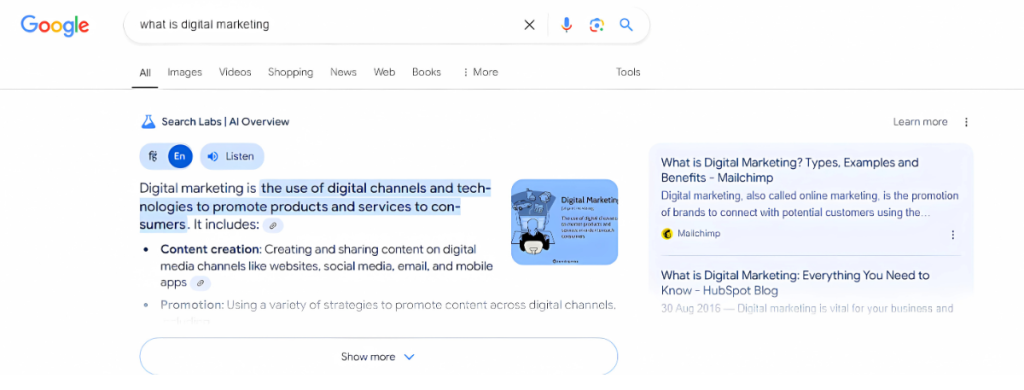
AI overview section at the top of search results

AEO is a new optimization technique that makes website content visible, findable, or understandable by voice-activated assistants and search engines. You must have seen the AI overview section at the top of your search results on Google’s search engine whenever you ask a question. The websites, brands, and products linked to that answer are a result of Answer Engine Optimization. The reason for its popularity in recent times is the concise and direct answer users get with this. Rather than opening multiple links and multiple websites to get your query cleared, you get a clear, concise, and direct answer, which is enough for most people to get their query resolved. 

AEO is used not only for AI-based results on search engines but also for all other options where direct and concise answers are provided to the user, such as voice assistants such as Alexa, Siri, Google Assistant, etc. All these voice search services have become more popular and easier for users to use than traditional methods. This makes the AEO a booming war of digital marketing that every company wants to conquer. It’s been an interesting addition to the digital marketing landscape, which will make the competition for higher ranking and to be visible at position zero a bit more difficult for the digital marketers as only 2-3 companies will be able to make it to the position zero where the AI-generated content is provided to the user as a result for their queries. 

AEO vs. SEO: Understanding the Differences

AEO vs SEO_ Understanding the Differences

Considering the long, illustrious, and highly impacting journey of SEO in digital marketing, no one thought that something like AEO would come and make a difference. But first, we need to understand what makes these two different from each other. 

Although AEO is considered a subpart of SEO as it is also related to content optimization for better ranking in search engines. But, AEO targets the direct and concise answers that Generative AI-based results, voice assistants, etc., provide these days as the user considers these results more useful and time-saving. In other words, we can say that traditional SEO targets broad keyword visibility across different search engines, while the AEO is more focused on direct and concise answers to user queries. 

At its core, SEO is about improving a website’s visibility and ranking on search engine result pages (SERPs). This process involves optimizing various aspects of a website — from content and keywords to technical elements like page speed and mobile-friendliness — to increase the chances of ranking higher in search engine results. AEO, on the other hand, is a more specific optimization technique that focuses on providing direct, concise answers to user queries.

AEO is particularly aligned with the growing trend of voice search, AI-driven assistants, and instant search results (e.g., featured snippets or “Position Zero” on Google). While SEO aims to capture broad keyword visibility across various search engines, AEO is targeted at providing precise, structured answers that can be easily understood by AI-powered systems and digital assistants like Google Assistant, Siri, and Alexa. For example, when a user asks their voice assistant, “What’s the weather like today?” the assistant needs a quick, direct response, not an entire webpage full of information. AEO ensures that businesses can have their content featured in these quick-answer formats, such as the Answer Box, Featured Snippets, and Knowledge Panels.

Importance of AEO for Business Owners

In a world where information is available at the tip of our fingers, the way users access and consume content is evolving rapidly. Today’s consumers are less likely to shift through long articles or web pages to find an answer to their questions. Instead, they prefer immediate, concise responses—whether through a voice search, a quick Google query, or a chatbot. 

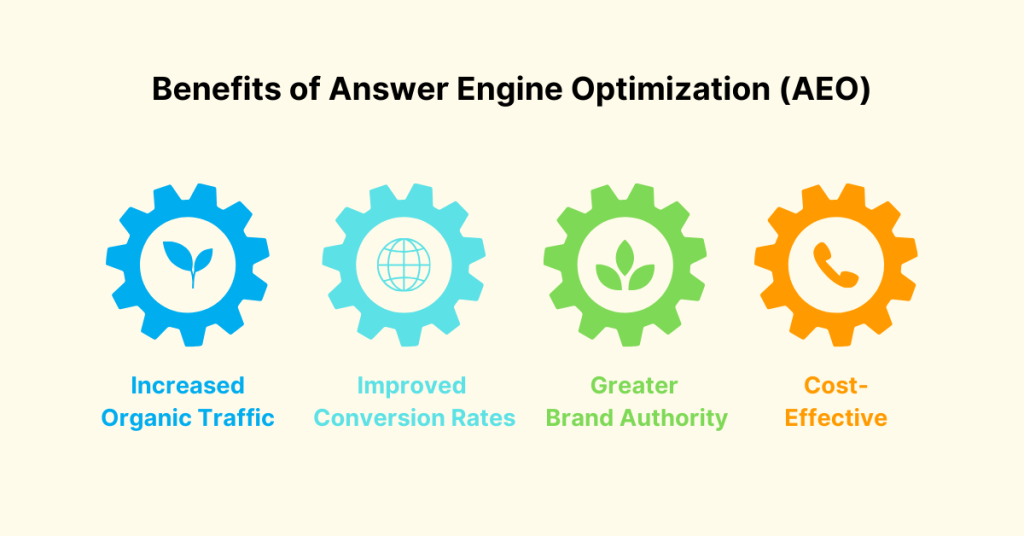
For business owners, embracing AEO offers several compelling benefits, and some of them are discussed here;

    • Improved Visibility

AEO increases your chances of being featured in Position Zero on Google, the coveted spot where direct answers are displayed above traditional search results. For businesses, this increased visibility can result in more traffic, brand recognition, and trust.

    • Better User Experience

As the demand for instant answers grows, optimizing for AEO ensures that your customers get the quick, concise information they need. This enhances user experience, which is crucial for conversion rates and customer satisfaction.

    • Enhanced Voice Search Optimization

As the popularity of voice search continues to rise, businesses need to optimize their content for voice queries, which are typically more conversational and question-based. AEO helps businesses tailor their content for this shift.

    • Edge Over Competitors

Businesses that adapt to AEO can gain a competitive advantage over those relying solely on traditional SEO techniques. By delivering high-quality, concise answers, you position yourself as an authoritative voice in your industry.

  • Stay Ahead of AI Trends

As AI and machine learning technologies continue to advance, optimizing for AEO ensures that your content is ready to be consumed by these technologies, keeping you at the forefront of digital marketing innovations.

Future of Answer Engine Optimization (AEO) in 2025

As we look to 2025, the landscape of search and content discovery is set to undergo even more profound changes. While SEO remains integral to online marketing, AEO is expected to become increasingly important, especially with advancements in AI, voice technology, and the growing role of digital assistants in everyday life.

Here’s a list of what the future of AEO might look like:

    • Greater Integration with AI and NLP  

AI will become even more sophisticated at interpreting and responding to user queries. Content optimized for AEO will need to be tailored to how AI systems understand context, intent, and conversational language.

    • Voice Search Domination

By 2025, the use of voice search is expected to surpass traditional text-based searches. As voice assistants continue to improve, the need for content that is optimized for quick, spoken answers will become even more critical.

    • Increased Use of Structured Data:  

Structured data (such as schema markup) will become a fundamental part of AEO strategies. Search engines and AI systems rely on structured data to quickly pull relevant answers from websites, making it essential for businesses to integrate it into their content.

    • AI-Powered SERPs:  

Search engines will increasingly rely on AI to curate search results, meaning that businesses will need to optimize their content not just for keywords but for AI systems that prioritize relevance and precision.

  • Personalized Answer Engines:  

With the rise of predictive analytics and machine learning, users will expect more personalized answers. Content will need to be optimized not only for general queries but also for individual preferences and contexts.

Key Strategies for Implementing AEO

Implementing AEO in your digital marketing strategy involves optimizing your content to meet the demands of voice search, AI-driven responses, and direct answers. Here are some key strategies:

    • Understanding User Intent is a Must

Understand the questions your target audience is asking and create content that directly addresses those queries. Use long-tail keywords and natural language that mirrors the way people speak.

    • Content Optimization for Featured Snippets

Featured Snippets are prime real estate for AEO. To optimize for this, structure your content with clear, concise answers to common questions using lists, bullet points, or tables.

    • Direct and Concise Answers

Voice search queries tend to be more conversational and shorter. Provide clear, direct answers within the first 50-100 words of your content.

    • Optimize for Mobile

Since voice search is often conducted on mobile devices, ensure your website is mobile-friendly and loads quickly.

  • Leverage Conversational AI 

Incorporate Chatbots or voice assistants on your site to provide direct and real-time answers to user queries. This can improve engagement and provide additional data on what users are asking.

Benefits of AEO for Your Business

Benefits of Answer Engine Optimization (AEO)

There are multiple benefits that AEO can offer to the business in terms of its brand visibility, ranking, reach, and also conversion rates as well. Here, you will get a detail of each of these benefits that AEO offers to businesses:

    • Increased Organic Traffic

Optimizing for direct answers increases your chances of being featured in top search results, bringing in more organic traffic.

    • Improved Conversion Rates

When users receive concise, accurate information quickly, they’re more likely to make purchasing decisions or take other desired actions on your site.

    • Greater Brand Authority

Being the go-to source for specific, relevant answers can position your brand as an authority in your industry.

  • Cost-Effective

AEO focuses on optimizing content rather than paying for ads, making it a more cost-effective long-term strategy compared to PPC campaigns.

Ready to Explore AEO?

Considering the benefits AEO can offer to businesses, it is worth exploring more of its features, and Deftsoft is the best option for modern businesses to do so. One of the leading organizations in the field of Web development, SEO, and Digital Marketing for over 19 years, Deftsoft has all the resources, tools, technologies, and human resources to adapt to these changing requirements. At Deftsoft, you will get the best customer support, an easy-to-understand description of the whole process and also, and guaranteed results. Also, their expertise in SEO for over 19 years is a plus as it is easier for them to adapt to this changed requirement of digital marketing. All you need to do is to get a free consultation scheduled with the experts and get a detailed overview of how your business success journey will be started with the company. 

Conclusion

The rise of Answer Engine Optimization (AEO) is a response to a shifting digital landscape driven by AI, voice search, and a growing demand for instant information. While traditional SEO remains important for driving general traffic and ranking for broad keywords, AEO offers a new way to ensure your content is at the forefront of this next phase of online search. By embracing AEO strategies, businesses can position themselves as leaders in providing concise, relevant answers to user queries—ultimately improving visibility, user experience, and conversion rates. As we move towards 2025, businesses that adopt AEO strategies early will have a distinct competitive advantage over others because of the better reach and conversions they will get as compared to the businesses that will only be depending upon traditional SEO practices to rank higher. 

Throughout this discussion over AEO vs SEO, it is evident that SEO will remain important for businesses and will be an important part of the digital marketing landscape. However, AEO will be a useful addition for businesses that are already doing well with SEO to get even more boost in their search engine ranking, visibility, reach, and conversion rates. So, it is evident that with the evolution of AEO, digital marketers will have a new strategic change to add to their marketing plans in order to offer better results to their respective brands. For businesses searching for reliable and trusted AEO services, Deftsoft can be a perfect option, considering their 19 years of industry experience and visionary leadership. The company offers all sorts of IT services, including AEO and SEO, where they have some of the best people in the industry to lift your business to new heights. 

Best Digital Marketing Agency in India

Ever feel like the internet is a giant party, and your brand is stuck at the door, trying to get in? That’s where digital marketing comes to the rescue! Imagine it as your all-access VIP pass, guiding you through the crowd and making sure everyone knows your name. Whether it’s eye-popping social media campaigns, getting your website to the top of Google searches, or sending out emails that people actually open, digital marketing is how businesses thrive in the online world.

According to IIM Skills, “Digital marketing industry is the fastest growing sector in India, with a growth rate of 25% to 30% rate per year”. Whether you’re a startup or an established company, partnering with a reliable digital marketing agency in India can propel your business to new heights. 

In today’s fast-paced modern world, the significance of digital marketing services cannot be overstated. They are essential for businesses looking to thrive in a digital-first world, enabling them to connect with target audiences, drive growth, and achieve long-term success. As we approach 2025, now is the perfect time to step up your game and elevate your digital presence efficiently. Today, India has overtaken China to become the most populated country in the world, with a population of 1.45 billion. With the increase in population, India has also shown a significant jump in its active internet users. According to Statista (dated 18 September 2024), India is the second largest online market in the world, with 900 million internet users. 

This burgeoning online population presents a golden opportunity for businesses looking to harness the power of digital marketing services.

One more thing, 

“Investing in digital marketing services is not just an option – it’s a necessity for any business looking to thrive in technology’s vibrant and competitive online ecosystem.”

In this competitive landscape, Indian businesses need a digital marketing guru who not only understands the intricacies of online strategies but also knows how to make them sparkle! This is where Deftsoft enters the chat. With 19+ years of experience, Deftsoft is the best digital marketing agency in India. Deftsoft is like the seasoned caption of a ship, expertly steering businesses through the ever-evolving digital seas. From SEO magic to social media wizarding, Deftsoft has all the right tools and strategies to make sure your business stands out in the digital crowd. In this guide, let’s discuss about Deftsoft, a leading digital marketing agency in India, in detail. 

Deftsoft: The Best Digital Marketing Agency in India 

The era of traditional marketing techniques is over! Everything is digitalized, and so does marketing and promotional tactics. This is where the importance of digital marketing services is elevated. As the best digital marketing agency in India, Deftsoft stands at the forefront of transforming the customer engagement and promotional landscape. With 19+ years of experience, Deftsoft is counted among the leading digital marketing agencies in India, offering cutting-edge solutions that help businesses thrive in the competitive online landscape. We have a team of experienced professionals who are highly skilled in implementing valuable digital marketing strategies, including SEO, social media marketing, content creation, and pay-per-click advertising. Our expertise spans various industries (tech, fashion, real estate, shopping & etc.)

19+ Years of Excellence

Deftsoft laid its foundation in 2005 – a time when digital marketing was still a new concept for the Indian subcontinent. However, in no time, Deftsoft remodelled from a successful startup into a giant digital marketing agency in India. This year, we celebrate our 19+ years of excellence, and the whole company is so proud of how far they have come. In our nearly two decades of experience, we’ve successfully partnered with over 1200 clients all across the globe. This remarkable milestone is an honest proof of our commitment to our dedication, excellence, and skills. Back in the day, Deftsoft revolutionized the digital marketing landscape with the availability of advanced technologies and strategies. 

Now, as we approach 2025, we’re again at the forefront of fulfilling the unique requirements of India’s evolving digital landscape. 

Our Comprehensive Digital Marketing Services

As the best digital marketing agency in India, Deftsoft aims to elevate your brand’s online presence. Our comprehensive digital marketing services are designed to help businesses succeed in the fast-paced digital world. From SEO and social media marketing to pay-per-click advertising and content creation, we offer a full range of strategies to boost your visibility, engagement, and conversions. Take a look through our comprehensive digital marketing services. 

1. Search Engine Optimization (SEO)

Deftsoft, the best digital marketing agency in India, offers top-tier SEO services that boost your website’s visibility and ranking. Our expert team utilizes tools like SEMrush, Moz, and Google Analytics to conduct keyword research and optimize on-page elements, ensuring sustainable organic traffic and growth for your business.

2. Pay-Per-Click (PPC)

Maximize your ROI with Deftsoft’s PPC services. As a top digital marketing agency in India, we create targeted ads using Google Ads and Microsoft Advertising that drive instant traffic and conversions. Our continuous optimization strategies ensure measurable, cost-effective results for your campaigns.

3. Content Marketing

At Deftsoft, we craft engaging content that resonates with your audience. Our content marketing services include blogs, articles, and infographics, supported by tools like BuzzSumo and Sprout Social. We build brand authority and drive organic growth through meaningful content tailored to your target market.

4. Technical Search Engine Optimization

Deftsoft excels in technical SEO, ensuring your website is optimized for speed, mobile-friendliness, and crawlability. We use tools like Google Search Console and GTmetrix to discover site issues and performance, helping search engines easily index your pages and boost your ranking.

6. Online Reputation Management

Protect and enhance your brand image with Deftsoft’s Online Reputation Management services. We monitor and manage your online presence using tools like Reputation.com and Google Alerts, addressing negative feedback and promoting positive reviews to ensure your business maintains a trustworthy reputation.

7. Email Marketing Services

Deftsoft’s email marketing services boost engagement and drive conversions. We utilize platforms like Mailchimp and SendinBlue to create personalized campaigns and automated workflows, helping you connect with your audience and nurture leads for impactful results.

8. Conversion Rate Optimization

Boost your website’s performance with Deftsoft’s Conversion Rate Optimization services. Using tools like Hotjar and Optimizely, we analyze user behavior and implement data-driven strategies to enhance your site’s usability, driving more leads, sales, and overall conversions.

9. E-Commerce Marketing

At Deftsoft, we specialize in e-commerce marketing that drives sales and increases online visibility. We leverage tools like Shopify, WooCommerce, and Google Merchant Center to optimize product listings and create tailored strategies that ensure your online store reaches the right audience.

10. Amazon Marketing Services

Stand out on the world’s largest e-commerce platform with Deftsoft’s Amazon Marketing Services. We utilize Amazon Seller Central and Helium 10 to optimize your product listings, manage ads, and enhance visibility, driving more sales and improving your brand’s ranking on Amazon.

11. Social Media Marketing (SMM)

Amplify your brand’s presence with Deftsoft’s Social Media Marketing services. We create engaging content and manage campaigns using tools like Hootsuite and Buffer to foster meaningful connections with your audience across platforms like Facebook, Instagram, and Twitter, ensuring increased engagement and growth.

12. Local SEO

Dominate local searches with Deftsoft’s Local SEO services. We use tools like Google My Business and BrightLocal to optimize your business for location-specific keywords, ensuring your brand ranks higher in local searches and drives more foot traffic to your physical store.

13. Facebook Ads

Deftsoft’s Facebook Ads services are designed to target the right audience and drive conversions. Utilizing Facebook Ads Manager and AdEspresso, we help you create tailored ad strategies that connect with your ideal customers, boost engagement, and maximize your return on ad spend.

14. Strategic and Analytics Consulting

Unlock your business’s potential with Deftsoft’s Strategic and Analytics Consulting. Our experts analyze your digital performance using tools like Google Analytics and Tableau, creating data-driven strategies that help you achieve measurable success and ensure your campaigns are optimized for growth and efficiency.

Wrapping Up

In conclusion, as we move toward 2025, the importance of digital marketing cannot be overstated. Partnering with Deftsoft, the best digital marketing agency in India, empowers your business to harness the immense potential of the online landscape. With over 19 years of experience, our dedicated team is equipped with the expertise and tools necessary to elevate your brand’s presence, drive growth, and achieve lasting success. From SEO and PPC to social media marketing and content creation, we offer comprehensive solutions tailored to your unique needs. Don’t let your brand stay at the door; let Deftsoft guide you to the centre of the digital party and ensure your voice is heard loud and clear!

Frequently Asked Questions (FAQs)

1. Which company is best for digital marketing in India?
Deftsoft stands out as a top digital marketing company in India, offering a blend of innovative strategies, skilled experts, and proven results to drive growth for businesses across sectors.

2. How much do digital marketing agencies charge in India?
Digital marketing costs in India vary based on services and campaign complexity. We offer customizable packages to suit every budget.

3. What services does a digital marketing agency in India offer?
Digital marketing agencies, like Deftsoft, offer SEO, social media marketing, PPC, E-mail marketing, content creation, conversion optimization, and more to help businesses grow their online presence.

4. What new technologies or tools will digital marketing agencies use in 2025?
By 2025, AI-driven analytics, voice search optimization, and advanced personalization tools will dominate digital marketing. We stay ahead by adopting these cutting-edge technologies.

5. How can a digital marketing agency help my business leverage voice search for SEO?
A digital marketing company optimizes content for voice queries, ensuring your business ranks in voice search results, captures voice-driven traffic, and stays relevant in the evolving SEO landscape.

6. How does a digital marketing agency measure the success of a campaign?
The agency tracks success through key performance indicators (KPIs) like traffic, conversions, and ROI, providing detailed reports to showcase the campaign’s impact on your business growth.

Content Marketing Strategy Checklist: B2B Customer Retention Guide

Whether you’re a B2B or B2C business organization, understanding the value of content marketing is non-negotiable. There are two main pillars of growing any business: 

A. Generating relevant leads that convert, and 
B. Retaining those leads

Many businesses just focus on point A and completely forget about customer retention. The real treasure lies in offering value to your existing customers for a high customer satisfaction rate and thus, enhancing your business’s revenue. 

According to a recent Harvard research, you can increase your profits by 25% to 95% by increasing your customer’s lifetime value and retention by 5%. This is the reason why it is important to invest in content marketing, especially for retaining your customers.

If you’re overwhelmed by confusion, this blog is the perfect guide to help you follow our well-researched guide on the best customer retention strategies.

What is Customer Retention? How to Measure It?

Customer retention is a quantitative metric to measure the total number of customers that are retained by a business in a specific time frame. In simple words, it refers to the number of people who repurchase a product or service from your business or brand. 

It is a reflection of the customer’s loyalty to a company. There is also a direct relationship between your company’s revenue and the customer retention rate.

Here’s how you can measure customer retention rate:

Customer Retention Rate (CRR) formula

Let’s make it easy with an example.

If you have 530 customers at the end of the month and 500 customers at the beginning of the month. Also, you gained 50 new customers. Therefore, your customer retention rate will be:

(530-50)/500 = 0.96 

This means that you have a 96% retention rate.

Note: You need to work on your customer retention rate if it is less than 60% for 2 months consecutively.

Why is Customer Retention Important?

You must maintain a healthy customer retention rate of at least >70% to drive in sophisticated amount of revenue to your business. There are plenty of reasons to actively work on customer retention strategies for enhanced business profitability.

  1. Consistent Monthly Recurring Revenue (MRR)

One major reason to invest in B2B customer retention strategies is to gain consistent Monthly Recurring Revenue (MRR). MRR accounts for the number of customers driving specific revenue per month. Once you gain loyal customers, they can bring in consistent business. 

The higher the retention rate, the higher the revenue.

For example, Salesforce‘s customer retention rate of 77% ranks it fifth amongst its competitors, including Google, IBM, SAP, Workday, and Oracle, according to Comparably. 

  1. Reduced Churn Costs

Companies can incur heavy losses if they cannot retain a customer. It is worrisome to have a high churn rate. According to Invesp, it costs 5 times more to attract a new customer than to retain an existing one. Therefore, when you invest in retaining your customers, they can also bring in 2x more business through word-of-mouth and referrals.

  1. Enhanced Brand Loyalty

According to Yotpo, over 55% of consumers are loyal to a brand because they love the product. Then come other factors such deals and customer service.

Enhanced Brand Loyalty

Customers that retain also bring in bonus business by buying more products than their first purchase. The same goes for B2B businesses! Loyal customers also act as a pool of resources for a company. You can gain valuable feedback from these consumers and make the required changes to your business’s product or service.

Now that you’re familiar with customer retention, how can you increase your customer retention rate? 

The secret lies in implementing solid content marketing strategies right when you onboard a client, in the case of a B2B business, or when a potential customer visits your website. 

It’s time to learn about content marketing!

What is Content Marketing?

Content marketing is a strategy that revolves around planning, creating, and distributing content to generate relevant leads. It is an approach that does not follow the conventional methods of advertising but generates content on various social channels, including blog posts, social media posts, articles, images and videos.

The content created is heavily emphasized on being informational, insightful and solution-focused to the consumers. 

The apex goal of content marketing is to build trust, credibility and accountability for your company. Once you create a loyal user base, you open the door to an increased number of referrals and, ultimately, sales.

What are the Best Content Marketing Channels for B2B Customer Retention?

According to the HubSpot State of Marketing Report, 50% of marketers plan to increase their investment in content marketing in 2024. And according to a recent Forbes study, 45% of B2B content marketers expect an increase in their content marketing budget in 2024. 

If you’re one of them, it is important to strategically create content for various social channels for B2B businesses. 

According to Forbes, the most popular social media channels for B2B content marketing are as follows:

social media channels for B2B content marketing
  • In-person events (56%)
  • Webinars (51%)
  • Email (44%)
  • Organic social media platforms (44%)
  • Blogs (40%)
  • Email newsletters (39%)

Foolproof B2B Content Marketing Strategy Checklist for Customer Retention

Let’s address the elephant in the room: what are the best content marketing strategies for customer retention?

Before we move forward with the content marketing strategies for B2B businesses, it is pivotal to understand the customer buyer journey. Comprehending a customer journey map is as important for retaining customers as it is for generating new leads

The following are the crucial stages in a customer journey:

  • Awareness stage
  • Consideration stage
  • Conversion stage
  • Loyalty stage
  • Advocacy stage or Referral stage

We have curated content marketing strategies keeping these stages in mind, and you should, too when implementing the following strategies!

B2B Content Marketing Strategy Checklist

1. Content is the King

Creating content actively can help you enhance your brand’s visibility to both potential customers as well as to search engines. You can create various forms of content that offer value to the users. Being in the business, you can create the following types of content:

  • Blog posts
  • Emails
  • How-to guides
  • FAQs
  • Product demos
  • Case-studies
  • Whitepapers
  • Ebooks
  • Infographics
  • Checklists
  • Social media posts
  • Videos

Pro Tip: You can batch-create the content for the whole month in one go by brainstorming 10-20 topics. This practice will help you generate content consistently which will eventually help your customers to look out for your content!

2. Don’t Underestimate Customer Data

Customer data is a valuable resource for understanding consumers’ interests. It indicates how a customer interacts with your website. You can harness this data to gain useful insights and perform analysis to gather useful information across various touchpoints. We call it ‘customer intelligence’.

You can then build user personas, group them up and perform customer segmentation based on interests, demographics, consumer problems, etc.

3. Show Your Case Studies and Testimonials

When a prospect reaches your website, it is important to show them proof of work. This is when your business’s case studies and customer testimonials come in handy. Presenting one of the best content marketing strategies to enhance the chances of converting your leads into clients.

Testimonials and case studies hold the power to evoke emotions in the individuals who interact with such content. This practice allows the brands to create deeper connections with their prospects.

4. Shoot Appealing Onboarding Emails

It is pivotal to build smooth experiences with your customers right when they buy your product or service. Sending an onboarding email when your consumers make a purchase increases the chances of retaining them.

You can add interactive elements to the emails such as a catchy hook, animations, images, short videos or even an exclusive discount. For example, make the user feel worthy of reading the entire email by providing a discount on the next purchase.

Ensure that you perform customer segmentation based on your customers’ responses and behaviors to the onboarding emails and create a content marketing strategy accordingly.

5. Collect User Feedback through Chatbot

 Collecting customer feedback is the ultimate content marketing strategy for customer retention. You can create and deploy a chatbot on your website to directly gain the personal experiences of consumers. This will help you understand areas for improvement in your product or service.

Once you recognize various bottlenecks and work on them, you can work on these shortcomings and retain your consumers.

6. Personalize Wherever You Can

Human beings love to rebuy from brands where they feel seen and heard. If you’re an enterprise, you must create your profiles on social media platforms, especially LinkedIn and YouTube. 

Small businesses can still interact with their audience directly. However, enterprises mostly struggle with creating personal relationships with their consumers. However, some prominent enterprises have built an immaculate social media presence.

For example, Shopify creates a pool of content on YouTube, which has yielded them a solid personal community and thus directly impacted their customer retention rate.

shopify

Let Us Help You Formulate a Solid Content Marketing Strategy

Whether you’re an enterprise, business organization or small business, Deftsoft is a top-notch digital marketing agency that has a team of inbound and outbound content marketing, SEO and content writers. With more than 18 years in the industry, we come in with expertise in content marketing. From building custom B2B content marketing strategies to strategizing for marketing campaigns, we’ve got you. 

Reach out to us to get started on a killer content marketing strategy for your brand today.

FAQs:

What is meant by a digital content marketing strategy?

A digital content marketing strategy refers to planning, creating, and implementing a strategy for marketing content across various digital and social channels. The most popular method for formulating a content marketing strategy is to understand the customer’s buyer journey and develop a strategy around it.

What is the best type of content to create for building a customer retention strategy?

It is important to have an updated blog post page to keep your customers updated about your product or service. Next, you must focus on building a strong social media presence on various channels such as LinkedIn, YouTube, Instagram, Twitter and Facebook. Another pro tip to retain your customers is to always act on negative feedback actively.

Mention some of the best content marketing strategies for retaining customers.

Some of the best content marketing strategies are to focus on creating content and emails that address customers’ interests and pain points, show your case studies and testimonials on your website, make a killer onboarding email to shoot to your customers and always collect user feedback to analyze it and create a content marketing strategy accordingly.

What is meant by customer retention?

Customer retention refers to the number of customers who rebuy your product or service after their first purchase from you. It is better to focus more on increasing your customer retention rate than upselling, as it costs 5x times more to capture a new customer than to retain him. 

11 Lead Generation Strategies: How to Generate Leads for SaaS Businesses

Did you know that you need to generate at least 50 quality leads to gain one customer? A lead is someone who fits your business’s ideal customer profile and discovers your company. In general, they’re keen to learn about your business.

On the other hand, a quality lead is when an individual visits your website and provides their contact information by filling out a form. For instance, if you run an HR management software that helps HR professionals manage their data, your website must reflect that information.

Here’s the big question: if you needed to generate thousands or even tens of thousands of quality leads, how would you do it? The answer is cracking the code for lead generation.

In this blog, we’ll plunge into sure-shot strategies for lead generation for B2B SaaS. It entails 11 foolproof strategies so that you never fall off track from collecting high-quality leads.

What is Meant by Lead Generation for B2B SaaS?

Now that you’re familiar with what a lead is, let’s learn about what is B2B lead generation for SaaS.

Lead generation for B2B SaaS is the process of identifying the right set of business organizations or enterprises that show interest in your software service. In other words, they have the potential to buy from you and can be your future customers. 

Lead generation for SaaS business is more of a spiral than a straight process. The first ignition to identify your potential clients is when they interact with your service. For instance, if someone visits your website and signs up for a newsletter, he’s a potential customer.

No one does it better than Salesforce. For instance, it has added a chatbot to register website visitors’ queries, which are a direct reflection of potential customers.

Salesforce

Lead generation for B2B SaaS is the first step in guiding users into the sales or marketing funnel. Most individuals think that advertising is the only way to attract leads. However, this is not true. Lead generation for SaaS includes the following strategies:

  • Content marketing
  • Email marketing
  • Pay-Per-Click (PPC) ads
  • Organic marketing
  • Cold calling
  • Website optimization
  • Event Marketing

Why is Lead Generation for SaaS Important?

Fundamentally, B2B lead creation is important to the business, sales, and marketing departments. Without lead creation, there wouldn’t be any leads to move through the sales funnel, no conversions, no clients, and no further business.

Apart from functioning as an organization’s lifeblood, B2B lead generation also furnishes crucial data to marketing representatives, sales representatives, and sales development representatives (SDRs), who are the people in the background.

Note: When practicing lead generation for SaaS, sales-qualified leads should be considered a high priority as they’re more likely to convert than marketing leads.

It is important to implement SaaS lead-generation strategies for the following reasons:

  • To filter ideal customers
  • Boost brand awareness and online visibility
  • Enhance conversion rate
  • Generate high revenue
  • Optimize sales pipeline flow

What is the Process for B2B Lead Generation for SaaS?

Process for B2B Lead Generation for SaaS

Lead generation is a crucial part of inbound marketing and a pivotal process of the marketing funnel. Bringing awareness about your brand is how you can attract new leads. As discussed earlier, leads are nothing but a bunch of individuals interested in your service.

The following are the well-defined process of lead generation for your B2B SaaS business:

1. Creating a Buyer Persona

It is important to find the right product-market fit. Therefore, you must find what an ideal customer looks like for you. You must craft a clear picture of the following characteristics of your ideal customer (buyer persona):

  • What are the preferences of your buyer persona?
  • What are the pain points of your ideal customer?
  • What are the interests of your buyer persona?
  • What are the demographics of your buyer persona?

2. Leveraging Marketing Tactics

After figuring out the buyer persona, you must choose a solid strategy to target it. You can target the ideal businesses through social media posts, blog posts, landing pages, and squeeze pages (landing pages with newsletter sign-up prompts). 

3. Lock In the Prospect

The purpose of lead generation for B2B SaaS is to create a consistent influx of businesses that can convert into actual clients. In case these leads become inactive, you can retarget them through social channels, email retargeting, etc.

Top-Notch Strategies for Lead Generation for SaaS Companies

It’s time to address the elephant in the room: how to generate leads for SaaS businesses. This section discusses B2B SaaS lead generation strategies. These strategies are a great option to adopt when you don’t want to opt for cold-calling or perform offline sales. To make it easy for you, we’ve considered the example of Human Resource Management (HRM) software to understand the B2B dynamics of the business landscape.

Let’s begin!

Strategies for Lead Generation for SaaS Companies

1. Newsletters for the Win

Newsletters serve as a valuable tool for engaging with potential lead generation and practicing how to generate leads for SaaS on a regular basis. For example, an HRM software company could curate content for its newsletters that includes industry news, tips for improving HR processes, case studies showcasing successful implementations of its software, and upcoming events or webinars. 

It is a great starter strategy for lead generation for SaaS businesses, as they can collect email addresses from prospective clients and reach out to them personally later on. 

By providing a mix of educational and promotional content, the newsletter keeps the software top-of-mind and positions it as a trusted resource in the HR space.

2. Content Marketing and Blogging

Content marketing serves as the backbone of the entire inbound marketing strategy and is one of the best practices for SaaS lead generation. Content marketing, particularly through blogging, allows HRM software companies to demonstrate their expertise and provide solutions to common challenges faced by HR professionals. 

By publishing in-depth articles, how-to guides, and case studies on topics relevant to their target audience, such as talent acquisition strategies, employee engagement tactics, and compliance issues, the software can attract leads who are actively seeking solutions to their HR problems. 

Additionally, maintaining a regularly updated blog can improve the software’s search engine visibility and drive organic traffic to its website. Remember to refresh your content according to prospects’ latest needs to grab their attention.

Pro Tip:

Don’t know how to generate leads for SaaS? You can create content according to the marketing funnel that works for your enterprise or business organization.

3. Social Media Advertising

Social media advertising, particularly on platforms like LinkedIn, provides HRM software companies with the opportunity to target their ideal audience of HR professionals. You can also use other social media channels, such as Instagram, Twitter, TikTok, Pinterest, Reddit, and Quora, to attract leads.

Note: Posting at the right time matters in the long run. For a time guide, refer to the following.

Right time to post on social media platforms, facebook, Instagram, Twitter, TikTok, Pinterest and LinkedIn

Through targeted advertising campaigns, the software can reach users based on factors such as job title, industry, company size, and interests. For example, the software could create sponsored content or display ads that highlight specific features or use cases of the software, driving traffic to landing pages where leads can learn more and sign up for a free trial or demo.

Therefore, social media advertising is another result-oriented B2B SaaS lead generation strategy.

4. Webinars and Workshops

Hosting webinars and workshops allows HRM software companies to engage with potential leads in a more interactive and educational format to generate direct leads for B2B SaaS businesses. By addressing common pain points and challenges faced by HR professionals, such as performance management, employee training, or remote workforce management, the software can demonstrate its value proposition and provide practical solutions. 

For example, a webinar on effective onboarding strategies could showcase how the software simplifies the onboarding process and improves employee satisfaction and retention.

5. Search Engine Optimization (SEO)

Search Engine Optimization (SEO) is not just related to ranking long-form content; it also plays a pivotal role in raking landing pages, websites, and even My Google Business Profile. Therefore, SEO is another undermined SaaS lead generation strategy.

For example, SEO is crucial for ensuring that HRM software companies’ websites rank prominently in search engine results pages (SERPs) when potential leads are searching for relevant keywords or phrases. 

By optimizing website content, meta tags, and site structure for keywords related to HRM software and related topics, such as HR automation, payroll management, and talent acquisition, the software can attract organic traffic from users actively seeking solutions in the HR technology space.

6. Email Marketing Campaigns

Email Marketing Campaign

Email marketing campaigns allow HRM software companies to nurture leads through the sales funnel by delivering personalized content and offers directly to their inbox. 

By segmenting leads based on factors such as industry, company size, or stage in the buyer’s journey, the software can send targeted emails that address the specific needs and pain points of each segment. 

For example, a lead who has downloaded a whitepaper on employee engagement could receive follow-up emails with case studies showcasing how the software has helped other companies improve employee morale and productivity.

7. Partnerships and Co-marketing

You can explore other channels such as partnerships for outbound lead generation services for B2B SaaS businesses.

As in the case of an HRM firm, forming partnerships with complementary businesses or industry associations can help HRM software companies expand their reach and attract new leads. By collaborating on joint marketing initiatives, such as co-hosting webinars, creating co-branded content, or participating in industry events together, the software can leverage the partner’s existing network and credibility to reach a wider audience of potential leads. 

For example, partnering with a recruitment agency could lead to mutually beneficial opportunities for cross-promotion and lead generation.

8. Customer Referral Program

Don’t know how to generate leads for SaaS? Use a customer referral program. Implementing a customer referral program incentivizes satisfied customers to refer their colleagues or connections to the software, effectively turning them into brand advocates. By offering rewards such as discounts, credits, or exclusive access to new features for each successful referral, the software can encourage customers to actively promote the product to their networks. 

For example, a customer who has had success with the software in streamlining their recruitment process may be more inclined to refer other HR professionals in their network who are facing similar challenges.

9. Case Studies and Testimonials

Case studies and testimonials provide social proof of the software’s effectiveness and help build credibility with potential leads. By showcasing real-world examples of how the software has helped other companies solve their HR challenges and achieve tangible results, such as increased efficiency, cost savings, or employee satisfaction, the software can demonstrate its value proposition and differentiate itself from competitors. 
You can also add a star-feature rating to your business. According to a recent post by ExplodingTopics on Twitter,

Only 6% of consumers say star ratings don’t affect their choices. 

38% of shoppers won’t do business with a brand unless they have a 4-star rating.

21% need to see at least a 3.5 rating, and 12% are happy to settle for 3 stars.

Source: BrightLocal

When considering the example of HRM software, featuring testimonials from HR professionals who have successfully implemented the software and seen measurable improvements in their processes can reassure potential leads of its efficacy and reliability.

10. Networking Events and Conferences

Attending industry events and conferences provides HRM software companies with valuable opportunities to network with potential leads and showcase their product to a targeted audience. By sponsoring booths, hosting networking sessions, or participating in panel discussions and speaking engagements, the software can increase brand visibility and establish thought leadership in the HR technology space. 

For example, hosting a live demonstration of the software at a major HR conference allows attendees to interact with the product firsthand and learn more about its features and benefits.

11. Free Tools and Resources

Offering free tools and resources related to HR allows HRM software companies to attract leads who are seeking solutions to specific challenges. By providing value upfront and demonstrating expertise in the HR domain, the software can position itself as a trusted resource and build rapport with potential leads. 

For example, offering a free HR audit tool or template for creating employee performance evaluations not only helps HR professionals address immediate needs but also introduces them to the software’s capabilities and encourages further engagement.

Wrapping Up

It’s a wrap on how to generate leads for SaaS. Lead generation for SaaS businesses requires a keen eye for detail and intricacy. In addition to cold-calling and door-to-door sales, understanding the value of various social media and other rich resources is important. You can prepare a concoction of educational and promotional content on various channels to attract your prospective clients. At the end of the day, businesses seek pure value, and you must be able to fulfill their requirements.

FAQs:

What is meant by lead generation for SaaS?

Lead generation for SaaS business refers to the process of identifying the right set of business organizations or enterprises that show interest in your software service. In other words, they have the potential to buy from you and can be your future customers. 

What are the best practices for lead generation for SaaS companies?

The best practices for B2B SaaS lead generation include leveraging web blogging and content advertising, Search Engine Optimization (SEO), newsletters, creating free tools and resources for the prospects, running email marketing campaigns, and creating partnerships with other businesses to get an influx of prospects.

What are the best social channels for B2B lead generation for SaaS?

The best social channels for B2B SaaS lead generation include social media platforms such as Instagram, Facebook, Pinterest, Twitter, Reddit and TikTok. You can also use newsletters to attract prospective businesses.

How to create inbound leads in SaaS?

You can create a consistent influx of leads for your SaaS business by applying top-of-the-funnel, middle-of-the-funnel and bottom-of-the-funnel strategies. You can work on social media posts and blog posts to create inbound leads. You can also create content for all stages of the buyer’s journey and create whitepapers and ebooks.

Google’s Robots for Ad Creation: Peek AI Era

WPP Open marketing operating system is all set to integrate with Gemini 1.5 Pro, raising the bar in marketing creativity, productivity, and efficiency.

Can you imagine a world where ads are created and post-produced by AI? Well, the wait is over. The world’s largest advertising and PR company, WPP, recently partnered with Google to build ads using the former’s proprietary AI miracle, Gemini.

To shed more light on WPP, it is a British communications, PR, advertising, and commerce multinational company that serves as the parent company of various ad firms, such as Ogilvy, Wunderman Thompson, and VMLY&R. According to Statista, the company bagged a revenue of $18.9 billion in 2023 and is set to transcend enterprise boundaries with this gigantic collaboration.

The company is all set to leverage Gemini AI to create ads. It would also include the following:

  • Ad narration.
  • Voiceover script generation.
  • Product image creation.

The landmark partnership with WPP means that Google’s robots could potentially create ads for some of the world’s biggest brands, such as the Coca-Cola Company, L’Oréal, and Nestlé.

PPC experts have consistently emphasized the importance of leveraging AI to stay ahead in marketing. With the world’s biggest ad group actively incorporating Google’s Gemini into their strategy, it’s a pivotal moment, and advertisers should pay attention. This integration holds the promise of transforming the industry landscape.

Why WPP Made the Groundbreaking Collaboration?

WPP is fixated on the potential of transforming marketing capabilities and functionalities. To quote the exact words, WPP is anticipating that the collaboration with Google will “drive a step-change in marketing efficiency and effectiveness.” All thanks to Google, it can put forth its expertise in generative AI (Gen AI) technology, data analytics, and cybersecurity. 

These technologies are revolutionizing the marketing scenario, global creative reach and thorough understanding of clients’ requirements.

Gemini Technology in Action

Now, you must be wondering how the whole process of ad creation will work. It is simple. Google’s proprietary advanced generative AI tools will be integrated with WPP’s marketing and advertising data. 

This integration of the data will open the doors for the WPP’s clients to create product/service-specific content for their brand that caters to the users’ needs. After all, the power of generative AI cannot be underestimated. 

There’s more to the integration!

The integration of data will also provide deeper insights into the client’s target audience preferences and requirements. Additionally, this merging of the technologies will allow the WPP clients to understand the effectiveness of their formulated content and the degree to which they can optimize their campaigns.

What are the Use-Cases of Technological Integration?

There are four major innovative use cases of Google’s collaboration:

  • WPP Open Creative Studio

WPP Open has its own proprietary gen AI app, the Creative Studio. This Creative Studio is integrating with Google’s Gemini 1.5 Pro technology. The versatile nature of this integration will help with various tasks, such as writing headlines or even turning a sketch into an image. By integrating gen AI, users can also build feature-rich and dynamic user interfaces. You can provide in-depth prompts to the tool regarding the brand’s color palette, voice, fonts and even previous marketing campaigns.

  • Smarter Content Optimization

WPP also offers an AI Performance Brain that can predict the success of a marketing campaign even before it launches. This is achieved by integrating Gemini 1.5 Pro with the WPP Gen AI, which enables faster predictions with high accuracy. This tool can help business organizations save millions of dollars by only investing in marketing campaigns with the potential to perform well.

  • AI Narration

Gemini 1.5 Pro has taken the art of video creation to the next level. With the help of AI, users can create customizable video narration scripts automatically. ElevenLabs, a reliable WPP partner, then creates a realistic voiceover of the generated script. Therefore, the video narration process is now simple, easier, feasible, and efficient with a personalized touch.

  • Hyper-Realistic Product Representation

The Gemini AI has taken product visualization technology up a notch. It uses the Universal Scene Description 3D file formats to understand the brand’s style guidelines, such as colors, logos, fonts, etc. It can also incorporate the product’s shape, design, and packaging. These hyper-realistic images can be used for marketing and advertising of the products.

What WPP Said?

This is what Stephan Pretorius, Chief Technology Officer at WPP, said:

“This collaboration marks a pivotal moment in marketing innovation. Our integration of Gemini 1.5 Pro into WPP Open has significantly accelerated our gen AI innovation and enables us to do things we could only dream of a few months ago. With Gemini models, we’re not only able to enhance traditional marketing tasks but also to integrate the end-to-end marketing process for continuous, adaptive optimisation. I believe this will be a game-changer for our clients and the marketing industry at large.”

What Google Said?

This is what Thomas Kurian, CEO of Google Cloud, said:

“AI has the potential to unlock new levels of effectiveness for marketers, whether it is optimising campaigns, automating repetitive tasks like brand descriptions, or sparking entirely new ideas. This partnership brings the power of Google Cloud’s gen AI capabilities together with WPP’s marketing domain expertise to help our mutual customers create better campaigns that resonate with consumers in a deeper way.”

WPP has made an annual investment of £250 million in AI, data and technology and its strategy is to capitalize on new-gen technologies through groundbreaking collaborations with enterprises like Google.