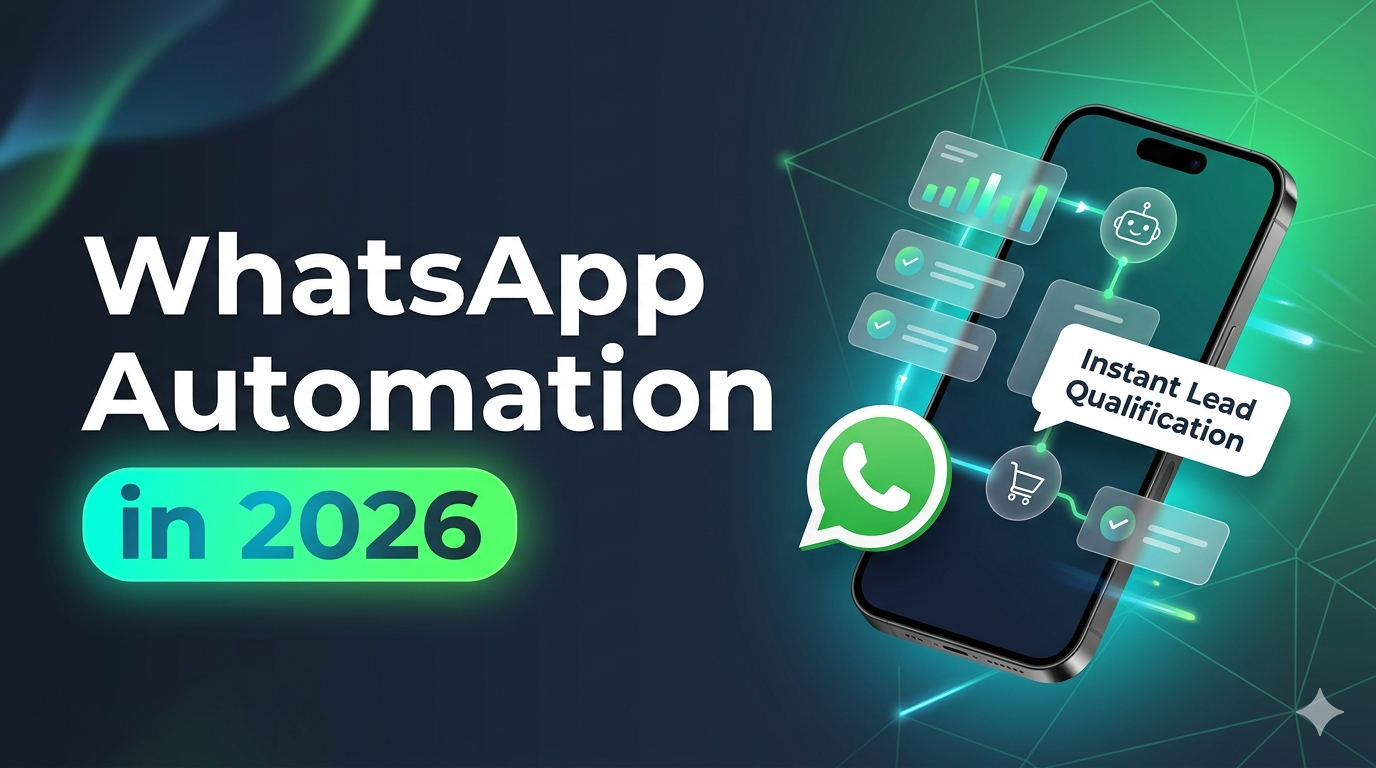
How Can WhatsApp Automation Help Businesses Turn Conversations into Conversions in 2026?
-
By Devraj
-
15th June 2026
Customers no longer want to wait. They expect quick replies, useful answers, simple buying steps, and personalised support. This is one reason why WhatsApp has become more than a messaging app for businesses. It is now a direct communication channel where brands can answer questions, send updates, recover leads, support customers, and increase repeat sales.
In 2026, WhatsApp automation is becoming a major part of modern business communication. It helps companies stay available without making teams handle every message manually. From lead follow-ups to abandoned cart reminders, appointment confirmations, order updates, and customer support, automation can make conversations faster and more useful.
At the same time, WhatsApp marketing is also changing. It is no longer about sending bulk promotional messages. Modern WhatsApp campaigns need timing, consent, segmentation, personalisation, and clear value. When used correctly, WhatsApp can help businesses move users from interest to action with less friction.
This blog explains how WhatsApp automation works in 2026, why it matters for growth, and how businesses can use WhatsApp marketing, conversational marketing, AI chatbots, and smart customer retention strategies to turn everyday chats into real conversions.
Quick Summary
WhatsApp automation helps businesses manage customer conversations, follow-ups, reminders, support queries, and sales journeys without depending only on manual replies.
WhatsApp marketing works best when brands use it for helpful, timely, and permission-based communication instead of random promotional blasts.
Modern businesses are using WhatsApp with CRM tools, ecommerce systems, websites, ads, payment journeys, and customer support platforms. Conversational marketing is becoming important because customers prefer two-way communication over one-sided advertising.
An AI chatbot for a website can work with WhatsApp to capture leads, answer common questions, and continue the conversation on a channel customers already use. Strong customer retention strategies now include post-purchase WhatsApp updates, reorder reminders, feedback requests, loyalty messages, and personalised support.
For businesses that want to build these systems properly, Deftsoft can help with WhatsApp automation strategy, chatbot development, CRM integration, and complete digital growth solutions.
Ready to Turn WhatsApp Chats into Customers?
Build smarter customer journeys with WhatsApp automation, AI chatbots, and personalised marketing flows that help your business respond faster, engage better, and convert more leads.
Quick Navigation
Why WhatsApp Matters More for Businesses in 2026
How WhatsApp Marketing Has Changed
WhatsApp Automation and Conversational Marketing
Where an AI Chatbot for a Website Fits In
Best WhatsApp Automation Use Cases for Businesses
1. Lead Capture and Qualification
4. Appointment and Booking Reminders
5. Post-Purchase Communication
6. Customer Feedback and Reviews
How WhatsApp Automation Helps Improve Conversions
WhatsApp Marketing and Customer Retention Strategies
Mistakes Businesses Should Avoid
How to Build a Smart WhatsApp Automation Strategy
Why Personalisation Matters in WhatsApp Marketing
The Role of AI in WhatsApp Automation
Industries That Can Benefit from WhatsApp Automation
Measuring WhatsApp Marketing Performance
Why WhatsApp Matters More for Businesses in 2026
WhatsApp is already part of everyday life for customers in many regions. People use it to talk to family, friends, service providers, local shops, doctors, banks, travel agents, and brands. That comfort makes it a powerful business channel.
The main advantage is simple: customers already know how to use WhatsApp.
They do not need to download another app. They do not need to learn a new support portal. They do not need to search through long email threads. A business can send a clear message, and the customer can reply instantly.
This is why WhatsApp marketing has become useful for industries like ecommerce, real estate, healthcare, education, finance, hospitality, travel, and professional services. It gives businesses a direct way to communicate with people who have already shown interest.
However, the real value comes when WhatsApp is not used as a standalone tool. It works better when it is connected with automation, CRM data, website forms, ad campaigns, customer support systems, and sales teams.
That is where WhatsApp automation becomes important.
What Is WhatsApp Automation?
WhatsApp automation means using smart workflows, rules, chatbots, templates, and integrations to manage WhatsApp conversations automatically.
For example, when a user fills out a website form, they can receive an instant WhatsApp message. When someone abandons a cart, they can get a reminder. When a customer books an appointment, they can receive confirmation and follow-up messages. When someone asks a common question, a chatbot can reply immediately.
This does not mean removing human support. It means using automation to handle repetitive tasks, so your team can focus on better conversations.
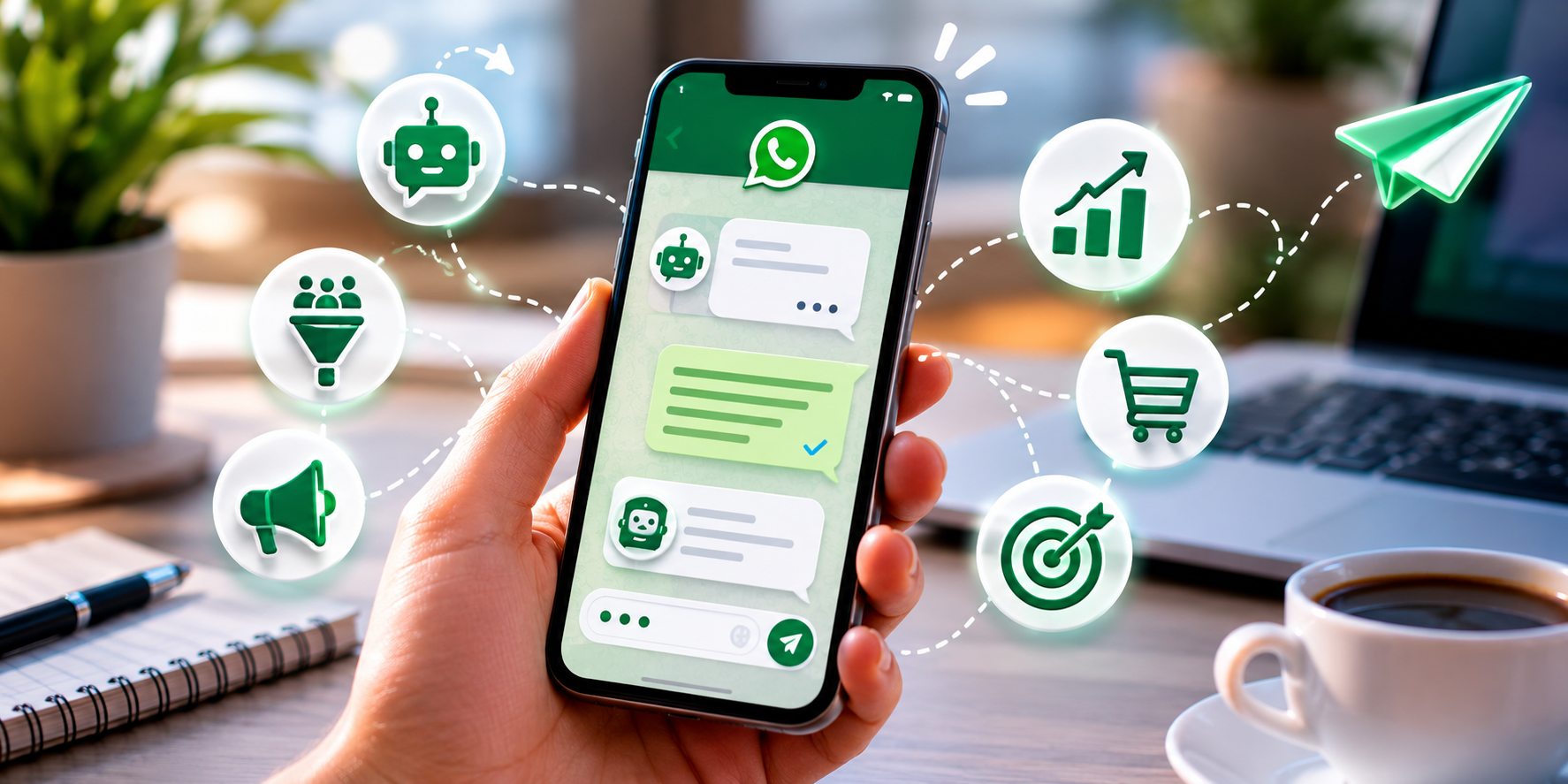
Common examples of WhatsApp automation include:
- Welcome messages for new leads
- Product enquiry responses
- Appointment booking confirmations
- Order tracking updates
- Payment reminders
- Event reminders
- Feedback collection
- Reorder prompts
- Support ticket updates
- Lead qualification questions
The goal is not to send more messages. The goal is to send the right message at the right time.
How WhatsApp Marketing Has Changed
Old-style marketing was mostly one-way. A business sent an ad, email, SMS, or notification, and the customer either responded or ignored it.
WhatsApp marketing is different because it feels more personal. It opens a conversation, not just a campaign. Customers can ask questions, compare options, request prices, share requirements, and get help before making a decision.
In 2026, strong WhatsApp marketing depends on five things:
- First, permission matters. Businesses should only message users who have opted in or shown clear interest.
- Second, personalisation matters. A returning customer should not receive the same message as a first-time visitor.
- Third, timing matters. A cart reminder after ten minutes may work better than a random offer two weeks later.
- Fourth, value matters. Every message should help the customer do something useful.
- Fifth, handoff matters. If automation cannot answer the question, the conversation should move smoothly to a human team member.
This is why businesses need a proper strategy before launching WhatsApp marketing campaigns. Without structure, WhatsApp can easily become noisy. With the right setup, it can become one of the most effective communication channels in the customer journey.
WhatsApp Automation and Conversational Marketing
Conversational marketing is based on one simple idea: people prefer conversations over complicated forms and slow support systems.
Instead of forcing users to read multiple pages, wait for emails, or fill out long forms, businesses can guide them through a natural chat. A customer can ask, “Is this product available?” “Can I book a demo?”, or “What is the price?”, and get a useful response quickly. WhatsApp automation supports conversational marketing by making these interactions faster and more structured.
For example, a real estate company can use WhatsApp to qualify property buyers. The automation can ask about budget, preferred location, property type, and timeline. After that, the sales team can speak only to serious leads.
An ecommerce brand can use WhatsApp to recommend products, share delivery updates, collect reviews, and send reorder reminders. A healthcare clinic can use WhatsApp to confirm appointments, send preparation instructions, and remind patients about follow-ups.
In all these cases, WhatsApp becomes more than a messaging tool. It becomes a guided customer journey.
Where an AI Chatbot for a Website Fits In
An AI chatbot for a website can be a strong partner to WhatsApp. Many users visit a website before speaking with a business. They may check services, pricing, case studies, products, or contact details. If they do not find answers quickly, they may leave.
A chatbot can help capture that interest before it is lost.
For example, an AI chatbot for a website can answer common questions, collect contact details, understand the user’s needs, and then continue the conversation via WhatsApp. This creates a smoother journey from website visit to active conversation.
Here is how it can work:
A visitor lands on a service page. The chatbot asks if they need help choosing the right service. The visitor shares a requirement. The chatbot collects their name and phone number. Then the user receives a WhatsApp message with the next step, such as booking a call, getting a quote, or speaking to a consultant.
This combination of website chatbot and WhatsApp automation reduces drop-offs. It also speeds up lead handling for the sales team.
For service businesses, this can be especially useful because many leads are lost due to slow response time. When the first reply is instant and relevant, the chances of conversion improve.
Best WhatsApp Automation Use Cases for Businesses
1. Lead Capture and Qualification
Not every lead is ready to buy. Some are just researching. Some want pricing. Some need a demo. Some are ready to speak to sales.
WhatsApp automation can help sort these leads quickly. It can ask simple questions, capture important details, and route leads based on their responses.
For example:
“What service are you interested in?”
“What is your budget range?”
“When do you want to start?”
“Would you like to speak with a consultant?”
This helps sales teams avoid cold follow-ups and focus on leads with real intent.
2. Faster Customer Support
Customers often ask the same questions again and again. These may include delivery status, pricing, refund policy, appointment time, service availability, or product details.
Automation can answer these common questions instantly. If the query is complex, it can transfer the conversation to a human agent. This improves support speed without putting extra pressure on the team.
3. Abandoned Cart Recovery
For ecommerce businesses, cart abandonment is a common problem. Customers may add products to the cart but leave before payment. A well-timed WhatsApp reminder can bring them back. The message can include the product name, cart link, support option, or limited-time offer.
This type of WhatsApp marketing works because it reaches users when they have already shown buying intent.
4. Appointment and Booking Reminders
Businesses that depend on bookings can use WhatsApp to reduce missed appointments.
Clinics, salons, consultants, coaches, real estate agents, and service providers can send automated reminders before the scheduled time. They can also allow users to confirm, cancel, or reschedule through WhatsApp.
This saves time for both the customer and the business.
5. Post-Purchase Communication
The customer journey does not end after a sale. Order confirmations, delivery updates, usage tips, support messages, and feedback requests all matter. Good post-purchase communication builds trust. It also supports long-term customer retention strategies.
For example, a skincare brand can send product usage tips after delivery. A SaaS company can send onboarding steps. A training company can send class reminders and learning resources.
6. Customer Feedback and Reviews
Businesses can use WhatsApp to ask customers for feedback after a purchase, appointment, or service delivery. The message should be short and simple. Instead of asking users to fill out a long form, businesses can ask one or two direct questions.
This makes it easier to collect useful feedback and improve service quality.
How WhatsApp Automation Helps Improve Conversions
A conversion does not always happen in one step. A customer may see an ad, visit a website, compare options, ask a question, wait for a reply, and then decide. If there is a delay at any point, the lead can go cold.
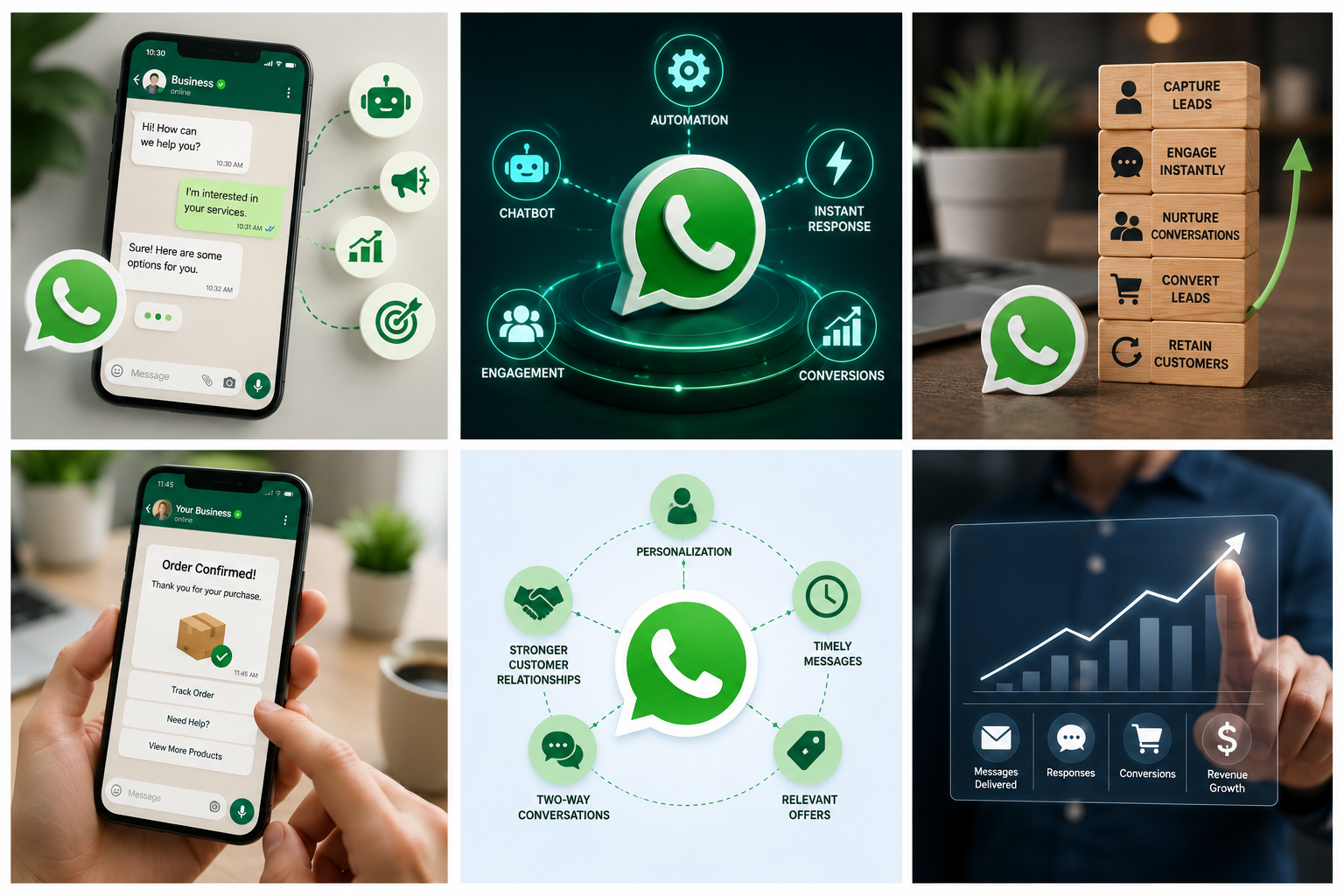
WhatsApp automation helps reduce that delay. It keeps the conversation moving.
It improves conversions by:
- Replying instantly to new leads
- Reducing manual follow-up gaps
- Sending timely reminders
- Guiding users to the next step
- Answering common objections
- Connecting serious leads with sales teams
- Keeping customers informed after purchase
For many businesses, the biggest problem is not traffic. It is response handling. Leads come in, but follow-ups are slow or inconsistent. WhatsApp can solve this when connected with the right automation flow.
WhatsApp Marketing and Customer Retention Strategies
Most businesses focus heavily on new leads. But keeping existing customers is just as important. This is where WhatsApp can support better customer retention strategies.
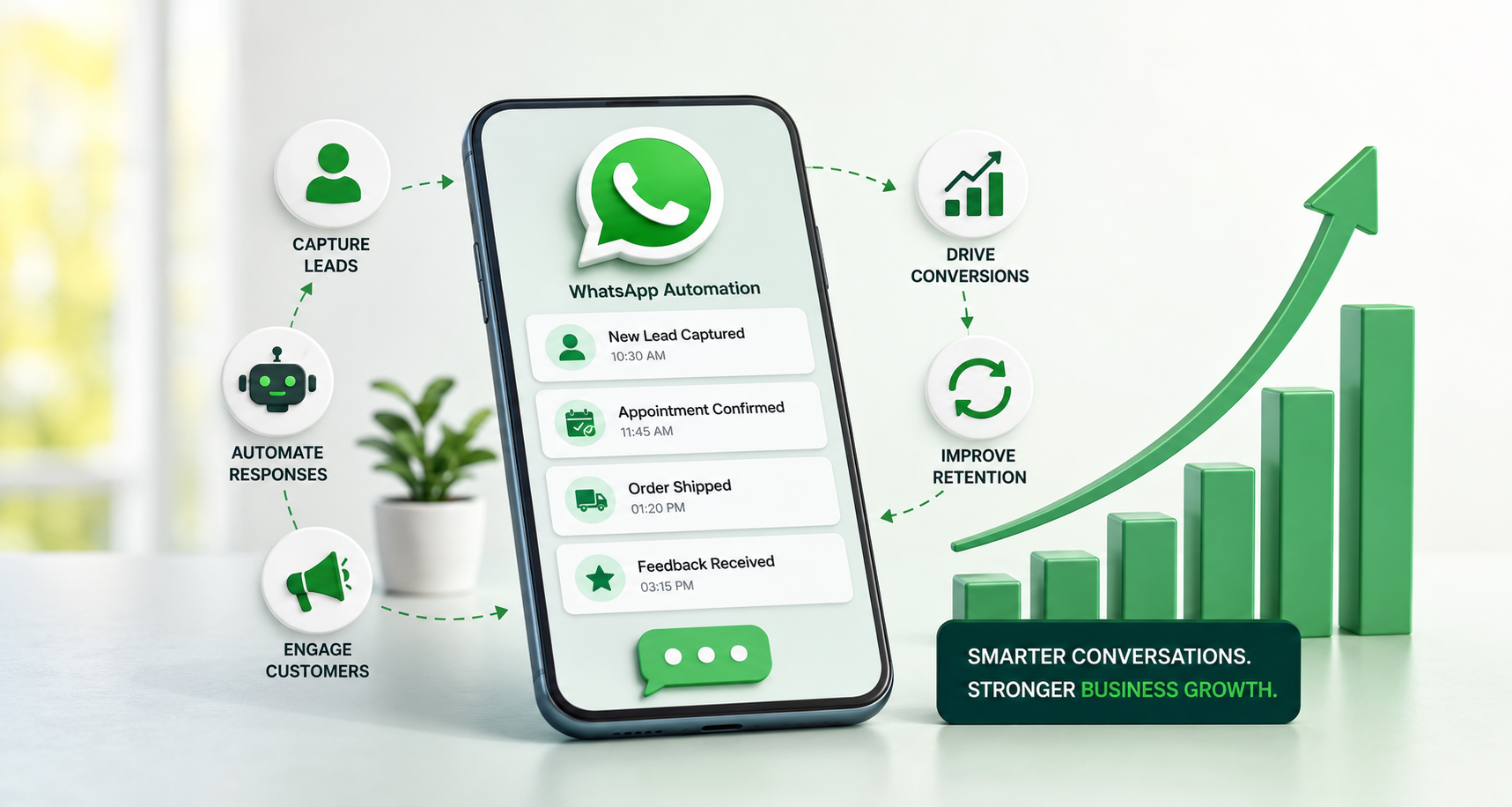
A returning customer already knows your brand. They may need reminders, support, new product updates, loyalty offers, or helpful content. WhatsApp makes it easier to stay connected without depending only on email.
Useful customer retention strategies through WhatsApp include:
- Reorder reminders
- Renewal reminders
- Loyalty programme updates
- Personalised offers
- Service follow-ups
- Product care tips
- Feedback requests
- Customer education messages
- Referral prompts
- Exclusive early access updates
The key is to keep communication useful. Customers should feel helped, not pushed.
For example, a fitness brand can send workout tips after a purchase. A software company can send feature updates based on user behaviour. A real estate company can send property alerts based on budget and location.
This type of WhatsApp marketing builds trust by being relevant.
Mistakes Businesses Should Avoid
WhatsApp is a personal channel, so mistakes can quickly damage trust.
- One common mistake is sending too many promotional messages. Customers may opt out if every message feels like a sales push.
- Another mistake is poor segmentation. A new lead, a loyal customer, an inactive customer, and a high-value buyer should not receive the same message.
- A third mistake is using automation without human backup. If a customer has a serious issue, they should not be trapped in a chatbot loop.
- Businesses should also avoid unclear opt-ins, poorly timed messages, and generic templates. A WhatsApp strategy should feel helpful and human, even when automation is working in the background.
Strong WhatsApp automation should support the customer experience, not make it feel robotic.
How to Build a Smart WhatsApp Automation Strategy
A good strategy starts with the customer journey.
Businesses should first map how customers interact with the brand. Where do they come from? What questions do they ask? Where do they drop off? What makes them buy? What support do they need after purchase?
Once this is clear, automation can be added at the right points.
A simple strategy may include:
- Capture leads from website, ads, landing pages, and social media.
- Send an instant WhatsApp welcome message.
- Ask qualifying questions.
- Share useful information based on the customer’s needs.
- Send reminders if the user does not respond.
- Transfer high-intent leads to the sales team.
- Send post-purchase updates and support messages.
- Use retention campaigns for repeat engagement.
This approach makes WhatsApp automation more focused. It also makes reporting easier because businesses can track which flows are producing leads, sales, bookings, or repeat customers.
Why Personalisation Matters in WhatsApp Marketing
Customers do not want generic messages. They want answers and offers that match their needs.
Personalisation in WhatsApp marketing can be based on:
- Customer name
- Purchase history
- Location
- Product interest
- Service requirement
- Cart activity
- Lead source
- Customer lifecycle stage
- Previous conversations
For example, a user who asked about mobile app development should not receive a generic digital marketing message. A customer who bought a product last month may need a reorder reminder, not a first-time discount.
Personalisation makes communication more useful. It also makes customers more likely to respond.
This is where CRM integration becomes important. When WhatsApp is integrated with CRM data, businesses can send smarter messages rather than guessing.
The Role of AI in WhatsApp Automation
AI is making WhatsApp workflows more flexible. Earlier automation was mostly rule-based. If the customer selected an option, the system responded with a fixed answer. Now AI can understand questions better, respond more naturally, and support more complex journeys.
AI can help with:
- Intent detection
- Product recommendations
- Lead scoring
- Support replies
- Conversation summaries
- Sales handoff notes
- Follow-up suggestions
- Customer behaviour analysis
However, AI should be used carefully. Customers still want accuracy and trust. If an AI reply is wrong or confusing, it can hurt the customer experience. The best setup combines AI with clear rules, approved content, CRM data, and human support. This keeps the experience fast but still reliable.
Industries That Can Benefit from WhatsApp Automation
Many industries can use WhatsApp automation in different ways.
- Ecommerce brands can use it for order updates, abandoned-cart recovery, product recommendations, and repeat-purchase reminders.
- Real estate businesses can use it for property enquiries, buyer qualification, appointment scheduling, and project updates.
- Healthcare providers can use it for appointment reminders, patient follow-ups, and general support.
- Education businesses can use it for course enquiries, admission updates, class reminders, and student support.
- Travel companies can use it for booking updates, itinerary sharing, payment reminders, and customer assistance.
- B2B companies can use it for lead nurturing, demo scheduling, proposal follow-ups, and client communication.
The common point is simple: wherever customers need quick answers, WhatsApp can improve the journey.
Measuring WhatsApp Marketing Performance
A WhatsApp campaign should not run blindly. Businesses need to measure what is working.
- Important metrics include:
- Number of opt-ins
- Message delivery rate
- Response rate
- Click-through rate
- Lead qualification rate
- Sales conversion rate
- Appointment booking rate
- Support resolution time
- Customer satisfaction
- Repeat purchase rate
- Opt-out rate
These numbers show whether your WhatsApp marketing is actually helping the business.
For example, a high response rate but low sales rate may mean the offer is weak. A high opt-out rate may mean messages are too frequent. A strong booking rate may show that WhatsApp is working well for appointment-based services.
Tracking helps businesses improve their campaigns rather than make assumptions.
How Deftsoft Can Help Businesses with WhatsApp Automation
Building a strong WhatsApp system is not just about setting up messages. It needs strategy, technology, integrations, content, automation logic, and performance tracking.
This is where Deftsoft can support businesses.
Deftsoft helps brands plan and build digital solutions that improve communication, lead handling, customer engagement, and retention. For businesses looking to use WhatsApp automation, Deftsoft can help create a complete setup that connects WhatsApp with websites, CRM systems, landing pages, chatbots, ecommerce platforms, and marketing campaigns.
Deftsoft can also help businesses build an AI chatbot for a website that captures leads and moves them into WhatsApp conversations. This creates a smooth journey from website visit to sales follow-up.
With experience in web development, mobile app development, AI solutions, digital marketing, automation, and customer-focused software, Deftsoft can help businesses use WhatsApp marketing in a practical way. The goal is not just to send messages. The goal is to create better conversations that lead to more enquiries, more conversions, and stronger customer relationships.
If your business wants to improve response time, automate follow-ups, qualify leads, and build stronger customer retention strategies, Deftsoft can help you plan and develop the right solution.
Ready to Turn WhatsApp Conversations into Real Business Growth?
Your customers are already using WhatsApp. The next step is to make every conversation faster, smarter, and more useful.
Final Thoughts
In 2026, customers expect brands to be quick, helpful, and easy to reach. This is why WhatsApp automation is becoming a smart choice for businesses that want to improve communication and sales.
At the same time, WhatsApp marketing needs to be more thoughtful than before. It should not feel like spam. It should feel like support, guidance, and timely communication.
When WhatsApp is combined with conversational marketing, CRM integration, an AI chatbot for the website, and strong customer retention strategies, it can become a powerful growth channel.
The businesses that win will not be the ones sending the most messages. They will be the ones creating the most useful conversations.
FAQs
1. What is WhatsApp automation?
WhatsApp automation is the process of using automated workflows, chatbots, templates, and integrations to manage customer conversations on WhatsApp. It can be used for lead follow-ups, order updates, appointment reminders, support replies, and customer retention messages.
2. How does WhatsApp marketing help businesses?
WhatsApp marketing helps businesses communicate directly with customers through a channel they already use. It can improve lead nurturing, customer support, abandoned cart recovery, event reminders, repeat sales, and personalised engagement.
3. Is WhatsApp automation useful for small businesses?
Yes. Small businesses can use WhatsApp automation to reply faster, manage enquiries, send reminders, follow up with leads, and support customers without hiring a large team.
4. Can I connect an AI chatbot for a website with WhatsApp?
Yes. An AI chatbot for website can collect user details, answer common questions, qualify leads, and then move the conversation to WhatsApp. This helps businesses reduce lead drop-offs and improve response speed.
5. What are the best customer retention strategies using WhatsApp?
Some of the best customer retention strategies include reorder reminders, service follow-ups, loyalty offers, product tips, feedback requests, renewal reminders, and personalised updates based on customer behaviour.
6. Is WhatsApp marketing better than email marketing?
Both channels are useful, but they work differently. Email is good for detailed updates and newsletters. WhatsApp is better for quick, direct, and conversational communication. Many businesses use both together for better results.
7. How can Deftsoft help with WhatsApp automation?
Deftsoft can help businesses plan, develop, and integrate WhatsApp automation with websites, CRM systems, AI chatbots, ecommerce platforms, and marketing campaigns. This helps improve lead management, customer engagement, and conversion rates.
Recent Articles



Devraj
 15th June 2026