Shopify SEO Services: A Growth Guide for Better Visibility of Online Stores
-
By Devraj
-
25th May 2026
Quick Summary
Shopify SEO services help online stores become easier to find, more trustworthy, and easier to buy from. A strong SEO strategy is not only about adding keywords to product pages. It also improves your store structure, technical health, product content, collection pages, speed, internal links, and buyer journey. For new stores, it builds a strong foundation. For growing brands, it reduces overdependence on ads. For larger stores, it fixes deeper technical and catalog issues. This guide explains how SEO services for Shopify can support long-term ecommerce growth in a practical and beginner-friendly way.
Want stronger Shopify visibility?
Quick Navigation
Why Shopify SEO Matters More Than Ever
Shopify SEO Is Not Just About Rankings
What Shopify SEO Services Usually Include
Why Many Shopify Stores Struggle With Search
How Shopify SEO Adapts to Your Business Size
3. SEO for Large Shopify Stores
4. SEO for Local Shopify Businesses
Product Pages Need More Than Product Details
Collection Pages Are Often Missed
Blogs Should Support Sales Without Sounding Salesy
Technical SEO Keeps the Store Healthy
How Deftsoft Can Help With Shopify SEO Services
Why Shopify SEO Matters More Than Ever
Shopify has made it easier for almost anyone to start an online store. A business owner can choose a theme, upload products, connect payment options, and launch a store within a short time. That is one of the biggest reasons Shopify is loved by startups, D2C brands, local sellers, and growing ecommerce businesses.
But launching a store is not the same as growing a store.
Many Shopify businesses reach the same point. The website looks good. The products are ready. The checkout works. Social media posts are going live. Paid ads are running. Still, organic traffic is low. Product pages are not ranking. Collection pages are not bringing visitors. Sales depend too much on ad spend.
This is where Shopify SEO services become important.
SEO helps your store show up when people search for products, solutions, comparisons, and buying advice. These people are not just scrolling randomly. They are already looking for something. Some are ready to buy. Some are comparing options. Some are researching before making a decision.
A good Shopify SEO strategy helps your store reach all of them at the right stage.
For example, a customer may search for “best running shoes for beginners” before they search for a specific shoe. Another customer may search for “organic face serum for dry skin” before choosing a brand. Someone else may search for “custom leather laptop bag” because they already know what they want.
If your Shopify store is properly optimized, you have a better chance of appearing in these searches.
Shopify SEO Is Not Just About Rankings
Many store owners think SEO only means ranking higher on Google. Rankings are important, but they are only one part of the story.
The real goal is to attract the right visitors and help them take action.
A Shopify store does not need traffic from everyone. It needs traffic from people who are likely to browse, trust, compare, and buy. This is why SEO services for Shopify should focus on business growth, not just keyword positions.
For a new store, SEO may help build visibility from the ground up. For a growing brand, it may help lower pressure from paid ads. For a large catalog store, it may help resolve technical issues that prevent important pages from ranking. For a local ecommerce business, it may help bring customers from specific cities or delivery areas.
This is why a one-size-fits-all SEO plan rarely works.
Every Shopify store has a different stage, audience, product range, and growth challenge. The best SEO strategy starts with understanding these details.
What Shopify SEO Services Usually Include
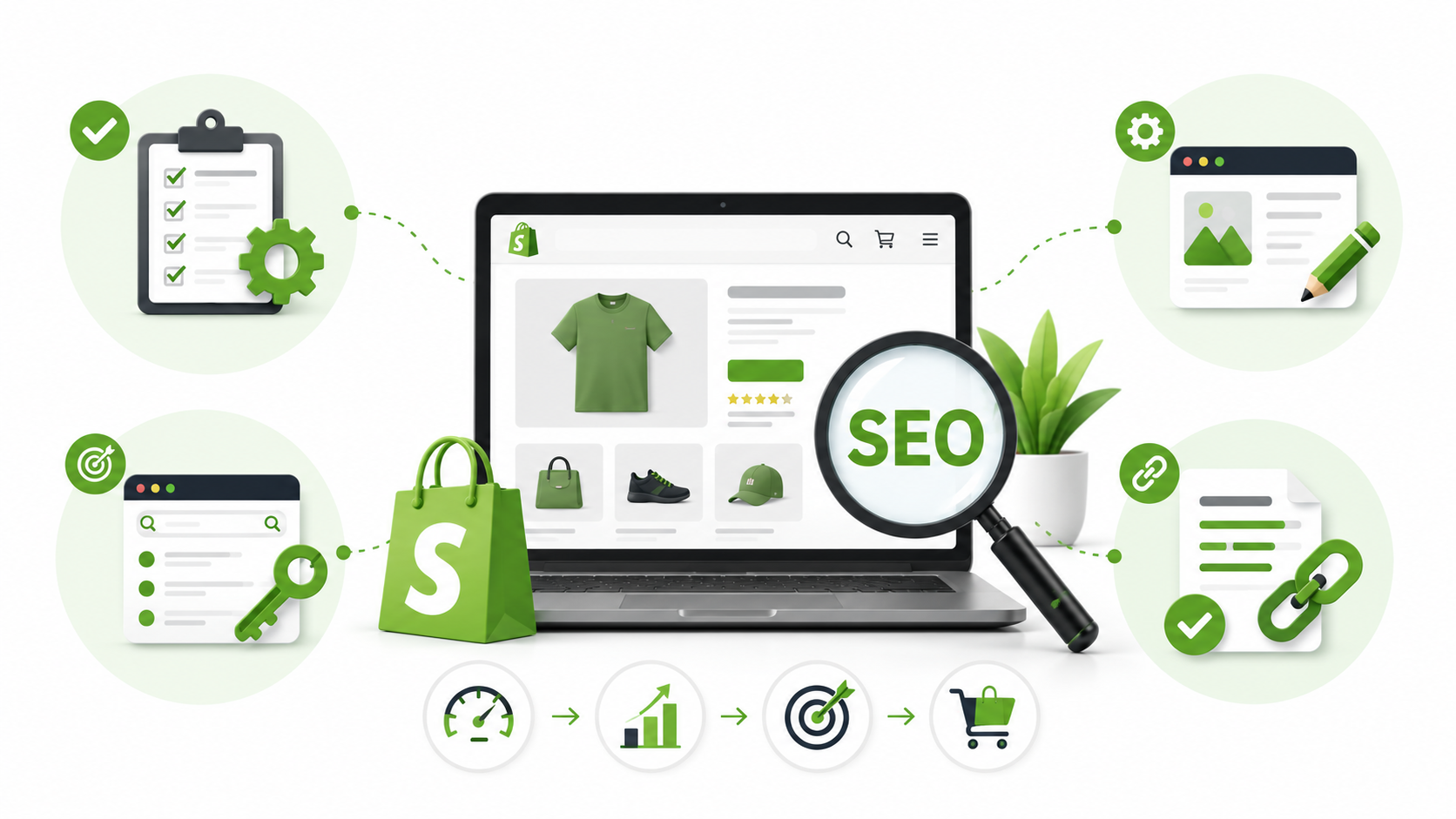
A proper Shopify SEO service covers all the work needed to improve your store’s visibility in search engines. A comprehensive strategy typically includes:
- Comprehensive SEO Audits: Reviewing technical health, indexing issues, and site speed bottlenecks.
- Strategic Keyword Mapping: Aligning product terms to product pages, category terms to collection pages, and informational terms to blogs.
- On-Page Optimization: Improving product descriptions, updating meta titles, and optimizing image alt text.
- Content & Linking Strategy: Adding helpful collection page content, writing target blogs, and building a strong internal linking structure.
Why Many Shopify Stores Struggle With Search
Most Shopify stores are built to launch quickly. That is useful in the beginning, but it can create SEO gaps later.
A store owner may upload products using suppliers’ short descriptions. Collection pages may show only product grids, with no helpful content. Images may be large and slow to load. Apps may keep getting added for reviews, popups, tracking, email, upsells, and subscriptions. Over time, the store becomes heavier and harder to manage.
The front end may still look fine. But search engines may face issues in the background.
Some pages may not be indexed properly. Some product URLs may compete with each other. Some collections may not have enough content to rank. Some blogs may drive traffic but not direct users to products. Some pages may load slowly on mobile.
These problems are common. They are also fixable.
This is why a Shopify technical SEO audit service expert can be valuable, especially for stores with many products, collections, apps, or older themes. A technical audit gives a clear view of what is happening behind the scenes.
How Shopify SEO Adapts to Your Business Size
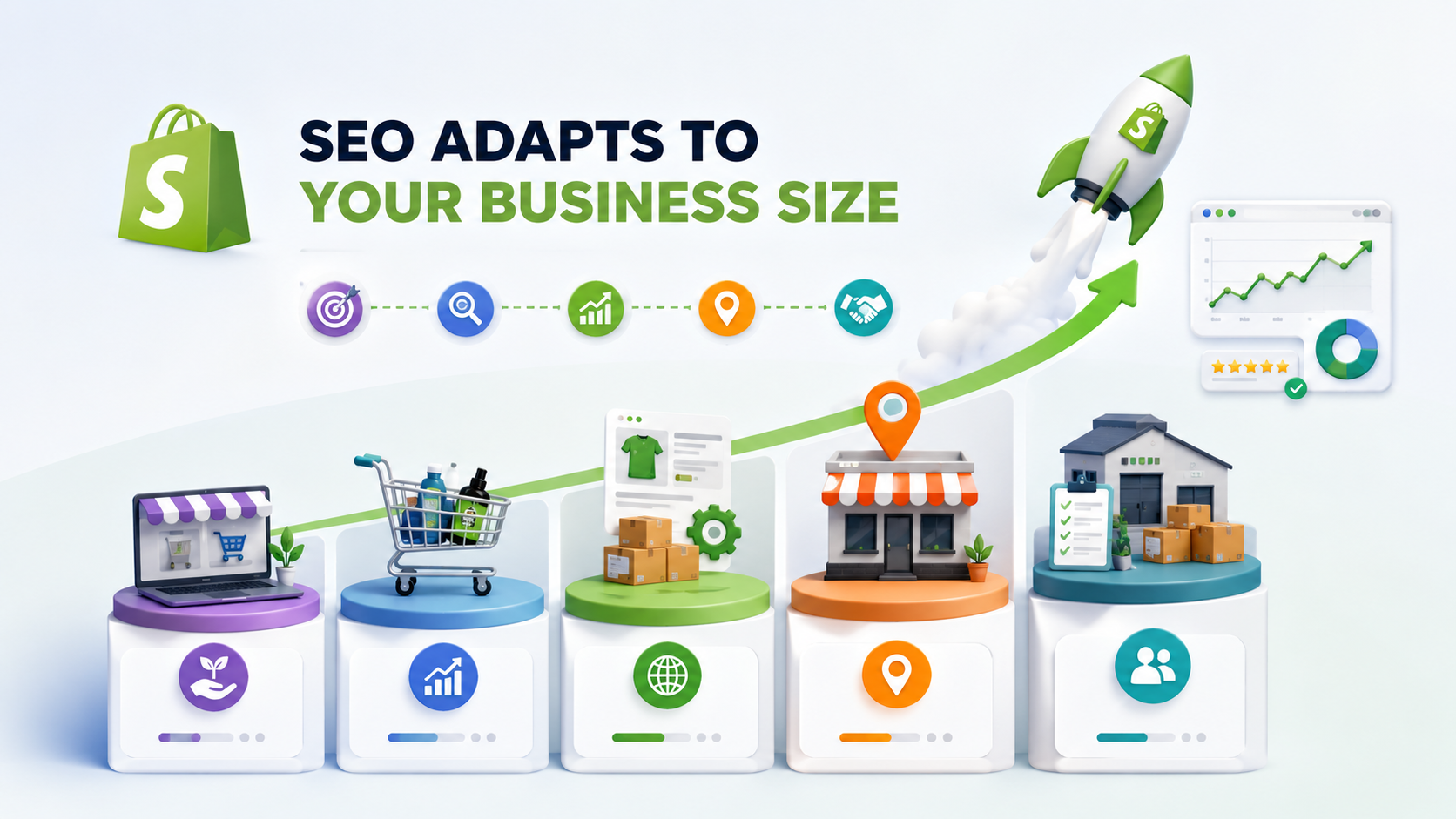
1. SEO for New Shopify Stores
New Shopify store owners often want to rank for big keywords quickly. That is understandable, but it is not always realistic.
If a new skincare store launches, it will be hard to rank for a broad keyword like “face serum” at first. The competition is too strong. Instead, the store may achieve better early results by targeting specific search terms such as “vitamin C serum for dull skin” or “hydrating serum for sensitive skin.”
This is where smart keyword planning helps.
A new Shopify store should focus on building a clean SEO foundation. The homepage should clearly explain what the brand sells and who it helps. Product pages should have unique descriptions. Collection pages should include useful content. Images should be compressed. Meta titles should be written properly. Basic tracking should be set up from the start.
The goal at this stage is not to do everything at once. The goal is to avoid messy SEO habits that become harder to fix later.
2. SEO for Growing D2C Brands
Growing D2C brands usually have a different problem. They may already have traffic and sales, but growth is heavily tied to paid ads.
At first, this may feel fine. Paid ads bring quick visibility. But as competition rises, ad costs can increase. If every sale needs paid traffic, profit margins can become tighter.
Shopify SEO services can help create a more balanced growth model.
For a D2C brand, SEO should focus on high-value product pages, collection pages, buying guides, comparison content, and trust-building content. A customer may not buy on the first visit. They may read a blog, explore a collection, compare products, leave, return later, and then buy. A good SEO strategy supports this full journey.
For example, a fitness brand can create content around product use, benefits, routines, comparisons, and customer questions. A fashion brand can create style guides, seasonal edits, and collection-focused content. A home decor store can create room guides, material guides, and buying advice.
This kind of content does not feel forced. It helps customers make better decisions.
Case Study
The Client: A growing D2C eco-friendly apparel brand on Shopify.
The Challenge: Over 80% of sales depended entirely on Meta and Google Ads, squeezing net profit margins as cost per click (CPC) rose.
The Deftsoft Strategy: We restructured their collection page architecture and mapped out informational buyer guides targeting mid-funnel search terms.
The 6-Month Result: Achieved a 42% increase in organic revenue and a 28% reduction in paid ad dependency, shifting thousands of dollars from ad spend directly back into profit.
3. SEO for Large Shopify Stores
Large Shopify stores need a more structured SEO approach. When a store has hundreds or thousands of products, small issues can turn into large problems.
A large catalog may have similar product descriptions across many pages. Some products may appear in several collections. Filters may create extra URLs. Out-of-stock products may still be indexed. Old pages may have broken links. Apps may slow down the site.
In this case, SEO is not only about writing more content. It is about properly organizing the store.
The website needs a clear structure so search engines know which pages matter most. Important collection pages should be easy to reach. Product pages should be linked naturally. Duplicate content should be reduced. Canonical tags should be reviewed. Slow templates should be improved. Low-value pages should not waste crawl attention.
This is where technical SEO becomes a serious growth factor.
A store may already have enough products and demand, but poor structure can stop it from getting the visibility it deserves.
4. SEO for Local Shopify Businesses
Not every Shopify store sells nationally or globally. Many businesses use Shopify to sell within a city, region, or service area.
This includes bakeries, florists, clothing boutiques, furniture stores, gift shops, pet stores, and specialty food brands.
For these businesses, local SEO can make a big difference.
A florist does not only need to rank for “flower delivery.” It may need to rank for “same day flower delivery in Mohali” or “birthday flowers in Chandigarh.” A boutique may want visibility for searches related to local pickup, nearby shopping, or city-specific products.
Local Shopify SEO can include location-focused content, Google Business Profile optimization, delivery area pages, local reviews, and local backlinks.
This helps connect online search with real-world buying behavior.
5. SEO for B2B Shopify Stores
B2B Shopify stores often need a different content style.
A retail shopper may buy quickly. A B2B buyer may take more time. They may compare suppliers, check specifications, ask about bulk pricing, review product quality, and look for trust signals.
For B2B ecommerce, SEO content should be clear, detailed, and practical. Product pages should explain specifications properly. Category pages should guide users toward the right product type. Blogs should answer industry questions. FAQ sections should remove doubts.
A B2B store may also need pages for use cases. For example, instead of only listing packaging products, the store can explain packaging solutions for restaurants, warehouses, ecommerce sellers, or manufacturers.
This helps attract buyers who search by need, not just by product name.
Product Pages Need More Than Product Details
A product page is one of the most important pages on a Shopify store. But many product pages are too thin.
A short description may not give Google enough context. It may also not give customers enough confidence.
A strong product page should feel helpful. It should explain what the product is, who it is for, why it is useful, how to use it and what makes it different. It should also answer common buyer questions around size, material, care, delivery, returns, ingredients, compatibility, or usage.
This does not mean writing long content for every product. It means writing the right content.
Some products need detailed explanations. Some need simple descriptions with strong visuals and FAQs. Some need comparison charts or size guides. Some need trust signals like reviews, certifications, guarantees, or shipping details.
Good Shopify SEO respects the buyer’s decision process.
Collection Pages Are Often Missed
Collection pages are powerful because they target category-level searches.
A customer may not search for a specific product first. They may search for “men’s leather wallets,” “organic baby clothes,” “handmade candles,” or “wireless gaming headphones.” These searches usually match collection pages better than product pages.
Still, many Shopify stores leave collection pages almost empty.
They add a heading and product grid, but no helpful content. This limits ranking potential.
A good collection page should introduce the category naturally. It should help users understand what they can find, how to choose, and why the products are worth exploring. It should also link to related collections or useful guides where needed.
The content does not need to be long. It needs to be useful.
Blogs Should Support Sales Without Sounding Salesy
Blogs are often misunderstood in ecommerce SEO.
Some stores write blogs only to add keywords. Others ignore blogs because they think only product pages matter. Both approaches can limit growth.
A good Shopify blog should answer real customer questions.
A skincare brand can write about routines and ingredient choices. A clothing brand can write about styling. A supplement brand can write about usage and comparisons. A furniture brand can write about room planning. A pet store can write about care tips.
The blog should not feel like a hard sales pitch. It should educate first and guide the reader naturally toward relevant products or collections.
This is how content builds trust.
A person who finds your blog helpful may not buy immediately, but they may remember your brand. They may return when they are ready. They may also explore your store after reading.
Technical SEO Keeps the Store Healthy
Technical SEO is the part that many store owners do not see, but it affects everything.
If search engines cannot crawl your important pages properly, your content may not perform well. If your store loads slowly, visitors may leave. If duplicate pages confuse Google, rankings may suffer. If the schema is missing, your product results may look weaker in search.
Shopify technical SEO may include checking page speed, duplicate URLs, sitemap settings, canonical tags, broken links, mobile usability, structured data, app scripts, redirects, and indexing.
This work may sound complex, but the purpose is simple.
Your store should be easy for Google to read and easy for users to browse.
How Deftsoft Can Help With Shopify SEO Services
Deftsoft can help Shopify businesses develop SEO strategies tailored to their store stage, product type, and growth goals.
Instead of using the same plan for every store, the process should start with understanding the business. A new store may need a clean foundation. A growing D2C brand may need stronger visibility for its products and collections. A large catalog store may need technical cleanup. A local Shopify business may need city-based SEO. A B2B store may need trust-focused content.
Deftsoft’s Shopify SEO services can include audit, keyword mapping, product page optimization, collection page improvements, technical SEO, content planning, internal linking, and performance tracking.
The focus should stay practical. Every SEO action should help the store become easier to find, easier to understand, and easier to buy from.
How to Know If Your Store Needs Shopify SEO
Your store may need SEO support if organic traffic is low, product pages are not ranking, collection pages are thin, ad costs are increasing, or competitors appear above you for important searches.
You may also need SEO if your store has grown quickly without a clear structure. This often happens when new products, apps, collections, and landing pages are added over time without an SEO plan.
A strong Shopify SEO services agency can review the full store and identify what should be fixed first.
The first step is not always more content. Sometimes the first step is fixing technical issues. Sometimes it is improving collection pages. Sometimes it is rewriting product descriptions. Sometimes it is creating a better internal linking structure.
The right priority depends on the store.
Final Thoughts
Shopify SEO services are not just for large brands. They can help new stores, growing D2C businesses, local sellers, B2B ecommerce companies, and large catalog stores.
The real value of SEO is not only higher rankings. It is better visibility, better user experience, stronger trust, and more qualified traffic. When your store answers the right searches with the right pages, customers can find what they need faster.
A good Shopify SEO strategy should not feel generic. It should reflect your products, customers, competition, and business goals.
With the right Shopify SEO service, your store can build a stronger organic growth channel and depend less on short-term traffic sources.
FAQs
1. What are Shopify SEO services?
Shopify SEO services help improve the search visibility of Shopify stores. They can include technical SEO, keyword research, product page optimization, collection page SEO, content planning, internal linking, and performance tracking.
2. Why are SEO services for Shopify important?
SEO services for Shopify are important because they help your store appear when people search for products you sell. This can bring more qualified traffic and reduce complete dependence on paid ads.
3. How is Shopify SEO different from normal SEO?
Shopify SEO is focused on ecommerce pages such as products, collections, variants, filters, images, and apps. It needs a store-specific approach because ecommerce websites have more moving parts than basic service websites.
4. What does a Shopify technical SEO audit include?
A Shopify technical SEO audit can include checks for duplicate URLs, crawl issues, indexing problems, slow pages, broken links, missing schema, mobile performance, canonical tags, and app-related speed issues.
5. Can a Shopify SEO service help increase sales?
Yes. A Shopify SEO service can help attract higher-quality visitors, improve product visibility, strengthen collection pages, and clarify the buying journey. This can support more sales over time.
6. When should I hire a Shopify SEO services agency?
You should consider hiring a Shopify SEO services agency if your store has low organic traffic, weak rankings, increasing ad costs, technical issues, thin product pages, or poor collection page visibility.
7. How long does Shopify SEO take?
Shopify SEO usually takes a few months to show clear results. Some technical improvements may help sooner, but long-term growth depends on competition, content quality, store structure, and consistent optimization.






Devraj
 25th May 2026